

Note: This article contains affiliate links. If you click on these links and make a purchase, I may earn a small commission at no extra cost to you. This helps support my research and content. Read my full affiliate disclosure here.
If you are starting a vegetable or flower plot for the first time, choosing the right beginner raised garden bed makes planting easier and more productive. A well-chosen raised bed improves soil control, drainage, and access while reducing back strain and maintenance time. This guide covers seven shortlisted options suited to small yards, patios, and first-time growers, and explains the practical differences that matter in a real garden. We evaluated assembly effort, material durability, drainage and soil depth, and longevity for seasonal use so you can pick a bed that fits your space and gardening goals. Read on for the key tradeoffs and what to expect when installing a raised bed in your outdoor space.
Top Picks at a Glance
| Best Overall The best all-around choice for most situations | AmazStove Galvanized Oval Raised Garden Bed Kit (4×2×1 ft, 2‑Pack) |  |
| Best Quality Built to a higher standard if you want something more solid | Vego Garden 17" Tall Modular Metal Raised Garden Bed Kit (10-in-1) |  |
| Best Value The sweet spot between price and what you get | Land Guard Galvanized Oval Raised Garden Bed Kit, 2-Pack |  |
| Best Budget The cheapest option that still gets the job done reliably | JERIA Galvanized Raised Garden Bed 4×2×1 ft |  |
| Highest Rated A top-rated pick with lots of positive feedback | Vego Garden 17" Tall 9-in-1 Metal Raised Garden Bed Kit (8 ft x 2 ft) |  |
| Most Popular A crowd favorite that many people choose with confidence | Land Guard Galvanized Oval Raised Garden Bed Kit, 6×3×1 ft |  |
| Best Seller A high-volume bestseller chosen again and again | Rakukiri 5 ft Galvanized Raised Garden Bed Planter Box |  |
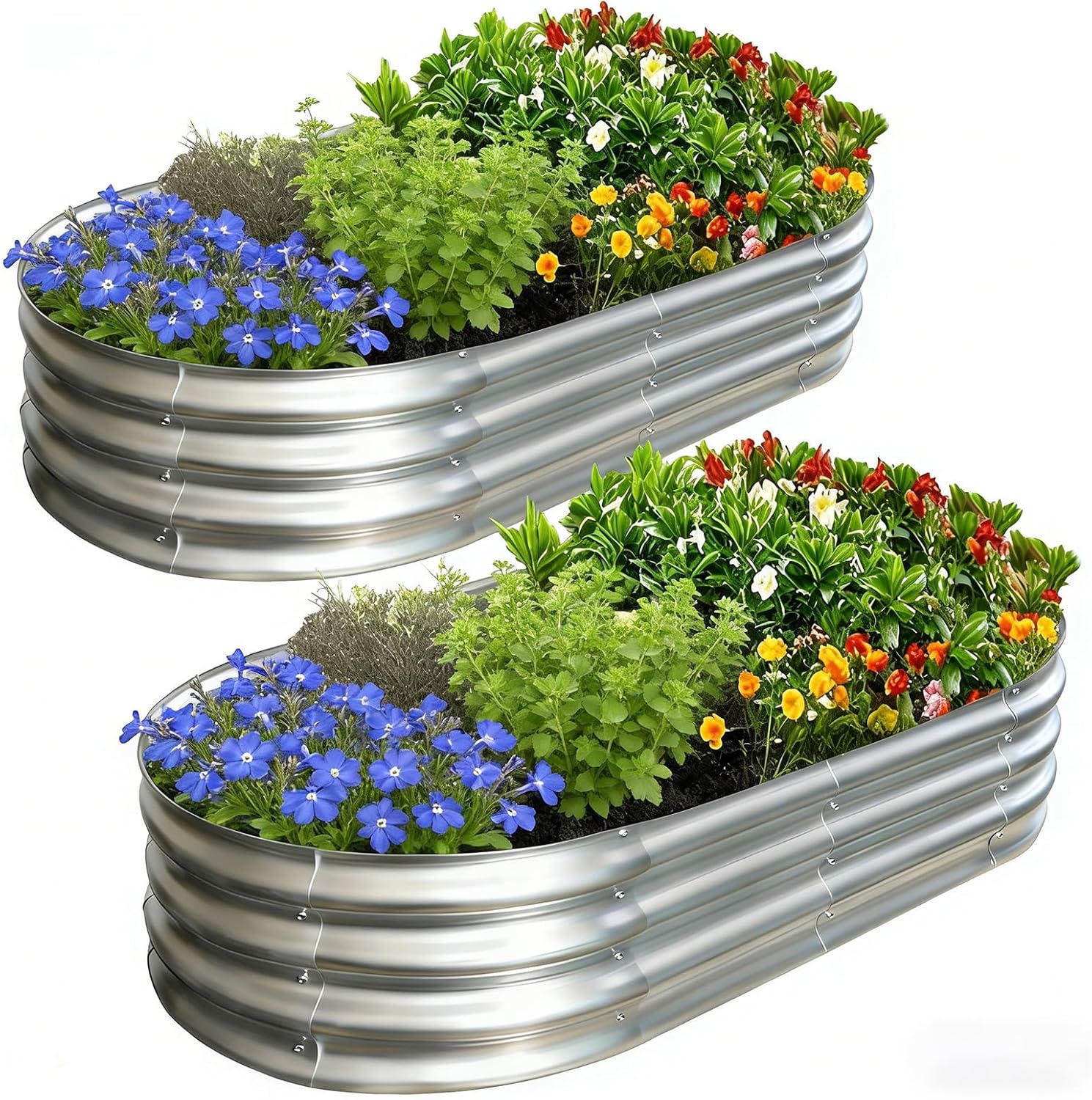
AmazStove Galvanized Oval Raised Garden Bed Kit (4×2×1 ft, 2‑Pack)
| Material Type | Galvanized |
|---|---|
| Capacity | 226.56 liters |
| Set Name | 2-Pack |
| Mounting Type | Floor Standing |
| Indoor Outdoor Usage | Outdoor |
This 4×2×1 ft AmazStove raised garden bed kit offers a simple, durable platform for beginners to start container gardening. The kit ships as a two‑pack of oval, floor‑standing planters made from coated, double‑layer galvanized steel that resists rust and is light enough to reposition. Assembly is straightforward with supplied instructions, nuts, and bolts and the vendor claims most people can put one together in about 10 minutes. The open base design improves drainage and lets plant roots reach native soil, which helps avoid waterlogging and root rot. Practical benefits include portability for moving beds to better light, a coated finish to reduce metal‑to‑soil contact, and included basic tools. Limitations are the shallow depth relative to some large crops and the metal construction can warm more quickly in hot sun, which may require extra watering or shade for temperature‑sensitive plants. Overall this kit suits new gardeners who want low‑maintenance, rust‑resistant raised beds they can assemble quickly and rearrange as needed.
Best for: A practical beginner who wants a quick, low‑fuss way to grow vegetables, herbs, or seasonal flowers in a tidy, moveable raised bed setup and values durability and ease of assembly.
Less Ideal for: Gardeners planning to grow very deep or permanently planted root crops or those who prefer wooden or fabric beds for greater insulation and soil depth.
- Galvanized double‑layer steel construction for corrosion resistance and longevity
- Open base design promotes drainage and better root access to native soil
- Lightweight and portable so beds can be moved to optimize sun exposure
- Easy assembly with included nuts, bolts, instructions and basic tools
- Shallow 1 ft planting depth limits large root crops like mature carrots or deep‑rooted perennials
- Metal sides can heat up in strong sun which may increase water needs
Verdict: AmazStove's galvanized two‑pack gives beginners a rust‑resistant, easy‑to‑assemble raised bed solution that drains well and can be moved to the best light.
Vego Garden 17" Tall Modular Metal Raised Garden Bed Kit (10-in-1)

| Capacity | 21 cubic feet |
|---|---|
| Material Type | Metal |
| Other Special Features of the Product | Rust Resistant |
| Mounting Type | Floor Standing |
| Indoor Outdoor Usage | Outdoor |
This Vego Garden raised bed kit is a heavy-duty metal planter built for performance-focused vegetable growing. Its modular 10-in-1 design lets you configure the kit into multiple layouts to match available space and planting plans, and the 17" planting depth supports deeper root systems and better drainage for larger vegetables. The metal panels use a zinc-magnesium-aluminum coating plus painted finish that the brand says is corrosion-tested, and the kit includes a base, side panels, connecting hardware, and basic tools so you can assemble without advanced construction skills. Practical benefits include less bending when tending crops, the oval shape with covered rubber edges for safer handling, and compatibility with add-ons such as trellises, covers, and irrigation. Expect a fairly robust, long-lived bed but plan for a substantial unit weight and the need to level a floor-standing location. This is not a lightweight portable solution, and while the system is modular it requires some physical effort to assemble and position once filled with soil.
Best for: Gardeners who prioritize durable, high-performing vegetable planters and want a configurable metal raised bed that supports deeper-rooted crops and integrates with irrigation and trellis add-ons.
Less Ideal for: People who need a lightweight, easily moved planter or those who prefer natural wood aesthetics should consider other options.
- Modular 10-in-1 design adapts to different garden layouts and needs
- 17" planting depth promotes healthier roots and improved drainage for vegetables
- Corrosion-resistant metal construction with painted finish tested for long life
- Includes base, side panels, connecting hardware, and tools for self-assembly
- Heavy when assembled and filled, making relocation difficult
- Requires physical effort and time to assemble and place before planting
Verdict: Choose this modular 17" metal raised bed when you want a durable, configurable planter that supports performance vegetable growing and deeper root development.
Land Guard Galvanized Oval Raised Garden Bed Kit, 2-Pack

| Material Type | Metal |
|---|---|
| Finish Types | Galvanized |
| Indoor Outdoor Usage | Outdoor |
| Capacity | 136.99 liters |
| Unit Count | 2 Count |
These Land Guard galvanized raised garden beds come as a two-pack of oval, floor-standing planters intended for outdoor vegetable and container gardening. Each bed is made of galvanized metal, which resists rust and provides a sturdy, low-maintenance planting container for beginner gardeners who want a defined growing area without building boxes from wood. Typical use is filling the beds with potting mix or garden soil and planting vegetables, herbs, or seasonal flowers; the oval shape is space-efficient along patios, walkways, or small yards. Notable features are the galvanized finish for weather resistance, a paired set so you can dedicate one bed to a crop and the other to succession planting, and included wire for assembly or reinforcement. Practical benefits include quick setup, durable material that needs little upkeep, and a capacity that suits shallow-rooted vegetables. Limitations are the shallow 12-inch depth, which restricts deep-rooted plants and limits soil volume for long-term perennial crops, and the metal construction can heat up in full sun and may need insulation or shade in hot climates.
Best for: Buyers who want a durable, low-maintenance starter raised bed to quickly create tidy vegetable or herb plots and prefer ready-made metal planters over DIY timber builds.
Less Ideal for: Gardeners planning deep-rooted vegetables, large perennials, or long-term root crops should choose deeper beds or alternatives designed for greater soil depth.
- Galvanized metal resists rust and reduces maintenance over seasons
- Sold as a two-pack to outfit multiple beds or stagger plantings
- Oval, low-profile shape fits patios and narrow spaces efficiently
- Sufficient capacity for shallow-rooted vegetables and herbs
- 12-inch depth limits planting to shallow or medium-rooted species
- Metal surface can absorb heat in strong sun which may stress roots
Verdict: A durable, beginner-friendly two-pack of galvanized raised beds that gets you growing quickly in small outdoor spaces.
JERIA Galvanized Raised Garden Bed 4×2×1 ft

| Capacity | 424.8 liters |
|---|---|
| Material Type | Galvanized sheet |
| Finish Types | Powder Coated |
| Included Components | Tools, Instruction manual, Hardware |
| Indoor Outdoor Usage | Outdoor |
This JERIA galvanized raised garden bed is a straightforward, no-frills planter built for small vegetable and herb projects. It assembles from pre-cut galvanized sheets with the included hardware and basic tools, and the kit also adds rubber edge strips and gloves for safer handling. The open base drains freely, so it is best used on soil, gravel, or with a liner if you want to hold potting mix. Powder-coated, galvanized steel resists rust and fading for season-long outdoor use, and the 4×2×1 ft footprint gives enough room for a few rows of lettuces, herbs, or a couple of tomato cages in a compact space. Because it is shallow, it suits shallow-rooted vegetables more than deep-rooted crops. The lightweight panels make the bed easy to move during setup, but that also means it can be less rigid than heavier framed beds and may need extra support if placed on uneven ground. For gardeners wanting an affordable, durable raised bed to start a small vegetable patch, this delivers the essentials without extras.
Best for: Gardeners on a tight budget who want a durable, easy-to-assemble raised bed to grow small vegetables and herbs in a limited space.
Less Ideal for: Growers planning deep-rooted crops like large carrot varieties or permanent heavy-duty beds should choose a deeper, more rigid option instead.
- Galvanized steel with powder coating offers rust resistance for outdoor use
- Includes assembly hardware, tools, rubber edge strips and gloves for safer setup
- Open base allows natural drainage without additional modifications
- Compact 4×2 ft footprint fits small patios, balconies, or tight garden spots
- Shallow 1 ft depth limits planting to shallow-rooted vegetables and herbs
- Lightweight panels can feel less sturdy and may require extra bracing on uneven ground
Verdict: An affordable, corrosion-resistant raised bed that gives budget gardeners a quick, compact planting area for vegetables and herbs.
Vego Garden 17" Tall 9-in-1 Metal Raised Garden Bed Kit (8 ft x 2 ft)

| Material Type | Metal |
|---|---|
| Capacity | 23 cubic feet |
| Other Special Features of the Product | Rust Resistant, UV Resistant, Weather Resistant |
| Mounting Type | Floor Standing |
| Indoor Outdoor Usage | Outdoor |
This Vego Garden 9-in-1 raised bed kit is a modular metal planter intended for backyard vegetable beds where durability and flexible layout matter. The kit assembles into multiple configurations so you can build an 8' x 2' bed or reconfigure panels to fit different garden plans. Its metal panels are finished with a zinc-magnesium-aluminum coating and painted surface that the brand says is corrosion resistant, and the 17" depth gives vegetables ample root room and better drainage than shallow containers. Installation is straightforward with supplied tools and rounded panel edges with rubber trim to reduce sharp corners. Practical benefits include long-term weather resistance, reduced bending when weeding or harvesting, and the option to add brand accessories such as covers, trellises, and irrigation. Important limitations are that it is a single-level metal bed so it does not include built-in legs or wheels in this configuration, and the full-length panel requires assembly on a flat surface and permanent placement once filled with soil. Expect to plan placement and soil logistics before building for best results.
Best for: Buyers who prioritize a durable, long-lasting vegetable bed and want the flexibility to reconfigure layout as garden needs change, with minimal ongoing maintenance.
Less Ideal for: Gardeners who need a portable or elevated planter with built-in legs or wheels or who want a ready-to-use unit that does not require assembly and site preparation.
- Modular 9-in-1 design lets you configure the bed to different layouts
- Metal construction with corrosion-resistant VZ 2.0 finish for long outdoor life
- 17" planting depth supports deeper-rooted vegetables and improved drainage
- Rounded panel edges and rubber trim reduce risk of cuts during assembly and use
- No integrated legs or wheels in this 9-in-1 configuration so it sits at ground level
- Requires assembly and a flat, prepared site before filling with heavy soil
Verdict: Choose this Vego metal raised bed if you want a configurable, weather-resistant planter that gives vegetables deeper root space for reliable long-term production.
Land Guard Galvanized Oval Raised Garden Bed Kit, 6×3×1 ft

| Capacity | 15.55 cubic feet |
|---|---|
| Material Type | Q195 galvanized metal sheet |
| Finish Types | Double-layer galvanized |
| Mounting Type | Floor Standing |
| Indoor Outdoor Usage | Outdoor |
This Land Guard raised garden bed is a 6×3×1 ft oval planter made from double-layer galvanized Q195 steel designed for outdoor vegetable gardening. It assembles quickly and is intended to sit on the ground with an open base so excess water drains away and plant roots avoid sitting in moisture. The sheet metal is relatively thick compared with many budget metal planters, which should give the bed sturdiness and resistance to warping at the joints. The oval shape and wave-formed panels make the sides less likely to deform under soil pressure, and the rust-resistant finish extends usable life. Expect straightforward use for annual vegetables, herbs, and flowers in yards, courtyards, and greenhouses. Important limitations are that it is a shallow bed at 12 inches deep, so it suits shallower-rooted vegetables or requires frequent soil maintenance for larger root crops, and metal can heat up in direct sun requiring attention to watering and plant choice.
Best for: Gardeners who want a low-maintenance, long-lasting raised bed for growing vegetables, herbs, and flowers and who prioritize durability and simple setup over maximum soil depth.
Less Ideal for: Growers planning to cultivate deep-rooted crops like large carrots or potatoes or those who need very large soil volume should consider deeper or larger raised beds.
- Galvanized double-layer finish for improved rust resistance
- Thicker Q195 steel panels for greater rigidity and durable joints
- Open base design improves drainage and reduces root rot risk
- Quick, simple assembly suitable for weekend setup
- Only 12 inches deep, limiting room for deep-rooted vegetables
- Metal walls can warm up in hot sun and affect root temperatures
Verdict: Choose this galvanized oval raised bed if you want a sturdy, rust-resistant planter that sets up fast and reliably for seasonal vegetable and herb beds.
Rakukiri 5 ft Galvanized Raised Garden Bed Planter Box

| Capacity | 68 gallons |
|---|---|
| Material Type | Metal |
| Finish Types | Powder Coated |
| Other Special Features of the Product | Rust Resistant, Weather Resistant |
| Indoor Outdoor Usage | Outdoor |
This Rakukiri 5 ft galvanized raised garden bed is a straightforward, durable planter for growing vegetables and herbs. It assembles with simple hardware and butterfly nuts, then sits as an open-bottom oval that lets excess water drain into the soil below while keeping roots from sitting in standing water. The 0.8 mm galvanized sheet and powder-coated finish provide corrosion resistance that suits year-round outdoor use and reduces the need for frequent replacement. With roughly 68 gallons of planting capacity the bed gives enough soil depth for most shallow- to medium-rooted vegetables and herbs. Because it is metal and not insulated, soil in very hot or cold climates will respond faster to ambient temperatures, so you may need to add mulch or insulation for extreme conditions. The open base also means you must place it on stable, reasonably level ground and expect some root growth into the subsoil. For gardeners who want a low-maintenance, long-lasting planting container that maximizes growing area per footprint, this is a practical choice.
Best for: Gardeners who want a sturdy, low-maintenance raised bed to maximize productive vegetable and herb growing area without complex installation.
Less Ideal for: People needing a portable or insulated raised bed for container-only production or those who must prevent any root penetration into underlying soil.
- Thicker 0.8 mm galvanized metal construction for better durability and rust resistance
- Open-bottom design provides natural drainage and improved root access to subsoil
- Powder-coated finish adds weather resistance for outdoor use
- Easy assembly with butterfly nuts and included hardware
- Metal walls offer little thermal insulation so soil temperature can fluctuate in extreme heat or cold
- Open bottom allows roots to grow into underlying soil which may complicate relocation
Verdict: A robust, easy-to-assemble galvanized raised bed that gives practical, long-lasting planting space for vegetable and herb gardeners.
Choosing the Right Beginner Raised Garden Bed: Key Factors to Consider
Ease of Assembly and Setup
Beginner-friendly raised beds should be simple to put together with common household tools. A design that uses clear, few fasteners and straightforward panels saves time and reduces the risk of incorrect assembly. If the bed arrives prefabricated, factor in transport and whether the assembled footprint will fit through gates or up stairways.
Setup also includes site preparation. Leveling the ground, placing a simple weed barrier, and planning for access to water are part of the initial work. Beds that come with assembly guides or labeled parts are especially helpful for first-time builders and reduce frustration during installation.
Material and Weather Resistance
Materials determine how long a raised bed lasts with repeated wet-dry cycles and seasonal freeze-thaw. Rot-resistant wood, weather-rated metal, and UV-stable composites behave differently in a garden. Treated or naturally rot-resistant timber can last many seasons when kept off standing water. Metal beds need coatings or corrosion-resistant alloys to avoid rust in wet climates.
Think about your local climate and storage options. If you expect heavy rain, snow, or salty air, choose materials and finishes rated for those exposures. Also consider how the material behaves when in contact with moist soil and fertilizer; some finishes can degrade faster when exposed to constant moisture and salts.
Soil Depth and Root Space
Soil depth directly affects which crops will thrive. Most leafy greens and herbs do well in shallower beds, but root vegetables and larger fruiting plants need deeper soil. Aim for a bed that provides enough volume for the crops you plan to grow while accounting for settling when the soil is first installed.
Shallower beds are lighter to fill and easier to move if portable, but they will dry out faster and limit root development. Deeper beds retain moisture better and allow a wider variety of vegetables. Consider whether you will add compost or additional soil over time, since that will change both soil quality and effective depth.
Drainage and Water Management
Good drainage prevents waterlogging and root rot, and it helps maintain healthy soil structure. Beds with pre-drilled drainage, or ones that allow easy addition of drainage layers like coarse gravel or coarse sand, help maintain balance between moisture retention and excess runoff. On hard surfaces, beds should be designed so water can escape or be diverted rather than pooling beneath the structure.
Consider how often you will water and whether you plan to use drip irrigation or hand watering. Beds on patios may need different drainage solutions than beds on bare ground. Also account for winter wetness; well-drained beds are less likely to suffer from freeze-thaw damage.
Size, Footprint, and Modularity
Choose a raised bed size that fits your available space and workflow. Narrow beds allow easy reach from both sides, while wider beds increase planting area but may require stepping into the bed to tend plants. Modular systems let you start small and expand later and are often helpful for beginners who want to experiment without committing to a large footprint.
Consider the finished height for comfort and gardening accessibility. Taller beds reduce bending but need more soil. If you have limited access for filling with soil or compost, smaller modules or split panels make transport and filling less onerous.
Maintenance, Accessibility, and Long-Term Use
Think about how you will maintain and rotate crops in the bed. Designs that allow easy access for planting, weeding, and harvesting reduce long-term labor. Removable sides or panels that make replacing soil easier are useful features. Also consider pest management: some beds accept accessories like mesh covers or frames to keep birds and pests out.
Long-term upkeep includes occasional tightening of fasteners, resealing of exposed wood, or touch-up of metal finishes. Choose beds whose maintenance needs match the time you are willing to invest to keep the structure performing well over multiple seasons.
Best Sites and Placement for Small Beginner Beds
Placement determines how productive a raised bed will be. For most vegetables and many flowers, choose a location that gets at least six hours of direct sun. If full sun is not possible, select shade-tolerant varieties and place beds where morning sun reaches them.
Also consider access to water and how you will haul soil and compost to the bed. Position beds near a hose or water source if possible, and leave enough room to move a wheelbarrow or carry soil bags to the site. If your space is a rooftop or balcony, check load limits and use lighter-weight filling strategies such as a mix of compost and lightweight soil amendments.
- Avoid low spots where water pools after rain
- Orient long sides east-west for even sun exposure when possible
- Allow 2 to 3 feet of working clearance on at least one side
Soil Mixes That Work Best in Raised Beds
A balanced soil mix combines organic matter, mineral components, and good drainage. For beginners, a simple mix of high-quality topsoil, compost, and a mineral component like coarse sand or perlite helps establish good structure. The organic portion feeds plants and supports water retention, while mineral content prevents compaction.
Avoid using pure garden soil from the yard as it can be heavy and poorly drained in a raised bed. Plan to top-dress with compost annually to maintain fertility and soil life.
- Typical beginner ratio: 40% topsoil, 40% compost, 20% mineral amendment
- Add lime or sulfur only after testing soil pH if needed
- Mulch the surface to conserve moisture and suppress weeds
Seasonal Care and Winterizing Your Bed
At the end of the growing season, remove spent plants and incorporate any healthy plant material back into the soil as compost if disease is not present. Cover crops or winter mulches protect soil structure and feed the bed over the off-season. A layer of straw or leaves also reduces erosion and weed pressure.
If your bed is made from materials that are sensitive to prolonged wetness, ensure good drainage during winter and consider covering the bed or moving it if it is a lightweight portable model. Plan springtime soil refreshes so the bed is ready for planting when temperatures rise.
- Clear diseased foliage rather than composting it on-site
- Use winter mulch or cover crop to reduce nutrient loss
- Inspect structural fasteners each spring
Accessibility Upgrades for Comfortable Gardening
Making a raised bed comfortable extends gardening time and reduces strain. Adding a comfortable working height or a bench edge helps gardeners with mobility limitations. Consider a split-height approach where part of the bed is taller for sit-down work and another section is lower for deep-rooted crops.
Edge treatments that prevent splinters and rounded corners improve safety, especially when children help. Also plan pathways and stepping stones so you can reach the bed easily without compacting surrounding soil.
- Aim for 24 to 36 inches width for single-sided access
- Provide at least 18 to 24 inches of clear path for tools
- Install handrails or bench seating for longer sessions
Lightweight Filling Strategies for Raised Beds on Heavy Surfaces
When placing a bed on a balcony, rooftop, or deck, soil weight may be a concern. Use lightweight soil mixes that include pumice, perlite, or coir to reduce overall load while retaining water. Layering practices that put lightweight materials at the bottom with richer mixes on top can save weight without compromising fertility.
Check structural load limits before installing multiple beds and distribute weight evenly. Consider using planters with separate compartments rather than one large heavy mass.
- Use a lightweight base layer of coarse material to reduce weight
- Top with a nutrient-rich but lighter mix for plant growth
- Avoid overwatering to keep mass low and reduce structural stress
How We Chose the Best Beginner Raised Garden Bed
Our selection focused on products that suit first-time vegetable and flower growers who need straightforward setup and reliable growing conditions. We prioritized beds that are easy to assemble without specialized tools, provide adequate soil depth for common garden crops, and include good drainage or are easy to modify for drainage. Durability in outdoor conditions mattered, so we looked for materials and finishes that resist rot or corrosion during typical seasonal cycles. We assessed practical handling and maintenance for small-space gardeners, including whether beds allow easy planting, harvesting, and winter cleanup. Sizing flexibility and compatibility with common soil mixes were considered so beds work on patios, balconies, or compact yards. Exclusions included complicated kits aimed at advanced growers, beds requiring heavy equipment to install, and any designs with unprotected finishes that would quickly degrade outdoors. The final list balances assembly time, structural life, drainage and soil volume, and day-to-day usability for beginner gardeners.
FAQ
How deep should a beginner raised garden bed be?
Depth depends on crops. Many leafy greens and herbs do fine in 6 to 8 inches, but most vegetables and root crops benefit from 10 to 12 inches or more. If possible, choose a bed that provides at least 10 inches of soil for broader planting options.
Can I put a raised bed directly on a patio or deck?
Yes, but you need to manage drainage and weight. Place a moisture barrier or tray to protect the surface and use a lighter soil mix to reduce load. Ensure water can be diverted away to avoid pooling under the bed.
What is the easiest way to prevent weeds in a new raised bed?
Start with a clean site by removing perennial weeds and adding a weed barrier under the bed if on bare ground. Use clean, weed-free soil and mulch the surface to suppress new weed growth. Regular light maintenance prevents weeds from becoming established.
How often should I add compost or soil amendments?
Usually an annual top-dress of compost in spring is sufficient for most beginner beds. For heavily cropped beds or intensive vegetable growing, add compost two to three times per season to maintain nutrient levels and soil structure.
Are tall raised beds worth the extra soil?
Tall beds reduce bending and can be easier to manage for those with limited mobility. They do require more soil to fill and may dry out faster, so plan for irrigation and lighter-weight filling strategies if weight or water are concerns.
Final Verdict
Prioritize a raised bed that balances ease of assembly, adequate soil depth, and reliable drainage for successful first-season gardening. Consider material durability and how much maintenance you are willing to do so the structure lasts multiple seasons. Match bed size and height to your available space and physical comfort to encourage regular tending. By focusing on these practical tradeoffs, you can confidently select a beginner raised garden bed that gets you growing quickly and sustainably.
