

Note: This article contains affiliate links. If you click on these links and make a purchase, I may earn a small commission at no extra cost to you. This helps support my research and content. Read my full affiliate disclosure here.
Choosing the right plant food for tulips makes a real difference to bulb health, stem strength, and flower size. Tulips have specific nutrient needs at different stages: bulb development in fall, root establishment in early spring, and bloom support as flowers form. The right fertilizer timing and formulation reduce flop, improve color intensity, and help bulbs store energy for the next season. This guide covers our six shortlisted plant foods for tulips and explains the practical tradeoffs gardeners face, including nutrient ratios, application methods, and timing. We evaluate each option against clear garden-focused criteria so you can pick a feeding approach that fits your planting pattern and maintenance style.
Top Picks at a Glance
| Best Overall The best all-around choice for most situations | Espoma Bulb-Tone Organic Fertilizer (3-5-3), 4 lb |  |
| Best Quality Built to a higher standard if you want something more solid | Jobe's Organics Granular Bulb Fertilizer, 4 lb | 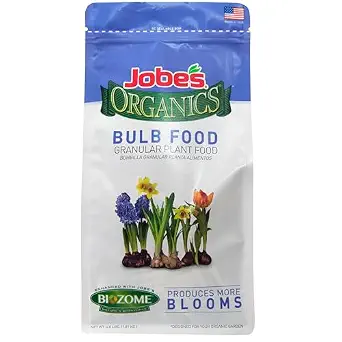 |
| Best Value The sweet spot between price and what you get | TPS Nutrients Tulip Bulb Fertilizer, Liquid Plant Food, 32 oz |  |
| Best Budget The cheapest option that still gets the job done reliably | TPS NUTRIENTS Tulip Bulb Fertilizer Liquid Plant Food, 8 oz |  |
| Highest Rated A top-rated pick with lots of positive feedback | Espoma Bulb-Tone Organic Fertilizer 3-5-3, 4 lb | |
| Most Popular A crowd favorite that many people choose with confidence | Espoma Bulb-Tone Organic Fertilizer (3-5-3), 4 lb. bag (Pack of 2) |  |
Espoma Bulb-Tone Organic Fertilizer (3-5-3), 4 lb

| Item Form | Granules |
|---|---|
| Specific Uses For Product | Gardening, Organic, Plant Food |
| Coverage | Medium |
| Target Species | Bulbs |
| Mixing Ratio | 3:5:3 |
Espoma Bulb-Tone is an easy-to-use granular organic fertilizer designed for planting and feeding bulb crops. You apply it directly in the planting hole for new bulbs or sprinkle on the soil surface for established plants and water it in. Its 3-5-3 analysis supplies a higher middle number that supports flowering and bulb development while added calcium and Espoma’s Bio-tone microbes help soil health. Because it comes in granules and is ready to use, it is convenient for small-scale vegetable beds of onions or garlic where you want a gentler, organic feed rather than a quick synthetic boost. The product is approved for organic gardening and contains no fillers. Limitations are that its NPK is formulated for flowering bulbs, not high-nitrogen leafy growth, so it will not drive rapid top growth the way a fertilizer higher in nitrogen would; also a 4 lb bag covers a moderate area so heavier feeders or larger beds may require additional product or repeat applications.
Best for: Buyers who want an organic, low-fuss fertilizer for small onion or garlic beds and prefer soil-friendly inputs over fast-acting synthetic feeds.
Less Ideal for: Growers who need rapid, high-nitrogen feeding for large-scale leafy production or who manage extensive beds where larger quantity or concentrated nitrogen is required.
- Organic formulation approved for organic gardening
- 3-5-3 formula that supports bulb development and flowering
- Ready-to-use granules that are easy to apply in planting holes or as a top dressing
- Contains calcium and beneficial microbes to improve soil health
- NPK balance favors flowering bulbs so it provides less quick nitrogen for fast leafy growth
- 4 lb bag provides medium coverage and may be small for larger vegetable beds
Verdict: A compact organic granular fertilizer that gives bulb crops like onions and garlic a soil-friendly feed to support bulb formation without synthetic inputs.
Jobe's Organics Granular Bulb Fertilizer, 4 lb

| Item Form | Granules |
|---|---|
| Specific Uses For Product | Plant Growth, Root Development, Seed Development, Soil Conditioning |
| Target Species | bulbs, flowers |
| Mixing Ratio | 3-5-4 |
Jobe's Organics Granular Bulb Fertilizer is an OMRI-listed, pet- and kid-friendly granular formula designed to feed tulips and other spring bulbs through bloom. It uses a 3-5-4 NPK ratio aimed at supporting flowering and root development and is applied every 3 to 5 weeks during the growing season. In practice the granules are easy to measure and sprinkle into bulb beds or mixed into the planting hole, and because it is organic it reduces the risk of burning delicate bulbs when used as directed. The product is versatile for both new plantings and established beds and is intended to minimize runoff and mess compared with liquids. Limitations to know are that granular organics release nutrients more slowly than soluble feeds, so you should expect gradual results rather than an immediate boost, and regular reapplication is required during bloom. For growers seeking steady, low-risk feeding tailored to bulb flowering, this delivers practical, reliable nutrition.
Best for: Gardeners who prioritize steady, low-risk feeding for tulips and other bulb flowers and want an organic product that protects delicate bulbs while supporting bloom production.
Less Ideal for: Growers who need an immediate, dramatic bloom response or who prefer quick-release, water-soluble feeds for rapid correction of nutrient deficiencies.
- OMRI listed organic formula suitable for certified organic production
- 3-5-4 NPK ratio formulated to promote blooms and root development
- Granular form is easy to measure and apply to beds or planting holes
- Labeled safe for use around children and pets when used as directed
- Slower nutrient release than water-soluble fertilizers, so effects are gradual
- Requires repeated applications every 3–5 weeks during the season for best results
Verdict: Choose this product if you want a reliable organic granular fertilizer that steadily promotes bulbs' blooms and root health without risking burn.
TPS Nutrients Tulip Bulb Fertilizer, Liquid Plant Food, 32 oz

| Item Form | Liquid |
|---|---|
| Specific Uses For Product | Tulip Bulbs, Bulb Plants, Ornamental Bulbs |
| Target Species | Tulips |
| Unit Count | 32 Fluid Ounces |
This 32 oz liquid tulip bulb fertilizer is made to support bulb rooting and encourage stronger stems and fuller spring blooms. You dilute and apply it according to the label during planting in fall and again in early spring to feed developing bulbs without overstimulating foliage growth. The formula is presented as balanced for bulb plants, so it targets the needs of tulips and other ornamental bulbs rather than general garden feeding. Practical benefits include easy measuring and mixing of a liquid concentrate and a single product that covers both planting and pre-bloom feeding windows. Limitations are that specific nutrient analysis is not listed on the product page, so gardeners used to exact N-P-K ratios may want that detail; it is also focused on bulbs only and not intended as an all-purpose fertilizer for vegetables or shrubs. If you follow the package directions the product should integrate cleanly into a seasonal bulb care routine but expect to combine it with good planting depth and site selection for best results.
Best for: Gardeners who prioritize reliable bulb performance and want a simple, season-focused feeding plan for tulips and other ornamental bulbs.
Less Ideal for: People seeking precise nutrient formulations or a single fertilizer to feed vegetables, trees, or broad garden beds.
- Formulated specifically for tulips and ornamental bulb plants
- Liquid concentrate is easy to measure and mix for seasonal applications
- Recommended for both fall planting and early spring pre-bloom feeding
- Made in USA and presented with clear usage directions
- No explicit N-P-K or full nutrient breakdown shown on the listing
- Not suitable as a general-purpose fertilizer for non-bulb plantings
Verdict: Use this liquid bulb fertilizer if you want a simple, season-targeted feed to improve rooting and bloom size in tulips.
TPS NUTRIENTS Tulip Bulb Fertilizer Liquid Plant Food, 8 oz

| Item Form | Liquid |
|---|---|
| Coverage | Tulip bulbs |
| Target Species | Tulips |
| Unit Count | 8 Fluid Ounces |
This 8 oz liquid bulb fertilizer from TPS Nutrients is made for feeding tulips at planting and in early spring to encourage stronger roots, sturdier stems, and better blooms. It is applied as a diluted liquid feed that targets bulbs rather than general garden plantings, so you can treat newly planted bulbs or give a pre-bloom boost without overfeeding foliage. Notable features include a bulb-focused formulation and guidance for fall and early spring use, which makes timing straightforward for seasonal bulb care. For gardeners on a budget the small bottle is easy to store and simple to measure so you do not waste product when treating small beds or containers. The main limitation is the modest 8 oz volume, which means frequent purchases or multiple bottles are needed for larger plots, and there is no multi-plant coverage listed so you will need a different product for mixed flower beds. If you want a tulip-specific, easy-to-use liquid feed for targeted seasonal treatments this product delivers practical, focused nutrition.
Best for: Budget-minded gardeners who plant tulips in small beds or containers and want a simple, bulb-specific feed for planting and pre-bloom care.
Less Ideal for: Large-scale gardeners or those who need an all-purpose fertilizer for mixed flower beds should choose a higher-volume or multi-plant product instead.
- Formulated specifically for tulip bulbs to support rooting and bloom development
- Liquid form is easy to dilute and apply precisely to bulbs and small plantings
- Clear seasonal guidance for fall planting and early spring feeding
- Compact 8 oz bottle reduces waste for small gardens and container growers
- Small volume may require multiple purchases for larger gardens
Verdict: A practical, easy-to-use liquid feed for budget-conscious gardeners who need targeted seasonal nutrition for tulips.
Espoma Bulb-Tone Organic Fertilizer 3-5-3, 4 lb
| Item Form | Granules |
|---|---|
| Specific Uses For Product | Gardening,Organic,Plant Food |
| Coverage | Medium |
| Target Species | bulbs |
| Mixing Ratio | 3:5:3 |
Espoma Bulb-Tone is an organic granular fertilizer designed primarily for planting and feeding spring and fall bulbs, but it can be applied to other allium crops like onions when a balanced, natural boost is desired. It is ready to use out of the bag and recommended for placing in the planting hole for new bulbs or sprinkling on the soil surface for established plants then watering in. Notable features include its 3-5-3 NPK ratio, inclusion of calcium, and Espoma's Bio-tone formula made from organic ingredients approved for organic gardening. In practice this product provides steady nutrient release and helps support root development and flowering; for onions that translates to healthier sets and improved bulb formation when applied at planting and during early growth. Limitations are that it is formulated for bulbs rather than specifically for vegetable onions, so growers seeking higher nitrogen for heavier foliage or a slow-release formulation tailored to vegetable production may want a fertilizer made for vegetables. For gardeners who prioritize natural inputs and predictable, gentle feeding, Bulb-Tone is a dependable choice.
Best for: Gardeners who prefer organic, reliable products and want a gentle, easy-to-apply fertilizer to support bulb and bulb-like crops during planting and early growth.
Less Ideal for: Growers who need a vegetable-specific fertilizer with higher nitrogen or a targeted slow-release program for commercial onion production.
- Organic formula approved for organic gardening
- Ready-to-use granular form that can be placed at planting or sprinkled on soil
- Balanced 3-5-3 NPK with added calcium to support root and bulb development
- Produces steady, gentle nutrient release suitable for sensitive bulb roots
- Formulated for ornamental bulbs rather than specifically for vegetable onions
- Not a high-nitrogen feed if you want vigorous foliage growth
Verdict: Choose Bulb-Tone when you want an organic, ready-to-use granular fertilizer that reliably supports bulb and bulb-like crops with balanced nutrients.
Espoma Bulb-Tone Organic Fertilizer (3-5-3), 4 lb. bag (Pack of 2)

| Item Form | Powder |
|---|---|
| Specific Uses For Product | Plant Food |
| Coverage | 60 Sq. Ft. |
| Target Species | Fall and spring flowering bulbs |
| Mixing Ratio | 3-5-3 |
Espoma Bulb-Tone is an organic bulb fertilizer designed to feed spring and fall bulbs and encourage strong blooms. It is applied at planting by placing granules in the planting hole for new bulbs or sprinkled on the soil surface and watered in for established bulbs. The 3-5-3 formula emphasizes phosphorus for bloom development while added calcium and Espoma’s Bio-tone support root establishment and soil biology. Because it is ready to use and approved for organic gardening, it is convenient for gardeners who prefer natural inputs and do not want to mix solutions. Coverage is listed at about 60 sq ft per 4 lb bag, so larger beds will require multiple bags. It is focused on bulb flowering rather than general-purpose feeding, so gardeners needing balanced, continuous feed for foliage or non-bulb ornamentals may need a supplemental product. Overall this is a straightforward, reliable option when you want an organic, bloom-focused fertilizer for bulbs like ranunculus, tulips and daffodils.
Best for: Gardeners who prioritize consistent, organic bloom feeding for bulbs and want a low-effort product they can rely on each planting season.
Less Ideal for: People seeking a general-purpose fertilizer for foliage-heavy or non-bulb plants should consider a different balanced or slow-release formula.
- Organic formula approved for organic gardening and safe for use in ornamental beds
- Ready-to-use granular form requires no mixing and is easy to apply at planting or post-bloom
- Higher phosphorus ratio (3-5-3) and added calcium support bloom development and root health
- Coverage per bag is modest so multiple bags are needed for large beds
Verdict: Choose this for an easy, certified-organic bloom booster that reliably supports bulbs like ranunculus at planting and post-bloom.
Choosing the Right Plant Food for Tulips: Key Factors to Consider
Nutrient Ratio and Timing
Tulips respond differently to nutrients through their lifecycle. Phosphorus and potassium are important for root and bulb development and for robust flowering, while excessive nitrogen in spring can promote soft foliage at the expense of blooms. When choosing a plant food, check the N-P-K ratio and match it to the planting stage.
Apply higher-phosphorus feeds at planting or in fall to help bulbs establish, and switch to balanced or lower-nitrogen formulas as shoots emerge. Timing matters as much as the numbers: a well-timed feeding supports both this season's flowers and the bulb's energy reserves for next year.
Release Type and Frequency
Slow-release or timed-release formulations provide steady nutrition over weeks or months and reduce the chance of accidental overfeeding. Granular slow-release feeds are convenient for beds and reduce the number of garden visits, whereas soluble fertilizers deliver a quick boost and are useful when foliage or blooms need immediate help.
Consider how often you want to feed. If you prefer low-maintenance care, a single autumn or early-spring slow-release application may be best. If you enjoy hands-on feeding or have bulbs in containers, periodic liquid feeds can fine-tune bloom quality.
Application Method and Precision
How a product is applied affects both efficacy and safety. Granules are easy to sprinkle across a bed but require calibration so bulbs are not overexposed. Water-soluble feeds allow precise doses and quick uptake, which is helpful for container-grown tulips or small plots.
Think about measuring tools and how the product will be distributed around bulbs without contacting foliage directly. For bulbs planted in groups, even distribution avoids crowded nutrient pockets that can harm delicate roots.
Soil Type and pH Interaction
Soil texture and pH influence nutrient availability. In heavy clay, nutrients can bind and become less available; in sandy soils, nutrients leach more quickly. Some amendments and fertilizers can alter soil pH over time, which changes phosphorus and micronutrient uptake.
Match your feed to the soil conditions in your garden. In acidic soils, certain nutrients may be less available, so a feed formulated to maintain appropriate pH or combined with pH-correcting amendments will be more effective for bulb health.
Organic Vs Conventional Formulations
Organic plant foods release nutrients more slowly as biological activity breaks down the material. They improve long-term soil structure and microbial life, which benefits bulbs over multiple seasons. Conventional synthetic formulations can deliver specific nutrient ratios immediately and are often more concentrated.
Decide whether soil-building goals or rapid, targeted feeding is a priority. Organic options suit gardeners focused on soil health and wildlife-friendly beds, while conventional feeds offer precise control over bloom-time nutrients.
Container Versus In-Ground Use
Tulips in containers need more frequent feeding and careful watering because containers dry and leach nutrients faster than in-ground beds. Concentration and salt build-up are concerns in pots, so water-soluble feeds at lower concentrations or slow-release granules designed for containers are preferred.
For in-ground plantings, a well-timed granular application provides season-long support, while containers benefit from lighter, more frequent doses to maintain steady growth and flowering.
When to Feed Tulips
Feed tulips at distinct points in their growth cycle rather than continuously. A pre-planting nutrient boost or a fall feeding gives newly planted bulbs the reserves they need for root development. As shoots emerge in early spring, a targeted feed can support stem strength and flower development without encouraging excessive leafy growth.
A light follow-up after bloom can help replenish nutrients the bulb used to support the flower, but avoid heavy nitrogen late in the season. In containers, follow a gentler, more frequent schedule because pot media loses nutrients faster.
- Apply at planting or in autumn for bulb establishment
- Feed again at shoot emergence in early spring
- Use a light post-bloom feed if bulbs look depleted
How Soil Testing Helps
A quick soil test removes guesswork by revealing pH and macro- and micronutrient levels. Knowing phosphorus and potassium reserves helps you choose a feed that fills the actual gaps rather than repeating nutrients that are already plentiful. Testing also flags pH issues that limit phosphorus availability even when total P levels appear adequate.
- Use a basic home kit or send a sample to a lab
- Adjust feed choice based on phosphorus and potassium availability
- Retest every few years to track changes
Feeding Tulips in Containers and Raised Beds
Containers and raised beds change feeding needs. Media in pots drains faster and holds less organic matter, so nutrients can leach out with regular watering. Choose feeds that match the container environment: soluble formulas for quick correction and slow-release granules for steady, low-maintenance nutrition.
For raised beds, consider the soil mix and whether it contains compost or slow-release components already. Overapplication is a common mistake in confined spaces, so follow recommended rates and flush pots occasionally to avoid salt buildup.
- Use lower concentrations for container feeds
- Flush pots periodically to prevent salt buildup
- Account for existing compost in raised bed mixes
Combining Plant Food with Mulch and Amendments
Mulch and organic amendments influence how plant food behaves. Organic mulches help retain moisture and slowly release nutrients as they break down, complementing slow-release feeds. When incorporating compost into the planting hole, reduce initial fertilizer amounts to avoid nutrient excess.
Avoid applying high concentrations of fertilizer directly on top of bulbs. Instead, work granular feeds into the soil surface or apply liquid feeds to the root zone when foliage is actively taking up nutrients.
- Let compost supply starter nutrients to newly planted bulbs
- Use mulch to conserve moisture and help microbial breakdown of organics
- Apply fertilizers to soil, not directly on bulbs
Signs Your Tulips Need Feeding
Look for paler-than-normal flowers, weak stems that flop, reduced bloom size, or slow shoot growth as indicators that tulips may be lacking nutrients. Sudden yellowing can signal other issues like disease or water stress, so use visual clues alongside soil testing.
If bulbs bloomed well previously but show declining performance year to year, targeted feeding in fall and early spring can restore vigor and help bulbs rebuild energy reserves for the next season.
- Pale or small flowers indicate bloom nutrient shortage
- Floppy stems suggest insufficient support nutrients
- Year-to-year decline often responds to corrected feeding and improved bulb care
How We Chose the Best Plant Food for Tulips
We shortlisted plant foods that match the seasonal needs of tulips and are suited to common planting situations from mass displays to containers. Key evaluation criteria included nutrient profile balance, timing and release characteristics, ease of application, and compatibility with bulb health. We prioritized formulas that supply phosphorus and potassium for bloom and bulb development while avoiding excessive nitrogen at the wrong time. We also assessed practicality for home gardeners: whether a product is simple to spread, measures easily for small beds or pots, and fits organic or conventional preferences. Longevity and release type mattered because slow-release feeds reduce the risk of overfeeding and make spring care less fussy. Products that required specialist equipment or very frequent reapplication were deprioritized. Excluded items include general-purpose lawn fertilizers with high nitrogen meant for turf, and treatments focused solely on disease control rather than nutrition. The final list emphasizes feed options that support healthy roots, larger flowers, and reliable bulb storage for the next season.
FAQ
How often should I feed tulips in the ground?
Usually one feeding at planting or in autumn and a light feed at shoot emergence is sufficient. Soils with low fertility may benefit from an additional early-spring application, but avoid heavy nitrogen later in the season.
Can I use bulb food meant for other spring bulbs on tulips?
Often yes. Many bulb formulas are suitable across spring bulbs, but check the nutrient ratio to ensure it supports bloom and bulb development rather than high vegetative growth.
Are organic plant foods effective for tulips?
Organic feeds work well over the long term by improving soil structure and microbial life, but they release nutrients more slowly. For immediate bloom correction, a water-soluble feed provides faster results.
What if my tulips have weak stems and floppy flowers?
Floppy stems can result from low phosphorus or potassium, overly rich nitrogen, or poor light. Adjust feeding to favor bloom-support nutrients and ensure bulbs get full sun and firm soil support.
Should I feed tulips after they finish blooming?
A light post-bloom feed can help replenish bulb reserves, but avoid heavy nitrogen. Focus on enabling the bulb to photosynthesize and store energy, and do not remove foliage prematurely.
How do I prevent fertilizer burn in container tulips?
Use lower concentration feeds, follow label dosing for pots, and flush containers periodically to prevent salt buildup. Slow-release granules formulated for containers reduce burn risk compared with concentrated liquid doses.
Final Verdict
Focus on matching nutrient balance and timing to tulip growth stages. Prioritize phosphorus and potassium at planting and during bloom, choose a release type that fits your maintenance rhythm, and adjust application method for containers versus in-ground beds. Tradeoffs exist between quick correction and long-term soil building; pick the approach that suits your schedule and bed type. With attention to timing, feed type, and soil conditions, you can encourage bigger blooms and healthier bulbs year after year.
