

Note: This article contains affiliate links. If you click on these links and make a purchase, I may earn a small commission at no extra cost to you. This helps support my research and content. Read my full affiliate disclosure here.
Snake plants are forgiving houseplants, but they still benefit from feeding that matches their slow growth and drought-tolerant habits. The right plant food for snake plant provides the nutrients they need without encouraging overly fast, floppy growth or causing root stress from overfertilization. This guide shortlists seven top options that suit low-light, indoor conditions and different gardener preferences. We evaluated formulas, application methods, and consumption rates so you can pick a feeding approach that fits your watering routine and potting soil. Below are our top picks and the practical reasons each type might work better for your setup.
Top Picks at a Glance
| Best Overall The best all-around choice for most situations | Miracle-Gro Indoor Plant Food for Tropicals, 8 fl. oz. (2-Pack) |  |
| Best Quality Built to a higher standard if you want something more solid | Gardenera 3-1-2 Liquid Concentrate Fertilizer for Snake Plants (8 oz) |  |
| Best Value The sweet spot between price and what you get | HiThrive Liquid Fertilizer for Snake Plants, 16 oz |  |
| Best Budget The cheapest option that still gets the job done reliably | Farmer's Secret Snake Plant Liquid Plant Food, 8 fl oz |  |
| Highest Rated A top-rated pick with lots of positive feedback | FOLLOWIN Snake Plant Liquid Fertilizer, 3-1-2 NPK, 21 fl oz |  |
| Most Popular A crowd favorite that many people choose with confidence | Perfect Plants Snake Plant Liquid Fertilizer, 8 oz |  |
| Best Seller A high-volume bestseller chosen again and again | Miracle-Gro Indoor Plant Food, Liquid, 8 oz. (2-Pack) |  |
Miracle-Gro Indoor Plant Food for Tropicals, 8 fl. oz. (2-Pack)

| Item Form | Liquid |
|---|---|
| Application Method | Directly to soil or mixed with water |
| Target Species | Tropical Plants |
| Mixing Ratio | 4 pumps:1 quart of water |
| Unit Count | 16 Fluid Ounces (per bottle) |
This liquid formula is designed to feed tropical indoor plants and is useful for houseplants that benefit from regular, low‑volume nutrition. It can be applied directly to potting soil using the built‑in pump or diluted at a ratio of 4 pumps per quart of water for routine watering, with reapplication every two weeks. The potassium‑focused formulation aims to promote lush green foliage, which matters for many broadleaf tropicals. Practical benefits include an easy pump dispenser for small pots, two bottles in the bundle for longer supply, and clear mixing guidance so dosing is straightforward. Limitations to consider: the product is formulated for general tropical houseplants rather than a specialist crop, and coverage is described as low so frequent dosing or multiple bottles may be needed for larger collections. If you prefer granular slow‑release nutrition or a fertilizer tailored to a very specific species, this liquid feed may not match those needs.
Best for: Indoor plant owners who want a simple, pump‑dispensed liquid fertilizer to maintain lush foliage on common tropical houseplants and who value straightforward dosing and social proof from other buyers.
Less Ideal for: Collectors seeking a slow‑release granular fertilizer, a formula customized for specialist epiphytes, or growers who want concentrated coverage for large collections.
- Designed specifically for tropical indoor plants with a potassium‑focused formula to support foliage
- Built‑in pump and clear 4 pumps per quart mixing ratio for easy, repeatable dosing
- Comes as a two‑bottle bundle so you have spare supply for ongoing feeding
- Liquid form delivers nutrients immediately when applied to soil
- Not species‑specific so it is a general tropical formula rather than tailored to unusual plants
- Labeled coverage is low, meaning frequent applications or additional product may be required for many plants
Verdict: A convenient, pump‑dispensed liquid fertilizer that makes biweekly feeding of common tropical houseplants quick and reliable.
Gardenera 3-1-2 Liquid Concentrate Fertilizer for Snake Plants (8 oz)

| Item Form | Liquid |
|---|---|
| Specific Uses For Product | Plant Growth, Root Development |
| Target Species | Snake |
| Mixing Ratio | 1:128 |
| Unit Count | 8 Fluid Ounces |
Gardenera's 3-1-2 liquid concentrate is designed for routine root-zone feeding of indoor snake plants. Mix one teaspoon per gallon of water and use the diluted solution in place of a regular watering on the schedule recommended on the label. The mild nitrogen-led NPK helps steady green growth while phosphorus and potassium support root development and overall vigor. The product is sold in an 8 fl oz concentrate, so a small bottle provides many feedings for a shelf of plants. Its plant-specific labeling simplifies matching the formula to snake plants without guesswork. Important practical points: it is not a foliar spray so benefits come through the potting mix rather than leaf misting, and the directions call for alternate-watering application rather than daily use. Safety guidance recommends keeping it away from children and pets and using gloves or eye protection when handling concentrate. For growers who want a simple, measured way to boost growth and root strength in sansevieria, this concentrate is straightforward to use and economical per serving.
Best for: Buyers who want a low-effort, measured feeding routine for indoor snake plants and prefer root-zone nutrition applied with regular watering.
Less Ideal for: People who primarily want foliar sprays or instantaneous leaf treatments or who prefer certified organic products labeled as organic for all ingredients.
- Concentrated formula gives many feedings from an 8 fl oz bottle
- Plant-labeled formula simplifies dosing for snake plants
- Gentle 3-1-2 NPK ratio supports steady foliage growth and root development
- Root-zone application mixes with watering can for even distribution through potting mix
- Not intended for foliar feeding so no immediate leaf shine or spray benefits
- Contains concentrated nutrients that require careful measuring and protective handling
Verdict: A compact, plant-labeled 3-1-2 concentrate that makes measured, root-zone feeding for sansevieria simple and economical.
HiThrive Liquid Fertilizer for Snake Plants, 16 oz

| Item Form | Liquid |
|---|---|
| Specific Uses For Product | Plant Growth |
| Coverage | Snake Plants (Indoor & Outdoor) |
| Mixing Ratio | 1 teaspoon per gallon of water |
HiThrive’s 16 oz liquid formula is designed to provide balanced macro and micronutrients for snake plants both indoors and outdoors. You mix 1 teaspoon per gallon of water and apply with normal watering, which makes the bottle stretch to about 96 gallons of feed. The formula emphasizes nitrogen for leaf growth, phosphorus for root strength, and potassium for stress resistance, plus trace elements like iron and calcium to help correct yellowing and nutrient deficiencies. Because it is a liquid concentrate it is easy to dose and works with top-watering or bottom-watering routines. Practical growers will appreciate the concentrated mix that reduces how often you need to buy fertilizer and the clear mixing instructions. Note that the product requires careful dosing and standard precautions when handling concentrated fertilizer, and using it with already-saturated soils or overwatering practices common to beginners could harm plants.
Best for: Buyers who want a no-frills, concentrated feed to keep snake plants healthy and who routinely monitor soil moisture and watering schedules.
Less Ideal for: Beginners who prefer pre-diluted or slow-release granular fertilizers or those who struggle to avoid overwatering should consider gentler alternatives.
- Concentrated formula yields about 96 gallons from a 16 oz bottle
- Balanced NPK focus for foliage growth, root development, and stress resistance
- Includes micronutrients (iron, calcium, magnesium, trace metals) to address deficiencies
- Simple mixing ratio that works with top or bottom watering methods
- Contains concentrated chemicals that require protective handling and careful dosing
- Directions recommend applying with every watering which could encourage overfeeding if soil moisture is not monitored
Verdict: A concentrated, easy-to-use liquid fertilizer that stretches far and provides targeted nutrition to keep snake plants vigorous and correct common nutrient deficiencies.
Farmer's Secret Snake Plant Liquid Plant Food, 8 fl oz

| Item Form | Liquid |
|---|---|
| Specific Uses For Product | Plant Food |
| Application Method | dilute into watering routine |
| Target Species | Snake |
| Mixing Ratio | 1:4 (younger plants), (mature plants) |
This concentrated liquid plant food is formulated specifically for snake plants to encourage stronger roots and steady growth. It is used by diluting a small measured amount into water and adding it to your weekly watering routine, with a mixing guideline for younger and mature plants. The formula contains the basic NPK nutrients plus micronutrients and is presented in an 8 ounce bottle so a little goes a long way. Practical benefits include easy measuring, weekly feedings that fit into typical houseplant care, and targeted support for root development that can improve plant vigor over time. Limitations are that the label gives general dilution instructions rather than a full nutrient analysis, so advanced growers wanting exact NPK ratios or custom feeding schedules may find the information minimal. Also this bottle size is compact and very concentrated, which is economical but means you will need to measure carefully to avoid overfeeding.
Best for: A budget-minded houseplant owner who wants an inexpensive, easy-to-use fertilizer tailored to Sansevieria and prefers simple weekly feedings over detailed nutrient management.
Less Ideal for: Experienced hobbyists who need exact NPK values or custom feeding regimens for aggressive fertilization schedules should consider products with full nutrient breakdowns.
- Designed specifically for snake plants with dilution instructions for young and mature specimens
- Highly concentrated formula so small doses treat many feedings
- Simple application that integrates into a weekly watering routine
- Includes macro and micronutrients aimed at promoting root strength
- No explicit NPK ratio listed on the product page for precise nutrient planning
- Small 8 fl oz bottle requires careful measuring to avoid overapplication
Verdict: A concentrated, easy weekly feed that gives budget-conscious snake plant owners targeted root and growth support with minimal fuss.
FOLLOWIN Snake Plant Liquid Fertilizer, 3-1-2 NPK, 21 fl oz

| Item Form | Liquid |
|---|---|
| Specific Uses For Product | Plant Growth, Root Development |
| Target Species | Snake Plant, Sansevieria |
| Liquid Volume | 21 fluid ounces |
| Mixing Ratio | 1:100-1:300 |
This is a gentle, purpose-made liquid fertilizer for snake plants that aims to support steady leaf growth and stronger rhizomes without risking burn from overfeeding. You mix a measured capful with water (mixing ratio provided) and apply it during watering, typically every other watering or every 4 to 6 weeks in the growing season. Notable features include a 3-1-2 NPK balance that prioritizes leaf development and root health, chelated nutrients for faster uptake, and a graduated cap built into the bottle for accurate dosing. In practice it is easy to integrate into routine care for potted snake plants in low-light indoor spots where slow growth is common. The formula includes micronutrients and common trace elements to help maintain variegation and overall vigor. Limitations are that it is single-purpose for sansevieria rather than a general houseplant feed and users must follow dilution instructions carefully to avoid overapplication.
Best for: Buyers who prioritize a reliable, plant-specific feeding routine for potted snake plants and want an easy-to-measure liquid feed that integrates into regular watering.
Less Ideal for: Gardeners seeking a multi-purpose houseplant fertilizer or a dry/slow-release product should look elsewhere.
- 3-1-2 NPK ratio targets balanced leaf growth and root development for snake plants
- Chelated liquid formula dissolves quickly for efficient nutrient uptake with minimal residue
- Graduated cap provides built-in measuring for consistent, easy dilution
- Includes micronutrients to support leaf variegation and overall plant vitality
- Designed specifically for snake plants so it may not be ideal for other houseplant types
- Requires careful dilution and scheduling to avoid over-fertilization
Verdict: If you want a straightforward, reliably dosed liquid feed tailored to snake plants, this concentrated 3-1-2 formula makes regular feeding simple and safe.
Perfect Plants Snake Plant Liquid Fertilizer, 8 oz

| Item Form | Liquid |
|---|---|
| Application Method | Water |
| Specific Uses For Product | Plant Food |
| Target Species | Snake |
| Unit Count | 8 Fluid Ounces |
This is a concentrated liquid fertilizer made specifically for snake plants (Sansevieria). It contains a 9-3-6 NPK blend plus calcium, magnesium, sulfur and several micronutrients, and is diluted at one teaspoon per gallon so a single 8 oz bottle covers many feedings. You apply it in place of a regular watering once a month during active spring and summer growth, which keeps feeding simple and reduces the chance of overfertilizing. The resealable cap makes storage straightforward between uses and the liquid form mixes easily into water for even distribution. Because it is targeted to snake plants, it supports deeper leaf color and new growth on common varieties without needing specialty mixing or equipment. Limitations are that it is designed for monthly use only during the growing season and the bottle is relatively small, so heavy collections or larger containers will need more frequent repurchasing. If you prefer granular slow-release formulas or year-round feeding schedules, this product may require adjusting your routine.
Best for: Buyers who want a simple, low-risk feeding routine for one or a few snake plants and prefer a product tailored to Sansevieria rather than a general houseplant fertilizer.
Less Ideal for: Collectors with many large containers or gardeners who prefer granular slow-release fertilizer or automated year-round feeding systems should consider alternatives.
- Formulated specifically for snake plants with 9-3-6 NPK and added micronutrients
- Concentrated liquid mixes easily at 1 teaspoon per gallon for simple dosing
- Resealable 8 oz bottle stores neatly between monthly feedings
- Single watering application replaces a regular watering, reducing fuss
- Small bottle size means frequent replacement for owners with many or large plants
- Intended for seasonal monthly feeding so not suited for year-round automatic feeding schedules
Verdict: A straightforward concentrated liquid fertilizer designed to give snake plants noticeable color and growth with one easy monthly feeding.
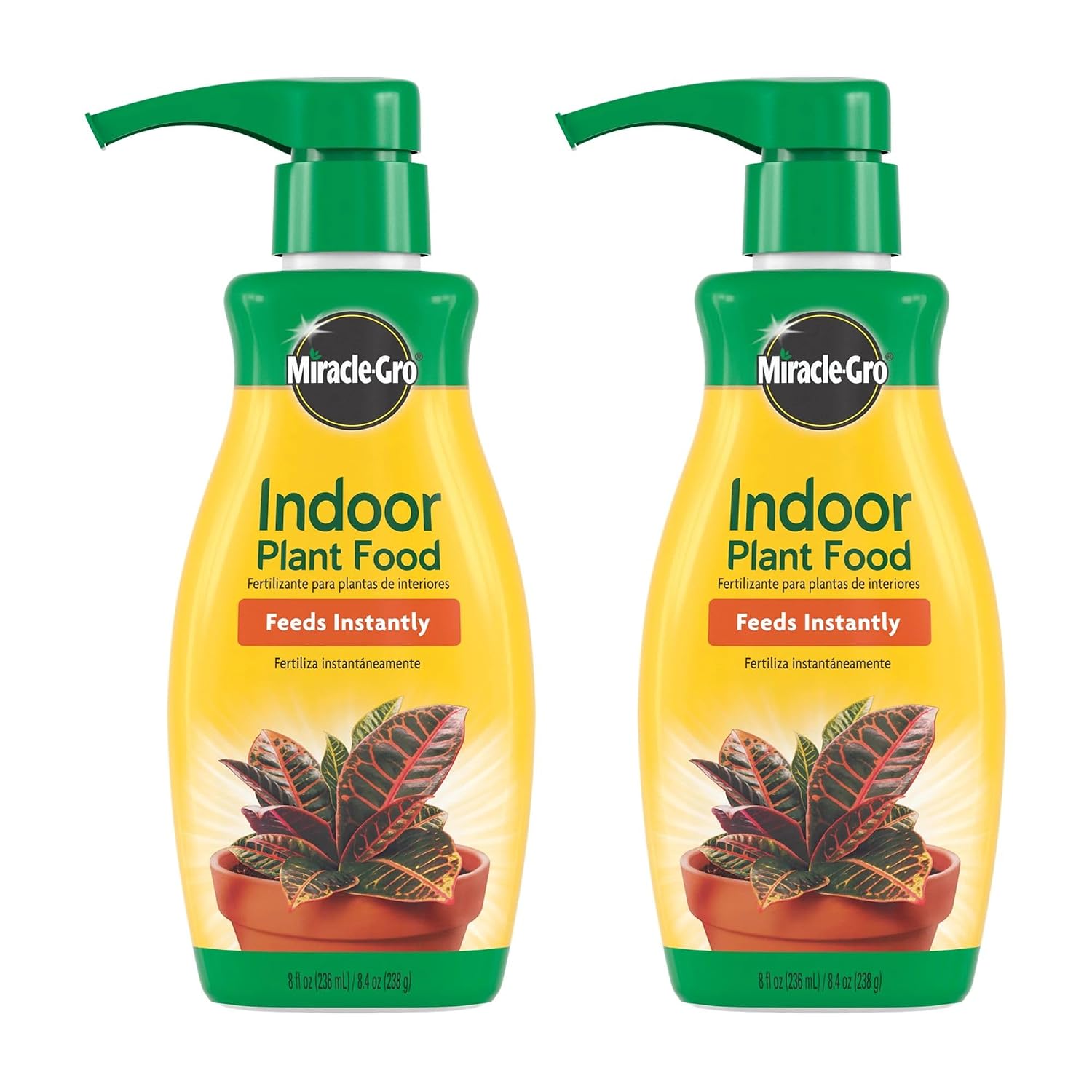
Miracle-Gro Indoor Plant Food, Liquid, 8 oz. (2-Pack)
| Item Form | Liquid |
|---|---|
| Application Method | Apply directly to the soil or mix with water |
| Coverage | Pot size |
| Target Species | Peace Lily, Snake Plant, Croton, Succulents, Herbs |
| Unit Count | 16 Fluid Ounces |
Miracle-Gro Indoor Plant Food is a ready-to-use liquid fertilizer designed for weekly feeding of houseplants. It is applied either by pumping directly into the potting soil (one pump for small pots, two for larger pots) or by diluting four pumps per quart of water and using as a regular watering. The formula is aimed at common indoor species such as snake plants, peace lilies, succulents, herbs and edible container vegetables, so it suits mixed collections. Practical benefits include instant nutrient availability, easy dosing with the pump bottle, and a compact two-pack that keeps a steady supply on hand. Important limitations are that it requires weekly application to see results and contains concentrated nutrients that should be kept away from children and pets and handled with care. Also, instructions assume typical indoor pot sizes so very large container gardens may need adjusted dosing. For everyday indoor gardeners wanting straightforward, frequent feeding, this product makes routine care simple and effective.
Best for: Indoor plant owners who want a simple, regular feeding routine for a mixed collection of houseplants and occasional edible containers.
Less Ideal for: People who prefer organic or slow-release granular fertilizers or those who want a low-maintenance no-fertilizer approach.
- Suitable for a wide range of common houseplants including edibles and succulents
- Easy pump-dosing or water-dilution application for quick feeding
- Comes as a two-pack to maintain a regular feeding schedule
- Liquid form delivers nutrients immediately to the root zone
- Requires weekly application to maintain benefits
- Contains concentrated chemicals that require safe handling away from children and pets
Verdict: A convenient, pump-dosed liquid fertilizer that makes weekly feeding of mixed houseplant collections quick and reliable.
Choosing the Right Plant Food for Snake Plant: Key Factors to Consider
Nutrient Ratio and Strength
Snake plants do best with a gentle, balanced nutrient supply rather than high-nitrogen formulas that push fast leaf growth. Look for moderate N-P-K numbers with a bias toward balanced or slightly higher potassium to support leaf structure and stress tolerance.
Concentration matters because indoor potted snake plants have limited root volume. Strong or frequent feeds can quickly build up soluble salts and cause tip burn. Choose a product that allows dilution to lower strengths or that is formulated specifically for houseplants.
Form and Application Method
Plant foods come as water-soluble concentrates, slow-release granules, spikes, and organic liquids. Water-soluble feeds give precise control and let you skip or cut back easily in winter. Slow-release granules reduce maintenance but may continue to feed even when the plant is dormant.
Consider how the feed fits your routine. If you water infrequently, a monthly slow-release may be convenient. If you prefer to water-feed together, a diluted liquid or soluble powder that mixes into each watering will be easier to manage.
Release Profile and Longevity
Release profile determines how often you need to reapply. Snake plants are slow growers so long-duration products are often best. A slow-release granule designed for several months can prevent overfeeding, while a low-concentration liquid used seasonally gives more control but requires a feeding schedule.
Factor in your light level. Plants in lower light use nutrients more slowly, so shorter-release products or high-strength feeds can lead to buildup. Choose duration that matches your plant's growth rate.
Solubility, Measurement, and Dosing Accuracy
Clear instructions and easy solubility reduce dosing mistakes that harm snake plants. Powders and concentrates that dissolve without residue let you measure small doses reliably. Products that require complex dilution ratios increase the chance of overdose.
Also check whether the feed needs agitation, warm water, or a specific pH to dissolve. Simple, well-documented mixes are better for busy indoor gardeners and reduce the risk of root damage from undissolved granules.
Compatibility With Potting Mix and Water Quality
Different potting mixes and household water can affect nutrient availability. Mixes high in organic matter bind nutrients differently than inert mixes, so choose a feed that works with your soil's retention. Hard water and alkaline tap water can cause certain micronutrients to precipitate.
If you use reverse osmosis or very soft water, you may need a formula that supplies more calcium and magnesium. Conversely, if your tap water is hard, select products low in additional minerals to avoid salt buildup.
Organic Vs Synthetic Options
Organic feeds release nutrients as microbes break down material and tend to be gentler and slower-acting, which matches snake plants' conservative growth. Synthetic, water-soluble feeds give faster correction of deficiencies and easier control of N-P-K ratios.
Decide based on your growing philosophy and whether you prefer predictable, measurable dosing or a low-maintenance, soil-health-focused approach. Both can work well when applied at appropriate strengths.
Feeding Schedule For Indoor Snake Plants
Adjust feeding frequency to light and season. In active growth months with brighter indoor light, a diluted liquid feed every 4 to 6 weeks is often enough. In low-light winter months pause or cut feedings to one application every 8 to 12 weeks to avoid salt buildup and unnecessary new growth.
If you use slow-release granules, apply them sparingly and follow the labeled duration. Because snake plants grow slowly, a single application designed for three to six months can be sufficient for many indoor setups.
- Bright, warm spots: feed more often but at lower concentration.
- Low light: reduce frequency and strength.
- Repotted plants: hold off feeding for 4 to 6 weeks if fresh potting mix contains starter fertilizer.
How To Spot Overfeeding And Nutrient Issues
Symptoms of overfeeding include brown leaf tips, sticky residue on the soil surface, and slowed growth despite regular feeding. Flush the potting mix with plain water if you suspect salt buildup and reduce future feed strength.
Underfeeding commonly shows as slow, pale new growth or stunted leaves. A balanced, dilute feed will usually correct mild deficiencies over a few applications, while persistent discoloration may indicate pH or root problems.
- Flush soil with several volumes of water to remove excess salts.
- Check roots for rot if leaves yellow and feel soft.
- Adjust pH and water type if micronutrient deficiencies persist.
Mixing And Applying Liquid Feeds Safely
Always measure and mix according to label instructions, then consider halving the suggested strength for snake plants to reduce risk. Use a clean container and dissolve fully before watering the potting mix. Apply to moist soil rather than bone-dry to help distribute nutrients evenly.
Avoid pouring concentrated solution directly on the crown or leaves. Water the soil surface gently and allow the feed to soak through; discard any runoff to prevent accumulation in saucers.
- Mix in a separate jug, then pour evenly around the pot.
- Wipe excess solution from leaves to prevent spotting.
- Record feeding dates to avoid accidental double doses.
Pot Size, Root Volume, And Dose Adjustment
Smaller pots and compact root systems need less fertilizer per application. Scale down doses proportionally instead of following a one-size-fits-all feeding rate. Overdosing in small pots is a frequent cause of tip burn and root stress.
When repotting into a larger container, ramp up feeding gradually as the plant resumes active root growth. New potting mixes may have starter nutrients, so wait before applying full-strength feeds.
- Use half-dose for pots under 4 inches in diameter.
- When upsizing pots, feed lightly after 4 to 6 weeks if needed.
Integrating Fertilizer With Watering And Light Management
Fertilizer effectiveness depends on light-driven growth rates. If you increase light, expect the plant to use nutrients faster and adjust feeding accordingly. Conversely, if you move the plant to dimmer conditions, cut back feeding.
Coordinate feeding with normal watering so you do not over-saturate the root zone. Err on the side of lighter, more frequent dilute feeds rather than occasional heavy doses for best control.
- Match feed frequency to light intensity and watering schedule.
- Avoid fertilizing immediately after a heavy soak; wait until the soil has drained and settled.
How We Chose the Best Plant Food for Snake Plant
We focused on factors that matter for snake plants rather than broad ornamental criteria. Key evaluation points included nutrient ratio and form, because snake plants prefer milder, balanced feeding that avoids high nitrogen spikes. We also considered application method and concentration so indoor growers can feed accurately without root burn. Release profile and longevity were tested conceptually to favor products that reduce feeding frequency in low-light conditions. Solubility and ease of measurement were assessed to help gardeners avoid dosing errors. Finally, compatibility with common indoor potting mixes and pH stability were included to prevent nutrient lockout. We excluded products intended only for heavy-feeding annuals, lawn fertilizers, and formulations with very high water-soluble nitrogen that encourage weak, rapid growth. Items that require specialized equipment or greenhouse-scale use were not considered. The final shortlist balances nutrient science, practical application, and the slow-growing habit of snake plants.
FAQ
How often should I fertilize a snake plant indoors?
Often once every 4 to 8 weeks during the growing season is enough. In lower light or winter, reduce frequency to every 8 to 12 weeks or pause feeding entirely.
Can I use indoor houseplant fertilizer at full strength?
Usually not. Snake plants prefer weaker solutions. Start at half the recommended strength and adjust if the plant shows healthy, steady growth without tip burn.
Are organic plant foods better for snake plants?
Organic feeds are gentler and release nutrients slowly, which suits snake plants. Synthetic, water-soluble feeds offer more precise control and faster correction of deficiencies, so choose based on your routine and preference.
What should I do if my snake plant shows brown leaf tips after feeding?
Brown tips often indicate salt buildup from overfeeding. Flush the potting mix thoroughly with plain water, reduce future feed strength, and avoid leaving water in the saucer.
Is slow-release fertilizer safe for snake plants in small pots?
It can be, but use low-dose products designed for container plants because slow-release granules continue supplying nutrients even in low-growth periods. Pick formulations with moderate release duration for small pots.
Should I change feeding if I water with hard or soft water?
Yes. Hard water can contribute additional minerals and salt buildup, so reduce feed strength or choose a formula lower in added calcium and magnesium. If you use very soft or filtered water, ensure your feed supplies essential minerals.
Final Verdict
Prioritize gentle, balanced feeding and a regimen that matches your snake plant's light and potting conditions. For most indoor growers that means lower-strength liquid feeds on an infrequent schedule or a mild slow-release product applied sparingly. Watch for signs of salt buildup or nutrient deficiency and adjust strength, frequency, or feed type accordingly. Choosing the right plant food for snake plant comes down to controlling concentration and aligning release profile with the plant's slow growth. Pick the approach that fits your watering habit and light level, and you will keep leaves firm, upright, and healthy with minimal fuss.
