

Note: This article contains affiliate links. If you click on these links and make a purchase, I may earn a small commission at no extra cost to you. This helps support my research and content. Read my full affiliate disclosure here.
If you grow seedlings or container plants you want containers that protect roots now and disappear without a mess later. The right biodegradable plant pot supports early root structure, drains and wicks moisture appropriately, and breaks down in soil without leaving toxic residues. This guide covers seven shortlisted biodegradable plant pots suited to garden beds, containers, and small-space patios. We tested for material breakdown behavior, root performance, and handling during transplanting, and we explain the criteria gardeners need to prioritize when picking a pot for nursery starts, herbs, or annuals.
Top Picks at a Glance
| Best Overall The best all-around choice for most situations | JNYONG 60-Pack 3.15" Peat Seedling Pots (Biodegradable) |  |
| Best Quality Built to a higher standard if you want something more solid | PlantBest 3 Inch Coconut Coir Biodegradable Starter Pots, 22-Pack |  |
| Best Value The sweet spot between price and what you get | DJGINRO 150-Pack 3.15" Biodegradable Peat Seedling Pots (with labels & tools) |  |
| Best Budget The cheapest option that still gets the job done reliably | Jiffy 3" Biodegradable Peat Seedling Pots, 22-Pack |  |
| Highest Rated A top-rated pick with lots of positive feedback | BIGIVACA 60-Piece Biodegradable Square Peat Pots (3.1 in) |  |
| Most Popular A crowd favorite that many people choose with confidence | Daniel's Plants 4" Natural Biodegradable Seed Starter Pots, 30-Pack |  |
| Best Seller A high-volume bestseller chosen again and again | Dalzom 60-Pack 3.1" Biodegradable Peat Seedling Pots with 60 Plant Labels |  |
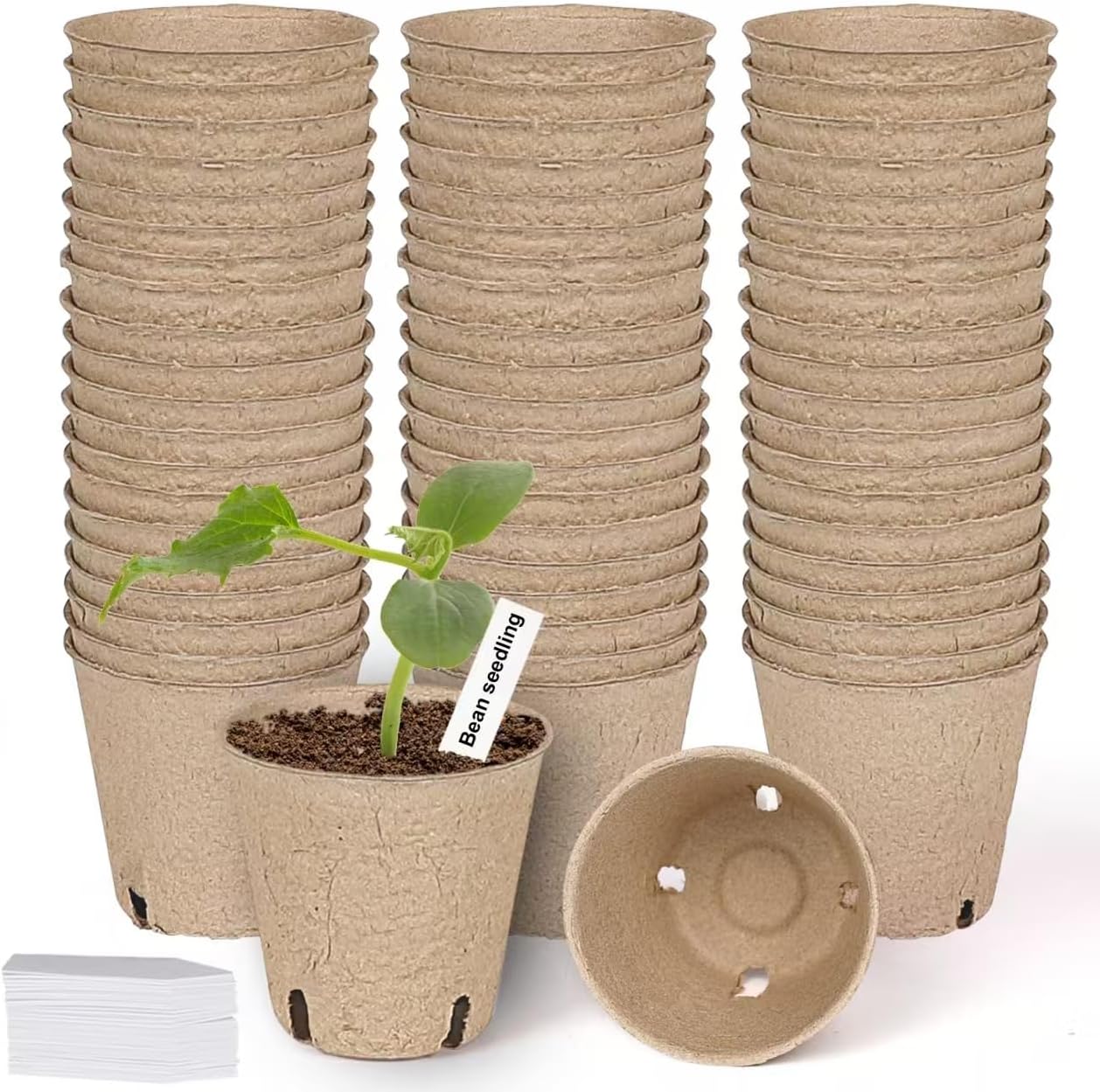
JNYONG 60-Pack 3.15" Peat Seedling Pots (Biodegradable)
| Material Type | Peat |
|---|---|
| Unit Count | 60 Count |
| Capacity | 401.92 ml |
| Other Special Features of the Product | Biodegradable, Drainage Hole |
| Indoor Outdoor Usage | Outdoor |
These JNYONG peat pots are small biodegradable starter containers intended for sowing seeds and growing seedlings that can be planted directly into the ground. Each pack contains 60 round peat pots about 3.15 inches across with four drainage holes to help prevent waterlogging and promote root aeration. Because they are made from peat and recycled pulp fibers the pots soften and break down in soil so you can transplant seedlings without disturbing roots or removing the container. That makes them useful for vegetables, herbs, flowers and small ornamentals started indoors or in a greenhouse before moving outdoors. Practical benefits include included plant labels and simple, single-use convenience for quick propagation. Limitations are their short-term durability when handled wet and the single-size option in this listing, so they are best for small seedlings rather than larger transplants or repeated reuse.
Best for: Gardeners who want a low-fuss, eco-friendly way to start seeds and transplant directly into beds or containers, and who prioritize convenience and reduced transplant shock.
Less Ideal for: Growers who need reusable pots, larger container sizes, or longer-term pot durability for bigger seedlings should choose plastic or larger nursery pots instead.
- Biodegradable peat construction allows direct planting with minimal root disturbance
- Four drainage holes help prevent waterlogging and improve aeration
- Pack of 60 provides enough pots for multiple seed-starting sessions
- Includes plant labels to keep seedlings organized
- Not durable for long-term reuse once saturated with water
- Only one pot size (3.15 inch) included in this pack
Verdict: Buy these if you want a convenient, eco-friendly single-use seed-starting pot that you can plant directly into soil to avoid transplant shock.
PlantBest 3 Inch Coconut Coir Biodegradable Starter Pots, 22-Pack

| Capacity | 0.44 liters |
|---|---|
| Set Name | Coconut Coir Biodegradable Pot Set (22×3.25 Inch) |
| Indoor Outdoor Usage | Outdoor |
These PlantBest coconut coir pots are small biodegradable starter containers intended for seedlings, cuttings, and propagation. Made from 100% coconut coir, the pots provide a fibrous, breathable structure that improves drainage and air circulation around young roots compared with plastic or paper pots. They are typically used in seed trays, on greenhouse benches, or individually on a patio table; when seedlings are ready you can plant the whole pot into soil where the coir breaks down and allows roots to expand. Notable features include a lightweight construction and a claimed durability of up to nine months in high-moisture greenhouse conditions, which makes them suitable for multi-week propagation cycles. Practical benefits are reduced transplant shock, easy handling during potting up, and an eco-friendlier disposal path. Limitations are their small 3-inch size, which means frequent potting up for fast-growing vegetables or large transplants, and reduced longevity in continuously wet outdoor beds compared with rigid containers.
Best for: Gardeners who prioritize plant performance and want starter pots that promote healthy root development while minimizing transplant shock during seed starting and propagation.
Less Ideal for: Those who need larger long-term containers or who prefer reusable rigid pots for continuous outdoor planting should consider alternatives.
- Made from 100% coconut coir for natural biodegradability
- Breathable, fibrous structure improves drainage and root oxygenation
- Can be planted directly into soil to minimize transplant shock
- Durable enough for extended propagation cycles in greenhouse conditions
- Small 3-inch capacity requires repotting for many vegetable or larger seedlings
- Biodegradation rate varies with soil conditions so pots may not fully break down quickly in all gardens
Verdict: Choose these coconut coir starter pots when you want an eco-friendly, performance-focused seed pot that improves root aeration and lets you plant seedlings without disturbing roots.
DJGINRO 150-Pack 3.15" Biodegradable Peat Seedling Pots (with labels & tools)

| Included Components | 150 Peat Pots, 30 Plant Labels, 2 Transplanting Tools |
|---|---|
| Material Type | Peat (recycled pulp) |
| Other Special Features of the Product | Biodegradable |
| Indoor Outdoor Usage | Indoor |
| Capacity | 0.25 quarts |
These peat pots are a straightforward, no-frills solution for starting seeds and reducing transplant shock. The 150-count pack supplies many rounds of seedlings and includes 30 plant labels plus two simple transplanting tools so you can set up trays and keep seedlings organized. Made from natural recycled peat pulp, the pots breathe and allow roots to penetrate the pot wall so you can plant the whole pot into the ground without disturbing the root ball. Built-in drainage holes help avoid overwatering during early growth and the 3.15-inch diameter gives enough room for common vegetables, herbs, and flowers to develop before moving outdoors. Because they are biodegradable, the pots break down in soil, simplifying transplanting and reducing plastic waste. Expect them to soften after prolonged wetting so handle carefully when moving very young seedlings; they are best used with gentle watering and supported by trays until planting time. These are practical for gardeners who want an eco-friendly, bulk seed-starting option and prefer easy transplanting into garden beds or larger containers.
Best for: Gardeners who prioritize practical, sustainable seed starting and want a bulk, ready-to-use option for starting many seedlings with minimal fuss.
Less Ideal for: Growers who need durable long-term containers or who require precise measurements for professional propagation should consider reusable pots or trays instead.
- Large 150-count pack suitable for multiple sowing sessions or larger projects
- Biodegradable recycled peat construction allows planting pots directly into soil
- Built-in drainage holes reduce risk of overwatering
- Includes plant labels and two transplanting tools for organized seed starting
- Peat pulp can soften and lose rigidity when saturated, requiring careful handling
- Not specified for outdoor long-term use beyond seed starting
Verdict: Buy this pack if you want an affordable, eco-friendly bulk starter pot solution that lets you plant seedlings directly in the soil to minimize transplant shock.
Jiffy 3" Biodegradable Peat Seedling Pots, 22-Pack

| Material Type | Peat |
|---|---|
| Other Special Features of the Product | Biodegradable |
| Number of Pieces | 22 |
| Indoor Outdoor Usage | Indoor, Outdoor |
| Plant or Animal Product Type | Herb |
These Jiffy 3-inch peat pots are simple, no-frills starters for gardeners who want an eco-friendly way to raise seedlings. Fill each pot with seed-starting mix, sow your seeds, and keep them on a tray or greenhouse shelf until roots fill the pot. Because the pots are made from natural peat they can be planted directly into the garden, which helps reduce transplant shock and avoids disturbing delicate roots. The 22-count gives enough pots for small vegetable, herb, or flower batches, and the tabletop-friendly shape fits standard seed trays. Expect the pots to be lightweight and to soften as they break down in soil, so handle gently when moving large or heavily watered seedlings. These are not reusable like plastic cells and will decompose over time, so they are best used for single-season seed starting. For gardeners focused on low waste and straightforward transplanting, these peat pots are a practical, budget-friendly choice.
Best for: Gardeners who want a low-cost, low-waste way to start seeds and prefer planting seedlings without removing them from containers.
Less Ideal for: Growers who need durable, reusable propagation trays or who frequently move large, established seedlings before transplanting.
- Biodegradable peat construction allows direct planting to reduce transplant shock
- Standard 3-inch size suits many vegetables, herbs, and flowers
- 22-pack provides enough pots for small to moderate seed-starting projects
- Single-use product that will not hold up for multiple seasons or heavy handling
Verdict: A simple, affordable biodegradable option for starting seedlings that you can transplant directly into the garden.
BIGIVACA 60-Piece Biodegradable Square Peat Pots (3.1 in)

| Material Type | Recycled Pulp |
|---|---|
| Number of Pieces | 60 |
| Other Special Features of the Product | Drainage Hole |
| Indoor Outdoor Usage | Indoor, Outdoor |
These BIGIVACA peat pots are a straightforward, reliability-focused option for starting seeds indoors or prepping transplants for the garden. Made from recycled pulp, the pots let roots breathe and are designed to be planted directly into the soil so seedlings avoid disruptive pot removal. Built-in drainage holes reduce the risk of waterlogging and root rot, while the non-stick, precision-molded finish makes individual pots easy to separate when you are ready to use them. The 60-count kit includes matching labels which helps keep multiple varieties organized through the seedling stage. Expect consistent, predictable performance for common vegetables, herbs, and flowers; the square shape stacks neatly and uses space efficiently on a tray or shelf. Limitations are that these small 3.1-inch pots will only support seedlings for a short time before needing planting out or up-potting, and the unfinished pulp will break down if left constantly wet for long periods. For gardeners prioritizing dependable, low-fuss seed starting and seamless transplanting, these deliver practical benefits without gimmicks.
Best for: Gardeners who want a reliable, low-maintenance seed-starting solution that lets seedlings transition to the garden with minimal shock and straightforward workflow.
Less Ideal for: Growers needing larger starter containers for long-term nursery growth or those who require reusable plastic trays for repeated seasonal use.
- Biodegradable recycled-pulp construction allows planting the pot directly into garden soil
- Built-in drainage holes reduce waterlogging and help prevent root rot
- Non-stick precision molding makes individual pots easy to separate and use
- Large 60-count pack with matching labels keeps seedlings organized
- Small 3.1-inch size limits how long a seedling can remain in the pot before transplanting
- Unfinished pulp will degrade if kept constantly saturated over extended periods
Verdict: A dependable bulk set of biodegradable peat pots that simplifies seed starting and allows seedlings to be planted out with minimal transplant shock.
Daniel's Plants 4" Natural Biodegradable Seed Starter Pots, 30-Pack

| Unit Count | 30 Count |
|---|---|
| Material Type | Natural Spruce Fibres |
| Plant or Animal Product Type | seed |
| Indoor Outdoor Usage | Indoor |
| Capacity | 31.26 fluid ounces |
These 4-inch biodegradable pots are designed for starting seedlings indoors and planting them directly into the garden to avoid transplant shock. Made from natural spruce fibres with no peat or adhesives, the pots are porous to promote root aeration and allow roots to grow through the pot wall, so you can transplant seedlings without disturbing the root ball. Typical use is filling the pots with seed-starting mix, sowing seeds for vegetables or tropical plants, keeping them on a tabletop or seed tray indoors, then planting the whole pot into the ground once roots have established. The OMRI-listing and single-ingredient construction appeal to gardeners avoiding peat and plastics. Because they are intended for indoor seed starting and direct planting, they degrade in soil over time but will not provide long-term structural support like rigid plastic pots, and their indoor usage recommendation means they can be more fragile when overwatered or handled roughly. For gardeners who prioritize compostable materials and gentle transplanting, these offer a straightforward, low-waste solution.
Best for: Gardeners who prioritize low-waste, peat-free seed starting and want an easy way to transplant seedlings directly into the garden with minimal root disturbance.
Less Ideal for: People who need durable, reusable nursery pots for long-term container growing or frequent handling should choose rigid plastic or ceramic alternatives.
- Made from a single natural ingredient (spruce fibres) so no peat or adhesives are used
- Porous construction promotes aeration and root growth into surrounding soil
- Designed to be planted intact to reduce transplant shock
- OMRI-listed compatible with organic growing practices
- 30 pots per pack offers enough starters for multiple vegetable or tropical seedlings
- Intended for indoor seed starting and direct planting so pots are not durable for long-term container use
- Porous natural material can degrade if kept overly wet indoors
Verdict: Pick these if you want a peat-free, compostable seed-starting pot that lets you plant seedlings directly into soil to minimize transplant shock.
Dalzom 60-Pack 3.1" Biodegradable Peat Seedling Pots with 60 Plant Labels

| Material Type | 100% Recycled Pulp |
|---|---|
| Other Special Features of the Product | Biodegradable |
| Indoor Outdoor Usage | Indoor, Outdoor |
| Number of Pieces | 60 |
These Dalzom peat pots are a straightforward option for starting seeds and young transplants. Made from 100% recycled pulp, the 3.1" top diameter pots have built-in drainage holes and retain enough moisture for seedlings while allowing excess to escape. You use them like standard nursery pots: fill with seed mix, sow, label with one of the included 60 plastic plant labels, then water and move seedlings as they grow. A key benefit is that pots are biodegradable and can be planted directly into the ground to minimize root disturbance at transplant. They come in a large 60-count pack that suits a home gardener starting multiple vegetables, herbs, or flowers. Limitations to note are that pulp pots soften when kept very wet so they need gentle handling during transport and planting, and they are single-use compared with durable plastic pots. For gardeners who prefer low-waste practices and want an easy transplant workflow, these pots are a practical, no-fuss choice.
Best for: Gardeners who prefer low-waste, simple seed-starting and want to avoid disturbing roots at transplant, especially those starting multiple vegetables, herbs, or flowers.
Less Ideal for: Growers who need long-term reusable containers or who frequently move seedlings before planting should consider sturdier plastic or hard-sided nursery pots instead.
- Made from 100% recycled pulp and fully biodegradable for easy planting into soil
- Includes 60 plant labels to keep seedlings organized
- Pre-cut drainage holes improve aeration and prevent waterlogging
- Generous 60-count pack supports batch seed starting for multiple varieties
- Pulp material softens when saturated and requires careful handling
- Single-use design is less durable than reusable plastic or ceramic pots
Verdict: A convenient, low-waste 60-pack of biodegradable peat pots that lets you start lots of seedlings and plant them directly without root shock.
Choosing the Right Biodegradable Plant Pot: Key Factors to Consider
Material Composition and Breakdown Behavior
The raw materials determine how a biodegradable pot behaves in the garden. Pots made from natural fibers such as peat, coir, wood pulp, or uncoated paper tend to fragment and decompose in soil, while those with added binders or synthetic coatings resist breakdown. Know whether the pot is intended for backyard composting or requires industrial conditions. A pot that breaks down too quickly can fall apart when you are still nursing seedlings, but one that takes years to decompose defeats the purpose.
Also consider whether the material leaves fibrous residues that can entangle roots or create channels that wick moisture away from the root ball. The ideal composition supports gradual microbial decomposition while maintaining enough structure for transplanting and root anchoring.
Effect on Root Development and Transplanting
Biodegradable pots should encourage healthy root growth and simplify transplanting. Pots that allow roots to penetrate or break through become part of the soil and reduce transplant shock because you plant the whole pot. However, some materials restrict root tips or cause circling if the wall is too dense. Inspect how readily roots colonize the pot walls and whether they anchor into surrounding soil once planted.
Consider how the pot influences timing for transplanting. Faster breakdown shortens the safe window for moving seedlings, so choose a product with a breakdown profile that matches your seed-starting schedule and the typical time to transplant for the species you grow.
Drainage and Moisture Retention
Good drainage and appropriate moisture retention are essential for seedling health. The pot material and design determine how water moves through the container. Some biodegradable pots wick moisture away from the root ball, potentially drying out seedlings faster, while others hold water and risk waterlogging if drainage is poor. Evaluate the wall porosity and presence of drainage holes.
Moisture behavior also affects decomposition. Constant saturation can accelerate breakdown in some materials but can cause pots to slump or collapse in others. Match pot porosity to your watering style and the needs of the plants you start.
Handling Strength and Nursery Workflow
You will move pots, water trays, and transplant seedlings; handling strength matters. A biodegradable pot must survive seeding, repeated watering, and occasional bumps without disintegrating. Durability during handling reduces wasted plants and makes nursery work less fussy. Look for pots that hold shape on potting benches and in flats but still soften when placed in garden soil.
Consider how the pots perform when lifted by the root ball versus when squeezed or pinched during transplanting. Some pots tear easily along seams or fold lines once wet, so match the product to how you plan to move and plant your seedlings.
Soil and Garden Compatibility
Not every biodegradable pot behaves the same across soil types. Acidic, sandy, or highly organic soils interact differently with pot materials and local microbial communities. Pots that break down well in rich, compost-heavy garden beds may persist longer in poor, dry soils. Likewise, colder climates slow decomposition, extending the pot's presence around roots.
Think about whether you want the pot to add organic matter or slightly alter soil structure. Natural-fiber pots can integrate into the soil and feed microbes, but in some situations they may temporarily change water-holding capacity or create visible remnants until fully decomposed.
Environmental and Disposal Considerations
Part of choosing a biodegradable pot is deciding how you want to dispose of it. Some pots break down in the ground and can be planted directly; others are best sent to a home compost pile. If a product requires industrial composting to fully degrade, it may not deliver the environmental benefit you expect in a backyard garden.
Also consider certifications or material transparency. Pots made from local, renewable fibers reduce transport impact and may come with clearer guidance on safe disposal. Avoid pots with hidden plastic liners or coatings that undermine biodegradability and complicate composting.
When To Use Biodegradable Pots Versus Plastic
Biodegradable pots are most useful for seedlings you plan to transplant with minimal root disturbance, such as vegetables, annuals, and herbs. They are also beneficial for reducing plastic waste in community gardens or classrooms where disposable pots build up quickly. Use them when you want the container to become part of the soil rather than be removed and recycled.
Plastic or reusable pots still have a role when you need repeated reuse, precise moisture control, or long-term container gardening. Match the pot choice to the crop and workflow rather than assuming biodegradable is always better.
- Choose biodegradable pots for direct-planting seedlings and minor soil amendment.
- Use reusable plastic or ceramic containers for long-term pots or slow-growing species.
How to Plant a Seedling in a Biodegradable Pot
Planting from a biodegradable pot is simple but a few steps improve success. Water the pot well before moving to loosen the potting mix. Dig a hole slightly larger than the pot, set the pot in the hole to the same depth as the nursery container, and gently firm soil around the edges. Do not remove the pot unless it is showing signs of deterioration that would hinder root contact with garden soil.
If the pot is still intact but flexible, you can score or tear the upper rim to help roots escape. Cover any visible pot rim with soil to ensure roots have direct contact with the surrounding medium and to hide any remnants as they break down.
- Pre-water seedlings and soil before transplanting.
- Plant the entire biodegradable pot at the same depth to reduce root disturbance.
- Loosen the pot rim if necessary to encourage root penetration.
Speeding Up Breakdown in the Garden
You can encourage faster decomposition by improving soil contact and microbial activity. Burying pots slightly deeper so most of the wall contacts moist soil helps microbes get to the material. Adding a thin layer of compost or soil inoculant around planted pots can introduce beneficial organisms that accelerate breakdown.
Avoid leaving pots sitting dry on gravel or hard surfaces where contact with soil microbes is limited. Warmer, moist, and aerated soil speeds the process, whereas cold and dry conditions slow it.
- Place pots in contact with garden soil and cover lightly with compost.
- Keep soil moist but avoid waterlogging to maintain microbial activity.
- Rotate planting timing to warmer seasons if you want faster decomposition.
Common Pitfalls and How to Avoid Them
A common issue is pots that disintegrate in flats during watering. To avoid losing seedlings, handle flats carefully and water from beneath when practical. Use trays that support the pots so they do not sit on sharp edges or gaps that can lead to tearing.
Another pitfall is buying pots that require industrial composting when you only have a backyard. Check decomposition claims and choose materials that show reliable backyard breakdown if that is your disposal method.
- Water gently and support pots in solid trays to prevent collapse.
- Verify decomposition conditions before assuming home compostability.
Integrating Biodegradable Pots Into Small-Space Gardening
For balcony, patio, or small-space gardeners, biodegradable pots offer a low-mess way to start plants that will later go into containers or community beds. Use compact pot sizes for herbs and salad greens, and transplant early into final containers to avoid pots breaking down prematurely on crowded shelves.
Stacking or nesting pots can save space during storage, but keep in mind that tightly nested natural-fiber pots may trap moisture and start decomposing if stored damp. Store them dry and ventilated until use.
- Start small with herbs and annuals and transplant when sturdy.
- Store pots dry and ventilated to extend shelf life.
How We Chose the Best Biodegradable Plant Pot
We focused on real-garden performance that matters to gardeners who start seeds or grow in containers. Selection began by filtering for pots made from plant-based or natural-cellulose materials that are marketed as biodegradable or compostable. We excluded containers that require industrial composting unless they also showed reliable backyard breakdown data. Editorial evaluation emphasized practical, observable dimensions: rate and completeness of material breakdown in garden soil, how the pot affects root development and transplant shock, drainage and moisture management, and construction durability during seed-starting and handling. We also checked whether the materials introduce loose fibers or residues that can interfere with young roots. Longevity before breakdown was considered so a pot can survive the seedling stage without falling apart. Products were removed from consideration if they shed synthetic fibers, relied on coatings that prevent biodegradation, or showed inconsistent physical performance in damp nursery conditions. The final list balances breakdown behavior with usability in the garden, so each shortlisted option can protect plants while still returning to the soil on a realistic schedule.
FAQ
How long do biodegradable plant pots take to break down in a backyard garden?
It depends on material, soil conditions, and climate. Many natural-fiber pots begin to soften in a few weeks under warm, moist conditions and can be largely integrated within a few months. Cold or dry soils slow the process and can extend breakdown to a year or more.
Can I plant seedlings directly with the biodegradable pot still on?
Usually yes. Planting the whole pot reduces root disturbance and transplant shock. Make sure the pot sits in direct contact with garden soil and, if needed, loosen the rim so roots have access to surrounding soil.
Will biodegradable pots affect soil pH or nutrient balance?
Most natural-fiber pots have minimal impact on soil chemistry as they decompose, though some materials may temporarily tie up nitrogen while microbes break down carbon-rich fibers. Adding a light dressing of compost at planting helps offset any temporary nutrient drawdown.
Are all biodegradable pots safe for vegetable gardens?
Many are safe, but you should confirm the material and absence of synthetic coatings or plastic liners. Pots made from untreated plant fibers and uncoated paper are generally suitable for edibles when they are labeled for garden use.
How should I store biodegradable pots before use?
Keep them dry and out of direct sun to prevent premature breakdown. Store in a ventilated, cool place and avoid tightly stacking damp pots, which can initiate decomposition before you plant.
Final Verdict
Pick a biodegradable pot that matches how long you need it to hold together and how you plan to transplant. Prioritize material composition, breakdown timing, and moisture performance so seedlings get stable support without long-term residues. If you value easy transplanting and lower plastic waste, choose a pot with proven backyard breakdown and sufficient wet-strength for your seed-starting routine. Balance faster decomposition against handling needs to avoid loss of young plants.
