

Note: This article contains affiliate links. If you click on these links and make a purchase, I may earn a small commission at no extra cost to you. This helps support my research and content. Read my full affiliate disclosure here.
Container choice matters more than most gardeners realize. The right plant pot controls moisture, root health, and temperature for potted flowers, herbs, and edibles whether you are on a balcony, patio, or working with tight garden beds. This guide shortlists seven practical plant pots selected for common outdoor and small-space situations. We evaluate each option for drainage, material longevity, weight, and how the pot performs in seasonal conditions so you can pick the best fit for the plants and location you have. Read on for focused buying guidance and the factors that matter most when choosing pots for real gardening use.
Top Picks at a Glance
| Best Overall The best all-around choice for most situations | YNNICO Self-Watering Plastic Planter Set, 6-Pack (8, 7, 6.5, 6, 5.5, 5 in) |  |
| Best Quality Built to a higher standard if you want something more solid | Creative Co-Op Large Matte White Embossed Stoneware Planter |  |
| Best Value The sweet spot between price and what you get | FUIJOL Clear Plastic Nursery Pots with Saucers, 20‑Pack (4", 5", 6", 7") |  |
| Best Budget The cheapest option that still gets the job done reliably | SQKH 4-Inch Plastic Plant Pots, 6-Pack with Drainage Trays |  |
| Highest Rated A top-rated pick with lots of positive feedback | Xiaan Jiaju Tuscan Ceramic Plant Pot with Drainage |  |
| Most Popular A crowd favorite that many people choose with confidence | Root & Vessel Majestic Full Depth Cylinder Pot, 12-Inch, Glossy White |  |
| Best Seller A high-volume bestseller chosen again and again | Utopia Home 5‑Pack Plastic Indoor Plant Pots with Saucers and Drainage |  |
YNNICO Self-Watering Plastic Planter Set, 6-Pack (8, 7, 6.5, 6, 5.5, 5 in)
| Included Components | Tray |
|---|---|
| Unit Count | 6 Count |
| Other Special Features of the Product | Drainage Hole, Self Watering |
| Material Type | Plastic |
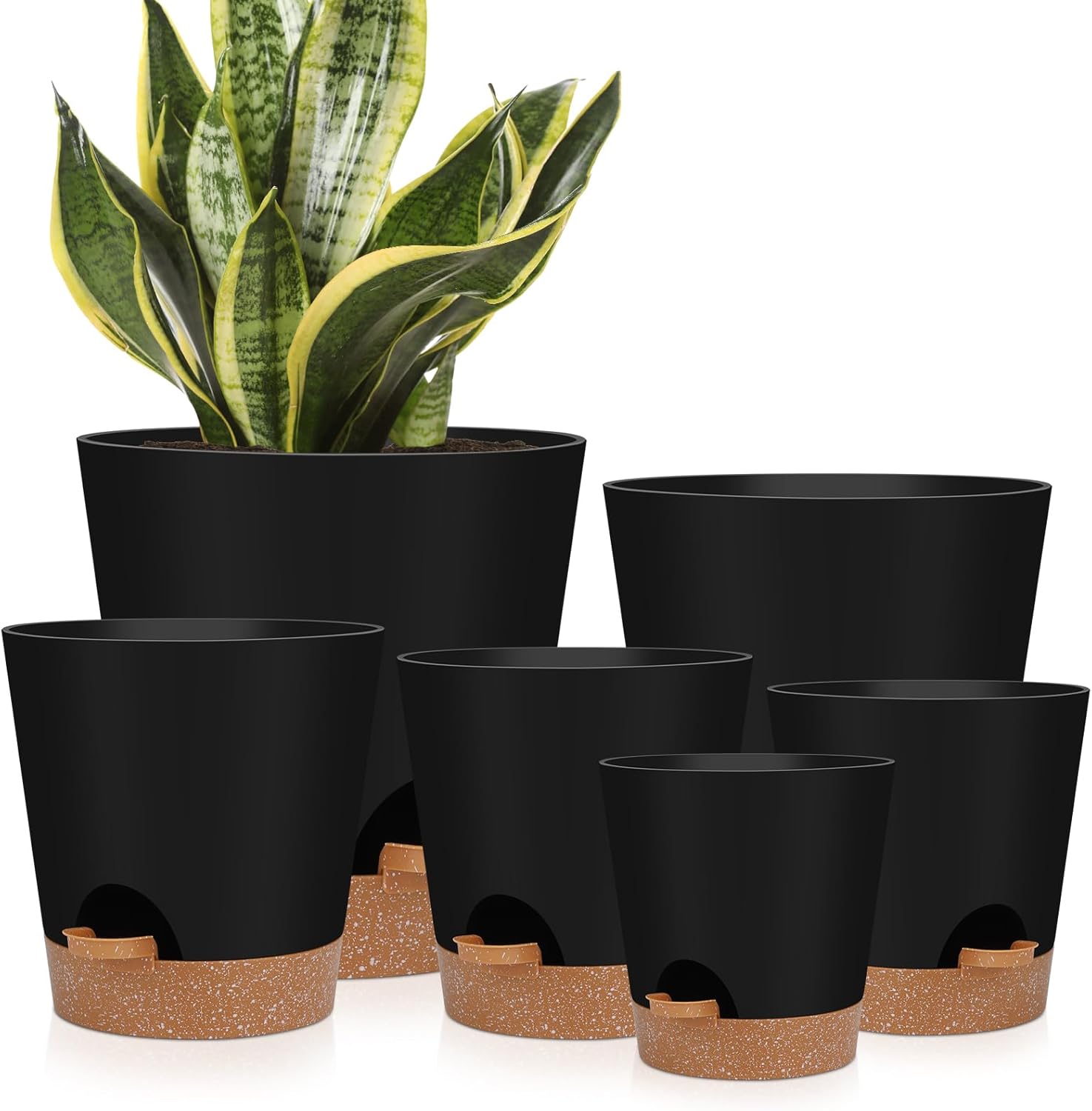
These YNNICO planters are a practical all-purpose set for indoor and sheltered outdoor container gardening. The pack includes six nested sizes (8, 7, 6.5, 6, 5.5 and 5 inches) so you can pot a range of small to medium houseplants, herbs, or starter transplants. Each pot is made from matte polypropylene with thick sidewalls that feel sturdy yet remain lightweight for easy moving and rearranging. Built-in drainage holes plus included saucers and a wick let you use bottom-watering and a separate reservoir to reduce overwatering and keep roots healthier. The minimalist modern look blends with most decor and the stackable design simplifies storage when not in use. Limitations are the basic plastic finish which may scratch over time and the smallest sizes are only suitable for plants with limited root systems. Also the set is designed for tabletop or sheltered use rather than heavy-duty outdoor exposure. For someone who wants reliable, low-maintenance pots that cover a variety of common houseplant sizes, this set is a convenient, budget-friendly choice.
Best for: Buyers who want a single versatile set to pot a variety of common houseplants and prefer low-maintenance watering features and a clean modern look.
Less Ideal for: Gardeners who need heavy-duty outdoor planters, very large specimen pots, or premium ceramic finishes should consider other options.
- Includes six sizes to accommodate a range of small to medium plants
- Self-watering reservoir with wick and saucer reduces risk of overwatering
- Durable yet lightweight polypropylene construction with thick sidewalls
- Matte minimalist finish that fits modern home and office decor
- Plastic surface can scratch and may look less premium over time
- Smallest pots are only suitable for limited-root plants or seedlings
Verdict: A convenient six-piece self-watering planter set that covers most small-to-medium indoor plant needs with low maintenance and a modern look.
Creative Co-Op Large Matte White Embossed Stoneware Planter

| Material Type | Stoneware |
|---|---|
| Finish Types | Matte Finish |
| Mounting Type | Floor Standing |
| Indoor Outdoor Usage | Indoor |
| Capacity | 1764 cubic inches |
This Creative Co-Op stoneware planter is a sturdy indoor pot designed to showcase larger houseplants. Made from 100% stoneware with a matte finish and subtle embossed texture, it functions as a decorative standing planter or as a stylish cover for a nursery pot. Its large capacity and round, floor-standing form make it suitable for fuller foliage like fiddle leaf figs or tall palms in living rooms and entryways. The minimalist farmhouse look blends with many interiors and the heavy stoneware construction helps keep top-heavy plants stable. Because it is intended for indoor use and lacks listed drainage features, you should plan to use a plastic liner or a nursery pot with drainage to avoid overwatering. The planter is relatively heavy when filled, which improves stability but makes repositioning more difficult. Overall it is a solid choice if you want a durable, design-forward indoor pot that keeps plants upright and complements modern or farmhouse decor.
Best for: Buyers who prioritize a durable, stable indoor planter that complements modern or farmhouse interiors and will house larger potted plants.
Less Ideal for: Anyone who needs a lightweight, portable pot for frequent rearranging or who requires a planter with built-in drainage for direct planting.
- Durable 100% stoneware construction adds stability for larger plants
- Matte embossed finish offers a stylish, minimalist farmhouse look
- Large capacity suitable for bigger houseplants or as a cover pot
- Floor-standing form provides stable display without additional hardware
- No manufacturer information about built-in drainage so indoor watering needs management
- Heavy weight makes frequent repositioning or moving more difficult
Verdict: Choose this planter when you want a heavy, design-forward indoor pot that keeps larger houseplants stable and elevates room decor.
FUIJOL Clear Plastic Nursery Pots with Saucers, 20‑Pack (4", 5", 6", 7")

| Unit Count | 20 Count |
|---|---|
| Included Components | Tray, Saucer |
| Material Type | Plastic |
| Other Special Features of the Product | Drainage Hole |
| Indoor Outdoor Usage | Outdoor |
These FUIJOL clear nursery pots come as a 20‑piece assortment (five each of 4, 5, 6 and 7 inch) with matching saucers and built‑in drainage holes, making them a straightforward choice for propagating seedlings, orchids, succulents and small foliage. The transparent plastic lets you monitor root development without disturbing plants, while the included saucers collect runoff to keep shelves and benches tidy. The pots are lightweight, slightly flexible and rated for outdoor use across a wide temperature range, so they are easy to move when transplanting and reusable between seasons. Because they are basic molded plastic they are not decorative for finished displays and will eventually show wear under heavy UV exposure, so they are best used for nursery work, potting up and short‑term containers rather than long‑term decorative planters. For growers who value visibility, convenience and a range of starter sizes, these pots simplify staging, watering and transplant decisions.
Best for: Practical gardeners who need a versatile, visible set of starter pots for propagation, potting up and moving plants between indoor and outdoor spots.
Less Ideal for: Buyers seeking decorative or heavy‑duty long‑term planters for finished displays should consider ceramic or UV‑stabilized alternatives.
- Clear walls let you check root growth and moisture without disturbing plants
- Includes matching saucers to catch runoff and keep surfaces clean
- Four sizes in one pack cover seedling to small transplant stages
- Drainage holes promote aeration and reduce risk of waterlogging
- Basic plastic finish is not intended for decorative, long‑term display
- May degrade or discolor with prolonged intense sun exposure
Verdict: A practical, visible starter‑pot kit that simplifies propagation and potting up with multiple sizes and matching saucers.
SQKH 4-Inch Plastic Plant Pots, 6-Pack with Drainage Trays
| Unit Count | 6 Count |
|---|---|
| Material Type | Plastic |
| Other Special Features of the Product | Drainage Hole |
| Indoor Outdoor Usage | Indoor, Outdoor |
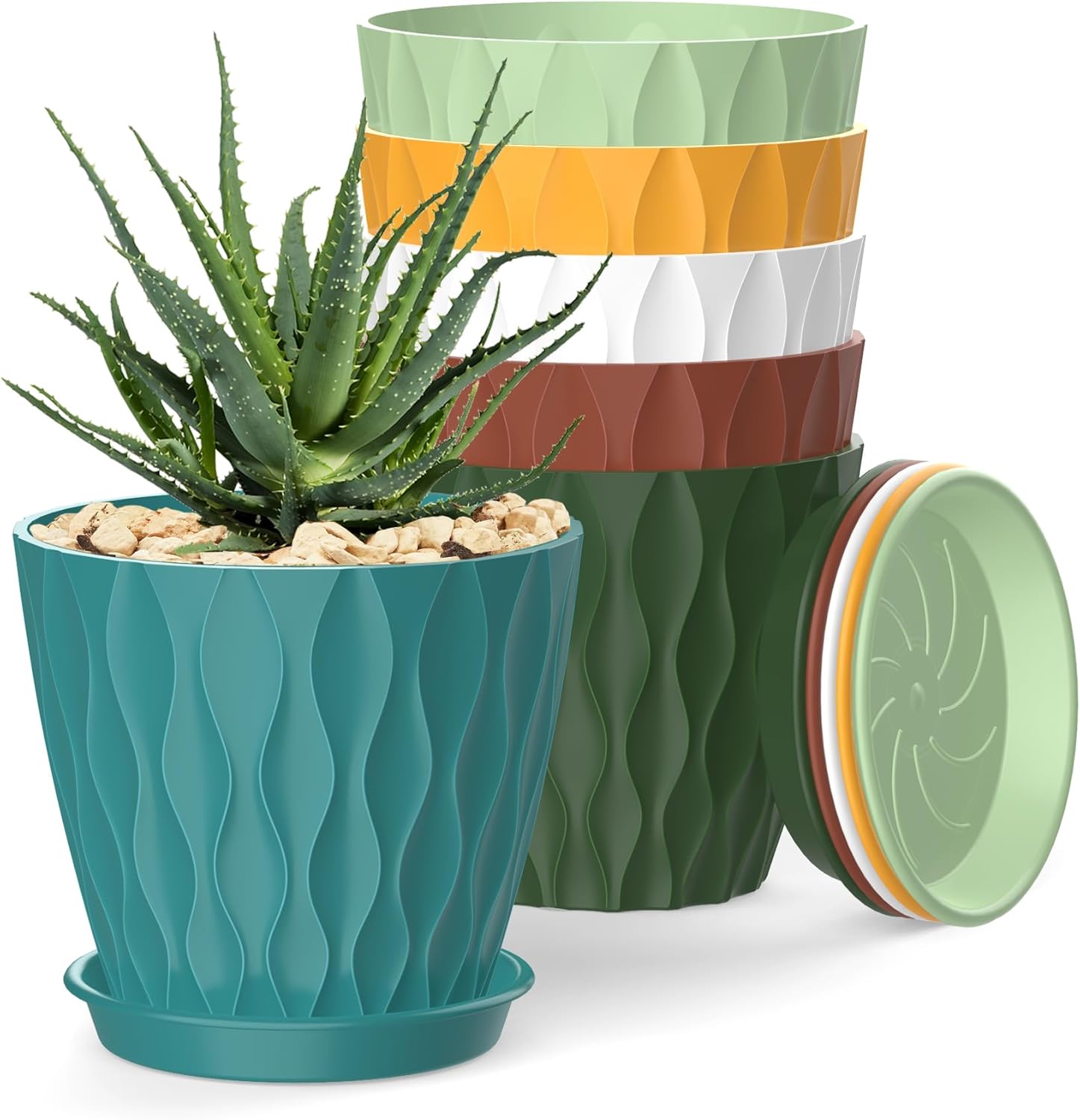
These SQKH 4-inch pots are a practical, no-frills option for growing small houseplants, succulents, herbs, and starters. Each set includes six lightweight matte plastic pots and matching trays, which makes potting multiple plants or replacing nursery containers quick and tidy. The manufacturer highlights a dense pattern of drainage holes at the base and the separate saucers collect excess water, so plants are less likely to sit in soggy soil. The polypropylene construction is thick for this price class, so the pots resist crushing and will tolerate sun exposure without becoming brittle quickly. Because they are small, they work best for seedlings and species that prefer confined root space. There is limited decorative variety beyond the simple striped matte look, and these are not intended for large plants or long-term planting of fast-growing species without repotting. For budget-focused gardeners who need an economical, durable set of starter pots with reliable drainage, these are a solid everyday choice.
Best for: Buyers looking for an affordable, durable set of starter pots to propagate seedlings, house succulents, or pot multiple herbs and small plants quickly and without fuss.
Less Ideal for: Gardeners who want decorative statement planters or need containers for large or long-term plantings should consider larger or higher-end options.
- Six-pack provides good value for potting multiple small plants
- Built-in drainage holes plus trays help prevent overwatering
- Thicker polypropylene construction resists compression and sun damage
- Matte finish and simple striped design suit modern indoor decor
- Small 4-inch size requires frequent repotting for fast-growing plants
- Limited color and decorative options compared with ceramic or designer pots
Verdict: A budget-friendly, durable six-pack of 4-inch pots with reliable drainage that makes potting multiple small plants fast and simple.
Xiaan Jiaju Tuscan Ceramic Plant Pot with Drainage

| Material Type | Ceramic |
|---|---|
| Finish Types | Distressed, Crackle Glaze |
| Other Special Features of the Product | Drainage Hole, Hand-Finished, Scalloped Edges |
| Indoor Outdoor Usage | Indoor |
| Size | Small |
This small Tuscan-style ceramic planter is a decorative indoor pot that pairs vintage charm with practical planting features. It is typically used as a tabletop planter for small houseplants, succulents, or decorative arrangements where the distressed crackle glaze and scalloped edges are meant to be seen. Notable features include a drainage hole to help prevent root rot, a hand-finished distressed surface for an antique look, and a sturdy ceramic construction that feels weighty and stable. In real use the drainage hole and solid ceramic body make it easy to water plants without overwatering, while the compact size fits windowsills, shelves, and small side tables. The main limitations are its small capacity, which restricts the size and root volume of plants it can support, and the indoor-only recommendation that limits outdoor exposure. Buyers should also handle the pot carefully because ceramic can chip or crack if dropped. For anyone after a reliable, attractive indoor planter that presents well on a tabletop, this is a solid choice.
Best for: Buyers who want an attractive, dependable indoor planter to showcase small houseplants and value a vintage, hand-finished look over large planting capacity.
Less Ideal for: People who need large-capacity or outdoor planters for sizable plants or who want lightweight, unbreakable containers for high-traffic locations.
- Built-in drainage hole reduces risk of overwatering and root rot
- Hand-finished crackle glaze gives authentic vintage, decorative appeal
- Sturdy ceramic construction provides stability on tabletops
- Compact size fits small indoor spots like windowsills and shelves
- Small internal volume restricts use to petite plants or seedlings
- Ceramic material is breakable and needs careful handling
Verdict: Choose this planter if you want a reliable indoor tabletop pot that combines an authentic vintage look with practical drainage for small houseplants.
Root & Vessel Majestic Full Depth Cylinder Pot, 12-Inch, Glossy White

| Capacity | 18.85 liters |
|---|---|
| Material Type | Plastic |
| Finish Types | Glossy Finish |
| Other Special Features of the Product | Drainage Hole, Lightweight, Rust Resistant, UV Resistant, Weather Resistant |
| Indoor Outdoor Usage | Indoor, Outdoor |
The Root & Vessel Majestic Full Depth Cylinder Pot is a simple, modern plastic planter intended for everyday container gardening. It provides a deep planting profile that supports root development and includes a removable snap-on tray so you can protect indoor surfaces or expose drainage holes when using it outdoors. The glossy finish gives a clean, contemporary look while the polypropylene construction keeps the pot lightweight and weather resistant for season-to-season use. Practical benefits include easy repositioning on plant stands or shelves, low maintenance compared with ceramic, and recyclable BPA-free material. Limitations are that it is a basic plastic pot without insulating mass, so soil in hot or cold climates will change temperature more quickly than in heavier pots, and very large plants may need additional support or a larger container. For planting, add a drainage layer or remove the tray outdoors to avoid overwatering and follow species-specific potting advice for best results.
Best for: Buyers who prioritize a practical, low-maintenance planter that looks modern and is easy to move and care for, and who value products with many user reviews for reassurance.
Less Ideal for: Those seeking heavy, decorative ceramic planters that provide thermal mass for temperature stability or collectors wanting handcrafted finishes.
- Deep planting depth supports stronger root growth
- Built-in snap-on tray protects indoor surfaces and can be removed to expose drainage
- Lightweight and easy to move for repositioning or seasonal changes
- Durable, weather and UV resistant plastic suitable for indoor or outdoor use
- Plastic construction offers less thermal insulation than ceramic or terracotta pots
Verdict: A durable, lightweight full-depth planter that combines easy indoor protection with outdoor drainage for reliable everyday container gardening.
Utopia Home 5‑Pack Plastic Indoor Plant Pots with Saucers and Drainage

| Material Type | Plastic |
|---|---|
| Unit Count | 5 Count |
| Included Components | Saucers Tray |
| Other Special Features of the Product | Frost Resistant, Lightweight, Portable, Rot Resistant, Rust Resistant |
| Indoor Outdoor Usage | Indoor |
These Utopia Home pots are a simple, practical set for indoor plant care. The five included pots cover a range of common small to medium houseplant sizes and come with matching saucers and drainage plugs so you can manage watering without moving plants every time. Made from reinforced polypropylene, the pots are lightweight, frost and rot resistant and easy to wipe clean, which makes them convenient for apartment windowsills, desks, or shelves. The design highlights multiple drainage holes and a patent‑pending drainage system that helps prevent overwatering and promotes healthier roots. Because they are plastic and tabletop style, they are easy to relocate and unlikely to crack from accidental knocks. The main limitations are the basic aesthetic and the material: these are functional planters rather than decorative ceramic or designer pieces, and they do not specify outdoor durability beyond being frost resistant. Expect a useful, low‑maintenance set for everyday indoor gardening rather than a premium showpiece.
Best for: Buyers who want a low‑risk, easy‑to‑use set of indoor planters for everyday houseplants and prefer practical features like drainage and saucers over decorative finishes.
Less Ideal for: Shoppers seeking high‑end decorative ceramics or heavy outdoor planters for permanent exterior installation should look elsewhere.
- Multiple sizes included to cover seedlings through small to medium houseplants
- Included saucers and drainage plugs make watering and mess control easier
- Lightweight, reinforced plastic that resists rot and rust and is simple to clean
- Design patent‑pending drainage system to reduce overwatering risk
- Basic plastic finish that is utilitarian rather than decorative
- Not positioned as a weatherproof outdoor planter for long-term exterior exposure
Verdict: A dependable, low‑maintenance five‑pack of indoor plastic pots that makes watering and root health easy for everyday houseplant owners.
Choosing the Right Plant Pot: Key Factors to Consider
Drainage and Water Management
Proper drainage is the single most important factor for most container-grown plants. Pots with adequate drainage holes prevent waterlogged soil and root rot, while designs that allow air exchange encourage healthy root structure.
Think about whether you need a saucer or an elevated base to keep excess water away from decking or balcony surfaces. Some pots include built-in reservoirs or layered drainage chambers; others rely on standard holes and a saucer. For gardeners who occasionally overwater, look for pots that shed excess moisture quickly and visibly.
Material and Outdoor Durability
The pot material determines how it handles sun, wind, and temperature swings. Terracotta breathes well and moderates soil temperature but can crack in freezing conditions. Plastic and resin are lightweight and weather-resistant but vary in UV stability and can degrade or fade over years.
Consider how long you expect the pot to stay outdoors and whether it will be moved seasonally. Metal pots can be long-lasting but may heat soil more in direct sun and can corrode if not treated. Composite materials offer a middle ground with better freeze resistance and less weight.
Size, Depth, and Root Space
Choose a pot size that matches the plant's mature root system, not just the current top growth. Shallow pots limit root development for many vegetables and shrubs, while deep-rooted species need extra depth for healthy anchoring and moisture access.
Also think about grouping and aesthetics. A scalable size range lets you repot upward as plants grow or switch seasonal displays without replacing containers constantly. Measure the available space where pots will sit to ensure they fit walkways, railings, or shelves.
Weight and Handling for Placement
Weight affects how you position and maintain containers. Heavy ceramic or filled terra-cotta pots stay put in wind but are hard to move for watering or winter storage. Lightweight resin or fiber pots are easier to rearrange but may need extra ballast in windy spots.
Consider whether you will lift pots yourself, use plant caddies, or move plants indoors seasonally. Handles, rim shapes, and the pot's base footprint all influence how easy it is to tip, carry, or rotate containers during regular garden tasks.
Thermal Behavior and Plant Stress
Pots influence root temperature. Dark, thin materials can heat quickly in sun and stress roots, while light-colored or insulated materials keep soil cooler. In cold climates, some pots offer better insulation against freeze-thaw cycles, protecting roots from sudden temperature swings.
If you grow temperature-sensitive plants or keep pots on reflective surfaces, choose materials and colors that moderate heat. Thermal behavior also affects watering frequency since hotter soil evaporates moisture faster.
Maintenance and Longevity
How easy a pot is to clean and repair affects long-term use. Smooth surfaces rinse clean, while porous materials can retain salts and fertilizer residues that affect future plantings. Removable liners or modular components simplify seasonal cleanups.
Think about how often you repot, whether you need to disinfect containers between plantings, and whether replacement parts like saucers or liners are available. Durable finishes and UV-stable pigments prolong a pot's attractive appearance and functional life.
Matching Pots to Plant Types
Different plants have different root habits and moisture needs, and the pot you choose should reflect that. Annual flowers and herbs do well in medium-depth pots with good drainage, while bulbs and root vegetables need deeper containers that allow vertical space for growth. Woody ornamentals or patio shrubs benefit from larger volumes that provide steady moisture and anchor the rootball.
- Shallow pots for succulents and alpine plants
- Medium pots for herbs, annuals, and mixed containers
- Deep pots for vegetables and larger perennials
Placement and Microclimate Considerations
Where you place a pot affects watering schedules, sun exposure, and the material performance. Pots on hot patios or dark decking will heat up faster than those in shaded corners or under awnings. Rail planters and balcony containers face more wind and may need heavier bases or secure fittings.
- Sunny exposure: choose light-colored or insulated pots
- Wind-prone spots: use heavier or anchored containers
- Sheltered areas: more material options are acceptable
Potting Mix and Filling Tips
The right potting mix improves drainage and nutrient retention regardless of pot material. Use mixes designed for containers with good porosity, and add grit or perlite for species that prefer fast drainage. For very large pots, layer coarser material at the bottom sparingly to reduce weight without creating a perched water table.
- Use container-specific mixes for best structure
- Avoid garden soil straight into pots; it compacts and drains poorly
- Top-dress with compost annually to refresh nutrients
Seasonal Care and Winter Storage
Pots left outdoors through cold months face different stresses depending on material. Lighter, frost-proof materials are safer outdoors; fragile terra-cotta benefits from being emptied and stored when temperatures regularly drop below freezing. Winter care also includes protecting saucers and preventing standing water that can freeze and damage pots.
- Empty and store delicate pots in cold climates
- Elevate pots slightly to allow drainage and air flow
- Reduce watering in dormant seasons to prevent freezing damage
Styling and Groupings for Small Spaces
In compact gardens and patios, grouping pots of complementary sizes and shapes maximizes visual impact while allowing plants with similar needs to be watered together. Match pot scale to plant size so taller pots do not overwhelm small specimens. Vertical arrangements and tiered stands can expand planting area without crowding floor space.
- Group by watering needs to simplify maintenance
- Use vertical planters to save floor space
- Consider color and texture to create a unified look
How We Chose the Best Plant Pot
We started by identifying the traits that directly affect plant health and ease of use in real gardens. Selection prioritized pots that provide reliable drainage, durable construction for outdoor exposure, appropriate size range for common container plants, and a balance of weight and portability for repositioning. We favored materials and designs that reduce root overheating and resist cracking in freeze-thaw cycles where applicable. We applied performance filters and excluded pots that only suited decorative indoor use or required specialized hardware. Our evaluation criteria included drainage effectiveness, material durability under outdoor conditions, weight and handling for regular garden tasks, and compatibility with standard potting mixes and fertilizers. We also considered how easy pots are to clean and maintain, and whether their dimensions supported healthy root development across popular container-grown species. Items that failed to offer practical drainage or had limited outdoor durability were removed from consideration. The remaining selections represent a balance of gardener-friendly features and real-world longevity for patios, balconies, and compact outdoor plots.
FAQ
How do I tell if a pot has good drainage?
Good drainage means visible holes at the base and a design that lets excess water escape quickly. Test by pouring a steady flow of water into the pot; it should drain freely and not hold a perched water layer above coarse material.
Can I use indoor pots outside?
Some indoor pots are fine outdoors for short periods but may not tolerate UV or freeze-thaw cycles. If you plan to keep them outside, choose pots made from weather-resistant materials or move fragile indoor pots to sheltered locations.
What size pot do herbs generally need?
Most culinary herbs thrive in medium-sized pots that provide 6 to 12 inches of root depth, depending on the species. Larger herbs or woody types benefit from slightly bigger containers to avoid frequent watering and repotting.
Should I put rocks in the bottom of a pot for drainage?
Putting rocks at the bottom can create a perched water table and does not improve drainage for most container setups. Better options are a free-draining potting mix and sufficient holes; if you need to reduce weight use coarse material sparingly.
How often should I repot container plants?
Repotting frequency depends on plant growth and pot size but is usually every one to three years for actively growing species. Signs you need to repot include roots circling the rootball, very fast drying, or slowed growth despite adequate care.
Final Verdict
Choose pots that match the plants and the place. Prioritize drainage, appropriate root volume, and material durability for the climate where you garden. Balance weight and handling needs with the stability required in exposed spots. Your final choice should reflect tradeoffs between mobility, insulation, and longevity. Focus first on drainage and correct sizing, then refine material and styling choices to fit your patio, balcony, or garden conditions.
