

Note: This article contains affiliate links. If you click on these links and make a purchase, I may earn a small commission at no extra cost to you. This helps support my research and content. Read my full affiliate disclosure here.
Choosing the right tomato plant pot matters for yield and plant health whether you grow on a balcony, patio, or in a small backyard. The container you pick affects root development, moisture retention, drainage, and how easy it is to prune and harvest. This guide walks through a curated shortlist of the top options for tomato containers, each selected for practical garden performance. We evaluated pots for drainage, root volume, material durability, and how they behave in real-world watering and feeding routines. Read on to see which container types match your growing space and maintenance preferences.
Top Picks at a Glance
| Best Overall The best all-around choice for most situations | TeCreatio Tomato Planter with Trellis, Self-Watering Reservoir and Wheels |  |
| Best Quality Built to a higher standard if you want something more solid | RooTrimmer 16-inch Deep Outdoor Planters, 4-Pack |  |
| Best Value The sweet spot between price and what you get | FEED GARDEN 10 Gallon Nonwoven Fabric Grow Bags, 4-Pack |  |
| Best Budget The cheapest option that still gets the job done reliably | Suteck Raised Garden Bed Planter Box with Adjustable Trellis |  |
| Highest Rated A top-rated pick with lots of positive feedback | Vego Garden Large Outdoor Planter with Steel Trellis and Self-Watering System |  |
| Most Popular A crowd favorite that many people choose with confidence | VIVOSUN 5-Pack 5-Gallon Fabric Grow Bags with Handles |  |
| Best Seller A high-volume bestseller chosen again and again | VIVOSUN 5-Pack 10 Gallon Fabric Grow Bags with Handles |  |
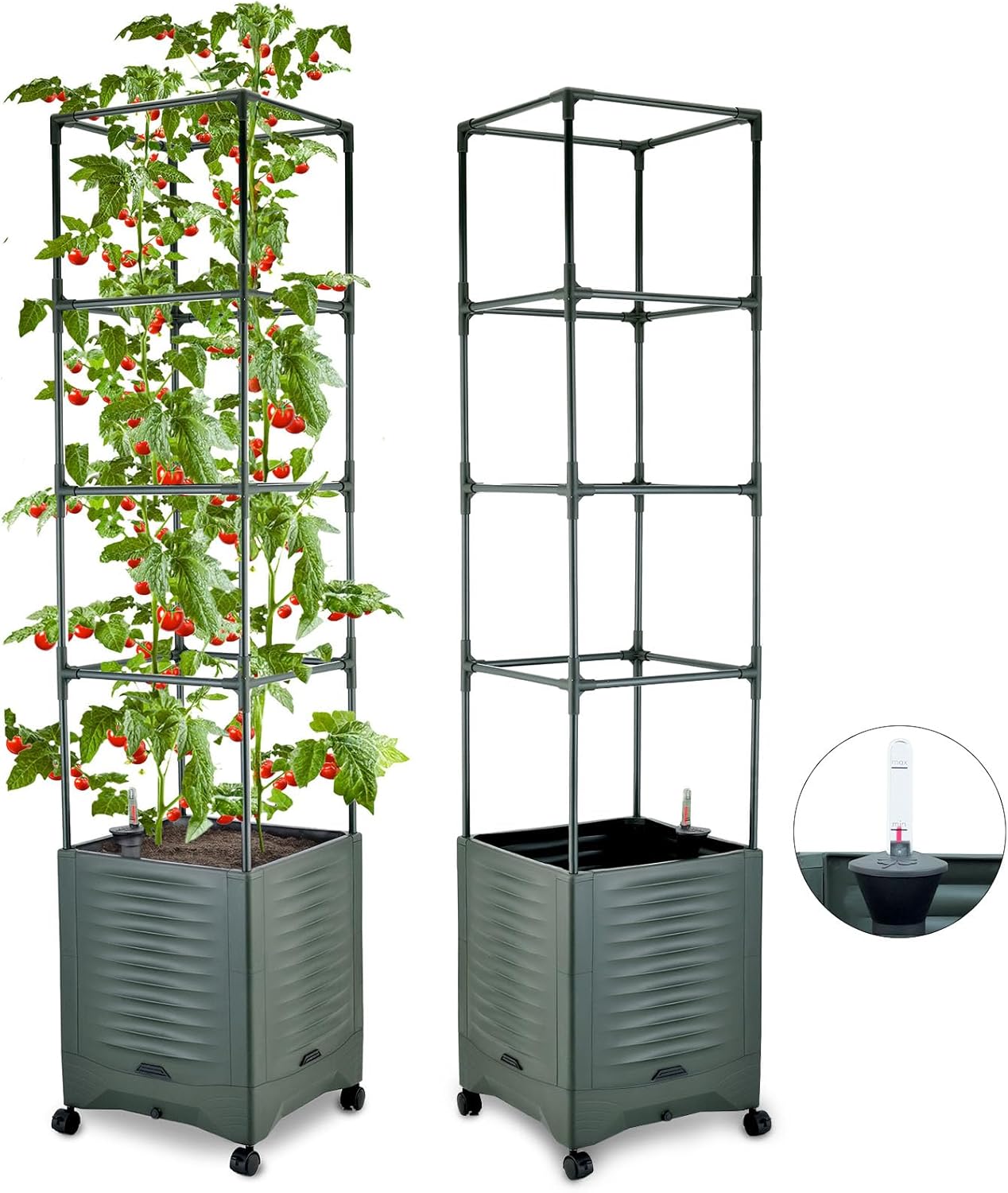
TeCreatio Tomato Planter with Trellis, Self-Watering Reservoir and Wheels
| Material Type | Metal |
|---|---|
| Capacity | 2 gallons |
| Included Components | Trellis, Wheels |
| Other Special Features of the Product | Rust Resistant |
| Indoor Outdoor Usage | Indoor, Outdoor |
This TeCreatio tomato planter is a vertical, floor-standing metal planter designed specifically for growing tomatoes in containers. It combines a 2.0 gallon self-watering reservoir with a top water inlet and a visible water-level indicator so you can refill without disturbing the soil. The powder-coated metal construction and dual-layer rust-resistant finish give it outdoor durability, and the included sturdy metal trellis supports indeterminate plants as they climb. Mobility is easy thanks to five wheels, four of which lock, so you can move the planter to optimize sun exposure or shelter plants during storms. Ventilation holes and two drainage outlets help prevent waterlogging while the planter depth supports adventitious root development for stronger plants. Limitations to note are its single planting column rather than multiple separate pockets and a modest soil capacity compared with large raised beds, so it is best for growing a few productive tomato plants rather than high-density production.
Best for: A home gardener who wants a low-maintenance, space-efficient solution for growing a few tomato plants on a patio, balcony, or small yard and values mobility and consistent moisture control.
Less Ideal for: Growers who need to produce large quantities or who prefer traditional wide raised beds for multiple plants should consider larger containers or bed systems instead.
- Self-watering reservoir with top fill and visible indicator reduces watering frequency
- Sturdy metal trellis offers reliable support for climbing indeterminate tomato varieties
- Powder-coated, rust-resistant finish improves outdoor durability
- Five wheels, four lockable, make it easy to reposition for light or weather management
- Single tall column and 2 gallon capacity limit soil volume compared with larger raised beds
- Not suitable for high-density planting or very large tomato varieties without frequent pruning
Verdict: Choose this planter if you want a compact, durable self-watering system with a built-in trellis and wheels for easy, low-maintenance tomato growing.
RooTrimmer 16-inch Deep Outdoor Planters, 4-Pack

| Capacity | 10 gallons |
|---|---|
| Number of Pieces | 4 |
| Material Type | Plastic |
| Indoor Outdoor Usage | Indoor, Outdoor |
| Other Special Features of the Product | Breathable, Drainage Hole, Lightweight, UV Resistant, Weather Resistant |
These RooTrimmer 16-inch deep planters are built for growers who want durable, high-capacity pots for tomatoes and other deep-rooting vegetables. Each pot holds about 10 gallons and the 15-inch depth gives tomato roots room to develop without frequent repotting. Practical design touches include multiple large drainage holes, side vents and an elevated base to prevent standing water and improve root aeration, which reduces the risk of root rot in heavy-watering situations. The thickened rim makes lifting and repositioning full pots easier and more comfortable. Made from UV-resistant polypropylene, the planters are lightweight to move yet sturdy enough to withstand outdoor weather. Limitations are typical for plastic pots: they do not provide insulation like ceramic or double-walled containers, so soil can heat or cool faster in extreme temperatures, and very large or mature trees would outgrow the volume. For tomato growers seeking straightforward, reliable containers that prioritize root health and drainage, these planters are a practical choice.
Best for: Gardeners growing tomato plants or other deep-rooting vegetables who prioritize strong root development, reliable drainage, and durable outdoor containers that are easy to move.
Less Ideal for: People who need insulated or decorative ceramic planters for temperature-sensitive plants or those who prefer very large containers for trees and oversized specimens.
- Deep 15-inch planting depth supports healthy, deep root systems for tomatoes and other vegetables
- Multiple large drainage holes and elevated base improve drainage and root aeration
- UV-resistant polypropylene construction resists cracking and fading for outdoor longevity
- Reinforced widened rim makes lifting and moving full pots easier and safer
- Plastic construction offers less thermal insulation than ceramic or double-walled planters
Verdict: These deep, well-draining 16-inch planters are a practical pick for tomato growers who want durable outdoor containers that promote healthy root growth.
FEED GARDEN 10 Gallon Nonwoven Fabric Grow Bags, 4-Pack

| Capacity | 10 gallons |
|---|---|
| Unit Count | 4 Count |
| Material Type | Nonwoven Fabric |
| Other Special Features of the Product | Breathable, Foldable, Weather Resistant |
These FEED GARDEN 10‑gallon grow bags are built for practical, repeatable container gardening. The thick 300G nonwoven fabric provides strong aeration and quick drainage, which helps potato tubers develop healthy root systems and reduces the risk of rot in wet conditions. Reinforced double-stitched handles make it easy to move filled bags for crop rotation or to shift plants to sun, and the foldable design stores flat between seasons. Because the fabric is described as weather resistant and tear-resistant, the bags should hold up across multiple growing cycles if handled reasonably. Limitations to note are the fixed 10‑gallon capacity, which is well suited to early or mid-size potato varieties but may restrict very large or long-season cultivars, and the lack of pockets or integrated drainage controls that some specialized potato grow bags provide. These are straightforward, durable containers that simplify spacing, lifting, and storing tubers compared with rigid pots, but expect to manage irrigation and harvest without extra built-in features.
Best for: Gardeners who want a durable, space-efficient container for growing potatoes in limited spaces and who prioritize easy handling and seasonal storage.
Less Ideal for: Growers planning to cultivate very large or indeterminate potato varieties or those who want specialized bags with harvest flaps or built-in irrigation controls.
- Breathable nonwoven fabric improves aeration and drainage to reduce overwatering and encourage healthy tuber growth
- Durable 300G construction resists tearing for reuse across multiple seasons
- Double-stitched reinforced handles make moving full bags practical and safer
- Foldable design stores flat to save space when not in use
- 10‑gallon capacity may be small for very large potato varieties or long-season crops
- No integrated drainage valves or side harvest flaps for easier harvesting
Verdict: A practical, reusable 10‑gallon grow bag set that makes growing potatoes easier to move, store, and reuse.
Suteck Raised Garden Bed Planter Box with Adjustable Trellis

| Material Type | Plastic, Steel |
|---|---|
| Finish Type | Powder Coated |
| Item Type Name | Raised Garden Bed Planter Box with Trellis |
| Number of Packs | 1 |
This Suteck raised garden bed combines a shallow planter box with a powder-coated steel trellis to support tomatoes, cucumbers, beans, and other vining vegetables in patios or balconies. It is assembled without tools using snap-together rods and panels, and the modular extension rods let you increase trellis height as plants grow. A bottom water reservoir with drainage ports reduces how often you need to water and helps keep soil moisture consistent. The plastic and steel construction keeps the unit lightweight and rust-resistant for season-to-season use, though its compact footprint means it is best for one or two plants rather than a large tomato crop. Practical benefits include vertical growing that saves floor space, simple setup, and lower maintenance from the self-watering tray. Important limitations are limited soil volume and load capacity compared with full-size raised beds, so heavy indeterminate tomatoes will need close pruning or additional support as they mature.
Best for: A budget-minded urban gardener who wants to grow one or two tomatoes or other vining vegetables on a patio, balcony, or small raised-bed area and values easy setup and low maintenance.
Less Ideal for: Gardeners planning to grow many large indeterminate tomato plants or seeking deep, high-capacity raised beds for full-season production should consider larger, heavier containers or traditional raised beds.
- Adjustable trellis height supports plants through multiple growth stages.
- Built-in water reservoir with drainage reduces watering frequency.
- Powder-coated steel rods resist rust and add stable vertical support.
- Tool-free, quick assembly and modular design for small spaces.
- Small planting volume limits root development and yield for large tomato varieties.
- Lightweight plastic planter may need anchoring in windy conditions.
Verdict: A compact, inexpensive self-watering planter with an adjustable steel trellis that gives small-space gardeners easy vertical support for a couple of tomato plants.
Vego Garden Large Outdoor Planter with Steel Trellis and Self-Watering System

| Capacity | 2.4 gallons |
|---|---|
| Material Type | Steel Trellis and Polypropylene Shell |
| Other Special Features of the Product | Rolling Casters For Mobility |
| Finish Types | Powder Coated |
| Indoor Outdoor Usage | Outdoor |
This Vego Garden planter is built for productive tomato growing in confined outdoor spaces. It combines a powder-coated 8mm steel trellis that resists bending with a polypropylene planter body that houses a 2.4 gallon (about 9L) self-watering reservoir and a visible water-level gauge. Use it as a freestanding container for indeterminate tomato varieties, peppers, or eggplants; the breathable inner vents promote soil aeration while the adjustable water-volume regulator and drain plug reduce overwatering and make maintenance simple. Low-profile rolling casters let you reposition the planter for light or protection without heavy lifting. Practical benefits include strong vertical support for heavy fruit loads, reduced watering frequency, and easier mobility for season management. Important limitations are that it is sized for individual plants rather than large multi-plant beds and the plastic shell and reservoir design require occasional monitoring to avoid mosquito breeding if the drain plug is misused outdoors.
Best for: Growers who prioritize strong plant support and consistent moisture for high-yield tomato varieties and want a low-maintenance, moveable container solution.
Less Ideal for: People wanting a large, wide bed for multiple tomato plants or those who prefer in-ground planting and heavy-duty all-metal planters.
- Reinforced 8mm steel trellis gives sturdy vertical support for heavy tomato vines.
- Integrated 9L self-watering reservoir with gauge reduces how often you need to water.
- Breathable inner vents improve soil aeration and root health.
- Powder-coated finish on trellis increases weather resistance and longevity.
- Rolling casters make it easy to move the planted container for light or sheltering.
- Reservoir and plug design can invite mosquitoes if not managed correctly.
- Tall narrow footprint limits it to one or two plants rather than larger multi-plant setups.
Verdict: Choose this planter if you want a durable trellis and a reliable self-watering system to maximize tomato yields in a compact, movable container.
VIVOSUN 5-Pack 5-Gallon Fabric Grow Bags with Handles

| Capacity | 5 Gallons |
|---|---|
| Material Type | Nonwoven fabric |
| Included Components | 5 Bags |
| Indoor Outdoor Usage | Indoor, Outdoor |
| Other Special Features of the Product | Drainage Hole |
These VIVOSUN grow bags are basic, reliable fabric planters for small- to medium-sized container crops. Made from 300g nonwoven fabric they breathe and drain well, which helps keep roots cooler and reduces waterlogging compared with plastic pots. The set includes five 5-gallon bags that work for vegetables, herbs, and annual flowers in raised beds, patios, or a grow tent. Notable features are reinforced serged handles that make filled bags easier to move and a built-in drainage hole to prevent standing water. Because the fabric encourages air pruning, you can develop a healthier, fibrous root system and reuse the bags for multiple seasons with reasonable care. Limitations are the modest 5-gallon capacity, which is not suitable for large shrubs or trees, and the fabric will eventually show wear if left constantly exposed to UV and abrasion. Occasional hand-washing and storing them out of direct sun when not in use will extend their life.
Best for: Buyers who prioritize proven, well-reviewed basics and want a reliable set of breathable containers for vegetables, herbs, or patio flowers that are easy to move and reuse.
Less Ideal for: Not a good choice for gardeners who need large containers for trees or permanent decorative pots that must withstand long-term outdoor exposure.
- Breathable nonwoven fabric improves drainage and root aeration
- Reinforced serged handles make moving filled bags practical
- Reusable construction for multiple seasons with proper care
- Built-in drainage hole reduces risk of waterlogging
- 5-gallon size limits use to small- and medium-rooted plants
- Fabric will degrade faster than rigid pots if left in constant sun or abrasive conditions
Verdict: A dependable, well-made 5-pack of breathable grow bags that gives risk-conscious gardeners a proven, easy-to-handle solution for small to medium container plants.
VIVOSUN 5-Pack 10 Gallon Fabric Grow Bags with Handles

| Capacity | 10 gallons |
|---|---|
| Number of Pieces | 5 |
| Material Type | Nonwoven Fabric |
| Other Special Features of the Product | Drainage Hole |
| Indoor Outdoor Usage | Indoor, Outdoor |
These VIVOSUN grow bags are simple, no‑fuss fabric containers for vegetables, herbs, and flowering plants grown on patios, decks, or in grow tents. Made from 300g thickened nonwoven fabric, the bags breathe and drain well so soil stays aerated and roots tend to develop fibrous, healthy structure rather than circling. Reinforced serger‑stitched handles make moving filled bags easier than single‑strap designs, and the lightweight, reusable construction means you can repot or store them between seasons. Expect straightforward benefits: improved root health, reliable drainage, and portability for rearranging plants or bringing containers indoors. Limitations are their basic feature set — there is no rigid support, so tall plants may need external staking, and the fabric will gradually degrade with heavy UV exposure over many seasons. Also the 10‑gallon size suits small to medium plants rather than large shrubs or trees.
Best for: Buyers who want a low‑risk, easy container solution for patio or indoor gardening and value reliable drainage, portability, and reusable materials.
Less Ideal for: Not the best choice for growers who need large, rigid pots for heavy or very tall plants or those who want built‑in structural support.
- Breathable nonwoven fabric promotes healthy, air‑pruned root growth
- Good drainage reduces risk of overwatering
- Reinforced stitched handles make moving filled bags practical
- Reusable construction suitable for multiple seasons with reasonable care
- No rigid structure so tall plants require external staking or cages
- Fabric will slowly wear with prolonged direct UV exposure
Verdict: A practical, low‑maintenance set of breathable 10‑gallon fabric grow bags that reliably improve root health and make container gardening easier.
Choosing the Right Tomato Plant Pot: Key Factors to Consider
Drainage and Overflow Management
Tomatoes are vulnerable to root rot if water sits in the bottom of a container. A pot with well-placed drainage holes or a breathable fabric wall helps excess water escape and encourages air to reach roots. Consider how runoff will be handled on your balcony, patio, or deck; pots that direct overflow away from living spaces or that accept a saucer with an overflow lip can make maintenance easier.
Good drainage also means you can water more confidently without compacting the root zone. If you rely on self-watering systems, check that the reservoir design prevents waterlogging near the crown of the plant and that air exchange still occurs at the soil surface.
Usable Root Volume
Tomatoes require substantial soil volume to support vigorous foliage and heavy fruit sets. The advertised capacity of a pot is useful, but depth and shape determine how roots distribute. Deep, tapered pots let roots go down while wide pots provide lateral space for multiple stems or indeterminate varieties.
Smaller, shallow containers often force root-bound conditions quickly, which reduces fruiting and increases the need for frequent fertilizing and watering. Plan for enough soil to store moisture and nutrients between feedings, and match pot size to the tomato variety you intend to grow.
Material and UV Resistance
Pot material affects temperature fluctuations, longevity, and how the soil behaves. Thin plastic heats and cools faster than thicker plastic or ceramic, which can stress roots in very hot or cold conditions. Fabric pots breathe and reduce overheating but may lose moisture faster and degrade quicker in strong sun unless treated for UV resistance.
Consider whether the pot will sit in full sun all day and choose materials that resist cracking, fading, or splitting. Longevity matters if you plan to reuse containers season after season; more durable materials reduce long-term replacement and disposal.
Mobility and Practical Handling
Container tomatoes often need repositioning for sun, shelter, or to get out of frost. Heavy ceramic pots become cumbersome once filled with soil and plants, while lightweight plastic or fabric containers are easier to move. Look for integrated handles, rolling dollies, or lightweight construction if you anticipate moving the pot frequently.
Additionally, consider how easy it will be to access the root zone for feeding, repotting, or winter storage. Pots that stack, collapse, or have removable liners simplify summer-to-winter transitions for many gardeners.
Water Retention and Irrigation Compatibility
Different pot designs hold and lose moisture at different rates. Fabric pots and unglazed terracotta wick moisture and generally require more frequent watering. Self-watering containers and those with deep soil volumes reduce watering frequency and help stabilize moisture for consistent fruit development.
Match the pot to your irrigation habits. If you travel or prefer low-maintenance care, choose containers that maintain even moisture or accept a reservoir system. If you water daily and worry about overwatering, choose a highly draining option with good aeration.
Support for Staking and Caging
Tomato plants need solid above-ground support when grown in containers because wind and fruit weight can topple pots and damage stems. Some pots include reinforced rims, anchor points, or sleeves to secure cages and stakes. Others may require you to insert support rods through the soil or anchor a tall cage to the container base.
Consider how you will provide support without dislodging the plant or interfering with drainage. Pots with wide rims and stable footprints reduce tipping risk, while designs that allow stake insertion without cracking or splitting are easier to use throughout the season.
Best Pot Sizes for Different Tomato Types
Match pot size to the tomato variety and your available space. Determinate and dwarf varieties usually fare well in 5 to 10 gallon pots, while indeterminate or beefsteak types need 15 gallons or more to sustain a long season and heavy yields. For patio tomatoes, choose wider, shallower pots to support multiple stems without taking excessive height.
If space is tight, consider planting single-stem indeterminate varieties in taller containers with a deep root profile. That preserves root volume while keeping the footprint manageable.
- 5-10 gallons: small determinate and patio varieties
- 10-15 gallons: most determinate and many small indeterminate varieties
- 15+ gallons: large indeterminate and beefsteak types
Container Placement and Microclimate
Where you place a tomato pot affects heat, wind exposure, and pollination. Sunny, sheltered spots with at least six hours of direct sun are ideal. Avoid locations that trap heat against a wall or reflectors that could scorch foliage midday.
Consider airflow for disease prevention and fruit set. Good air movement reduces humidity around foliage and helps pollination. On balconies, rotate pots periodically to ensure even sun exposure and reduce leaning.
- Full sun: morning through midafternoon exposure
- Sheltered from strong winds to prevent toppling
- Elevate pots slightly to improve drainage and airflow
Soil Mix and Fertilizer Strategy for Container Tomatoes
Use a well-draining, moisture-retentive potting mix designed for containers. Mixes with a blend of peat, composted bark, and perlite or coarse sand balance water holding with aeration. Avoid garden soil, which compacts and drains poorly in containers.
Fertilize regularly because container-grown tomatoes have limited nutrient reserves. A steady feed strategy with a balanced fertilizer during vegetative growth and higher potassium during fruiting helps maintain plant vigor. Consider slow-release granules in the planting mix and supplement with liquid feeds during peak production.
- Use a soilless container mix for best drainage
- Add slow-release fertilizer at planting for steady nutrients
- Supplement with liquid feed during bloom and fruit set
Managing Watering in Different Containers
Adjust watering to the pot material and weather. Fabric pots and terracotta dry faster and may require daily attention in hot weather, while large, deep plastic pots hold moisture longer. Check soil moisture by feel and use a moisture meter if you are unsure.
Mulching the soil surface helps stabilize moisture and keep roots cooler. Organic mulches also break down and add nutrients over the season, but ensure mulch does not block drainage holes.
- Feel the top 1-2 inches of soil to gauge watering needs
- Use mulch to reduce evaporation and moderate soil temperature
- Consider timers or drip systems for consistent watering
Winter Care and Reuse of Tomato Pots
Empty or clean pots before storing to reduce pests and disease carryover. Fabric pots can be collapsed and stored dry, while rigid containers should be cleaned, allowed to dry fully, and stacked to save space.
Inspect for UV damage, cracks, or weakened handles before reusing. Reusing pots is sustainable, but retired containers can still serve as planters for non-edible ornamentals if they no longer meet the demands of tomato production.
- Clean and dry pots thoroughly before winter storage
- Store fabric pots out of direct sun to prolong life
- Rotate or replace containers showing significant damage
How We Chose the Best Tomato Plant Pot
We selected containers that reliably support vigorous tomato growth in containers and small-space gardens. Our editorial filters prioritized real-world gardening performance over marketing claims. Key evaluation criteria included drainage efficiency, because excess water quickly leads to root problems; usable root volume, since tomatoes need adequate soil to set heavy fruit loads; material durability and UV resistance, to ensure the pot stands up to sun and repeated wet-dry cycles; and ease of handling, including mobility and how simple the pot is to lift, relocate, or winter-store. We also considered how each pot affects watering frequency and nutrient management, plus compatibility with staking or cages. Excluded items were decorative planters lacking sufficient depth or drainage for tomatoes, and any container types that routinely restrict root development. The result is a set of pots that balance water management, root room, longevity, and gardener convenience for successful container tomato production.
FAQ
How big should a tomato plant pot be for a single indeterminate tomato?
A single indeterminate tomato does best in a pot with at least 15 gallons of soil to provide sufficient root volume and moisture buffering. Smaller pots can work for short-season varieties but will need more frequent watering and feeding.
Can I use a fabric pot for tomatoes on a hot balcony?
Fabric pots breathe and reduce overheating, which can be beneficial, but they also dry out faster in hot, exposed locations. If you use fabric, plan for more frequent watering or a drip system and consider providing afternoon shade during heat spikes.
Do I need a saucer under my tomato container?
A saucer can protect decking or flooring from stains, but make sure it does not trap standing water. Use a shallow saucer that allows overflow or remove it after watering to prevent waterlogging and root issues.
How do I support a heavy tomato plant in a pot without tipping it over?
Choose a pot with a wide, stable base and use heavy-weight potting mix or add ballast to the bottom. Secure a sturdy cage or stake into the soil and anchor the support to the pot rim if possible to reduce leverage from wind and fruit weight.
What soil mix is best for tomatoes in pots?
A soilless potting mix that combines composted organic matter with perlite or coarse sand provides both nutrients and drainage. Including slow-release fertilizer at planting helps maintain steady nutrient levels over the season.
Final Verdict
Pick a tomato plant pot that balances drainage, root volume, and handling for your specific growing spot. Larger containers give more consistent moisture and less frequent feeding but may be heavier to move. Lightweight or breathable pots make handling easier but require closer attention to watering. Weigh the tradeoffs between size, material, and ease of care based on the tomato type you plan to grow and how much time you want to spend on watering and maintenance. Prioritize pots that match your site conditions and support stable staking so you get reliable fruit production all season.
