

Note: This article contains affiliate links. If you click on these links and make a purchase, I may earn a small commission at no extra cost to you. This helps support my research and content. Read my full affiliate disclosure here.
Choosing the right indoor planter for herbs matters because container size, drainage, and light access determine how well culinary and medicinal herbs grow and how easy they are to maintain. In small kitchens, apartments, or on a sunny windowsill, the wrong planter can stunt roots, cause rot, or make harvesting awkward. This guide looks at seven top indoor planters for herbs shortlisted for everyday gardeners. We evaluate how each option handles drainage, light placement, soil volume, and routine care so you can pick a planter that keeps herbs productive and easy to harvest. Read on for practical guidance and the key tradeoffs to consider.
Top Picks at a Glance
| Best Overall The best all-around choice for most situations | Click and Grow Smart Garden 3 Indoor Herb Kit with Grow Light |  |
| Best Quality Built to a higher standard if you want something more solid | Lechuza Balconera Color 80 Self-Watering Window Box Planter |  |
| Best Value The sweet spot between price and what you get | D'vine Dev Indoor Herb Garden Planter Set (3-Compartment) |  |
| Best Budget The cheapest option that still gets the job done reliably | C CRYSTAL LEMON Indoor Herb Garden Planter Set — 3 Metal Pots with Tray |  |
| Highest Rated A top-rated pick with lots of positive feedback | Candco 3‑Pot Indoor Herb Planter with Tray and Labels |  |
| Most Popular A crowd favorite that many people choose with confidence | Ahopegarden Indoor Hydroponic Garden Kit — 10‑Pod LED System |  |
| Best Seller A high-volume bestseller chosen again and again | OurWarm Windowsill Self-Watering Herb Planter Box, Set of 3 |  |
Click and Grow Smart Garden 3 Indoor Herb Kit with Grow Light

| Included Components | Lamp, pot, refills, manual |
|---|---|
| Item Type Name | Indoor Herb Garden (Includes Basil Plant Pods) |
| Plant or Animal Product Type | herbs |
| Other Special Features of the Product | Low Maintenance |
The Click and Grow Smart Garden 3 is a countertop-ready indoor herb system designed to take the guesswork out of container growing. You drop prefilled plant pods into the unit, fill the reservoir, and the Smart Soil, capillary wicking and automated LED (16 hours on, 8 hours off) handle watering, nutrients and light so plants sprout in about 1 to 2 weeks. It is typically used for herbs and small salad greens on a kitchen sill or counter where space is limited. Notable features are the passive, silent water delivery that lasts 2 to 3 weeks between fills, the extendable grow lamp that raises with plant height, and a tested library of compatible pods for basil, parsley, cilantro and other culinary herbs. Practical benefits include consistent, year-round harvests without mixing fertilizers or monitoring pH and a neat, low-maintenance footprint that keeps fresh leaves within arm's reach while cooking. Limitations are the three-plant capacity, which restricts volume and diversity compared with larger systems, and reliance on proprietary pods if you want plug-and-play simplicity.
Best for: Home cooks or container gardeners who prioritize reliable, low-effort yields of culinary herbs year-round and want a plug-and-play system that frees them from daily maintenance.
Less Ideal for: Growers who need large volumes, many varieties at once, or who prefer to use custom soil mixes or seed-starting methods should consider larger or more traditional container setups.
- Fully automated lighting and watering reduces hands-on maintenance
- Patented Smart Soil provides nutrients and stabilizes pH so no mixing required
- Silent, passive wicking system eliminates noisy pumps
- Compact footprint fits on kitchen counters or windowsills for easy access to fresh herbs
- Limited to three pods so harvest quantity and plant variety are constrained
- Depends on proprietary plant pods for easiest operation
Verdict: If you want effortless, reliable fresh herbs on your countertop with minimal fuss, this compact automated garden delivers consistent results.
Lechuza Balconera Color 80 Self-Watering Window Box Planter

| Capacity | 12 liters |
|---|---|
| Other Special Features of the Product | Drainage Hole, Self Watering |
| Mounting Type | Indoor,Outdoor |
| Material Type | Plastic |
The Lechuza Balconera Color 80 is a purpose-built self-watering window box that simplifies container gardening on balconies and railings. It uses an internal water reservoir and a visible water-level indicator so plants draw moisture as needed, which reduces how often you must water and helps avoid drought stress for annuals, herbs and flowering foliage. The planter ships with an easy-to-lift planted liner so you can plant on the ground and then insert the liner into the mounted box, which makes installation and maintenance much easier. Built-in drainage and a removable plug let you clear excess rain when used outdoors, and the included LECHUZA-PON substrate separates soil from the reservoir to keep roots aerated. The plastic construction and matte finish resist weathering, but the planter is a single-piece box so heavy plantings may need extra support if hung using brackets sold separately. Expect straightforward, low-maintenance performance for balcony and deck plantings with fewer missed waterings, though you will need to buy mounting brackets separately for railing installation.
Best for: Buyers who want a performance-focused, low-maintenance balcony or railing planter that minimizes daily watering and makes planting and upkeep simple.
Less Ideal for: People who need an all-in-one hanging system right out of the box or those planning extremely heavy, large rootball plantings that require rigid structural support.
- Reliable self-watering reservoir with visible water-level indicator for easy monitoring
- Removable planted liner simplifies planting and replanting without lifting the full box
- Drainage plug allows removal of excess rainwater when used outdoors
- Includes LECHUZA-PON substrate to separate soil from reservoir and improve root aeration
- Mounting brackets for railing or wall installation are sold separately
- Made of plastic so it may flex under very heavy soil loads
Verdict: Choose the Balconera Color 80 if you want a high-performance self-watering balcony planter that cuts watering frequency and makes planting and maintenance much easier.
D'vine Dev Indoor Herb Garden Planter Set (3-Compartment)

| Capacity | 1.38 liters |
|---|---|
| Number of Pieces | 9 |
| Material Type | Plastic |
| Mounting Type | Tabletop |
| Indoor Outdoor Usage | Indoor |
This D'vine Dev herb planter set is a compact, practical solution for growing multiple herbs on a windowsill or countertop. The kit includes three separate square pots fitted into a 12 inch tray so you can keep different herbs separated while sharing the same location. Each pot has a drainage hole plus detachable saucer and a raised wave-pattern bottom to improve airflow and prevent waterlogging. Made from thick matte plastic, the pots are lightweight, unbreakable compared with ceramic, and easy to move for watering or repositioning. Typical uses are growing culinary herbs like basil, parsley, and chives, starting seedlings, or keeping succulents and small vegetables in a sunny kitchen. The main limitations are that the pots are small with limited soil volume and the product is intended for indoor tabletop use rather than larger outdoor plantings, so you will need to water and fertilize more frequently for thirsty herbs and replace soil as roots fill the compartments.
Best for: Someone who wants a dependable, low-maintenance way to keep several culinary herbs on a windowsill or countertop and values durability and tidy drainage.
Less Ideal for: Gardeners who need large containers for mature or heavy-feeding plants or those looking for outdoor-grade planters for patios or balconies.
- Three individual pots in one tray let you grow and rotate different herbs without root interference
- Built-in drainage holes with removable saucers reduce overwatering risk and keep surfaces clean
- Durable thick matte plastic is lightweight and resistant to breakage for long indoor use
- Raised wave-design bottom and drainage mesh improve airflow and help prevent soggy soil
- Small individual compartments limit root space so larger or fast-growing herbs will need repotting
- Designed for tabletop indoor use only and not suitable for heavy outdoor exposure
Verdict: A durable, low-fuss tabletop planter set built for reliably growing multiple windowsill herbs in a neat, drip-free setup.
C CRYSTAL LEMON Indoor Herb Garden Planter Set — 3 Metal Pots with Tray

| Material Type | Metal |
|---|---|
| Mounting Type | Window Mount |
| Other Special Features of the Product | Drainage Hole |
| Unit Count | 3 Count |
| Indoor Outdoor Usage | Indoor |
This three‑pot herb planter set is a straightforward option for growing small culinary herbs indoors. The galvanized metal pots and tray provide a durable, no‑fuss container that fits a windowsill or small countertop. Each pot includes a drainage hole which helps prevent overwatering when you plant basil, parsley, thyme or similar herbs in potting mix. The set is sold as three 4‑inch pots on a single tray, so it is easy to move and keep tidy, and the simple white finish suits modern or cottage kitchen decor. Because the pots are metal, they heat up more quickly near a sunny window than ceramic or plastic, so check soil moisture more often on hot days. The small 4‑inch capacity also limits root space, so plants will need more frequent watering and occasional repotting as they grow. For someone who wants an affordable, attractive starter setup for kitchen herbs, this set covers the basics with minimal assembly.
Best for: Buyers who want an inexpensive, low‑maintenance starter set to grow kitchen herbs on a windowsill or countertop and prefer a simple, durable aesthetic.
Less Ideal for: Gardeners who plan to grow large or fast‑growing herb varieties long term or who need insulated pots for temperature‑sensitive plants should choose larger or different material containers.
- Galvanized metal construction for durable, long‑lasting use
- Includes drainage holes to reduce risk of overwatering
- Three pots plus tray keep multiple herbs organized and mobile
- Compact 4‑inch size fits windowsills and small kitchen spaces
- Small pot volume limits root growth and requires more frequent watering
- Metal can warm quickly in direct sun which may stress roots
Verdict: An affordable, compact three‑pot metal set that gives budget shoppers a durable, ready‑to‑use solution for growing kitchen herbs on a windowsill.
Candco 3‑Pot Indoor Herb Planter with Tray and Labels
| Unit Count | 3 Count |
|---|---|
| Capacity | 6.95 liters |
| Material Type | Metal |
| Mounting Type | Tabletop |
| Indoor Outdoor Usage | Indoor |
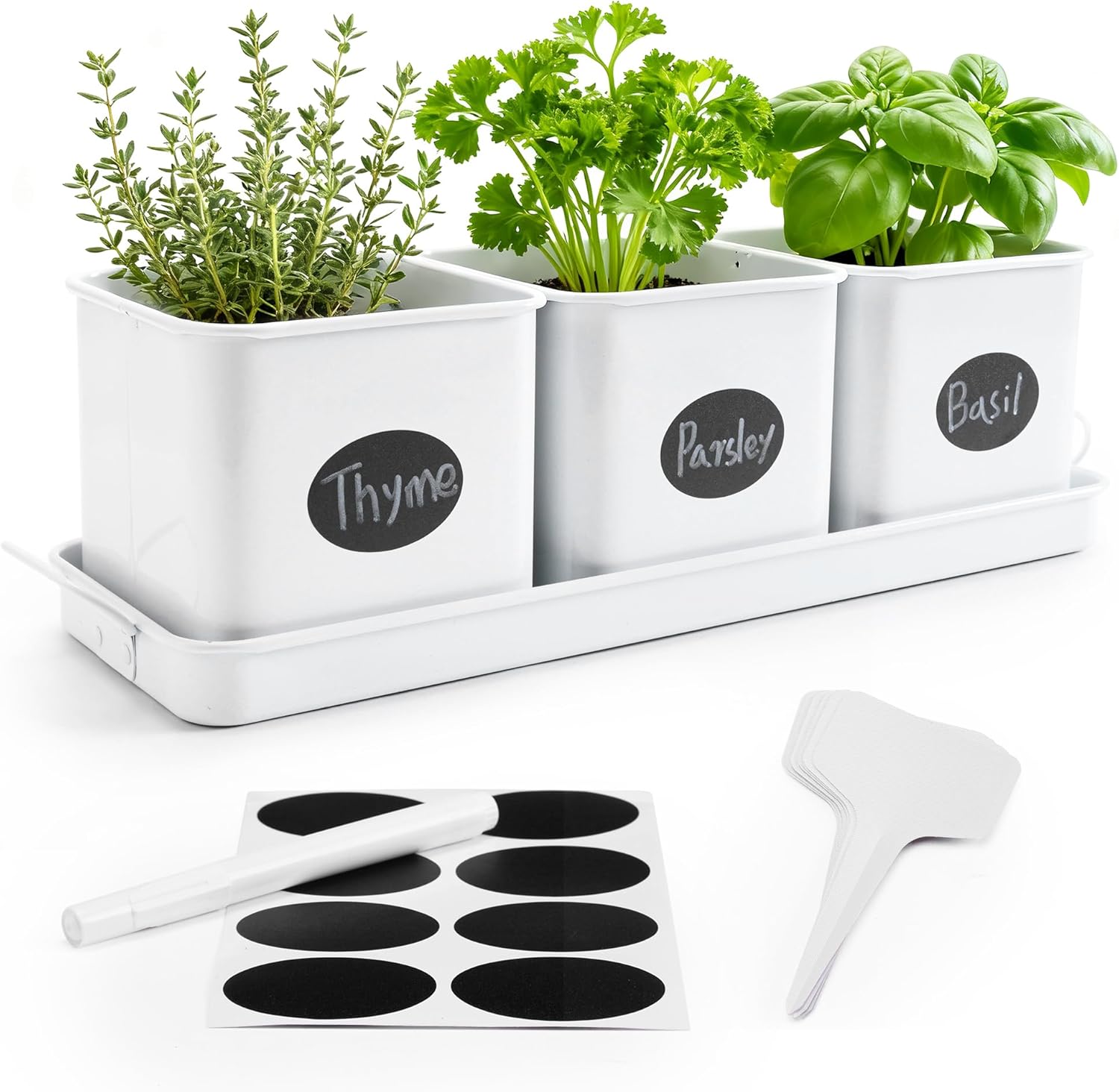
This Candco herb planter is a simple, reliable tabletop kit designed for growing three small herbs on a windowsill or countertop. The metal pots sit in a handled tray for easy moving and catching drips, and each pot includes drainage holes to help prevent overwatering. The set includes reusable chalkboard-style oval labels, plant stakes, and a white marker so you can identify seedlings and rotate herbs as needed. Its glossy white farmhouse finish looks tidy in kitchens and the rust-resistant metal construction gives it a durable feel compared with thin plastics. Because the pots are shallow and sized for small herbs or succulents, you will need to transplant larger or deep‑rooted herbs as they outgrow the containers. The planter is built for indoor tabletop mounting rather than permanent outdoor exposure. If you want a low-fuss, attractive vessel to start and maintain kitchen herbs with straightforward maintenance and easy labeling, this kit does that well.
Best for: Buyers who want a dependable, low-maintenance indoor herb setup for a kitchen windowsill and value durable materials and simple organization.
Less Ideal for: Gardeners who need large or deep planters for mature plants or those who plan to keep planters outdoors exposed to weather should look for larger or outdoor-rated options.
- Compact three-pot design fits windowsills and countertops
- Handled tray makes it easy to move the whole set for light or watering
- Included reusable labels and marker simplify plant identification
- Metal construction with rust-resistant finish is more durable than many plastic planters
- Shallow pots limit long-term growth of deep‑rooted herbs
Verdict: A sturdy, space-saving indoor herb planter kit that reliably keeps three small herbs organized and easy to care for.
Ahopegarden Indoor Hydroponic Garden Kit — 10‑Pod LED System

| Planting pods | 10 Pods |
|---|---|
| Reservoir capacity | 3 liters |
| Lighting schedule | 16 hours on, 8 hours off |
| Mounting type | Tabletop |
| Special feature | Self Watering |
This Ahopegarden 10‑pod hydroponic system provides a compact, mostly hands‑off way to grow kitchen herbs year‑round. It combines a 3 L water reservoir with a circulation system, full‑spectrum LED light that runs on a 16‑hour timer, and adjustable light height so seedlings can be moved up as they grow. The kit includes planting baskets, sponges, growth domes, basic A&B nutrients, and a water‑level window so you can check reservoir fill at a glance. Typical use is straightforward: place seeds in the sponges, set the pods in the tray, top up water and nutrients, and let the pump and light keep conditions steady. Practical benefits are faster, cleaner growth than soil for herbs and small greens, minimal daily maintenance, and an indoor tabletop footprint suitable for kitchens. Limitations: the unit is plastic and tabletop only so it is not built for large plants or outdoor use, and you will need to replace sponges and nutrient solution over time. Serious growers may want larger or more automated models, but for steady kitchen herb production this kit is a low‑risk entry product.
Best for: A practical buyer who wants a low‑effort, dependable way to grow fresh kitchen herbs indoors without soil and without complex controls.
Less Ideal for: Gardeners who expect to grow large fruiting crops or run a high‑output microfarm should choose a larger, more heavy‑duty system instead.
- Compact tabletop footprint fits a kitchen counter or windowsill
- Includes 10 planting pods and starter components (baskets, sponges, growth domes, nutrients) for immediate setup
- Adjustable LED grow light with 16‑hour timer simplifies light scheduling
- 3‑liter reservoir with visible water‑level window makes monitoring and refills easy
- Made of painted plastic so long‑term durability is limited compared with metal constructions
- Not suited for larger plants or heavy production beyond herbs and small vegetables
Verdict: An easy, compact hydroponic kit that reliably grows kitchen herbs with minimal daily attention.
OurWarm Windowsill Self-Watering Herb Planter Box, Set of 3

| Capacity | 4.1 liters |
|---|---|
| Material Type | Plastic |
| Mounting Type | Tabletop |
| Unit Count | 3 Count |
| Indoor Outdoor Usage | Indoor |
These OurWarm planter boxes are designed to keep small herbs and succulents healthy with minimal daily attention. Each rectangular pot uses two absorbent cotton ropes that wick water from a lower reservoir up into the soil, and a top-fill injection port and visible water-level window make refilling and monitoring simple. Typical use is on a windowsill, kitchen counter, or small balcony where you want a tidy row of herbs without daily watering. The plastic construction is lightweight and durable, and the set of three gives space for a few varieties or successive plantings. Installation is tool-free and straightforward, and the tabletop mounting style keeps soil and water contained. Limitations: the planters are relatively shallow and meant for small-rooted herbs and succulents rather than larger vegetables or long-term specimens, and plastic can look less premium than ceramic or wood. You also need to keep the reservoir below the marked line to avoid overwatering delicate plants.
Best for: Buyers who want a low-maintenance windowsill herb setup that saves time on daily watering and fits a small indoor-space gardening routine.
Less Ideal for: Gardeners who need deep-rooted or long-term container vegetables, or anyone seeking a high-end decorative planter for formal living spaces.
- Self-watering reservoir with cotton wicking reduces frequency of manual watering
- Top-fill injection port lets you add water without disturbing plants
- Visible water-level window makes it easy to know when to refill
- Lightweight durable plastic is easy to move and clean
- Three-pack gives room to grow multiple herbs or stagger plantings
- Shallow planting depth limits use to small herbs, succulents, or seedlings
- Plastic finish is utilitarian rather than decorative
Verdict: If you want an easy, low-maintenance way to grow multiple kitchen herbs on a windowsill, this self-watering three-pack is a practical pick.
Choosing the Right Indoor Planter for Herbs: Key Factors to Consider
Drainage and Water Control
Herbs dislike sitting in soggy soil, so a planter with effective drainage or an integrated reservoir matters. Good drainage prevents root rot and supports intermittent dry periods between waterings. If a planter has a reservoir, it should allow excess water to escape or be isolated so roots are not constantly submerged.
Consider how easy it is to empty or clean the drainage area. Indoor planters should limit spills and protect furniture from water stains. For kitchens and small indoor spaces, look for designs with overflow prevention or a clear indicator of when to remove water from a reservoir.
Soil Volume and Root Space
Different herbs have different root habits. Compact herbs like chives and thyme can thrive in small volumes, while basil and parsley prefer deeper or wider pots to develop a healthy root ball. Selecting a planter with the right soil volume helps avoid frequent repotting and supports stable growth through the season.
Also think about grouping multiple herbs together. A single wide planter can share soil and water resources but may require more careful spacing. Conversely, individual small planters make it easier to control conditions for each variety.
Light Placement and Size Compatibility
Indoor light is the limiting resource for many kitchen herb setups. The planter should fit the locations where you will place it: a south-facing windowsill, a narrow ledge, or a countertop under grow lights. Low-profile planters work better on shallow sills, while taller pots may block light or be awkward to move.
Measure available space before choosing a planter. Also consider whether you will use supplemental lighting; planters that pair well with clip-on or under-shelf lights give you more flexibility for positioning and grooming herbs.
Material and Finish
Planter material affects weight, thermal behavior, and longevity. Terracotta breathes and can help soil dry between waterings, but it can also be fragile and stain surfaces. Glazed ceramic looks attractive and resists moisture but can be heavier. Lightweight plastics are easy to move and less likely to break but may retain heat differently and sometimes degrade under UV from grow lights.
Also assess whether the finish is food-safe and easy to clean. For kitchen use, nonporous surfaces reduce staining and odor buildup. Consider the planter's resistance to chipping and whether the finish sheds soil when you move the pot.
Ease of Planting and Routine Maintenance
Daily access matters for herbs you harvest regularly. A planter with a wide opening makes planting, pruning, and harvesting easier. Features like removable inner pots or accessible reservoirs simplify repotting and cleaning. Consider how often you will water and whether the planter design reduces drips and mess.
Also evaluate how straightforward it is to refresh soil or divide plants in the container. Some planters have integrated liners or modular sections that save time when repotting or rearranging herbs.
Stability and Placement Safety
Indoor planters should be stable to prevent spills and protect young plants. A low center of gravity and a broader base help on narrow windowsills. If you have pets or children, choose a design that resists tipping and keeps soil contained during knocks.
Also consider attachment or anti-slip features if you plan to place the planter on a glass or polished wood surface. Weighted bases, non-slip pads, or secure mounting options enhance safety in high-traffic kitchen areas.
Best Pots for Small Windowsills
Windowsill herb gardens are common because they maximize natural light in a compact footprint. When space is limited, choose shallow but wide planters that let herbs spread horizontally without crowding. Low-profile containers allow multiple plants to share the same light source without creating shade problems.
Think about access for harvesting. Shallow troughs with individual planting cells make it easier to trim a single plant without disturbing neighbors. Also check that the planter's lip does not block incoming sunlight when placed against a window frame.
- Prefer low, wide troughs for multiple small herbs
- Check sill depth so the planter does not overhang and block light
- Look for built-in drainage to protect wood sills
Using Self-Watering and Reservoir Planters Indoors
Self-watering planters reduce the frequency of watering and can keep herbs evenly hydrated, which helps prevent stress during busy periods. They are especially useful if you travel or forget occasional watering sessions.
However, reservoir systems can be problematic for herbs that prefer to dry slightly between waterings. Choose reservoirs with a separate fill port and an overflow safeguard so roots do not sit in stagnant water. Periodically check that wicking materials are clean to avoid mold or algae buildup.
- Use reservoirs when you need low-maintenance watering
- Avoid reservoirs for herbs that require drier cycles
- Clean reservoirs seasonally to prevent algae
Placement Under Grow Lights
If natural light is limited, pairing a planter with a small LED grow light can sustain vigorous growth. Consider planters with adjustable height or open tops so you can position lights close to the foliage without causing heat stress.
Reflective surfaces or light-colored finishes inside the planter area can help distribute light to lower leaves. When using lights, maintain a consistent photoperiod suitable for herbs, typically 10 to 14 hours, and monitor for signs of light stress.
- Choose low-heat LED lights and adjustable mounts
- Position lights 6 to 12 inches above foliage depending on output
- Rotate planters occasionally for even growth
Grouping and Companion Planting Strategies
Planting compatible herbs together can simplify care and make efficient use of space. For example, group herbs with similar water and light needs so you can irrigate and fertilize uniformly. Using a single larger planter for a small herb cluster reduces the number of containers to manage.
Be mindful of root competition in shared planters. Thinner-rooted herbs can be crowded out by more aggressive species. Use dividers or stagger planting times to keep herbs balanced.
- Group by water needs to minimize overwatering
- Use dividers to slow root competition
- Stagger planting to give slower herbs room to establish
Cleaning and Winter Care
Regular cleaning helps prevent pests and diseases in indoor herb setups. Empty and rinse planters when you change soil or at the end of a growing season. Nonporous finishes make sanitizing easier and reduce residue buildup from fertilizers.
In winter, indoor herbs may need reduced fertilization and careful attention to humidity and light. Consider relocating planters closer to the brightest windows or supplementing with lights, and avoid overwatering when growth slows.
- Sanitize planters between plantings
- Adjust water and fertilization in low-light months
- Monitor for pests that thrive indoors, such as fungus gnats
How We Chose the Best Indoor Planter for Herbs
We focused on attributes that directly affect herb growth and the user experience of growing herbs indoors. Selection began with planters intended for container herb culture in small spaces, then filtered for build features and functional design rather than decorative extras. We excluded items meant only for large ornamental houseplants or outdoor-only containers. Evaluation criteria emphasized drainage and overflow control, appropriate soil volume relative to common herb root systems, compatibility with common indoor light sources and placement, and material durability for repeated watering. Usability factors included ease of planting and repotting, how easy the planter is to clean, and whether it supports tidy harvesting from a windowsill or countertop. We also considered weight and stability to reduce tip-over risks. These factors drove which planters made the shortlist and inform the scoring labels used on each product card.
FAQ
How big should an indoor herb planter be?
Size depends on the herb. Small herbs like chives and thyme do well in shallow pots around 4 to 6 inches wide, while basil benefits from deeper and wider containers. If you plan multiple herbs together, choose a planter that gives each plant several inches of space for roots.
Do indoor herb planters need drainage holes?
Drainage is important to prevent root rot. If a planter lacks drainage, use a layer of coarse material and water with care or choose one with an integrated reservoir that isolates excess water. Regularly check moisture levels rather than relying on a fixed watering schedule.
Can I use a decorative planter without drainage for herbs?
You can, but it requires more vigilance. Use a liner with drainage and remove excess water after watering, or plant in nursery pots that can be lifted out for watering. Decorative pots without drainage are best for short-term displays rather than long-term herb production.
What materials are best for kitchen herb planters?
Terracotta, ceramic, and plastic each have tradeoffs. Terracotta breathes and helps soil dry, ceramic is attractive and often nonporous, and plastic is lightweight and easy to move. Match the material to your watering habits and the planter's placement.
How often should I repot herbs in indoor planters?
Repotting frequency depends on growth rate. Many herbs need fresh soil or a larger container every 12 to 18 months. Check root health and pot-bound signs such as slowed growth or roots circling the pot to decide when to move up a size.
Final Verdict
Select an indoor planter that balances adequate soil volume and proper drainage with the size and light conditions of your space. Prioritize stability, easy access for harvesting, and a finish that suits your routine cleaning and placement needs. Remember that every choice involves tradeoffs: larger planters reduce watering frequency but take more space, while self-watering designs cut maintenance but can keep soil wetter. Focus on the few criteria most relevant to your situation – drainage, root space, and light placement – and you will narrow the options quickly. That approach makes it straightforward to pick an indoor planter for herbs that keeps plants healthy and easy to use in a kitchen or windowsill garden.
