

Note: This article contains affiliate links. If you click on these links and make a purchase, I may earn a small commission at no extra cost to you. This helps support my research and content. Read my full affiliate disclosure here.
Growing tomatoes on a patio changes how you think about soil depth, watering, and support. The right patio tomato planter makes it possible to produce full-size flavor in limited space while avoiding common container pitfalls like root crowding, poor drainage, and rapid drying. This guide covers seven shortlisted patio tomato planters chosen for small balconies, decks, and urban patios. We'll evaluate how well each option handles drainage, root volume, and plant support so you can pick a container that fits your space and growing goals. Read on to see how the options compare and which features matter most.
Top Picks at a Glance
| Best Overall The best all-around choice for most situations | LINEX Raised Garden Bed Planter Box with Trellis and Self-Watering Reservoir |  |
| Best Quality Built to a higher standard if you want something more solid | GTSABWAY Metal Planter Box with Trellis and Lockable Casters |  |
| Best Value The sweet spot between price and what you get | Lazzmonk 2-Pack 58" Raised Tomato Planter Box with Trellis (Self-Watering) |  |
| Best Budget The cheapest option that still gets the job done reliably | Suteck Raised Garden Bed Planter Box with Adjustable Trellis |  |
| Highest Rated A top-rated pick with lots of positive feedback | Vego Garden 21" Rolling Metal Planter Pot with Wheels, 20 Gallon |  |
| Most Popular A crowd favorite that many people choose with confidence | LEETOLLA 31.6" Elevated Raised Garden Bed with Wheels and Storage Shelf |  |
| Best Seller A high-volume bestseller chosen again and again | TeCreatio Tomato Planter with Trellis, Self-Watering Reservoir and Wheels |  |
LINEX Raised Garden Bed Planter Box with Trellis and Self-Watering Reservoir

| Capacity | 6.1 Gal |
|---|---|
| Material Type | Metal and reinforced PP |
| Included Components | Connector, Plugs, Tomato Planter Box, Trellis, Wheels |
| Other Special Features of the Product | Drainage Hole |
| Indoor Outdoor Usage | Indoor, Outdoor |
This LINEX raised garden bed combines a 6.1 gallon planter box with a 43.6 inch trellis to give climbing vegetables like tomatoes, peas, and vining flowers vertical support without constant staking. The built-in reservoir wicks water up to the soil for several days of irrigation while four drainage holes prevent waterlogging, which simplifies care for busy gardeners. The trellis frame is alloy steel and the box is reinforced PP, making the unit suitable for outdoor exposure, and the four lockable swivel casters let you move the planter for better sun or to protect plants from harsh weather. Assembly is straightforward and designed to be tool-free, and the modular trellis sections let you expand or change the configuration to suit your space. Limitations include the relatively small soil capacity compared with full-size raised beds, which means heavier feeders or large indeterminate tomato varieties may need more frequent fertilizing and watering once rootbound, and the metal trellis may eventually need touch-ups to avoid corrosion in very wet climates.
Best for: Gardeners who want a compact, low-maintenance solution for growing tomatoes or other climbers on patios, balconies, or small yards and value portability and easy care.
Less Ideal for: Growers planning to cultivate large indeterminate tomato varieties or multiple heavy-producing plants who need much larger soil volume and deeper beds.
- Integrated trellis provides sturdy vertical support for vining vegetables without extra staking
- Self-watering reservoir reduces how often you need to water by wicking moisture to roots
- Lockable swivel casters make it easy to reposition for sun or shelter
- Durable materials: reinforced PP planter box and alloy steel trellis suitable for outdoor use
- Small soil capacity limits root space for large or heavy-feeding tomato varieties
- Finish is unfinished metal that may require care in very wet or salty environments
Verdict: A portable, self-watering trellis planter that makes growing tomatoes and other climbers on small patios effortless and low-maintenance.
GTSABWAY Metal Planter Box with Trellis and Lockable Casters

| Material Type | Metal |
|---|---|
| Finish Type | Powder Coated |
| Included Components | Drainage Holes & Lockable Casters |
This galvanized steel planter is built as a 3-in-1 solution: a raised bed, trellis and privacy screen that makes it easy to grow patio tomatoes and other vining vegetables in a compact space. The powder-coated, galvanized construction resists rust and weather, so you can leave it outdoors through wet seasons without worrying about rotting like wood. It comes with pre-drilled holes and labeled attachment points that simplify assembly, and drainage holes help prevent waterlogging for healthier roots. The tall trellis lifts vines vertically to increase yield where floor space is limited, and lockable casters let you move the planter to track sun or protect plants from storms. Be aware the unit is a fixed rectangular bed and not insulated, so soil will heat and cool with ambient temperatures and may require more frequent watering in hot weather. Also assembly requires several screws and alignment steps, so plan for one person to help when fastening the trellis upright.
Best for: Gardeners who want a performance-focused patio solution for growing tomatoes and other vining vegetables in limited space, and who prioritize durability and vertical yield over decorative planters.
Less Ideal for: People seeking a lightweight, decorative pot or insulated planter for temperature-sensitive seedlings should consider alternatives better suited to delicate starts or small, decorative balconies.
- Galvanized steel construction offers strong corrosion and weather resistance for long outdoor life
- Integrated trellis allows vertical support for tomatoes, cucumbers and other vining crops to boost yield
- Pre-drilled holes and labeled parts speed up DIY assembly
- Lockable casters provide easy mobility to reposition for sunlight or shelter
- Built-in drainage holes prevent water accumulation and promote healthy root conditions
- No insulation or temperature regulation so soil can heat up quickly in full sun
- Assembly requires multiple fastenings and may need two people for easier alignment
Verdict: Choose this galvanized metal planter if you need a durable, mobile vertical planter that increases tomato yield on patios and small outdoor spaces.
Lazzmonk 2-Pack 58" Raised Tomato Planter Box with Trellis (Self-Watering)

| Capacity | 16 liters |
|---|---|
| Number of Levels | 1 |
| Other Special Features of the Product | Self Watering |
| Material Type | Stainless Steel |
This Lazzmonk two-pack combines narrow raised planter boxes with built-in corner trellises to support tomatoes, cucumbers, and other climbing vegetables in small yards or patios. Each 58-inch planter uses a grid bottom and side fill port to create a siphon-style self-watering reservoir that keeps soil evenly moist for several days while drainage holes prevent waterlogging. The stainless steel core trellis provides vertical support so heavy fruiting branches are less likely to sag or break, and the polypropylene planters are weather-resistant and easy to wipe clean. Assembly is tool-free and straightforward, and the units disassemble for storage. Limitations to know: the capacity is modest so you will need quality potting mix and frequent feeding for heavy-producing tomato varieties, and the triangular/narrow footprint is best for one plant per planter rather than a full multi-plant bed.
Best for: Gardeners on a limited budget who need a space-saving, low-maintenance solution for growing one or two tomato plants on a balcony, patio, or small yard.
Less Ideal for: Growers who want to cultivate multiple large indeterminate tomato plants or build a deep raised bed for extensive soil volume should look for larger planters or bed systems.
- Integrated stainless-steel trellis offers sturdy vertical support for vining plants
- Self-watering reservoir with side fill port reduces daily watering chores
- Tool-free assembly and disassembly for quick setup and compact storage
- Weather-resistant polypropylene construction suitable for outdoor use
- Relatively small soil capacity limits long-term nutrient and water storage for large indeterminate tomato varieties
Verdict: A budget-friendly, space-saving self-watering planter with built-in trellis support that simplifies growing one or two tomato plants on small patios or balconies.
Suteck Raised Garden Bed Planter Box with Adjustable Trellis

| Material Type | Plastic, Steel |
|---|---|
| Finish Type | Powder Coated |
| Item Type Name | Raised Garden Bed Planter Box with Trellis |
| Number of Packs | 1 |
This Suteck raised garden bed combines a shallow planter box with a powder-coated steel trellis to support tomatoes, cucumbers, beans, and other vining vegetables in patios or balconies. It is assembled without tools using snap-together rods and panels, and the modular extension rods let you increase trellis height as plants grow. A bottom water reservoir with drainage ports reduces how often you need to water and helps keep soil moisture consistent. The plastic and steel construction keeps the unit lightweight and rust-resistant for season-to-season use, though its compact footprint means it is best for one or two plants rather than a large tomato crop. Practical benefits include vertical growing that saves floor space, simple setup, and lower maintenance from the self-watering tray. Important limitations are limited soil volume and load capacity compared with full-size raised beds, so heavy indeterminate tomatoes will need close pruning or additional support as they mature.
Best for: A budget-minded urban gardener who wants to grow one or two tomatoes or other vining vegetables on a patio, balcony, or small raised-bed area and values easy setup and low maintenance.
Less Ideal for: Gardeners planning to grow many large indeterminate tomato plants or seeking deep, high-capacity raised beds for full-season production should consider larger, heavier containers or traditional raised beds.
- Adjustable trellis height supports plants through multiple growth stages.
- Built-in water reservoir with drainage reduces watering frequency.
- Powder-coated steel rods resist rust and add stable vertical support.
- Tool-free, quick assembly and modular design for small spaces.
- Small planting volume limits root development and yield for large tomato varieties.
- Lightweight plastic planter may need anchoring in windy conditions.
Verdict: A compact, inexpensive self-watering planter with an adjustable steel trellis that gives small-space gardeners easy vertical support for a couple of tomato plants.
Vego Garden 21" Rolling Metal Planter Pot with Wheels, 20 Gallon

| Capacity | 20 gallons |
|---|---|
| Material Type | Metal |
| Other Special Features of the Product | Drainage Hole, Portable, Weather Resistant |
| Included Components | Tray, Wheels |
| Indoor Outdoor Usage | Indoor, Outdoor |
This Vego Garden 21" rolling metal planter is built for growers who want a durable, mobile container for dwarf fruit and ornamental trees. The metal construction and corrosion‑resistant hardware give it a solid, long‑lasting feel while the integrated drainage hole helps avoid waterlogging for deeper root systems. Heavy‑duty locking caster wheels make it simple to move the planter on hard surfaces when you need to protect frost‑sensitive trees or change patio layout, and the included tray catches excess water. Typical use is planting patio or dwarf trees up to the recommended size, plus vegetables or large perennials that need good drainage and occasional relocation. The main benefits are sturdiness, mobility, and weather resistance, but the metal build is heavier than plastic alternatives and will heat up in full sun more easily. Assembly and wheel attachment are straightforward but require basic tools. For balanced gardeners who want a reusable, portable home for container trees, this planter covers the essentials without extra frills.
Best for: Gardeners who want a sturdy, reusable container for dwarf fruit trees or large patio specimens and value the ability to move pots seasonally without lifting heavy loads.
Less Ideal for: Those who need ultra‑lightweight pots for frequent lifting or who prefer thermally insulating materials for heat‑sensitive roots.
- Durable metal construction with corrosion‑resistant hardware for long service life
- Heavy‑duty locking wheels provide easy mobility and secure placement
- Built‑in drainage hole and included tray reduce risk of overwatering
- Weather resistant finish suitable for outdoor use
- Heavier than plastic planters which makes lifting difficult when empty
- Metal sides can warm up in hot sun which may stress root systems
Verdict: A robust, mobile metal planter that makes growing dwarf fruit and patio trees easier by combining durability, drainage, and locking wheels.
LEETOLLA 31.6" Elevated Raised Garden Bed with Wheels and Storage Shelf

| Capacity | 2.5 cubic feet |
|---|---|
| Number of Levels | 2 |
| Material Type | Iron |
| Indoor Outdoor Usage | Indoor, Outdoor |
| Other Special Features of the Product | 2 universal wheels + 2 stabilizing feet, 5 drainage holes + 2 cross-lines, Handle Bar, Storage Shelf |
This LEETOLLA elevated raised bed lifts container gardening to waist height so you can plant, water, and harvest without kneeling. It is built from painted iron with a powder-coat finish, includes two all-terrain wheels and an ergonomic handle for moving the filled bed, and has a lower shelf for tools or extra pots. The planting area holds about 2.5 cubic feet of soil and features five drainage holes plus cross-channels to help prevent waterlogging. Assembly is straightforward with the included hardware and takes roughly 30 to 45 minutes with two people. Practical benefits include reduced back strain, mobility to follow sun patterns or shelter plants from storms, and tidy storage on the attached shelf. Limitations are the metal construction, which will require touch-up care over time to avoid surface rust in very wet or coastal conditions, and the relatively narrow planting depth compared with deep beds, so very large root crops may be less suitable. The unit fits small balconies and patios but is best for mixed vegetables, herbs, and compact varieties rather than large, heavy crops.
Best for: Buyers who want comfortable, low-effort vegetable or herb gardening on a balcony, patio, or small yard and prioritize mobility and ease of use over maximal soil depth.
Less Ideal for: Gardeners seeking very deep beds for large root vegetables or those who prefer untreated wood or plastic planters that do not require metal maintenance.
- Elevated height reduces bending and kneeling for easier planting and harvesting
- Two large wheels and a handle let you reposition the bed to follow sun or avoid bad weather
- Built-in drainage holes and cross-channels reduce risk of overwatering
- Lower storage shelf keeps small tools and supplies handy
- Powder-coated iron construction for sturdier, decorative outdoor use
- Metal finish can require periodic touch-up to prevent corrosion in very wet or salty environments
- Planting depth is modest so very deep-rooted crops may be limited
Verdict: A mobile, waist-height metal raised bed that makes growing herbs and compact vegetables easier by cutting bending and letting you move plants to the best light.
TeCreatio Tomato Planter with Trellis, Self-Watering Reservoir and Wheels
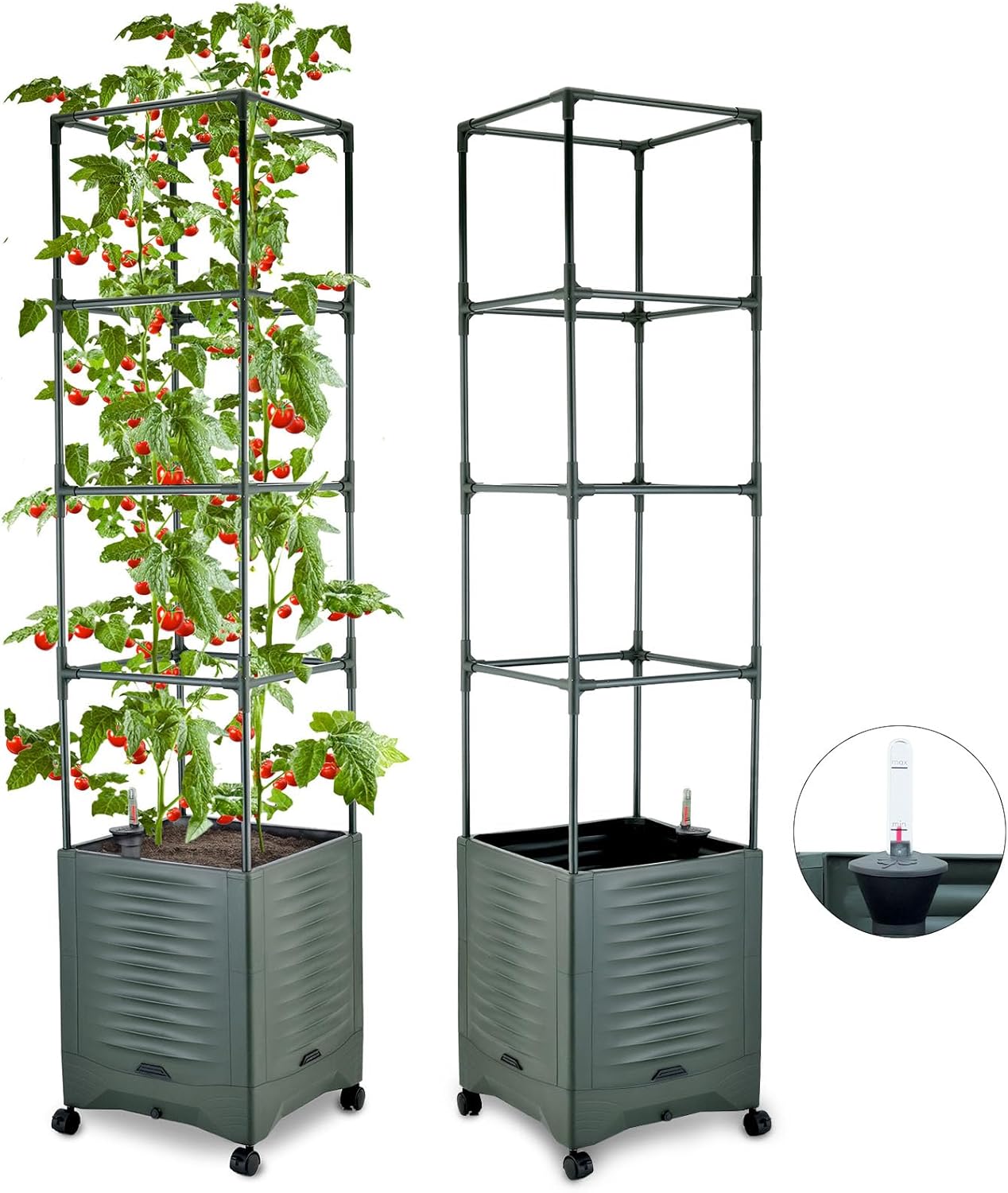
| Material Type | Metal |
|---|---|
| Capacity | 2 gallons |
| Included Components | Trellis, Wheels |
| Other Special Features of the Product | Rust Resistant |
| Indoor Outdoor Usage | Indoor, Outdoor |
This TeCreatio tomato planter is a vertical, floor-standing metal planter designed specifically for growing tomatoes in containers. It combines a 2.0 gallon self-watering reservoir with a top water inlet and a visible water-level indicator so you can refill without disturbing the soil. The powder-coated metal construction and dual-layer rust-resistant finish give it outdoor durability, and the included sturdy metal trellis supports indeterminate plants as they climb. Mobility is easy thanks to five wheels, four of which lock, so you can move the planter to optimize sun exposure or shelter plants during storms. Ventilation holes and two drainage outlets help prevent waterlogging while the planter depth supports adventitious root development for stronger plants. Limitations to note are its single planting column rather than multiple separate pockets and a modest soil capacity compared with large raised beds, so it is best for growing a few productive tomato plants rather than high-density production.
Best for: A home gardener who wants a low-maintenance, space-efficient solution for growing a few tomato plants on a patio, balcony, or small yard and values mobility and consistent moisture control.
Less Ideal for: Growers who need to produce large quantities or who prefer traditional wide raised beds for multiple plants should consider larger containers or bed systems instead.
- Self-watering reservoir with top fill and visible indicator reduces watering frequency
- Sturdy metal trellis offers reliable support for climbing indeterminate tomato varieties
- Powder-coated, rust-resistant finish improves outdoor durability
- Five wheels, four lockable, make it easy to reposition for light or weather management
- Single tall column and 2 gallon capacity limit soil volume compared with larger raised beds
- Not suitable for high-density planting or very large tomato varieties without frequent pruning
Verdict: Choose this planter if you want a compact, durable self-watering system with a built-in trellis and wheels for easy, low-maintenance tomato growing.
Choosing the Right Patio Tomato Planter: Key Factors to Consider
Container Size and Root Space
Tomatoes need enough root volume to support fruit set and steady water supply. On a patio, that often means choosing a planter with at least moderate depth and a roomy footprint so roots do not become cramped as the plant grows. A shallow pot will dry out quickly and limit fruiting, while an undersized container often forces frequent watering and lowers yield.
Consider the mature size of the variety you intend to grow. Compact determinate types can do well in smaller containers, but most producers find that a minimum volume and depth provide steadier results. Roomier planters also buffer temperature swings and reduce stress during hot afternoons on a paved surface.
Drainage and Water Retention Balance
Good drainage prevents root rot but excessive drainage combined with a small soil volume causes rapid drying. Look for planters with well-placed drainage holes and a design that allows for adding a moisture-retentive potting mix or internal water reservoir when needed. The right balance keeps roots moist without sitting in puddles after heavy watering or rain.
On patios where you cannot always water daily, a container that holds moisture without becoming waterlogged will reduce plant stress and blossom drop. Also think about whether drainage holes sit above the ground or on a saucer-friendly lip to avoid water damage to decking or balcony surfaces.
Support Options for Staking or Caging
Tomatoes fruit on vines that benefit from vertical support to reduce disease and improve air circulation. A planter should either include integrated supports, have attachment points for cages or stakes, or be sturdy enough to accept a separate trellis. On a patio, lightweight cages that clip to the container or built-in rings are often more practical than freestanding trellises that require ground anchoring.
Good support reduces stem breakage when fruit is heavy and keeps foliage off wet surfaces. Evaluate how easy it is to install, adjust, and remove supports when replanting or overwintering containers on the patio.
Material and UV Resistance
Patio planters face sun, heat, and repeated watering. Material choice affects longevity, weight, and heat transfer to the root zone. Plastics and composites tend to be lightweight and retain moisture but can degrade under constant UV exposure unless stabilized. Terracotta and ceramic are breathable but heavier and more prone to drying; they may crack in freeze-thaw conditions if left outdoors.
Consider whether you need a lightweight option you can move or a heavy, decorative container that stays put. Also think about how the material affects root temperature on a hot patio surface and whether it will hold up season after season.
Soil Mix Compatibility
Not all container sizes work the same with every potting medium. Tomatoes prefer a well-draining, nutrient-rich mix with good water-holding capacity. The planter should allow you to use a mix formulated for vegetables or amend soil for longer water retention without compromising drainage holes.
If the container has a narrow opening, filling and amending soil can be awkward. Also consider how easy it is to replace potting mix between seasons and whether the planter design permits adding slow-release fertilizer or a separate reservoir system.
Mobility and Patio Footprint
Patio gardeners often adjust layouts for sun angle, weather, and entertaining. A planter that is easy to move or sits on castors can be a big advantage. Mobility also helps with winter storage and pest management. However, very lightweight containers can tip in wind when plants are large, so balance ease of movement with stability.
Measure your patio area and account for the planter footprint, including any supports or drip trays. Think about access for watering and harvesting as well as proximity to railings or walls that affect light and airflow.
Variety Matching for Best Results
Match your tomato variety to the planter size and support you can provide. Compact determinate varieties and patio types are bred for container culture and usually need less root volume. If you plan to grow smaller-fruited beefsteaks or indeterminate types, choose planters with extra depth and volume and be prepared to provide stronger support.
Also consider maturity time and cropping strategy. Faster-ripening varieties reduce time under hot or stormy conditions on a patio, while longer-season types benefit from larger containers that buffer water stress.
- Choose compact varieties for very small planters
- Use deeper planters for indeterminate or heavier-fruiting types
- Consider maturity date alongside container capacity
Watering Strategies for Patio Containers
Patio containers tend to dry faster than ground beds, especially when exposed to heat-reflective surfaces. Establish a watering routine based on morning checks rather than strict schedules. Feel the top inch of soil and watch for wilting that does not recover quickly after watering.
For longer intervals between watering, use a mix with water-retentive components like coconut coir or well-aged compost and consider a self-watering planter or reservoir system. Mulching the surface with straw or coarse bark also cuts evaporation and keeps fruiting steadier.
- Water deeply to encourage root growth
- Use mulch to reduce surface evaporation
- Consider self-watering planters for hot, exposed patios
Placement and Light Considerations
Tomatoes need full sun to set fruit reliably. Place planters where they receive at least six hours of direct sun, ideally more. On small patios, reflectivity from light-colored walls can add useful light, but avoid areas with strong, drying wind.
Also think about spacing so plants get adequate airflow. Crowded containers increase humidity around foliage and raise the risk of disease. If you have limited sun exposure, select determinate or patio varieties that are more forgiving in lower light.
- Prioritize the sunniest spot for fruiting
- Avoid locations with strong, drying winds
- Allow space between containers for air movement
Winter Care and Off-Season Storage
Decide whether planters will remain outdoors over winter or be stored. Some materials resist freeze-thaw cycles better than others. Emptying and storing lightweight planters can extend lifespan, while heavy ceramics may survive outdoors but risk cracking in cold climates.
Cleaning and fully drying containers before storage reduces disease and pest carryover. If you overwinter soil in containers, refresh the mix before the next season to replenish nutrients and break disease cycles.
- Store lightweight planters indoors if possible
- Clean and dry containers to reduce pests
- Refresh potting mix between seasons
Designs That Reduce Mess and Staining
On patios, runoff and staining are common issues. Look for planters with built-in saucers, raised feet, or integrated reservoirs that keep excess water off decking and balcony floors. Some designs channel overflow away from railings to avoid staining and drip marks.
If stain prevention is a priority, place a drip tray or protective mat under the planter and position containers so overflow does not run onto painted surfaces.
- Use saucers or trays to protect decking
- Opt for raised feet to encourage airflow under the pot
- Position planters to minimize water runoff on railings
How We Chose the Best Patio Tomato Planter
We focused on features that matter for successful patio tomato growing rather than brand names. Our selection filters prioritized containers that provide adequate root volume for determinate and compact indeterminate varieties, reliable drainage to prevent waterlogged roots, and integrated or compatible plant-support options for staking or caging. We also considered material durability under sun and watering cycles, how quickly containers dry between waterings, and ease of filling and moving for patio use. Excluded items included containers that lack sufficient depth or volume for producing mature fruit, planters with no drainage or impossible retrofit options, and products designed only for decorative use without practical growing capacity. We assessed each candidate against measurable criteria: root volume and depth, drainage and water retention balance, structural durability and UV resistance, and support compatibility for staking or cages. Ease of maintenance and portability on paved or deck surfaces were also part of the editorial filters.
FAQ
How big should a patio tomato planter be for reliable fruiting?
For compact patio varieties, a container holding 5 to 10 liters often suffices, while larger or indeterminate types benefit from 15 liters or more. Bigger containers buffer moisture and support heavier yields but take more space.
Can I grow full-size tomatoes in patio planters?
Yes, you can grow many full-size tomatoes in larger patio planters if the container provides sufficient root volume and support. Expect to manage watering and provide sturdy staking or a cage as fruit develops.
Are self-watering planters worth it on sunny patios?
Self-watering planters reduce frequency of watering and can keep moisture more consistent on exposed patios. They are especially useful during hot stretches but still need monitoring to avoid salt buildup in the soil.
What is the best potting mix for patio tomato planters?
Use a well-draining, nutrient-rich mix with components that hold moisture like compost or coir combined with perlite for aeration. Avoid garden soil alone because it compacts and drains poorly in containers.
How often should I fertilize tomatoes in containers?
Container tomatoes typically need regular feeding because nutrients leach with frequent watering. Apply a balanced liquid feed every one to two weeks or a slow-release formula at planting following label guidance.
How do I prevent planters from tipping in wind?
Increase stability by using wider, heavier containers or placing a weight in the bottom if the planter allows it. Grouping multiple pots together and situating them near a wall or railing also reduces tipping risk.
Final Verdict
Choose a patio tomato planter that matches the variety you want to grow and the realities of your outdoor space. Prioritize sufficient root volume and reliable drainage, and make sure you can provide stable support for vines to reduce disease and breakage. Balance material, mobility, and moisture retention according to how often you can water and whether you need to move or store containers. When deciding, accept tradeoffs between weight and durability, and between retention and drainage. Focus on the handful of features that matter most for your patio: root space, water management, and support compatibility. With those priorities in place you can pick a planter that delivers steady fruiting season after season.
