

Note: This article contains affiliate links. If you click on these links and make a purchase, I may earn a small commission at no extra cost to you. This helps support my research and content. Read my full affiliate disclosure here.
Picking the right planter for indoor herbs matters more than many gardeners expect. The wrong container can cause overwatering, cramped roots, or awkward placement that limits light and harvests. You want planters that keep soil healthy, fit your windowsill or counter, and make watering and harvesting simple. This guide shortlists the top options for indoor herb growing, explaining how each type performs in typical home setups. Below you'll find concise evaluations based on drainage, root space, and everyday handling to help you choose the best planter for your kitchen or indoor garden.
Top Picks at a Glance
| Best Overall The best all-around choice for most situations | D'vine Dev Indoor Herb Garden Planter Set (3-Compartment) |  |
| Best Quality Built to a higher standard if you want something more solid | Gepege 6-Inch Ceramic Plant Pots with Drainage and Saucers (Set of 2) |  |
| Best Value The sweet spot between price and what you get | OurWarm Windowsill Self-Watering Herb Planter Box, Set of 3 |  |
| Best Budget The cheapest option that still gets the job done reliably | WSMKSZ 4-inch Self-Watering Plant Pots, 6-Pack |  |
| Highest Rated A top-rated pick with lots of positive feedback | vensovo Ceramic Herb Planter Set with Tray (3 Small Pots) |  |
| Most Popular A crowd favorite that many people choose with confidence | Barnyard Designs Indoor Herb Planter Set with Tray (3-piece, Galvanized Metal) |  |
| Best Seller A high-volume bestseller chosen again and again | Utopia Home Indoor Plant Pots with Drainage, 5‑Pack |  |
D'vine Dev Indoor Herb Garden Planter Set (3-Compartment)

| Capacity | 1.38 liters |
|---|---|
| Number of Pieces | 9 |
| Material Type | Plastic |
| Mounting Type | Tabletop |
| Indoor Outdoor Usage | Indoor |
This D'vine Dev herb planter set is a compact, practical solution for growing multiple herbs on a windowsill or countertop. The kit includes three separate square pots fitted into a 12 inch tray so you can keep different herbs separated while sharing the same location. Each pot has a drainage hole plus detachable saucer and a raised wave-pattern bottom to improve airflow and prevent waterlogging. Made from thick matte plastic, the pots are lightweight, unbreakable compared with ceramic, and easy to move for watering or repositioning. Typical uses are growing culinary herbs like basil, parsley, and chives, starting seedlings, or keeping succulents and small vegetables in a sunny kitchen. The main limitations are that the pots are small with limited soil volume and the product is intended for indoor tabletop use rather than larger outdoor plantings, so you will need to water and fertilize more frequently for thirsty herbs and replace soil as roots fill the compartments.
Best for: Someone who wants a dependable, low-maintenance way to keep several culinary herbs on a windowsill or countertop and values durability and tidy drainage.
Less Ideal for: Gardeners who need large containers for mature or heavy-feeding plants or those looking for outdoor-grade planters for patios or balconies.
- Three individual pots in one tray let you grow and rotate different herbs without root interference
- Built-in drainage holes with removable saucers reduce overwatering risk and keep surfaces clean
- Durable thick matte plastic is lightweight and resistant to breakage for long indoor use
- Raised wave-design bottom and drainage mesh improve airflow and help prevent soggy soil
- Small individual compartments limit root space so larger or fast-growing herbs will need repotting
- Designed for tabletop indoor use only and not suitable for heavy outdoor exposure
Verdict: A durable, low-fuss tabletop planter set built for reliably growing multiple windowsill herbs in a neat, drip-free setup.
Gepege 6-Inch Ceramic Plant Pots with Drainage and Saucers (Set of 2)

| Material Type | Ceramic |
|---|---|
| Finish Types | Glazed |
| Included Components | Mesh, Saucer, Tray |
| Indoor Outdoor Usage | Indoor, Outdoor |
These Gepege ceramic pots are a practical, attractive choice for everyday indoor plants like succulents, small orchids, and tabletop greens. The set includes two glazed ceramic pots, matching saucers that can be used in two positions, and mesh pads that help keep soil from washing out through the drain hole. In typical use you plant in the ceramic pot, place the mesh pad over the hole to hold soil, and use the saucer to catch excess water or sit beneath the pot for a tidier display. The glazed finish gives a retro, solid look that works on windowsills and tables while the drainage makes them suitable for plants that dislike sitting in water. Because they are ceramic they feel substantial and resist tipping, but they are breakable if dropped and heavier than plastic alternatives. These pots suit buyers who want a balance of style, functionality, and easy maintenance for small indoor plants but who can accept the fragility of ceramic.
Best for: Buyers who want an attractive, functional planter for small indoor plants and value drainage and tidy watering in a matching set for windowsills, shelves, or tabletops.
Less Ideal for: People needing lightweight, unbreakable pots for high-traffic areas or large pots for bigger houseplants should look elsewhere.
- Includes drainage hole plus mesh pad to prevent soil loss and support healthy root drainage
- Removable saucers offer two placement options for catching excess water or decorative display
- Glazed ceramic finish provides a substantial, attractive retro look suitable for indoor display
- Set of two gives matching planters for paired displays or multiple plants
- Ceramic construction is heavier and can chip or break if knocked or dropped
- Size is limited to small plants so not suitable for larger container-grown species
Verdict: A stylish glazed ceramic twin set that delivers practical drainage and tidy watering for small indoor plants while looking good on shelves and windowsills.
OurWarm Windowsill Self-Watering Herb Planter Box, Set of 3

| Capacity | 4.1 liters |
|---|---|
| Material Type | Plastic |
| Mounting Type | Tabletop |
| Unit Count | 3 Count |
| Indoor Outdoor Usage | Indoor |
These OurWarm planter boxes are designed to keep small herbs and succulents healthy with minimal daily attention. Each rectangular pot uses two absorbent cotton ropes that wick water from a lower reservoir up into the soil, and a top-fill injection port and visible water-level window make refilling and monitoring simple. Typical use is on a windowsill, kitchen counter, or small balcony where you want a tidy row of herbs without daily watering. The plastic construction is lightweight and durable, and the set of three gives space for a few varieties or successive plantings. Installation is tool-free and straightforward, and the tabletop mounting style keeps soil and water contained. Limitations: the planters are relatively shallow and meant for small-rooted herbs and succulents rather than larger vegetables or long-term specimens, and plastic can look less premium than ceramic or wood. You also need to keep the reservoir below the marked line to avoid overwatering delicate plants.
Best for: Buyers who want a low-maintenance windowsill herb setup that saves time on daily watering and fits a small indoor-space gardening routine.
Less Ideal for: Gardeners who need deep-rooted or long-term container vegetables, or anyone seeking a high-end decorative planter for formal living spaces.
- Self-watering reservoir with cotton wicking reduces frequency of manual watering
- Top-fill injection port lets you add water without disturbing plants
- Visible water-level window makes it easy to know when to refill
- Lightweight durable plastic is easy to move and clean
- Three-pack gives room to grow multiple herbs or stagger plantings
- Shallow planting depth limits use to small herbs, succulents, or seedlings
- Plastic finish is utilitarian rather than decorative
Verdict: If you want an easy, low-maintenance way to grow multiple kitchen herbs on a windowsill, this self-watering three-pack is a practical pick.
WSMKSZ 4-inch Self-Watering Plant Pots, 6-Pack
| Material Type | Plastic |
|---|---|
| Other Special Features of the Product | Drainage Hole, Lightweight, Self Watering |
| Mounting Type | Tabletop |
| Indoor Outdoor Usage | Indoor, Outdoor |
| Included Components | Cotton Rope, Water Reservoir, Watering Lip |
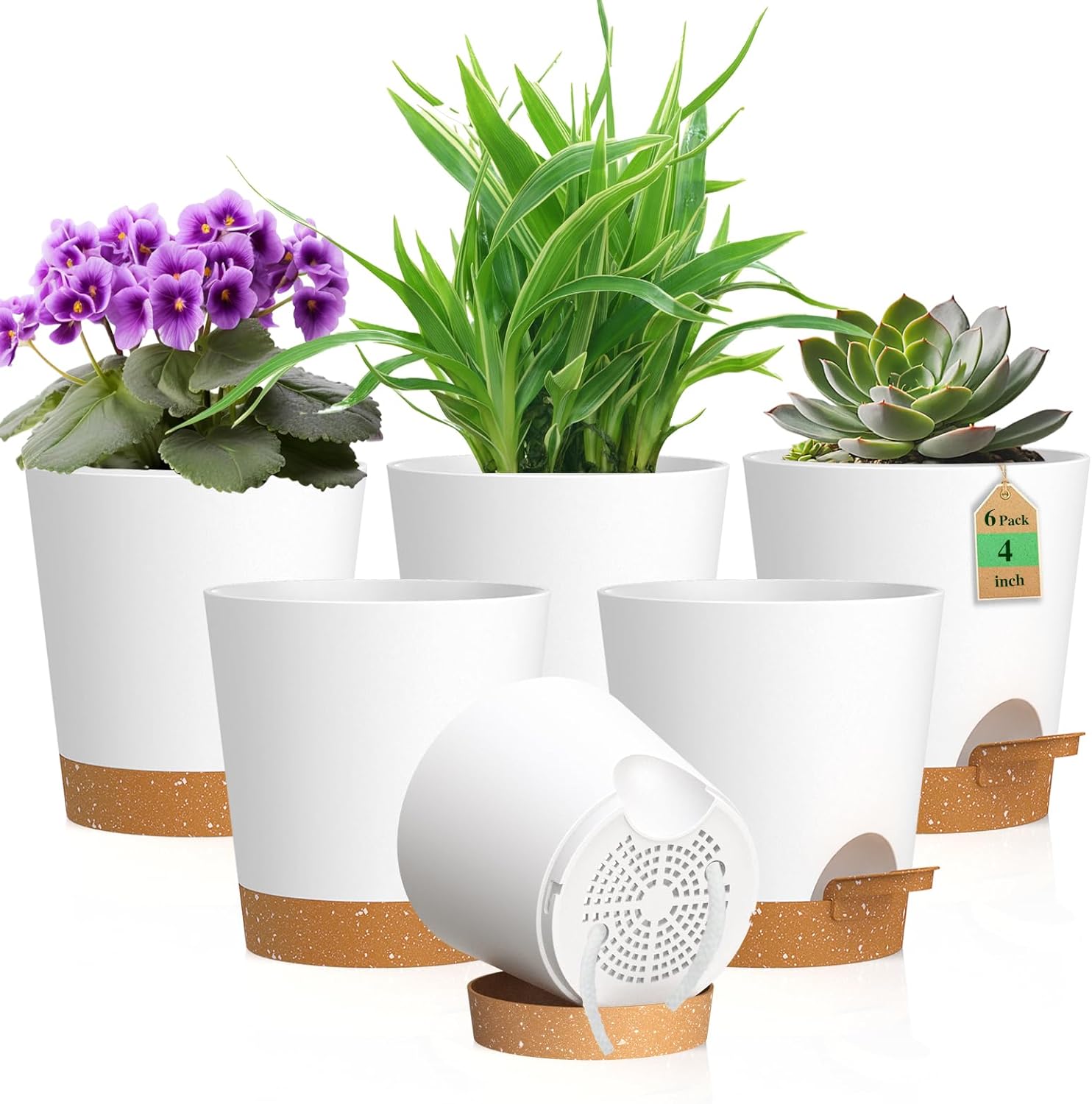
These WSMKSZ 4-inch self-watering pots are a budget-friendly, no-frills solution for small houseplants and seedlings. Each pot includes a built-in water reservoir and a cotton wick that draws moisture to the root zone, while detachable bottom trays collect excess drainage so you can keep surfaces clean. The set of six lightweight PP plastic pots is durable and UV resistant enough for both indoor and sheltered outdoor use. They are best for succulents, cacti, herbs and other small container plants where consistent but not excessive moisture helps prevent rot and stress. Practical extras include drainage holes and a matte finish that hides wear. Expect the pots to be basic rather than decorative and to require occasional cleaning of the reservoir and wick to avoid salt buildup. Their small 4-inch size limits them to seedlings or compact species, so you will need larger containers as plants grow.
Best for: A frugal houseplant owner or beginner who wants low-maintenance containers for succulents, herbs, or propagation and values buying multiple pots at once.
Less Ideal for: Gardeners who grow larger houseplants, heavy feeders, or plants that need deep root space should choose bigger, more decorative planters or nursery-sized pots.
- Self-watering reservoir with wick reduces how often you need to water
- Includes detachable saucers to catch excess water and protect surfaces
- Durable, lightweight recyclable PP plastic that is easy to move
- Set of six gives value for small collections or propagating seedlings
- Small 4-inch size restricts use to seedlings and very small plants
- Basic appearance without decorative detailing
Verdict: A cost-effective six-pack of small self-watering pots that keeps small indoor plants hydrated with minimal effort.
vensovo Ceramic Herb Planter Set with Tray (3 Small Pots)

| Material Type | Ceramic |
|---|---|
| Other Special Features of the Product | Drainage Hole |
| Mounting Type | Tabletop |
| Finish Types | Glazed |
This vensovo ceramic planter set includes three small glazed pots and a long matching tray made for indoor herb and succulent growing. Each pot has a built-in drainage hole to prevent waterlogging while the tray collects excess water, which makes routine watering and mess control straightforward on a windowsill or countertop. The pots are sized for single herbs or small succulents and are finished with a floral green leaf pattern that suits kitchen and apartment decor. Ceramic construction gives the set solid stability and makes it easy to wipe clean, though the pots are relatively small so plants will need regular watering and occasional repotting as herbs grow. The tray and tabletop mounting make it simple to keep seedlings or starter herbs together, but the set is intended for indoor use only and will not replace larger outdoor containers or deep-rooted plants. For someone wanting a tidy, reliable home herb setup, this set covers the basics with durable materials and built-in drainage.
Best for: Buyers who want a dependable, low-maintenance indoor herb starter set that keeps watering tidy and fits on a windowsill or small countertop.
Less Ideal for: Gardeners who need deep containers for established herbs, larger plants, or outdoor planters should choose bigger pots or outdoor-rated containers.
- Built-in drainage holes with a matching tray to prevent overwatering and contain excess water
- Glazed ceramic construction is sturdy, easy to clean, and stable for indoor use
- Compact three-pot layout designed to organize multiple herbs or succulents on a windowsill
- Decorative floral green leaf finish that doubles as functional kitchen or office decor
- Small pot volume limits root space so herbs will need frequent watering and eventual repotting
- Designed for indoor tabletop use only and not suited for larger or outdoor plantings
Verdict: A practical, attractive indoor herb starter set that prioritizes reliable drainage and tidy tabletop use.
Barnyard Designs Indoor Herb Planter Set with Tray (3-piece, Galvanized Metal)

| Material Type | Galvanized Metal |
|---|---|
| Capacity | 9 cups |
| Other Special Features of the Product | Drainage Hole, Drip Tray Included, Lightweight |
| Mounting Type | Tabletop |
| Indoor Outdoor Usage | Indoor, Outdoor |
This three‑pot herb planter set is designed for windowsill and countertop herb gardens where space is limited. Each cylindrical galvanized metal pot nests into a 12.5‑inch tray so you can group three small herbs together and keep them tidy on a kitchen sill. The built‑in drainage holes plus the snug drip tray make watering mess-free and reduce the risk of root rot for potted basil, thyme, or chives. The painted finish and farmhouse styling provide a decorative, vintage look while the lightweight metal keeps the set easy to move for light changes or repositioning. Because the pots are small, they suit shallow‑rooted herbs or seedlings rather than larger perennial herbs that need more soil volume. Expect to repot herbs into larger containers as they mature and to monitor soil moisture more often in the shallow pots. Overall, this set makes it simple to start a compact window box herb display that is both attractive and functional for frequent kitchen use.
Best for: Buyers who want an attractive, space‑saving starter setup to grow kitchen herbs on a windowsill or small counter where easy access and tidy watering matter.
Less Ideal for: Gardeners who need deep pots for mature perennial herbs or those planning to grow large bushy varieties without repotting should choose larger containers instead.
- Includes three pots plus a fitted drip tray to keep a grouped windowsill herb display tidy
- Galvanized metal construction is durable for indoor or sheltered outdoor use
- Drainage holes reduce overwatering risk and make indoor watering cleaner
- Lightweight for easy repositioning and cleaning
- Shallow pot capacity limits long‑term growth of larger herbs without repotting
- Painted finish may chip over time with heavy outdoor exposure
Verdict: A compact, stylish three‑pot galvanized set that makes it easy to start and maintain a tidy windowsill herb garden.
Utopia Home Indoor Plant Pots with Drainage, 5‑Pack

| Material Type | Plastic |
|---|---|
| Included Components | Saucers Tray |
| Unit Count | 5 Count |
| Other Special Features of the Product | Frost Resistant, Lightweight, Portable, Rot Resistant |
| Mounting Type | Tabletop |
These Utopia Home planters are a practical starter set for indoor potted trees and other houseplants. The pack includes five nested sizes and matching saucers so you can pot seedlings, small citrus or ficus cuttings and move them around a sunny windowsill or tabletop. Made from reinforced PP plastic, the pots are frost and rot resistant and feel light enough to reposition without strain. Each pot features drainage provisions and removable plugs that help prevent overwatering while the saucers protect furniture from runoff. The minimalist polished finish is unobtrusive with most décor, and the multiple sizes make it easy to repot a sapling as it grows. Limitations are that these are basic plastic planters so they offer less insulation and long-term durability than ceramic or thick fiberstone, and the listed specs emphasize indoor use rather than outdoor longevity in harsh weather. For buyers who prioritize fuss-free, lightweight containers with simple drainage, this set covers common needs for small potted trees and starter transplants.
Best for: Buyers who want a low-risk, practical set of indoor planters for starting or styling small potted trees and other houseplants and who value ease of use and social proof from a popular, well-reviewed product.
Less Ideal for: Gardners seeking heavyweight, display-grade planters for mature large trees or outdoor year-round exposure should consider ceramic, concrete, or fiberstone alternatives.
- Multiple pot sizes in one set for potting and repotting as a tree seedling grows
- Included saucers protect surfaces from drainage and allow indoor placement
- Drainage plugs and design to reduce risk of overwatering
- Lightweight, frost and rot resistant plastic that is easy to move
- Plastic construction provides less thermal insulation and premium appearance than heavier ceramic or stone pots
Verdict: A convenient, well-reviewed five-piece indoor planter set that makes starting and repotting small potted trees simple and low effort.
Choosing the Right Planter for Indoor Herbs: Key Factors to Consider
Drainage and Water Management
Drainage determines how easily excess water leaves the pot and how likely the soil is to stay aerated. For indoor herbs, standing water quickly leads to root rot and fungal issues, so you want planters that either have built-in drainage holes or allow for an inner liner with a reservoir. Terracotta wicks moisture differently than plastic, and containers without holes require precise watering schedules.
Proper drainage also affects how often you need to water. Containers with more free drainage dry faster and may need daily attention in warm windowsills. Conversely, planters designed to retain moisture can reduce watering frequency but increase risk if you overwater. Consider whether you prefer a system that makes overwatering hard or one that holds moisture for forgetful growers.
Root Space and Pot Volume
Herbs have varied root habits: basil and cilantro develop bushy shallow roots, while mint spreads laterally and can become crowded. The planter should offer enough horizontal and vertical space for the typical root architecture of the herbs you plan to grow. Too-small pots force frequent repotting and reduce overall vigor and flavor development.
Pot volume also affects soil stability and nutrient availability. Larger volumes buffer temperature and moisture swings but take more room. Match the planter size to the herb's mature size and whether you intend to keep multiple plants in the same container.
Material, Porosity, and Indoor Climate
Planter material influences moisture exchange, weight, and how it interacts with indoor humidity. Unglazed clay breathes and dries quickly, which is helpful in humid kitchens but may dry out thin-soil setups fast. Glazed ceramics and plastics retain moisture longer and are lighter to move. Metal can heat up near sunny windows, stressing roots.
Think about your indoor climate: a dry, heated apartment will favor materials that hold moisture, while humid or cooler spaces do better with more porous pots. Material also affects staining, salt buildup from fertilizers, and how the planter pairs with saucers or trays to protect surfaces.
Ease of Maintenance and Repotting
Indoor herb planters should make routine tasks simple. Removable liners, self-watering inserts, or wide rims simplify repotting and soil refreshes. Consider how easy it is to access roots for dividing or replacing soil, and whether the planter design collects debris or makes cleaning difficult.
Also evaluate how the planter ages: some finishes chip or accumulate salts that require scrubbing. If you plan to rotate herbs seasonally or move containers between light sources, choose a planter that is light enough to lift without risking slips or spills.
Stability and Placement
Planters must remain stable on narrow windowsills, counters, or small shelves. Top-heavy containers or tall, narrow pots can tip when herbs are pruned or watered. A low, broad design reduces tipping and keeps root zones evenly distributed.
Placement concerns include footprint and whether you need stackable or modular options for small spaces. Consider the planter's base compatibility with saucers to protect indoor surfaces from drips and staining.
Aesthetic Fit and Functional Design
Indoor herb planters serve both functional and decorative roles. Choose a style that complements the room but does not compromise function. For example, decorative outer pots without drainage should accommodate an inner pot or liner that handles watering safely.
Functional design details like built-in handles, integrated saucers, or modular trays can improve usability. Think about how the planter integrates into your daily routine and kitchen layout to keep herbs accessible and healthy.
Best Planter Shapes for Different Herbs
The shape of the planter affects root distribution and how the plant sits relative to light. Shallow wide containers suit flat-rooted herbs like parsley and basil, while deeper pots help herbs that develop slightly longer root tapers. Long rectangular troughs are ideal for creating a small mixed herb row on a windowsill.
Consider how shape influences watering and airflow around plants. Narrow tall pots can hold more soil but may leave the surface drier than the root zone. Match shape to the herb's growth habit to minimize transplanting and maximize harvests.
- Shallow, wide bowls for basil, parsley, and cilantro
- Rectangular troughs for multiple small herb plants in one container
- Moderate-depth pots for rosemary or sage when grown from cuttings
Indoor Placement and Light Strategies
Most culinary herbs need bright light to produce flavorful leaves. South- or west-facing windows often work best, but many kitchens have only eastern exposure. When light is limited, place planters where they get the most direct morning or midday sun and rotate regularly for even growth.
Use plant stands, shelves, or tiered setups to move planters closer to light without crowding your counter. Consider thin-profile planters for narrow sills and designs that allow hanging or wall-mounting if floor or counter space is scarce.
- Rotate pots weekly to prevent lopsided growth
- Group planters with similar light needs together
- Use reflective surfaces behind planters to boost light in dim spots
Self-Watering Options and When to Use Them
Self-watering planters reduce the risk of both under- and overwatering by providing a small reservoir that the potting mix can draw from. They are useful if you travel, forget occasional waterings, or have sun-exposed spots that dry out soil quickly. However, reservoirs can keep soil too wet for herbs that prefer drier feet, like rosemary.
Pick self-watering systems with overflow safeguards and easy-to-access fill ports. For windowsills where spills would be a problem, ensure the design isolates the reservoir from the outer decorative shell.
- Good for busy households or warm, sunny windows
- Avoid for herbs that require drier conditions
- Look for clear fill lines and removable reservoirs for cleaning
Saucers, Trays, and Surface Protection
Protect countertops and shelves from water and fertilizer salts by using properly sized saucers or trays under each planter. For decorative pots without drainage, a saucer alone is not enough; use an inner liner or choose a discrete drip tray that can capture spills during watering.
Elevated saucers or trays with feet improve airflow under the pot and reduce the risk of mold or surface staining. Keep saucers clean and empty standing water to prevent pests and odors.
- Match saucer size to pot base to prevent overflow
- Raised trays help airflow and reduce surface moisture
- Clean saucers regularly to avoid salt buildup
Growing Multiple Herbs Together
Combining herbs in one planter can save space and create attractive mixes, but only pair plants with similar water and light needs. Fast-growing, thirsty herbs placed with drought-tolerant types will outcompete one another. Consider root behavior too: invasive spreaders can dominate shallow containers.
When planting multiple herbs, leave room for future growth and use soil mixes that balance drainage and nutrient retention. Plan for occasional thinning or division to maintain vigor.
- Group herbs by water and light needs
- Leave at least an inch or two between small seedlings to reduce transplant shock
- Use intermediate-sized troughs for companion planting
How We Chose the Best Planter for Indoor Herbs
We evaluated planters for indoor herbs using criteria gardeners rely on for consistent kitchen-garden results. We prioritized drainage control because small indoor containers are prone to waterlogging, and root space because many herbs prefer loose soil and room to develop shallow but spreading roots. Material and finish were considered to assess moisture retention and durability in indoor conditions. Ease of handling and maintenance were included to reflect how often herbs are moved, repotted, or harvested. Finally, compatibility with typical indoor light spots and footprint constraints guided selection for real kitchen and apartment situations. We excluded planters that are strictly decorative without functional drainage or those designed only for outdoor beds. We also filtered out containers that require complex assembly or ongoing technical maintenance. The remaining candidates were judged on measurable specs like pot volume, drainage options, weight, and typical maintenance needs, matching the priorities gardeners have when growing herbs indoors.
FAQ
Do indoor herb planters need drainage holes?
Often yes. Drainage holes help prevent waterlogged soil and root rot, which are common in indoor planters. If you prefer decorative pots without holes, use an inner liner or carefully control watering to avoid excess moisture.
What size planter is best for a single herb plant?
Usually a pot between 4 and 8 inches in diameter is appropriate for most common herbs. Smaller herbs and seedlings can start in 3 to 4 inch pots, while basil and mint benefit from the larger end to allow fuller root development.
Are self-watering planters good for all herbs?
They are useful for many herbs, especially in warm, dry indoor spots or for people who travel. However, herbs that prefer drier conditions may stay too wet in self-watering systems, so choose based on the herb species and monitor moisture levels.
How often should I repot indoor herbs?
It depends on growth rate, but many herbs need repotting every 12 to 18 months or when roots start circling the pot. Fast growers may need more frequent attention to refresh soil and give roots space.
What potting mix works best for indoor herbs?
A well-draining mix that retains some moisture is ideal. Look for blends with peat or coco coir plus perlite or grit to improve drainage. Avoid heavy garden soils that compact and reduce aeration in small containers.
Final Verdict
When choosing a planter for indoor herbs, prioritize drainage and appropriate root space first, then match material and shape to your indoor climate and available light. Accept tradeoffs: retainable materials reduce watering frequency but increase the need to monitor moisture, while porous pots require more frequent care but improve aeration. For most kitchen gardeners, a mid-sized pot with good drainage and a manageable weight offers the best balance of harvest reliability and ease of use. Decide which features matter most for your routine and space, then pick a planter that aligns with those priorities. That approach minimizes repotting and keeps herbs productive and flavorful over many seasons.
