

Note: This article contains affiliate links. If you click on these links and make a purchase, I may earn a small commission at no extra cost to you. This helps support my research and content. Read my full affiliate disclosure here.
Picking the right urn planter changes how container plantings perform and how a porch, patio, or garden entrance looks. An urn that holds enough soil, drains well, and stands up to seasonal weather will reduce watering hassles, protect roots, and keep plantings looking tidy. This guide shortlists six top urn planters suited to typical outdoor situations, from sheltered porches to exposed garden beds. We evaluated each option on build material, drainage design, weight and stability, and ease of seasonal care to help you choose the right container for your site and plants. Read on to see which styles and construction choices fit your space.
Top Picks at a Glance
| Best Overall The best all-around choice for most situations | Mayne Vienna 25in Self-Watering Tall Square Urn Planter |  |
| Best Quality Built to a higher standard if you want something more solid | Austram Pedestal Urn Planters, Set of 2 (Stone-Resin, 21.5") |  |
| Best Value The sweet spot between price and what you get | Pure Garden Front Porch Outdoor Planter Urns, 16 x 18 in, 2-Pack |  |
| Best Budget The cheapest option that still gets the job done reliably | Arcadia Garden Products Classic 10×12" Plastic Urn Planter |  |
| Most Popular A crowd favorite that many people choose with confidence | Arcadia Garden Products Classic 16×18" Plastic Urn Planter |  |
| Best Seller A high-volume bestseller chosen again and again | Arcadia Garden Products Classic 13×15" Plastic Urn Planter, Brushed Copper | |
Mayne Vienna 25in Self-Watering Tall Square Urn Planter

| Capacity | 3 gallons |
|---|---|
| Other Special Features of the Product | Lightweight, Self Watering, UV Resistant, Weather Resistant |
| Material Type | Polyethylene (PE) |
| Indoor Outdoor Usage | Indoor, Outdoor |
The Mayne Vienna 25in urn planter is a lightweight, weather-resistant container that combines a clean urn silhouette with a built-in self-watering reservoir. It is typically used as a statement planter on porches, patios, or indoors to display flowers or mixed foliage with less daily watering. Double-wall polyethylene gives UV and weather resistance so it holds up to sun and seasonal conditions while staying lighter than ceramic or concrete alternatives. The reversible saucer/tray creates a reservoir for consistent root moisture or flips to improve drainage during heavy rains or winter storage. Practical benefits include low maintenance watering, all-season outdoor durability, and a refined look that pairs well with different styles. Important limitations are its 3-gallon capacity and relatively narrow planting volume compared with large urns, so it is best for medium to small specimens rather than large trees or big shrubs, and the lightweight plastic finish will not have the heft or perceived premium of stone or ceramic pieces.
Best for: Buyers who want a low-maintenance, attractive urn for a porch, patio, or indoor display and prefer weatherproof, easy-to-move planters that keep plants reliably watered.
Less Ideal for: Not a good fit for gardeners who need large-volume planters for big shrubs or trees or who want the weight and texture of natural stone or ceramic.
- Built-in self-watering reservoir reduces frequent watering and helps maintain consistent root moisture
- UV-resistant polyethylene resists fading and weather damage for outdoor use
- Lightweight construction makes it easy to move or rearrange compared with ceramic or stone
- Reversible saucer allows use as a reservoir or as an elevated drain tray
- 3-gallon capacity limits planting to small or medium plants rather than large specimens
- Polyethylene finish is less heavy and tactile than stone or ceramic alternatives
Verdict: A stylish, low-maintenance urn planter that keeps medium and small container plants consistently watered while standing up to sun and weather.
Austram Pedestal Urn Planters, Set of 2 (Stone-Resin, 21.5")

| Material Type | Natural Stone Powder, Recycled Plastic |
|---|---|
| Capacity | 5 gallons |
| Other Special Features of the Product | Lightweight, Removable Drainage Plug, Weather Resistant |
| Mounting Type | Floor Standing |
| Indoor Outdoor Usage | Indoor, Outdoor |
These Austram pedestal urns are designed to give the look of carved stone without the weight and fragility of real concrete. Sold as a matched set of two, each urn assembles without tools and sits on a stable pedestal base to frame entryways, porches, or patio corners. The stone-resin composite blends natural stone powder with recycled plastic to create a matte, textured finish that resists cracking and chipping better than traditional concrete or ceramic. A removable drainage plug makes the pair versatile for indoor displays or outdoor planting where you can open the plug to allow runoff. At 21.5 inches high with a 16-inch opening they hold enough soil for layered seasonal arrangements, small shrubs, or ornamental grasses. Expect easy repositioning thanks to the lightweight construction but be aware that lighter planters can be more susceptible to tipping in very windy spots unless anchored or weighted with soil and rocks. The finish is convincing and durable for year-round outdoor use if properly drained and winterized.
Best for: Buyers who want the visual impact of carved stone planters but prioritize easier handling and lower risk of cracking, especially for framing entryways and staged seasonal plantings.
Less Ideal for: Gardeners who need permanently anchored, heavyweight planters for very exposed sites or who require true stone or concrete for historical authenticity.
- Realistic stone-textured finish that elevates curb appeal
- Lightweight stone-resin construction makes placement and seasonal changes easier than true stone
- Removable drainage plug for clean indoor use or proper outdoor drainage
- Tool-free assembly and matched set provides instant symmetry for entryways
- Lightweight build can require added ballast or secure placement in exposed, windy locations
- Not as heavy or frost-resistant as solid concrete for extreme climates
Verdict: If you want the carved-stone look with easier handling and outdoor durability, this matched set delivers high-impact styling with practical performance.
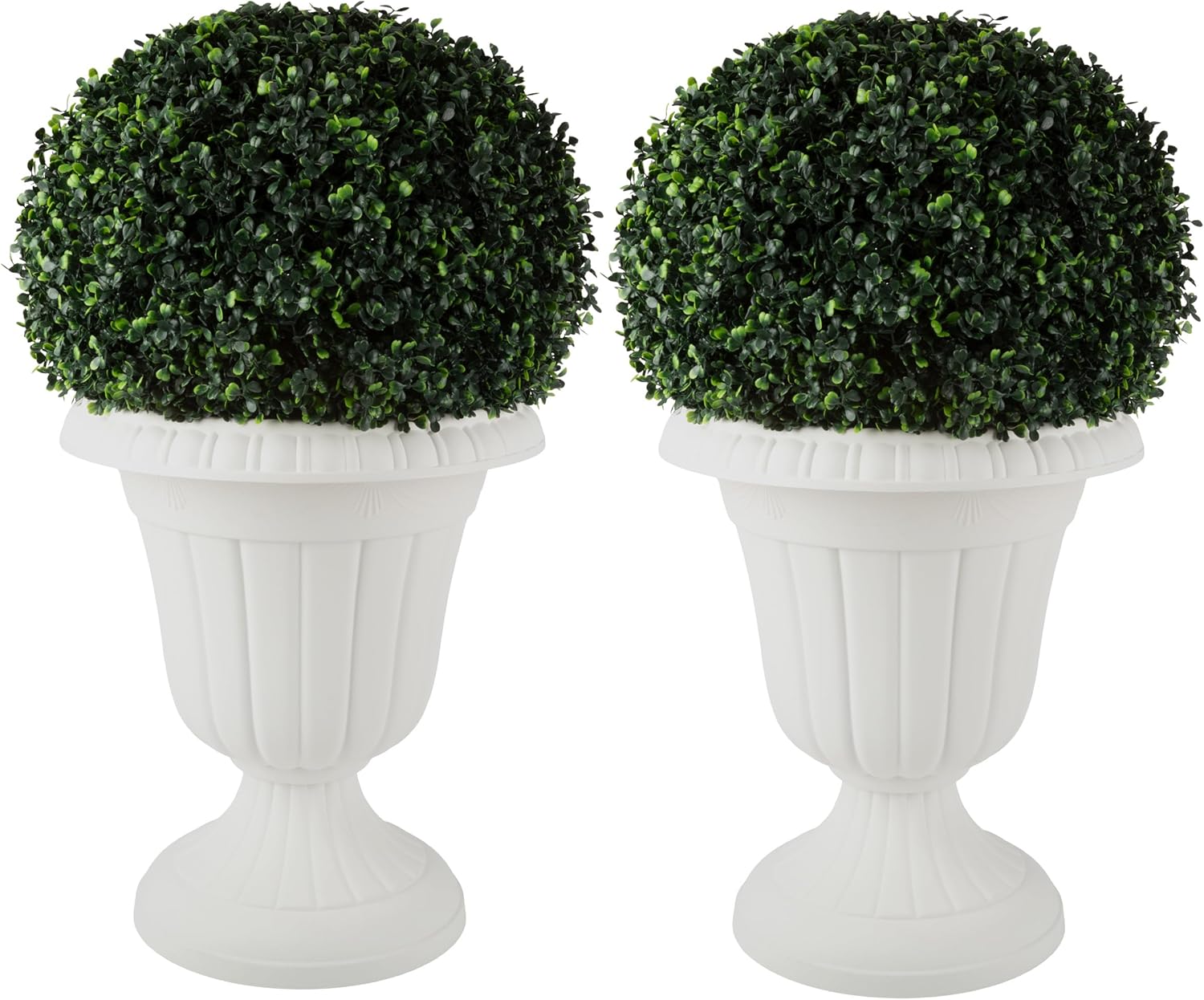
Pure Garden Front Porch Outdoor Planter Urns, 16 x 18 in, 2-Pack
| Material Type | Plastic |
|---|---|
| Indoor Outdoor Usage | Outdoor |
| Capacity | 30 pounds |
| Number of Pieces | 2 |
These Pure Garden urn planters give you the look of a traditional pedestal planter without the weight of stone. Each set arrives in two twist-and-lock pieces for tool-free assembly and compact storage, and the recycled polypropylene construction stands up to temperature changes so you can use them outdoors year-round. The pots are portable, easy to clean, and you can drill drainage holes if you need them for live plants. In practice they are best for porch accents, framing an entry with matching pairs, or holding seasonal flowers and faux topiaries. Because they are plastic they will not chip or crack like ceramic if knocked over and are simple to move for seasonal swaps. Limitations include a lightweight feel compared with heavy stone urns and a plastic appearance that may not satisfy buyers wanting an authentic stone finish. For gardeners who prioritize easy handling, durability, and storage, these planters are a sensible, low-maintenance choice.
Best for: Buyers who want the classic urn aesthetic with low maintenance and easy handling for porch or patio displays and who value seasonal flexibility and simple storage.
Less Ideal for: Those seeking authentic heavy stone or high-end ceramic planters for a premium, permanent landscape installation should look elsewhere.
- Recycled polypropylene construction resists temperature extremes for year-round outdoor use
- Lightweight, two-piece design assembles by twisting for tool-free setup and compact storage
- Portable and easy to clean, making seasonal swaps and repositioning straightforward
- Can accommodate drainage holes for live plants and also works with artificial arrangements
- Lightweight plastic lacks the heft and authentic stone look of traditional urn planters
- Finish may appear synthetic up close compared with molded or natural materials
Verdict: A practical two-pack of lightweight, weather-resistant urns that give traditional curb appeal with easy assembly and storage.
Arcadia Garden Products Classic 10×12" Plastic Urn Planter

| Material Type | Plastic |
|---|---|
| Indoor Outdoor Usage | Indoor, Outdoor |
| Mounting Type | Floor Standing |
| Other Special Features of the Product | Lightweight |
This Arcadia 10×12" plastic urn brings a classic urn silhouette in a lightweight, weather-resistant plastic that works for tabletops, entryways, and patios. It ships as a two-piece pedestal that screws together without tools, so you can plant or swap seasonal displays quickly. The urn is drillable for drainage if you plan on using live plants outdoors and the interior opening and depth accommodate medium bedding plants or compact shrubs. The brushed finish and ribbed detailing give it the look of a heavier decorative pot without the weight, making it easy to move for seasonal styling or storage. Because it is plastic, it resists cracking from typical outdoor exposure and is simple to clean, but it will not have the thermal mass or premium feel of ceramic or stone. For budget-conscious gardeners who want a traditional urn aesthetic that is durable and easy to handle, this is a practical, low-maintenance option.
Best for: Gardeners seeking an affordable decorative urn that looks classic but is easy to move and maintain for seasonal displays or small outdoor spaces.
Less Ideal for: Those wanting heavy, premium materials for permanent placement or planters that naturally provide thermal insulation and greater stability.
- Lightweight construction makes moving and seasonal swapping easy
- Tool-free two-piece assembly for quick setup
- Durable plastic resists weather and UV exposure
- Traditional fluted design and brushed finish give a decorative look without heavy materials
- No factory drainage holes so drilling is required for healthy outdoor planting
- Plastic lacks the weight and premium feel of ceramic or stone
Verdict: An inexpensive, easy-to-handle traditional urn that gives a classic look without the cost or heft of stone or ceramic.
Arcadia Garden Products Classic 16×18" Plastic Urn Planter

| Capacity | 15.9 liters |
|---|---|
| Material Type | Plastic |
| Indoor Outdoor Usage | Indoor, Outdoor |
| Mounting Type | Floor Standing |
This 16×18" Arcadia urn is a garden-ready decorative planter that gives you a classic fluted look without the weight of ceramic or stone. It arrives as a two-piece, tool-free assembly you screw together in minutes, then fill with potting mix and plants for an entryway, patio, or porch focal point. The high-quality plastic construction is UV-resistant and easy to move, so you can update displays seasonally or bring arrangements indoors during harsh weather. The planter does not include drainage holes but can be drilled if you prefer planted, living specimens; otherwise it suits faux arrangements or lined displays. Its 15.9 L capacity and wide opening make planting and maintenance straightforward, though the plastic finish will not replicate the heft or thermal mass of clay or concrete and can scratch if bumped. For buyers focused on low-maintenance, movable outdoor decor, this urn blends traditional styling with practical durability.
Best for: Buyers who want a classic urn look without heavy materials and who value easy setup and seasonal flexibility in entranceway or patio plant displays.
Less Ideal for: Gardeners seeking a heavyweight, frost-resistant stone or ceramic urn that provides thermal insulation for roots should consider other materials.
- Lightweight, easy to move for seasonal displays or repositioning
- Tool-free two-piece assembly for quick setup
- UV-resistant plastic designed for indoor or outdoor use
- Wide opening and 15.9 L capacity simplify planting and maintenance
- No factory drainage holes included so you must drill them for planted specimens
- Plastic finish lacks the weight and thermal benefits of ceramic or stone
Verdict: Choose this Arcadia 16×18" urn when you want a traditional-looking, weather-resistant planter that is lightweight and quick to assemble.
Arcadia Garden Products Classic 13×15" Plastic Urn Planter, Brushed Copper
| Capacity | 6.2 quarts |
|---|---|
| Included Components | Pot |
| Material Type | Plastic |
| Indoor Outdoor Usage | Indoor, Outdoor |
| Mounting Type | Floor Standing |
This Arcadia 13×15" urn is a decorative, easy-to-use planter intended for porches, entryways, patios or indoor display. It ships as a two-piece pedestal that screws together without tools, so setup is quick and relocating the planter is straightforward thanks to the lightweight plastic construction. The fluted, traditional profile and brushed copper finish give a classic look suitable for seasonal plantings, faux arrangements, or holiday displays. The planter does not come with drainage holes, but the plastic can be drilled if you prefer planted specimens that need bottom drainage. With a roughly 6.2 quart capacity and an 11" opening it fits medium bedding plants or compact shrubs and offers a roomy interior for potting soil and root growth. Expect good weather resistance from the synthetic material and easy cleaning compared with ceramic or metal urns, though it lacks the heft of heavier materials that can resist tipping in strong wind. Overall it is a practical, attractive choice when you want the look of an urn without the weight or maintenance of traditional materials.
Best for: Someone who wants classic urn styling with minimal fuss and easy placement, especially buyers who prioritize low-maintenance, moveable outdoor decor.
Less Ideal for: People seeking heavy, wind-resistant stone or ceramic planters or gardeners who need built-in drainage and very large soil volume for big shrubs.
- Traditional fluted design adds curb appeal without extra work
- Tool-free two-piece assembly for fast setup
- Lightweight plastic makes it easy to move and reposition
- Durable synthetic material resists weather and UV exposure
- No factory drainage holes so you must drill them for planted specimens
- Lightweight construction can be less stable in strong winds or if top-heavy
Verdict: A lightweight, weather-resistant urn that delivers classic planter styling and quick tool-free assembly for low-maintenance outdoor or indoor displays.
Choosing the Right Urn Planter: Key Factors to Consider
Material and Longevity
The material determines how long an urn planter will last outdoors. Dense stone, cast concrete, and glazed ceramics resist sun and abrasion but may be heavy and vulnerable to freeze-thaw cracking in cold climates. Lightweight composites, fiberglass, and high-quality resins mimic classic looks while shedding moisture stress and resisting chips. Metal urns can be attractive and durable but may corrode over time unless treated or made from stainless alloys.
Think about your local weather patterns and where the urn will sit. Pots on exposed corners need materials that handle wind-driven rain and temperature swings. For sheltered porches, a wider range of materials is acceptable because they avoid constant wetting and freezing.
Drainage and Root Health
Proper drainage is essential for container plantings. An urn with a single small hole can still waterlog heavy soils, while a well-formed drainage system and a design that allows excess water to escape reduces root rot risk. Some urns have integrated drainage channels or slightly raised planting wells that keep roots above standing water.
Consider how you will water and what plants you plan to grow. Moisture-loving annuals tolerate slower drainage, while many perennials and shrubs prefer freer draining mixes. If an urn lacks builtin drainage, plan for retrofitting holes or using a layered approach with coarse substrate and a well-draining potting mix.
Size, Soil Capacity, and Plant Selection
Urns come in a range of volumes and profiles. Deep, narrow urns suit plants with deeper root systems, like small shrubs and certain perennials, while wide, shallow urns favor trailing plants and seasonal combinations. Soil capacity affects how often you need to water and how large a plant you can establish without root confinement.
Match urn dimensions to the mature root habits of your chosen plants. Allow extra soil volume for shrubs or larger perennials and choose deeper urns for plants that require anchoring. Remember that soil also adds weight, which matters for placement and mobility.
Stability, Weight, and Wind Exposure
An urn planter must resist tipping in gusts and support top-heavy plantings. Heavy materials and wider bases increase stability but reduce portability. Lighter urns are easy to move for seasonal changes or winter storage but can topple if planted with tall specimens or placed on an exposed corner.
If the site is windy, choose an urn with a lower center of gravity or plan to secure it with anchoring plates or filled media at the base. Consider how often you will move the planter when deciding between heavy permanence and light flexibility.
Finish, Color, and Visual Integration
Finish and color determine how an urn fits within a landscape. Glazed finishes and painted surfaces provide strong color accents but can peel or fade over time, while natural stone and aged patinas develop a stable look. High-contrast colors can highlight an entrance, whereas muted tones help plantings blend into a classic garden palette.
Select finishes that complement your architecture and planting style. Also think about how dirt, mineral deposits, and water streaks will look on different surfaces and how much cleaning or periodic refinishing you are willing to perform.
Seasonal Care and Winter Protection
How you plan to overwinter urns affects material choice and placement. Some materials tolerate freezing filled with soil, while others crack if moisture freezes inside. Drainage, removable liners, and the ability to empty and store urns are important considerations for cold climates. For very large urns, installing them permanently or providing shelter may be the best approach.
Plan for frost protection, whether that means elevating urns off ground moisture, moving them to an unheated garage, or using protective covers. Maintenance tasks like repotting and cleaning will also be easier with urns designed for access and drainage.
Best Urn Profiles for Different Planting Styles
Urn shape affects planting composition and silhouette. Tall, narrow urns create a vertical accent that suits structural specimens or columnar evergreens. Wide, bowl-shaped urns work well for seasonal color displays with spillers, fillers, and thrillers in combination.
Think about the visual role of the urn. Use taller profiles to frame entrances or to add height on a low wall. Choose wide-profile urns for grouping several plants together or for creating lush cascades of trailing foliage.
- Tall urns: best for single specimen or vertical accents
- Wide urns: ideal for mixed container plantings and trailing plants
- Shallow urns: good for succulents and shallow-rooted annuals
How to Prepare an Urn for Planting
Start by checking drainage. If the urn lacks holes, determine whether you can drill or adapt the vessel. Place a breathable fabric or a piece of landscape cloth across the base to keep potting mix from washing out while allowing water to pass.
Use a high-quality potting mix tailored to the plants you will grow, and consider adding perlite or grit for better drainage. Place coarse material or broken pots at the very bottom only if you cannot increase drainage; otherwise rely on soil amendments and drainage holes.
- Verify or create drainage before adding soil
- Line with breathable fabric to prevent soil loss
- Use potting mix adjusted for drainage needs
Placement and Grouping Strategies
Position urns where they will have enough sun or shade for the intended plants and where watering access is convenient. Grouping several urns of different heights can produce a layered effect and help with wind buffering. Keep heavy, permanent urns on stable, level surfaces to avoid shifting.
When placing urns on wood decks, use protective pads to prevent moisture damage. On paved surfaces, ensure adequate drainage away from foundations and avoid blocking walkways or drainage channels.
- Group urns by height and color for visual cohesion
- Protect decking and surfaces beneath heavy urns
- Place urns where routine watering is easy
Refinishing, Cleaning, and Long-Term Care
Routine cleaning prevents salt buildup and mineral staining. For glazed or painted urns, gentle washing with water and a mild detergent is usually sufficient. Porous materials benefit from occasional sealing if you want to preserve color or limit water absorption.
Repotting every few seasons refreshes soil and prevents root binding. Inspect drainage holes regularly and clear any blockages. For winter care, empty and store lightweight urns or protect heavier pieces in place with breathable covers and raised supports where possible.
- Clean surfaces annually to remove mineral deposits
- Repot and refresh soil every 2 to 3 years
- Seal porous finishes if color retention is desired
Plant Combinations That Work Well in Urns
Classic urn plantings use a thriller, filler, and spiller composition. Pick a central specimen for height, surround it with complementary mid-height plants, and let trailing species soften the edges. This approach works for annuals, perennials, and mixed seasonal displays.
Consider root depth and watering needs when mixing species. Pair plants with similar moisture requirements and select soils that balance moisture retention and drainage to keep the planting healthy.
- Thriller: tall central plant for vertical interest
- Filler: mid-height intersecting textures and colors
- Spiller: trailing plants that soften the rim
How We Chose the Best Urn Planter
We focused on the features that matter most for outdoor urn planters in real garden settings. Key evaluation criteria were material durability and weather resistance, because urns are often exposed to freeze-thaw cycles and sun. Drainage design and soil depth were tested conceptually to ensure containers can support healthy root systems without waterlogging. Stability and weight were considered for wind-prone sites and for areas where heavy seasonal planters need repositioning. Ease of maintenance and seasonal care was assessed, including how simple it is to empty, replant, or protect the urn through winter. Aesthetic flexibility and finish longevity were reviewed to ensure an urn will work with common planting styles and not prematurely fade or flake. We excluded ornamental vessels that are purely decorative with insufficient depth or no drainage provision. We also set aside very small tabletop pots and built-in masonry features that are not practical as standalone urn planters. The shortlist reflects containers that balance usable soil volume, practical drainage, durable construction, and visually versatile design.
FAQ
Do urn planters need drainage holes?
Usually yes. Most outdoor urns perform best with drainage to prevent waterlogged soil and root rot. If an urn lacks holes, plan to add them if the material allows or use a very well-draining potting mix and monitor watering carefully.
Can I leave an urn planter outside in winter?
It depends on the material. Heavy stone or frost-resistant composites can often remain outside if drained, but glazed ceramic and some casts can crack when water freezes. In cold climates consider emptying and storing urns or protecting them from freeze-thaw cycles.
How large should an urn be for a small shrub?
Choose an urn with enough soil volume to accommodate the shrub's root mass with room to grow. A deeper profile is usually better for shrubs to anchor roots and provide adequate moisture buffering. Exact dimensions depend on the shrub size at maturity.
Are lightweight urns a bad idea for windy sites?
Not necessarily. Lightweight urns are fine if you select lower-growing plants and add ballast or secure the container. For exposed sites, heavier materials or anchoring methods reduce tipping risk and are usually safer for tall plantings.
What soil mix works best in urn planters?
A high-quality potting mix amended with perlite or grit improves drainage while retaining enough moisture for plants. Avoid using garden soil alone because it compacts and drains poorly in containers. Tailor amendments to the moisture needs of your chosen plants.
How often should I repot or refresh an urn planting?
Typically every two to three years. Refreshing soil prevents nutrient depletion and root crowding. If you notice poor drainage, compacted soil, or stunted growth, it may be time to repot sooner.
Final Verdict
Choose an urn planter by matching material and profile to your climate, planting style, and how often you will move or maintain the container. Prioritize drainage design and adequate soil capacity for plant health, and balance weight and stability against your need for portability. With attention to finish durability and seasonal protection, an appropriately chosen urn will support healthy plantings and provide lasting visual impact.
