

Note: This article contains affiliate links. If you click on these links and make a purchase, I may earn a small commission at no extra cost to you. This helps support my research and content. Read my full affiliate disclosure here.
Picking the right plant manure matters because it directly changes soil structure, feeding rhythm, and moisture retention in real gardens. The wrong manure can burn seedlings, overload a small raised bed with salts, or fail to supply the slow-release nutrients your plantings need. This guide covers seven shortlisted plant manures that suit a range of garden sizes and uses, from vegetable plots and containers to established shrubs. We evaluated options on nutrient balance, how they affect soil texture, ease of application, and odor or handling concerns. Read on to see which types match your soil goals and planting situation.
Top Picks at a Glance
| Best Overall The best all-around choice for most situations | Black Kow Composted Cow Manure Fertilizer, 8 qt |  |
| Best Quality Built to a higher standard if you want something more solid | R&M Organics Cow Manure Compost Soil Amendment (10 lb) |  |
| Best Value The sweet spot between price and what you get | Wiggle Worm Pure Worm Castings Organic Fertilizer, 15 lb |  |
| Best Budget The cheapest option that still gets the job done reliably | Home and Country USA Organic Composted Cow Manure (1 Quart) |  |
| Highest Rated A top-rated pick with lots of positive feedback | Lancaster Agriculture Products Chicken Manure Pellets, 16 lb |  |
| Most Popular A crowd favorite that many people choose with confidence | Brut Organic Worm Castings, 5 lb |  |
| Best Seller A high-volume bestseller chosen again and again | BRUT Worm Farms Cow Compost — 10 Quart Bag |  |
Black Kow Composted Cow Manure Fertilizer, 8 qt

| Item Form | Granules |
|---|---|
| Unit Count | 256 Fluid Ounces |
| Included Components | Cow Manure |
| Mixing Ratio | 1:1 |
Black Kow composted cow manure is a ready-to-use organic soil amendment formulated to improve moisture retention, aeration, and nutrient availability in planting areas. Gardeners typically mix it into raised bed soil before planting or use it as a top dressing and it can also be brewed into compost tea using the 1:1 mixing ratio supplied. The product is granular and contains beneficial microbes that help convert nitrogen into plant-available forms, so it feeds slowly without burning young roots. Practical benefits for raised vegetable beds include better water-holding in sandy mixes and improved crumb structure in heavier soils, which helps root development and reduces nutrient leaching. Important limitations are that nutrient content is not given as an N-P-K analysis and dosing is less precise than bagged balanced fertilizers, so heavy feeders may still need supplemental fertilizers. The safety notes mean you should handle with gloves and a mask and avoid direct contact with edible harvests immediately after fresh application.
Best for: Home gardeners building or refreshing raised vegetable beds who want an affordable, organic soil conditioner to improve texture, water retention, and microbial activity.
Less Ideal for: Gardeners who need a precise, high-analysis fertilizer program for heavy-feeding crops or who prefer fully screened, potting-grade composts for container vegetables.
- Organic composted manure improves soil structure and moisture retention
- Contains beneficial microbes that help make nutrients available to plants
- Versatile use as soil amendment, top dressing, or compost tea ingredient
- Granular form is easy to mix into raised bed mixes and garden soil
- No detailed N-P-K nutrient breakdown provided for precise feeding
- May require supplementary fertilizer for heavy-feeding vegetables
Verdict: A budget-friendly organic soil amendment that improves structure and moisture retention in raised vegetable beds while supplying slow-release nutrients.
R&M Organics Cow Manure Compost Soil Amendment (10 lb)

| Item Form | Solid |
|---|---|
| Specific Uses For Product | Organic |
| Application Method | Apply a thin layer around plants or mix into soil |
| Coverage | All-purpose |
| Target Species | fruits, vegetables, flowers, lawns, trees |
This 10 lb bag of R&M Organics compost is a straightforward, all-purpose soil amendment aimed at improving soil health in garden beds, containers, and raised beds. Made from cured cow manure and fully composted, it is low-odor and easy to work with — apply a thin quarter-inch layer around established plants or mix into planting soil at the recommended 5:1 ratio for new beds. The compost enhances moisture retention, aeration, and organic matter, which helps roots establish and reduces watering frequency. Its small bag size and modest weight make it convenient for small to medium projects and for gardeners who prefer incremental soil improvements. Because the product is pure compost rather than a balanced fertilizer, it is best used as a long-term soil builder rather than a quick nutrient fix; you may still need targeted fertilizers for heavy-feeding vegetables or to correct specific nutrient deficiencies. The simplicity and low odor make it a practical choice for backyard growers who want a reliable organic amendment without handling fresh manure or bulk deliveries.
Best for: Gardeners who prefer incremental, low-effort soil improvement for beds and containers and who prioritize organic, low-odor amendments for everyday maintenance.
Less Ideal for: Large-scale gardeners or landscapers who need bulk amendments or immediate corrective fertilizers for specific nutrient deficiencies should look for bulk compost or formulated plant foods.
- Fully composted cow manure reduces pathogens and minimizes odor compared with raw manure
- Improves soil structure and moisture retention for beds, containers, and raised beds
- Small 10 lb bag is easy to carry, store, and apply for small to medium gardens
- Versatile all-purpose amendment suitable for fruits, vegetables, flowers, lawns, and trees
- Not a formulated fertilizer so it may not supply immediately available nutrients for heavy feeders
- Bag size is small for larger beds or bulk soil rebuilding projects
Verdict: A convenient, low-odor organic compost that steadily improves soil structure and moisture retention for small to medium garden beds.
Wiggle Worm Pure Worm Castings Organic Fertilizer, 15 lb

| Item Form | Pure earthworm castings |
|---|---|
| Specific Uses For Product | Soil Conditioning |
| Unit Count | 240 Ounce |
| OMRI Listed | Yes |
Wiggle Worm Pure Worm Castings is a straightforward organic soil amendment that supplies water-soluble nutrients and a boost of beneficial microbes to garden beds, containers, and lawns. It is used by mixing a portion into potting mixes, adding a thin top dressing to established plants, working into planting holes for transplants, or brewing into a quick casting tea for fast uptake. Notable features include its pure castings formulation with screening to remove debris and worm eggs and an OMRI listing that makes it suitable for organic gardens. Practical benefits are improved soil aeration and water retention, enhanced root development, and slow-release nutrition that reduces the need for frequent feeding. The product is non-burning and odorless, so it is safe for use around seedlings and mature plants. Limitations are that a single 15 lb bag covers a modest area so larger lawns or multiple raised beds will require multiple bags, and because it is an amendment rather than a complete fertilizer you may still need to supplement specific nutrients depending on soil test results.
Best for: Gardeners seeking an all-purpose organic soil builder to improve soil health and root development across flower beds, vegetables, and containers who prefer low-risk, easy-to-use amendments.
Less Ideal for: People who need large-scale bulk fertilizer for extensive lawns or those looking for a single product to meet precise N-P-K requirements without soil testing.
- 100% pure worm castings that add beneficial microbes and plant-ready nutrients
- OMRI listed for organic use and safe around seedlings due to non-burning formula
- Versatile application methods: top dressing, soil mix-in, planting hole amendment, or tea
- Improves soil aeration and water retention to support stronger root growth
- 15 lb bag provides only modest coverage for larger gardens or lawns
- Not a complete fertilizer so specific nutrient gaps may still require testing and supplementation
Verdict: A safe, OMRI-listed organic soil amendment that reliably improves soil structure and root health for gardeners who want an easy, low-risk way to boost plant vigor.
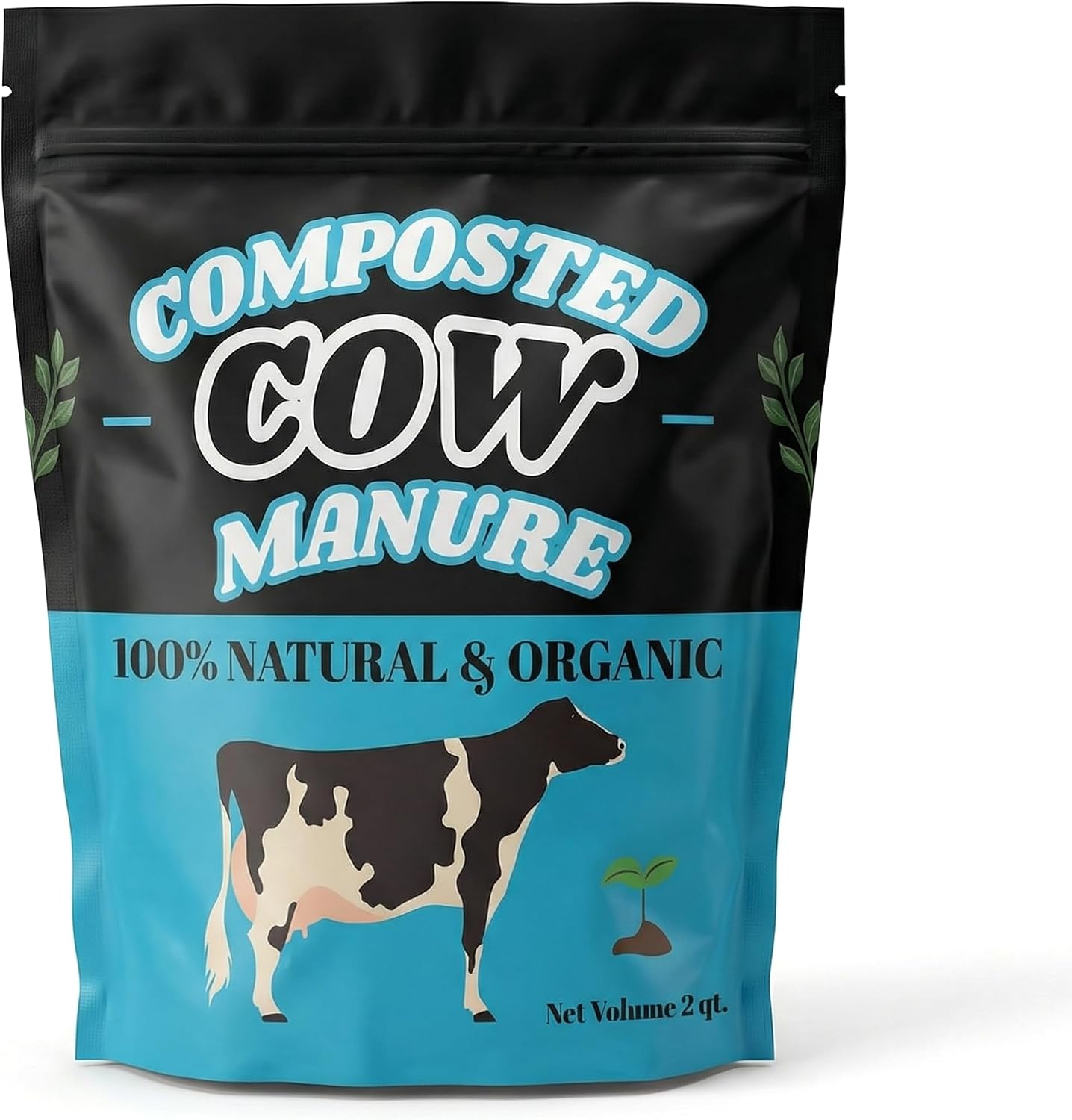
Home and Country USA Organic Composted Cow Manure (1 Quart)
| Item Form | Liquid |
|---|---|
| Application Method | Incorporate into soil |
| Target Species | vegetables, flowers, shrubs |
| Liquid Volume | 1 quarts |
| Mixing Ratio | 1:10 |
This 1-quart organic composted cow manure is a concentrated liquid fertilizer designed to be mixed and incorporated into garden soil. Typical use is blending the product at the recommended 1:10 ratio and applying it to raised beds, vegetable plots, potted plants or around shrubs to boost soil fertility and water retention. Notable features include an organic formulation from U.S. farms, a liquid form that makes even application and quick integration into soil, and guidance for full garden coverage. Practical benefits are faster distribution than bulky bagged manure, suitability for small-plot gardeners who want organic inputs, and an easy mixing ratio for dilute feeding. Limitations are the small container size, which means you will need multiple bottles for larger beds, and the liquid form may require more frequent applications than slow-release amendments. It is most useful as part of a regular feeding routine or to quickly refresh potted soils rather than as a sole long-term soil builder.
Best for: Gardeners working with small beds, containers or raised planters who want an easy-to-apply organic feed on a budget and prefer quick soil refreshes.
Less Ideal for: Large-scale vegetable growers or those seeking a single-product soil-building amendment for extensive beds should consider bulk compost or bagged manure instead.
- Certified organic composted manure sourced from U.S. farms
- Liquid form mixes easily with water for even application
- Targets vegetables, flowers and shrubs so it is versatile for garden beds and containers
- Small 1-quart volume requires multiple purchases for medium to large gardens
- Liquid feed works faster but does not provide long-term bulk organic matter
Verdict: A convenient, wallet-friendly organic liquid manure for quickly boosting soil fertility in small beds and containers.
Lancaster Agriculture Products Chicken Manure Pellets, 16 lb

| Item Form | Pellets |
|---|---|
| Mixing Ratio | 4:2:2 |
| Included Components | Soil Amendments |
| Unit Count | 256 Ounce |
These chicken manure pellets are a ready-to-use organic fertilizer designed to feed flowers, vegetables, trees, and shrubs without mixing or measuring. The pellets are heat-treated and dehydrated for easier handling and lower odor than raw manure, and the listed 4-2-2 analysis plus 8% calcium supports steady nitrogen-driven growth with phosphorus and potassium for root and bloom development. Typical use is sprinkling around the plant drip line and watering in; the manufacturer recommends spring and fall applications for trees and shrubs and monthly top-dressings for vegetables and ornamentals during the growing season. The product suits gardeners who want a natural, sustainably sourced soil amendment that also simplifies application. Limitations to note are that nutrient release is relatively slow compared with soluble fertilizers so it is not intended for instant greening, and application rates must be followed to avoid overfeeding. Also, pellets still require proper storage to stay dry and to prevent clumping or biodegradation over time.
Best for: Gardeners who prioritize dependable, natural soil feeding and want a low-fuss, organic fertilizer for regular seasonal use on vegetables, flowers, and established trees and shrubs.
Less Ideal for: Growers needing fast, soluble nutrients for quick correction or for foliar feeding should choose a water-soluble fertilizer instead.
- Ready-to-use pelleted form simplifies application and eliminates mixing.
- Heat-treated and dehydrated for reduced odor and easier handling than raw manure.
- Balanced 4-2-2 NPK with 8% calcium supports general plant growth and soil improvement.
- Suitable for organic gardening and sourced from regenerative farm practices.
- Slow-release nutrient profile means results appear over weeks rather than immediately.
- Requires dry storage to prevent clumping and loss of quality.
Verdict: Buy this if you want a dependable, easy-to-apply organic chicken manure pellet that steadily improves garden soil and feeds a wide range of plants.
Brut Organic Worm Castings, 5 lb

| Item Form | Granules |
|---|---|
| Specific Uses For Product | Gardening,Organic |
| Target Species | All plants |
| Mixing Ratio | 1:5 |
Brut Organic Worm Castings function as a concentrated, natural soil amendment you mix into potting mixes or top-dress garden beds and raised beds. Typical use is mixing at the recommended 1:5 ratio for new indoor plants, sprinkling a cup around established houseplants, or working into outdoor planting holes and beds according to the brand directions. The product is OMRI/CDFA listed and produced in controlled conditions, which supports consistent nutrient content and beneficial microbial life that help roots establish, improve soil structure, and increase moisture retention without burning plants. Practical benefits for raised garden beds include improved aeration, slow-release nutrients, and a boost in microbial activity that supports long-term fertility. Limitations are that it is not a complete NPK fertilizer for immediate heavy feeding needs and larger beds require significant quantities to hit the suggested per-square-foot rates, so frequent applications or bulk purchases may be needed for big projects.
Best for: Gardeners who prioritize dependable, organic soil improvement for raised beds and container gardens and prefer predictable, low-risk amendments that support long-term soil health.
Less Ideal for: Those needing immediate, high-NPK feeding for heavy-feeding crops or gardeners who want to amend very large beds without buying supplemental bulk material.
- Certified organic and produced indoors for consistent purity
- Rich in beneficial microbes that improve soil structure and plant vigor
- Easy-to-use granular form suitable for mixing or top-dressing
- Not a standalone high-NPK fertilizer for rapid nutrient correction
- Five-pound bag may be small for large raised beds and repeated seasonal use
Verdict: Use this OMRI/CDFA-listed worm castings product to reliably build long-term fertility and microbial health in raised beds and containers.
BRUT Worm Farms Cow Compost — 10 Quart Bag

| Unit Count | 192 Ounce |
|---|---|
| Volume | 10 quarts |
| Brand Name | BRUT WORM FARMS |
| UPC | 860000284295 |
Brut Cow Compost is a ready‑to‑use bagged cow manure compost aimed at improving soil fertility and structure. It is made from 100% composted cow manure that has been finely sifted, which makes it easy to mix into potting mixes, top‑dress containers, or incorporate into garden beds. Notable features include an OMRI listing for organic use, a nutrient profile with nitrogen, calcium and iron, and a low‑odor, non‑burning formula that is safe around seedlings and houseplants. In practice the compost increases microbial activity and helps retain moisture, so plants show healthier foliage and better growth when used regularly. The 10 quart bag is convenient for small gardens, potted plants, or spot treatments without handling bulk loads. Limitations are the modest volume per bag for larger beds and the product is a general amendment rather than a complete, balanced fertilizer, so heavier feeding or specific NPK management may still be needed for high‑demand crops.
Best for: Gardeners who want an easy, certified organic soil amendment to boost soil life and moisture retention in containers, small beds, or targeted spots without handling raw manure.
Less Ideal for: People establishing large garden plots or those seeking a complete NPK fertilizer for heavy feeding crops should consider bulk compost or supplemental fertilizers instead.
- OMRI‑listed organic compost safe for edible and ornamental plants
- Finely sifted, low‑odor formula suitable for indoor use and seedlings
- Adds organic matter and beneficial microbes to improve moisture retention and soil structure
- Versatile application as top dressing, mix‑in amendment, or container soil enhancer
- Small 10 quart volume requires multiple bags for larger garden projects
- Not formulated as a balanced complete fertilizer for high‑demand crops
Verdict: A compact, OMRI‑listed bag of finely composted cow manure that reliably adds organic matter and microbial life to containers and small garden beds.
Choosing the Right Plant Manure: Key Factors to Consider
Nutrient Profile and Release Rate
Different manures contain varying ratios of nitrogen, phosphorus, and potassium, plus secondary nutrients and micronutrients. Fresh manures tend to be higher in immediately available nitrogen but can be too strong for seedlings and young plants. Well-aged or composted manures release nutrients more slowly, providing steadier feeding and lowering burn risk.
Consider what you are planting and when. Fast-growing annual vegetables often benefit from a manure with a higher early nitrogen availability, while perennial beds and shrubs usually prefer steady-release material that builds long-term fertility without repeated high-strength applications.
Organic Matter and Soil Structure
Manure is valuable because it adds organic matter that helps soil hold water, improves aggregation, and feeds soil life. Some manures break down quickly and produce a fine humus that improves clay or sandy soils differently. Others remain coarse longer and are better for mulching or surface dressing.
If your goal is to rebuild depleted beds, prioritize manures with higher stable organic matter and slower decomposition. For quick texture improvements in heavy soils, mix manures in and allow a short settling period before planting to avoid nitrogen immobilization.
Salt Content and Contaminants
Salt accumulation and the potential for weed seeds or pathogens are practical concerns. Some manures, especially those from poultry or from animals fed high-salt diets, can have elevated soluble salts that harm sensitive plants or container gardens. Raw manures can also carry weed seeds or pathogens unless heat-treated or well-composted.
Always check whether the manure has been tested or processed to reduce salt and contaminants. For small containers or seed-starting mixes, use low-salt, fully composted manures or blends specifically labeled safe for those uses.
Form and Ease of Use
Manures come as composted piles, dried pellets, or blended mixes. Pelleted and bagged composted manures are easier to store, measure, and apply in containers. Loose, semi-composted piles may be cheaper but require more handling and a place to blend into soil.
Think about how you will apply the manure. For top-dressing established beds, a coarse product that resists washing away is useful. For mixing into potting soil, a finer, screened product makes uniform blends and reduces clumping.
Odor, Handling, and Storage
Manure odor and dust affect where you can use and store a product. Some well-composted manures have little smell and are fine to keep near patios or garages. Fresher materials can be malodorous and attract attention from neighbors or wildlife, and they may require covered storage.
Consider how often you will handle the manure and whether you need gloves, a mask, or covered storage. Ease of handling also ties into packaging size-smaller bags are easier to move but generate more waste, while bulk options need room and tools to transfer.
Environmental and Sourcing Considerations
Sourcing affects sustainability and garden outcomes. Locally produced manures typically have lower transport impact and may be fresher or untreated. Some manures are blended with bedding or other byproducts that change nutrient ratios and decomposition behavior.
If reducing chemical runoff and supporting soil biology are priorities, favor products with clear sourcing and processing claims such as 'composted' or 'aged.' For organic-certified systems, ensure the manure meets required standards for inputs.
Choosing Manure for Vegetables and Edibles
Vegetable plots need predictable nutrient release without high salt or immature organic matter that can tie up nitrogen. For spring planting, use well-composted manures worked into beds the season before or top-dress with stabilized products early to avoid seedling stress. Heavy feeders like brassicas and corn benefit from higher nitrogen availability timed shortly before rapid growth.
For container-grown edibles, prefer screened, low-salt, composted manure or pelletized forms that mix uniformly into potting media. Containers are more sensitive to salts and moisture-holding properties, so products that are specifically prepared for potting mixes are safer.
- Work composted manure into beds in fall or early spring.
- Use screened or pelleted manures for containers and small pots.
- Avoid fresh manure near seedlings or immediately before transplanting.
Using Manure for Established Beds and Lawns
Established perennial beds and lawns benefit from manures that emphasize organic matter and slow nutrient release. A surface application in spring and again in fall gradually feeds roots and improves soil tilth. Coarser materials can be left as mulch where they slowly incorporate into the soil with normal weathering and microbial action.
When applying to lawns, choose fine, screened composted manure to avoid uneven clumping. Light, repeated applications are usually better than a single heavy dressing that can smother turf or create thatch issues.
- Top-dress with coarse or screened manure in cooler months.
- Avoid heavy spring applications on grass just before a heat spell.
Composting and Preparing Raw Manure
Raw manure often contains weed seeds, high ammonia, or pathogens. Composting at adequate temperatures for several weeks reduces these risks and stabilizes nutrients. A hot composting process also lowers soluble salts and produces a mellow, earthy product that gardens accept readily.
If you plan to compost raw manure at home, mix it with carbon-rich materials and monitor moisture and temperature. Turn piles regularly until the compost is dark and crumbly and no longer gives off strong ammonia odors before using in edible beds.
- Aim for sustained high temperatures when hot-composting raw manure.
- Allow finished compost to cure before applying to sensitive plantings.
Application Rates and Timing
Application depends on the manure type, crop needs, and soil test results. As a general rule, apply composted manure in moderate amounts and rely on soil testing for high-demand crops. Too much can lead to nutrient imbalances or leaching. Incorporating manure into soil in the fall gives time for stabilization before spring growth.
Timing also matters for plant health. Apply higher nitrogen materials when plants are about to begin vigorous growth and use lower-release options for maintenance feeding throughout the season.
- Base heavy applications on soil test results and crop needs.
- Fall incorporation is safer for coarse or less-stable manures.
Storing and Handling Manure Safely
Store manure in a dry, covered area to prevent nutrient loss and runoff. Keep composted materials away from watercourses and avoid piling fresh manure where rain can carry nutrients into drainage. Use gloves and a dust mask when handling dried or pelleted products that produce fine particles.
Label storage so you use older, cured manure first and avoid applying fresh material directly to edible crops. Good handling reduces odors and keeps wildlife attraction to a minimum.
- Cover bulk manure to prevent nutrient washout.
- Rotate stock to use well-aged material first.
How We Chose the Best Plant Manure
We focused on characteristics that genuinely affect performance in home and small-scale ornamental gardens. Key filters included nutrient profile and release rate so we could identify manures that suit seed-starting, steady feeding, or long-term organic building. Soil-conditioning effect was another criterion, looking at how each manure alters texture, water retention, and drainage when mixed into beds or top-dressed. Application practicality was evaluated by considering packaging form, ease of spreading or incorporation, and whether the manure requires composting before use. Safety and salt content were assessed to reduce risk of seedling burn or salinity buildup. Finally, environmental and sourcing factors such as whether the manure is a byproduct blend or pure species, and how it is processed, were considered. We excluded raw, unprocessed inputs known to carry persistent weed seeds or high pathogen risk unless they are specifically labeled and processed for gardening use. Products that are primarily fertilizers with negligible organic matter were not considered. Our selection reflects manures that balance nutrient delivery with soil improvement and straightforward handling for typical garden tasks.
FAQ
Can I use raw manure directly on my vegetable beds?
Raw manure can be risky for vegetables because it may contain pathogens or weed seeds and is often high in soluble nitrogen. It is safer to compost raw manure until it is well-aged and stable before applying to edible beds, or to apply it several months before planting.
How do I know if a manure product is too salty for containers?
Check product labels for soluble salt information if provided, or choose composted and screened products marketed for potting mixes. When in doubt, use a small test batch in a container and observe plant response for several weeks before wide use.
Is pelletized manure as effective as loose composted manure?
Pelletized manure is convenient and often pelletized after composting, making it easier to measure and mix. It can be as effective over time, though loose composted manure may contribute organic matter more quickly depending on particle size and degree of decomposition.
When is the best time to apply manure to a lawn?
Apply manure-based top-dressings in spring after the turf begins active growth and again in fall to support root health and soil structure. Use fine, screened products to avoid surface clumping and adjust timing to avoid hot, dry periods.
Will manure attract pests or wildlife to my garden?
Fresh manure with a strong odor can attract wildlife. Well-composted manure has much less smell and is less likely to draw animals. Store and apply manure carefully and avoid leaving exposed piles near planting areas.
Final Verdict
Prioritize the factors that match your garden's needs: nutrient release timing for the crops you grow, organic matter contribution for long-term soil health, and a low-salt, well-processed form for containers or seedlings. Tradeoffs are common: faster-release materials feed quickly but need careful timing, while well-aged manures build soil slowly with lower risk. Choose a manure type that fits your application method and storage capacity, and adjust timing based on whether you are planting annual vegetables, maintaining perennials, or refreshing lawns. When you match manure characteristics to those goals, you get steady fertility and better soil structure with minimal risk.
