

Note: This article contains affiliate links. If you click on these links and make a purchase, I may earn a small commission at no extra cost to you. This helps support my research and content. Read my full affiliate disclosure here.
Mosquitoes make time outdoors unpleasant and can limit evening gardening or patio use. Choosing the right natural mosquito killer matters because some options reduce bites with minimal harm to pollinators, while others trade off convenience or coverage. This guide shortlists seven top-performing natural mosquito control methods and devices suitable for yards, decks, and small properties. We evaluate each option for real garden use, focusing on effectiveness against biting mosquitoes and safety for people, pets, and beneficial insects. Expect practical notes on placement, maintenance, and how the approaches behave over a season.
Top Picks at a Glance
| Best Overall The best all-around choice for most situations | Wondercide Flea & Tick Yard Spray (Ready-to-Use, 32 oz) |  |
| Best Quality Built to a higher standard if you want something more solid | Wondercide Outdoor Pest Control Spray — 32 oz Ready-to-Use |  |
| Best Value The sweet spot between price and what you get | Summit Mosquito Dunks (6 count) Biological Mosquito Control | 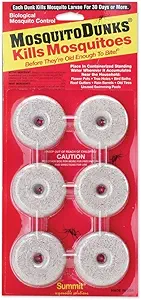 |
| Best Budget The cheapest option that still gets the job done reliably | EcoLogic Flying Insect Killer Aerosol, 14 oz |  |
| Highest Rated A top-rated pick with lots of positive feedback | MKNXYD Natural Mosquito Repellent Pouches (14-Pack) |  |
| Most Popular A crowd favorite that many people choose with confidence | Cliganic Mosquito Repellent Bracelets, Pack of 10 (Citronella) |  |
| Best Seller A high-volume bestseller chosen again and again | Summit Mosquito Bits BTI Granules, 30 oz |  |
Wondercide Flea & Tick Yard Spray (Ready-to-Use, 32 oz)

| Liquid Volume | 946 ml |
|---|---|
| Item Form | Spray |
| Active ingredient | 12.63% Cedarwood Oil |
| Coverage (fleas/mosquitoes) | Up to 5,000 sq ft |
| Coverage (ticks/mosquito repel) | Up to 2,500 sq ft |
Wondercide Flea & Tick Yard Spray is a ready-to-use hose-end treatment that uses cedarwood and other plant-derived ingredients to kill and repel fleas, ticks, and mosquitoes in the yard. You attach the bottle to a garden hose, turn the sprayer on, and walk steady sweeping passes to treat up to 5,000 sq ft for fleas and mosquitoes or 2,500 sq ft for ticks and mosquito repellency. Notable features include a pre-mixed formula for quick application, a hose-powered sprayer for even coverage, and an ingredient list centered on cedarwood oil that the brand says is safe for pollinators when used as directed. In practice it is convenient for routine maintenance and for reducing pest pressure around foundations, patios, and pet areas without waiting for drying or reentry. Important limitations are sensitivity to high heat or direct sun which can cause plant foliage browning if applied above 90°F and reduced residual effect after heavy rain, which may require reapplication. The product is exempt from EPA registration under FIFRA and carries typical safety instructions to avoid eye contact and keep out of reach of children.
Best for: Buyers who want a convenient, natural-first yard repellent that treats broad outdoor areas and lowers pest pressure around pets and play spaces with minimal setup.
Less Ideal for: Those who need a product that holds up through heavy storms or who require a chemically registered pesticide for regulatory or commercial settings should consider other options.
- Pre-mixed hose-end bottle makes whole-yard treatment fast and easy
- Plant-based active (cedarwood oil) targets fleas, ticks, and mosquitoes
- Covers a large area per bottle (up to 5,000 sq ft for fleas and mosquitoes)
- Formulated to be safe for people, pets, and pollinators when used as directed
- Can cause phytotoxic browning if applied in direct sun or when temperatures exceed 90°F
- Heavy rain or intense irrigation can wash away residue and may require reapplication
Verdict: If you want an easy, plant-powered yard spray to reduce mosquitoes, fleas, and ticks over large lawns while prioritizing pet and pollinator safety, this ready-to-use option delivers fast, low-fuss coverage.
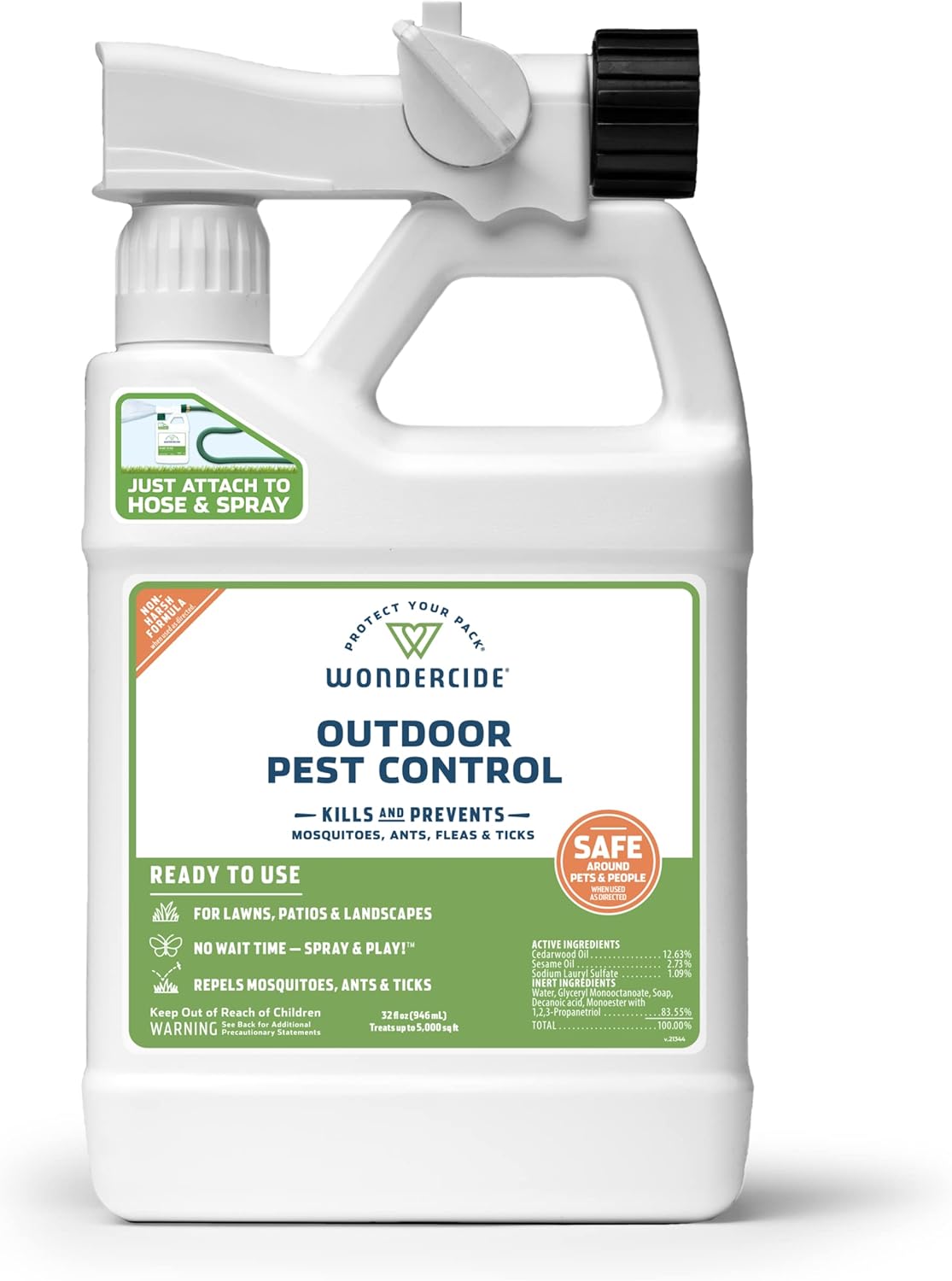
Wondercide Outdoor Pest Control Spray — 32 oz Ready-to-Use
| Format | Pre-mixed, hose-end spray |
|---|---|
| Active ingredients | Cedarwood Oil 12.63%, Sesame Oil 2.73% |
| Coverage | Up to 5,000 sq ft (general); 2,500 sq ft (ticks/mosquito repel) |
Wondercide Ready-to-Use Outdoor Pest Control is a hose‑end spray designed for treating yards up to 5,000 sq ft for general pests and 2,500 sq ft for ticks and mosquito repellency. You attach the bottle to a garden hose, sweep the nozzle across lawns, patios, and foundation lines, and the cedarwood‑based formula delivers quick coverage with no dry time required. Notable features include plant-powered active ingredients (cedarwood and sesame oils), ready-to-use convenience, and instructions for both active infestations and preventative maintenance. Practical benefits are that it is safe to use around people and pets when directions are followed, residues are reported to be non-harmful to pollinators, and the hose attachment makes treating large areas fast. Important limitations are that effectiveness depends on water pressure, walking speed, and weather, heavy rain may require reapplication, and spraying in temperatures above 90°F or direct sun can cause plant burn. Users who need an all‑season, high‑durability pesticide for heavy infestations should plan on repeated applications and follow label precautions to protect sensitive plants.
Best for: Buyers who prioritize effective, plant‑based mosquito and tick control for medium to large yards and want a fast hose‑attached solution that is safe around families and pets when used as directed.
Less Ideal for: Gardeners who need a single, long‑lasting professional‑grade pesticide for severe, persistent infestations or who cannot reapply after rain should consider alternative, heavier‑duty treatments.
- Ready-to-use hose-end applicator for fast coverage of large yards
- Plant-based active ingredients (cedarwood and sesame oils) that target common yard pests
- No dry time required so kids and pets can re-enter treated areas quickly
- Covers up to 5,000 sq ft for general pest control and 2,500 sq ft for ticks/mosquito repellency
- May cause phytotoxic burning if applied in direct sun or temperatures above 90°F
- Performance depends on water pressure and user walking speed which can lead to uneven coverage
- Heavy rain can wash it away and requires reapplication
Verdict: If you want a fast, family- and pet-friendly plant‑based spray to reduce mosquitoes and ticks across a medium to large yard, this ready‑to‑use hose‑end formula delivers practical, repeatable results.
Summit Mosquito Dunks (6 count) Biological Mosquito Control
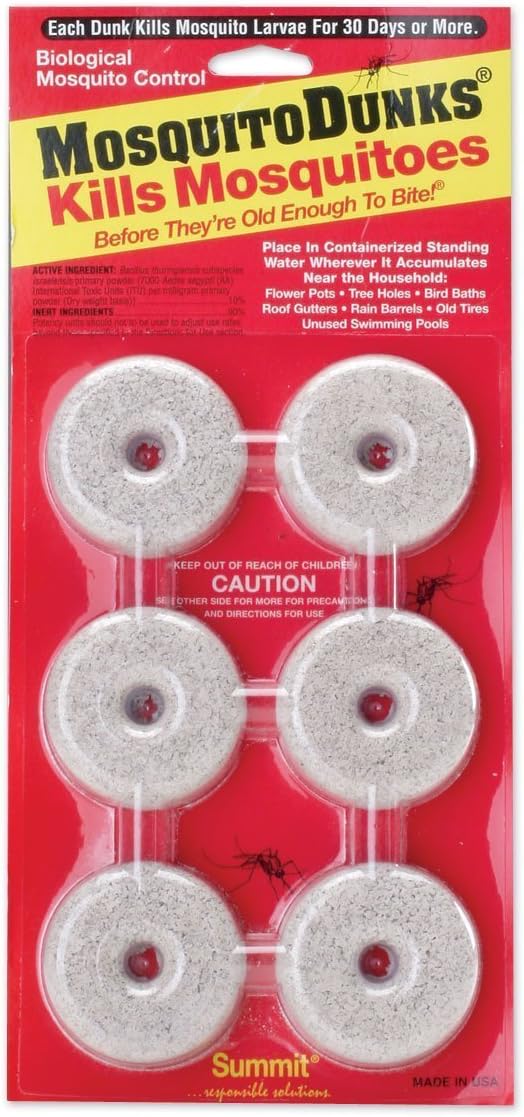
| Unit Count | 6 Count |
|---|---|
| Item Form | Pellets |
| Active Ingredients | Bacillus thuringiensis subspecies israelensis |
| Specification Met | EPA |
Mosquito Dunks deliver a simple, low-effort way to control mosquito larvae in small bodies of standing water. You place a dunk or break off pieces and float them in birdbaths, gutters, rain barrels, plant saucers, or other mosquito breeding spots where larvae develop. Each pellet releases a bacterial larvicide that targets mosquito and certain fly larvae but is safe for people, pets, and most wildlife when used as directed. The product is EPA listed and comes in a six-count unit that lasts several weeks per dunk, so ongoing maintenance is minimal. The main limitations are that Dunks only affect larvae and will not repel or kill adult mosquitoes, and they require access to the specific water sources where mosquitoes breed. For gardeners and homeowners who want a targeted, chemical-free method to reduce local mosquito populations around the yard, these are a practical, proven option.
Best for: Homeowners and gardeners who want a low-maintenance, targeted way to cut mosquito breeding around the yard without broad chemical spraying.
Less Ideal for: People who need immediate reduction of biting adult mosquitoes across large open areas or who cannot locate and treat discrete standing water sources.
- Contains Bacillus thuringiensis israelensis, a targeted biological larvicide
- EPA listed for safe use in standing water around homes and gardens
- Easy to use by floating in breeding sites with multi-week effectiveness per dunk
- Minimal upkeep once placed and safe around people, pets, and most wildlife
- Only kills mosquito larvae and has no effect on adult mosquitoes
- Requires placing dunks in each specific standing water source, which can be time consuming for many dispersed sites
Verdict: A practical, low-effort biological larvicide for reducing mosquito breeding in standing water around the home.
EcoLogic Flying Insect Killer Aerosol, 14 oz

| Item Form | Spray |
|---|---|
| Target Species | Insects |
| Liquid Volume | 14 fluid ounces |
| Active Ingredients | Cornmint Oil 3.50%, Cinnamon Oil 1.20%, Clove Oil 0.75% |
This EcoLogic Flying Insect Killer is an aerosol spray formulated with cornmint, cinnamon, and clove oils to kill houseflies, mosquitoes, moths, fruit flies, gnats, and wasps on contact. It is used by aiming short two- to three-second bursts directly at flying insects outdoors around patios, decks, windows, and doorways; the label also permits indoor use with caution. Notable features include its plant-derived active ingredients and a familiar spray nozzle that makes direct-contact knockdown straightforward. Practical benefits are quick visible control of small groups of flying pests without using synthetic pyrethroids and a compact 14-ounce can that is easy to store. Important limitations are that it only kills by direct contact so it is not a barrier or long‑term repellent, and repeated applications are needed for ongoing mosquito pressure; the pressurized can also requires standard aerosol precautions and careful storage away from heat. Follow label directions to avoid spraying plants, food, people, or pets.
Best for: Buyers looking for an affordable, short-term way to knock down visible flies and mosquitoes around outdoor living spaces who prefer products made with plant-derived ingredients.
Less Ideal for: People who need long‑lasting mosquito control, whole-yard protection, or non-contact repellency should consider foggers, spatial repellents, or residual treatments instead.
- Uses plant-derived actives (cornmint, cinnamon, clove) instead of synthetic insecticides
- Effective knockdown by direct contact against a range of flying insects
- Compact 14-ounce aerosol convenient for patios, porches, and quick spot treatments
- Label allows outdoor and limited indoor use when directions are followed
- Only kills on direct contact and provides no residual barrier or long-term protection
- Aerosol format requires caution around heat, open flame, people, pets, and food
Verdict: A budget-friendly, plant-oil aerosol for quick contact kills of visible flying insects around outdoor seating areas.
MKNXYD Natural Mosquito Repellent Pouches (14-Pack)

| Scent Name | Citronella, Lemongrass, and Peppermint oils |
|---|---|
| Item Form | Granule |
| Number of Items | 14 |
| Unit Count | 12.35 Ounce |
These MKNXYD repellent pouches deliver a simple, natural way to reduce mosquitoes around patios, yards, and travel spaces. Each small pouch contains granules infused with citronella, lemongrass, and peppermint oils that slowly release scent to confuse mosquito sensory receptors. They are intended to hang or sit near seating areas, doorways, tents, or inside RVs and garages and are lightweight and easy to position using the included string bags. A single pouch claims 30 to 60 days of protection and covers roughly 120 square feet, so a 14-pack can treat multiple zones or provide seasonal coverage. The formulation is labeled natural and safe for use around people, children, and pets, which makes it a low-friction option for everyday outdoor use. Limitations are that effectiveness depends on placement, local mosquito pressure, and wind, and pouches do not replace screens or targeted insect control when infestations are heavy. For steady, low-maintenance mosquito reduction in typical backyard settings these pouches are a convenient, natural choice.
Best for: Homeowners or outdoor enthusiasts who want a low-maintenance, natural mosquito deterrent for patios, decks, and travel and prioritize predictable, easy-to-use options.
Less Ideal for: People dealing with heavy mosquito infestations or who need immediate knockdown control should choose a stronger targeted insecticide or physical barriers like screened enclosures instead.
- Uses a natural oil blend (citronella, lemongrass, peppermint) rather than synthetic chemicals
- Simple to deploy with string bags for hanging or placing near activity areas
- Each pouch is rated to cover up to 120 sq. ft. and provide 30–60 days of protection
- Lightweight and portable for use at home, in an RV, or while camping
- Effectiveness varies with wind, placement, and mosquito density and may be limited outdoors in heavy mosquito pressure
- No active ingredient concentrations listed for comparing strength to other products
Verdict: A convenient, natural pouch system that reliably provides season-long, low-effort mosquito protection for small outdoor zones.
Cliganic Mosquito Repellent Bracelets, Pack of 10 (Citronella)

| Scent Name | Citronella |
|---|---|
| Item Form | Band |
| Indoor Outdoor Usage | Indoor, Outdoor |
| Target Species | Mosquito |
| Number of Items | 10 |
Cliganic Mosquito Repellent Bracelets are stretchy bands infused with plant-based essential oils (geranium, lemongrass, citronella) designed to be worn on a wrist or ankle for on-the-go mosquito deterrence. The package contains ten individually wrapped bands that are marketed for indoor and outdoor use such as parks, hiking, camping, and travel. Key practical benefits are ease of use and low chemical exposure since the product is DEET-free and labeled non-toxic, vegan, and cruelty free. Individual wrapping makes them convenient to carry and share, and the one-size-stretchy design fits most children and adults without fasteners. Important limitations are that these are a passive, localized repellent rather than a full-body treatment so coverage is limited to the immediate area around the band, and effectiveness can vary with wind, activity, and mosquito pressure. Users who need long-duration, whole-body protection or who are in high-risk areas should supplement with other proven measures. For cautious buyers wanting a simpler, low-chemical option for routine outdoor activities, these bands offer an easy extra layer of protection.
Best for: Buyers who prioritize low-chemical, easy-to-use mosquito protection for everyday outdoor activities and want a simple product they can hand to kids or tuck into a pack.
Less Ideal for: People who need robust, long-duration protection for high-risk mosquito areas or require full-body coverage should look at stronger topical repellents or treated clothing.
- DEET-free, plant-based ingredients reduce exposure to synthetic repellents
- Individually wrapped bands are portable and hygienic for travel or sharing
- One-size-stretchy design fits most wrists and ankles without adjustment
- Marketed for both indoor and outdoor use so they are versatile for casual activities
- Provides only localized protection around the band rather than full-body coverage
- Effectiveness can be inconsistent in windy conditions or heavy mosquito populations
Verdict: A convenient, DEET-free wearable that adds a low-chemical layer of mosquito protection for everyday outdoor use.
Summit Mosquito Bits BTI Granules, 30 oz

| Unit Count | 30 Ounce |
|---|---|
| Item Form | Granules |
| Target Species | Insects |
| Active Ingredients | Bacillus thuringiensis subsp. israelensis, 2.86% |
These Mosquito Bits are a granular formulation of Bacillus thuringiensis israelensis intended for treating small areas of standing water to prevent mosquito larvae from developing. You sprinkle or scatter the granules into birdbaths, clogged gutters, ponds, tree holes, and other stagnant water where mosquitoes breed; the active bacteria target larvae but are formulated to be safe for people and most pets when used as directed. The 30 ounce container supplies multiple treatments for small to medium sites and is EPA registered for use across states. Practical benefits include quick application without mixing, targeted control of larvae before they become biting adults, and long-standing use of BTI as a low-risk biological option. Important limitations are that this product does not repel adult mosquitoes and must reach standing water where larvae are present to work, so it is not a standalone solution for immediate adult mosquito relief in activity areas.
Best for: Buyers looking for a low-risk, science-backed way to prevent mosquitoes from breeding in backyard water features and other small standing-water sites; especially appropriate for cautious homeowners who prefer targeted biological products over broad chemical sprays.
Less Ideal for: Not a good fit for someone needing immediate relief from adult mosquitoes in living or entertaining areas or for large acreage mosquito control where larval habitats are impractical to treat.
- Contains BTI, a targeted biological larvicide effective against mosquito larvae
- Granular form is easy to apply directly to small or irregular water sources
- EPA registered for use in all 50 states
- 30 ounce size provides multiple treatments for repeat applications
- Only controls larvae and will not reduce adult mosquitoes already present
- Requires identifying and treating standing water sources to be effective
Verdict: Use these BTI granules to reliably stop mosquitoes at the larval stage in backyard standing-water sources so you prevent future adult infestations.
Choosing the Right Natural Mosquito Killer: Key Factors to Consider
Coverage Area And Placement
How much ground the control method protects determines whether it suits a small patio, a medium yard, or a larger property. Some natural devices produce a localized protective zone of a few square meters, while others target breeding sites across a broader area.
Placement also matters because wind and vegetation influence effectiveness. Devices placed in sheltered seating areas often work better than ones exposed to constant breeze. For breeding-site treatments, identify standing water and prioritize those spots closest to human activity.
Mode Of Action
Natural mosquito killers work in different ways: repelling adults, attracting and trapping them, or interrupting larval development in standing water. Repellents mask human scents or create a barrier; traps lure and remove adult mosquitoes; larvicides prevent eggs and larvae from maturing.
Understanding the mode of action helps set expectations. Repellents reduce bites in a protected zone but do not reduce population at the neighborhood scale. Larval control lowers local numbers when you treat the correct breeding habitats consistently.
Safety Around People, Pets, And Pollinators
Prioritize methods with low toxicity to humans and domestic animals and minimal harm to bees, butterflies, and other beneficial insects. Even botanical products vary: some concentrated oils can irritate skin or stress pollinators if applied broadly to flowering plants.
Products that confine active agents to traps or target only mosquito larvae in contained water are often safer for pollinators. Read labels and avoid broadcast spraying across flowering beds. Consider whether children or pets will access the treated area when deciding on placement and formulation.
Maintenance And Seasonal Use
Natural options often require more frequent attention than long-lasting synthetic systems. Traps need periodic emptying and lure replacement. Larval treatments may require reapplication after heavy rain. Plant-based repellents may need nightly relighting or reapplication.
Factor in how much time you will commit. Low-maintenance choices are better for vacation homes or busy households, while hands-on gardeners may favor techniques that integrate with regular yard work.
Weather And Environmental Limits
Weather influences performance. Wind disperses repellent vapors and reduces trap catches; heavy rain dilutes or washes away larvicides and distributed oils. Temperature affects activity levels of mosquitoes and the volatility of botanical repellents.
Match the method to typical local conditions. For breezy coastal yards choose localized traps or larval source management; for humid, sheltered patios botanical candles or slow-release diffusers can be effective when used correctly.
Cost And Consumable Needs
Natural approaches often trade lower chemical hazard for ongoing consumable needs such as lures, wick refills, replacement media, or repeat larvicide treatments. Estimate annual consumable costs and availability before committing.
Also consider upfront hardware durability. A sturdy trap with inexpensive refills may be more economical long term than a low-cost device requiring frequent replacement.
How Natural Repellents Work In The Garden
Botanical repellents create a vapor barrier that masks the odors that attract mosquitoes or directly deters landing. In practice they work best in small, sheltered spaces where vapors stay concentrated, such as screened porches or around seating areas. Expect shorter effective spans on windy evenings.
- Best for localized protection around seating and dining areas
- Often requires nightly relighting or reapplication
- Do not apply directly to flowering plants to protect pollinators
Traps And Attractant Devices
Attract-and-trap devices lure adult mosquitoes using carbon dioxide mimicry, heat, or odor blends and then capture or dehydrate them. In backyard use, strategic placement along flight paths and near host-seeking hotspots improves catch rates. Traps are a good option when you want continuous reduction without broadcasting chemicals.
- Place downwind of the area you want protected for best results
- Regular emptying and cleaning is required to maintain trap efficiency
- Effectiveness varies with lure type and local mosquito species
Larval Source Management
Targeting mosquito larvae in standing water is one of the most reliable ways to reduce local populations. This includes eliminating unnecessary water, regularly emptying containers, and treating unavoidable water with low-toxicity larvicides or biological agents that specifically affect mosquito larvae. For gardeners, the practical benefit is lasting population reduction near the treated site, but success depends on identifying and treating all productive sites on the property.
- Inspect the yard monthly for items that collect water
- Treat birdbaths, wheelbarrows, and small ponds appropriately
- Use larval control only in contained water to avoid non-target exposure
Beneficial Plants And Habitat Adjustments
Certain plantings and landscape choices can make a yard less attractive to mosquitoes by reducing shaded, damp resting places and by encouraging predators such as birds, bats, and dragonflies. Pruning dense shrubbery, improving drainage, and creating sunlit areas can lower mosquito harboring spots. While no plant guarantees bite-free evenings, integrating habitat alterations with other controls reduces overall pressure and supports a healthier garden ecosystem.
- Remove dense groundcover near seating areas
- Encourage native insect and bird habitat
- Avoid overwatering and improve soil drainage
Combining Methods For Better Results
No single natural method eliminates mosquitoes entirely in most suburban and rural settings. Combining larval-source reduction, a trap system, and localized repellents often provides the best day-to-day comfort. Use each method where it performs best: traps for continuous removal, larval control at breeding sites, and repellents for immediate personal protection during outdoor activities. Plan for seasonality by ramping up larval control in spring and using repellents during peak summer evenings.
- Layer short-term repellents with long-term source control
- Coordinate placement to avoid interfering effects, such as traps near strong repellent sources
- Monitor results and adjust the mix seasonally
How We Chose the Best Natural Mosquito Killer
Our selection focused on safe, nonchemical approaches and low-toxicity formulations that gardeners can use around families, pets, and pollinator-friendly plantings. We prioritized methods proven to interrupt mosquito life cycles or reliably reduce adult biting activity in outdoor living spaces. Key evaluation criteria included efficacy in reducing biting mosquitoes, safety to people and pets, impact on non-target insects like bees, ease of setup and ongoing maintenance, and suitability for typical backyard coverage areas. We excluded conventional synthetic insecticide systems and any approach requiring specialized licensing or professional-only application. We also filtered out products or methods that rely on unproven anecdote without data or consistent user experience supporting their claims. The final list balances short-term bite suppression with longer-term population control and practical gardener concerns like cleanup, refill frequency, and winter storage.
FAQ
Are natural mosquito killers safe for pets and children?
Many natural options are low in toxicity, but safety varies. Contained traps and targeted larvicides are usually safer than broad plant sprays. Keep children and pets away from open flame repellents and follow label directions for any treatment.
Will planting certain flowers repel mosquitoes?
Some plants contain repellent compounds, but their scent from garden plantings is often too weak to meaningfully reduce biting. Use plants as a minor component of an overall strategy rather than the sole solution.
How often do larval treatments need reapplication?
Reapplication depends on the product and weather. Some biological larvicides last several weeks, while others need reapplying after heavy rain or when new water accumulates. Check product guidance and inspect sites after storms.
Do mosquito traps eliminate all mosquitoes on a property?
Traps reduce adult populations locally but rarely remove every mosquito in a neighborhood. They are most effective when used with breeding-site reduction and placed correctly to intercept flight paths.
Are botanical repellents safe for pollinators?
Botanical repellents can be safe when used in ways that avoid direct contact with flowering plants. Broadcast application across blooms can stress pollinators, so confine use to nonflowering areas or devices that deliver localized vapors.
Final Verdict
Choosing the best natural mosquito killer means balancing immediate bite protection with longer-term population reduction and safety for people, pets, and pollinators. Prioritize larval source management to reduce local numbers, add traps for continuous adult removal, and use localized repellents for short-term personal protection. Decide based on the size and layout of your outdoor space, how much maintenance you will do, and whether protecting pollinators is a priority. A layered approach usually gives the most reliable evenings outdoors while keeping the garden ecosystem intact.
