

Note: This article contains affiliate links. If you click on these links and make a purchase, I may earn a small commission at no extra cost to you. This helps support my research and content. Read my full affiliate disclosure here.
If you spend warm evenings outside, choosing the right natural mosquito control can make the yard usable without relying on harsh chemicals. Natural mosquito killers for yards differ in how they protect space, how safe they are around people and pets, and how much maintenance they need. This guide covers six top shortlisted options suitable for typical residential yards and evaluates each on coverage, safety, and ease of use. Below you will find practical information to match control methods to yard size, plantings, and household needs before the detailed product blocks.
Top Picks at a Glance
| Best Overall The best all-around choice for most situations | Wondercide Outdoor Pest Control Spray — 32 oz Ready-to-Use |  |
| Best Quality Built to a higher standard if you want something more solid | Cedarcide Outdoor Bug Spray Gallon (Natural Cedar & Lemongrass) |  |
| Best Budget The cheapest option that still gets the job done reliably | Summit Mosquito Dunks (6 Count) Biological Mosquito Control | 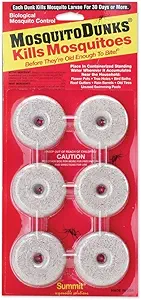 |
| Highest Rated A top-rated pick with lots of positive feedback | CuuFceEo Mosquito Deterrent Pouches, 8-Pack |  |
| Most Popular A crowd favorite that many people choose with confidence | Mighty Mint Peppermint Oil Insect Repellent Spray, 1 Gallon |  |
| Best Seller A high-volume bestseller chosen again and again | Wondercide Flea & Tick Yard Spray (Ready-to-Use, 32 oz) |  |
Wondercide Outdoor Pest Control Spray — 32 oz Ready-to-Use
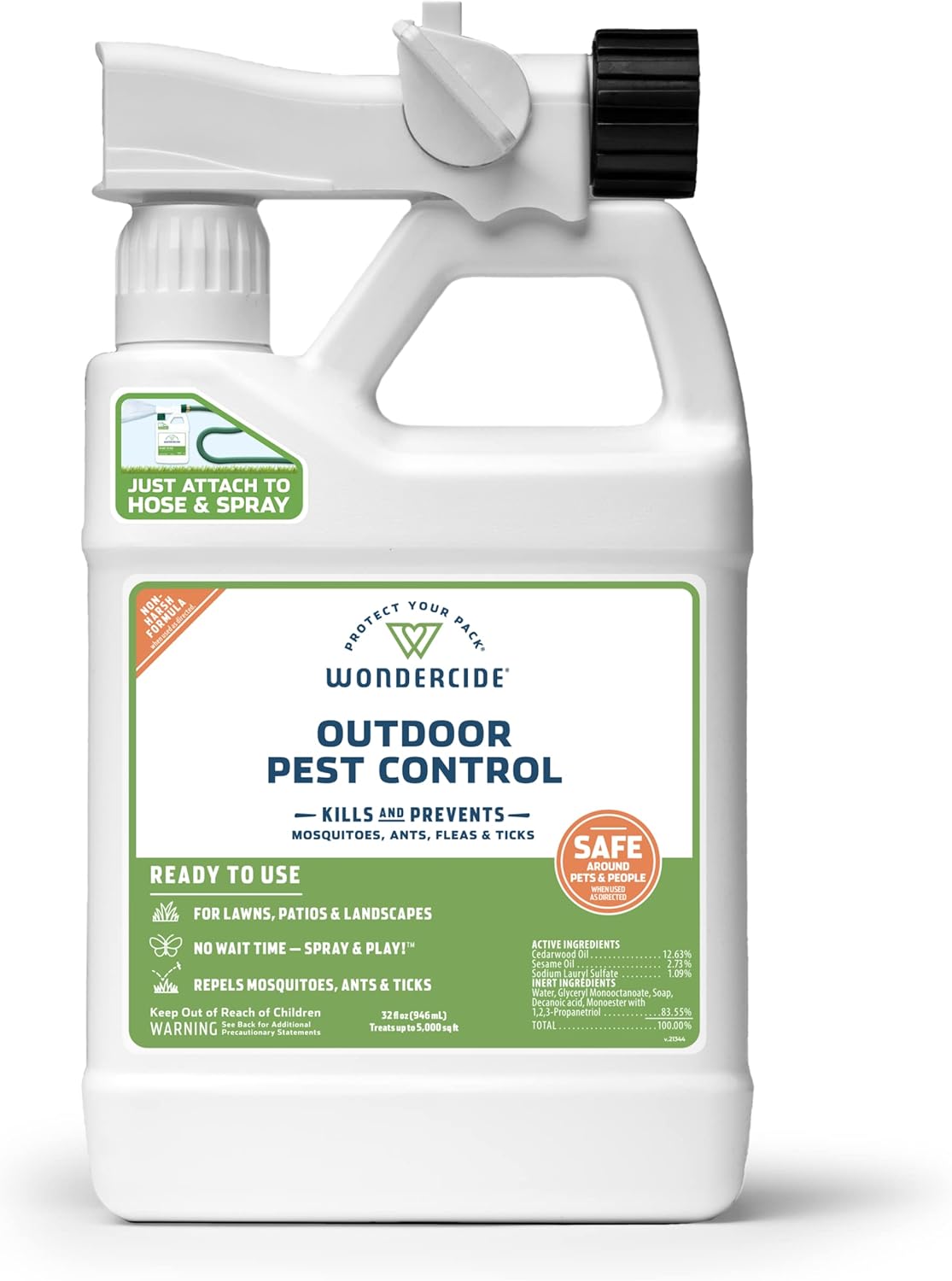
| Format | Pre-mixed, hose-end spray |
|---|---|
| Active ingredients | Cedarwood Oil 12.63%, Sesame Oil 2.73% |
| Coverage | Up to 5,000 sq ft (general); 2,500 sq ft (ticks/mosquito repel) |
Wondercide Ready-to-Use Outdoor Pest Control is a hose‑end spray designed for treating yards up to 5,000 sq ft for general pests and 2,500 sq ft for ticks and mosquito repellency. You attach the bottle to a garden hose, sweep the nozzle across lawns, patios, and foundation lines, and the cedarwood‑based formula delivers quick coverage with no dry time required. Notable features include plant-powered active ingredients (cedarwood and sesame oils), ready-to-use convenience, and instructions for both active infestations and preventative maintenance. Practical benefits are that it is safe to use around people and pets when directions are followed, residues are reported to be non-harmful to pollinators, and the hose attachment makes treating large areas fast. Important limitations are that effectiveness depends on water pressure, walking speed, and weather, heavy rain may require reapplication, and spraying in temperatures above 90°F or direct sun can cause plant burn. Users who need an all‑season, high‑durability pesticide for heavy infestations should plan on repeated applications and follow label precautions to protect sensitive plants.
Best for: Buyers who prioritize effective, plant‑based mosquito and tick control for medium to large yards and want a fast hose‑attached solution that is safe around families and pets when used as directed.
Less Ideal for: Gardeners who need a single, long‑lasting professional‑grade pesticide for severe, persistent infestations or who cannot reapply after rain should consider alternative, heavier‑duty treatments.
- Ready-to-use hose-end applicator for fast coverage of large yards
- Plant-based active ingredients (cedarwood and sesame oils) that target common yard pests
- No dry time required so kids and pets can re-enter treated areas quickly
- Covers up to 5,000 sq ft for general pest control and 2,500 sq ft for ticks/mosquito repellency
- May cause phytotoxic burning if applied in direct sun or temperatures above 90°F
- Performance depends on water pressure and user walking speed which can lead to uneven coverage
- Heavy rain can wash it away and requires reapplication
Verdict: If you want a fast, family- and pet-friendly plant‑based spray to reduce mosquitoes and ticks across a medium to large yard, this ready‑to‑use hose‑end formula delivers practical, repeatable results.
Cedarcide Outdoor Bug Spray Gallon (Natural Cedar & Lemongrass)

| Ingredients | Natural essential oils including Cedarwood and Lemongrass |
|---|---|
| Coverage | Treats up to 4 acres |
| Intended use | Lawns, landscaping, patios, perimeter of home |
Cedarcide Outdoor Bug Spray is a plant-based perimeter treatment designed for yard-scale pest control. It is applied with a pump or hose-end sprayer to lawns, landscaping, patios, and around home foundations and is labeled to treat up to four acres. The formula relies on natural essential oils, primarily cedarwood and lemongrass, which provide a strong scent that deters ticks, mosquitoes, fleas, chiggers, and similar pests without synthetic pesticides. Practical benefits include a large one-gallon volume suited to treating large areas, a family- and pet-friendly ingredient list, and clear directions for perimeter and landscape use. Performance-minded buyers should note that efficacy depends on thorough coverage and repeat applications; natural oil repellents often require more frequent reapplication than synthetic alternatives and may be less persistent after heavy rain. This product is best used as part of an integrated yard program where safety around people and pets is a priority and where users accept a maintenance schedule to sustain protection.
Best for: Buyers who prioritize a safer, pet-friendly yard solution and want a product capable of treating large outdoor areas while avoiding synthetic pesticides.
Less Ideal for: Gardeners who need long-lasting, low-maintenance control or immediate knockdown comparable to conventional chemical pesticides should consider other options.
- Large one-gallon container suitable for treating up to 4 acres
- Uses natural cedarwood and lemongrass essential oils considered safe around people and pets
- Designed for perimeter and landscaping application to reduce yard pest populations
- Clear directions for use on lawns, patios, and around homes
- Natural oil-based formula typically requires more frequent reapplication than synthetic pesticides
- Effectiveness can be reduced by rain and requires good coverage for best results
Verdict: Choose this gallon natural spray when you want a pet-safe, yard-scale tick and mosquito repellent that prioritizes safety over long-lasting chemical persistence.
Summit Mosquito Dunks (6 Count) Biological Mosquito Control
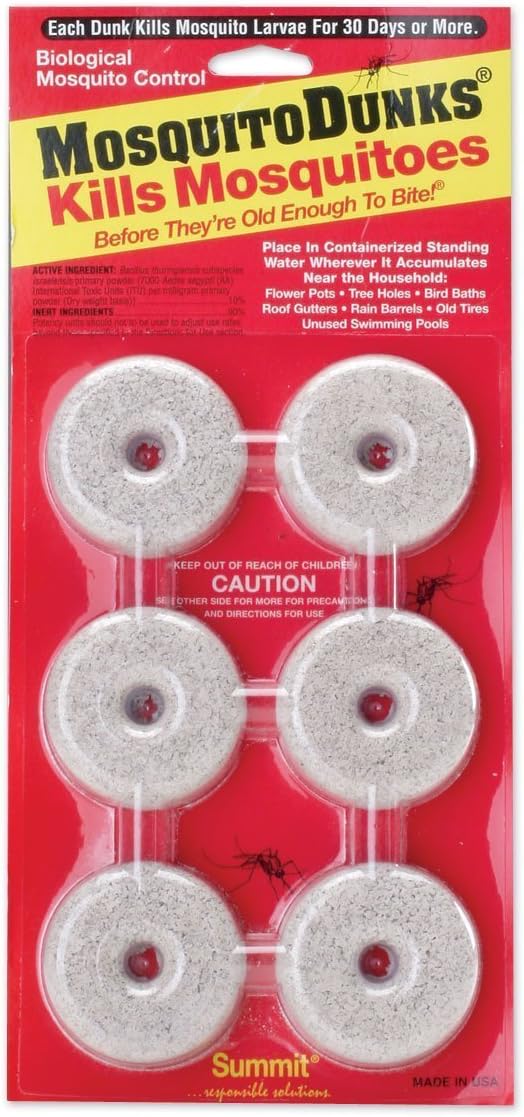
| Unit Count | 6 Count |
|---|---|
| Item Form | Pellets |
| Target Species | Insects |
| Active Ingredients | Bacillus thuringiensis subspecies israelensis |
| Specification Met | EPA |
Mosquito Dunks are small, slow‑releasing pellets designed to be floated in any standing water where mosquitoes breed, such as birdbaths, rain barrels, gutters, and pond edges. Each dunk contains the bacteria Bacillus thuringiensis israelensis which targets mosquito larvae but is safe for people, pets, and most wildlife when used as directed. They are easy to use — drop a dunk into water and it provides control for about 30 days — making them a low‑effort solution for ongoing yard maintenance. The product is EPA listed and comes as a 6‑count pack, so a single purchase covers multiple water sources or several months of treatment. Limitations are that dunks only work where larvae are present and do not repel adult mosquitoes, so they should be paired with other measures if adults are a current problem. Also they must be kept in contact with water to be effective and replaced on schedule for continuous protection.
Best for: Budget-minded homeowners who want a low-maintenance, targeted way to reduce mosquito breeding in small standing water sources around the yard without using broad‑spectrum chemicals.
Less Ideal for: People needing immediate reduction of biting adult mosquitoes or those who need a whole‑yard adulticide solution should consider alternative or additional products.
- Targets mosquito larvae specifically so non target mammals and most wildlife are unaffected
- Easy to use — place in standing water and provide about 30 days of control per dunk
- EPA listed active ingredient (Bacillus thuringiensis israelensis) with established effectiveness
- Six dunks per pack covers multiple breeding sites or staggered treatments over time
- Does not affect adult mosquitoes so you may need additional control methods
- Only works in water where larvae are present and requires periodic replacement
Verdict: An inexpensive, easy-to-use biological larvicide that reliably prevents mosquito larvae in standing water for about a month per dunk.
CuuFceEo Mosquito Deterrent Pouches, 8-Pack

| Pack quantity | 8 Packs |
|---|---|
| Coverage per pouch | Up to 120 sq ft |
| Duration | Up to 90 days |
| Ingredients | Plant-based, peppermint |
These mosquito deterrent pouches use peppermint and other plant-based ingredients to help keep mosquitoes away from patios, porches, balconies and indoor living spaces. Each pouch is sold in an eight-pack and is rated to cover roughly 120 square feet for up to 90 days, so you can place them in hotspots like seating areas, entryways or camping setups without frequent swapping. The pouches are simple to use and require no installation or power source, which makes them convenient for renters or seasonal setups. Because they rely on passive scent rather than electrical attraction or toxic sprays, they are marketed for family and pet friendly use when directions are followed. Limitations are that effectiveness depends on placement, wind and mosquito pressure and they do not actively kill insects or provide instant relief the way a repellent spray or zapper might. For people who want a low-maintenance, non-powered way to reduce mosquitoes over a few months, these pouches are a practical option.
Best for: Buyers who want a low-maintenance, nonpowered way to reduce mosquitoes around small outdoor or semi-indoor areas and prioritize safer, plant-based options for families and pets.
Less Ideal for: People who need rapid knockdown or large-area protection in high mosquito-pressure environments should consider active repellents or electronic devices instead.
- Plant-based peppermint formula intended to be family and pet friendly when used as directed
- Each pouch covers up to 120 sq ft, allowing targeted placement around outdoor living areas
- Rated to last up to 90 days per pouch, reducing replacement frequency
- No power, tools, or setup required for use
- Effectiveness can vary with wind, placement, and local mosquito pressure
- Does not kill mosquitoes and may not provide immediate relief like sprays or electric devices
Verdict: A simple, pet-friendly way to cut mosquito presence in small outdoor and semi-indoor spaces for months without power or chemicals.
Mighty Mint Peppermint Oil Insect Repellent Spray, 1 Gallon

| Volume | 128 oz |
|---|---|
| Ingredients | Water, Glycerin, Polyglycerol Oleate, Soap, Peppermint Oil |
| Use areas | Indoor / Outdoor |
| Scent | Peppermint |
Mighty Mint’s 1-gallon peppermint oil spray is a plant-based insect repellent intended for broad indoor and outdoor use. The product is supplied as a large ready-to-use bottle with a detachable nozzle for spraying around entryways, baseboards, patios, and gardens or for refilling smaller spray bottles. Its formula lists peppermint oil along with water, glycerin, and soap, so it works by delivering a strong peppermint scent that repels spiders, ants, roaches and similar pests without synthetic pesticides. Practical benefits include the large 128 oz volume for extended coverage and a scent that many households find more pleasant than chemical sprays. The label notes it is safe for use around people and pets when used as directed, and the concentrate-style packaging simplifies repeat applications. Limitations to keep in mind are that it is a deterrent rather than a lethal insecticide, so it may not eliminate established infestations, and effectiveness can vary by pest and environmental conditions. Users should follow safety directions and reapply after heavy rain or watering for outdoor use.
Best for: Buyers who prioritize safer, plant-based pest control and want a proven, widely used product with visible social proof for routine outdoor and perimeter pest prevention.
Less Ideal for: People facing severe infestations who need a fast-acting, residual insecticide or professional pest control should consider stronger, targeted treatments instead.
- Large 128 oz ready-to-use gallon provides long-lasting coverage and value
- Plant-based formula using peppermint oil rather than synthetic pesticides
- Versatile for indoor and outdoor application and can refill smaller bottles
- Pleasant mint scent that is less intrusive than chemical alternatives
- Designed as a repellent and deterrent so it may not eradicate heavy or established infestations
- Performance can be inconsistent depending on pest type and weather conditions
Verdict: Choose this gallon peppermint spray if you want a plant-based, widely adopted repellent for routine outdoor perimeter and home pest prevention.
Wondercide Flea & Tick Yard Spray (Ready-to-Use, 32 oz)

| Liquid Volume | 946 ml |
|---|---|
| Item Form | Spray |
| Active ingredient | 12.63% Cedarwood Oil |
| Coverage (fleas/mosquitoes) | Up to 5,000 sq ft |
| Coverage (ticks/mosquito repel) | Up to 2,500 sq ft |
Wondercide Flea & Tick Yard Spray is a ready-to-use hose-end treatment that uses cedarwood and other plant-derived ingredients to kill and repel fleas, ticks, and mosquitoes in the yard. You attach the bottle to a garden hose, turn the sprayer on, and walk steady sweeping passes to treat up to 5,000 sq ft for fleas and mosquitoes or 2,500 sq ft for ticks and mosquito repellency. Notable features include a pre-mixed formula for quick application, a hose-powered sprayer for even coverage, and an ingredient list centered on cedarwood oil that the brand says is safe for pollinators when used as directed. In practice it is convenient for routine maintenance and for reducing pest pressure around foundations, patios, and pet areas without waiting for drying or reentry. Important limitations are sensitivity to high heat or direct sun which can cause plant foliage browning if applied above 90°F and reduced residual effect after heavy rain, which may require reapplication. The product is exempt from EPA registration under FIFRA and carries typical safety instructions to avoid eye contact and keep out of reach of children.
Best for: Buyers who want a convenient, natural-first yard repellent that treats broad outdoor areas and lowers pest pressure around pets and play spaces with minimal setup.
Less Ideal for: Those who need a product that holds up through heavy storms or who require a chemically registered pesticide for regulatory or commercial settings should consider other options.
- Pre-mixed hose-end bottle makes whole-yard treatment fast and easy
- Plant-based active (cedarwood oil) targets fleas, ticks, and mosquitoes
- Covers a large area per bottle (up to 5,000 sq ft for fleas and mosquitoes)
- Formulated to be safe for people, pets, and pollinators when used as directed
- Can cause phytotoxic browning if applied in direct sun or when temperatures exceed 90°F
- Heavy rain or intense irrigation can wash away residue and may require reapplication
Verdict: If you want an easy, plant-powered yard spray to reduce mosquitoes, fleas, and ticks over large lawns while prioritizing pet and pollinator safety, this ready-to-use option delivers fast, low-fuss coverage.
Choosing the Right Natural Mosquito Killer for Yards: Key Factors to Consider
Coverage Area
How much of your yard a single unit or treatment will protect matters because different yards have different shapes and risk spots. Coverage area describes the effective radius or square footage where mosquito activity is noticeably reduced. A product that claims a wide radius may still be limited by wind, nearby standing water, or vegetation density.
Consider whether you need concentrated protection around seating and play areas or broader suppression across an entire property. For localized evening use, a smaller device with focused coverage can be more efficient. For whole-yard reduction, look for solutions or placement strategies designed to create overlapping protection zones.
Environmental Safety
Natural approaches vary in how they affect non-target organisms. Some methods use oils, botanical extracts, or biological agents that break down quickly and have low toxicity to people, pets, and pollinators. Others reduce mosquito numbers by targeting larvae in water but require careful application to avoid harming aquatic life.
Evaluate labels and instructions for restrictions around flowering plants and water features. If you have bees, butterflies, or a pond with fish, prioritize options with documented minimal impact on those species. Safety for children and pets should guide placement and formulation choices.
Longevity and Maintenance
Different natural solutions require very different upkeep. Some need weekly replenishment, seasonal reapplication, or periodic cleaning. Others provide multi-week or seasonal control with a single prep step. Maintenance affects total time investment and ongoing cost.
Plan around your willingness to maintain devices or treatments. If you prefer low-effort control, look for options with multi-week persistence or reusable hardware that only needs occasional refills. If you are comfortable with regular maintenance, more targeted or concentrated approaches may offer higher effectiveness for problem spots.
Mechanism of Action
Natural mosquito killers use a range of mechanisms: repellents that discourage mosquitoes from entering a treated zone, attract-and-kill systems that lure adults away from people, and larvicides that interrupt breeding in standing water. Each mechanism works on a different part of the mosquito life cycle and has tradeoffs in speed and durability.
Matching mechanism to the source of your mosquito problem is important. If breeding sites are the main issue around your yard, targeting larvae delivers longer-term reductions. If mosquitoes arrive from neighboring green areas, a combination of repellents and attract-and-kill strategies can be more effective.
Ease of Setup and Use
A solution that is difficult to install or requires special tools will likely sit unused. Evaluate whether the unit needs permanent mounting, electrical power, batteries, or regular refills. Also consider whether the device is portable so you can move it to different seating areas as needed.
Clear, simple instructions and readily available replacement components make day-to-day use less frustrating. For seasonal tools, check how straightforward winter storage and spring reactivation are.
Weather Resistance and Placement Flexibility
Yard devices and treatments are exposed to sun, rain, and temperature swings. Weather resistance affects both performance and lifespan. Materials that hold up to UV exposure and damp conditions reduce the chance of premature failure and leaching of active ingredients.
Also consider placement flexibility. Some treatments must be applied near water, others perform best in open air, and bulky units may be limited to flat, stable ground. Choose products that fit the microclimates and physical layout of your yard.
Match Method to Mosquito Source
Identify where mosquitoes are breeding and where you encounter the most bites. Nearby standing water is the most common breeding source, so addressing larvae at those sites can reduce overall numbers. If mosquitoes are coming from outside your property, target adult control around activity areas to protect people while broader landscape measures take effect.
For yards with dense sheltering vegetation, perimeter treatments and attract-and-kill placements should consider wind patterns and typical human activity zones. In open yards, devices with larger coverage radii can be more effective and require fewer units.
- Inspect gutters, birdbaths, and containers for standing water before deploying adult-focused devices
- Place perimeter controls upwind of seating areas when possible
- Use larval treatments in ponds or water features only when labeled safe for aquatic life
Integrating Natural Controls with Yard Care
Mosquito control is more effective when combined with routine yard maintenance. Reducing excess shade, trimming dense shrubs, and eliminating catch basins where water collects lowers habitat for mosquitoes and increases the impact of any natural control you add.
Strategic landscaping choices also help. Selecting plants that do not hold water and ensuring proper drainage around foundations reduces breeding sites. Natural controls work best as part of a layered approach rather than as a single fix.
- Fix low spots that collect rainwater after storms
- Turn over or drill drainage holes in outdoor containers
- Keep lawn edges and shrub bases tidy to reduce resting sites
Safety Around Kids, Pets, and Pollinators
Even natural ingredients can be harmful if misused or applied directly where children and pets play. Choose low-toxicity formulations and follow label directions for safe placement and timing. Consider physical barriers or elevated placements to keep devices out of reach.
Protect pollinators by avoiding treatments on flowering plants or during times of peak insect activity. Where larvicides are used in water features, select products that are specifically labeled as safe for fish and beneficial aquatic organisms.
- Store refills and concentrates locked away from children and pets
- Avoid treatments on open flowers to reduce pollinator exposure
- Use signage or fencing if you place devices near play areas
Seasonal Timing and Long-Term Planning
Plan control actions around the local mosquito season. Early inspection and breeding-site removal in spring can reduce pressure later in the season. Some natural options deliver immediate knockdown while others require gradual population declines through larval targeting. Consider a schedule that blends quick-acting measures for events with longer-term prevention.
Record where you place devices and note refill intervals so you can optimize placement in future seasons. Over time, small adjustments to landscape and maintenance routines often yield the largest reductions in mosquito activity.
- Start monitoring for standing water and adult activity as temperatures rise
- Time treatments before major outdoor gatherings for maximum comfort
- Rotate placement or change strategies if a given approach loses effectiveness
Troubleshooting Common Yard Scenarios
If you still see mosquitoes despite using natural devices, check for overlooked breeding spots such as clogged drains, low-lying puddles, or roof gutters. Poor device placement, like positioning units downwind of seating areas, can also reduce perceived effectiveness.
For persistent problems, combine methods: target larvae at water sources and add adult control near activity zones. Be patient; natural population-level control takes more time than repeated quick chemical treatments, but it reduces collateral impact on beneficial species.
- Inspect and remove hidden water sources weekly during the season
- Move portable units closer to shaded perimeters at dusk
- Document results and change tactics after two to three weeks if no improvement appears
How We Chose the Best Natural Mosquito Killer for Yards
We focused on candidates that rely primarily on natural, low-toxicity approaches rather than synthetic insecticides. Selection criteria emphasized methods that are appropriate for typical residential yards and that reduce mosquito populations without persistent chemical residues. Key evaluation dimensions were coverage area, environmental safety, longevity and maintenance needs, and user ergonomics. Coverage area measures how much yard a single unit or treatment reliably protects. Environmental safety considers effects on pollinators, pets, and beneficial wildlife, plus the active ingredients or mechanisms used. Longevity and maintenance assess how often replacements, refills, or upkeep are required and how easy that work is. User ergonomics covers setup complexity, portability, and how straightforward controls are for everyday use. We excluded approaches that rely on broad-spectrum synthetic insecticides applied frequently, tools intended only for industrial or commercial use, and any option that poses significant risk to non-target species when used as directed. The final shortlist favors options homeowners can deploy safely in common yard scenarios and that offer clear tradeoffs between effectiveness and environmental impact.
FAQ
Are natural mosquito killers safe around children and pets?
Often they are safer than synthetic pesticides, but safety depends on the active ingredients and application method. Choose low-toxicity formulations, follow label instructions, and place devices out of reach. Avoid applying treatments on play surfaces or directly on items children handle.
How soon will I notice fewer mosquitoes after using a natural solution?
It depends on the mechanism. Adult-targeted repellents or attract-and-kill units can reduce biting within hours to days, while larval control often takes one to several breeding cycles to noticeably lower populations. Expect gradual improvement with larval-focused approaches.
Can natural methods handle large yards or only small patios?
Some natural options scale to larger yards through multiple units or perimeter strategies, while others are designed for localized protection. Evaluate coverage area per unit and plan overlapping placement for whole-yard suppression.
Do natural mosquito killers affect pollinators or fish?
Some products have minimal impact when used correctly, but others can harm non-target species if applied to flowering plants or directly into ponds. Always use formulations labeled safe for pollinators and aquatic life when those resources are nearby.
How often do I need to maintain or refill natural devices?
Maintenance intervals vary widely. Some devices require weekly refills or cleaning, while others last for several weeks or a full season. Check the expected longevity and plan your yard routine around those intervals to maintain effectiveness.
Will landscaping changes reduce the need for active mosquito control?
Yes. Improving drainage, removing standing water, and reducing dense shade lowers mosquito habitat and can make natural control measures more effective. Combining landscape management with targeted treatments gives the best long-term results.
Final Verdict
Choose a natural mosquito control strategy based on the source of the problem, the size of the area you need to protect, and who uses the yard. Prioritize solutions that balance sufficient coverage with low impact on pollinators, pets, and household members. Expect tradeoffs between immediate knockdown and longer-term population reduction, and plan placement and maintenance to match your tolerance for upkeep. With a layered approach that includes habitat reduction and targeted natural controls, you can significantly lower mosquito nuisance while keeping the yard safe and enjoyable.
