

Note: This article contains affiliate links. If you click on these links and make a purchase, I may earn a small commission at no extra cost to you. This helps support my research and content. Read my full affiliate disclosure here.
If you are propagating or transplanting arborvitae, the right rooting hormone can make the difference between quick establishment and a struggling specimen. Rooting aids change how cuttings and disturbed roots form new feeders, reduce shock after transplanting, and can speed early growth so young plants withstand heat and dry spells. This guide covers seven top rooting hormone options chosen for arborvitae use. We shortlist products that perform reliably in real garden conditions and evaluate them on root initiation, ease of application, and handling in outdoor planting situations. Read on to see the criteria we used and the practical strengths of each option before you pick one for your arborvitae cuttings or transplants.
Top Picks at a Glance
| Best Overall The best all-around choice for most situations | Hormex Rooting Hormone Powder #16 for Hardwood Cuttings, 3-Pack |  |
| Best Quality Built to a higher standard if you want something more solid | Hormodin 2 Rooting Hormone Powder (0.3% IBA), 16 oz |  |
| Best Value The sweet spot between price and what you get | Grow More Rapid Root Powder Rooting Hormone (2 oz) |  |
| Best Budget The cheapest option that still gets the job done reliably | Bonide Bontone II Rooting Powder, 1.25 oz |  |
| Highest Rated A top-rated pick with lots of positive feedback | Herrdemia 3-in-1 Rooting Powder (IBA + NAA + Mycorrhizae) |  |
| Most Popular A crowd favorite that many people choose with confidence | Garden Safe TakeRoot Rooting Hormone Powder, 2-Pack (2 oz) | 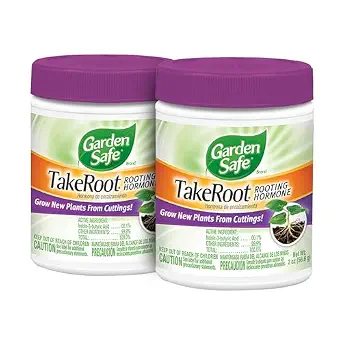 |
| Best Seller A high-volume bestseller chosen again and again | Garden Safe TakeRoot Rooting Hormone, 2 oz (pack of 12) |  |
Hormex Rooting Hormone Powder #16 for Hardwood Cuttings, 3-Pack

| Item Form | Powder |
|---|---|
| Application Method | Dip |
| Target Species | woody plants, juniper, grapes, tomatoes |
| Mixing Ratio | 3/4 oz per application |
This three-pack of Hormex #16 rooting powder is formulated specifically for hard-to-root hardwood cuttings such as arborvitae, junipers and other woody shrubs. You prepare a cleaned cutting, moisten the base, dip into the powder, tap off excess and plant into your chosen medium. Each 21 g bottle treats many cuttings and the higher 1.6% IBA concentration is intended to encourage root initiation on mature, woody stems that often fail with milder starters. The product’s simple dip application and clear plant-strength guidance in the images make it easy to match the powder to arborvitae cuttings and use on a propagation bench or outdoor potting area. Important limitations are that this is a powder-only, single-strength formula intended for difficult hardwoods so it is not suited to tender softwood cuttings, and success still depends on correct cutting technique and humidity control. Also the directions warn not to return unused powder to the bottle, so plan doses to avoid waste.
Best for: Gardeners propagating mature woody shrubs or trees who want a focused, professional-strength rooting aid for difficult-to-root cuttings and value repeatable, bench-friendly application.
Less Ideal for: People primarily rooting softwood or tender annual cuttings or those who prefer a liquid rooting hormone and adjustable concentrations should consider other products.
- High 1.6% IBA concentration tailored for difficult hardwood cuttings like arborvitae
- Dip-and-plant powder is simple to use on a propagation bench or in outdoor pots
- Three 21 g bottles provide multiple applications so you can keep a working bottle and a sealed spare
- Clear plant-strength guide helps you choose the right Hormex strength for woody species
- Single high-strength formulation is not appropriate for softwood or very tender cuttings
Verdict: Choose Hormex #16 when you need a strong, reliable rooting powder specifically engineered to help hardwood cuttings like arborvitae develop roots.
Hormodin 2 Rooting Hormone Powder (0.3% IBA), 16 oz

| Item Form | Powder |
|---|---|
| Specific Uses For Product | Root Development |
| Target Species | woody and semi-woody plants, including some of the evergreens |
| Unit Count | 16 Ounce |
| Mixing Ratio | 1:0 or 100% |
Hormodin 2 is a powder-form rooting hormone designed to improve success when propagating woody and semi-woody plants. You use it by moistening the basal end of a fresh cutting, dipping the stem in the powder, tapping off the excess, and planting the treated cutting in rooting medium. The 0.3% IBA concentration targets plants that are moderately difficult to root, and the powder format makes application quick and low-tech for both hobbyists and small-scale growers. Practical benefits include faster root initiation, lower propagation bench time, and reduced losses from failed cuttings. The product description notes it prevents disease migration between cuttings because you dip individuals rather than sharing solutions. Important limitations are that it is formulated for woody and semi-woody species so it is not the best choice for very soft herbaceous plants, and being a powdered chemical it requires careful handling and storage to keep it dry and out of reach of children. The large 16 ounce jar suits repeat propagation but may be more than a casual user needs.
Best for: Gardeners and small-scale propagators who prioritize consistent, reliable rooting of woody and semi-woody cuttings and want a straightforward, repeatable application method.
Less Ideal for: Casual gardeners propagating mostly soft-stemmed annuals or those who prefer liquid dipping solutions and smaller single-use packages.
- Formulated specifically for woody and semi-woody plant cuttings with 0.3% IBA concentration.
- Powder format enables quick "dip it, tap it, stick it" application without mixing solutions.
- Large 16 oz jar provides many treatments for frequent propagators.
- Helps speed root initiation and reduce propagation bench time.
- Not formulated for soft herbaceous species where lower-strength products perform better.
- Powder requires dry storage and careful handling to avoid spills or contamination.
Verdict: Choose Hormodin 2 when you need a dependable powdered rooting hormone to reliably start roots on woody and semi-woody cuttings.
Grow More Rapid Root Powder Rooting Hormone (2 oz)

| Item Form | Powder |
|---|---|
| Specific Uses For Product | Root Development |
| Application Method | Dip |
| Target Species | All-purpose |
| Unit Count | 2 Ounce |
Grow More Rapid Root Powder is a concentrated rooting hormone in powder form intended for dipping cuttings before planting. With 0.3% IBA the powder speeds root initiation on a wide range of ornamental and landscape cuttings and is applied by briefly dipping the cutting into the powder then planting. The powder form reduces cross-contamination risk compared with reusable liquid dips and a small 2 ounce container claims enough product to treat many cuttings, which suits propagators who work in batches. Practical benefits include straightforward one-step application, broad plant compatibility for non-food species, and a compact container that stores easily. Important limitations are that it is not labeled for use on food crops and the strength may be stronger than needed for very soft-stemmed houseplants, so lighter touch or lower-concentration products might be preferable for delicate cuttings. There is also no dosing beyond the dip instruction, so users who want precise dilution guidance for different species will need to rely on general propagation experience.
Best for: Ideal for home gardeners and landscapers who regularly propagate ornamental or landscape plants and want an efficient, low-waste rooting treatment for batches of cuttings.
Less Ideal for: Not a good choice for people propagating herbs, vegetables, or other food crops or for beginners who prefer pre-diluted liquid hormones with step-by-step dosing.
- Contains 0.3% IBA, a proven rooting auxin to promote faster root formation
- Powdered one-dip application minimizes cross-contamination between cuttings
- Compact 2 oz jar treats a large number of cuttings, economical for batch propagation
- All-purpose label indicates compatibility with many ornamental and landscape species
- Not labeled for use on edible food crops
- No species-specific dosing guidance provided beyond 'dip' instructions
Verdict: If you need an economical, low-contamination rooting powder to bulk-propagate ornamental and landscape cuttings, this 2 oz Grow More formula is a practical, effective choice.
Bonide Bontone II Rooting Powder, 1.25 oz

| Item Form | Powder |
|---|---|
| Specific Uses For Product | Root Development |
| Application Method | dip and shake |
| Target Species | azaleas, mums, geraniums, pachysandra, poinsettias and others |
| Unit Count | 1.25 Ounce |
Bonide Bontone II is a classic IBA-based rooting powder sold in a small 1.25 oz dust jar for home gardeners and hobbyists. You apply it by dipping a cutting’s wound into the powder, shaking off excess, and planting into moist media; it can also be used to coat seeds or bulbs in a bag before planting. The product’s straightforward formulation of indole-3-butyric acid targets root initiation and is effective on both softwood and hardwood cuttings as well as many ornamentals and vegetables. In practice the powder is convenient to use, has a medium coverage per package, and reduces the time and failure rate for many common cuttings. Limitations are the small unit size if you plan to take large numbers of cuttings, and because it is a dry powder it can be messier to apply than gel alternatives. Safety precautions are also reasonable to follow since it is a plant hormone rather than an inert filler.
Best for: Gardeners who want a reliable, easy-to-use rooting hormone backed by long-standing use and positive user feedback and who take a cautious approach to selecting proven products for their cuttings.
Less Ideal for: Propagation professionals or growers who take very large numbers of cuttings and need bulk quantities or who prefer the tidier application of gels or liquid dilutions.
- Contains indole-3-butyric acid (IBA), a proven rooting hormone for cuttings
- Ready-to-use powder that is simple to apply by dip and shake
- Versatile for cuttings, seeds, bulbs, and transplants across many ornamental and edible plants
- Compact jar size convenient for occasional home garden use
- Small 1.25 oz package may not be economical for frequent or large-scale propagation
- Powder form can be messier and harder to control than gel or liquid formulations
Verdict: A proven, ready-to-use IBA powder that reliably speeds rooting for home gardeners focused on successful cuttings.
Herrdemia 3-in-1 Rooting Powder (IBA + NAA + Mycorrhizae)

| Item Form | Powder |
|---|---|
| Application Method | dip or mix with water |
| Specific Uses For Product | Root Development, plant propagation |
| Target Species | Houseplants |
| Unit Count | 1.1 Ounce |
This rooting powder is designed to accelerate root initiation and improve survival of cuttings across soil and hydroponic systems. It is typically used as a dip for soil propagation or dissolved in water for water and LECA propagation; the package includes mixing ratios and step-by-step directions. The formula combines IBA for feeder roots, NAA for a strong central root, and R. irregularis mycorrhizae to extend nutrient uptake, plus adjuncts such as seaweed extract and chitosan to reduce stress and protect cut sites. Practical benefits include faster visible rooting in 1–2 weeks in many species, compatibility with popular houseplants and woody cuttings, and an estimated high coverage per bottle suited to repeated propagation projects. Important limitations are the need to follow the dosage carefully because overuse can inhibit rooting, and the product is a concentrated chemical powder that requires careful handling and must be kept away from children and pets. Overall it is a reliable option for gardeners who want consistent rooting performance when propagating a variety of plants.
Best for: Buyers who prioritize dependable, repeatable propagation results and want a single product that works across soil and water systems for houseplants and woody cuttings.
Less Ideal for: Gardeners who prefer purely organic, food-safe options or who will not follow precise dosing and safety precautions should consider alternative gentler methods.
- Broad-spectrum formula combining IBA, NAA, and mycorrhizae for stronger, more complete root systems
- Works in both soil and water propagation and is compatible with hydroponic media like LECA
- Includes practical directions and mixing ratios for dips and water solutions
- High estimated coverage per bottle suitable for many cuttings or repeated propagation sessions
- Concentrated formula requires precise dosing since overuse can suppress rooting
- Contains active ingredients that are hazardous if swallowed or inhaled and must be stored safely
Verdict: Choose this powder when you want a single, lab-tested rooting hormone that reliably speeds and strengthens root formation across soil and water propagation.
Garden Safe TakeRoot Rooting Hormone Powder, 2-Pack (2 oz)

| Item Form | Powder |
|---|---|
| Specific Uses For Product | Plant Growth, Root Development |
| Application Method | Stir cut ends in powder |
| Number of Packs | 2 |
| Active Ingredient | Indole-3-butyric acid |
Garden Safe TakeRoot is a simple powder rooting hormone intended to help grow new plants from stem cuttings. You moisten the cut end, dip or stir it in the powder, tap off excess and plant the treated cutting in a rooting medium, then mist regularly. The active ingredient is indole-3-butyric acid, a commonly used auxin that encourages root initiation on a wide range of houseplant and garden varieties such as African violets, geraniums, roses, poinsettias and many woody ornamentals. In practice the powder form is easy to apply, low-mess compared with liquids, and the included two-pack gives extra supply for repeated propagation attempts. Limitations are that it is a basic, single-concentration product so you cannot adjust strength for difficult species, and you must avoid cross-contaminating the jar when treating multiple plants. For cautious gardeners who prefer a proven, no-frills rooting aid, this product reliably increases the odds that common cuttings will form roots when used with proper cutting and aftercare techniques.
Best for: Buyers who want a straightforward, proven rooting aid to improve success with common cuttings and who favor reliable, low-risk products over experimental approaches.
Less Ideal for: Propagators seeking adjustable-concentration hormones, specialized formulations for very difficult-to-root plants, or liquid dosing systems should consider other options.
- Contains indole-3-butyric acid, a widely used rooting hormone that promotes root formation
- Powder form is easy to apply and reduces spills compared with liquid formulations
- Suitable for many common houseplants and garden cuttings including roses, geraniums and African violets
- Two-pack supply lets you treat multiple cuttings or keep a back-up jar
- Single-strength powder does not allow dosing adjustments for very sensitive or hard-to-root species
- Requires careful handling to avoid contaminating the container when treating multiple plants
Verdict: A dependable, easy-to-use powder rooting hormone that raises your chances of success with typical houseplant and garden cuttings.
Garden Safe TakeRoot Rooting Hormone, 2 oz (pack of 12)

| Item Form | Powder |
|---|---|
| Specific Uses For Product | Potting,Rooting |
| Application Method | Stir the cut end in powder |
| Coverage | Medium |
| Unit Count | 24 Ounce |
Garden Safe TakeRoot is a powdered rooting hormone intended to help cuttings establish roots by coating the cut end with indole-3-butyric acid, a plant compound similar to naturally occurring rooting hormones. Typical use is simple: moisten the cutting, dip or stir the cut end in the powder, tap off excess and plant in a rooting medium, then mist regularly. The powder format is low-mess compared with liquids and the product lists compatibility with a wide range of houseplants and ornamentals, which makes it versatile for nursery and home use. Because it is sold as a multi-pack of 2-ounce units, it is convenient for gardeners who propagate often or share cuttings. Limitations to consider are that success still depends on proper cutting technique and aftercare and that the powder format offers less precise dosing than some liquid concentrates. For a risk-averse gardener propagating conifers like arborvitae, this product provides a familiar, widely used active ingredient and straightforward directions to increase chances of rooting when steps are followed carefully.
Best for: Gardeners who prefer tried-and-true, low-risk products and want an easy-to-use powder rooting hormone for routine propagation of common ornamentals and shrubs.
Less Ideal for: People who need exact micro-dosing or who prefer a liquid concentrate delivery system should consider other formats.
- Contains indole-3-butyric acid, a proven rooting stimulant for many plant varieties
- Powder form is easy to apply by dipping and produces minimal cleanup
- Comes in multiple 2-ounce units so you have enough on hand for repeated propagation
- Clear, simple directions for preparing cuttings and applying the product
- Powder dosing is less precise than liquid concentrates for fine control
- Not a guaranteed solution for difficult-to-root species; proper technique and care remain essential
Verdict: A straightforward, powder rooting hormone that gives risk-averse gardeners a familiar, easy-to-use way to improve rooting success on common cuttings.
Choosing the Right Rooting Hormone for Arborvitae: Key Factors to Consider
Formulation Type
Rooting hormones come in powders, gels, liquids, and concentrated solutions. Powdered auxins are simple to use when dipping cut stems and offer long shelf life. Gels provide a tidy, measurable coating that clings to fresh cuts and is good for woody cuttings like arborvitae. Liquid concentrates let you adjust strength for softwood versus hardwood material but require careful dilution.
Choosing the right formulation affects how cleanly you can treat cuttings, how much product you waste, and how predictable results are. For homeowners doing a few cuttings, a gel or powder often gives reliable results with minimal fuss. For larger batches or repeated use, a dilute liquid that you can mix to strength may be more economical and flexible.
Active Ingredient Strength
Different products use varying concentrations of auxin-type compounds. Stronger concentrations can speed root formation but increase the risk of tissue burn or slowed growth if overapplied. Lower concentrations are gentler and often better for woody or older material where the rooting response is naturally slower.
Understanding active strength helps you match product to task: fresh soft tips might root quickly with a mild formulation, while cuttings from mature arborvitae may need a higher-but-controlled dose. Manufacturers usually give strength guidance; choose one that makes dosing clear and forgiving for gardeners.
Application Method and Equipment
How you apply rooting hormone matters in the garden. Powdered hormones need a light, even dusting and work best with a small scoop or shaker. Gels are applied by dipping and provide consistent coverage. Liquid concentrates require measuring tools, mixing containers, and sometimes a separate applicator for dipping or soaking.
Think about where you will be working. If you are treating cuttings on a bench, a liquid soak can be convenient. For in-ground transplant roots, a quick powder or gel that sticks to cut areas may be simpler. Also consider cleanup, spill risk, and whether you need disposable applicators for sanitary handling between different plants.
Shelf Life and Storage
Rooting aids vary in how long they retain activity. Powders and sealed concentrates usually last longer when stored cool and dry, while diluted solutions and some gels have shorter useful windows after opening. Degraded product can give inconsistent results and waste time and plant material.
Proper storage matters: keep products out of direct sun, avoid freezing temperatures, and follow label instructions for resealing. For occasional gardeners, a stable powdered or sealed concentrate that endures between seasons reduces waste and uncertainty.
Safety and Non-target Effects
Although rooting hormones are generally low-risk when used as directed, some formulations are potent and require gloves, eye protection, or careful handling to avoid skin irritation. Drift or spills in the planting area can contact nearby plants, so choose products with clear safety guidance and minimal risk to surrounding vegetation.
Consider personal protective equipment, how children and pets access stored materials, and whether you need a product with milder active compounds for use near edible plantings or sensitive ornamentals.
Compatibility with Garden Conditions
Arborvitae roots best in cool, moist soils with good drainage. The rooting aid you choose should fit how you will propagate or transplant in those conditions. For instance, products that require long misting or high humidity to perform may not work well in a hot, dry yard without additional environmental controls. Conversely, quick-action gels that set a firm coating can help where humidity is hard to maintain.
Also think about whether you will be using rooting hormone in containers, cold frames, or outside beds. Some formulations respond better to controlled nursery conditions, while others are forgiving in the variable reality of a home landscape.
Preparing Arborvitae Cuttings
Take semi-hardwood cuttings in late spring through summer when stems are mature but not fully lignified. Cut below a node with a clean, sharp tool and remove lower foliage to expose several inches of bare stem for rooting and planting.
Wound the base lightly for hardwood cuttings if appropriate, then apply the rooting aid according to the product instructions. Use a clean tray or individual pots filled with a well-draining mix to start cuttings.
- Sterilize cutting tools between plants to reduce disease transfer
- Keep cuttings in bright, indirect light with consistent humidity
- Avoid overwatering; moist but not waterlogged media encourages root growth
Using Rooting Hormone on Transplants
When transplanting young arborvitae, a light application of rooting hormone to disturbed roots or severed feeder roots can speed reestablishment. For larger root balls, avoid burying excess powder in contact with soil; coat the cut root ends or dip damaged areas.
Work quickly to reduce root exposure time and keep the root zone moist during replanting. Follow label guidance on concentration and avoid overuse, which can inhibit rather than help rooting.
- Prune broken roots to clean cuts before applying hormone
- Firm soil around the root ball to remove air pockets after planting
- Water thoroughly after planting to settle soil and activate hormone contact
Managing Humidity and Light for Rooting Success
Rooting success depends not only on hormone choice but also on humidity and light. Maintain high relative humidity around cuttings with a clear dome, misting, or placing trays in a sheltered spot. Avoid direct midday sun which can desiccate tissue and reduce rooting success.
For outdoor propagation, choose a shaded bench or under-canopy location that mimics natural conditions. If you are transplanting in open landscape, protect new plantings from wind and sun for several weeks to reduce stress while roots develop.
- Use temporary shade cloth for hot afternoons
- Monitor moisture daily and water gently to keep media evenly moist
- Gradually acclimate rooted cuttings to lower humidity before transplanting
Troubleshooting Poor Root Development
If cuttings fail to root, reassess humidity, light, and media drainage first. Too wet or too dry conditions are the most common causes of failure. Check for signs of rot at the base and remove any decaying material before trying again.
If cultural conditions are sound, consider whether the hormone concentration or application method was appropriate for the wood type. Try a slightly different formulation or a mild increase in damping-off prevention through cleaner tools and sterile media.
- Replace suspect media and sanitize containers between attempts
- Test a control group with no hormone to determine baseline rooting rate
- Be patient-woody cuttings often take longer to show root initials than softwood cuttings
Storing and Handling Rooting Products
Store unopened products as directed, typically in a cool, dry place away from direct sunlight. After opening, reseal containers tightly and note any recommended discard timelines for diluted mixes or gels.
When handling concentrated materials, wear gloves and avoid inhaling powders. Label any mixed solutions with dilution ratio and date to avoid accidental misuse later in the season.
- Keep products out of reach of children and pets
- Dispose of unused diluted mixes according to local guidance
- Clean equipment thoroughly after use to prevent cross-contamination
How We Chose the Best Rooting Hormone for Arborvitae
We focused on attributes that matter for establishing arborvitae from cuttings or when transplanting. Our selection process prioritized formulations that encourage root initiation without causing excessive tissue stress, delivery methods that suit home and small-scale landscapers, and proven performance in cool, shaded, and full-sun planting spots typical for arborvitae. We considered both quick-acting options for cuttings and gentler mixes for larger root balls. Concrete evaluation criteria included rooting speed and success rate in coniferous cuttings, ease of application in field and container settings, concentration and formulation flexibility, and safety for use around established shrubs and nearby plants. We also checked shelf stability and packaging that prevents contamination during repeated use. Products that posed handling risks without clear benefits or that lacked clear instructions for nursery or home use were excluded. Excluded items were untested homemade concoctions and aggressive high-concentration chemicals unsuited for small-scale garden use. The final shortlist reflects options that balance reliable rooting activity with straightforward application and sensible safety characteristics for arborvitae work.
FAQ
When should I apply rooting hormone to arborvitae cuttings?
Apply hormone immediately after taking a fresh cutting and making a clean cut. Fresh tissue accepts auxins better, so do not wait. Prepare media and humidity controls before treating cuttings to minimize the time roots are exposed.
Can I use rooting hormone on established arborvitae when transplanting?
Yes. A light application to damaged or severed root ends can help reestablishment. Use gentler formulations for larger root balls to avoid overconcentration at the root surface.
Is a gel better than a powder for arborvitae cuttings?
Gels provide consistent coverage and reduce mess, which many gardeners prefer for woody cuttings. Powders are durable and long-lasting in storage. The best choice depends on your workflow and whether you need tidy application or shelf stability.
How long before I should expect roots to form?
Root initiation varies with wood type, season, and conditions. Softwood cuttings may show roots in a few weeks, while semi-hardwood or hardwood material can take several weeks to a few months. Maintain consistent humidity and check gently for root development.
Can rooting hormone harm nearby plants or soil life?
When used as directed, most formulations have minimal non-target effects. Avoid heavy spills and rinse equipment to limit localized concentration. If you are concerned about soil organisms, choose milder preparations and follow label safety guidance.
Final Verdict
Selecting a rooting hormone for arborvitae comes down to matching formulation and strength to your propagation method and garden conditions. Prioritize an option that offers consistent root initiation, clear application instructions, and manageable handling for your scale of work. Balance speed against safety: faster-acting concentrates can work well but require careful dosing, while gels and powders give predictable, lower-risk results. Focus on humidity, clean technique, and proper storage as much as on the product itself. With the right preparation and an appropriate rooting aid, you can significantly increase transplant survival and get arborvitae established more reliably in your landscape.
