

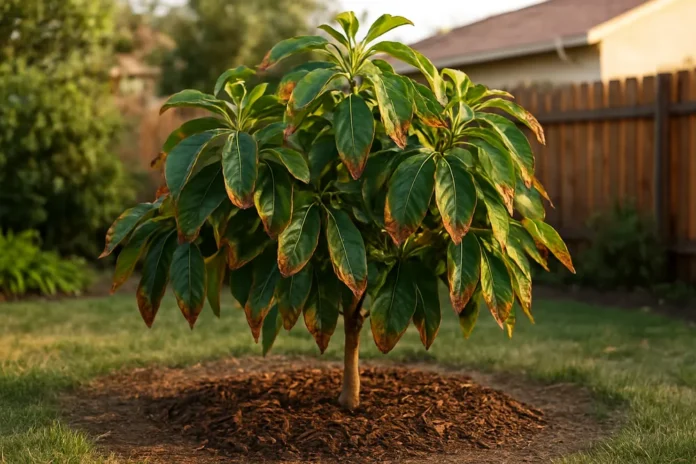
Avocado tree leaves usually develop brown edges because the roots are under stress from uneven watering, salt buildup, poor drainage, heat, wind, or cold damage. In some cases, nutrient imbalance or root disease also causes the leaf margins to dry out and turn brown.
If your avocado tree leaves have brown edges, the tree is telling you something is off, but it is not always saying the same thing. Brown margins can show up after a watering problem, during a hot windy stretch, after salts accumulate in the soil, or when roots are struggling in heavy ground.
I have found that avocados often show stress at the leaf edges before they show it anywhere else. These trees can look mostly green from a distance, yet the older leaves start crisping along the margins as the roots lose their ideal balance of moisture, air, and nutrients.
The good news is that brown leaf edges on avocado are often manageable once you match the symptom pattern to the real cause. The trick is to look at where the damage started, which leaves are affected first, and what has changed recently in weather, watering, or soil conditions.
What Brown Edges Usually Mean on Avocado Leaves
Brown edges are a form of leaf scorch. The outer leaf tissue dries out first because it is farthest from the water supply moving through the leaf. When an avocado tree cannot move water smoothly from the roots to the foliage, the margins often become tan, brown, dry, or brittle.
That does not automatically mean the tree is simply thirsty. Avocados can scorch from too little water, too much water, excess fertilizer salts, poor drainage, hot wind, reflected heat, or root damage. In other words, the symptom appears in the leaves, but the problem often starts below ground or in the surrounding environment.
- Older outer leaves browning first often points to salt buildup or chronic watering stress.
- Newer leaves with edge damage after weather swings may suggest heat, wind, or cold injury.
- Brown edges plus yellowing can indicate root stress or nutrient imbalance.
- Brown edges plus drooping and soggy soil often suggest overwatering or drainage issues.
When I diagnose avocado leaf scorch, I pay close attention to which leaves were damaged first. If the oldest leaves look the worst while new growth is still fairly decent, I start by suspecting salts or a long-running root-zone problem rather than a sudden disease outbreak.
Uneven Watering Is the Most Common Cause
Underwatering and Dry Root Zones
Avocados need consistent moisture, especially while they are establishing or fruiting. If the root zone dries too far between waterings, the leaves lose moisture faster than the roots can replace it. The edges then dry out and turn brown. This often shows up during hot weather, in sandy soil, or when irrigation is too shallow.
A tree that is underwatered may also show curling leaves, leaf drop, smaller new growth, and dry soil several inches below the surface. The canopy can still look green overall, which tricks gardeners into thinking the tree is getting enough water when it is not.
Overwatering Can Create the Same Symptom
This is where avocado care gets frustrating. A tree with waterlogged roots can also develop brown edges because roots need oxygen as much as moisture. In soggy soil, roots cannot function well, so the leaves scorch even though the ground is wet.
If overwatering is the issue, you may notice limp leaves, slow growth, yellowing, a sour smell in the soil, or standing water after irrigation. Trees planted in clay soil or low spots are especially vulnerable.
- Water deeply enough to moisten the full root zone, not just the top inch or two.
- Let the upper soil begin to dry slightly before watering again, but do not let the root zone go bone dry.
- Adjust frequency with season, heat, wind, and soil type.
- Avoid daily shallow watering, which encourages weak surface roots.
If you are unsure whether the tree is getting too much or too little water, dig a small test hole near the drip line rather than right against the trunk. I trust what the soil feels like 6 to 10 inches down more than I trust the surface.
Salt Buildup Is a Classic Avocado Problem
Avocados are sensitive to salts, and brown leaf edges are one of the classic warning signs. Salts can come from tap water, well water, reclaimed irrigation water, synthetic fertilizers, or naturally salty soils. Over time, salts accumulate around the roots and make it harder for the tree to take up water, even when moisture is present.
In many home gardens, this problem builds slowly. The tree may look acceptable for months, then older leaves start showing a narrow yellow band followed by crispy brown margins. Those damaged leaves usually do not recover, but the goal is to stop the pattern from continuing into fresh growth.
- Leaf tips and edges dry first, especially on older leaves.
- Damage can worsen after fertilizing.
- The tree may be watered regularly but still look scorched.
- White crust on the soil surface or container rim can hint at salt accumulation.
The usual fix is to reduce excess fertilizer and occasionally leach the soil with a deeper watering that moves salts below the main root zone, assuming the soil drains well enough for that to be safe. In poorly drained soil, flushing can make root problems worse, so drainage has to be considered first.
Poor Drainage and Root Stress Often Sit Behind the Symptom
Avocado roots are unusually sensitive to bad drainage. Heavy clay, compacted soil, buried root flares, or planting too deeply can all reduce root health. Once the roots are stressed, the leaves often respond with browning at the edges, general dullness, and eventual leaf drop.
This problem is common in lawns where avocado trees share irrigation with grass. Turf sprinklers often run too often for avocado roots, keeping the upper soil constantly damp. The tree may survive for a while, but chronic stress slowly shows up in the foliage.
Signs the Roots May Be in Trouble
- Soil stays wet for days after watering
- The tree is planted in a basin or low area where water collects
- Growth is sparse even during the active season
- Leaves show browning, yellowing, and drop at the same time
- The trunk base is buried under excess mulch or soil
Improving drainage may involve reducing irrigation frequency, redirecting runoff, removing excess soil or mulch from the trunk flare, or planting future trees on a mound or raised area. Avocados generally prefer a soil profile that drains quickly but does not dry out instantly.
Heat, Sun, and Wind Can Scorch Leaf Margins
Environmental scorch is another frequent cause of brown edges. Hot, dry winds pull moisture from avocado leaves fast, especially during summer heat waves or in exposed planting sites. Reflected heat from walls, gravel, patios, or driveways can intensify the problem.
When weather is the main trigger, damage often appears suddenly after a harsh stretch rather than building slowly over many weeks. The outer and upper canopy may look worse than the inner canopy because those leaves take the full force of sun and wind.
- Leaf edges turn dry and brittle after hot windy days
- The side facing open wind or western sun looks worse
- New flushes may wilt or scorch quickly
- Recently planted trees are more vulnerable than established ones
I see a lot of gardeners blame fertilizer when the real problem was a brutal week of dry wind. If the damage appeared almost overnight and the exposed side of the tree looks rougher than the sheltered side, weather stress jumps much higher on my list.
Mulch can help buffer soil moisture and root temperature, and temporary shade or wind protection can help younger trees through extreme conditions. Just keep mulch a few inches away from the trunk itself.
Cold Injury Can Also Cause Browning at the Edges
Although avocados are often associated with warm climates, many home gardeners grow them where cold snaps happen. Chilling temperatures or light frost can damage leaf tissue and leave margins or tips brown afterward. Tender new growth is especially susceptible.
Cold damage may not show up immediately. Leaves can look water-soaked or slightly dull at first, then turn brown over the following days. If the tree was otherwise healthy before the cold event, the pattern often matches the exposed canopy rather than the entire tree evenly.
Do not rush to prune every browned leaf right away. Waiting until new growth begins makes it easier to see what tissue is truly dead and what the tree can still use for recovery.
Nutrient Issues Are Possible, but They Are Not Always the First Suspect
Brown leaf edges can sometimes relate to nutrient imbalance, especially when potassium is low or when root stress prevents normal nutrient uptake. But in avocados, water management and salts are more common causes than a simple fertilizer shortage.
A true nutrient issue usually comes with other clues. Nitrogen deficiency tends to cause overall pale foliage. Iron deficiency usually shows up as yellowing between veins on newer leaves. Potassium deficiency can contribute to marginal scorch, but it often appears alongside weak growth or poor fruit performance.
- Use fertilizer sparingly and according to the tree's age and size.
- Avoid repeated heavy feeding, especially with fast-release products.
- If symptoms persist, a soil test or leaf tissue test can prevent guesswork.
- Correcting pH and drainage often improves nutrient uptake more than adding extra fertilizer.
If you suspect nutrient trouble, resist the urge to pile on more plant food. Excess fertilizer can make brown edges worse by increasing salt stress.
Root Rot and Disease Should Be Considered when the Tree Keeps Declining
One of the more serious possibilities is root rot, especially Phytophthora root rot, which is a major issue for avocados in poorly drained conditions. Early signs can overlap with ordinary watering problems: leaf edge browning, pale foliage, leaf drop, weak vigor, and branch dieback.
What makes disease more concerning is that the tree continues to decline even after obvious watering mistakes are corrected. The canopy may thin out, new growth may stay small, and the roots may be dark, brittle, or sparse instead of creamy and healthy.
When to Suspect a More Serious Root Problem
- The tree has been sitting in wet soil for long periods
- Browning spreads despite more careful irrigation
- Leaves are dropping heavily and twigs are dying back
- Overall growth is stunted from season to season
At that point, improving drainage becomes urgent, and local extension guidance or a professional diagnosis may be worthwhile. Disease management depends heavily on site conditions, so a generic treatment does not always solve it.
How to Tell Which Cause Is Most Likely in Your Yard
The best diagnosis comes from combining the leaf pattern with recent conditions. Brown edges alone are not enough. Look at watering habits, soil texture, weather, fertilizer use, and how quickly the symptom appeared.
- Check whether the soil is staying too dry or too wet several inches down.
- Think about recent heat, wind, or cold events.
- Review whether you fertilized recently or use mineral-heavy irrigation water.
- Notice whether older leaves are worse than newer ones.
- Look for signs of broader decline such as yellowing, leaf drop, or slow growth.
Change one thing at a time if you can. When gardeners adjust watering, fertilizer, mulch, and pruning all at once, it becomes much harder to tell what actually helped the next flush of leaves.
Also remember that damaged leaves usually stay damaged. Success is measured by the condition of new leaves and the overall vigor of the tree over the next several weeks or months.
What to Do Now to Help the Tree Recover
Start with the root zone. Make sure the soil drains well, then water deeply and on a schedule that matches your climate and soil type. If you have been feeding heavily, pause fertilizer applications until the tree stabilizes.
- Maintain even soil moisture without keeping the roots constantly saturated.
- Apply a broad mulch layer over the root zone, but keep it away from the trunk.
- Protect young trees from extreme wind, reflected heat, and frost.
- Cut back on high-salt fertilizers and avoid unnecessary repeat applications.
- Watch the next flush of leaves rather than expecting old leaves to turn green again.
If the tree is in chronically wet soil, focus on drainage first. If the issue followed a weather event, support the tree with steadier moisture and time. If decline continues no matter what you adjust, root disease or a deeper site problem becomes more likely.
FAQ
Should I Cut Off Avocado Leaves with Brown Edges?
Usually no, unless the leaves are mostly dead or unsightly. Partially damaged leaves can still photosynthesize, so I usually leave them on until the tree pushes healthy new growth.
Can Too Much Fertilizer Cause Brown Edges on Avocado Leaves?
Yes. Excess fertilizer can raise salt levels around the roots, and avocados are sensitive to that. Brown tips and margins after feeding are a common clue.
Do Brown Edges Mean My Avocado Tree Is Dying?
Not necessarily. Brown edges often mean the tree is stressed, not doomed. If the trunk, branches, and new growth still look reasonably healthy, the tree can often recover once conditions improve.
How Often Should I Water an Avocado Tree with Brown Leaf Edges?
There is no single schedule that fits every yard. The right timing depends on soil type, weather, tree size, and drainage. What matters most is deep, even moisture without long dry spells or constantly soggy soil.
Can Hard Water Cause Avocado Leaf Edges to Turn Brown?
Yes. Hard or mineral-heavy water can contribute to salt buildup over time, especially in dry climates where the soil is irrigated often and natural rain does not flush salts away.
Why Are Only the Older Avocado Leaves Getting Brown Edges?
That pattern often points to salt buildup or chronic root-zone stress. Older leaves tend to show accumulated stress first, while newer leaves may still look fine for a while.
Will Brown Edges Turn Green Again After I Fix the Problem?
No. Once leaf tissue turns brown, it does not recover. The goal is to prevent further damage and encourage healthy new leaves.
Want the right fix faster? Read our avocado tree care and treatment guides to compare fertilizers, mulches, watering tools, and disease-management options that actually suit avocado roots.
