

Note: This article contains affiliate links. If you click on these links and make a purchase, I may earn a small commission at no extra cost to you. This helps support my research and content. Read my full affiliate disclosure here.
If you want a predictable way to cultivate mushrooms at home, the right grow bag makes setup, sterilization, and humidity control much easier. A grow bag built for mushroom cultivation affects how quickly mycelium colonizes, how well the substrate holds moisture, and how easy it is to avoid contamination. This guide covers seven shortlisted grow bags suited for small-scale indoor mushroom cultivation. We evaluated material, filter type, sealing options, and ease of handling so you can pick the bag that fits your workflow and growing space. Read on for what matters and how to match a bag to your cultivation goals.
Top Picks at a Glance
| Best Overall The best all-around choice for most situations | North Spore Boomr Bag Sterile Manure-Based Mushroom Substrate, 5 lb |  |
| Best Quality Built to a higher standard if you want something more solid | SPAWN DADDY 5 lb All-in-One Sterilized Mushroom Grow Bag (Triple Grain + CVG Substrate) |  |
| Best Value The sweet spot between price and what you get | Gymgit 30-Pack Mushroom Grow Bags with 0.2 Micron Filter Patch |  |
| Best Budget The cheapest option that still gets the job done reliably | SUCOHANS Mushroom Grow Bags with 0.2 Micron Filter Patch (10 pack) |  |
| Highest Rated A top-rated pick with lots of positive feedback | MaxiMush Good to Grow Kit XL 2-Pack — All‑in‑One Sterilized Mushroom Grow Bags |  |
| Most Popular A crowd favorite that many people choose with confidence | Out-Grow Sterilized Rye Berry Grain Spawn Bags, 6 × 1 lb with Self-Healing Injection Ports |  |
| Best Seller A high-volume bestseller chosen again and again | NuBlume 4 lb All‑in‑One Mushroom Grow Bag Kit |  |
North Spore Boomr Bag Sterile Manure-Based Mushroom Substrate, 5 lb

| Item Weight | 5 pounds |
|---|---|
| Manufacturer | North Spore |
The North Spore Boomr Bag is a ready-to-use, sterile bulk substrate designed to speed colonization and maximize flush size for dung-loving mushrooms. Each 5 lb bag arrives hydrated to field capacity and contains a proprietary mix of composted horse manure, coco coir, and nutrient supplements formulated by mycologists. Typical use is to mix colonized grain spawn thoroughly into the substrate (North Spore suggests about 1 lb spawn per 5 lb bag) and incubate in monotubs, grow bags, trays, or directly from the bag in a humidity-controlled room. Notable features include commercial autoclave sterilization with biological indicator testing, room-temperature storage without refrigeration, and a formula optimized for vigorous mycelial growth. In practice the Boomr Bag reduces prep time compared with DIY substrates and produces consistent, large flushes when sterile technique is used. Limitations to plan for are that it is tailored to dung-loving species rather than hardwood species and successful results depend on proper inoculation and sterile handling to avoid contamination.
Best for: Growers who prioritize reliable performance and larger yields and want a ready-made, lab-sterilized substrate to cut prep time and improve consistency in monotub or controlled-room grows.
Less Ideal for: People focused on cultivating hardwood-loving species or those who prefer to formulate and sterilize their own custom substrates from raw materials.
- Sterilized in a commercial autoclave with biological indicator verification for contaminant-reduced starts
- Formulated by mycologists from composted horse manure and coco coir to support rapid mycelial growth
- Hydrated to field capacity so no additional watering or conditioning is required before inoculation
- Room-temperature storage allows keeping substrate on hand for several months without refrigeration
- Optimized specifically for dung-loving species and not the best choice for hardwood-loving mushrooms
Verdict: Choose the Boomr Bag when you want a lab-sterilized, ready-to-use substrate that speeds colonization and consistently boosts flush size for dung-loving mushrooms.
SPAWN DADDY 5 lb All-in-One Sterilized Mushroom Grow Bag (Triple Grain + CVG Substrate)

| Capacity | 5 pounds |
|---|---|
| Material Type | Polypropylene (PP) |
| Indoor Outdoor Usage | Indoor |
| Other Special Features of the Product | Breathable |
| Included Components | Alcohol Prep Pad, Instructions |
This SPAWN DADDY 5 lb All-in-One Grow Bag comes ready to inoculate, combining red milo sorghum, oats, and rye berries with a CVG substrate (coco coir, vermiculite, gypsum) amended with Azomite micronutrients. Designed for indoor hobbyists and educators who want a reliable start, the bag’s professional sterilization and durable filter patch reduce contamination risk while allowing gas exchange during colonization. Use is straightforward: inoculate with your chosen mushroom culture, keep the bag in appropriate temperature and humidity conditions, and monitor colonization until fruiting. The nutrient-rich blend and triple-grain food source support vigorous mycelial growth and can produce higher yields than single-grain mixes. Limitations are typical of prefilled bags: you cannot customize substrate proportions, and once inoculated the bag must be managed carefully to avoid temperature or moisture swings. Also the bag is small enough for tabletop setups but may require multiple bags for continual harvests. For growers prioritizing a dependable, low-prep start, this bag substantially reduces the common contamination and setup steps involved in beginner cultivation.
Best for: Buyers who want a low-prep, contamination-resistant way to start cultivating gourmet or manure-loving mushrooms indoors and value reliability over customization.
Less Ideal for: Growers who prefer to formulate their own substrate recipes, need large-scale continuous production, or want outdoor/field cultivation solutions.
- Professionally sterilized to lower contamination risk at inoculation
- Triple grain blend (red milo, oats, rye) for robust colonization
- CVG substrate with Azomite provides balanced nutrients for healthy mycelial growth
- Durable filter patch allows gas exchange while maintaining sterility
- Ready-to-use format minimizes preparation and setup time
- Substrate proportions and ingredients cannot be adjusted by the user
- Single bag size may be small for growers who want continuous or large-volume harvests
Verdict: If you want a dependable, low-effort indoor starter bag that reduces contamination risk and gets you to colonization fast, this 5 lb sterilized all-in-one grow bag is an efficient choice.
Gymgit 30-Pack Mushroom Grow Bags with 0.2 Micron Filter Patch
| Material Type | Polypropylene (PP) |
|---|---|
| Filter rating | 0.2 micron |
| Thickness | 0.08mm |
| Autoclave temperature | 250°F (121°C) at 15 PSI |
| Unit Count | 30 Count |
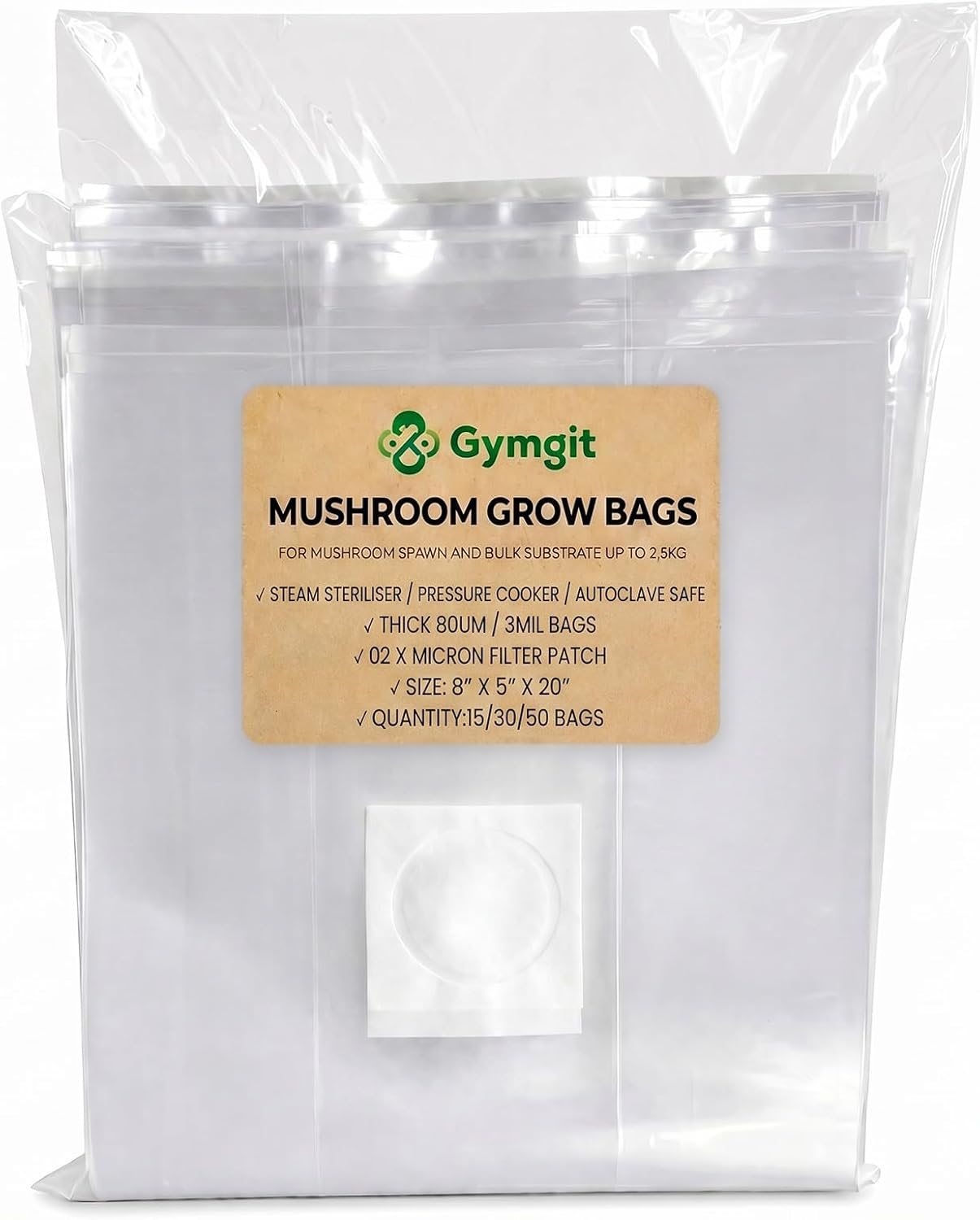
These Gymgit grow bags are built for practical mushroom cultivation where reliability and repeatability matter. Each bag is made from 0.08 mm food-grade polypropylene that the manufacturer rates as autoclavable to 250°F (121°C) at 15 PSI, so they can be used with pressure cookers or autoclaves for sterilizing grain, sawdust, or pellet substrates. The gusseted, self-standing design and reinforced heat-sealed base make filling and handling easier, and the clear plastic lets you monitor mycelial colonization without opening the bag. The 0.2 micron filter patch provides finer filtration than many budget bags, helping CO2/O2 exchange while lowering contamination risk. Supplied in a 30-pack, these bags suit repeated batches for hobbyists or small-scale growers. Limitations to note are that they are intended for indoor use and require proper sealing tools and sterilization equipment to realize the autoclavable benefit; they are single-use in most workflows and will add recurring supply needs compared with reusable container systems.
Best for: Practical growers who run repeated batches and prioritize reliable sterilization, easy filling, and visible colonization checks in home or small commercial mushroom production.
Less Ideal for: Gardeners looking for reusable containers, outdoor beds, or growers without access to a pressure cooker or autoclave should consider other cultivation methods.
- Autoclavable 0.08 mm polypropylene tolerates pressure cooker or autoclave sterilization
- 0.2 micron breathable filter patch for improved gas exchange and reduced contamination risk
- Gusseted self-standing design and heat-sealed base make filling and handling straightforward
- Clear material allows visual monitoring of mycelium growth without opening the bag
- Designed for indoor, single-use substrate cultivation and not intended as a long-term reusable container
- Requires external sealing tools and access to a pressure cooker or autoclave to use full sterilization capability
Verdict: These bags are the practical choice for growers who want autoclavable, durable single-use bags with a fine 0.2 micron filter for consistent, low-contamination mushroom batches.
SUCOHANS Mushroom Grow Bags with 0.2 Micron Filter Patch (10 pack)

| Unit Count | 10 Count |
|---|---|
| Other Special Features of the Product | Injection port and 0.2 micron filter patch |
| Material Type | Polypropylene (PP) |
| Indoor Outdoor Usage | Indoor |
These SUCOHANS mushroom grow bags are heavy-duty polypropylene spawn bags intended for producing and incubating bulk mushroom substrate. Each bag includes a microporous 0.2 micron filter patch for gas exchange while blocking contaminants and is made from about 3 mil material that seals with an impulse sealer prior to sterilization. Typical use is filling with grain or substrate, sealing, sterilizing in a pressure cooker or autoclave, then inoculating through the filter or an injection port and allowing full colonization inside the bag. The larger size holds several pounds of substrate so they reduce handling compared with jars and speed up bulk production. Practical benefits include a breathable filter that simplifies clean incubation and a pack quantity that suits small-scale or experimental growers. Important limitations are the need for an external sealer and pressure sterilization equipment to use them safely and the bags cannot withstand dry heat methods, so they are not a stand-alone solution for sterilization.
Best for: Practical DIY growers who want to scale up from jars to bulk spawn on a modest budget and are comfortable using a pressure cooker or autoclave and a sealer.
Less Ideal for: Beginners without access to a pressure sterilization method or anyone wanting a ready-to-use, presterilized container should consider alternatives.
- 0.2 micron filter patch allows gas exchange while limiting contaminants
- Thicker 3 mil polypropylene material for durable, sealable incubation
- Large capacity suitable for bulk substrate to reduce handling compared with multiple jars
- Comes in a 10-count pack, useful for small-scale batch runs
- Requires an impulse sealer or heat sealer to create an airtight seal before sterilization
- Needs pressure sterilization (pressure cooker or autoclave); not usable with dry heat methods
Verdict: If you want an affordable way to move from jars to bulk mushroom spawn, these sealable polypropylene bags with a 0.2 micron filter are a practical, cost-effective option.
MaxiMush Good to Grow Kit XL 2-Pack — All‑in‑One Sterilized Mushroom Grow Bags

| Set Name | Good to Grow Kit XL 2-Pack |
|---|---|
| Unit Count | 128 Ounce |
| Item Type Name | All-in-One Mushroom Grow Bag |
| Material Type | Polypropylene (PP) |
| Indoor Outdoor Usage | Indoor, Outdoor |
These MaxiMush Good to Grow XL bags are an all‑in‑one solution for growers who want a low‑effort, reliable way to produce dung‑loving mushroom varieties at home. Each bag arrives double sealed and lab‑grade sterilized, so you skip substrate prep and contamination worries common with loose substrate. The kit combines sterilized rye grain and high‑yield substrate inside a self‑humidifying polypropylene bag with a self‑healing injection port, letting you inoculate with spores or liquid culture and then let the bag maintain humidity without daily misting. A QR code links to a video tutorial to guide beginners through inoculation and incubation. Practical benefits are simplicity, reduced contamination risk, and a compact footprint for indoor setups. Limitations are that the bag targets manure‑preferring strains and comes sized as XL two‑pack only, so growers who need exact weight counts, different substrates, or very small experimental runs may find it less flexible than mixing your own substrate or using specialized bulk setups.
Best for: A buyer who prioritizes dependable, low‑maintenance mushroom yields and wants to minimize contamination risk and setup time. Good for home growers who prefer a plug‑and‑play kit rather than mixing and sterilizing substrate.
Less Ideal for: Not a good fit for growers who want full control over substrate composition, small test batches, or those cultivating non‑manure species that require different substrates.
- Comes pre‑sterilized in industrial autoclave to lower contamination risk
- Includes sterilized rye grain and high‑yield substrate ready for inoculation
- Self‑humidifying bag reduces need for daily misting or humidity gear
- Self‑healing injection port simplifies inoculation with spores or liquid culture
- Video tutorial via QR code and paper instructions support beginners
- Designed specifically for dung/manure‑preferring mushroom varieties so strain choices are limited
- Offered as an XL two‑pack which may be more than ideal for single small tests
Verdict: Buy this kit if you want a ready‑to‑use, sterilized grow bag that minimizes contamination and hands‑on humidity management for reliable home mushroom harvests.
Out-Grow Sterilized Rye Berry Grain Spawn Bags, 6 × 1 lb with Self-Healing Injection Ports

| Capacity | 1 quarts |
|---|---|
| Unit Count | 6 Count |
| Material Type | Rye Berry Surface |
| Indoor Outdoor Usage | Indoor, Outdoor |
These Out-Grow rye berry spawn bags arrive hydrated and fully sterilized, ready to inoculate and use as grain spawn for a wide range of gourmet and specialty mushrooms. Each 1 lb bag contains whole rye berries that offer good nutrition and moisture retention for strong mycelial growth, and the built-in self-healing injection port makes inoculation with liquid culture or spore syringes straightforward without opening the bag. The bags save time and equipment compared with hydrating and sterilizing grain yourself and are convenient for producing spawn to transfer into bulk substrates or monotubs once colonized. They come individually sealed, store well for several months, and include a filter patch to support gas exchange during colonization. Limitations are that these are single-use 1 lb bags so you may need multiple bags to scale larger projects, and they require sterile technique during inoculation and handling to avoid contamination like any prepared grain spawn.
Best for: Growers who want a low-effort, reliable source of rye grain spawn to start or expand small to medium mushroom projects and prefer ready-made, sterilized substrates to reduce setup time and equipment needs.
Less Ideal for: Commercial-scale producers or growers who need large continuous volumes of spawn per run should look for bulk spawn or larger-capacity options instead.
- Fully sterilized and ready to use, removing the need for home sterilization equipment
- Self-healing injection ports allow inoculation without opening the bag, reducing contamination risk
- Whole rye berries provide good nutrition and moisture retention for robust mycelial colonization
- Individually sealed 1 lb bags are convenient to store and use as needed
- 1 lb bag size is small for large projects and multiple bags are needed to scale production
- Requires careful sterile technique during inoculation and transfer like other grain spawn
Verdict: A convenient, ready-to-use 6-pack of sterilized rye berry spawn bags that lets home growers skip grain prep and get straight to inoculation and colonization.
NuBlume 4 lb All‑in‑One Mushroom Grow Bag Kit

| Capacity | 4 pounds |
|---|---|
| Mounting Type | Tabletop |
| Indoor Outdoor Usage | Indoor |
| Included Components | 4LB grain & substrate bag, incubation box, gloves, prep wipes, sealing clips, rubber band |
| Other Special Features of the Product | Guaranteed to Grow |
This NuBlume kit is a self-contained mushroom grow bag designed for beginners and cautious hobbyists who want a low-effort way to produce multiple flushes. The bag ships pre-sterilized with a 0.2-micron filter patch and a self-healing injection port, so you only need to add a spore syringe or liquid culture, seal the port, and place the bag in the included incubation box at typical room temperature. The 4 lb nutrient-dense grain and substrate blend is intended to speed colonization and deliver heavier yields than smaller kits. Included accessories like gloves, prep wipes, sealing clips, and a simple instruction guide make setup straightforward and reduce contamination risk. The Guaranteed to Grow replacement policy offers additional reassurance if colonization fails. Limitations are that spores or cultures are not included and successful results still depend on sterile technique and following the instructions; advanced growers who want full control over substrate composition or larger-scale systems may find a single bag restrictive.
Best for: Buyers who want a low-risk, beginner-friendly kit that minimizes extra equipment and provides clear, guided setup for reliable at-home mushroom growing.
Less Ideal for: Experienced cultivators wanting custom substrate recipes or those who plan continuous, large-scale production should look at bulk spawn or multi-bag systems instead.
- Pre-sterilized all-in-one bag with self-healing injection port for simple inoculation
- 0.2-micron filter patch provides proper air exchange throughout growth stages
- Large 4 lb nutrient blend aimed at higher, multi-flush yields
- Includes incubation box and basic accessories to reduce contamination risk
- Guaranteed replacement policy for failed colonization offers buyer protection
- Does not include spores or liquid culture so you must source genetics separately
- Single bag limits scalability for growers wanting continuous or larger harvests
Verdict: If you want a low-effort, beginner-friendly mushroom kit with a large pre‑sterilized block and a replacement guarantee, this 4 lb NuBlume bag is built to deliver reliable, high-yield home grows.
Choosing the Right Grow Bag for Mushrooms: Key Factors to Consider
Filter Type and Placement
A quality filter lets gas exchange happen while blocking airborne contaminants. Look for integrated microfilter patches or ports positioned away from where substrate contacts the bag. Filters on the top or on a raised panel reduce clogging from wet substrate and let you tap into passive airflow when the bag is set upright.
Filter placement affects how you handle the bag during inoculation and incubation. A filter in the seam or too close to where you open the bag raises the risk of contamination during transfers. Filters that are clearly specified for mushroom cultivation are preferable because they are sized and layered to balance air exchange and contamination protection.
Material Strength and Heat Resistance
Grow bags must survive whatever sterilization method you plan to use. Thicker, multilayer polypropylene is common because it tolerates pressure sterilization and repeated handling. If you plan to pasteurize substrate inside the bag, check that the material resists softening at those temperatures and maintains an effective seal.
Durable material also resists punctures during handling and stacking. Thin, brittle plastics tear more easily when the bag is moved or when substrate settles. Reinforced seams and tear-resistant film reduce accidental breaches that lead to contamination or moisture loss.
Seal and Closure Options
How a bag closes determines how sterile your workflow can be. Heat-sealable tops and zip-style closures both have pros and cons. Heat seals create an airtight barrier that is simple once sealed, but require a sealer and are single-use unless a reclosable valve is integrated. Zip closures allow repeat access for fruiting or substrate adjustments but can be harder to keep fully sterile without careful technique.
Consider whether you want to inoculate inside the bag and incubate without opening, or whether you anticipate opening it for colonization checks. Closure style influences how you plan incubation, how much handling is needed, and the risk of introducing contaminants when the bag is reopened.
Substrate Compatibility and Fill Capacity
Different mushroom substrates behave differently in a bag. Loose, grain-based mixtures need bags that support agitation and settling without blocking filters, while denser sawdust or supplemented substrates require wider bags that allow even distribution and full colonization.
Capacity matters because underfilling can lead to uneven colonization and overfilling increases contamination risk and handling difficulty. Choose a size that matches your intended batch scale and gives a comfortable headspace for gas exchange and substrate expansion during colonization.
Bag Shape and Handling Practicality
The physical shape of a bag affects how you store and stack it during incubation and fruiting. Tall, narrow bags fit well on humid shelves and in small incubators, while wide, flat bags are easier to slice open for fruiting blocks. Consider how you plan to position the bag and whether you need a flat base, hangable tab, or firm sides to prevent substrate slumping.
Ergonomic features such as gussets, reinforced corners, or a built-in hanger make handling and transferring multiple bags easier. Also think about how the bag will fit into your sterilization equipment and whether you prefer a bag designed to sit upright or to lie flat during colonization.
Contamination Mitigation and Visibility
Grow bags that allow visual inspection without opening save handling and reduce contamination risk. Clear or semi-transparent films let you monitor colonization progress, spot contamination early, and assess moisture distribution. However, transparency should not compromise filter placement or material strength.
Some bags include molded inspection windows or panels that keep filters and seals separate from the viewing area. Good visibility combined with minimal need to open the bag reduces the frequency of sterile interventions and improves overall success in small-scale grows.
Preparing a Bag for Sterile Inoculation
Preparation starts with cleaning your workspace and assembling a sterilization plan that matches the bag material. If the bag supports pressure sterilization, load filled bags so they sit upright and have space for steam circulation. For pasteurization, verify the film can withstand the target temperature without warping or weakening.
When inoculating, keep the filter area and closure zone clear of substrate to avoid clogging and to maintain airflow. Use simple sterile techniques such as gloves, a clean surface, and brief exposure times to reduce contamination risk.
- Leave a small headspace around the filter and closure to avoid substrate contact.
- Label bags with substrate type and inoculation date before sterilization.
- If reopening is required, work near a still-air box or in a clean area.
Incubation and Monitoring Tips
Place bags in a consistently warm, dark space for colonization. Avoid stacking them tightly; allow some air movement around each bag to help gas exchange through filters. Monitor moisture by watching substrate surface and the film: excessive condensation can be a sign of over-moist substrate or poor ventilation.
Record colonization milestones so you can spot delays that might indicate contamination or inadequate conditions. When contamination appears, remove affected bags promptly to protect nearby cultures.
- Keep incubation temperatures within the species-specific optimal range.
- Rotate or reposition bags if colonization appears uneven.
- Use clear bags for easier visual checks without opening.
Fruiting From Bags Versus Transferring to Trays
Some growers fruit directly from the bag by cutting an opening or creating slits at colonization. This reduces handling but requires a bag with a closure that can be opened cleanly. Other growers prefer to transfer fully colonized substrate into trays or monotubs for more controlled fruiting environments. The choice depends on your space, contamination tolerance, and whether you need multiple flushes.
If you plan to fruit inside the bag, create controlled openings and monitor humidity closely. If transferring, let the mycelium fully consolidate first to reduce the risk of contamination during manipulation.
- Cut small fruiting windows rather than large openings to retain humidity.
- Consider a bag with resealable options if you plan intermittent access.
- Transferring to trays can improve air exchange for certain species.
Storage and Reuse Considerations
Some materials allow limited reuse if handled carefully and resealed after a sterile cleaning procedure, but reuse increases contamination risk. If you intend to reuse bags, inspect seams and filters for wear and verify integrity before each run. Disposable bags reduce the need for post-run cleaning but generate more waste.
For long-term storage of unused bags, keep them in a cool, dry place away from direct sunlight to prevent material degradation. Pre-sterilized bags should remain in their packaging until use to maintain sterility.
- Check seals and film for brittleness before reusing any bag.
- Store unused bags flat or in original packaging to avoid stress on seams.
- Dispose of heavily contaminated bags away from active growing areas.
Scaling From Single Bags to Multiple Batches
When you move from a single bag to running multiple batches, standardize your filling, closing, and sterilization steps to reduce variation. Use consistent substrate moisture, bag fill levels, and incubation placement so you can spot issues quickly across a run. Having a repeatable workflow shortens learning curves and reduces contamination spikes.
Plan storage and shelving to accommodate the number of bags you want to run simultaneously. Good organization reduces handling errors and cuts downtime between batches.
- Label and date every bag for easy tracking across multiple batches.
- Batch-process sterilization and inoculation when possible to save time.
- Keep a simple log of outcomes to learn which bag sizes or closure types perform best for your conditions.
How We Chose the Best Grow Bag for Mushrooms
We focused on attributes that directly affect successful mushroom cultivation at small to hobby scales. Key evaluation criteria included filter effectiveness and placement, since filtered gas exchange reduces contamination while allowing mycelium to breathe. We checked material durability and heat tolerance to ensure bags can withstand pasteurization or pressure sterilization. Substrate compatibility and capacity mattered because some bags perform better with loose substrates and others with denser mixes. Seal and closure options were assessed for ease of use and repeatable sterile handling. Finally, we considered bag size and shape for practical staging in typical home incubators or shelving. We excluded bags designed only for decorative planting or general gardening use that lack sterile-compatible seals or proper filtered vents. Single-use grocery-style plastic without heat tolerance or compatible filters was also excluded. Our short list reflects only bags that meet basic sterilization needs, provide controlled gas exchange, and are practical for small indoor grows.
FAQ
Can grow bags for mushrooms be pressure-sterilized?
Many mushroom grow bags are made from polypropylene and can tolerate pressure sterilization, but it depends on the film and seams. Check for manufacturer guidance on maximum temperature and pressure and avoid sealing methods that will deform the bag during sterilization.
How long should bags incubate before fruiting?
Incubation time depends on species and substrate but usually runs from a few weeks to a couple of months. Wait until the substrate is fully colonized and consolidated before initiating fruiting to reduce contamination risk.
Is it necessary to use bags with built-in filters?
Built-in filters provide consistent gas exchange and reduce contamination risk compared with improvised vents. Filters are especially helpful if you plan to incubate without opening the bag frequently.
What size bag is best for beginners?
Beginners often start with small to medium bags that match their available incubator space and make handling easier. Smaller batches are easier to recover from contamination and let you learn techniques without committing a lot of substrate.
Can I fruit mushrooms directly from the bag?
You can fruit directly from many grow bags by creating controlled openings once colonization is complete. This reduces handling but requires careful humidity and airflow management to support pinning and flushes.
How do I prevent contamination when opening a bag?
Work in a clean area, use gloves and brief exposure times, and consider a still-air box or laminar flow if available. Keep the filter and closure zone free of substrate contact and open the bag only when necessary.
Final Verdict
Choose a grow bag by matching filter type, material durability, and closure style to your sterilization method and handling preferences. Smaller bags simplify learning and reduce losses, while larger bags increase batch yield but require stricter technique. Prioritize filter effectiveness and heat tolerance first, then pick size and shape that fit your incubator and workflow. With the right bag you can minimize contamination, make incubation predictable, and focus on consistent substrate preparation. Keep a simple routine and track outcomes so you can refine choices over time and scale up with confidence.
