

Note: This article contains affiliate links. If you click on these links and make a purchase, I may earn a small commission at no extra cost to you. This helps support my research and content. Read my full affiliate disclosure here.
Picking the right budget grow bag matters when you want big harvests from limited space without spending much. The wrong fabric, poor drainage, or flimsy seams can stunt plants, cause root rot, or force frequent repotting. This guide covers seven shortlisted, practical options that suit patio beds, balconies, and tight backyard plots. We evaluate each on how well it drains, how breathable the material is, and how it holds up to seasonal wear. Below you'll find clear reasons these options made the list and the decision points to weigh before you buy.
Top Picks at a Glance
| Best Overall The best all-around choice for most situations | JERIA 5-Gallon Fabric Grow Bags, 12-Pack with Handles and Drainage Holes |  |
| Best Quality Built to a higher standard if you want something more solid | Gardzen 10-Pack 10 Gallon Fabric Grow Bags with Heavy-Duty Handles |  |
| Best Value The sweet spot between price and what you get | FEED GARDEN 5 Gallon Grow Bags, 4-Pack (300G Thickened Non-Woven Fabric) |  |
| Best Budget The cheapest option that still gets the job done reliably | Land Guard 4-Pack 5-Gallon Nonwoven Fabric Grow Bags with Handles |  |
| Highest Rated A top-rated pick with lots of positive feedback | AC Infinity Heavy-Duty 500G Fabric Grow Bags, 5 Gallon (5-Pack) |  |
| Most Popular A crowd favorite that many people choose with confidence | VIVOSUN 5-Pack 5-Gallon Fabric Grow Bags with Handles |  |
| Best Seller A high-volume bestseller chosen again and again | VIVOSUN 5-Pack 7‑Gallon Fabric Grow Bags with Handles |  |
JERIA 5-Gallon Fabric Grow Bags, 12-Pack with Handles and Drainage Holes

| Capacity | 5 gallons |
|---|---|
| Unit Count | 12 Count |
| Material Type | Fabric |
| Other Special Features of the Product | Drainage Hole |
| Included Components | Plant Labels |
These JERIA 5‑gallon fabric grow bags are a practical option for growing tomatoes in containers where space or soil depth is limited. Made from breathable nonwoven fabric, the pots promote air pruning of roots and improved drainage, which can reduce root circling and help plants establish a healthier root system. Each bag includes reinforced handles that make it easy to move plants for light or weather adjustments and to fold for offseason storage. The set includes plant labels and uses a simple floor‑standing bag design with a drainage hole so excess water can escape. Because these are fabric pots rather than rigid containers, they are best used on patios, balconies, or raised beds where you can manage watering more frequently and avoid tipping. The tradeoffs are typical for fabric grow bags: they dry out faster than large plastic pots and provide less insulation against cold, so you will need to water more often and protect plants in cool weather. For tomato growers who value airflow to the roots and easy portability, these bags offer a reliable, space‑saving solution.
Best for: Tomato growers who want a space‑efficient, portable container solution and prioritize healthier root development and easy seasonal storage.
Less Ideal for: Gardeners who prefer low‑maintenance, large insulated containers or who cannot water frequently should consider sturdier pots or self‑watering systems instead.
- Breathable nonwoven fabric encourages air pruning and healthier root structure
- Reinforced handles make moving and storing planted bags convenient
- Includes drainage hole to reduce risk of overwatering
- Comes as a 12‑pack so you can plant multiple tomato varieties or set up successive crops
- Fabric walls dry out faster than rigid pots, requiring more frequent watering
- Less insulation for roots in cold weather compared with thicker or rigid containers
Verdict: Choose these 5‑gallon fabric grow bags when you want breathable containers that improve root health and let you grow multiple tomato plants in limited space.
Gardzen 10-Pack 10 Gallon Fabric Grow Bags with Heavy-Duty Handles

| Capacity | 10 gallons |
|---|---|
| Unit Count | 10 Count |
| Material Type | Fabric |
| Other Special Features of the Product | Aeration, Breathable, Foldable, Lightweight |
| Indoor Outdoor Usage | Indoor, Outdoor |
These Gardzen 10-gallon fabric grow bags are built for performance-focused container gardeners who want reliable root health and easy handling. Made from thickened nonwoven fabric, the bags provide breathability that improves drainage and promotes air pruning to reduce root circling, which helps produce a denser, healthier root ball for vegetables and larger container plants. Reinforced X-shaped stitching on the heavy-duty handles makes moving filled bags far easier without tearing, and the foldable, washable construction simplifies offseason storage. You typically use them filled with a high-quality container mix for tomatoes, peppers, eggplants, or multi-plant arrangements on patios or balconies. Important limitations are their permeable fabric will dry faster than rigid pots so they need more frequent watering and they do not include internal dividers or rigid structure for stacking. For growers who prioritize root development and portability, these bags deliver consistent, season-after-season performance.
Best for: Gardeners focused on maximizing plant health and root development in containers who move or rotate plants regularly and grow larger vegetables or fruiting plants in limited space.
Less Ideal for: People who want low-maintenance containers that hold moisture for long periods or rigid pots that provide structural support for very tall or top-heavy specimens.
- Breathable nonwoven fabric encourages air pruning and better root structure
- Reinforced X-shaped stitched handles support lifting and repositioning filled bags
- Good drainage reduces risk of waterlogging compared with solid containers
- Foldable and washable for compact storage between seasons
- Permeable fabric increases watering frequency compared with rigid pots
- No internal structure or dividers to keep tall plants upright
Verdict: Choose these grow bags when you want breathable, durable containers that improve root health and make moving mature vegetables and container plants easy.
FEED GARDEN 5 Gallon Grow Bags, 4-Pack (300G Thickened Non-Woven Fabric)

| Capacity | 5 gallons |
|---|---|
| Material Type | Nonwoven |
| Number of Pieces | 4 |
| Other Special Features of the Product | Breathable, Drainage Hole, Lightweight, Portable, Weather Resistant |
| Indoor Outdoor Usage | Indoor, Outdoor |
These FEED GARDEN 5 gallon grow bags are a practical choice for small-space vegetable and herb gardening. Made from 300 g/m² nonwoven fabric, the bags hold their shape when filled and let excess water and air move through the entire wall so roots are air-pruned rather than circling. Each set includes four bags with reinforced double-stitched webbing handles that are rated for heavy lift, which makes repositioning containers on a balcony or patio straightforward. Typical use is filling with potting mix for herbs, salad greens, strawberries and compact peppers; the 5 gallon capacity and roughly 10 inch depth suit shallow-rooted crops. Because fabric walls drain across the surface, you get fewer standing-water problems but should place a tray underneath for indoor use. The bags fold flat for offseason storage, saving space compared with rigid pots. Limitations are the shallow depth for big crops like tomatoes or potatoes and the fabric surface will eventually show wear after multiple seasons if left constantly exposed to sun and abrasion.
Best for: Gardeners who want a space-saving, reusable container for herbs, salad greens, strawberries and other shallow-rooted crops and who value easy mobility and breathable soil conditions.
Less Ideal for: Growers planning to raise large, deep-rooted vegetables or full-size tomatoes should choose larger capacity or deeper containers instead.
- Thicker 300 g/m² nonwoven fabric holds shape and resists tearing compared with thinner bags
- Fabric walls provide full-surface drainage and air-pruning to reduce root circling and root rot
- Double-stitched reinforced handles support moving filled bags around the garden
- Folds flat for compact offseason storage, ideal for small patios and apartments
- 10.2 inch depth is too shallow for full-size tomatoes, large potatoes, or other deep-rooted crops
Verdict: A durable, space-efficient 4-pack of 5 gallon fabric grow bags that improve root health and make portable container gardening easy.
Land Guard 4-Pack 5-Gallon Nonwoven Fabric Grow Bags with Handles

| Capacity | 18.93 liters |
|---|---|
| Number of Pieces | 4 |
| Material Type | Nonwoven Fabric |
| Other Special Features of the Product | Breathable |
| Indoor Outdoor Usage | Outdoor |
These Land Guard grow bags are simple, inexpensive containers for growing herbs and small vegetables in limited space. The nonwoven fabric lets air and water pass through the soil, which reduces root circling and improves drainage so herbs like basil, parsley, and thyme establish healthier root systems. Each set includes four 5‑gallon bags with reinforced handles that make moving filled bags easier for repositioning or harvesting. The material is lightweight and folds flat for storage when not in use, and the breathable fabric provides modest insulation for roots during warm weather. Expect them to last multiple seasons with gentle use but know they are not indestructible; rough edges, constant sun exposure, or heavy abrasion can shorten their life. These are best for small-scale container herb gardens on patios, balconies, or raised beds where cost and portability matter more than decorative appearance or long-term commercial durability.
Best for: Budget-minded home gardeners who want an easy, portable way to grow several culinary herbs in containers on a patio, balcony, or small garden area.
Less Ideal for: Those seeking decorative or long-lasting hard planters for permanent displays or commercial growers who need very heavy-duty containers.
- Breathable nonwoven fabric improves drainage and reduces root circling.
- Includes reinforced handles for easier lifting and repositioning filled bags.
- Pack of four gives multiple planting spots for a small herb collection.
- Lightweight and foldable for compact storage when not in use.
- Material is not as durable as rigid planters and can wear faster with heavy use.
- Not decorative—plain utilitarian look that may not suit all outdoor aesthetics.
Verdict: An affordable, practical set of breathable 5‑gallon grow bags that gives budget gardeners a quick way to start a small container herb garden.
AC Infinity Heavy-Duty 500G Fabric Grow Bags, 5 Gallon (5-Pack)
| Material Type | Nonwoven Fabric |
|---|---|
| Capacity | 5.39 gallons |
| Number of Pieces | 5 |
| Other Special Features of the Product | Aeration, Durable, Permeable |
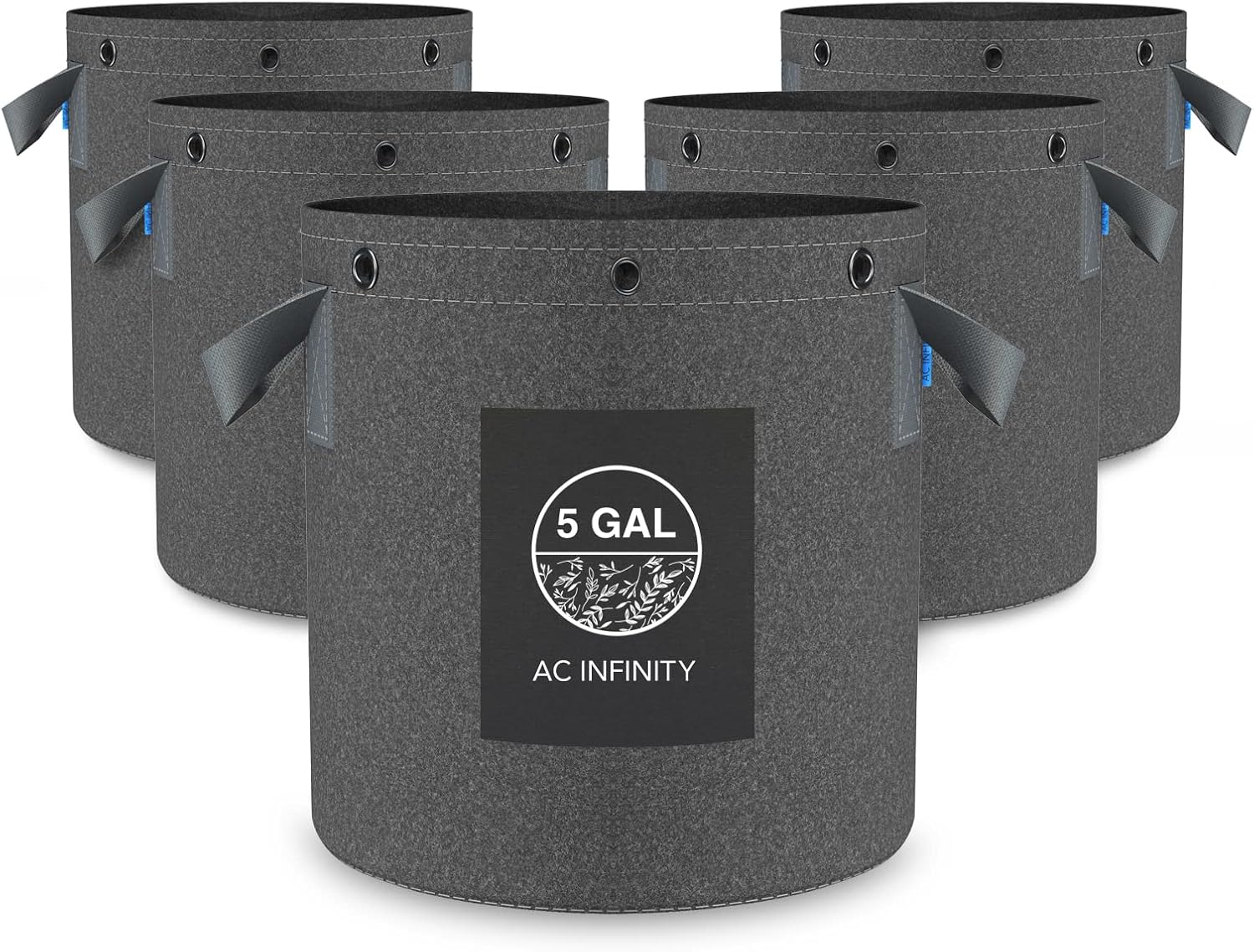
These AC Infinity fabric grow bags are built for gardeners who prioritize plant performance. The nonwoven 500G fabric promotes air pruning of roots and better oxygen flow, which helps prevent circling and encourages a denser root system. Each bag holds about 5.39 gallons and includes reinforced nylon handles and stitching for easier moving and longer life compared with thinner fabric bags. Metal rings at the top let you run twist-ties for low-stress training of vines or to hold plant supports without cutting or modifying the bag. In practice they drain well and dry faster than plastic pots, reducing the risk of overwatering; the breathable sides also let root temperature moderate on warm days. Limitations are that they are designed for outdoor use only and will need a saucer or tray if you want to protect decking from runoff, and very small or very large plants will need a different capacity. Overall they deliver a durable, grow-focused container option for gardeners who want healthier roots and easier plant handling.
Best for: Gardeners focused on maximizing root health and plant performance who want durable, reusable containers for outdoor vegetable and flower beds.
Less Ideal for: People needing very large or permanent planters for big shrubs or trees or those who want indoor-ready pots without trays or liners.
- Thick 500G nonwoven fabric improves aeration and encourages air pruning
- Reinforced nylon handles and stitching make lifting and moving easier
- Built-in metal rings allow twist-tie passthrough for low-stress plant training
- Reusable and drains faster than solid pots to reduce overwatering risk
- Designed for outdoor use only so indoor setups require extra containment
- True 5.39 gallon capacity may be small for larger or long-season plants
Verdict: Choose these heavy-duty 500G fabric grow bags when you want breathable, reusable outdoor containers that improve root structure and plant performance.
VIVOSUN 5-Pack 5-Gallon Fabric Grow Bags with Handles

| Capacity | 5 Gallons |
|---|---|
| Material Type | Nonwoven fabric |
| Included Components | 5 Bags |
| Indoor Outdoor Usage | Indoor, Outdoor |
| Other Special Features of the Product | Drainage Hole |
These VIVOSUN grow bags are basic, reliable fabric planters for small- to medium-sized container crops. Made from 300g nonwoven fabric they breathe and drain well, which helps keep roots cooler and reduces waterlogging compared with plastic pots. The set includes five 5-gallon bags that work for vegetables, herbs, and annual flowers in raised beds, patios, or a grow tent. Notable features are reinforced serged handles that make filled bags easier to move and a built-in drainage hole to prevent standing water. Because the fabric encourages air pruning, you can develop a healthier, fibrous root system and reuse the bags for multiple seasons with reasonable care. Limitations are the modest 5-gallon capacity, which is not suitable for large shrubs or trees, and the fabric will eventually show wear if left constantly exposed to UV and abrasion. Occasional hand-washing and storing them out of direct sun when not in use will extend their life.
Best for: Buyers who prioritize proven, well-reviewed basics and want a reliable set of breathable containers for vegetables, herbs, or patio flowers that are easy to move and reuse.
Less Ideal for: Not a good choice for gardeners who need large containers for trees or permanent decorative pots that must withstand long-term outdoor exposure.
- Breathable nonwoven fabric improves drainage and root aeration
- Reinforced serged handles make moving filled bags practical
- Reusable construction for multiple seasons with proper care
- Built-in drainage hole reduces risk of waterlogging
- 5-gallon size limits use to small- and medium-rooted plants
- Fabric will degrade faster than rigid pots if left in constant sun or abrasive conditions
Verdict: A dependable, well-made 5-pack of breathable grow bags that gives risk-conscious gardeners a proven, easy-to-handle solution for small to medium container plants.
VIVOSUN 5-Pack 7‑Gallon Fabric Grow Bags with Handles

| Capacity | 7 Gallons |
|---|---|
| Material Type | Nonwoven fabric |
| Included Components | 5 x Grow Bag |
| Other Special Features of the Product | Drainage Hole |
| Indoor Outdoor Usage | Outdoor |
These VIVOSUN grow bags are flexible, breathable fabric pots intended for outdoor vegetable and herb growing. Each 7‑gallon bag is made from thickened nonwoven fabric that lets excess water drain and air to circulate around the root ball, which helps prevent root circling and keeps soil cooler during warm months. Reinforced stitched handles make it practical to lift and reposition filled bags on a patio or raised bed, and the fabric is durable enough for repeated seasons when cleaned and stored properly. Typical use is filling with potting mix, placing on a well‑drained surface, and growing tomatoes, peppers, or herbs where extra root aeration and drainage are beneficial. The bags are lightweight when empty, so they are easy to store, but they do require a stable spot once filled because the soft sides do not hold a rigid shape. Also these are outdoor‑rated and lack integrated saucers, so expect more frequent watering in hot, exposed sites and provide a drip tray if you need to protect decking or patios.
Best for: Home gardeners who want a low‑risk, easy container option for growing tomatoes and other vegetables outdoors and who prefer simple, reusable containers that improve root health.
Less Ideal for: Those seeking rigid decorative pots, built‑in water reservoirs, or a container that will sit on delicate decking without a tray should consider alternatives.
- Breathable nonwoven fabric promotes air pruning and prevents root circling
- Good drainage reduces waterlogging and helps roots stay aerated
- Reinforced stitched handles make filled bags easier to move
- Durable 300g fabric intended for multiple seasons of use
- Soft sides mean bags need stable placement and can slump when filled
- No included saucers or rigid support so extra watering management may be required
Verdict: Choose these grow bags if you want a practical, reusable fabric pot that improves root health and is easy to move for outdoor tomato growing.
Choosing the Right Budget Grow Bag: Key Factors to Consider
Fabric Breathability and Root Health
How porous the fabric is determines root oxygen levels and the plant's ability to avoid waterlogged conditions. Breathable fabrics let excess moisture evaporate and encourage a natural air-pruning of roots that produces a denser, healthier root ball. In practice, you want material that feels substantial rather than plasticky; too little breathability traps moisture and invites root rot, while overly loose weaves can lose potting mix through the sides.
For gardeners, breathability also impacts how often you water. More breathable bags dry faster, which can be beneficial in warm, sunny spots but requires more frequent monitoring during heat waves or drought.
Drainage Performance and Water Management
Drainage in a grow bag depends on fabric permeability and any built-in drainage features. Good drainage prevents standing water and helps maintain an even moisture zone in the root zone. Poor drainage forces you to water less often and can create salt buildup at the soil surface or around roots.
Consider where you will place the bag. On balconies or patios you need reliable drainage that does not leak soil or stain surfaces. Bags with a consistent, even seep rate across the base and sides give the most predictable watering schedule.
Seam Construction and Handle Strength
Seams and handles are the structural weak points of most budget grow bags. Reinforced seams and double-stitched handles reduce the chance of tearing when moving filled bags or when a wind gust shifts them. Handles set into a strong seam made from the same fabric will last far longer than glued-on loops or thin stitched strips.
If you intend to lift or reposition bags regularly, prioritize handle placement and reinforcement. For permanently sited containers, seam strength still matters because weather and repeated wet-dry cycles can weaken poor construction over a single season.
Size and Shape Flexibility
Grow bags come in a range of capacities and dimensions. Size affects how much potting mix you need, the stability of the container, and the range of crops you can grow. Deeper, larger bags suit tomatoes, peppers, or small fruiting trees, while shallow wide bags work well for lettuces, herbs, and shallow-rooted vegetables.
Flexible sizing options let you mix plant types across a small space and change arrangements from season to season. Also consider whether the bag holds its shape when filled; some inexpensive fabrics collapse and reduce usable soil depth.
UV Resistance and Seasonal Durability
Outdoor fabrics face sun, rain, and temperature swings. UV-stabilized materials resist brittle failure, fading, and seam breakdown over multiple seasons. Non-stabilized fabrics often show fraying and seam separation after a single season in strong sun.
For gardeners who leave containers outdoors year-round, choose bags with documented UV resistance or thicker fabric weights. Otherwise plan to replace thin bags every season and store them out of direct sun when not in use.
Best Uses by Garden Situation
Different growing situations favor different grow bag features. Small balconies benefit from shallow, wide bags that fit railing planters or narrow spaces, while full-sun backyard beds can support larger, deeper bags for heavy-feeding crops. If you plan to move containers to follow the sun or shelter plants in cold snaps, look for bags with reinforced handles and a shape that stays consistent when lifted.
- Balconies and patios: shallow, wide bags to maximize planting area
- Small yards: medium-sized bags for tomatoes and peppers
- Seasonal rotation: reinforced handles for easy moving
Soil Mix and Watering Practices for Grow Bags
Grow bags dry faster than rigid pots and often require a richer, moisture-retentive mix. Aim for a high-quality potting mix amended with compost and a water-retention component such as coconut coir or well-aged compost. Large chunks of bark or heavy topsoil will dry unevenly in a fabric container.
- Use a light, well-draining potting mix with organic matter
- Add water-retention amendments for hot, sunny exposures
- Water deeply and check moisture at root level rather than surface only
Seasonal Care and Winter Storage
At the end of the season, emptying and cleaning grow bags extends their usable life. Let fabric dry fully before folding to prevent mildew. In regions with freezing winters remove soil and store bags indoors or under cover to avoid freeze-thaw damage that weakens fibers.
- Clean and dry bags before long-term storage
- Store flat in a dry, shaded area to preserve fabric
- Inspect seams and handles before refilling each season
Maximizing Yield in Small Spaces
Use complementary planting and vertical supports to get the most yield from each bag. Pair a deep-rooted crop with shallow companions in larger bags, and use trellises or cages to train vining plants upward. Choose varieties labeled for containers to reduce stress and improve fruit set in constrained soil volumes.
- Interplant with shallow-rooted herbs or leafy greens
- Use vertical supports for vining crops
- Select container-friendly plant varieties
How We Chose the Best Budget Grow Bag
We focused on features that directly affect plant health and gardener convenience when narrowing candidates for Best Budget Grow Bag. Our editorial filters prioritized fabric breathability and drainage performance because those two factors have the biggest impact on root oxygenation and water management in confined soil volumes. Durability and seam construction were assessed to predict how long a bag will hold up under repeated filling, exposure to sun, and seasonal changes. Handle strength and placement were included because weak or poorly positioned handles make moving full bags difficult and increase the chance of tearing. Finally, sizing flexibility and ease of storage mattered for gardeners working in patios, balconies, or small plots where yearly layout changes are common. We excluded products with unverified fabric claims, single-use thin plastic constructions, or unusually large minimum sizes that do not suit container or small-space gardening. The selection emphasizes practical, repeatable features you can check on a label and simple performance traits that affect growing results.
FAQ
How often should I water plants in a Budget Grow Bag?
Often depends on bag size, plant type, and exposure. Smaller or more breathable bags usually need daily checks in hot weather, while larger bags with water-retentive mix may go several days. Check moisture by inserting a finger or a probe into the root zone rather than relying on surface dryness.
Can I reuse a grow bag from last season?
Usually yes if the fabric and seams are intact. Clean out old soil, allow the bag to dry completely, and inspect for weakened stitches or UV damage. Add fresh potting mix and replenish nutrients before replanting.
Will fabric grow bags keep soil from freezing in winter?
Fabric offers minimal insulation compared with rigid containers. In cold climates, soil in bags will freeze faster because fabric loses heat more readily. To protect roots, move bags to a sheltered area, wrap them with insulating material, or empty and store them until spring.
Do grow bags work for fruiting plants like tomatoes?
They can work well if you choose a large enough bag, use a rich potting mix, and provide sturdy support. Ensure good drainage and monitor fertility because fruiting plants are heavier feeders and need consistent moisture and nutrients.
How do I prevent soil loss through the fabric?
Limit soil loss by using a fine-textured potting mix and avoiding heavy-handed watering that forces material through pores. Some gardeners line the inside with a thin layer of coir or use mesh liners to hold finer particles while keeping breathability.
Final Verdict
When choosing a Budget Grow Bag, prioritize drainage and fabric breathability first because those traits most directly affect root health. Next consider seam and handle durability if you plan to move bags regularly, and pick a size that matches the crops you want to grow. Expect tradeoffs between low cost and long-term durability; thinner bags can perform well for a season but may need replacement sooner in full-sun sites. Focus on the combination of breathability, reinforced construction, and appropriate size to get reliable results in small-space gardening.
