

Note: This article contains affiliate links. If you click on these links and make a purchase, I may earn a small commission at no extra cost to you. This helps support my research and content. Read my full affiliate disclosure here.
If you grow tall or top-heavy vegetables and ornamentals, the right hoop-style plant support prevents flopping, broken stems, and messy beds. Garden hoop plant supports hold multiple stems upright while leaving access for pruning, harvesting, and airflow. This guide covers seven shortlisted hoop supports that work well in raised beds, in-ground rows, and large containers. We evaluated each support for how it stands up to wind and weight, how easy it is to install and maintain, and whether it keeps plants accessible and healthy. Read on to understand the trade-offs so you can pick a hoop support suited to your garden layout and the crops you grow.
Top Picks at a Glance
| Best Overall The best all-around choice for most situations | LEOBRO Half-Round Metal Plant Support Stakes, 6-Pack |  |
| Best Quality Built to a higher standard if you want something more solid | WYRJXYB Garden Hoops Grow Tunnel Kit, 60-Piece Fiberglass Raised-Bed Hoops with Clips |  |
| Best Value The sweet spot between price and what you get | MAXPACE Fiberglass Garden Stake Kit (20-Pack) with Connectors and Clips |  |
| Best Budget The cheapest option that still gets the job done reliably | Dobetter Fiberglass Garden Hoops with Connectors and Plant Clips (36 rods + 30 clips) |  |
| Highest Rated A top-rated pick with lots of positive feedback | Thealyn 12-Pack 16" Metal Plant Support Hoops (Green) |  |
| Most Popular A crowd favorite that many people choose with confidence | Gardzen Garden Hoops Raised Bed Kit (24-piece) |  |
| Best Seller A high-volume bestseller chosen again and again | WYRJXYB Garden Hoops Grow Tunnel Kit — 36 Fiberglass Hoops with Connectors and Clips (6 Sets) |  |
LEOBRO Half-Round Metal Plant Support Stakes, 6-Pack

| Unit count | 6 Count |
|---|---|
| Material Type | Metal |
| Special Features | Anchor Stake |
| Item Length | 15.6 inches |
These LEOBRO half-round plant supports come as a 6‑pack of metal stakes designed to circle and hold up bushy or heavy‑blooming plants like peonies, hydrangeas and tomato seedlings. Each stake has a steel core with a plastic powder coating and a groove that lets you interlock pieces to form rings, rows, or custom shapes. In practice they are pushed into the soil around a plant to keep stems upright, prevent sprawling, and protect blooms from wind or rain. The 4 mm thickness and anchored pointed ends make them reasonably sturdy for garden beds and larger pots, while the deep green finish blends into foliage. They are adjustable by how deeply you insert them and stack for compact storage. Limitations are that they are relatively low height compared with tall tomato cages and may need multiple interlocked pieces for heavy fruits or large shrubs, and the pointed ends require care during installation and removal.
Best for: Gardeners wanting tidy, low‑profile supports for medium‑height flowering perennials and small vegetable plants who prefer flexible, reconfigurable stakes over rigid cages.
Less Ideal for: Growers who need tall, heavy‑duty cages for indeterminate tomatoes or large climbing vines should choose taller, full‑frame supports instead.
- Interlocking half‑round design lets you create rings or borders to match plant shape
- Steel core with 4mm thickness and powder coating for weather resistance and rust protection
- Set of six provides enough pieces to support multiple plants or form larger cages
- Deep green finish blends into foliage for a less obtrusive look
- Shorter height compared with full tomato cages so not ideal for very tall plants
- Pointed anchored ends can be sharp and require careful handling during installation
Verdict: A versatile, attractive 6‑pack of interlocking metal stakes that keeps medium‑height flowering and vegetable plants upright while blending into the garden.
WYRJXYB Garden Hoops Grow Tunnel Kit, 60-Piece Fiberglass Raised-Bed Hoops with Clips

| Number of Items | 60 |
|---|---|
| Frame Material | Fiberglass |
| Cover Material | Plastic |
| Indoor Outdoor Usage | Outdoor |
| Special Features | Rust-free, sturdy, heavy-duty fiberglass hoops |
This WYRJXYB kit supplies 60 rust-free fiberglass hoops, 60 connectors and 40 clips so you can build low tunnels, mini hoop houses or plant supports over raised beds. Typical use is to push hoops into soil along a bed, connect them to form an arched tunnel, then drape row cover, mesh or frost cloth and secure it with the included clips. The fiberglass frame is described as heavy-duty and flexible, which makes it easy to bend into the shape you need while resisting corrosion so it can stay in place through wet seasons. The kit is sized for narrow raised beds and can be combined to reach taller or longer spans. Practical benefits include season extension with frost cloth, bird and insect protection when paired with netting, and a lightweight, modular setup that is straightforward to assemble and reconfigure. Limitations are that the product does not include netting or a cover and the relatively short hoop length means multiple sets or closer spacing are required for wider beds or full-height tunnels.
Best for: Gardeners who want a durable, configurable hoop system to extend the season and protect vegetables or seedlings in raised beds and prioritize performance and longevity over an all-in-one cover kit.
Less Ideal for: People who need a complete greenhouse or full-height tunnel out of the box or who prefer a single-piece rigid frame solution for large beds.
- Fiberglass frame resists rust and offers flexible but sturdy support
- Large kit quantity (60 hoops plus connectors and clips) lets you build multiple tunnels or cover long runs
- Easy to assemble and bend into custom tunnel shapes for raised beds
- Works with row covers, frost cloth, bird netting or shade cloth for season extension and pest protection
- Does not include any mesh, row cover, or netting so additional purchases are required
- Hoop length is relatively short for wider beds and may require multiple sets or closer spacing
Verdict: Buy this kit if you want a high-quantity, rust-resistant hoop system you can configure to build durable raised-bed tunnels and reliably protect crops across seasons.
MAXPACE Fiberglass Garden Stake Kit (20-Pack) with Connectors and Clips

| Unit Count | 20 Count |
|---|---|
| Material Type | Fiberglass |
| Number of Pieces | 20 |
| Package Includes | 20 stakes, 14 connectors, 14 rotatable clips, 14 plant clips |
The MAXPACE kit supplies 20 fiberglass stakes plus connectors, rotatable clips, and plant clips so you can build custom-length supports and simple hoops or teepee frames for tomatoes, cucumbers, peppers, and other vining plants. Fiberglass construction means the stakes will not rust, are lightweight to move around, and can be reused season after season. The included connectors let you join stakes end-to-end to reach taller plants and the rotatable clips make it easy to attach stems or netting without cutting into the plant. Practical uses include single-stake tomato supports, small hoop frames for row covers, and temporary trellises for peas or beans. Limitations are that each stake is relatively short on its own so taller structures require multiple pieces and connectors, and the 0.335-inch diameter is slimmer than heavy-duty metal stakes so extremely heavy or large plants may need sturdier support. For gardeners who want a reusable, rust-proof way to assemble lightweight hoop or frame supports, this kit is a flexible option.
Best for: Gardeners who prioritize practical, reusable solutions for building adjustable hoop frames and lightweight plant supports, and who prefer configurable pieces they can repurpose across beds.
Less Ideal for: Growers who need single-piece, heavy-duty stakes for large trees or very heavy supports should choose thicker metal or longer one-piece stakes instead.
- Fiberglass construction resists rust and is reusable across seasons.
- Modular kit includes connectors and rotatable clips for custom-length supports and simple frame shapes.
- Lightweight pieces are easy to reposition and assemble without tools.
- Individual stakes are short on their own so building taller hoops requires joining multiple pieces.
- Slim diameter may not provide enough rigidity for very heavy or overgrown plants.
Verdict: A versatile, rust-proof kit that lets practical gardeners build reusable hoop and frame supports by joining lightweight fiberglass stakes.
Dobetter Fiberglass Garden Hoops with Connectors and Plant Clips (36 rods + 30 clips)

| Unit Count | 66 Count |
|---|---|
| Material Type | Fiberglass |
| Special Features | Rustproof |
| Item Length | 17 inches |
This Dobetter kit supplies 36 flexible fiberglass rods, 36 galvanized connectors and several clips so you can build custom hoops to cover raised beds or support climbing plants. Typical use is spacing several rods across a bed and linking them with the connectors to form half-round hoops that hold netting, frost cloth, or vine training lines. The double-coated fiberglass improves bend resistance and reduces the chance of splintering compared with plain rods, while galvanized joints add rust resistance for outdoor use. The included plant clips make quick work of securing vines and stems. Because the rods are relatively short, you will assemble multiple pieces for wider beds, which is convenient for custom sizing but takes a bit more time than single-piece hoops. Also handle with gloves since fiberglass can be flexible and may snap if over-stressed. For gardeners wanting an affordable, all-season way to add lightweight tunnel covers or trellises, this set covers the basics without specialty tools.
Best for: Gardners on a tight budget who need an inexpensive, flexible solution for creating low tunnels, netting supports, or vine training on raised beds and small plots.
Less Ideal for: People who want permanent heavy-duty trellises or single-piece wide hoops for large commercial beds should look for sturdier metal or longer-frame options.
- Large kit count lets you build multiple hoops or cover several small beds
- Double-coated fiberglass rods resist fracture and reduce splintering risk
- Galvanized connectors offer rust resistance for outdoor use
- Includes plant clips to secure vines and netting without extra purchases
- Rods are 17 inches long so multiple pieces must be joined for wider beds, adding assembly time
- Fiberglass requires careful handling and gloves to avoid irritation or breakage
Verdict: A cost-effective kit for building lightweight, rust-resistant hoops and simple vine supports on raised beds.
Thealyn 12-Pack 16" Metal Plant Support Hoops (Green)

| Unit Count | 12 Count |
|---|---|
| Material Type | Metal |
| Item Length | 16 inches |
These 16-inch plant support hoops are a straightforward, reliability-focused option for keeping tall stems upright. Each set includes 12 single-stem metal hoops with a 2.5-inch top ring and an open slot for slipping stems through; installation is tool-free, simply push the stake into the soil and guide the stem into the opening. Constructed from thicker-gauge steel with a green powder-coated, UV-treated finish, the supports resist rust and stand up to rain and moderate wind. The half-round, interlocking design also lets you link pieces into a wider ring or short cage for broader support. Practical benefits include quick seasonal deployment, discreet green color that blends into beds, and durable construction suitable for peonies, lilies, roses and fruiting stems like tomatoes. Important limitations are the single-stem ring size, which may be too small for very large clumps or multiple stems, and the fixed 16-inch height that could require taller versions for long-stemmed varieties. Sharp pointed ends mean you should handle carefully during placement and avoid rocky or root-dense ground where pushing in is difficult.
Best for: Gardeners who prioritize dependable, low-maintenance supports for single stems and want a durable, reusable solution to prevent bending and breakage in perennial beds and vegetable rows.
Less Ideal for: People growing very tall specimens, large clumping plants, or who need adjustable-height multi-stem cages should consider taller or fuller-support systems instead.
- Durable powder-coated steel resists rust and UV for long outdoor life
- Easy, tool-free installation that slips into soil and holds stems upright
- Interlocking half-round design allows forming cages or linked supports
- Comes in a 12-piece set for multiple plants or an entire border
- Fixed 16-inch height may be too short for taller varieties
- Top ring (2.5-inch) and open slot limit use with very thick stems or clusters
Verdict: A sturdy, no-fuss set of metal hoops that reliably keep single stems upright across a garden or flower border.
Gardzen Garden Hoops Raised Bed Kit (24-piece)
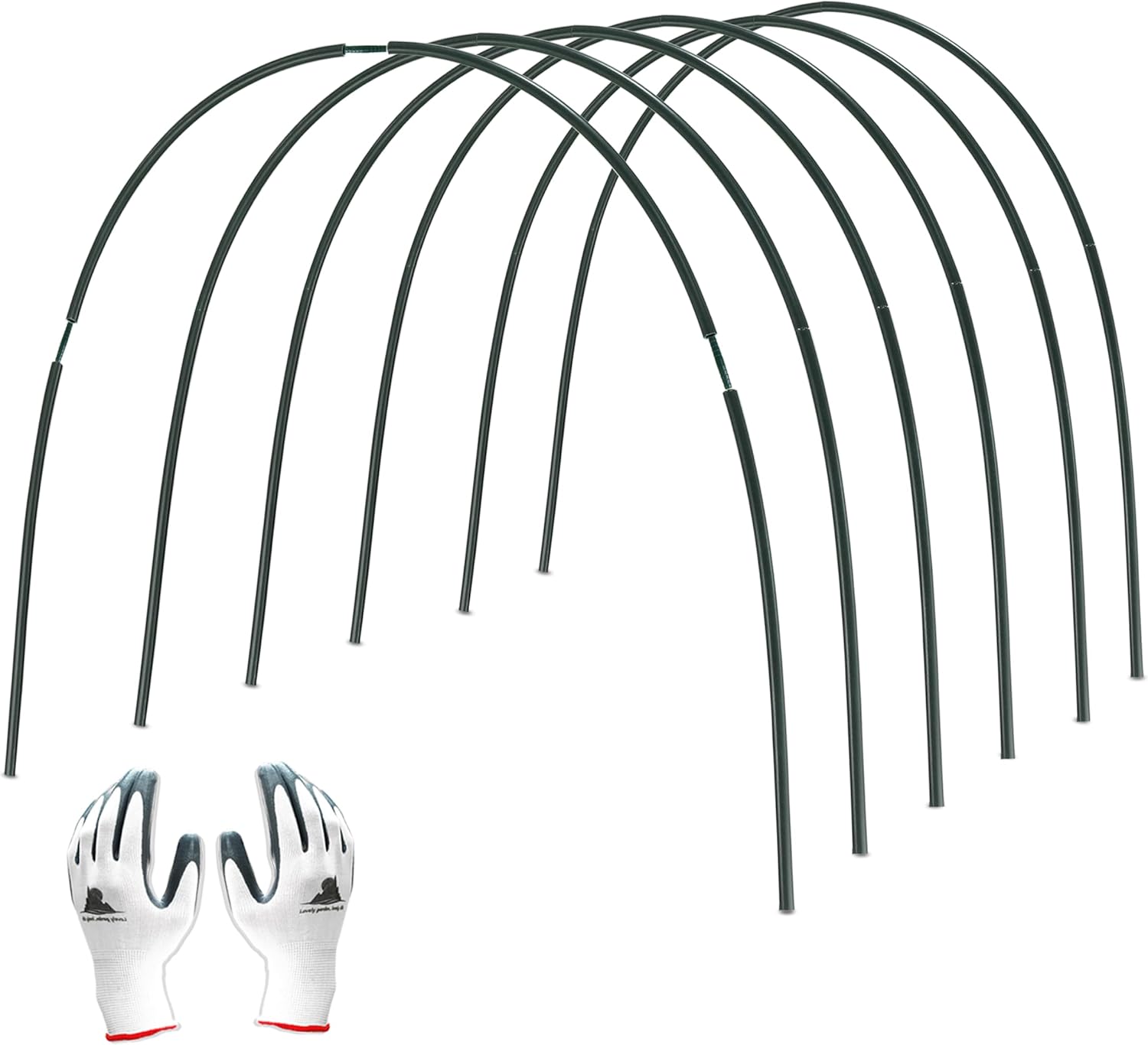
| Number of Items | 24 |
|---|---|
| Indoor Outdoor Usage | Outdoor |
| Cover Material | Polyvinyl Chloride (PVC) |
| Frame Material | Plastic |
These Gardzen garden hoops are a simple DIY kit for converting raised beds into low tunnels for frost protection, bird netting, or shade cloth. The set includes 24 smooth polypropylene hoops and 25 connectors so you can space and link arches to match bed length and desired coverage. Because the hoops are made from plastic PP the pieces are splinter-free and easy to handle, and the included gloves help with setup. Typical use is pushing the stakes into soil, snapping rods into connectors, then draping plastic, row cover, or netting and rolling up the door for access. The main benefits are tool-free assembly, flexible sizing for different beds, and an all-season shield that extends the growing window and keeps birds and small animals off seedlings. Limitations are the lightweight plastic frame, which is convenient but less sturdy in high winds or heavy snow, and the PVC cover material which can degrade faster than heavier greenhouse films. Expect to reinforce the structure in exposed sites and store the kit indoors in winter to maximize lifespan.
Best for: Gardeners who want an affordable, easy-to-install way to protect raised-bed seedlings and extend the season and who prefer products with clear customer experience and practical performance. Ideal for users who value straightforward assembly and flexible coverage over heavy-duty permanence.
Less Ideal for: Growers needing a permanent, heavy-duty greenhouse solution or those in very exposed, wind-prone sites where metal frames are required. Not the best choice if you need a structure to hold heavy snow loads long term.
- Complete 24-piece kit with connectors for building continuous low tunnels
- Smooth polypropylene rods reduce splinters and are safe to handle
- Tool-free, quick assembly and adjustable spacing for different raised beds
- Works with row cover, netting, or PVC cover to protect seedlings and extend season
- Lightweight plastic frame may need reinforcement in strong wind or heavy snow
- PVC cover is less durable than heavy greenhouse film and can degrade with prolonged sun exposure
Verdict: A budget-friendly, tool-free hoop kit that quickly turns raised beds into protective low tunnels to extend your growing season.
WYRJXYB Garden Hoops Grow Tunnel Kit — 36 Fiberglass Hoops with Connectors and Clips (6 Sets)

| Number of Items | 36 |
|---|---|
| Number of Packs | 6 |
| Frame Material | Fiberglass |
| Cover Material | Plastic |
| Indoor Outdoor Usage | Outdoor |
This WYRJXYB kit supplies 36 flexible fiberglass hoops plus connectors and clips so you can build short grow tunnels and row covers over raised beds and garden rows. Typical use is inserting hoops into soil at regular intervals, connecting them with the supplied pieces, then draping frost cloth, bird netting, or shade fabric and securing it with the clips and the zipper closure where needed. The fiberglass frame is bendable and rust-resistant, which makes the hoops easy to flex into an arch and reuse season after season. The kit is compact and modular so you can create a mini greenhouse, a protective insect barrier, or simple plant supports for vines and tomatoes. Limitations are that the set is designed for narrow beds and low tunnels only and does not include mesh or cover fabric, so you will need to buy or reuse row cover material for full plant protection. Very tall crops or heavy-duty greenhouse builds will require sturdier or larger components.
Best for: Gardeners who want a low-risk way to extend the season and protect seedlings in raised beds using a reusable, easy-to-assemble hoop system.
Less Ideal for: Growers planning full-size greenhouses, very tall crops, or heavy-duty permanent structures should choose larger, sturdier framing systems instead.
- Rust-free fiberglass frame resists corrosion and is reusable across seasons
- Modular connectors and clips let you customize tunnel length and spacing
- Lightweight, bendable hoops are easy to push into soil and reposition
- Includes 36 hoops (6 sets) which cover multiple raised beds or rows
- No cover fabric or mesh included so protective cloth must be purchased separately
- Best suited for low tunnels and raised beds rather than tall or heavy structures
Verdict: Buy this kit if you need a simple, rust-free hoop system to build low grow tunnels and protect raised-bed plants with reusable, customizable hoops.
Choosing the Right Garden Hoop Plant Support: Key Factors to Consider
Height and Diameter
Height determines the maximum plant growth the hoop can support without bending or forcing stems into awkward angles. Choose a height that matches the expected mature size of your plants plus a safety margin for wind and leaning. Diameter affects how many stems you can enclose and whether multiple plants can share one hoop without crowding.
Too-small hoops compress plants and restrict airflow, increasing disease risk. Oversized hoops may be harder to anchor securely and can be more affected by wind. For mixed beds, consider a range of heights and diameters so you can match supports to crop needs rather than forcing one size to do everything.
Material and Corrosion Resistance
Materials determine how long a hoop will last in contact with soil and moisture. Metal hoops are common for strength but vary by coating and alloy. Powder-coated steel or galvanized finishes resist rust longer than bare steel, while aluminum resists corrosion but may be less stiff under heavy loads.
Plastic or composite hoops resist rust and are lightweight, but some plastics can become brittle from sun exposure. Think about exposure conditions in your garden: constant moisture, salty coastal air, or heavy winter wetness will push you toward more corrosion-resistant choices to avoid frequent replacement.
Anchoring and Ground Penetration
A hoop is only useful if it stays upright. Anchoring options include long stakes, integral ground spikes, or designs that distribute load across multiple contact points. Soil type matters: loose, sandy soils need deeper or wider anchors than firm loam.
Consider whether you will leave supports in place year-round. Removable anchors make bed rotations and soil prep easier, while permanent anchors give added stability for long-season crops. Also check that anchors can be driven without heavy tools so you can install and remove supports with typical garden equipment.
Access for Pruning and Harvest
Hoop supports should hold plants without creating barriers to routine care. Look for shapes and spacing that allow you to reach in for pruning, tie-up, and picking without disassembling the entire support. Some hoops come with hinged or removable sides that simplify access, while continuous hoops may force you to lift plants to get inside.
Good access reduces damage to stems and fruit during harvest and makes it easier to spot pest or disease problems early. If you grow crops that require frequent attention, prioritize designs that combine robust support with convenient entry points.
Adjustability and Modularity
Adjustable hoops let you change height or tension as plants grow. Modularity allows combining multiple hoops into cages or extending a single hoop for larger plants. These features add versatility if you grow different crops or want to reuse supports across seasons.
However, more connections can mean more failure points. Evaluate whether adjustability comes with secure locking methods and whether those features maintain stability under load. Simpler fixed designs may be more durable but less flexible when plant choices change.
Storage and Off-Season Handling
Consider how you will store supports when not in use. Collapsible or nesting hoops save space and are easier to carry, while rigid designs may take more room and can be awkward to handle. Materials that resist moisture and sun damage also hold up better in sheds and lean-tos.
Off-season handling also affects whether you can leave hoops in place during bed preparation or need to remove them for tilling. If you rotate crops or amend soil heavily in winter, choose supports that are quick to remove and reinstall without tools.
Best Uses by Garden Layout
Different hoop designs suit different layouts. Narrow beds and high tunnels benefit from slimmer hoops that fit between rows, while wide raised beds and open plots can use larger-diameter hoops that enclose several stems.
For container gardening, choose shorter, lighter hoops with secure anchors that do not overwhelm the pot. In windy, exposed sites, prioritize hoops with deeper ground penetration or that attach to a fixed frame for extra resilience.
- Raised beds: medium-diameter hoops for multiple plants
- In-ground rows: taller hoops spaced to match plant spacing
- Large containers: compact hoops with strong pot anchors
- Windy sites: deeper anchors or frame attachment points
Installation Tips for Long-Lasting Performance
Install hoops before plants grow into them so stems do not have to be forced through narrow openings. Drive anchors fully into the soil and check alignment to avoid leaning when loads are applied.
If your soil is compacted, loosen a pilot hole before inserting stakes to reduce bending. Use ties or soft plant tape to secure stems to the hoop; avoid tight bindings that can girdle growth.
- Pre-install supports early in the season
- Use pilot holes in compacted soil
- Secure stems with soft ties, not wire
- Check anchors after storms and heavy fruiting
Maintenance Through the Season
Check connections and anchors regularly. As plants grow and fruit loads increase, retensioning or moving hoops slightly can keep supports effective and prevent damage to stems.
Clean and dry supports before storing to reduce corrosion risk. For metal hoops, touch up any damaged coating to slow rust. Inspect plastic hoops for UV damage and replace brittle pieces to avoid midseason failures.
- Retighten or reposition as plants increase in weight
- Inspect coatings for chips or rust
- Store dry and protected during off-season
Designs That Improve Airflow and Light
Hoop spacing and openness influence airflow and light penetration. Wider-diameter hoops that leave gaps between stems allow better circulation and lower humidity, which reduces fungal disease pressure.
Avoid designs that trap foliage in dense pockets. If you grow crops prone to blight or mildew, prioritize supports that keep foliage spread and accessible to sunlight.
- Use wider hoops for better airflow
- Position hoops to maximize morning sun exposure
- Avoid dense netting that blocks light and air
Pairing Hoops with Other Support Systems
Hoops work well combined with twine, netting, or single-stem stakes. For heavy fruiting crops, use a hoop for general structure and add individual stakes for primary stems to prevent sagging.
In permanent beds, integrate hoops with fixed frames or trellises for a hybrid approach that balances access with extra strength in windy conditions.
- Combine hoops with stakes for heavy loads
- Use removable netting for season-specific needs
- Attach hoops to fixed frames for exposed sites
How We Chose the Best Garden Hoop Plant Support
We focused on attributes that matter in active vegetable and flower gardens rather than marketing claims. Primary evaluation criteria included structural stability under load, material corrosion resistance, ease of installation and adjustment, and how the shape and spacing affect plant access for pruning and harvest. We also considered longevity in outdoor conditions and how well a support lets air and light reach foliage to reduce disease risk. Products were excluded if they were designed only for indoor pots, lacked clear specifications for height or diameter, or relied on fragile connections that fail under normal garden loads. We prioritized supports that balance strength with low maintenance and that are practical for common garden uses like supporting tomatoes, peppers, beans, and tall perennials. The final shortlist reflects supports tested for straightforward setup in soil and containers, realistic load-bearing potential, and design details that make daily garden tasks easier. These filters helped ensure the recommendations suit gardeners who need reliable hoop-style support across seasons.
FAQ
Can hoop supports handle heavy fruit loads like tomatoes or peppers?
Often they can if the hoop is made from stiff material and has secure anchors. For very heavy fruiting varieties you may need to supplement a hoop with individual stakes or add internal tying points to distribute weight.
How deep should anchors go for sandy or loose soil?
Anchors should be significantly deeper in loose soil, often 25 to 50 percent deeper than in firm loam. Using wider-spread anchoring or adding a secondary anchor point helps prevent tipping in sandy sites.
Are collapsible hoops flimsy compared with rigid ones?
Collapsible hoops trade some stiffness for storage convenience. A well-designed collapsible hoop can be sturdy enough for many crops, but for consistently heavy or windy conditions a rigid design usually offers better long-term stability.
Can I leave hoop supports in the ground over winter?
It depends. If you mulch heavily or leave beds undisturbed, durable, corrosion-resistant hoops can stay in place. However, removable hoops make soil prep and bed renovation easier, and taking them up reduces winter wear from freeze-thaw cycles.
What ties or fasteners are best for securing plants to hoops?
Use soft, flexible ties such as cloth strips, soft garden twine, or purpose-made plant tape that will not cut into stems. Fastening systems that allow quick adjustment are helpful as plants grow and need retensioning.
Final Verdict
Choose a hoop support that matches the size and growth habit of your plants and that anchors appropriately for your soil and exposure. Prioritize corrosion resistance and a balance between rigidity and accessibility so you can tend plants without damaging stems. Accept trade-offs between convenience and strength: collapsible, lightweight hoops are easy to store but may not resist heavy loads, while sturdier, fixed designs offer longevity and stability. Focus on the height, anchoring, and access features that fit your garden and crop choices to pick a hoop support that will perform season after season.
