

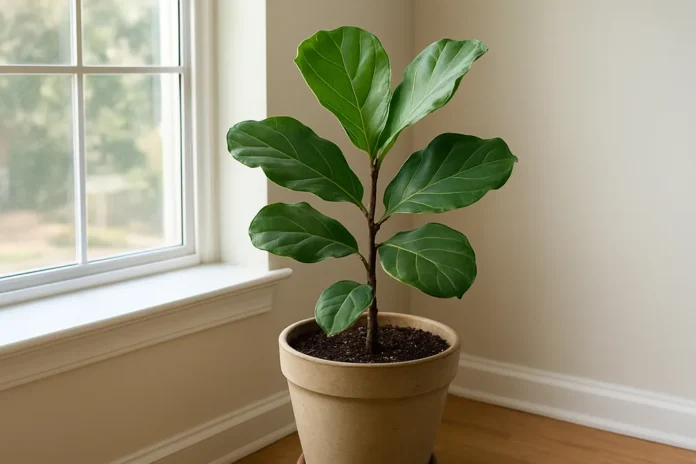
A fiddle leaf fig usually stops growing because it is not getting enough light or its roots are stressed by watering, pot size, or poor drainage. Slow growth can also be normal in winter when indoor conditions are cooler and darker.
If your fiddle leaf fig seems healthy enough but is not growing, the problem is usually tied to its indoor environment rather than a single disease. These plants can hold onto old leaves for months while putting out little or no new growth when light, watering, temperature, or root conditions are not quite right.
In most U.S. homes, the biggest reason a fiddle leaf fig stalls is insufficient bright light. But slow growth can also happen when the plant is rootbound, sitting in soggy soil, recovering from repotting, dealing with low humidity, or simply resting during the shorter days of winter.
The good news is that a stalled fiddle leaf fig often starts growing again once its basic needs are corrected. A few targeted changes usually do more than frequent fertilizing or moving the plant around every week.
What Normal Growth Looks Like
Before assuming something is wrong, it helps to know how these plants normally grow indoors. A healthy fiddle leaf fig does not grow at the same speed year-round. Most active growth happens in spring and summer, while fall and winter often bring much slower growth, especially in cooler regions or homes with limited natural light.
New growth usually appears at the tips of stems as a sheath opens and a fresh leaf unfurls. Some plants also branch after pruning, but they do not constantly push out new leaves. If your plant has firm stems, stable leaf color, and no major leaf drop, it may simply be in a slow phase rather than in serious trouble.
- Active indoor growth often happens from late spring through early fall.
- Growth slows significantly in winter, especially near northern windows.
- Young plants usually grow faster than mature indoor specimens.
- A recently purchased or recently moved plant may pause growth while adjusting.
Low Light Is the Most Common Cause
If a fiddle leaf fig is not growing, low light is the first thing to suspect. These plants need very bright conditions indoors to make enough energy for new leaves and stem growth. Many homes feel bright to people but still do not provide enough light for a large tropical tree.
A plant placed several feet away from a window often receives a fraction of the light it would get directly in front of that same window. East, south, and bright west exposures tend to support the best growth. In many cases, a north-facing room or a dim corner can keep a fiddle leaf fig alive but not actively growing.
Signs Your Plant Needs More Light
- No new leaves for months during spring or summer
- Smaller new leaves than older ones
- Long gaps between leaves on the stem
- Leaning strongly toward the window
- Lower leaves dropping over time
Bright indirect light is ideal, but many fiddle leaf figs can also handle some direct morning sun or filtered afternoon sun indoors once acclimated. If you move the plant from a dim room to stronger light, do it gradually over a week or two to avoid leaf scorch.
Watering Problems Can Stall Growth
Fiddle leaf figs often stop growing when their roots are stressed by inconsistent watering. Both overwatering and underwatering can interrupt growth, even before dramatic leaf symptoms appear. Roots need moisture, oxygen, and warmth to function well.
How Overwatering Slows Growth
When soil stays wet too long, roots struggle to get oxygen. This reduces nutrient uptake and can lead to root rot. A plant in chronically soggy soil may sit still for months, with few or no new leaves. You may also see drooping, dark spots, yellowing leaves, or a musty smell from the pot.
How Underwatering Slows Growth
If the root ball gets too dry too often, the plant will conserve energy instead of producing new growth. Dry stress can cause crisp brown edges, leaf curl, drooping, or older leaves dropping. Some fiddle leaf figs are watered lightly too often, which leaves part of the root ball dry while the top layer looks moist.
A Better Watering Approach
- Water thoroughly until excess drains from the bottom.
- Let the top 1 to 2 inches of soil dry before watering again.
- Reduce watering frequency in winter.
- Never let the pot sit in standing water for long.
- Use your finger, a wooden skewer, or a moisture meter to judge soil moisture deeper in the pot.
Rootbound Conditions and Pot Issues
A fiddle leaf fig that has filled its container with roots may slow down because it runs out of room for water, air, and fresh soil. Rootbound plants often dry out quickly, need water more often, and may produce very little top growth even during the warm season.
At the same time, a pot that is too large can also create problems. Oversized pots hold excess moisture longer than the roots can use it, increasing the risk of soggy soil and stalled growth. The best container is only modestly larger than the current root ball and always has drainage holes.
Clues Your Fiddle Leaf Fig May Be Rootbound
- Roots circling along the inside of the pot
- Roots growing out of drainage holes
- Water rushing straight through the pot
- Soil drying out unusually fast
- Little or no growth despite good light and warm weather
If the plant is clearly rootbound, repot in spring or early summer into a pot about 2 inches wider. Use a loose, well-draining indoor plant mix amended with materials such as pine bark, perlite, or coarse pumice to improve aeration.
Poor Drainage and Dense Soil Cause Hidden Stress
Even when you water correctly, heavy or compacted soil can suffocate roots and slow growth. Many indoor plants are sold in peat-heavy mixes that stay wet for a long time indoors, especially in lower light or cool rooms. Over time, that soil can break down further and become dense.
A healthy fiddle leaf fig likes a mix that drains well but still retains enough moisture to support steady root function. If the soil stays wet for a week or more after watering, or if it has shrunk away from the pot edges and no longer absorbs water evenly, the root zone may not be functioning well.
- Choose a container with at least one good drainage hole.
- Use a chunky houseplant mix rather than heavy garden soil.
- Empty saucers or cachepots after watering.
- Refresh old, compacted soil when repotting if drainage has declined.
Temperature and Drafts Affect Growth More Than Many Gardeners Expect
Fiddle leaf figs are tropical plants, so they grow best in warm, stable indoor temperatures. If your plant sits near a cold window, exterior door, drafty vent, or blasting heater, it may stop producing new leaves even if everything else looks decent.
Ideal temperatures are usually around 65 to 85 degrees Fahrenheit. Growth often slows when nighttime temperatures dip too low or when the plant experiences repeated swings between warm days and chilly nights. Sudden environmental shifts can also trigger leaf drop and make the plant pause before growing again.
- Keep the plant away from HVAC vents and cold drafts.
- Do not let leaves press against freezing winter glass.
- Avoid frequent relocation between rooms with very different temperatures.
- Expect slower growth in air-conditioned or cool basement spaces.
Nutrient Deficiencies and Lack of Feeding
A fiddle leaf fig that has been in the same soil for a long time may simply be running low on nutrients. Nitrogen is especially important for leaf production, but balanced nutrition matters for overall growth. Plants kept in low light should not be heavily fertilized, yet actively growing plants in bright light usually benefit from regular feeding in the warm season.
If the plant has not been repotted or fertilized for a year or more, weak growth may reflect depleted soil. Pale leaves, smaller leaves, and slow development can all point to nutrition issues. However, excess fertilizer can burn roots and also stall growth, so more is not always better.
Smart Feeding Habits
- Feed during spring and summer when the plant is actively growing.
- Use a balanced houseplant fertilizer at label rate or a diluted strength if feeding more often.
- Do not fertilize a very dry plant.
- Pause or reduce feeding in fall and winter if growth has slowed.
Seasonal Dormancy and Recent Changes Can Pause Growth
Sometimes the plant is not growing because it is taking a normal break. Fiddle leaf figs commonly slow down in winter due to shorter days, lower light intensity, and cooler indoor conditions. This is especially true in northern states where winter daylight is limited.
Growth can also pause after a move, a repotting, pruning, shipping, or a sudden change in light. A newly purchased plant may spend several weeks adjusting before pushing fresh leaves. As long as the plant remains generally healthy, this temporary pause is usually not a cause for panic.
- Winter slowdown is normal.
- Repotted plants often prioritize root recovery first.
- Plants moved across town or across the country may need time to adapt.
- Consistency helps more than frequent tinkering.
Pests and Disease Can Suppress New Growth
A fiddle leaf fig under attack from pests may stop growing because energy is being diverted to stress response and damaged tissue. Spider mites, scale, mealybugs, and thrips are the most common indoor pests to check for. Infestations are often worse in dry indoor air and on plants already weakened by poor light or watering issues.
Spider mites can cause stippling, dull leaves, and fine webbing. Mealybugs appear as white cottony clusters in leaf joints. Scale looks like small brown bumps on stems and leaves. Thrips may distort tender new growth. Root rot is another possible issue when soil stays waterlogged for too long.
When Pests Are More Likely
- The plant is near a heat source and humidity is very low.
- Leaves are dusty and rarely cleaned.
- New houseplants were brought home without a short isolation period.
- The plant is already stressed by dim light or erratic watering.
How to Encourage Faster, Healthier Growth
Once you identify the likely cause, focus on creating steady conditions rather than trying several fixes at once. Fiddle leaf figs respond best to a predictable environment with strong light, careful watering, and room for healthy roots.
- Place the plant right in front of your brightest window or supplement with a grow light.
- Water deeply only when the upper soil has dried slightly.
- Make sure the pot drains freely and the soil is airy rather than dense.
- Repot in spring if roots are circling heavily or pushing out of the pot.
- Feed lightly during active growth with a balanced fertilizer.
- Keep temperatures warm and stable, ideally away from drafts and vents.
- Inspect foliage regularly for mites, scale, mealybugs, and other pests.
If you improve light and root conditions, you may not see a response immediately. Indoor plants often need a few weeks to resume active growth, and the first sign may be a swelling bud at the stem tip before a full new leaf appears.
When to Be Concerned Instead of Patient
A temporary lack of growth is usually manageable, but some symptoms suggest a deeper problem. If your fiddle leaf fig is not only stalled but also rapidly declining, it is time to act more quickly.
- Multiple leaves are turning yellow and dropping in a short period.
- Stems feel soft or blackened near the base.
- The potting mix smells sour or swampy.
- Leaves show widespread browning along with persistent drooping.
- You see active pests spreading across several leaves and stems.
These signs often point to root rot, severe watering stress, or a growing pest population rather than a simple seasonal slowdown. The earlier you correct the issue, the better the plant's chances of producing healthy new growth again.
FAQ
How Long Can a Fiddle Leaf Fig Go Without Growing?
It can go several months without obvious new growth, especially in fall and winter. If it has no new leaves through spring and summer, look more closely at light, watering, and root health.
Do Fiddle Leaf Figs Stop Growing in Winter?
Yes, many do. Shorter days, lower light intensity, and cooler indoor conditions naturally slow growth during winter in much of the U.S.
Will a Grow Light Help a Fiddle Leaf Fig Start Growing Again?
Yes, a quality grow light can help if low light is the main issue. It is especially useful in darker rooms or during winter when window light is limited.
Should I Repot My Fiddle Leaf Fig if It Is Not Growing?
Repot only if the plant is clearly rootbound, the soil is compacted, or drainage is poor. Repotting a plant that is already stressed for other reasons can sometimes delay growth further.
Can Too Much Fertilizer Stop a Fiddle Leaf Fig From Growing?
Yes. Excess fertilizer can damage roots and lead to stalled growth, brown leaf edges, or salt buildup in the soil.
Why Is My Fiddle Leaf Fig Healthy-looking but Not Making New Leaves?
That often happens when the plant is getting enough care to survive but not enough bright light to actively grow. Seasonal slowdown and recent environmental changes can also cause this.
How Often Should I Water a Fiddle Leaf Fig That Is Not Growing?
Water based on soil dryness rather than a fixed schedule. Most plants need less frequent watering when they are not actively growing, especially in winter.
Need the right setup for stronger indoor growth? Read our guide to the best grow lights, potting mixes, and fertilizers for fiddle leaf figs so you can choose products that actually help.
