

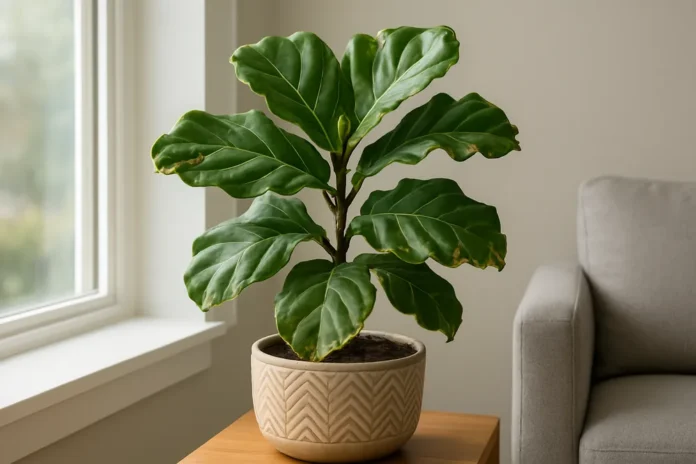
Fiddle leaf fig leaves usually curl because the plant is stressed by inconsistent watering, dry air, temperature changes, or root trouble. Curling can also happen when pests, harsh sun, or poor drainage interfere with normal leaf growth.
When fiddle leaf fig plants start showing leaves that are curling, it is usually a sign that something in their environment is off. These plants can be dramatic, and leaf curl is one of their earliest ways of signaling stress before more obvious damage like browning, dropping, or stunted growth appears.
The good news is that curling leaves do not always mean your plant is in serious decline. In many cases, the problem comes down to moisture imbalance, low humidity, sudden temperature swings, too much direct sun, or roots that are not functioning well. Once you match the pattern of curling with the underlying cause, you can usually help your fiddle leaf fig recover and push out healthier new growth.
What Leaf Curling Usually Means on a Fiddle Leaf Fig
Leaf curling is a stress response. A fiddle leaf fig curls its leaves to reduce moisture loss, protect tender tissue, or cope with poor root performance. The curl may be mild and temporary, or it may deepen as stress continues.
The way the leaf curls can give clues. Edges that roll inward often point to dry conditions, water stress, or heat. New leaves that emerge twisted or puckered can suggest low humidity, inconsistent watering, or pest feeding. Leaves that curl and also feel limp often reflect dehydration, while leaves that curl but stay thick and rigid may be reacting to excess light, salts, or root stress.
- Curling with dry, crispy edges often suggests underwatering, low humidity, or hot sun.
- Curling with yellowing can point to overwatering, root stress, or poor drainage.
- Curling with brown spots may indicate inconsistent moisture, edema, or infection after stress.
- Curling on brand-new leaves often happens when the plant struggles during active growth.
Underwatering and Inconsistent Watering
Dry Roots Make Leaves Curl Inward
One of the most common causes of curling leaves is underwatering or letting the potting mix swing from very dry to very wet. Fiddle leaf figs prefer evenly moist soil that dries slightly between waterings, not bone-dry soil followed by a heavy soak. When the roots cannot supply enough moisture, the plant reduces water loss by curling the leaves.
This is especially common in large plants with dense root systems, plants growing near heater vents, and plants in bright windows that dry out faster than expected. A plant can look fine one week and then suddenly show curled, droopy leaves after the root ball dries more deeply than usual.
- Leaves curl inward or cup slightly
- Foliage may droop at the same time
- Leaf edges can turn brown or crisp
- Soil pulls away from the sides of the pot
- The pot feels unusually light when lifted
How to Correct It
Water thoroughly when the top 1 to 2 inches of soil feel dry, then let excess water drain away. Avoid shallow sips that moisten only the surface. If the root ball has become very dry and water rushes straight through, you may need to water slowly in stages so the mix can rehydrate evenly.
After you correct the schedule, damaged leaves may stay curled, but new growth should come in flatter and healthier.
Overwatering and Root Stress
Too Much Water Can Cause Curl Too
Many gardeners assume curling means the plant is thirsty, but overwatering can create similar symptoms. When roots sit in constantly wet soil, they lose access to oxygen. Weak, stressed roots cannot move water properly, so leaves may curl even when the pot looks wet.
This happens most often in decorative pots without drainage, heavy soil mixes that stay soggy, or homes where the plant is watered on a fixed schedule instead of by soil moisture. Over time, chronic saturation can lead to root rot, which makes curling worse and triggers yellowing or leaf drop.
- Leaves curl and may also yellow
- Soil stays wet for many days
- Lower leaves drop first
- The plant looks dull or stalled instead of perked up after watering
- A sour smell from the pot can signal root problems
How to Correct It
Let the soil dry to the proper depth before watering again. Make sure the pot has a drainage hole and that excess water is emptied from saucers or cachepots. If the soil is dense and slow-draining, repot into a chunky indoor plant mix with ingredients like bark, perlite, or coarse pumice to improve airflow around the roots.
Low Humidity and Dry Indoor Air
Fiddle leaf figs tolerate average indoor conditions better than many tropical plants, but very dry air can still make leaves curl. This is especially true in winter, when heating systems lower indoor humidity and cause leaves to lose moisture faster than roots can replace it.
New leaves are usually the first to show the problem. They may emerge smaller than normal, curl at the edges, or look slightly wrinkled. Dry air stress often overlaps with inconsistent watering, so the two issues can reinforce each other.
- Leaf edges roll or cup inward
- Fresh growth looks tight, thin, or distorted
- Brown, crispy margins may develop later
- Problems worsen near radiators, fireplaces, or forced-air vents
Aim for moderate indoor humidity, especially during active growth. A humidifier works better than misting, which gives only temporary relief and can encourage spotting if water sits on leaves. Grouping plants together or moving the plant away from dry air sources can also help.
Temperature Swings and Drafts
Fiddle leaf figs prefer stable warmth. Sudden temperature changes can shock the plant and cause leaves to curl, twist, or droop. A chilly draft from a door, a cold window at night, or hot air from a vent can all stress the foliage.
This type of curling often appears quickly after a move or weather change. You might notice that the side of the plant closest to a draft or window is affected first. Newer leaves are more sensitive than older ones.
- Curling appears after moving the plant
- Leaf damage is worse on one side
- The plant sits near HVAC vents, exterior doors, or cold glass
- Growth slows after a sudden cold spell or heat burst
Keep the plant in a room that stays roughly between 60 and 85 degrees Fahrenheit, with as little fluctuation as possible. Avoid placing it where it gets hit by direct blasts of heated or cooled air.
Light Stress From Too Much Sun or Too Little Light
Harsh Direct Sun Can Curl and Scorch Leaves
Fiddle leaf figs like bright light, but there is a difference between bright indirect light and intense direct sun, especially afternoon sun through glass. If a plant that was grown in moderate indoor light is suddenly placed in strong sun, leaves may curl as they try to protect themselves from excess heat and water loss.
Sun-stressed leaves may feel dry, look faded, or develop tan or brown patches in addition to curling. The damage is often strongest on the window-facing side of the plant.
Low Light Weakens the Whole Plant
On the other hand, a plant kept in dim conditions may struggle to photosynthesize enough energy to support strong growth. Weak growth can emerge small, soft, and curled, especially if watering stays heavy while light remains low. In that situation, the issue is not direct leaf burn but general plant stress.
The best setup is bright, steady light with some gentle direct morning sun if available. If you need to move a fiddle leaf fig into stronger light, do it gradually over a week or two.
Poor Drainage, Compacted Soil, and Rootbound Plants
Curling leaves are often a root-zone problem rather than a leaf problem. If the potting mix has broken down into a dense mass, roots may stay too wet in some spots and too dry in others. That inconsistency makes it hard for the plant to take up water evenly.
A severely rootbound fiddle leaf fig can also curl leaves because the roots fill most of the pot and dry out very quickly. In that case, you might water often but still find the plant wilting or curling between waterings.
- Water runs down the sides of the pot instead of soaking in
- Roots circle the inside of the pot or emerge from drainage holes
- The soil surface hardens or shrinks away from the container
- The plant dries out unusually fast or stays soggy for too long
Repot when the root system clearly needs more room or when the soil structure has collapsed. Choose a pot only slightly larger than the current root ball, and use a well-aerated mix that drains well without drying instantly.
Pests That Distort Leaves
Several common houseplant pests can cause leaves to curl by feeding on tender tissue or sucking sap from developing growth. Spider mites, thrips, aphids, and mealybugs are the most likely culprits. Pest damage is often more obvious on new leaves, which can emerge curled, puckered, or misshapen.
Spider mites are especially common in dry indoor air. They can be hard to see at first, but their feeding causes subtle stippling, dullness, and deformation. Thrips may leave silvery scars or streaks. Mealybugs often hide in leaf joints and along stems.
- New leaves unfurl curled or twisted
- Tiny specks, webbing, sticky residue, or cottony clusters appear
- Leaves show stippling, silvering, or scarring
- The plant declines despite otherwise decent care
If pests are the cause, leaf curling may continue until the infestation is controlled. Isolate the plant from others and treat with repeated applications of insecticidal soap, horticultural oil, or another indoor-safe control labeled for the pest involved.
Fertilizer Buildup and Water Quality Issues
Excess fertilizer salts can burn roots and interfere with water uptake, which may show up as leaf curl, brown edges, or stalled growth. This is more likely when a fiddle leaf fig is fertilized too often, fed in low light, or grown in a pot where salts are never flushed out through the drainage hole.
In some homes, very hard tap water can also contribute to leaf edge stress over time. It usually is not the sole reason for curling, but it can add to existing moisture or root problems.
- White crust appears on the soil surface or pot rim
- Leaf tips and margins brown after feeding
- Growth slows even during spring and summer
- Curling persists despite improved watering
Flush the pot thoroughly from time to time to wash out salts, and fertilize lightly during active growth rather than year-round. If your tap water is very mineral-heavy, using filtered or room-temperature rainwater may reduce buildup.
How to Tell Which Cause Is Most Likely
Because several problems can produce similar curling, the best clue is the full pattern, not just the curled leaf itself. Look at soil moisture, the age of affected leaves, the location of the plant, and any other symptoms happening at the same time.
- Dry soil + limp curl + crispy edges usually points to underwatering or dry air.
- Wet soil + yellowing + curl often suggests overwatering or root stress.
- Curl on the sunny side + scorched patches leans toward excess direct sun.
- Twisted new leaves + speckling or webbing strongly suggests pests.
- Curl after a move or weather shift often comes from temperature stress or drafts.
- Persistent issues in old soil may indicate compaction, salts, or root crowding.
If more than one factor applies, treat the root-zone issue first. Healthy roots make it much easier for the plant to recover from humidity, light, or temperature stress.
What to Do Right Now to Help Your Plant Recover
Recovery starts with stability. Fiddle leaf figs respond better to a few well-targeted corrections than to constant moving, pruning, repotting, and watering changes all at once.
- Check soil moisture 1 to 2 inches down before watering again.
- Confirm that the pot has a drainage hole and the mix drains freely.
- Move the plant into bright, steady light away from harsh afternoon sun.
- Keep it away from vents, drafty doors, and cold windows.
- Inspect the undersides of leaves and new growth for mites, thrips, and mealybugs.
- Raise humidity if the air is very dry, especially in winter.
- Hold off on extra fertilizer until the plant resumes healthy growth.
Do not expect curled leaves to flatten completely in every case. The best sign of improvement is healthy new growth and a halt in further decline.
Can Curled Fiddle Leaf Fig Leaves Uncurl?
Sometimes, but not always. Mild curling caused by temporary thirst or a brief environmental change can relax after conditions improve. Leaves that hardened off while stressed, especially those with crisp edges, scarring, or distortion, usually stay somewhat curled.
That does not mean the fix failed. Houseplants often show recovery in the next leaves they produce rather than by repairing older damaged foliage. If the newest leaves emerge larger, flatter, and evenly colored, the plant is on the right track.
FAQ
Should I Cut Off Curled Fiddle Leaf Fig Leaves?
Only remove them if they are badly damaged, mostly brown, or unattractive enough that you want to prune them for appearance. Slightly curled green leaves still help the plant photosynthesize.
How Often Should I Water a Fiddle Leaf Fig with Curling Leaves?
Water based on soil dryness, not on a calendar. Most plants do best when watered thoroughly after the top 1 to 2 inches of soil have dried.
Can Low Humidity Alone Make Fiddle Leaf Fig Leaves Curl?
Yes, especially on new growth and during winter. Dry air often causes curling along with crisp edges, but it commonly occurs together with inconsistent watering.
Do Curled Leaves Mean My Fiddle Leaf Fig Has Root Rot?
Not necessarily. Curling can come from underwatering, dry air, sun stress, or pests too, but if the soil stays wet and the leaves also yellow or drop, root trouble becomes more likely.
Why Are Only the New Leaves on My Fiddle Leaf Fig Curling?
New leaves are more sensitive to low humidity, inconsistent moisture, pests, and sudden environmental changes. If only fresh growth is affected, closely inspect for mites or thrips and review humidity and watering habits.
Can Too Much Sun Curl Fiddle Leaf Fig Leaves?
Yes. Intense direct sun, especially after a sudden move to a brighter window, can make leaves curl, fade, or develop scorched patches.
Will Misting Stop My Fiddle Leaf Fig Leaves From Curling?
Usually not for long. Misting gives only brief humidity relief, so a humidifier, steadier watering, and a better location are more effective long-term solutions.
Still troubleshooting stressed houseplants? Read our guide to the best indoor plant soils, moisture meters, and pest treatments so you can fix curling leaves faster and prevent repeat problems.
