

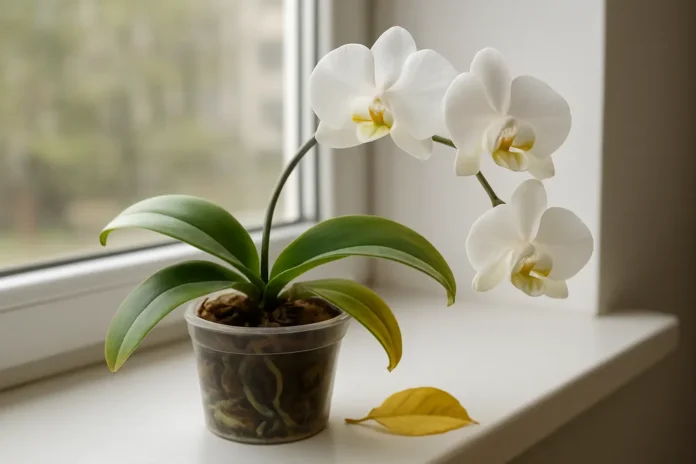
Orchid leaves usually fall off because the plant is stressed by watering problems, damaged roots, temperature shock, or disease. Sometimes a lower leaf dropping is just normal aging, but multiple leaves falling at once usually points to a care problem.
Seeing an orchid drop leaves can be alarming, especially if the plant looked fine a week ago. In my experience, leaf loss is one of the clearest signs that orchid stress has been building for a while, even if the real problem started below the potting mix or after a cold night near a window.
The good news is that orchids usually give clues before they completely decline. The number of leaves falling, which leaves drop first, whether they turn yellow or go mushy, and what the roots look like can tell you a lot. If your orchid leaves falling off issue is caught early, there is often a very good chance of saving the plant.
When Leaf Drop Is Normal and when It Is Not
Not every fallen leaf means your orchid is dying. Many common orchids, especially Phalaenopsis or moth orchids, will occasionally shed an older bottom leaf as part of normal growth. If the plant has firm roots, a healthy crown, and active new leaves, a single older leaf yellowing and dropping from the base is usually not an emergency.
Leaf drop becomes a concern when more than one leaf is falling in a short period, when newer leaves are involved, or when the leaves collapse while still green. Those patterns usually signal stress, root failure, infection, or environmental shock. A healthy orchid should not rapidly lose several leaves at once.
- Usually normal: one lower leaf yellows slowly, then drops
- Concerning: several leaves yellowing together
- Concerning: green leaves dropping suddenly
- Concerning: mushy crown, black spots, limp leaves, or sour-smelling media
When I assess an orchid, I pay close attention to which leaf dropped first. One oldest leaf from the bottom is often age-related. If the middle or top leaves loosen first, I start suspecting root damage, crown problems, or temperature injury.
Overwatering and Root Rot Are Common Causes
The most common reason I see orchid leaves fall off is overwatering. Orchids are not houseplants that like to sit in wet potting soil. Most are grown in bark, sphagnum moss, or a chunky orchid mix that is meant to hold air around the roots. When that medium stays wet too long, roots suffocate and rot.
Once the roots fail, the leaves may start yellowing, wrinkling, or dropping because the plant can no longer move water properly. Oddly, an overwatered orchid can look thirsty. That is because dead roots cannot absorb moisture, even when the pot is wet.
Signs That Overwatering Is Behind Leaf Drop
- Yellow leaves that soften before falling
- Black, brown, or mushy roots
- A stale or rotten smell from the pot
- Potting mix that stays wet for many days
- A plant that wobbles because roots have collapsed
Healthy orchid roots are usually firm and silvery gray when dry, then green when wet. Rotten roots turn brown, hollow, mushy, or papery. If most of the roots are gone, the orchid may drop leaves as it tries to survive on limited reserves.
What to Do
Take the orchid out of its pot and inspect the roots. Trim off dead, mushy roots with clean scissors, keep any firm live roots, and repot into fresh orchid bark or an appropriate orchid mix. After repotting, water carefully and let the medium approach dryness before watering again.
If you are unsure whether roots are alive, gently squeeze them. Live roots feel firm. Dead ones flatten, smear, or pull apart easily. I would rather save one good root than assume they are all lost and cut too aggressively.
Underwatering Can Also Trigger Leaf Loss
While overwatering gets most of the attention, underwatering can also make orchid leaves drop. This is especially common when orchids are potted in coarse bark, kept in warm dry rooms, or watered on a strict schedule that does not match the season.
An underwatered orchid often develops limp, leathery, or deeply wrinkled leaves before they yellow and fall. The roots may look dry, shrunken, and brittle rather than mushy. Flower spikes may also blast or dry up.
- Leaves look thin, floppy, or accordion-like
- Roots are dry, silver, and shriveled for long periods
- The pot feels unusually light
- The bark dries out very quickly after watering
If the plant has been too dry, increase watering gradually rather than soaking it constantly to make up for lost time. Water thoroughly so the roots are fully moistened, then let excess water drain away. Orchids do best with a wet-dry cycle, not constant dryness and not constant saturation.
Old Potting Mix and Compacted Media Can Choke the Roots
Sometimes the issue is not how often you water but what the orchid is planted in. Orchid bark breaks down over time. Moss compacts. As the medium decomposes, it holds more water and less air, which creates the perfect setup for root decline and leaf drop.
An orchid in old media may show the same symptoms as overwatering even if you are following a reasonable watering routine. If your plant has been in the same pot for two years or longer, especially in moss, the medium itself may be part of the problem.
Clues the Potting Mix Needs Replacing
- Bark looks crumbly or soil-like
- Moss stays densely packed and soggy
- Water drains slowly
- Roots near the center of the pot are brown or dead
- There is a sour or swampy smell
Repotting into fresh, airy orchid mix can make a huge difference. I usually recommend clear orchid pots with side ventilation for beginners because they make it easier to monitor root color and moisture.
Temperature Stress and Cold Damage Can Cause Sudden Leaf Drop
Orchids can react dramatically to cold drafts, heat blasts, or sudden temperature swings. A plant set near an icy window, an air conditioner vent, or a heater can drop leaves after the tissue has already been damaged. This can happen fast, especially during winter transport from store to car to home.
Cold damage often shows up as soft, yellowing, or water-soaked patches on leaves. The leaves may then detach from the plant. Heat stress, on the other hand, can lead to scorched patches, rapid dehydration, and leaf collapse.
- Leaf drop after a cold night near glass
- Damage shortly after bringing the plant home
- Yellow or translucent spots on leaves
- Dry brown scorch marks from intense direct sun or heat
Most household orchids prefer stable indoor temperatures, generally warm days and slightly cooler nights without extremes. If you suspect temperature stress, move the plant to a bright area away from drafts, heating vents, and direct midday sun.
Crown Rot and Stem Rot Are Serious Problems
If your orchid's top leaves are falling off or the center of the plant looks dark and soft, crown rot may be the culprit. This is especially common in Phalaenopsis orchids when water sits in the crown, the place where the leaves meet at the top of the plant.
Rot in the crown or stem can quickly spread into the growing point. Once the central growth area is badly infected, the orchid may lose leaves one after another because it can no longer support them.
Symptoms to Watch For
- Upper leaves yellowing or dropping
- Black or brown soft tissue in the crown
- Foul smell or wet-looking decay
- Leaves pulling out easily from the center
If you catch crown rot early, blot out standing water, remove dead tissue if possible with sterile tools, and improve airflow. In more severe cases, recovery is difficult. Some orchids may eventually produce a basal keiki or side growth, but heavily rotted plants are often hard to save.
I never leave water sitting in a Phalaenopsis crown after watering. Even a healthy plant can run into trouble if that moisture lingers in a cool room. If I water overhead, I do it early in the day so the plant dries before evening.
Pests and Disease May Be Weakening the Plant
Leaf drop can also happen when orchids are stressed by pests or infections. Mealybugs, scale, spider mites, and aphids can all weaken a plant by feeding on sap. Fungal or bacterial diseases may cause spots, soft areas, or rapid tissue breakdown that eventually leads to leaves dropping.
Pests alone do not always cause leaves to fall immediately, but a heavy infestation can leave the orchid too weak to hold foliage. Sticky residue, cottony clusters, shell-like bumps, or fine webbing are all warning signs.
Common Pest and Disease Clues
- Sticky honeydew on leaves or nearby surfaces
- White cottony masses in leaf joints
- Brown scale bumps on leaves or stems
- Speckled leaves or webbing from spider mites
- Black, wet, or fast-spreading lesions from infection
Isolate the orchid from other houseplants if you suspect pests or disease. Wipe pests away where possible, use an orchid-safe treatment if needed, and remove badly infected tissue with sterile tools. Good air movement and proper watering habits help prevent disease from returning.
Light Stress, Fertilizer Mistakes, and General Decline
Leaf drop is less often caused by light or fertilizer issues alone, but these can contribute to overall decline. Too little light weakens the plant over time. Too much direct sun can scorch leaves. Overfertilizing can burn roots, while never fertilizing during active growth may leave the orchid undernourished.
When orchids are gradually declining, the leaves may get smaller, paler, or weaker before they finally yellow and drop. This tends to be a slower process than cold injury or rot.
- Dark green, weak growth may suggest too little light
- Yellowed or bleached patches may suggest sun scorch
- Crusty white buildup on media can point to fertilizer salts
- Burned root tips may result from overly strong feeding
Most orchids prefer bright, indirect light and diluted fertilizer during active growth. I usually tell gardeners to think in terms of consistency rather than intensity. Moderate light, moderate feeding, and good drainage keep many orchids far healthier than big swings in care.
How to Diagnose the Cause by the Pattern of Leaf Loss
The fastest way to narrow down the cause is to pair the leaf symptom with root condition and recent environmental changes. Orchids rarely drop leaves for no reason. The pattern usually points in a useful direction.
- One bottom leaf yellowing slowly: often normal aging
- Several lower leaves yellowing with wet media: likely root rot or chronic overwatering
- Leaves wrinkled, limp, then dropping with dry roots: likely underwatering or root loss
- Top leaves loosening or crown darkening: possible crown rot
- Sudden drop after a chilly draft or transport: temperature injury
- Leaf spots, sticky residue, or visible insects: pests or disease
Before changing everything, look at the roots, smell the potting mix, inspect the crown, and think about what changed recently. New location, new watering routine, poor drainage, or old media are often the missing pieces.
Change one major variable at a time if the plant is still stable. If you repot, move the plant, start fertilizer, and change watering all at once, it becomes much harder to tell what helped and what added stress.
What to Do Right Now to Help Your Orchid Recover
Once leaves fall, they will not grow back on the same part of the stem, so focus on stopping further loss and supporting healthy new growth. Recovery depends on whether the crown and enough roots are still alive.
Immediate Recovery Steps
- Remove the orchid from its pot and inspect the roots.
- Trim away mushy, hollow, or dead roots with sterile scissors.
- Replace old or soggy media with fresh orchid bark or suitable orchid mix.
- Set the plant in bright, indirect light with good airflow.
- Water thoroughly, then let the medium approach dryness before watering again.
- Keep water out of the crown, especially on Phalaenopsis orchids.
- Hold off on heavy fertilizer until you see signs of active recovery.
Be patient with damaged orchids. They often recover slowly. Judge progress by new roots, a fresh leaf, or firmer remaining foliage rather than by the old damaged leaves.
How to Prevent Future Leaf Drop
Once you stabilize an orchid, prevention is mostly about routine. Most leaf-drop problems come from poor root conditions, trapped moisture, or sudden stress. A simple, repeatable care pattern is better than overcorrecting every week.
- Use a pot and medium designed for orchids, not standard potting soil
- Water based on how fast the mix dries, not by the calendar alone
- Repot every year or two before media breaks down badly
- Keep orchids out of cold drafts and away from heaters
- Provide bright, filtered light
- Check roots and leaf joints regularly for early signs of trouble
- Empty decorative cachepots so roots do not sit in water
If I had to choose one habit that prevents the most orchid problems, it would be checking the roots before assuming the leaves tell the full story. Healthy roots support healthy leaves. When the roots fail, leaf drop is often just the symptom you notice last.
FAQ
Will Orchid Leaves Grow Back After They Fall Off?
Individual leaves do not grow back in the same spot. The orchid can still recover by producing new leaves from its growing point or new growth from the base if the plant is still viable.
Is It Normal for an Orchid to Lose One Bottom Leaf?
Yes, a single older bottom leaf yellowing and dropping can be normal aging, especially on a healthy Phalaenopsis. It is more concerning when several leaves drop or newer leaves are affected.
Should I Cut Off Yellow Orchid Leaves?
If a leaf is only yellowing, I usually leave it until it comes away easily because the plant may still be reabsorbing resources from it. Remove it only if it is mushy, diseased, or clearly dead.
How Do I Know if My Orchid Has Root Rot?
Root rot is likely if the potting mix smells sour, stays wet for too long, and the roots are brown, mushy, or hollow instead of firm and green or silvery. The leaves may also yellow, wrinkle, or drop even though the pot feels wet.
Can Cold Air Make Orchid Leaves Fall Off?
Yes. Cold drafts, chilly window glass, and sudden exposure during transport can damage orchid leaves and lead to yellowing, soft patches, and eventual leaf drop.
Why Are My Orchid Leaves Dropping but the Roots Look Fine?
If the roots look healthy, consider crown rot, cold injury, pests, disease, or severe environmental stress. Check the top of the plant, leaf joints, and any recent changes in location, temperature, or light.
Should I Water an Orchid More if the Leaves Are Wrinkled and Falling?
Only if the roots are healthy but too dry. Wrinkled leaves can also happen when roots are rotted and unable to absorb water, so check the roots first before increasing watering.
Want to stop guessing with orchid care? Read our orchid watering and repotting guides to choose the right mix, pot, and routine before more leaves drop.
