

Note: This article contains affiliate links. If you click on these links and make a purchase, I may earn a small commission at no extra cost to you. This helps support my research and content. Read my full affiliate disclosure here.
If you grow watermelon, choosing the right insecticide matters for fruit set, yield, and the health of pollinators that make sweet melons possible. Pests like aphids, cucumber beetles, and melonworms can reduce yields quickly, and the wrong product or timing can harm beneficial insects or leave residues on fruit. This guide reviews six shortlisted insecticides for watermelon across common growing situations. We focus on how each option behaves in the field, which pests it controls, and how to use it with pollinator protection and harvest safety in mind. Below you will find the practical criteria we used to evaluate each product and actionable advice to help you pick the best fit for your patch or commercial block.
Top Picks at a Glance
| Best Overall The best all-around choice for most situations | Bonide Captain Jack's Deadbug Brew 16 oz Concentrate |  |
| Best Quality Built to a higher standard if you want something more solid | BioAdvanced Vegetable & Garden Insect Spray Concentrate, 32 fl oz |  |
| Best Value The sweet spot between price and what you get | BioAdvanced Fruit & Citrus Tree Insect Control Concentrate, 32 oz |  |
| Best Budget The cheapest option that still gets the job done reliably | Bonide Eight Garden & Home Ready-to-Use Insect Control, 32 oz |  |
| Highest Rated A top-rated pick with lots of positive feedback | Monterey Spinosad Insecticide, 32 oz (concentrate) |  |
| Most Popular A crowd favorite that many people choose with confidence | Bonide Captain Jack's Ready-to-Use Neem Oil Spray, 32 oz |  |
Bonide Captain Jack's Deadbug Brew 16 oz Concentrate

| Unit Count | 16 Ounce |
|---|---|
| Item Form | Spray |
| Target Species | Insects |
| Active Ingredients | Spinosad (Mixture of Spinosyn A and Spinosad D) |
Bonide Captain Jack's Deadbug Brew is a concentrated spinosad insecticide designed for use on vegetables, fruits, ornamentals, and other garden plants. You mix the 16 fl oz concentrate with water and apply it with a trigger, hand-held, backpack, or hose-end sprayer to target caterpillars, beetles, borers, leaf miners, and similar chewing pests. Because the active ingredient is spinosad, the product is approved for organic gardening and is selective enough that it does not significantly impact many predatory beneficial insects and mites when used as directed. In practical use it provides quick knockdown of listed pests and is suitable for protecting squash and other cucurbits from feeding damage. The main limitations are that it must be mixed and applied correctly following label rates and safety instructions and that repeated broad use can still affect non-target insects if timing and coverage are not careful. For gardeners focused on protecting food crops, it is a straightforward, effective option when integrated with scouting and spot treatments.
Best for: Gardeners who prioritize practical, effective pest control for edible gardens and want an organic-approved concentrate they can mix and apply themselves to protect squash and other crops.
Less Ideal for: Gardeners seeking a ready-to-use spray or those unwilling to follow label mixing and safety instructions should consider alternative formats or professional application.
- Contains spinosad, an active ingredient approved for organic gardening and effective against caterpillars and beetles
- Concentrate mixes with water for use with trigger, backpack, hand-held, or hose‑end sprayers
- Labeled for use on a wide range of vegetables, fruits, and ornamentals including cucurbits
- Designed to minimize impact on many predatory beneficial insects and mites when used as directed
- Requires careful mixing and application per label to avoid harming non-target insects
- Not a residual solution for all pests so repeat applications or scouting are often necessary
Verdict: A practical, organic-approved spinosad concentrate that reliably controls chewing pests on squash and other garden crops when mixed and applied correctly.
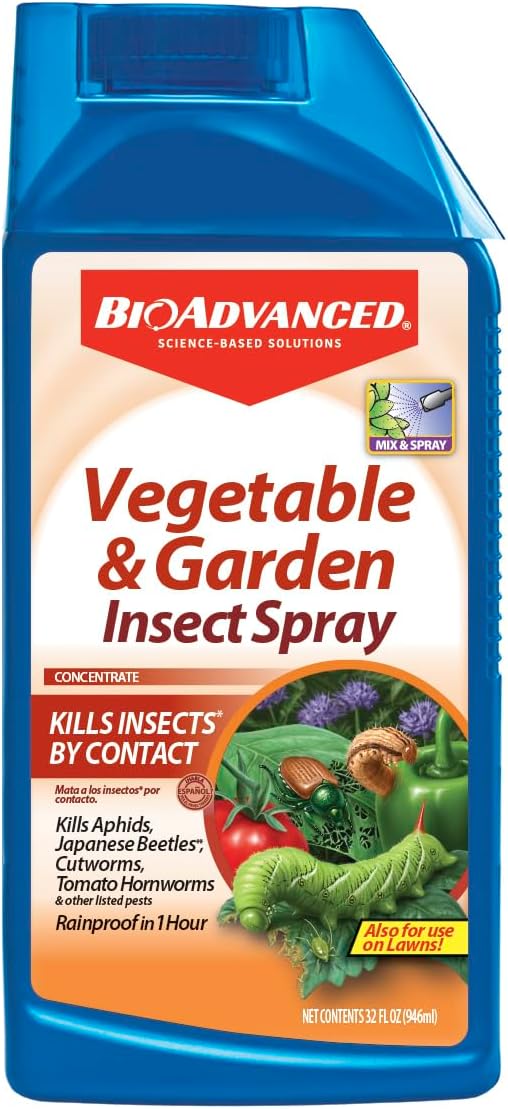
BioAdvanced Vegetable & Garden Insect Spray Concentrate, 32 fl oz
| Item Form | Spray |
|---|---|
| Target Species | Insects |
| Liquid Volume | 32 fluid ounces |
| Active Ingredients | Cyfluthrin |
This BioAdvanced concentrate is designed for gardeners who need a versatile, broad-spectrum insect control for outdoor plants. The bottle mixes into a ready spray that kills common pests on contact, including aphids, caterpillars, whiteflies, and tomato hornworms, and the formula becomes rainproof in about an hour so treatments hold up to light rain. Because it is a concentrate, one 32-ounce bottle makes up to 64 gallons of spray, which is convenient for treating larger beds or multiple plantings without frequent repurchasing. Typical use is diluting to label rates, filling a garden sprayer, and coating leaves until wet but not dripping. The main limitation is that it uses a synthetic pyrethroid active ingredient so it will also affect nontarget insects including beneficials if oversprayed, and label precautions must be followed for edible crops and pollinators. It is not a selective or organic option, but for balanced gardeners wanting an effective, easy-to-apply contact insecticide for outdoor plants, it provides strong, reliable control.
Best for: Gardeners who want a single, effective contact insecticide to protect vegetables, fruits, and ornamentals across a typical backyard garden and value ease of use and wide pest coverage.
Less Ideal for: Growers who prioritize organic methods, pollinator-safe selective controls, or those managing very small container plantings where concentrate dilution is inconvenient.
- Concentrate mixes to make up to 64 gallons, suitable for treating large areas
- Kills a wide range of listed garden pests on contact, including common vegetable pests
- Rainproof protection within one hour helps treatments withstand light rain
- Can be applied with most common garden sprayers for straightforward use
- Contains a synthetic pyrethroid (cyfluthrin) that can harm beneficial insects if not used carefully
- Not an organic or selective option for gardeners seeking softer pest control
Verdict: A productive, rainproof concentrate that delivers broad, contact insect control for gardeners who need reliable protection across vegetable and outdoor plantings.
BioAdvanced Fruit & Citrus Tree Insect Control Concentrate, 32 oz

| Unit Count | 32 Fluid Ounces |
|---|---|
| Item Form | Liquid |
| Target Species | Insects |
| Active Ingredients | avocado |
This BioAdvanced concentrate is designed to protect fruit and citrus trees by mixing and pouring at the plant base so the active ingredient is taken up through the roots and provides internal protection. It targets aphids, whiteflies, leafhoppers, scale and several other listed pests and claims up to two months of prevention after one application. Typical use is annual treatment of established fruit trees, or treating multiple small fruit plants and vegetable areas according to label rates; one 32-ounce bottle is advertised to treat up to nine trees or 640 square feet of vegetables. The practical benefits are no spraying, resistance to wash-off from rain, and a long residual that reduces repeat visits during the growing season. Important limitations are that it is a systemic insecticide with an imidacloprid active ingredient so users should follow label directions for edible plants and pollinator safety and note it is not available for sale in several states; it also does not provide immediate contact knockdown for heavy, visible infestations.
Best for: Gardeners who want an easy, low‑maintenance way to protect established fruit or citrus trees from sap‑feeding insects without foliar spraying and who prioritize season‑long coverage.
Less Ideal for: People needing immediate, contact control of visible outbreaks or those who avoid systemic neonicotinoid products for pollinator safety should consider alternative methods.
- Systemic root uptake gives internal protection that is not easily washed away by rain
- Controls a broad list of sap‑feeding pests including scale, aphids, whiteflies and leafhoppers
- Single annual application can protect trees for up to two months, reducing labor
- Concentrate format treats multiple trees or a larger vegetable area from one bottle
- Not a contact spray so it will not quickly knock down heavy, active infestations
- Contains imidacloprid which requires careful adherence to label restrictions for edible crops and pollinators
Verdict: Use this concentrate if you want a root‑applied, season‑lasting protection for fruit and citrus trees against scale and other sap‑feeding pests with minimal foliar spraying.
Bonide Eight Garden & Home Ready-to-Use Insect Control, 32 oz

| Brand | Bonide |
|---|---|
| Item Form | Spray |
| Target Species | ant |
| Liquid Volume | 32 fluid ounces |
Bonide Eight Garden & Home is a 32-ounce ready-to-use spray formulated to control more than 130 insect pests on vegetables, ornamentals, lawns, shrubs, trees, and roses. You use it like a typical pump-and-spray treatment: pump the attached wand and apply about a foot from foliage or surfaces until the area is lightly covered. Its water-based formula reduces odor and is unlikely to stain most siding, and the spray kills on contact which makes it useful for fast knockdown of visible pests. Because it is labeled for many plant types and pests, it functions as an all-purpose spot treatment for summer outbreaks, including beetles that chew leaves. Limitations include that it must contact pests to be effective so it will not provide long residual control or systemic protection, and it is not labeled for indoor use. For gardeners on a budget who want a simple spray bottle solution for treating visible infestations on outdoor plants, this product is practical and easy to deploy.
Best for: Gardeners looking for an inexpensive, easy-to-use outdoor spray to quickly knock down visible pests on vegetables, roses, shrubs, and ornamentals.
Less Ideal for: People seeking long-term beetle prevention, systemic protection, or indoor pest control should consider other products designed for residual or systemic action.
- Ready-to-use pump spray requires no mixing or special equipment
- Water-based formula with low odor and minimal risk of staining most siding
- Controls a broad list of over 130 pests across many garden plants
- Compact 32 oz bottle is convenient for spot treatments and storage
- Kills on contact only and does not provide long-lasting residual or systemic control
- Not labeled for indoor use
Verdict: A budget-friendly, ready-to-use outdoor spray that delivers fast contact kill for visible garden pests.
Monterey Spinosad Insecticide, 32 oz (concentrate)

| Unit Count | 32 Fluid Ounces |
|---|---|
| Item Form | Oil |
| Target Species | Insects |
Monterey Spinosad is a concentrated, spinosad‑based insecticide designed for home garden use to control caterpillars, leafminers, borers, thrips and many other chewing and crawling pests. Mixed into a trigger, backpack, or hose‑end sprayer, it can be applied to ornamentals, vegetables, lawns, citrus and fruit trees; the concentrate format makes it easy to cover larger areas on a schedule. The product is OMRI listed, fast acting, and practically odorless since spinosad is derived from naturally occurring bacteria. Safety directions on the label are clear and recommend protective clothing and thorough washing after handling. Limitations are that it is a broad contact toxin so beneficial insects like bees and predatory insects can be affected if applied during bloom or while pollinators are active, and you must follow label rates and reentry intervals for edible crops. For gardeners who prioritize reliable, organic‑approved control of chewing insects, this concentrate is a practical tool; those wanting an ant‑specific baiting strategy or systemic option will need a different product.
Best for: Gardeners who want a reliable, organic‑approved concentrate to quickly reduce chewing and boring insect populations across vegetables, ornamentals and fruit trees and who are comfortable following label safety and mixing instructions.
Less Ideal for: People seeking a targeted ant bait or a systemic insecticide for soilborne pests or those who need a product safe to spray during active bloom are better off with specialist ant baits or systemic products.
- OMRI listed for use in organic gardening
- Effective against a wide range of chewing and boring insects including caterpillars and leafminers
- Concentrate format works with trigger, backpack, or hose‑end sprayers for flexible coverage
- Fast acting and essentially odorless when applied properly
- Contact action can harm beneficial insects if applied when pollinators are active
- Requires mixing and careful adherence to label instructions for safe use
Verdict: Choose this OMRI‑listed spinosad concentrate when you need dependable, fast control of chewing garden pests across vegetables, ornamentals and fruit trees.
Bonide Captain Jack's Ready-to-Use Neem Oil Spray, 32 oz

| Item Form | Liquid |
|---|---|
| Target Species | Insects |
| Liquid Volume | 32 fluid ounces |
| Active Ingredients | Clarified Hydrophobic Extract of Neem Oil |
This ready-to-use neem oil spray is a multipurpose garden treatment that kills insects at all life stages while also serving as a miticide and preventative fungicide. Packaged in a 32-ounce trigger bottle, it is applied by shaking and thoroughly spraying plant surfaces, including leaf undersides, at the first sign of pests or disease and reapplying every 7 to 14 days as needed. The active ingredient is a clarified hydrophobic extract of neem oil, which is approved for organic gardening and labeled safe to use on vegetables up to the day of harvest. Practical benefits include broad pest coverage (aphids, whiteflies, spider mites and others), disease suppression such as powdery mildew, and convenience from a ready-to-use sprayer. Important limitations are that results are slower than synthetic contact insecticides and application timing matters to avoid leaf burn in full sun; repeated applications may be needed for heavy infestations. Follow label safety directions and keep the product away from children and pets.
Best for: Gardeners who want a single, organic-approved product to manage common vegetable garden pests and fungal problems and who prefer products with strong user feedback.
Less Ideal for: Growers needing rapid knockdown of severe infestations or commercial producers who require fast-acting, high-throughput treatments.
- Kills multiple pest stages including eggs, larvae and adults for more complete control.
- Also acts as a fungicide and miticide so one product covers pests and common fungal issues.
- Ready-to-use trigger bottle requires no mixing and is easy to apply to leaves and undersides.
- Approved for organic gardening and can be used on vegetables up to day of harvest.
- Slower-acting than many synthetic contact insecticides, so it may take several applications to see control.
- Must avoid spraying in peak sunlight to reduce risk of leaf burn.
Verdict: A convenient, organic-approved all-in-one neem spray that controls common vegetable garden pests and fungal issues with minimal fuss.
Choosing the Right Insecticide for Watermelon: Key Factors to Consider
Pest Spectrum and Targeting
Know which pests are most likely in your watermelon patch and choose an insecticide labeled for those targets. Some products are broad-spectrum and will reduce many different chewing and sucking pests, which is useful during mixed infestations. Others are selective, controlling a narrow group like aphids or caterpillars, which helps preserve beneficial predators.
Matching the product to the pest reduces unnecessary applications and slows resistance development. Scout regularly and identify whether you are dealing with beetles, aphids, caterpillars, or other pests before selecting a treatment. Timing the application to vulnerable life stages, such as early larval stages for caterpillars, typically improves control while reducing the need for repeat sprays.
Crop Safety and Preharvest Intervals
Check crop safety information and the preharvest interval, which dictates how long to wait between application and harvest. Watermelon is eaten fresh, so following labeled PHI is essential to avoid residues on fruit. Some chemistries require longer intervals or limited application rates near harvest to meet safety standards.
Consider phytotoxicity risk as well. Certain formulations or high rates may cause leaf scorch or fruit damage under hot or drought stress. When in doubt, test a small area or apply at lower labeled rates during favorable weather to minimize crop injury.
Impact on Pollinators and Beneficials
Watermelons rely heavily on bees and other pollinators for fruit set. Insecticides that are toxic to pollinators can reduce pollination and lower yields even if pest control is successful. Choose products and application timings that avoid flowering periods or apply in the evening after bees are less active.
Selective products or those with shorter residual activity can help protect beneficial insects. Also consider tank-mix compatibility with softer options and use integrated pest management tactics to limit blanket sprays that harm beneficial populations.
Residue Persistence and Environmental Fate
How long active ingredients persist on foliage and fruit affects both efficacy and safety. Longer-residual products can give extended control and reduce reapplication frequency, but they increase the risk of residues at harvest and longer exposure windows for non-target insects.
Think about weather conditions that influence persistence. Rain or intense sun can reduce efficacy of contact sprays and may necessitate reapplication. Select products whose persistence matches your management goals and harvest calendar.
Application Method and Equipment
Consider how you will apply the insecticide in your planting. Foliar sprays are most common for watermelon vine pests, but some chemistries are suitable for soil drench or drip chemigation when labeled. Choose a formulation compatible with your sprayer and capable of delivering adequate coverage to foliage and the undersides of leaves where many pests hide.
Nozzle selection, pressure, and spray volume affect coverage and control; growers with large blocks should favor products that perform well with standard boom sprayers, while small-scale or backyard growers may prefer ready-to-use or easy-mix formulations.
Resistance Management and Rotation
Repeated use of the same active ingredient increases the risk of pest resistance. Rotate modes of action across applications and integrate nonchemical controls, such as row covers early in the season, trap cropping, and biological control agents, to keep pest pressure manageable.
Follow label restrictions on maximum seasonal uses and combine scouting data with economic thresholds to avoid unnecessary treatments. A resistance-aware strategy extends the useful life of effective insecticides for watermelon.
Common Watermelon Pests and When They Peak
Understanding pest seasonality helps you time applications for maximum effect. Aphids often appear early in the season and can build quickly under warm, dry conditions. Cucumber beetles and flea beetles are active during seedling and transplant stages and can cause both foliar damage and bacterial wilt transmission.
Caterpillar pests such as melonworms and loopers are typically more problematic midseason and can cause fruit scarring and vine defoliation. Monitor by inspecting undersides of leaves and sampling several locations across the block instead of relying on a single spot.
- Early-season: flea beetles and cucumber beetles; protect seedlings and young vines
- Midseason: aphids and whiteflies can colonize new growth quickly
- Late season: caterpillars and fruit-feeding pests may appear as vines bulk up
Timing Sprays to Protect Pollination
Spraying during bloom can reduce bee activity and cut fruit set. Whenever possible, avoid foliar applications during peak bloom or apply late in the day after pollinators have left the field. Short-residual products and spot treatments around hotspots will help limit exposure.
Coordinate applications with local bee activity and weather forecasts. Calm, dry evenings reduce drift and allow residues to dry before morning pollinator flights.
- Avoid spraying when flowers are open and bees are active
- Apply in early morning or late evening when pollinators are less active
- Use targeted treatments rather than block sprays during heavy bloom
Integrating Nonchemical Controls
Relying solely on insecticides increases costs and resistance risk. Cultural controls such as crop rotation, sanitation, and removal of vine debris reduce pest overwintering. Row covers provide early-season protection against beetles until pollination becomes necessary.
Beneficial insects and biologicals can suppress low to moderate pest populations. Pair these tactics with selective insecticides and precise timing to keep pest pressure below damaging levels while preserving natural enemies.
- Use row covers for seedlings, remove them for pollination
- Rotate crops to disrupt pest life cycles
- Encourage natural enemies by reducing broad-spectrum sprays
Spray Technique and Coverage Tips
Good coverage is critical because many watermelon pests hide under leaves or near the fruit. Use nozzle types and spray volumes that penetrate the canopy and wet underside surfaces. For high-density plantings, increase spray volume rather than concentration to improve contact.
Avoid excessive pressure that creates drift and uneven coverage. Calibrate equipment regularly and observe spray patterns on a sunny day to ensure uniform application across rows.
- Aim for thorough coverage of foliage and fruit undersides
- Calibrate sprayers and choose appropriate nozzles for the canopy
- Increase volume in dense plantings rather than increasing rate
Record-Keeping and Seasonal Planning
Keep a log of pest observations, products used, rates, timing, weather, and results. Records help you spot patterns, evaluate what works in your specific field, and meet any regulatory or buyer requirements related to application and harvest intervals.
Plan a seasonal pest calendar based on past years and local extension recommendations. Anticipate peaks and build in scouting days so you can respond quickly and avoid calendar-driven, unnecessary sprays.
- Track dates, rates, and observed efficacy for each application
- Use historical records to predict pest peaks
- Coordinate spray plans with expected bloom and harvest windows
How We Chose the Best Insecticide for Watermelon
We prioritized products that deliver reliable control against the pests that most commonly damage watermelon fruit and vines. Key evaluation criteria included spectrum of control against chewing and sucking insects, documented crop safety and preharvest interval considerations, and compatibility with pollinators and beneficial insects when used according to label directions. Residue profile and reentry time were assessed because they affect harvest intervals and worker safety. We also considered ease of application in typical watermelon systems, including foliar sprays and drip treatments, and how flexible the product is across different growth stages. Excluded items included treatments intended only for seed or soil not labeled for foliar watermelon use, experimental compounds without practical application guidance, and general garden products that lack specific watermelon labeling. The final list favors products that balance effective pest suppression with practical stewardship measures growers need to protect pollinators and meet harvest safety windows.
FAQ
When should I apply an insecticide to protect young watermelon plants?
Apply at the first sign of damaging pest activity, especially for cucumber beetles and flea beetles that attack seedlings. Early, targeted applications or use of row covers can protect young plants until they are established and pollination is needed.
How do I avoid harming bees when treating watermelon?
Avoid spraying during bloom, or apply late in the evening when bees are inactive. Choose products with lower toxicity to pollinators and use spot treatments rather than full-field sprays whenever possible.
Can I tank-mix insecticides with fungicides on watermelon?
Tank-mixing depends on label permissions and compatibility. Many labels allow certain tank mixes, but you should check compatibility charts and conduct a small jar test first. Always follow label restrictions for rates and application timing.
How long before harvest can I spray an insecticide on watermelon?
Preharvest intervals vary by product and active ingredient, so follow the labeled PHI exactly. Some chemistries require several days to weeks before harvest, while others have shorter intervals. Observing PHI ensures fruit safety and compliance.
What nonchemical options work well with insecticide use?
Use cultural controls like crop rotation, sanitation, and row covers early in the season. Encourage beneficial insects and use selective insecticides to preserve natural enemies. These integrated tactics reduce overall insecticide dependence.
How can I manage resistance in common watermelon pests?
Rotate modes of action between applications and avoid repeated use of a single active ingredient. Combine chemical controls with scouting, economic thresholds, and nonchemical tactics to reduce selection pressure on pest populations.
Final Verdict
Choose an insecticide for watermelon by prioritizing the pests you need to control, crop safety near harvest, and measures that protect pollinators. Balance residual needs against harvest intervals and select application methods that give good coverage without unnecessary exposure to beneficial insects. Your best option will match the target pest spectrum to the crop stage, fit your application equipment, and fit into a resistance-management plan. Using insecticides as one part of an integrated program will preserve their effectiveness and maintain healthy, productive vines.
