

Note: This article contains affiliate links. If you click on these links and make a purchase, I may earn a small commission at no extra cost to you. This helps support my research and content. Read my full affiliate disclosure here.
Keeping plants alive in rooms with no natural light means choosing species that tolerate deep shade, erratic watering, and indoor temperature swings. The right plants can add texture and color to windowless bathrooms, hallways, basements, and interior offices without demanding constant repositioning or bright supplemental lighting. This guide covers six carefully shortlisted plants for no light indoors that are realistic choices for low-light spaces. Each selection was judged on how the plant behaves in true low-light conditions, how much water and maintenance it needs, and how well it resists pests and rot. Read on to see the practical traits gardeners should weigh and what to expect from low-light indoor greenery.
Top Picks at a Glance
| Best Overall The best all-around choice for most situations | Tropical Plants of Florida ZZ Plant (Zamioculcas zamiifolia) in 6" Nursery Pot |  |
| Best Quality Built to a higher standard if you want something more solid | Plants for Pets Sansevieria Superba (Snake Plant) – Fully Rooted Houseplant |  |
| Best Value The sweet spot between price and what you get | Plants for Pets Mini Pothos & Philodendron Pack (6 Live Plants) |  |
| Highest Rated A top-rated pick with lots of positive feedback | Thorsen's Greenhouse Live Low Light Houseplants (3 Pack) with 4" Decorative Pots |  |
| Most Popular A crowd favorite that many people choose with confidence | Altman Plants Snake Plant (Laurentii) in 4 in Grower Pot |  |
| Best Seller A high-volume bestseller chosen again and again | Plants for Pets Pothos 4-Pack (4" Assorted) |  |
Tropical Plants of Florida ZZ Plant (Zamioculcas zamiifolia) in 6" Nursery Pot

| Indoor Outdoor Usage | Indoor, Outdoor |
|---|---|
| Other Special Features of the Product | Air Purification, Compact, Drought Tolerant, Low Maintenance |
| Sunlight Exposure | Partial Sun |
| USDA Hardiness Zone | 9, 10, 11 |
| Moisture Needs | Little To No Watering |
The ZZ Plant (Zamioculcas zamiifolia) is a resilient, performance-focused houseplant suited to low- or no-sun interiors like offices, bathrooms, and windowless rooms. Arriving in a 6-inch grower pot, it produces upright stems of glossy green leaflets that keep their shape with minimal intervention. Care is straightforward: place in low to bright indirect light and water only when the top inch of soil is dry so the pot drains fully. Notable features include drought tolerance, low maintenance needs, and reported air-purifying qualities, which make it forgiving for busy owners or frequent travelers. Because it tolerates low light better than many houseplants, it functions well as a decorative, long-lived green accent where light is limited. Important limitations are that it prefers indirect light for best growth and is susceptible to overwatering, which causes yellowing; it is not a fast grower, so you should not expect rapid size gains. For someone prioritizing dependable, low-effort greenery in low-light spaces, the ZZ Plant delivers consistent, attractive results.
Best for: Buyers who want a dependable, low-effort green accent for low-light rooms and prioritize a plant that survives neglect while still looking polished.
Less Ideal for: People seeking a fast-growing statement plant or someone who wants flowering houseplants or bright direct-sun lovers.
- Tolerates low to bright indirect light making it suitable for windowless or dim spaces
- Very drought tolerant and forgiving of infrequent watering
- Compact size from the 6-inch nursery pot fits desks, shelves, and small corners
- Glossy, upright foliage provides year-round decorative interest and air-purifying benefits
- Slow grower compared with faster houseplants
- Sensitive to overwatering and root rot if not allowed to dry between waterings
Verdict: If you need a low-light, low-maintenance plant that stays healthy with minimal care, the ZZ Plant is a top practical choice.
Plants for Pets Sansevieria Superba (Snake Plant) – Fully Rooted Houseplant

| Indoor Outdoor Usage | Indoor, Outdoor |
|---|---|
| Other Special Features of the Product | Air Purification, Compact, Drought Tolerant, Low Maintenance |
| Sunlight Exposure | Partial Sun |
| USDA Hardiness Zone | 10, 11, 9 |
| Moisture Needs | Little To No Watering |
The Plants for Pets Sansevieria Superba is a compact, fully rooted snake plant that delivers the classic, nearly indestructible qualities buyers expect from this species. It is typically kept in a small grower pot on a windowsill, shelf, or office desk and prefers bright indirect light but tolerates low light, making placement flexible. Notable features include drought tolerance, variegated upright leaves with chartreuse margins, and claims of air-purifying benefits. Practical benefits are straightforward: infrequent watering needs, low attention requirements, and a sculptural look that suits modern interiors. Because it ships fully rooted, it is ready to go into a decorative cachepot or remain in its grower pot with minimal setup. Limitations are minimal for most owners but include the plant's suitability mainly for indoor use in mild climates and the typical size cap of a compact variety, which may not satisfy someone wanting a large specimen quickly. Occasional overwatering or very cold conditions will be the main care pitfalls to avoid.
Best for: A buyer who values a dependable, low-maintenance houseplant that survives occasional neglect and fits small indoor spaces; ideal for busy households, offices, or first-time plant owners who want a reliable decorative plant.
Less Ideal for: Not ideal for gardeners seeking rapid growth into a large floor plant or those who need a cold-hardy outdoor specimen for harsh climates.
- Fully rooted and ready to display or repot upon arrival
- Tolerates low light and infrequent watering, ideal for low-effort care
- Compact, upright variegated foliage provides decorative interest indoors
- Described as drought tolerant and low maintenance, suitable for busy owners
- Best suited to indoor or mild outdoor conditions rather than harsh climates
- Compact size may not meet buyers seeking an immediate large specimen
Verdict: Buy this fully rooted Sansevieria Superba when you want a near-indestructible, low-effort houseplant that reliably looks good in small indoor spaces.
Plants for Pets Mini Pothos & Philodendron Pack (6 Live Plants)
| Indoor Outdoor Usage | Indoor |
|---|---|
| Other Special Features of the Product | Air Purification, Low Maintenance |
| Sunlight Exposure | Partial Sun |
| Moisture Needs | Regular Watering |
| Number of Items | 6 |
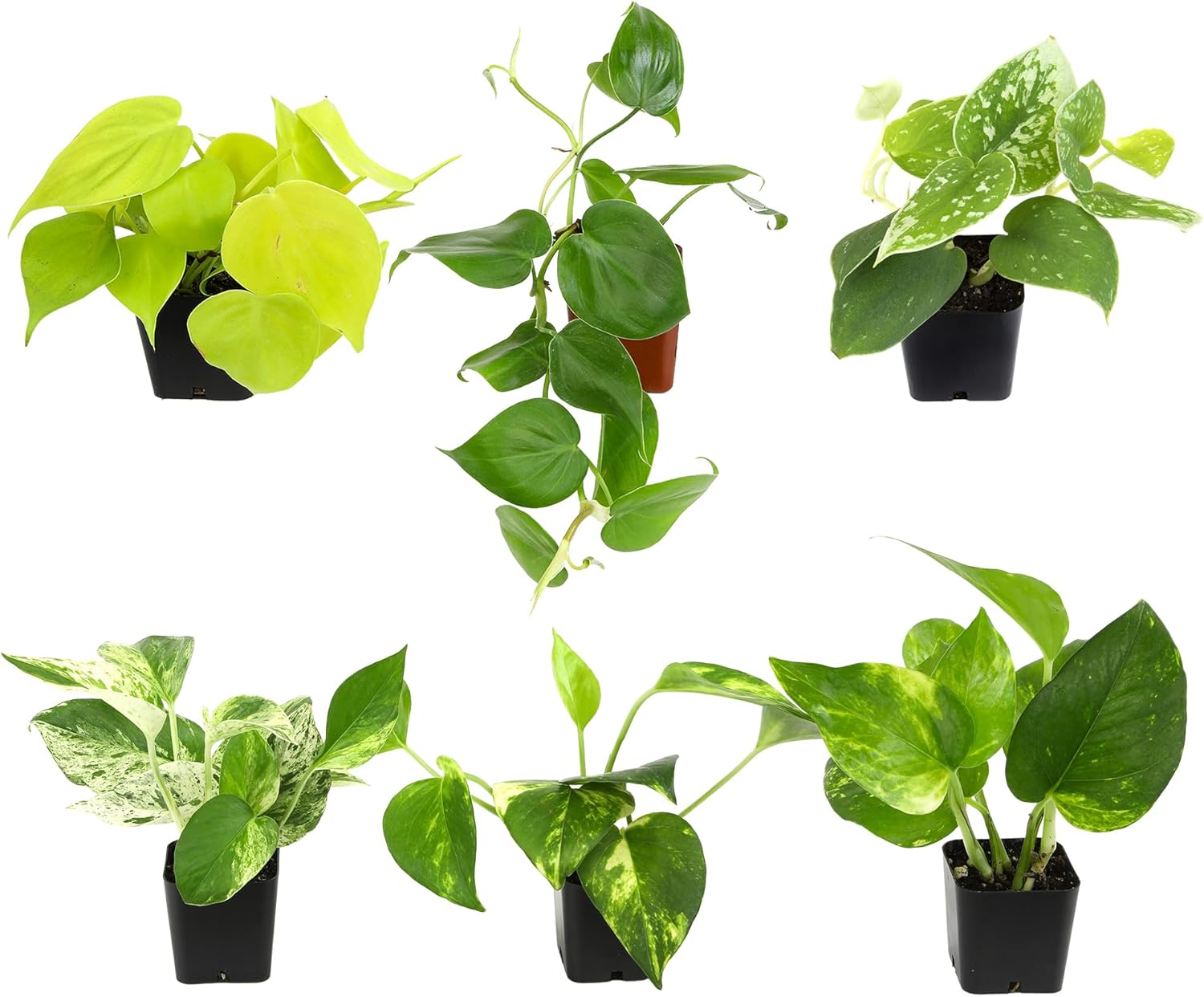
This six‑plant assortment combines several pothos varieties plus possible philodendron youngsters to give you fast visual impact and low‑maintenance greenery. The plants arrive rooted in 2" nursery pots and are suited to bright, indirect light but tolerate lower‑light rooms, making them useful for shelves, hanging baskets, or small plant stands. Key features are the mix of variegated and solid foliage that adds texture and the plants' reputation for forgiving care and air‑purifying benefits. Practical benefits include easy propagation from cuttings, grouping to boost humidity, and flexible placement around the home. Limitations are the small nursery pots at arrival, which means you will likely need to repot into larger containers within weeks as they grow, and variety received can vary so you should expect some unpredictability in exact foliage types. These are best treated as starter plants for someone building a collection or looking to add trail‑ing greenery to dimmer interior spots rather than instant, fully grown specimens.
Best for: Buyers who want an easy, low‑stress way to populate indoor shelves or hanging spots with trailing greenery and who value variety over uniform mature specimens.
Less Ideal for: Not a good fit for someone who needs mature, display‑ready plants or for collectors who require guaranteed specific cultivars.
- Includes six live plants for quick coverage and variety
- Tolerant of low to bright indirect light, good for low‑light rooms
- Low maintenance and forgiving for beginner plant owners
- Variegated and solid foliage adds decorative variety and propagation material
- Ships in small 2" nursery pots so repotting is needed soon after arrival
- Exact varieties are not guaranteed so selection may vary
Verdict: A convenient six‑pack of easy, low‑light tolerant pothos and philodendron starters that quickly fills indoor spaces with low‑maintenance trailing greenery.
Thorsen's Greenhouse Live Low Light Houseplants (3 Pack) with 4" Decorative Pots
| Indoor Outdoor Usage | Indoor |
|---|---|
| Other Special Features of the Product | Low Maintenance |
| Sunlight Exposure | Partial Shade |
| Soil Type | Peat Soil |
| Moisture Needs | Moderate Watering |
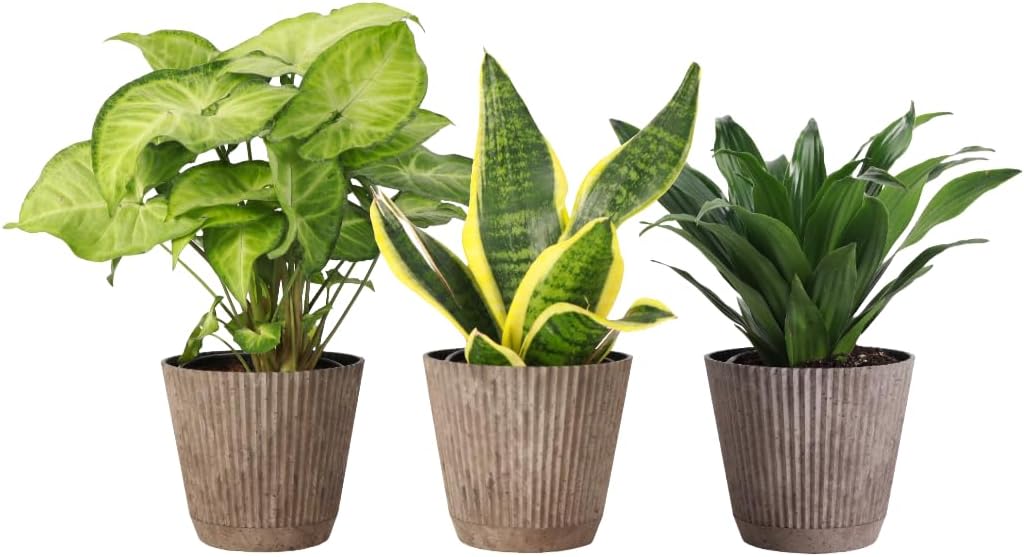
This 3-pack from Thorsen's Greenhouse supplies a small group of low-light houseplants selected by the grower and shipped in 4-inch pots with decorative plastic covers and attached saucers. Designed for dim indoor spots, the collection includes common office-friendly varieties such as pothos, snake plant, and prayer plant depending on what the grower chooses. Care guidance calls for moderate watering—roughly a small amount each week—and occasional diluted fertilizer during the growing season. The decorative pots make it easy to set the plants on a desk or shelf without extra saucers, and the plants are described as low maintenance and tolerant of low to medium light, which is useful in windowless offices. Because the bundle is grower’s choice, you cannot pick specific varieties and plants may show minor shipping stress on arrival that needs a short acclimation period. If you want predictable, specific cultivars or larger specimens, this surprise assortment may feel hit-or-miss, but for someone seeking reliable, low-effort greenery for a no-light office it provides a convenient starter set.
Best for: Office workers or facility managers who need low-effort, low-light greenery for desks, cubicles, or windowless rooms and prioritize dependable, easy-care plants over picking exact varieties.
Less Ideal for: Collectors who want specific cultivars, large statement plants, or immediately showroom-perfect specimens should consider single-variety nursery purchases instead.
- Three ready-potted low-light plants tailored for dim indoor spaces
- Decorative plastic pot covers with attached saucers simplify placement and watering
- Plants labeled low maintenance with simple weekly watering guidance
- Grower-selected assortment makes it easy to add variety without plant-shopping
- Grower’s choice means specific species are not guaranteed
- Plants may show minor wilting or leaf loss from shipping and need an acclimation period
Verdict: If you want a simple, low-maintenance set of plants that tolerate very low light and arrive potted and presentation-ready for an office, this 3-pack is a convenient, reliable choice.
Altman Plants Snake Plant (Laurentii) in 4 in Grower Pot

| Indoor Outdoor Usage | Indoor, Outdoor |
|---|---|
| Other Special Features of the Product | Low Maintenance |
| Sunlight Exposure | Full Sun |
| USDA Hardiness Zone | 10, 11, 12 |
| Soil Type | Sandy Soil |
The Altman Plants Laurentii is a classic variegated snake plant that provides tall, architectural foliage with minimal fuss. Sold fully rooted in a 4-inch grower pot, it is grown to handle typical indoor conditions and is frequently used as a low-light office or home plant to add vertical structure and color. Notable features are its tolerance for a wide range of light levels, drought resilience, and simple watering needs — water only when the top few inches of soil dry out. Because it is hardy and low maintenance it works well on shelves, in corners, or near windows with indirect light and helps improve indoor air quality. Limitations are inherent to the small nursery pot size on arrival, which means you may want to repot within a few months for fuller growth, and it is listed for warm USDA zones if placed outdoors. Overall care is straightforward, making it a reliable pick for someone who wants a durable, low-effort plant.
Best for: Buyers who want a no-fuss, durable houseplant to brighten low-light rooms or busy environments without frequent care. Ideal for people seeking a reliable, easy-care plant that can be left to dry between waterings.
Less Ideal for: Gardeners wanting instant, large statement plants or those who need outdoor-hardy specimens for cooler climates should look elsewhere.
- Very low maintenance and drought tolerant, suitable for irregular watering
- Tolerates low, medium, and bright indirect light, versatile placement indoors
- Variegated leaves add height and visual interest to small spaces
- Arrives fully rooted in a grower pot so it can be displayed immediately
- Ships in a small grower pot which may require repotting for faster growth
- Not cold-hardy outside except in warm USDA zones listed
Verdict: A tough, variegated snake plant that delivers low-light tolerance and minimal care, perfect for practical buyers who want a dependable, low-effort indoor plant.
Plants for Pets Pothos 4-Pack (4" Assorted)

| Indoor Outdoor Usage | Indoor |
|---|---|
| Other Special Features of the Product | Air Purification |
| Sunlight Exposure | Full Sun |
| Moisture Needs | Regular Watering |
| USDA Hardiness Zone | 3 |
This four-pack delivers beginner-friendly pothos varieties that suit low-light rooms and simple indoor care routines. Each plant comes rooted in a 4" nursery pot and the assortment rotates between familiar types such as Marble Queen, Golden, Neon, and Satin, so you get visual variety without extra effort. Pothos are typically grown in hanging planters, on shelves, or trained up a support; they prefer bright, indirect light but tolerate lower light levels that many apartments and offices have. The listing emphasizes air-purifying benefits and gives clear care guidance: allow the soil to dry between waterings and keep temperatures above about 60 F. Practical strengths are resilience, fast trailing growth for a lush look, and compatibility with common indoor spots like living rooms, kitchens, or bathrooms. Limitations are that you may receive different varieties than pictured and plants arrive in small 4" pots, so plan to repot sooner if you want bigger specimens or longer-term display without frequent watering.
Best for: Buyers who want low-maintenance greenery for indoor spaces and prefer reliable, easy-to-care-for plants that tolerate lower light and occasional neglect.
Less Ideal for: Growers seeking large, mature plants ready for instant statement displays or those who want guaranteed, specific rare varieties.
- Easy to grow and tolerant of low to bright indirect light
- Four different varieties provide visual variety in one purchase
- Ships in small nursery pots that establish quickly and are ready for hanging or shelving displays
- Listed care guidance is straightforward for first-time plant owners
- Arrives in 4" pots so plants may need repotting soon for faster growth or long-term display
- Specific varieties are not guaranteed and assortment can vary
Verdict: A simple, low-maintenance way to add trailing, low-light-friendly pothos to your home with minimal fuss.
Choosing the Right Plants for No Light Indoors: Key Factors to Consider
True Low-Light Tolerance
Plants labeled as suitable for low light vary widely in how little light they can actually use. True low-light tolerance means a plant can maintain form and leaf color in rooms with no direct sunlight and minimal ambient light from nearby windows or hallways. Expect slower growth and subdued coloration compared with bright-light placements.
This factor matters because some species merely endure short periods of shade but will eventually become leggy or drop leaves when kept in near darkness. Look for species that are documented to photosynthesize effectively under low photon levels and that exhibit stable foliage retention in interior settings.
Watering Flexibility and Drought Resistance
Indoor rooms with no natural light often have cooler temperatures and lower evaporation rates, so soils stay moist longer. Plants that tolerate erratic watering or light drought cycles will be less likely to develop root rot or suffer from overwatering mistakes.
Watering flexibility affects how much hands-on care the plant needs. Species that prefer to dry slightly between waterings are safer choices in low-light interiors because they are less sensitive to the extended moisture retention common in those conditions.
Resistance to Root Rot and Fungal Issues
Poor air circulation and persistently damp soil in darker rooms create conditions favorable to root rot and fungal pathogens. Plants with robust root systems, natural tolerance to lower oxygen in the root zone, or soil preferences that promote drainage will fare better.
Considering rot resistance is crucial because recovery from root disease in houseplants is often slow and may require repotting or root pruning. Choosing species with known resilience reduces the risk of repeated losses and the need for aggressive interventions.
Growth Habit and Space Compatibility
A plant's natural size and growth rate determine whether it suits tight corridors, small bathrooms, or larger interior foyers. Compact, slow-growing species or those with an upright or clumping habit are easier to manage in constrained, windowless spaces.
Assessing growth habit helps set realistic expectations for pruning, repotting, and the eventual footprint the plant will occupy. Plants that become leggy or sprawling in low light can quickly outgrow a small shelf or tabletop.
Tolerance to Indoor Climate Variability
Rooms without windows often have different temperature swings, lower humidity, and mechanical ventilation. Plants that tolerate a broad range of indoor temperatures and modest humidity levels will cope better with these microclimates.
This matters because delicate tropical species may need high humidity or stable warm conditions to avoid leaf browning. Choosing adaptable plants reduces the need for humidifiers or frequent relocation.
Ease of Maintenance and Recovery
Some plants bounce back quickly from neglect, pruning, or brief pest pressure, while others decline rapidly. Ease of maintenance includes straightforward pruning, simple repotting, and a forgiving response to less-than-ideal care.
For low-light interiors where monitoring may be sporadic, prioritizing easy-to-care-for species minimizes effort and increases the odds that greenery remains attractive and healthy over time.
How Plants Survive with No Natural Light
Plants use whatever light is available to maintain basic functions, but in true windowless rooms their metabolism slows. Many species adapt by growing more slowly, reallocating resources to root systems, or producing darker, thinner leaves that capture limited light more efficiently.
Understanding these survival strategies helps set expectations. You will notice reduced new growth and muted color, but that is typical for low-light conditions and not always a sign of decline.
- Slower growth rate is normal and reduces watering needs
- Darker, larger leaves can indicate light-adaptive changes
- Plants may become more susceptible to pests if under stress
Practical Placement and Light Tricks for Dim Rooms
Even rooms with no windows usually receive some indirect light from doorways, artificial fixtures, or adjacent spaces. Place plants where they get the most available ambient illumination and avoid corners that never see any light at all.
If you want to improve plant performance without constant artificial lighting, rotate plants periodically into brighter rooms for a week or two, or position them near warm, reflective surfaces to maximize any stray light.
- Use reflective walls or light-colored surfaces to boost ambient light
- Rotate plants to brighter spots occasionally to encourage vigor
- Avoid placing plants directly under cool fluorescent fixtures that emit little red spectrum light
Soil, Potting, and Drainage Tips for Low-Light Interiors
Because moisture lingers longer in shaded rooms, choose well-draining potting mixes and containers with reliable drainage. Adding perlite or coarse sand to potting medium improves aeration and reduces the risk of soggy roots.
Match pot size to root mass to avoid excessive soil that holds moisture. Also consider pots with shallow profiles for slow growers so the soil volume does not remain saturated for long periods.
- Always use pots with drainage holes and a loose, airy mix
- Avoid oversized containers that retain excess water
- Top-dress with chunky materials like horticultural grit to speed surface drying
Routine Care: Watering, Feeding, and Pruning in Low Light
Water less often than you would for the same species in brighter locations. Test the top few centimeters of soil and water only when it begins to dry, keeping in mind that slow growth reduces nutrient demand.
Fertilize sparingly and only during the plant's modest growth windows. Prune leggy stems to maintain compact shape and remove yellowing leaves promptly to reduce pest and disease risks.
- Check soil moisture rather than following a strict schedule
- Use a diluted fertilizer during active growth periods only
- Sanitize tools when pruning to prevent disease spread
When Supplemental Light Is Worth Considering
If you want faster growth, stronger form, or brighter foliage color, a modest supplemental light source can make a big difference. Full-spectrum LED grow lights that provide a balanced spectrum and low heat output are efficient for interior use.
Choose lights designed for low-power, long-duration use and position them to provide even coverage. Running lights on a timer to mimic day length helps keep plant cycles steady without manual switching.
- Use full-spectrum LED strips or small panel lights for close-range lighting
- Position lights 30 to 60 centimeters from the foliage for most small houseplants
- Limit daily light exposure to 10 to 12 hours for slow-growing low-light species
How We Chose the Best Plants for No Light Indoors
We selected plants that reliably survive in interior rooms with little to no direct natural light. Our editorial filters prioritized species with documented tolerance for low photon flux, slow or adaptable growth habits, and resilience to the common stressors of indoor environments, such as low air circulation and variable humidity. Evaluation criteria included minimum light tolerance, watering flexibility and drought tolerance, resistance to root rot and fungal issues, growth habit and space suitability, and pest resistance. We excluded species that require seasonal dormancy under strong light or frequent bright conditions, and plants that need specialized soils or horticultural treatments to thrive indoors. Sources for these criteria were horticultural guides and gardener observations about real-world indoor performance. The resulting shortlist favors easy-care specimens that perform predictably under typical household conditions and require only routine maintenance rather than specialized horticultural skills.
FAQ
Can any plant live in a completely windowless room?
Few plants truly thrive in completely windowless rooms long-term. Some species tolerate very low light and will survive with minimal growth, but most need occasional access to brighter conditions or supplemental lighting to remain robust.
How often should I water plants in rooms with no natural light?
Water much less frequently than for the same plant in a bright room. Check the top few centimeters of soil and water only when it begins to dry. Overwatering is a common cause of decline in low-light interiors.
Are artificial lights necessary for plants in dim spaces?
Artificial lights are not strictly necessary for tolerant low-light species, but they help maintain better form and color. A small full-spectrum LED can improve growth without high energy use if you want healthier-looking plants.
What are the common risks of keeping plants in no-light areas?
Common risks include slow, leggy growth, increased susceptibility to pests and fungal issues from stagnant air and moist soil, and leaf drop from stress. Good drainage and conservative watering reduce these problems.
Can rotating plants into brighter rooms help them?
Yes. Rotating a low-light tolerant plant into a brighter spot for short intervals can stimulate growth and recovery. Make rotations gradual to avoid light shock and monitor watering needs when plants return to darker locations.
How should I adjust feeding for plants kept in no light indoors?
Reduce fertilizer frequency and concentration because growth is slow and nutrient uptake is limited. Feed sparingly during the plant's active growth windows and skip feeding during prolonged dormancy or stress.
Final Verdict
Choose plants for no light indoors with realistic expectations: slow growth, muted foliage, and low maintenance. Prioritize species with proven low-light tolerance, forgiving watering needs, and resistance to rot and pests. Balance space constraints and maintenance commitment when selecting specimens, and use occasional rotation or modest supplemental lighting if you want stronger growth. Focusing on these tradeoffs will help you keep interior rooms green with minimal effort.
