

Note: This article contains affiliate links. If you click on these links and make a purchase, I may earn a small commission at no extra cost to you. This helps support my research and content. Read my full affiliate disclosure here.
When chinch bugs invade, they can quickly turn healthy turf into brown, patchy areas. Choosing the right lawn insecticide for chinch bugs matters because treatment speed, residual control, and turf safety determine whether the grass recovers or the damage spreads. This guide covers our top shortlisted options for treating chinch bug outbreaks and explains how each product type behaves in real lawn conditions. We evaluated candidates for rapid knockdown, residual protection, turf compatibility, and application practicality. Below are the picks that met those standards and the decision factors you should weigh before treating your lawn.
Top Picks at a Glance
| Best Overall The best all-around choice for most situations | Quali-Pro Bifenthrin I/T 7.9F Insecticide, 1 Gallon |  |
| Best Quality Built to a higher standard if you want something more solid | Agrisel Bifenthrin Pro 7.9 Insecticide, 1 Gallon |  |
| Best Budget The cheapest option that still gets the job done reliably | Spectracide Triazicide Insect Killer for Lawns & Landscapes, 32 oz |  |
| Highest Rated A top-rated pick with lots of positive feedback | The Andersons GrubOut Plus Lawn Food 17-0-3 (40 lb) |  |
| Most Popular A crowd favorite that many people choose with confidence | Ortho Bug B Gon Insect Killer for Lawns, 20 lb |  |
| Best Seller A high-volume bestseller chosen again and again | Atticus Talak 7.9% Bifenthrin Indoor/Outdoor Insecticide Concentrate, 32 oz |  |
Quali-Pro Bifenthrin I/T 7.9F Insecticide, 1 Gallon

| Item Form | Spray |
|---|---|
| Target Species | Termites, Carpenter Ants |
| Liquid Volume | 1 gallons |
| Active Ingredients | Bifenthrin |
This one-gallon Quali-Pro Bifenthrin I/T 7.9F is a flowable pyrethroid designed for preventive and residual control of a broad range of pests in lawns and landscaped areas. It is typically mixed and applied as a spray to turf, ornamental beds, foundations and around structures to suppress termites, carpenter ants, fleas, ticks, mites and similar pests. Key features include a long-lasting residual, compatibility with many turf and ornamental tank-mix partners, and a no-odor, non-irritating formulation that dries without visible residue. In practice it provides dependable knockdown and weeks of protection when applied at recommended rates, making it suited for routine perimeter treatments and spot-control of persistent infestations. Important limitations are that it is a concentrated professional-style product requiring careful dilution, protective equipment, and adherence to label directions for safe use around people, pets and desirable plants. It is not a ready-to-use consumer spray and should be used only where labeled.
Best for: Buyers who prioritize a reliable, long-lasting perimeter or spot-treatment solution for recurring or hard-to-control outdoor pests and who are comfortable following label directions and using concentrated products.
Less Ideal for: Casual users who want a simple ready-to-use spray for occasional bug bites or very small lawns should consider consumer-grade aerosols or hose-end products instead.
- Long-lasting residual control effective against termites, carpenter ants and other pests
- Compatible with herbicides, fungicides, insecticides and liquid fertilizers for tank mixes
- No-odor, non-irritating formula that dries with no visible residue
- Available in a one-gallon concentrated flowable for multiple applications
- Concentrated product requires dilution and protective equipment for safe handling
- Not intended as a ready-to-use consumer spray and may be overkill for very small yards
Verdict: Choose this product when you need a dependable, long-lasting concentrated insecticide for routine perimeter and spot treatments in lawns and ornamentals.
Agrisel Bifenthrin Pro 7.9 Insecticide, 1 Gallon

| Item Form | Liquid |
|---|---|
| Liquid Volume | 1 gallons |
Agrisel Bifenthrin Pro 7.9 is a one‑gallon liquid concentrate designed to control a wide range of outdoor pests, including stink bugs, ants, spiders, fleas, ticks, and mole crickets. Typically mixed with water and applied with a pump sprayer or hose-end applicator, the product is intended for use on lawns, ornamental plantings, and around building entry points. Notable features include a low use rate that stretches coverage per gallon and label guidance for application rates across vegetation densities. In practice it provides residual control when applied to foliage and perimeter areas, which helps reduce re‑infestation of stink bugs and other crawling insects. The formula is labeled to be safe for pets once surfaces are fully dry, and monthly reapplications are suggested for ongoing protection. Important limitations are that it is a chemical insecticide requiring careful handling and compliance with label restrictions, and some users may prefer non‑chemical or targeted traps for indoor or sensitive‑area control. Also sale restrictions prevent purchase in a few states, so check local rules before planning treatments.
Best for: Buyers who prioritize reliable, performance‑driven outdoor pest control for lawns or ornamental plantings and who are comfortable using concentrated insecticides responsibly.
Less Ideal for: Those seeking non‑chemical solutions, sensitive‑area treatments, or indoor‑only control should consider alternative methods.
- Broad spectrum efficacy against common outdoor pests including stink bugs
- Concentrated formula with low usage rates for economical coverage
- Labeled for multiple environments: lawns, ornamentals, and agricultural use
- Residual activity when applied to foliage and perimeter areas
- Requires careful mixing, PPE, and adherence to label directions as a chemical insecticide
- Not appropriate for indoor use or where chemical-free control is required
Verdict: Choose this bifenthrin concentrate if you want a performance‑focused, economical outdoor insecticide that delivers residual control against stink bugs and other common pests.
Spectracide Triazicide Insect Killer for Lawns & Landscapes, 32 oz
| Unit Count | 32 Ounce |
|---|---|
| Item Form | Spray |
| Target Species | Insects |
| Active Ingredients | Gamma-Cyhalothrin (0.08%) |
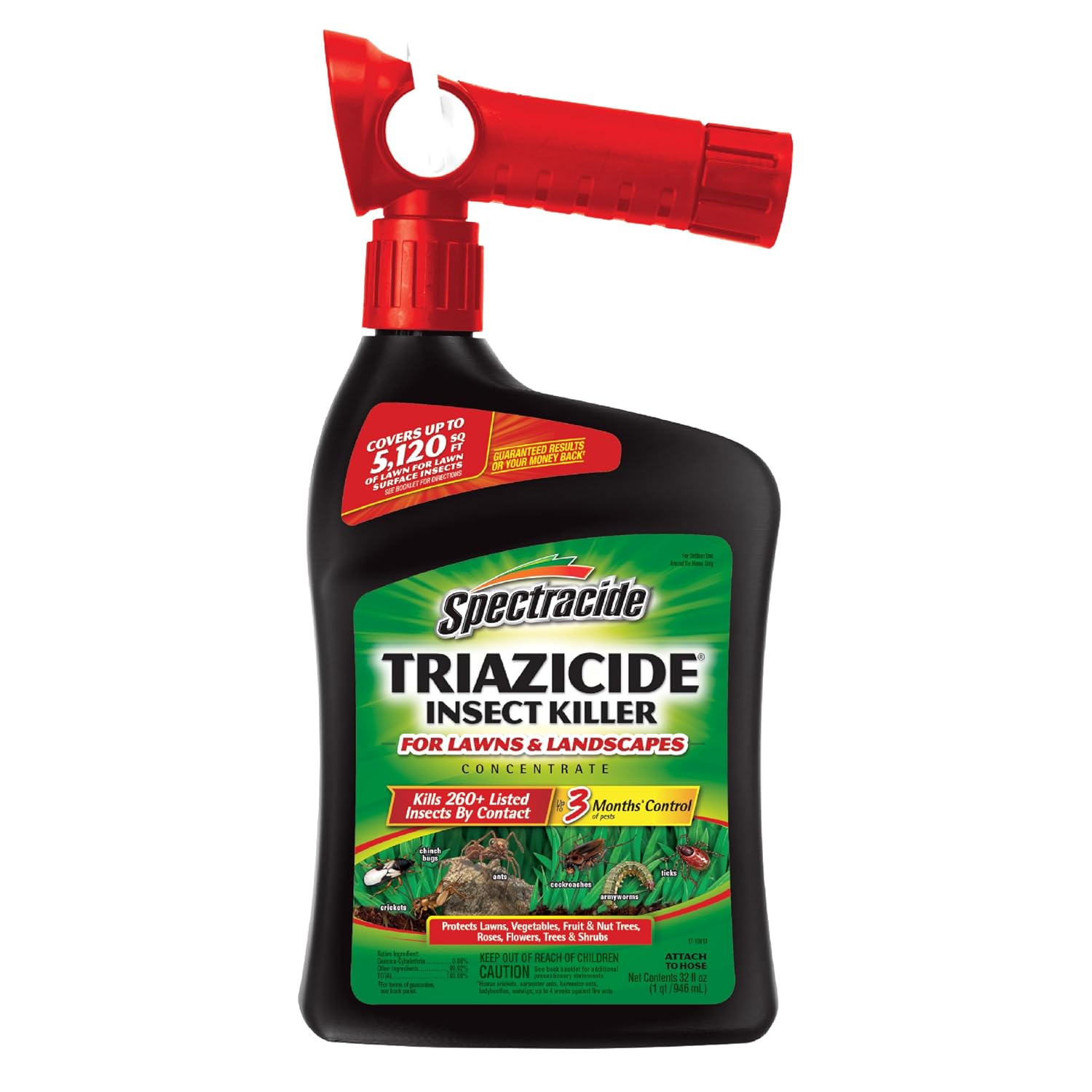
Spectracide Triazicide is a 32-ounce concentrate formulated to control more than 260 listed insects on lawns, flower beds, trees, shrubs and around vegetables. You mix the concentrate with water and apply it with a tank or hose-end sprayer; the ready-to-spray variant can attach to a garden hose for quicker application. The active ingredient, gamma-cyhalothrin, delivers fast contact kill for pests such as fleas, ticks, Japanese beetles and many surface insects, and the label claims protection for up to three months in some uses. It is non-staining when used as directed and can treat large areas, making it practical for whole-yard applications and targeted mound treatments like fire ants. Important limitations include toxicity to fish and bees, so it must not be applied near water or blooming plants, and the product requires careful handling and adherence to safety directions. Follow mixing rates and timing recommendations for best results and to minimize environmental risk.
Best for: Buyers who need an affordable, large-area solution to knock down common lawn and landscape pests and prefer a concentrate that stretches coverage when mixed.
Less Ideal for: People with small ornamental gardens near ponds, homeowners who prioritize pollinator-safe products, or those unwilling to follow pesticide safety precautions should consider gentler or targeted alternatives.
- Concentrate covers large areas so a single bottle treats many square feet when mixed correctly
- Fast-acting contact kill for a wide range of listed insects including fleas, ticks and Japanese beetles
- Versatile use on lawns, flower beds, trees, shrubs and around vegetables
- Non-staining when used as directed and available in hose-end ready-to-spray format for easier application
- Highly toxic to aquatic life and bees so it cannot be used near water or blooming plants
- Requires careful mixing and protective handling due to chemical toxicity
Verdict: A cost-effective, fast-acting concentrate for treating broad lawn and landscape pest problems when used with care and proper precautions.
The Andersons GrubOut Plus Lawn Food 17-0-3 (40 lb)

| Item Form | Granules |
|---|---|
| Target Species | Insects |
| Special Features | organic |
| Unit Count | 640 Ounce |
The Andersons GrubOut Plus 17-0-3 is a granular lawn treatment that pairs a professional fertilizer with a grub-control insecticide so you feed your turf while preventing grub damage. It is applied with a broadcast spreader or by hand for spot treatment, then must be watered in immediately to activate. The label recommends timing applications before grubs hatch for best prevention but allows use whenever grubs or damage are first noticed. Notable features include a 17-0-3 nutrient ratio for turf health, applicability across turf and ornamental beds, and specific spot rates for ant mounds. Practical benefits are dual-action convenience, coverage for multiple insect targets, and clear application guidance for longer control when higher rates are used. Important limitations are state sale restrictions that exclude several states and the need to follow safety precautions and watering steps carefully for safe, effective results. This product is heavy bulk granular material intended for regular lawn maintenance rather than quick knockdown sprays for visible surface pests.
Best for: Buyers who prioritize a dependable, professional lawn-care approach and want a single granular product that both nourishes turf and prevents grub-related damage across a whole yard.
Less Ideal for: Homeowners who need a fast-acting spray for visible surface pests or those living in states where this product is restricted should consider other local options.
- Combines fertilizer and grub preventer so one application feeds turf and controls grubs
- Professional-grade nutrient formula (17-0-3) tailored for lawn health
- Can be applied preventively or when grub damage is first noticed
- Clear application guidance including spot-treat rates and need to water in
- Suitable for use in lawns and landscaped ornamental areas
- Not available for sale in multiple states which limits where it can be used
- Requires immediate watering-in and adherence to safety directions for effective control
Verdict: Choose this product if you want a reliable, all-in-one granular treatment that feeds your lawn while preventing grubs so you can protect turf with a single application.
Ortho Bug B Gon Insect Killer for Lawns, 20 lb

| Brand | Ortho |
|---|---|
| Included Components | granular |
| Manufacturer | The Scotts Company LLC |
| Target Species | Insects |
Ortho Bug B Gon is a granulated insect killer formulated for lawns and perimeter treatment that targets chinch bugs along with ants, fleas, ticks, mole crickets and other listed pests. You spread it with a broadcast or drop spreader over turf, ornamentals or around the home and it begins killing insects both above and below the soil surface; the label states protection can last up to three months. Its granule format makes it straightforward to treat large areas quickly and the product claims coverage for thousands of square feet, which is useful for homeowners managing whole lawns. Notable features are the broad target list and the option to use around listed vegetable gardens. Limitations are inherent to granular insecticides: coverage depends on even spread and proper application rate, it can take time for soil activity to develop, and you must follow label restrictions for edible plants and sensitive areas. For buyers who want a proven, easy-to-apply granular option for seasonal chinch bug control, this is a practical choice.
Best for: Homeowners who prioritize proven, easy-to-apply seasonal control for chinch bugs and other common lawn pests and who prefer a granular product they can apply themselves with a spreader.
Less Ideal for: People seeking an immediate spray knockdown or spot treatment solution or those who need insect control inside the home should consider a liquid or targeted spray alternative.
- Broad-spectrum formula that lists chinch bugs plus many other lawn pests
- Granular form works with standard spreaders for fast coverage of large lawns
- Claims up to three months of residual control after application
- Labeled for use on lawns, ornamentals and around the home including some listed edibles
- Effectiveness depends on even application and correct spreader settings
- Requires following label restrictions for vegetable gardens and sensitive areas
Verdict: Choose this granular treatment if you want a straightforward, broad‑spectrum, seasonal solution for chinch bugs and other common lawn insects applied with a standard spreader.
Atticus Talak 7.9% Bifenthrin Indoor/Outdoor Insecticide Concentrate, 32 oz

| Active Ingredient | Bifenthrin |
|---|---|
| Formulation | Suspension Concentrate |
| Liquid Volume | 32 fluid ounces |
| Length of Control | Up to three months |
| Target Species | Insects |
Talak 7.9% is a liquid concentrate for treating lawns, landscaping, outdoor living areas and indoor perimeter spots like baseboards and cabinets. You dilute the concentrate with water to create a spray for barrier treatments, spot applications or lawn mixes; label rates explain how much to mix per gallon depending on the use. The product uses bifenthrin, a proven broad-spectrum active ingredient, and the manufacturer states it controls over 75 species and can give residual control for as long as three months. Its water-based formula dries clear, leaves no odor or visible residue, and is not phytotoxic on plants when used per label. Practical benefits include flexible indoor and outdoor use, clear drying, and a bottle designed for easier pouring. Important limitations are that solutions should be mixed only for same-day use, it is not registered for sale in a few states, and it is not approved for fogger application, so professional-style misting methods are not appropriate.
Best for: Buyers who want a single, reliable product to protect yards, patios and building perimeters from a wide range of common pests and prefer conservative, label-driven application practices.
Less Ideal for: People seeking ready-to-use sprays or fogger-compatible products or those in states where this formulation is not registered should look at alternatives.
- Broad-spectrum control listed for 75+ indoor and outdoor pest species
- Water-based formula that dries clear and leaves no odor or residue
- Flexible label directions for lawns, landscapes, hardscapes and indoor perimeter treatments
- Long residual activity up to three months when applied at recommended rates
- Mixed spray solutions cannot be stored and must be used the same day
- Not approved for fogger application and not available for sale in some states
Verdict: A versatile, water-based bifenthrin concentrate that delivers long-lasting, broad-spectrum outdoor (and perimeter indoor) control when used according to the label.
Choosing the Right Lawn Insecticide for Chinch Bugs: Key Factors to Consider
Knockdown Speed and Initial Control
How quickly an insecticide immobilizes or kills chinch bugs is critical during an active outbreak. Fast knockdown stops feeding damage sooner, which helps preserve leaf tissue and prevents expanding dead patches. In practice, products with contact activity often produce visible improvement within days, while slower-acting systemic options may take longer to show results. When choosing, match the expected response time to the severity of the infestation and your lawn recovery goals.
Remember that rapid insect mortality can require follow-up treatments to address eggs or late-hatching nymphs. Also consider whether the product label recommends combining with cultural measures like watering or dethatching to improve contact with pests.
Residual Activity and Reapplication Frequency
Residual control determines how long a treatment keeps chinch bugs suppressed after application. Longer residuals reduce the need for repeat treatments during the peak season, which can lower overall effort and disturbance to the lawn. However, persistent residues may have greater non-target impacts and might not be necessary for small or isolated infestations.
Consider your local climate and grub lifecycle when judging residual needs. Heavy rainfall or frequent irrigation can shorten residual effectiveness for contact products, while some systemic chemistries maintain turf protection through root uptake for several weeks.
Turf Compatibility and Phytotoxic Risk
Not all lawns react the same to every insecticide. Turf species, existing stress from drought or heat, recent fertilization, and mowing height all influence phytotoxic risk. An otherwise effective product can burn or discolor grass if applied during heat stress or at incorrect rates.
Read and follow label directions about temperature restrictions, watering before or after treatment, and recommended intervals after fertilizing or overseeding. Prefer formulations and application windows that match your grass type and seasonal maintenance to minimize visible damage.
Application Method and Practicality
How a product is applied affects coverage, effectiveness, and the time you spend treating the lawn. Granular products are easy to broadcast and reduce direct chemical handling, but may require irrigation to activate and can sit on thatch if not applied properly. Liquid sprays give better coverage on thatch and crown areas but need calibration of spreaders or sprayers and careful mixing.
Think about the equipment you own, the size of the treated area, and your comfort with mixing concentrates. Ease-of-application also ties to label clarity and the availability of homeowner-friendly formats.
Environmental and Non-target Safety
Consider risks to pollinators, beneficial insects, nearby water, and pets. Some active ingredients break down quickly and have lower risk to non-targets, while others are broader in activity and require more caution. Timing applications to avoid bee foraging periods and following buffer guidelines near water features reduce unintended impacts.
Look for clear label instructions about protected species, buffer zones, and pet re-entry intervals. Choosing formulations and application timings that minimize off-target drift and runoff helps protect the lawn ecosystem.
Resistance Management and Active Ingredient Rotation
Chinch bugs, like many pests, can develop tolerance to repeated use of the same chemistry. Rotating between different modes of action reduces selection pressure and preserves long-term control options. The label often lists the active ingredient group or mode of action, which helps plan rotations across the season.
Combine chemical strategies with cultural practices such as improving irrigation, reducing thatch, and promoting vigorous turf growth to lower pest pressure and delay resistance development.
When to Treat and How to Confirm Infestation
Treat when you find active feeding and increasing brown patches that expand over days. Confirm chinch bugs by inspecting turf crowns and thatch on warm, sunny days when they are most active. Use a small probe or a cup-with-water test: disturbing a square of sod or placing a shallow cup over turf and filling with water often forces bugs to the surface for easier identification.
Early detection gives the best outcomes because smaller infestations respond faster and need less area-wide treatment. If you are unsure, check multiple spots across the lawn and look for the characteristic yellowing that begins near sidewalks, driveways, or areas with thin turf.
- Inspect during warm, bright conditions when chinch bugs are active
- Check along lawn edges and stress-prone zones first
- Sample several locations rather than judging from a single patch
Cultural Controls That Reduce Chinch Bug Pressure
Cultural practices can make a lawn less hospitable to chinch bugs and reduce reliance on insecticides. Increasing mowing height, improving irrigation timing, and reducing drought stress all promote denser, more competitive turf that tolerates minor feeding.
Address excessive thatch and compacted soil because these conditions provide shelter and favorable microclimates for chinch bugs. Aeration, overseeding with appropriate grass cultivars, and balanced fertility help restore turf vigor and reduce future outbreaks.
- Raise mowing height to shade soil and slow heat stress
- Aerate to reduce compaction and improve root vigor
- Throttle irrigation to morning hours to avoid encouraging pests
Timing Applications With Weather and Lawn Care
Weather plays a big role in treatment success. Avoid applying insecticides before heavy rain unless the product label indicates rainfastness, because wash-off reduces efficacy. Apply when temperatures are moderate to reduce turf stress and avoid high-heat windows that can worsen phytotoxicity.
Coordinate applications with other lawn tasks. For example, postpone fertilization or herbicide treatments unless labels endorse tank-mixing. Mowing a day or two before application can improve coverage, but avoid scalping or applying to drought-stressed turf.
- Check the forecast and skip applications ahead of heavy rain
- Avoid treatments during midday heat spikes
- Space other lawn inputs to reduce combined stress on grass
Spot Treatment Versus Area-Wide Application
Small, localized outbreaks often respond to spot treatments that reduce chemical use and labor. For spot control, focus applications on the crown and thatch where chinch bugs feed. Larger or spreading infestations may require area-wide treatment to halt further damage.
Weigh the size of the infestation, the visibility of damage, and your ability to monitor treated areas before choosing between targeted and blanket applications. Spot treatments need diligent follow-up to catch reinfestation early.
- Use spot treatments for isolated patches under 10 percent of total lawn
- Choose area-wide applications when multiple zones show active damage
- Reinspect spots 7 to 14 days after treatment to confirm control
Safety Steps During and After Application
Follow label directions for personal protective equipment, mixing, and application rates. Keep people and pets off treated areas for the interval specified on the label and avoid allowing runoff into storm drains or water features. Store unused product securely and clean equipment after each use.
If accidental over-application occurs, irrigate only if the label allows and follow emergency guidance. Proper disposal of leftover product and containers prevents environmental contamination.
- Wear recommended gloves and eye protection during mixing
- Observe re-entry intervals for pets and children
- Calibrate spreaders and sprayers to avoid over-application
How We Chose the Best Lawn Insecticide for Chinch Bugs
We focused on measures that matter in a working lawn: immediate knockdown of chinch bugs to stop active feeding, residual efficacy to prevent reinfestation, and formulation characteristics that affect turf health and safety. We prioritized products with proven modes of action against sap-sucking insects and those that pair well with common lawn grasses and maintenance routines. Application practicality and label clarity were included so gardeners can apply products safely and effectively. Excluded items included broad-spectrum products that lack specific efficacy claims for chinch bugs, insecticides labeled only for ornamentals or non-turf uses, and formulations that require professional-only licensing. Our selection emphasized options that balance fast control with low phytotoxic risk when used as directed. Evaluation criteria incorporated knockdown speed, length of residual control, turf safety under typical mowing and irrigation, and ease of application. We also considered active ingredient diversity to reduce resistance risk and clarity of label instructions for safe homeowner use.
FAQ
How soon will treated areas show improvement after applying a chinch bug insecticide?
Improvement can appear within a few days for contact insecticides that produce fast knockdown, while systemic treatments may take a week or more as the chemical moves into plant tissue. Recovery speed also depends on turf health prior to treatment and whether supplemental watering or repair is done.
Can I treat during hot, dry weather?
Treating in extreme heat or drought increases the risk of turf damage. When possible, apply during cooler parts of the day and avoid treating newly fertilized or severely drought-stressed lawns. Follow label guidance about temperature restrictions to reduce phytotoxic risk.
Is irrigation needed after applying granular or liquid products?
Some granular products require light irrigation to activate, while many liquid formulations recommend avoiding heavy watering immediately after application to maintain contact. Check the product label for specific irrigation timing and amounts to optimize efficacy.
How often should I reapply to manage chinch bugs?
Reapplication intervals depend on the product's residual claim and pressure from local populations. Many options call for follow-up after two to four weeks if activity persists. Rotate active ingredients between applications to reduce resistance risk.
Will treating for chinch bugs harm pollinators or beneficial insects?
Some insecticides pose greater risks to non-target insects than others. To reduce impacts, avoid spraying flowering plants, time applications for low pollinator activity, and follow label precautions about protected species. Choosing targeted application methods can also help protect beneficials.
Final Verdict
When treating chinch bugs, prioritize products that deliver quick knockdown without stressing the turf and plan follow-up measures based on residual protection. Match application timing and method to your lawn's condition and local weather to reduce phytotoxic risk and maximize control. Balance chemical controls with cultural practices and rotate active ingredients to manage resistance. With careful selection and correct application, you can stop chinch bug damage and restore a healthy, resilient lawn.
