

Note: This article contains affiliate links. If you click on these links and make a purchase, I may earn a small commission at no extra cost to you. This helps support my research and content. Read my full affiliate disclosure here.
When you manage a vegetable patch you need pest control that protects crops without harming beneficials or leaving toxic residues. Choosing the right natural insecticide for vegetable gardens affects harvest quality, pollinator safety, and how often you must reapply. This guide shortlists seven top options suited to home vegetable plots and explains practical tradeoffs gardeners face. We evaluate products for pest range, safety around edible plants, ease of use, and effects on beneficial insects. Read on to find options that match the pests, planting system, and stewardship goals in your garden.
Top Picks at a Glance
| Best Overall The best all-around choice for most situations | Grower's Ally Crop Defender 3 Concentrate, 24 oz |  |
| Best Quality Built to a higher standard if you want something more solid | AgroMagen GrowSafe Organic Miticide & Fungicide (33.8 fl oz) |  |
| Best Value The sweet spot between price and what you get | Bonide Captain Jack's Bt Thuricide Ready-to-Use Spray, 32 oz |  |
| Best Budget The cheapest option that still gets the job done reliably | BioAdvanced Organics Neem Oil Spray, Ready-to-Use, 24 fl oz |  |
| Highest Rated A top-rated pick with lots of positive feedback | Lost Coast Plant Therapy 1 Gallon Natural Miticide, Fungicide, Insecticide (Concentrate) |  |
| Most Popular A crowd favorite that many people choose with confidence | Bonide Captain Jack's Ready-to-Use Neem Oil Spray, 32 oz |  |
| Best Seller A high-volume bestseller chosen again and again | Bonide Captain Jack's Deadbug Brew 16 oz Concentrate |  |
Grower's Ally Crop Defender 3 Concentrate, 24 oz

| Item Form | Liquid |
|---|---|
| Target Species | Insects, Plant Pathogens, Fungus |
| Active Ingredients | Thyme Oil, Rosemary Oil, Clove Oil, Peppermint Oil |
| Unit Count | 24 Fluid Ounces |
| Specification Met | OMRI |
Grower's Ally Crop Defender 3 is a ready-to-dilute botanical concentrate designed for weekly use in vegetable and ornamental plantings to knock down powdery mildew, spider mites, thrips, aphids and other soft-bodied pests on contact while also suppressing fungal pathogens. It mixes into spray solution and is formulated from thyme, rosemary, clove and peppermint oils with a built-in surfactant, so it acts as a miticide, insecticide and fungicide without synthetic pesticides or heavy metals. Practical benefits for a vegetable garden include OMRI listing for organic use, no re-entry interval and the ability to apply through all growth stages up to harvest, which makes timing applications flexible. The product is described as low-toxicity and bee-safe when used as directed, and multiple concentrate sizes let you scale from small beds to larger plots. Important limitations are that it is a contact treatment rather than a systemic product, so coverage and repeat applications are necessary for good control, and it may be less effective against hardier or hidden pests. Expect to follow label rates and spray thoroughly for best results.
Best for: Gardeners who want an all-purpose, low-toxicity spray that handles mites, common insects, and mildew across small to mid-size vegetable plots while fitting an organic integrated pest management approach.
Less Ideal for: Growers needing systemic long-term control or who require a single-application solution for soil-borne pests or deeply hidden infestations.
- Triple-action formula controls mites, soft-bodied insects, and fungal pathogens in one product
- OMRI listed and FIFRA 25(b) exempt, making it suitable for organic vegetable gardens
- Built-in surfactant improves spray coverage so active botanicals reach pests and spores
- Can be applied through all growth stages and up to harvest for flexible timing
- Contact-only activity requires thorough coverage and repeated applications for lasting control
- May be less effective on pests hidden in buds, soil, or under heavy foliage
Verdict: A versatile, OMRI-listed botanical concentrate that gives vegetable gardeners a low-toxicity weekly spray to manage mites, soft-bodied insects, and mildew when applied thoroughly and regularly.
AgroMagen GrowSafe Organic Miticide & Fungicide (33.8 fl oz)

| Item Form | Oil |
|---|---|
| Target Species | spider mites, whiteflies, aphids, powdery mildew, downy mildew |
| Liquid Volume | 8.5 fluid ounces |
| Active Ingredients | Corn Oil, Soybean Oil |
GrowSafe is a plant-based oil formulation designed for season-long pest and powdery mildew control in vegetable gardens and indoor plants. You mix the concentrate with water and apply as a foliar spray to treat spider mites, whiteflies, aphids and fungal spots on tomatoes, peppers, greens and herbs as well as ornamentals. The product’s corn and soybean oil base is formulated to mix stably with water, which helps reduce leaf burn and stomatal clogging compared with some horticultural oils. It is labeled safe for use on food crops through harvest and is described as low-toxicity for people, pets and beneficial insects when used as directed. Practical benefits include suitability for seedling through harvest, indoor and greenhouse use, and being a gentler neem alternative with less odor and residue. Limitations are that it is an oil-based contact treatment so it works best on direct spray coverage and may require repeat applications for severe infestations; it does not provide systemic protection or long residual control against new incoming pests.
Best for: Vegetable gardeners and small-scale growers who prioritize organic, low-toxicity pest and disease control and want a product they can use safely on edible crops throughout the season.
Less Ideal for: Large-scale growers seeking long-lasting systemic control or single-application knockdown for severe outbreaks should consider professional or systemic alternatives.
- Made from food-grade, plant-based oils suitable for edible crops
- Formulated to mix stably with water to reduce leaf burn and residue
- Effective contact control for mites, whiteflies, aphids and powdery/downy mildew
- Safe for use around people, pets and many beneficial insects when used as directed
- Works by contact so full coverage and repeat applications are needed for heavy infestations
- Not systemic so it will not protect new growth once applied
Verdict: Choose GrowSafe when you need a food-safe, plant-based foliar spray for organic, season-long contact control of mites and powdery mildew in vegetable gardens.
Bonide Captain Jack's Bt Thuricide Ready-to-Use Spray, 32 oz

| Unit Count | 32 Ounce |
|---|---|
| Item Form | Spray |
| Target Species | Insects |
| Active Ingredients | Bacillus Thuringiensi,Lapidapteran Active Toxins |
Bonide Captain Jack's Bt Thuricide is a ready-to-use biological spray that delivers Bacillus thuringiensis (Bt) to control caterpillars and worm-stage insects. You apply it with the trigger sprayer directly to the tops and undersides of leaves when you first see feeding damage; it is labeled for use on vegetables, fruit, shade trees and ornamentals and can be used up to the day of harvest on edibles. Because it kills by ingestion, treated pests stop feeding within a couple of days while birds, earthworms and many beneficial insects are largely unharmed. The product is convenient for small-to-medium infestations since it needs thorough coverage and repeat applications for new larvae. It is approved for organic gardening and comes in a 32-ounce bottle that is easier to use than concentrates for spot treatments, but using a ready-to-use bottle across a large property can become time consuming compared with hose-end or pressurized sprayers.
Best for: Gardeners who prioritize proven, low-risk biological control and want an easy spray for spot treating caterpillars on edible and ornamental plants; ideal for those who value safety around beneficials and pets.
Less Ideal for: People needing fast-contact knockdown for a large-scale outbreak or who must treat many acres quickly should consider concentrates or professional application methods instead.
- Targets caterpillars and worm-stage pests with a proven Bt active ingredient
- Safe for use on edible plants up to day of harvest when label directions are followed
- Ready-to-use trigger bottle requires no mixing for quick spot treatments
- Labeled for a wide range of plants including vegetables, ornamentals and shade trees
- Requires insects to ingest product so results are not immediate and depend on good spray coverage
- Ready-to-use bottle is less efficient for treating large areas compared with concentrates or hose-end applicators
Verdict: A convenient, organic-ready Bt spray that reliably controls caterpillars and worm pests while protecting beneficials, ideal for careful gardeners treating spot infestations.
BioAdvanced Organics Neem Oil Spray, Ready-to-Use, 24 fl oz

| Unit Count | 24 Fluid Ounces |
|---|---|
| Item Form | Oil |
| Target Species | Spider |
| Specification Met | OMRI |
| Active Ingredients | Clarified Hydrophobic Extract of Neem Oil 0.9% |
This BioAdvanced Organics Neem Oil spray is a ready-to-use 3-in-1 treatment for home gardeners who need broad protection from both pests and common fungal diseases. The trigger bottle applies neem oil in a clarified hydrophobic extract formulation that kills eggs, larvae, and adults of listed insects such as aphids, whiteflies, and spider mites on contact while also helping prevent and control fungal problems like black spot, powdery mildew, and rust when used on a 7 to 14 day schedule. It is labeled for roses, flowers, vegetables, fruits and shrubs and can be used up to the day of harvest, making it suitable for edible gardens. Practical benefits include convenience of a pre-mixed spray, multi-target control in one treatment, and OMRI recognition for organic gardening. Limits to expect are that it is a contact-based product so full coverage is required for effectiveness and repeated applications are needed for prevention, and results can be slower than synthetic pesticides for heavy infestations. The bottle is best for small to medium gardens and spot treatments rather than large-scale applications.
Best for: Gardeners who want a single, organic-friendly spray to manage common insects and fungal issues on roses, ornamentals, and edible plants without mixing concentrates.
Less Ideal for: Those managing very large beds or commercial plantings who need high-volume coverage or fast knockdown from systemic synthetic products should consider concentrate or professional options.
- Ready-to-use trigger spray for easy application
- Combines insecticide, miticide, and fungicide action in one product
- Labeled for use on edible plants and permitted up to day of harvest
- OMRI listed formulation suitable for organic gardening
- Effectiveness depends on thorough coverage because it works primarily on contact
- Requires repeated applications on a regular schedule for disease prevention
Verdict: A convenient ready-to-use organic neem spray that gives home gardeners broad, multi-purpose protection against common insects and fungal diseases.
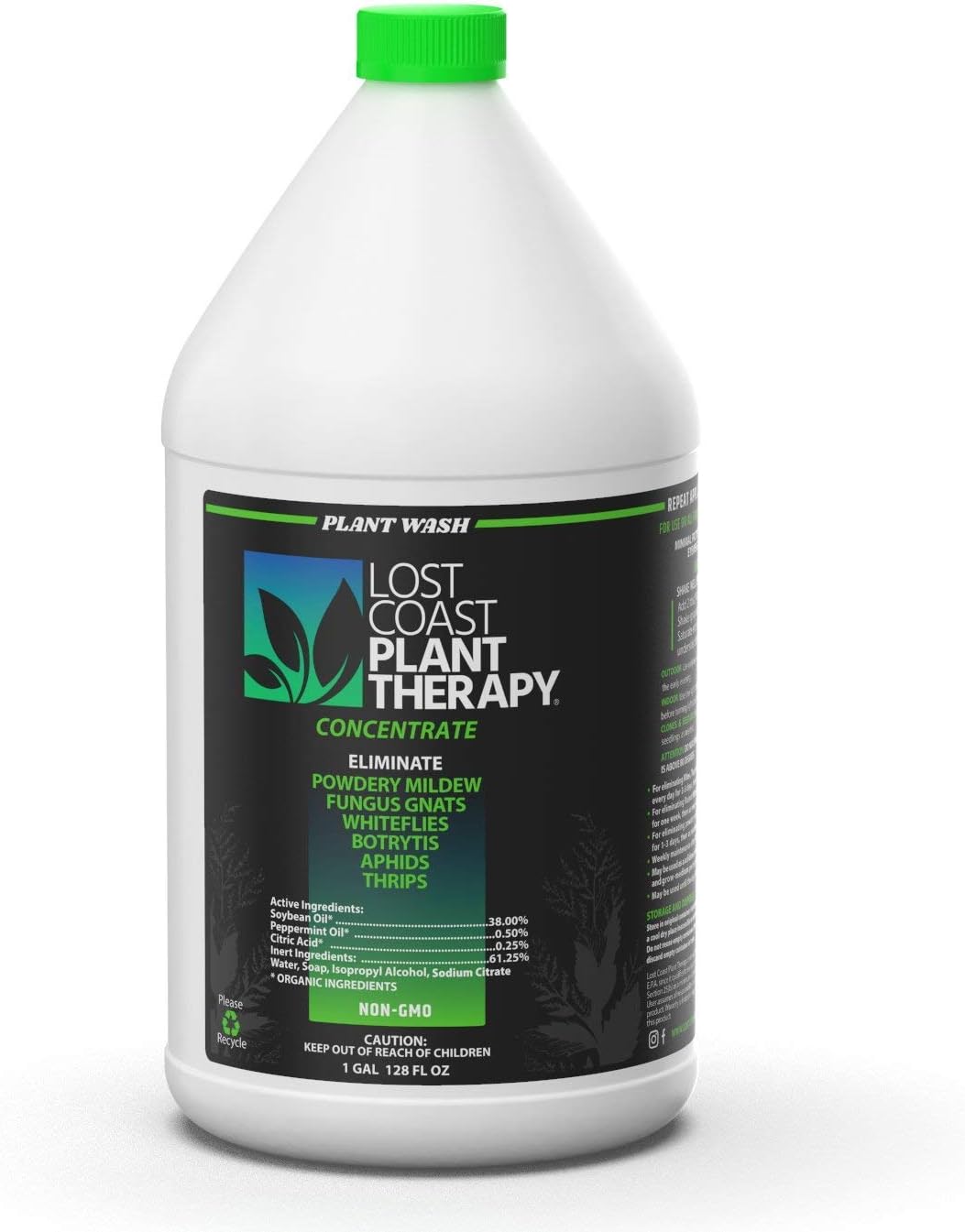
Lost Coast Plant Therapy 1 Gallon Natural Miticide, Fungicide, Insecticide (Concentrate)
| Item Form | Spray |
|---|---|
| Target Species | Insects |
| Special Features | Organic, natural, concentrate |
| Liquid Volume | 1 gallons |
Lost Coast Plant Therapy is a 1-gallon concentrate designed for gardeners who want a natural contact insecticide and miticide that can also help control powdery mildew and other surface pests. You dilute it and spray to thoroughly saturate leaves, stems, and undersides where insects and eggs hide; the formula adheres to the target and kills by disrupting respiration and dehydrating the pest. The product is advertised as nonresidual and safe for soil, ornamentals, fruits, and vegetables when applied in cool, low-light conditions, so it can be used up to harvest with proper timing. Practical benefits include broad contact control, organic ingredients, and a lab-tested formulation that reportedly leaves no residue. Important limitations are that it only works where it contacts the pest, so thorough coverage and repeat applications may be needed for well-established infestations or hidden life stages. Also, as a contact-only product it will not provide systemic protection or long-term residual control between treatments.
Best for: Gardeners who prioritize dependable, natural contact control for vegetable and ornamental beds and are willing to apply sprays carefully and on a schedule to manage pests reliably.
Less Ideal for: Gardeners seeking a long‑lasting systemic insecticide or those who want a one‑time treatment for deeply hidden or heavy infestations should consider alternative approaches.
- Concentrated formula covers many plants after dilution, reducing purchase frequency
- Kills on contact by suffocation and dehydration, so insects cannot develop chemical resistance
- Lab-tested and claimed to leave no residue, allowing use on edibles with proper application timing
- Safe for use on ornamentals and vegetables when applied under recommended conditions
- Only effective where spray contacts the pest, requiring careful, thorough application
- Provides no systemic or long-lasting residual protection between treatments
Verdict: A concentrated, natural contact spray that reliable gardeners can use on vegetables and ornamentals when they need residue‑free, on‑contact pest control with careful, thorough application.
Bonide Captain Jack's Ready-to-Use Neem Oil Spray, 32 oz

| Item Form | Liquid |
|---|---|
| Target Species | Insects |
| Liquid Volume | 32 fluid ounces |
| Active Ingredients | Clarified Hydrophobic Extract of Neem Oil |
This ready-to-use neem oil spray is a multipurpose garden treatment that kills insects at all life stages while also serving as a miticide and preventative fungicide. Packaged in a 32-ounce trigger bottle, it is applied by shaking and thoroughly spraying plant surfaces, including leaf undersides, at the first sign of pests or disease and reapplying every 7 to 14 days as needed. The active ingredient is a clarified hydrophobic extract of neem oil, which is approved for organic gardening and labeled safe to use on vegetables up to the day of harvest. Practical benefits include broad pest coverage (aphids, whiteflies, spider mites and others), disease suppression such as powdery mildew, and convenience from a ready-to-use sprayer. Important limitations are that results are slower than synthetic contact insecticides and application timing matters to avoid leaf burn in full sun; repeated applications may be needed for heavy infestations. Follow label safety directions and keep the product away from children and pets.
Best for: Gardeners who want a single, organic-approved product to manage common vegetable garden pests and fungal problems and who prefer products with strong user feedback.
Less Ideal for: Growers needing rapid knockdown of severe infestations or commercial producers who require fast-acting, high-throughput treatments.
- Kills multiple pest stages including eggs, larvae and adults for more complete control.
- Also acts as a fungicide and miticide so one product covers pests and common fungal issues.
- Ready-to-use trigger bottle requires no mixing and is easy to apply to leaves and undersides.
- Approved for organic gardening and can be used on vegetables up to day of harvest.
- Slower-acting than many synthetic contact insecticides, so it may take several applications to see control.
- Must avoid spraying in peak sunlight to reduce risk of leaf burn.
Verdict: A convenient, organic-approved all-in-one neem spray that controls common vegetable garden pests and fungal issues with minimal fuss.
Bonide Captain Jack's Deadbug Brew 16 oz Concentrate

| Unit Count | 16 Ounce |
|---|---|
| Item Form | Spray |
| Target Species | Insects |
| Active Ingredients | Spinosad (Mixture of Spinosyn A and Spinosad D) |
Bonide Captain Jack's Deadbug Brew is a concentrated spinosad insecticide designed for use on vegetables, fruits, ornamentals, and other garden plants. You mix the 16 fl oz concentrate with water and apply it with a trigger, hand-held, backpack, or hose-end sprayer to target caterpillars, beetles, borers, leaf miners, and similar chewing pests. Because the active ingredient is spinosad, the product is approved for organic gardening and is selective enough that it does not significantly impact many predatory beneficial insects and mites when used as directed. In practical use it provides quick knockdown of listed pests and is suitable for protecting squash and other cucurbits from feeding damage. The main limitations are that it must be mixed and applied correctly following label rates and safety instructions and that repeated broad use can still affect non-target insects if timing and coverage are not careful. For gardeners focused on protecting food crops, it is a straightforward, effective option when integrated with scouting and spot treatments.
Best for: Gardeners who prioritize practical, effective pest control for edible gardens and want an organic-approved concentrate they can mix and apply themselves to protect squash and other crops.
Less Ideal for: Gardeners seeking a ready-to-use spray or those unwilling to follow label mixing and safety instructions should consider alternative formats or professional application.
- Contains spinosad, an active ingredient approved for organic gardening and effective against caterpillars and beetles
- Concentrate mixes with water for use with trigger, backpack, hand-held, or hose‑end sprayers
- Labeled for use on a wide range of vegetables, fruits, and ornamentals including cucurbits
- Designed to minimize impact on many predatory beneficial insects and mites when used as directed
- Requires careful mixing and application per label to avoid harming non-target insects
- Not a residual solution for all pests so repeat applications or scouting are often necessary
Verdict: A practical, organic-approved spinosad concentrate that reliably controls chewing pests on squash and other garden crops when mixed and applied correctly.
Choosing the Right Natural Insecticide for Vegetable Gardens: Key Factors to Consider
Pest Spectrum
Different natural insecticides target different groups of pests. Some are broad-spectrum and will knock down many soft-bodied insects like aphids, whiteflies, and thrips, while others are specialist agents for caterpillars, beetles, or soil-dwelling larvae.
Understanding which pests are most damaging in your vegetable beds helps narrow choices. A product that controls the common pests in your garden reduces wasted applications and limits exposure of non-target organisms. Check which life stages (eggs, larvae, adults) the treatment affects since timing applications to the vulnerable stage increases success.
Crop Safety and Residue
Because these treatments are used on edible plants, crop safety is a primary concern. Some natural active ingredients break down quickly and leave negligible residues, while others, even if plant-derived, can persist longer or require pre-harvest intervals.
Review label guidance on waiting periods before harvest and rinse recommendations. Consider how the product behaves on leafy greens versus root crops or fruits: contact sprays may coat leaves and need more frequent washing, while systemic or translaminar options may protect tissues longer but have different safety profiles.
Effect on Beneficials and Pollinators
One advantage of natural choices is reduced harm to beneficial insects, but not all are benign. Some botanical oils and pyrethrum formulations will still injure bees, predatory wasps, and lady beetles on contact.
Plan applications for times when pollinators are least active, such as early morning or late evening, and avoid spraying flowering plants. Choose products with selective modes of action when possible and integrate them with cultural controls to preserve beneficial populations that help suppress pest outbreaks naturally.
Application Method and Practicality
Ease of use matters in a garden setting. Options vary from ready-to-use sprays to concentrates requiring dilution, and from soil drenches to foliar contact sprays. Consider tank mixing, required sprayer type, and how easy the label directions are to follow.
Practicality also includes how much treated area a single package covers and whether repeated applications are common. For small vegetable beds you may prefer small bottles and simple application; larger plots often need concentrates that are easier to transport and store.
Environmental Persistence and Reapplication Frequency
Natural insecticides differ widely in how long they remain active. Some break down in sunlight within hours, requiring frequent reapplications, while others adhere longer to foliage or have systemic activity that lasts several days.
Short persistence reduces non-target exposure and residue but increases labor. Longer-lasting options can reduce repeat treatments but may present greater risk to beneficials. Match persistence to the pest pressure and your tolerance for repeat applications.
Compatibility with Integrated Pest Management
A garden-friendly insecticide should fit into an integrated pest management approach. That means it should be usable alongside cultural methods, biological controls, and monitoring practices rather than replacing them.
Consider whether the product disrupts natural predators, whether it can be rotated with other modes of action to avoid resistance, and whether the label supports use with companion planting, mulches, or drip irrigation systems when appropriate.
Timing Applications for Greatest Effect
Successful pest control in vegetable gardens depends as much on timing as on product choice. Applying a contact spray after pests have established deep within a head of lettuce or inside a rolled leaf will do little good; targeting early nymph or larval stages improves mortality and limits repeat treatments.
For pollinator safety, apply when bees are least active and avoid treating open flowers. For soil-dwelling pests, apply drenches or soil amendments before planting or at the first sign of damage to intercept larvae before root damage escalates.
- Scout weekly to catch pest buildup early
- Treat early instars or newly hatched cohorts for higher success
- Avoid treating during peak pollinator activity
Using Natural Insecticides with Cultural Controls
Cultural practices reduce pest pressure and can make natural insecticides far more effective. Crop rotation, sanitation of crop debris, row covers, and trap crops all lower pest numbers so treatments need not be frequent.
Pairing a targeted natural insecticide with physical barriers or adjusted planting dates often prevents outbreaks from reaching damaging levels. Think of the insecticide as one tool in a broader plan rather than a standalone fix.
- Use row covers for early season protection against flying pests
- Practice crop rotation to break pest life cycles
- Remove heavily infested plant material promptly
Safety Practices for Homegrown Produce
Even natural options require safe handling. Wear appropriate gloves and avoid inhaling sprays when mixing concentrates. Read and follow label instructions for protective equipment and wash tools after application.
Observe pre-harvest intervals and rinse harvested produce when appropriate. When in doubt, choose the shortest recommended waiting period that still ensures crop safety, and avoid treating plants that are about to be harvested for immediate consumption.
- Follow label pre-harvest interval guidance
- Wash hands and produce after handling treated plants
- Store concentrates away from food and out of reach of children
Integrating Biological Controls
Natural insecticides work best when they support, rather than replace, biological control agents. Encourage predators and parasitoids by providing habitat and avoiding broad contact sprays when beneficial populations are active.
If you rely on released biologicals, choose least-disruptive treatments and spot-treat rather than blanket-spraying. Preserving beneficials reduces long-term pest pressure and lowers the need for chemical interventions.
- Create habitat for predatory insects with flowering borders
- Spot-treat infestations to spare beneficial populations
- Time applications to avoid active predator foraging periods
Application Equipment and Mixing Tips
For small plots, a handheld pump sprayer or trigger bottle is often sufficient. Larger or more frequent treatments benefit from a backpack or wheeled sprayer. Ensure nozzles produce a fine, even mist for good coverage without run-off.
When mixing concentrates, measure carefully, mix in a well-ventilated area, and use water at the temperature recommended by the label. Avoid combining multiple products unless the label specifies compatibility to prevent phytotoxicity or loss of efficacy.
- Calibrate sprayers to deliver recommended rates
- Rinse sprayers thoroughly between different product types
- Test mixes on a small sample plant before full-plot application
How We Chose the Best Natural Insecticide for Vegetable Gardens
We focused on products that are explicitly formulated for use on edible plants and that rely on biological, botanical, or minimally persistent chemistries trusted in home vegetable production. Selection prioritized a balance of documented efficacy against common vegetable pests and low risk to pollinators and soil life. Evaluation criteria included the scope of pests controlled, crop safety and residue profile, application method and coverage, persistence and reapplication interval, and compatibility with integrated pest management practices. We favored options that can be used around flowers and companion plantings and that have clear label directions for edible crops. Products that depend on highly persistent synthetic residues or that require specialized protective equipment were excluded for typical home garden use. Excluded items included untested homemade mixtures lacking safety data, broad-spectrum persistent chemistries unsuited to small-scale edible plantings, and treatments intended only for ornamental or turf use. The picks reflect practicality for vegetable gardeners: effective pest suppression while minimizing harm to beneficial insects and edible crop safety.
FAQ
Are natural insecticides safe to use on edible vegetables?
Often they are safe when used according to label directions. Safety depends on the active ingredient, application rate, and pre-harvest interval. Follow label guidance for use on specific crops and wash produce before eating.
How often do I need to reapply natural insecticides?
Reapplication frequency depends on the product's persistence, weather conditions, and pest pressure. Some break down within days and need repeated treatments, while others offer longer protection. Scout regularly and reapply when population thresholds are exceeded.
Will natural insecticides harm bees and predatory insects?
Some natural products can still harm pollinators on contact. To reduce risk, apply during low pollinator activity, avoid spraying flowers, and use targeted spot treatments when possible. Choosing selective modes of action helps preserve beneficials.
Can I use natural insecticides with drip irrigation or as soil drenches?
Some formulations are labeled for soil drench or root-zone application, while others are foliar only. Check the product label for approved application methods and follow instructions for dilution and timing to avoid phytotoxicity.
Do natural insecticides control all stages of insect pests?
No. Many are most effective against specific life stages, typically early larvae or nymphs. Successful control often requires timing sprays to the vulnerable stage or combining treatments with cultural methods to target eggs and adults.
Are homemade botanical sprays as effective as commercial natural insecticides?
Homemade sprays can offer some suppression but often lack consistent concentrations, safety testing, and documented efficacy. Commercial products provide standardized formulations and label guidance that help ensure safer and more reliable results.
Final Verdict
Choosing the right natural insecticide for vegetable gardens means balancing pest coverage, crop safety, and protection of beneficial insects. Prioritize products that target the pests you see, have clear pre-harvest guidance, and fit your application routine. Combine treatments with cultural and biological controls to reduce repeat applications and protect pollinators. With practical timing and careful selection you can manage pests while keeping your harvest safe and productive.
