

Note: This article contains affiliate links. If you click on these links and make a purchase, I may earn a small commission at no extra cost to you. This helps support my research and content. Read my full affiliate disclosure here.
If you want to protect your roses without harsh chemicals, choosing the right natural insecticide matters for bloom health and long-term garden balance. Insect pressure on roses can quickly damage buds and foliage, but the wrong control can also harm beneficial insects or scorch sensitive leaves. This guide narrows the field to five shortlisted natural insecticides formulated for roses and explains how each option behaves in the garden setting. We evaluate products for how well they suppress common rose pests and how safe they are for foliage and nearby pollinators. Read on to understand the practical tradeoffs, application needs, and safety tips that will help you pick the right natural option for your rose beds.
Top Picks at a Glance
| Best Quality Built to a higher standard if you want something more solid | Bonide Rose Rx 3-in-1 Concentrate Fungicide, Insecticide & Miticide, 16 oz |  |
| Best Value The sweet spot between price and what you get | Bonide Captain Jack's NeemMax Concentrated Cold Pressed Neem Oil, 16 oz |  |
| Highest Rated A top-rated pick with lots of positive feedback | Bonide Captain Jack's Rose Rx 4-in-1 Insect & Disease Control, 16 oz Concentrate |  |
| Most Popular A crowd favorite that many people choose with confidence | Bonide Captain Jack's Ready-to-Use Neem Oil Spray, 32 oz |  |
| Best Seller A high-volume bestseller chosen again and again | Bonide Captain Jack's Deadbug Brew Concentrate, 32 oz |  |
Bonide Rose Rx 3-in-1 Concentrate Fungicide, Insecticide & Miticide, 16 oz

| Item Form | Spray |
|---|---|
| Target Species | Multi-Purpose |
| Special Features | organic |
| Liquid Volume | 16 fluid ounces |
Bonide Rose Rx is designed to protect roses from a wide range of problems by combining a naturally derived neem extract that works as an insecticide, fungicide, and miticide. It mixes with water and is applied with a hand sprayer, hose-end or low-pressure sprayer to treat and prevent common rose issues such as black spot, powdery mildew and infestations of aphids, whiteflies and spider mites. For gardeners focused on integrated control, the product simplifies spray routines by addressing diseases and pests in one application and is USDA-approved for organic gardening. Practical benefits include control of eggs through adults in many insect life stages and broad coverage for fungal diseases that cause rust and leaf spots. Limitations are that it is a concentrated formulation requiring correct dilution and frequent reapplication during high-pressure disease periods, and like other botanical controls it may act more slowly than synthetic chemicals and requires thorough coverage to be effective.
Best for: Gardeners who want a single, organic-compatible product to manage both fungal diseases and common pests on roses and other ornamental plants without using multiple specialized treatments.
Less Ideal for: Users seeking a fast-acting chemical solution for severe, widespread infestations or those who prefer ready-to-use sprays rather than concentrated mixes.
- Three-in-one action controls fungi, insects, and mites with one product
- Active ingredient is a naturally derived neem extract approved for organic gardening
- Concentrate mixes with water for flexible application with hand or low-pressure sprayers
- Effective against multiple insect life stages including eggs, larvae and adults
- Requires correct dilution and regular reapplication during heavy disease pressure
- Works more slowly than many synthetic pesticides and needs thorough coverage
Verdict: Choose Bonide Rose Rx if you want one organic-approved concentrate that treats fungal diseases, insects, and mites on roses with a single spray program.
Bonide Captain Jack's NeemMax Concentrated Cold Pressed Neem Oil, 16 oz

| Item Form | Concentrate |
|---|---|
| Target Species | Multi-Purpose |
| Liquid Volume | 16 fluid ounces |
| Active Ingredients | Cold Pressed Neem |
Bonide Captain Jack's NeemMax is a concentrated neem oil designed for gardeners who want a single, plant-based product to tackle insects, fungal diseases, mites, and nematodes. Supplied as a concentrate, it is mixed into water and applied as a foliar spray for pests and diseases or as a soil drench to reduce nematode pressure. The formula includes a built-in surfactant so it disperses evenly and does not require adding dish soap. In practice NeemMax treats eggs through adults, helps prevent powdery mildew and botrytis, and can be used across ornamentals, vegetables, herbs and houseplants. Practical benefits include organic-compatible active ingredient, multi-target control, and flexibility of spray or drench applications. Limitations are that it must be mixed correctly and applied according to label directions, repeat treatments are typically needed for heavy infestations, and it is less selective than some insecticidal soaps so care around beneficial insects is advisable.
Best for: Gardeners who prioritize a practical, all-purpose organic treatment and want one concentrated product to manage multiple pest and disease problems across ornamentals and edibles.
Less Ideal for: Those seeking a single-application, fast-acting synthetic pesticide or growers who need products that spare beneficial insects in integrated pest management programs.
- Concentrated cold-pressed neem provides broad-spectrum botanical control of insects, fungi, mites, and nematodes.
- Built-in surfactant improves dispersal so it mixes and sprays evenly without adding soap.
- Can be applied as spray or soil drench for above- and below-ground pest control.
- Suitable for use on a wide range of plants including vegetables, ornamentals, and houseplants.
- Requires correct mixing and regular reapplication for effective control in heavy infestations.
- Non-selective action can impact beneficial insects if applied indiscriminately.
Verdict: Buy this if you want a single concentrated, cold-pressed neem product that handles insects, fungi, mites, and nematodes for organic gardening.
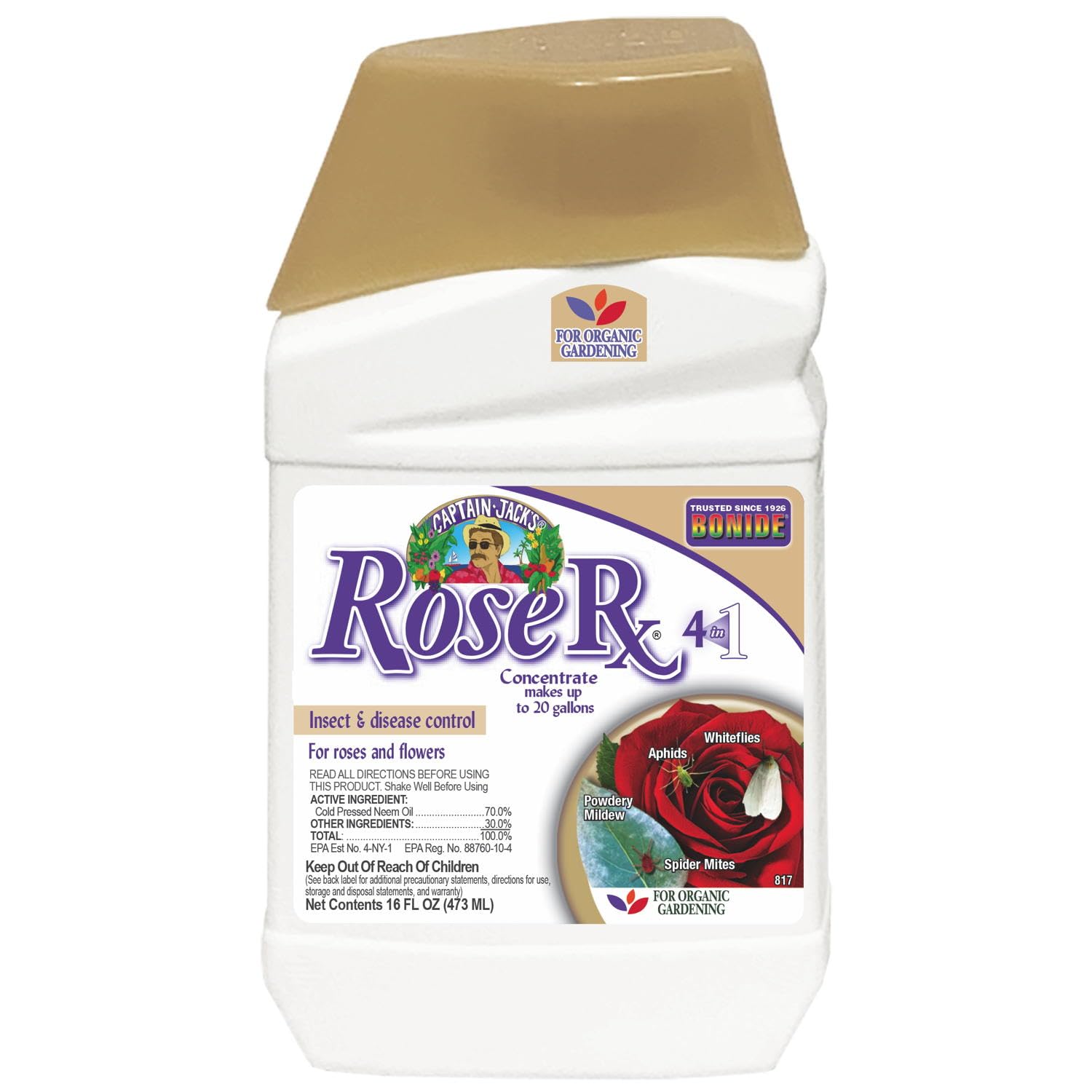
Bonide Captain Jack's Rose Rx 4-in-1 Insect & Disease Control, 16 oz Concentrate
| Item Form | Liquid Concentrate |
|---|---|
| Target Species | Insects |
| Liquid Volume | 16 |
| Active Ingredients | Cold Pressed Neem Oil |
Captain Jack's Rose Rx is a 16 oz concentrate formulated with cold pressed neem oil to control a wide range of insect pests and common fungal diseases on roses and other ornamentals. You mix the concentrate with water and apply it as a foliar spray or soil drench; the label states 16 oz makes up to 20 gallons when used as directed. In practice this product works both as a preventative fungicide and as a contact/ingestion insecticide that affects eggs, larvae, and adults, so it is useful before infestations become severe and as part of a regular maintenance schedule. Because it is plant based and approved for organic gardening, you can use it through harvest for edibles and safely on houseplants when instructions are followed. Expect reapplication every 7 to 14 days depending on whether you are targeting insects or diseases. Limitations are that it is a concentrate requiring correct mixing and frequent reapplications for ongoing control, and results depend on thorough coverage and timing rather than one-time eradication of heavy infestations.
Best for: Gardeners who prioritize reliable, plant-based protection for roses and want a single product to prevent and manage both pests and common fungal diseases as part of routine care.
Less Ideal for: Those who need a one-off, fast-acting synthetic knockdown for large infestations or who prefer ready-to-use sprays without mixing should consider alternatives.
- Combines fungicide, insecticide, miticide, and nematicide actions in one concentrate
- Uses cold pressed neem oil, an approved option for organic gardening
- Versatile application as foliar spray or soil drench for roses, ornamentals, vegetables and houseplants
- Concentrated formula makes multiple gallons of spray, stretching a single bottle
- Requires careful mixing and routine reapplication for effective control
- Not an instant knockout for heavy infestations; best used preventatively and on smaller populations
Verdict: Choose Rose Rx when you want a dependable, organic-approved concentrate that prevents and controls both pests and common fungal diseases on knockout roses with regular applications.
Bonide Captain Jack's Ready-to-Use Neem Oil Spray, 32 oz

| Item Form | Liquid |
|---|---|
| Target Species | Insects |
| Liquid Volume | 32 fluid ounces |
| Active Ingredients | Clarified Hydrophobic Extract of Neem Oil |
This ready-to-use neem oil spray is a multipurpose garden treatment that kills insects at all life stages while also serving as a miticide and preventative fungicide. Packaged in a 32-ounce trigger bottle, it is applied by shaking and thoroughly spraying plant surfaces, including leaf undersides, at the first sign of pests or disease and reapplying every 7 to 14 days as needed. The active ingredient is a clarified hydrophobic extract of neem oil, which is approved for organic gardening and labeled safe to use on vegetables up to the day of harvest. Practical benefits include broad pest coverage (aphids, whiteflies, spider mites and others), disease suppression such as powdery mildew, and convenience from a ready-to-use sprayer. Important limitations are that results are slower than synthetic contact insecticides and application timing matters to avoid leaf burn in full sun; repeated applications may be needed for heavy infestations. Follow label safety directions and keep the product away from children and pets.
Best for: Gardeners who want a single, organic-approved product to manage common vegetable garden pests and fungal problems and who prefer products with strong user feedback.
Less Ideal for: Growers needing rapid knockdown of severe infestations or commercial producers who require fast-acting, high-throughput treatments.
- Kills multiple pest stages including eggs, larvae and adults for more complete control.
- Also acts as a fungicide and miticide so one product covers pests and common fungal issues.
- Ready-to-use trigger bottle requires no mixing and is easy to apply to leaves and undersides.
- Approved for organic gardening and can be used on vegetables up to day of harvest.
- Slower-acting than many synthetic contact insecticides, so it may take several applications to see control.
- Must avoid spraying in peak sunlight to reduce risk of leaf burn.
Verdict: A convenient, organic-approved all-in-one neem spray that controls common vegetable garden pests and fungal issues with minimal fuss.
Bonide Captain Jack's Deadbug Brew Concentrate, 32 oz

| Unit Count | 32 Ounce |
|---|---|
| Item Form | Liquid |
| Target Species | Insects |
| Active Ingredients | Spinosad |
Bonide Captain Jack's Deadbug Brew is a concentrated spinosad-based insecticide designed for use on vegetables, fruits, flowers, and ornamentals in organic gardens. You mix the concentrate with water and apply it with a trigger, hand-held, backpack, or hose-end sprayer to target caterpillars, beetles, borers, leaf miners, thrips, spider mites and other listed pests. Because the active ingredient is spinosad, the product targets many chewing and some sucking insects while having limited impact on predatory beneficials when used as directed. The concentrate format keeps storage and transport compact and lets you treat multiple beds or trees from one bottle. Important limitations are following label directions closely for application rates and timing and taking normal safety precautions; like all insecticides it will not selectively remove a single pest species and repeated use can require integrated pest management strategies. For gardeners seeking a broadly effective, organic-eligible spray, this is a practical go-to option.
Best for: Gardeners who want a single, broadly effective insecticide approved for organic use to protect vegetables, fruits and ornamental beds and who prefer a concentrate that treats multiple areas.
Less Ideal for: People seeking an immediate-contact knockdown spray for household pests or those unwilling to follow dilution and safety instructions should consider other options.
- Contains spinosad, an organic-approved active ingredient effective against many caterpillars, beetles, borers and leaf-feeding pests
- Concentrate mixes easily with water and works with common sprayers including trigger, backpack and hose-end models
- Approved for use on a wide range of edible and ornamental plants, including vegetables, fruits and ornamentals
- Formulation is designed to have limited impact on predatory beneficial insects when used according to the label
- Requires careful dilution and adherence to label directions for safe and effective use
- Not selective to a single pest species and may require integration with other IPM practices
Verdict: Choose this concentrated spinosad spray if you want a versatile, organic-approved insecticide to protect a wide range of garden plants.
Choosing the Right Natural Insecticide for Roses: Key Factors to Consider
Target Pests and Mode of Action
Different natural insecticides work better on certain pests. Contact insecticides quickly kill soft-bodied insects like aphids and thrips on contact but offer little residual protection, so they require more frequent sprays. Systemic botanical or biological options may provide longer control but are less common for ornamental roses.
Know which pests are most problematic in your rose garden and choose a product whose mode of action addresses them. For example, oil-based sprays smother mites and eggs, while insecticidal soaps disrupt insect cell membranes. Matching the active mechanism to the pest life stage you are trying to interrupt improves results.
Plant Safety and Phytotoxicity Risk
Roses can be sensitive to certain formulations, especially during hot weather or on tender new growth. Some natural products, notably horticultural oils and concentrated soaps, can scorch leaves if applied in high temperatures or at too-strong a dilution. Always follow label dilution rates and avoid spraying in midday heat.
Test any new product on a few leaves before treating an entire plant. Consider application timing, typically early morning or late afternoon, and avoid use when roses are under water stress to reduce the risk of phytotoxic reactions.
Impact on Pollinators and Beneficial Insects
One reason gardeners choose natural insecticides is to protect bees, hoverflies, lady beetles, and predatory mites that help control pests. However, many natural actives can still harm beneficials if applied directly. Contact sprays will kill pollinators present during application, so timing matters.
Select products with low residual toxicity to pollinators, and apply treatments when pollinators are least active, such as early morning or dusk. Integrated pest management that reserves sprays for outbreaks and preserves habitat for beneficials will reduce collateral damage.
Residual Effect and Reapplication Frequency
Natural insecticides generally have shorter residual activity than synthetic systemic chemicals. This means they may require more frequent applications to keep pests suppressed. Some botanical extracts break down quickly in sunlight, rain, and irrigation.
When choosing a product, consider how often you are willing to monitor and reapply. Longer residual options reduce labor but may increase non-target risk, while short-residual sprays give precise control with more hands-on management.
Formulation and Application Practicality
Formulations vary from ready-to-spray bottles to concentrates that require measuring and mixing. Readiness affects convenience and precision. Sprayers, droplet size, and nozzle type also influence coverage; good coverage of undersides of leaves and buds is crucial for controlling many rose pests.
Gardeners should consider storage life, compatibility with other sprays, and whether their equipment can deliver even coverage. If you prefer minimal mixing, a ready-to-use spray may be best; if you need larger coverage and lower per-treatment cost, a concentrate could be more economical over time.
Residue on Cut Flowers and Handling Safety
If you cut roses for indoor display, consider withholding periods and contact residue. Some natural actives may leave residues that are best rinsed off before bringing blooms inside. Personal protective equipment and safe handling instructions should also be followed to avoid skin or eye irritation.
Check label guidance for safe harvesting intervals after treatment and follow recommended gloves and ventilation practices when mixing or spraying to minimize exposure.
When to Treat Roses Versus When to Wait
Not every sighting of an insect requires immediate spraying. Low populations of aphids or a few thrips are often managed by native predators or by a strong jet of water. Routine scouting helps you catch rising populations early before they damage buds or cause deformities.
Treat when you see sustained feeding damage, sticky residue from honeydew, distorted growth, or when pest numbers are increasing over several days. Timely intervention prevents major infestations and reduces the need for intensive follow-up treatments.
- Inspect buds and undersides of leaves twice weekly during peak season.
- Prioritize spot treatments on affected canes to reduce overall exposure.
- Use non-chemical options like pruning of infested shoots when practical.
Application Timing and Technique for Best Results
Apply natural insecticides early in the morning or late in the day when pollinators are least active and temperatures are cooler. Cooler conditions reduce the risk of phytotoxicity for oils and soaps and improve spray retention.
Focus coverage on leaf undersides, new growth, and developing buds. Thorough, even coverage is more important than high volume. For systemic or residual options, follow label guidance for frequency and avoid overlaps that exceed recommended application rates.
- Avoid spraying in direct midday sun or when temperatures exceed label limits.
- Rotate nozzle types or pressure for fine mist coverage without runoff.
- Keep a treated-area log to track when and where you applied products.
Integrating Natural Insecticides Into IPM
Natural insecticides are one tool in an integrated pest management approach that also uses cultural controls, biologicals, and mechanical removal. Encourage beneficial insects by providing nectar sources and avoiding unnecessary broad spraying.
Combine spot treatments with cultural practices such as good air circulation, proper watering, and timely pruning to reduce pest habitat. When you do spray, aim to preserve beneficial populations by targeting outbreaks rather than calendar-based blanket applications.
- Release or attract predators like lady beetles and lacewings where infestations begin.
- Remove heavily infested canes and dispose of them away from the bed.
- Use sticky traps and regular monitoring to track population trends.
Safety and Environmental Considerations
Even natural ingredients can be toxic to aquatic life or cause irritation to people and pets. Avoid spraying near water features, and follow label directions for buffer zones. Wear gloves and eye protection when mixing or applying concentrate formulations.
Store products in original containers with labels intact and keep them out of reach of children. Dispose of leftover mix responsibly and rinse application equipment in a manner consistent with local regulations.
- Never apply directly over open water or storm drains.
- Follow local rules for pesticide container disposal and rinsate management.
- Avoid drift by spraying in low-wind conditions and using appropriate nozzle settings.
Preparing Roses Before and After Treatment
Prune heavily infested or crowded canes to improve spray penetration and airflow. Remove spent blooms and debris that harbor pests. Clean pruning tools between plants if you suspect a disease vector to prevent spread.
After treatment, monitor treated canes for recovery and signs of phytotoxicity. If you plan to harvest blooms for indoor arrangements, consider rinsing flowers with clean water and observing recommended withholding times listed on product labels.
- Sanitize pruners between plants when cutting out infested material.
- Repeat inspections at labeled intervals to decide about follow-up sprays.
- Note weather forecasts so rain does not wash away recent treatments too soon.
How We Chose the Best Natural Insecticide for Roses
Our selection started by focusing only on products labelled and intended for use on ornamental roses or general flowering shrubs to avoid choices that would risk flower damage. We prioritized options that use plant-derived actives, biological controls, or low-toxicity contact ingredients rather than broad-spectrum synthetic neurotoxins. Evaluation criteria included efficacy against key rose pests such as aphids, thrips, spider mites, and rose slugs; foliage safety including phytotoxicity risk on bud and leaf tissue; residual activity and how often applications are required; and safety to pollinators and beneficial predators when applied as directed. We also considered formulation practicality for home gardeners, such as ready-to-use sprays versus concentrates and ease of mixing and application. We excluded broad agricultural insecticides not labelled for ornamentals and any products with insufficient safety data for flowering plants. The final list emphasizes balanced choices that manage pest populations while protecting bloom quality and supporting beneficial insects when used according to label directions.
FAQ
Are natural insecticides safe to use when roses are blooming?
Often they can be used when roses are blooming, but timing is important. Apply in early morning or late evening when bees and other pollinators are least active, and avoid spraying open flowers whenever possible to reduce direct exposure.
Will natural insecticides harm beneficial insects in my rose bed?
Many natural actives are less persistent than synthetic options, but contact applications can still kill beneficials present during spraying. Targeted spot applications and careful timing reduce the risk to predators and pollinators.
How soon will treated roses recover after an infestation?
Recovery time depends on pest pressure and plant vigor. Minor infestations often show improvement within a week after treatment and improved care. Severe damage to buds or canes may take a season of regrowth and pruning to fully recover.
Can I mix natural insecticides with other garden sprays?
Compatibility varies by formulation. Some concentrates mix safely with fungicides or foliar feeds, while others may react or increase phytotoxicity. Always follow label compatibility guidance and test a small area first before wide mixing.
How often should I reapply a natural insecticide?
Reapplication frequency depends on residual duration and pest pressure. Short-residual contact sprays may need treatments every 7 to 14 days during active outbreaks, while longer-acting options require less frequent retreatment. Follow label instructions.
Final Verdict
Choosing the right natural insecticide for roses means balancing fast pest suppression with protection for blooms and beneficial insects. Prioritize options that target the pests you see, minimize phytotoxic risk by following timing and dilution guidance, and integrate sprays into a broader IPM approach. If you value pollinator health or have tender varieties, favor short-residual, targeted applications and strong cultural controls. For persistent outbreaks, choose products with appropriate residual activity and accept the tradeoff of closer monitoring and careful timing.
