

Note: This article contains affiliate links. If you click on these links and make a purchase, I may earn a small commission at no extra cost to you. This helps support my research and content. Read my full affiliate disclosure here.
Picking the right soil amendment for a flower garden changes how beds perform through the season. The right amendment improves structure, supplies key nutrients, holds moisture where roots need it, and helps tender perennials and annuals establish more quickly. This guide looks at seven top soil amendment options suited for flower beds and borders, shortlisted for common garden situations. We evaluated each option for nutrient contribution, impact on soil texture, and how it affects water retention and root health. Read on for practical notes on using amendments, what to expect in different soil types, and how to match an amendment to your flower garden goals.
Top Picks at a Glance
| Best Overall The best all-around choice for most situations | BRUT Worm Castings Organic Plant Fertility Builder, 12 lb |  |
| Best Quality Built to a higher standard if you want something more solid | BuildASoil Build-A-Flower Organic Top Dress Kit — 1 cu ft |  |
| Best Value The sweet spot between price and what you get | Wiggle Worm Pure Worm Castings Organic Fertilizer, 30 lb |  |
| Best Budget The cheapest option that still gets the job done reliably | Hoffman Pelletized Garden Lime, 8 lb |  |
| Highest Rated A top-rated pick with lots of positive feedback | Nightcrawler Pure Worm Castings 7 qt — Natural Soil Amendment |  |
| Most Popular A crowd favorite that many people choose with confidence | Brut Organic Worm Castings, 5 lb |  |
| Best Seller A high-volume bestseller chosen again and again | Back to the Roots Organic Expanding Coco Coir Potting Soil Brick (10 lb) |  |
BRUT Worm Castings Organic Plant Fertility Builder, 12 lb

| Item Form | Granules |
|---|---|
| Mixing Ratio | 1:4 |
| Target Species | plants |
BRUT worm castings are a ready-to-use organic soil amendment that supplies slow-release nutrients and beneficial microbes to potting mixes and garden beds. Typically used as a top dressing, seedling boost, or mixed into potting soil at the brand recommended 1:4 ratio, the granular form is easy to distribute and incorporates without scorching roots. Notable features include certified organic status and a high microbial content that helps improve aeration, water retention, and nutrient availability over time. In practice this product is low-odor, safe for use around children and pets, and suitable for both indoor containers and outdoor vegetable or flower gardens. The 12 pound unit gives enough material to treat multiple containers or several rows when used sparingly. Limitations are that worm castings are a supplement rather than a complete fertilizer so heavier feeders may still need additional balanced fertilizers, and benefits accumulate gradually rather than producing an immediate nutrient spike.
Best for: Gardeners who want a natural, low-risk soil amendment to steadily improve soil health for a mix of container plants and garden beds and who prioritize organic inputs.
Less Ideal for: Growers seeking a fast, high-NPK feed for heavy fruiting or flowering crops or those who need an all-in-one fertilizer solution.
- Certified organic and listed by OMRI and CDFA for organic gardening
- Granular form is easy to apply as a top dressing or mix into potting soil
- Boosts beneficial microbes to improve soil structure, aeration, and water retention
- Low odor and safe for indoor plants, children, and pets
- Not a complete, high-NPK fertilizer so heavy-feeding crops may need extra nutrients
- Effects are gradual and build over time rather than delivering an immediate feed
Verdict: Use BRUT worm castings when you want a certified organic, easy-to-apply amendment that steadily improves soil biology and plant vigor.
BuildASoil Build-A-Flower Organic Top Dress Kit — 1 cu ft

| Item Form | Granules |
|---|---|
| Specific Uses For Product | Flower Growth, Soil Conditioning |
| Application Method | Top dress |
| Target Species | Flowers |
BuildASoil Build-A-Flower is a ready-to-use organic top dress designed specifically for flowering plants and garden beds. You apply handfuls across the soil surface before or during bloom and water it in, so it works as a quick way to add phosphorus, potassium, and living organic matter without digging or complicated mixing. The product combines two composts and a range of macro and micronutrients to stimulate beneficial soil biology, improve nutrient uptake, and support stronger blooms and root health. Practical benefits include simple application for raised beds, containers, and in-ground plantings, and an all-natural formula with no synthetic fertilizers, which suits growers who prefer organic inputs. Limitations are that it is a surface amendment rather than a complete potting mix replacement and the 1 cubic foot bag is best for top-dressing several plants rather than large landscape areas, so multiple bags are needed for bigger jobs.
Best for: Gardeners focused on maximizing bloom performance who want an easy organic boost applied at flowering time; good for raised beds, borders, and container flower plantings.
Less Ideal for: Those preparing large landscape areas or replacing potting mix should consider bulk amendments or a formulated potting soil instead.
- Formulated specifically to support flowering with added phosphorus and potassium
- Contains living organic compost to stimulate beneficial soil microbes
- Easy top-dress application requires no mixing or soil replacement
- All-natural ingredients with no synthetic fertilizers
- Small 1 cubic foot bag limits coverage for larger beds
- Intended as a surface amendment rather than a full potting soil substitute
Verdict: A convenient organic top-dress that delivers bloom-focused nutrients and living compost for gardeners who want a simple, performance-oriented boost during flowering.
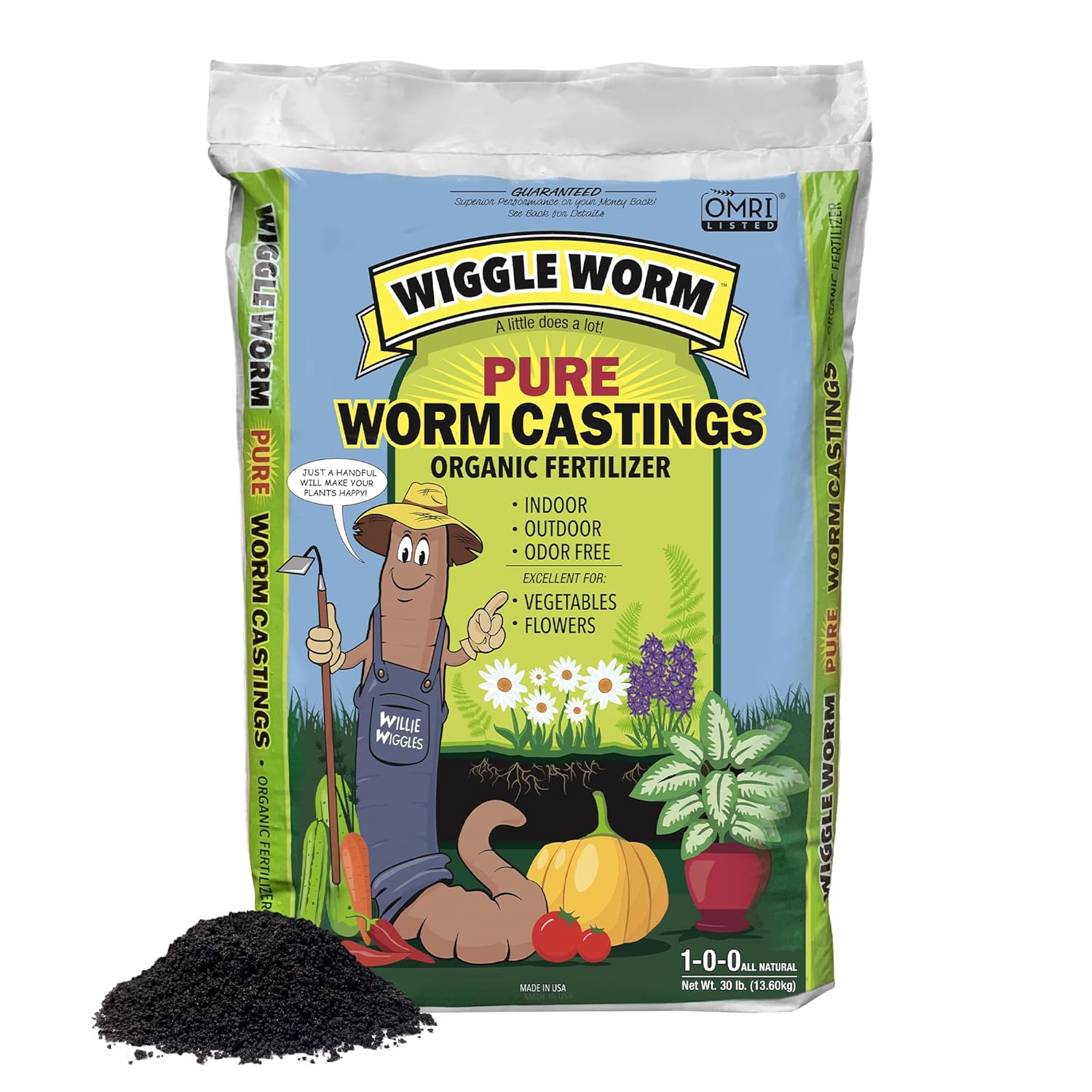
Wiggle Worm Pure Worm Castings Organic Fertilizer, 30 lb
| Item Form | Granules |
|---|---|
| Specific Uses For Product | Soil Conditioning |
| Application Method | Apply to soil |
| Unit Count | 480 Ounce |
Wiggle Worm Pure Worm Castings are a ready-to-use organic soil amendment made from concentrated earthworm castings. Gardeners typically mix a portion into potting mixes, top-dress established plants, work it into transplant holes, or brew it as a nutrient tea; the product page includes specific dosing for vegetables, containers, lawns, and roses. The castings are odorless, non-burning, and OMRI listed for organic use, so they supply water-soluble nutrients plus microbes that improve aeration, water retention, and root development without synthetic chemicals. Practical benefits include easy application, safe use on seedlings and mature plants, and versatility across raised beds, container gardens, and lawns. The main limitation is that this is a concentrated soil builder rather than an all-in-one fertilizer with NPK labels, so users seeking precise, fast-acting nutrient ratios may need to supplement for specific deficiencies; also a 30 lb bag is bulky to handle for small-space gardeners. For gardeners focused on long-term soil health and organic production, it functions as a low-risk, effective amendment.
Best for: Gardeners who prioritize building long-term soil health and want a safe, organic amendment for vegetables, ornamentals, and containers; buyers who value proven, low-risk inputs backed by strong user feedback.
Less Ideal for: Gardeners who need targeted, rapid nutrient correction based on precise NPK values or those who only want a lightweight product for very small balconies or indoor micro-gardens.
- OMRI listed organic and made from 100% worm castings
- Provides beneficial microbes that improve soil structure and water retention
- Odorless and non-burning so safe for seedlings and established plants
- Versatile dosing for containers, raised beds, lawns, and making worm casting tea
- No standard NPK nutrient label so not a precise standalone fertilizer for targeted feeding
- Large 30 lb bag can be heavy and awkward for gardeners with limited storage or mobility
Verdict: Choose this product when you want a proven, OMRI-listed worm casting that builds soil biology and improves plant health across beds and containers.
Hoffman Pelletized Garden Lime, 8 lb

| Item Type Name | Plant Supplement |
|---|---|
| Unit Count | 128 Ounce |
| Volume | 8 liters |
| Brand Name | Hoffman |
Hoffman Pelletized Garden Lime is a simple, budget-friendly soil amendment for correcting acidic garden soils. It comes as easy-to-spread pellets intended for lawns, flower beds, and vegetable gardens to raise pH and make nutrients more available to roots. The pelletized form is less dusty than powdered lime and spreads more evenly with a broadcast spreader or by hand; safety guidance recommends gloves and eye protection during handling. Because it is not a fertilizer, it does not supply nutrients directly but improves the soil chemistry so existing fertilizers and soil reserves work better. The package size suits small to medium raised beds or patches of lawn and stores easily in a dry place. Limitations are that results take time as lime reacts slowly with soil and application rates should follow a soil test to avoid overapplication. For gardeners on a tight budget who need a straightforward pH correction method, this product delivers predictable, low-tech performance.
Best for: Gardeners who need an inexpensive, low-effort way to correct acidic soil in garden beds or small lawns and who plan to follow a soil test or basic pH guidance.
Less Ideal for: Those needing rapid pH adjustment, a combined fertilizer-plus-lime product, or large-acreage applications where bulk agricultural lime would be more economical.
- Pelletized form spreads evenly and generates less dust than powdered lime
- Specifically formulated to raise soil pH and improve nutrient availability
- Suitable for lawns, flower beds, and vegetable gardens
- Affordable 8 pound package that is easy to store
- Acts slowly so pH changes are not immediate
- Not a fertilizer and does not add nutrients directly
Verdict: An affordable, easy-to-spread pelletized lime that reliably raises soil pH in garden beds and small lawns.
Nightcrawler Pure Worm Castings 7 qt — Natural Soil Amendment

| Item Form | Powder |
|---|---|
| Specific Uses For Product | Root Development |
| Target Species | plants |
| Unit Count | 1 Count |
This bag of pure worm castings is intended as a straightforward, low-maintenance soil amendment for flower beds, containers, and houseplants. It is a fine powder that blends easily into potting mixes or can be used as a top dressing around established plants to improve soil texture, aeration, and moisture retention. The product emphasizes a natural vermicompost process and contains beneficial microbes that support root development and steady plant growth. Because it is odor-free and easy to apply, it works well in both indoor and outdoor settings and for regular seasonal use. The formulation is simple and single-ingredient, so gardeners seeking a reliable, no-fuss way to boost soil biology and long-term soil quality will appreciate it. Limitations are that it is an amendment rather than a complete fertilizer so users should still supply targeted nutrients or bloom fertilizers when growing heavy-feeding flowers, and multiple applications over a season may be needed to see noticeable changes in very depleted soils.
Best for: Gardeners who prioritize dependable, natural soil health improvements for flower beds and containers and want an easy-to-use amendment that can be applied regularly without fuss.
Less Ideal for: Gardeners looking for an all-in-one fertilizer solution or immediate, dramatic nutrient boosts for high-demand ornamental varieties should consider a dedicated fertilizer instead.
- 100% pure worm castings provide natural microbes and organic matter
- Fine texture mixes easily into potting soil and containers
- Odor-free formula suitable for indoor and outdoor use
- Supports root development, soil aeration, and moisture retention
- Not a complete fertilizer so additional nutrients may be required for heavy-feeding plants
- May require repeated applications to improve very depleted garden soil
Verdict: A simple, reliable way to improve soil biology and structure in flower beds and containers with odor-free pure worm castings.
Brut Organic Worm Castings, 5 lb

| Item Form | Granules |
|---|---|
| Specific Uses For Product | Gardening,Organic |
| Target Species | All plants |
| Mixing Ratio | 1:5 |
Brut Organic Worm Castings function as a concentrated, natural soil amendment you mix into potting mixes or top-dress garden beds and raised beds. Typical use is mixing at the recommended 1:5 ratio for new indoor plants, sprinkling a cup around established houseplants, or working into outdoor planting holes and beds according to the brand directions. The product is OMRI/CDFA listed and produced in controlled conditions, which supports consistent nutrient content and beneficial microbial life that help roots establish, improve soil structure, and increase moisture retention without burning plants. Practical benefits for raised garden beds include improved aeration, slow-release nutrients, and a boost in microbial activity that supports long-term fertility. Limitations are that it is not a complete NPK fertilizer for immediate heavy feeding needs and larger beds require significant quantities to hit the suggested per-square-foot rates, so frequent applications or bulk purchases may be needed for big projects.
Best for: Gardeners who prioritize dependable, organic soil improvement for raised beds and container gardens and prefer predictable, low-risk amendments that support long-term soil health.
Less Ideal for: Those needing immediate, high-NPK feeding for heavy-feeding crops or gardeners who want to amend very large beds without buying supplemental bulk material.
- Certified organic and produced indoors for consistent purity
- Rich in beneficial microbes that improve soil structure and plant vigor
- Easy-to-use granular form suitable for mixing or top-dressing
- Not a standalone high-NPK fertilizer for rapid nutrient correction
- Five-pound bag may be small for large raised beds and repeated seasonal use
Verdict: Use this OMRI/CDFA-listed worm castings product to reliably build long-term fertility and microbial health in raised beds and containers.
Back to the Roots Organic Expanding Coco Coir Potting Soil Brick (10 lb)

| Item Highlight | 10 lb compressed coco coir brick; peat-free; OMRI Listed |
|---|---|
| Item Type Name | Coconut Coir |
| Volume | 2 cubic feet |
| Ingredients | Coconut Coir |
| Style Name | Expanding Potting Soil |
This compressed coco coir brick provides a lightweight, peat-free potting medium that expands when you add water to create loose, airy substrate for containers and seed flats. It is typically used by hydrating the 10 lb block to about 2 cubic feet of coir and then using it alone for potted plants, mixing it into garden soil to improve drainage and aeration, or blending with compost for starting seeds. Notable features include OMRI listing for organic use, a balanced pH suited to a wide range of plants, and compact storage before expansion which saves space. Practical benefits are improved root aeration and water retention compared with heavy garden loam, easier handling than bulky bags, and versatility across vegetables, herbs, and ornamentals. Important limitations are that coco coir is a soilless substrate and does not supply significant nutrients on its own so you will need to add fertilizer or compost for long-term potted herbs like rosemary, and the product requires time and a water source to expand before use.
Best for: Buyers who prioritize low-risk, easy-to-handle, organic potting media and want a versatile base for container herbs and seed starting without dealing with heavy bags.
Less Ideal for: Gardeners who want a ready-to-plant, nutrient-rich potting mix out of the box or those who prefer soil with built-in slow-release fertilizer.
- Peat-free OMRI listed organic coco coir suitable for organic growing
- Expands from a compact brick to about 2 cubic feet for easy storage and transport
- pH balanced and airy texture that improves drainage and root aeration
- Versatile use: can be used alone, for seed starting, or mixed into existing soil
- Provides little inherent fertility so supplemental feeding or compost is needed for nutrient-hungry plants
Verdict: A compact, peat-free coco coir brick that expands into an airy, pH-balanced base ideal for low-risk organic container gardening and seed starting when paired with fertilizer or compost.
Choosing the Right Soil Amendment for Flower Garden: Key Factors to Consider
Nutrient Profile And Release Rate
Different amendments supply nutrients on different schedules. Organic materials tend to release nitrogen, phosphorus, and potassium slowly as microbes break them down, which supports steady growth without large spikes. Mineral amendments like rock dust add trace elements more slowly and remain available longer. Knowing whether you need a quick nutrient boost for annuals or a slow-release source for perennials helps you choose an amendment that matches bloom timing and maintenance rhythm.
Also consider the balance of macronutrients and important micronutrients. Some flowering plants show deficiency symptoms in particular micronutrients, so an amendment with a broader trace element profile can prevent subtle problems that reduce bloom quality.
Effect On Soil Structure And Aeration
Amendments change how soil particles bind and how much pore space exists. Organic matter such as compost and well-rotted manure improves aggregation, creating stable crumbs that let roots penetrate and air circulate. For heavy clay, look for materials that open up the soil to reduce compaction and improve drainage. In very sandy soils, choose amendments that help particles cling together and increase water-holding capacity.
Improved structure also affects root depth and resilience. When soil aggregates are more stable, flower roots can explore a larger volume for water and nutrients, which supports prolonged bloom periods and better stress tolerance.
Moisture Retention Versus Drainage Needs
Flower gardens have varying moisture requirements depending on soil type and plant selection. Some amendments increase the soil's ability to hold moisture, useful in fast-draining sandy beds or raised planters. Other amendments improve drainage and prevent waterlogging in dense clay.
Match the amendment to your garden's drainage profile. Overdoing moisture-retaining materials in a site that already stays wet can cause root rot, while adding coarse, well-draining materials to an already dry bed can increase irrigation needs.
Impact On Soil Biology
Healthy soil life-microbes, fungi, and small fauna-drives nutrient cycling and plant health. Organic amendments feed soil organisms and support beneficial mycorrhizal relationships, which can improve nutrient uptake for flowering plants. Some mineral amendments have little immediate biological effect but can supply needed trace minerals to microbial communities over time.
Consider amendments that encourage a balanced soil ecosystem rather than those that temporarily mask deficiencies. Long-term garden health depends on fostering biology that builds and maintains fertile soil.
Application Practicality And Safety
Think about how you will apply the amendment and whether it is safe for flower beds and nearby plants. Some materials are easy to top-dress while others require tilling into the bed. For established perennial borders, low-disturbance options are often preferable to avoid root damage.
Also note any handling considerations, such as dust, smell, or the need for composting before use. Accessibility and whether you can source the material in usable quantities should influence your choice.
Duration Of Effect And Maintenance Frequency
Different amendments last different lengths of time in the soil. Fresh organic inputs may need annual replenishment, while mineral amendments or biochar can influence soil for multiple seasons. Consider how often you are willing to replenish material and how quickly you expect results.
If you prefer low-input maintenance, choose amendments that provide long-term structural or mineral benefits. If you enjoy seasonal bed refreshes, faster-acting organic amendments align with that routine.
When To Amend Flower Beds
Early spring or the dormant season are common times to work amendments into soil before new growth begins. For spring-blooming perennials, amend in fall or early spring so microbes have time to begin breaking down organic matter before the energy-demanding growth period.
Top-dressing is a good option during the growing season for annuals and established perennials, especially when using compost or mulch-like materials that improve the surface soil without root disturbance.
- In new beds, incorporate amendments into the top 6 to 12 inches of soil.
- For established borders, use light top-dressing or spot-treatment to avoid disturbing roots.
- Time amendments so nutrient release aligns with peak bloom demands.
How Much To Use And How To Measure
Application rates vary by amendment type and existing soil condition. A soil test is the best starting point; it tells you deficiencies and pH issues that influence both amendment choice and quantity. When no test is available, a conservative approach is safer: add moderate amounts and observe plant response over a season.
Spread organic compost at a depth of about 1 to 2 inches over the bed and work lightly into the topsoil for new plantings. Mineral amendments often require much smaller quantities and should be mixed more thoroughly according to their recommended rates.
- Use a soil test when possible to guide quantities.
- Avoid heavy single-season applications that can cause nutrient imbalances.
- For top-dressing, apply thinner layers annually rather than heavy one-time loads.
Integrating Amendments With Mulch And Fertilizer
Amendments are not always a replacement for occasional fertilizers or mulches. Compost and organic matter supply steady nutrition and structure, while a targeted fertilizer can address a specific deficiency. Mulch helps conserve moisture and moderate soil temperature, enhancing the benefit provided by soil amendments.
When using both, apply amendment first so the soil can absorb nutrients and structural benefits, then cover with an organic mulch to protect the surface and slow moisture loss.
- Apply amendments before adding mulch for best contact with soil.
- Use mulch to reduce watering frequency and protect newly amended soil.
- Combine slow-release fertilizers only when a soil test indicates a need.
Using Amendments In Containers And Raised Beds
Containers and raised beds have faster drainage and can dry out quickly, so choose amendments that boost water-holding capacity and provide steady nutrition. Lightweight composts and well-aged organic matter improve moisture retention without adding too much weight. Avoid materials that compact the container mix or reduce aeration.
For deep raised beds, mix amendments into the planting mix to a depth that matches expected root zones. Top-up annually to maintain organic levels in shallow beds and containers.
- Prioritize light, well-structured amendments for pots.
- Mix amendments thoroughly into raised bed soil to prevent layering.
- Check moisture levels more frequently after adding amendments to containers.
How We Chose the Best Soil Amendment for Flower Garden
We focused on amendments that reliably change soil conditions gardeners care about most in flower beds. Selection emphasized materials with measurable effects on nutrient availability, soil structure, drainage, and moisture-holding capacity. We prioritized amendments appropriate for typical flower garden use: establishing new beds, rejuvenating tired borders, or improving container mixes for larger planters. Evaluation criteria included nutrient release profile and trace element content, measured or well-documented effects on soil texture and aggregation, contribution to moisture retention or drainage as needed, and ease of incorporation or top-dressing for established plantings. We also considered long-term soil health impacts, such as organic matter persistence and effects on soil biology. Exclusions: we did not include raw fertilizers with narrow nutrient formulations, products intended only for lawns, or specialty industrial soil treatments. We excluded materials that are impractical for typical home gardeners to source or apply. The final list contains amendments suited to a range of flower garden situations, from sandy beds that need water-holding ability to heavy clay that benefits from improved aggregation.
FAQ
How soon will I see results after adding an amendment to flower beds?
It depends on the amendment. Fast-acting organic materials and soluble nutrients can show visible improvement in weeks, while mineral amendments and bulk organic matter may take a season or more as biology breaks them down. Expect gradual improvement in structure and root health over several months.
Can I use any compost in flower beds?
Most well-made composts are suitable for flowers, but quality varies. Use fully decomposed compost rather than fresh or hot compost, which can tie up nitrogen. Avoid composts with large amounts of woody material unless screened and finished.
Will adding a moisture-retaining amendment reduce how often I need to water?
Yes, in many cases amendments that increase organic matter or include water-holding materials reduce irrigation frequency, especially in sandy soils. However, in poorly drained soils, adding moisture-retaining materials without improving drainage can cause waterlogging, so match the amendment to the site.
Do mineral soil amendments change soil pH?
Some mineral amendments can influence pH, but many are used primarily for trace minerals and texture. If pH adjustment is a goal, use products specifically intended to raise or lower pH and follow soil test recommendations.
How do I avoid over-applying amendments?
Start with a soil test and use recommended application rates. Apply in modest quantities and monitor plant response. Heavy single applications can create nutrient imbalances or structural problems, so incremental additions over seasons are safer.
Final Verdict
Choosing the right soil amendment for a flower garden means matching what your soil lacks with what your plants need. Prioritize amendments that correct the most limiting factor first, whether that is nutrients, drainage, or organic matter. Consider how the amendment affects soil biology, moisture behavior, and how often you are willing to maintain beds. Focus on long-term soil health rather than quick fixes. With the right amendment and proper timing, you can create a foundation that supports bigger, longer-lasting blooms and more resilient plants.
