

Note: This article contains affiliate links. If you click on these links and make a purchase, I may earn a small commission at no extra cost to you. This helps support my research and content. Read my full affiliate disclosure here.
Choosing the right soil amendment for azaleas matters because these acid-loving shrubs depend on a specific root-zone environment to set buds and absorb nutrients. The wrong amendment can lock up nutrients or change pH too slowly, while the right one improves drainage, encourages fibrous rooting, and keeps soil acidity in the ideal range. This guide shortlists seven top soil amendments for azaleas and explains how each type behaves in garden beds and containers. We evaluate options based on how they change pH, deliver nutrients, and affect soil texture so you can pick the best fit for your planting situation.
Top Picks at a Glance
| Best Overall The best all-around choice for most situations | Soil Sunrise Acid-Loving Potting Soil Mix (12 Quarts) |  |
| Best Quality Built to a higher standard if you want something more solid | Espoma Organic Soil Acidifier, 30 lb |  |
| Best Value The sweet spot between price and what you get | Earth Science Fast Acting Sulfur Granules, 5 lb |  |
| Best Budget The cheapest option that still gets the job done reliably | True Organic Prilled Sulfur — Prilled Elemental Sulfur Granules, 5 lb |  |
| Highest Rated A top-rated pick with lots of positive feedback | Lawn Synergy Soil Acidifier Elemental Sulfur (18 lb) |  |
| Most Popular A crowd favorite that many people choose with confidence | Jobe's Organics Granular Soil Acidifier, 6 lb |  |
| Best Seller A high-volume bestseller chosen again and again | Espoma Organic Soil Acidifier, Granules (6 lb) – Pack of 2 |  |
Soil Sunrise Acid-Loving Potting Soil Mix (12 Quarts)

| Volume | 12 quarts |
|---|---|
| Ingredients | Peat moss, vermiculite, pine bark, pine needles, sphagnum moss |
| Brand Name | Soil Sunrise |
This 12-quart Soil Sunrise mix is built specifically for acid-loving container plants and combines peat moss, sphagnum, pine bark, pine needle mulch and vermiculite to deliver a consistently acidic, well-aerated medium. In practice it is easiest used for repotting azaleas, rhododendrons and blueberries or filling decorative containers where maintaining lower pH and steady moisture retention matter. The peat and sphagnum hold water and nutrients between waterings while pine bark and vermiculite keep the mix loose so roots do not suffocate. Because it is hand-blended in small batches with natural components, the texture and pH are tailored for long-term health rather than quick-release feeding. Expect improved root development and fewer problems with compaction compared with standard all-purpose mixes. Limitations are the modest bag size for larger shrubs and that it does not include fertilizer, so feeding is still required for fruiting or heavy bloom cycles.
Best for: Gardeners seeking reliable performance for container-grown acid-loving plants who prioritize consistent pH and healthy root environments over convenience blends.
Less Ideal for: Large-scale plantings or gardeners who want an all-in-one fertilized mix for immediate heavy bloom or fruit production.
- pH-balanced blend formulated for acid-loving species
- Peat moss and sphagnum retain moisture and nutrients between waterings
- Pine bark and vermiculite improve drainage and prevent compaction
- Hand-blended small-batch mix made from natural ingredients
- No added fertilizer, so plants will need separate feeding for fruiting or heavy blooms
- 12-quart bag is small for large containers or multiple shrubs
Verdict: Choose this mix when you need a purpose-built, pH-balanced potting medium that promotes strong roots and moisture management for acid-loving container plants.
Espoma Organic Soil Acidifier, 30 lb

| Unit Count | 480 Ounce |
|---|---|
| Item Type Name | Espoma UL30 Organic Soil Acidifier Fertilizer, 30 lb |
| Included Components | Fertilizer |
| Manufacturer | Espoma |
Espoma Organic Soil Acidifier is a pelletized, elemental sulfur-based amendment designed to lower soil pH for acid-loving plants like hydrangeas and blueberries. It is applied by spreading around the root zone or across beds and watering in; the package gives straightforward application rates for new plants, established plants, containers, and per-100 sq. ft. for gradual pH changes. The product is approved for organic gardening and avoids aluminum sulfate, so it is a safer choice for repeated use to achieve bluer hydrangea blooms. Practical benefits include clear instructions for different plant situations, a large 30 lb bag that covers significant area, and pellet form that is easy to handle and spread. Important limitations are that pH changes are gradual and may require repeat applications every 60 days, and it can irritate skin and eyes so gloves and a mask are recommended. Expect to monitor soil pH and plant response rather than seeing instant color shifts.
Best for: Gardeners who want a reliable, organic method to lower soil pH for blue hydrangeas and other acid-loving plants and who are willing to test and follow repeated applications for gradual results.
Less Ideal for: People who need instant pH shifts or a one-time quick fix for blooms or those unwilling to use protective gear when handling fertilizers.
- Pelletized elemental sulfur formula specifically formulated to lower soil pH for acid-loving plants
- Clear application rates for pots, individual plants, and per 100 sq. ft. make dosing straightforward
- Approved for organic gardening so it fits organic production and home organic beds
- Large 30 lb bag covers a lot of ground for repeated seasonal applications
- pH adjustment is gradual and requires repeat applications over months to see full effect
- Can cause irritation on contact so protective gear is needed when handling
Verdict: Use this organic, pelletized sulfur amendment if you want a safe, repeatable way to lower soil pH and intensify blue hydrangea blooms over time.
Earth Science Fast Acting Sulfur Granules, 5 lb

| Item Form | Granules |
|---|---|
| Specific Uses For Product | Lawn |
| Target Species | acid-loving plants |
| Unit Count | 80 Ounce |
Earth Science Fast Acting Sulfur is a granular soil amendment formulated to lower soil pH quickly for acid-loving plants like hydrangeas, azaleas, and blueberries. You apply it with a standard spreader or by hand at the recommended rate (1 lb per 100 sq ft for beds, 5 lb per 1,000 sq ft for lawns), and optional watering 15 minutes after application speeds activation. The product uses a Nutri-Bond technology to help the granules stay where they are applied, which reduces runoff and helps the treated area get full benefit. In practice it will help improve color and bloom quality when soil pH is too high, and it is marketed as safe for people and pets immediately after application. Important limitations are that you must test soil pH first to avoid over-acidifying, and results depend on existing soil chemistry so changes may vary by site; this is a targeted soil pH adjustment rather than a complete fertilizer program.
Best for: Home gardeners who want a reliable, low-risk way to lower soil pH for hydrangeas and other acid-loving plants and who prefer products that limit runoff and are safe around people and pets.
Less Ideal for: Gardeners seeking an all-in-one fertilizer or those who have already acidic soils and do not need pH adjustment.
- Designed specifically to lower soil pH for acid-loving plants
- Nutri-Bond technology helps reduce runoff and keeps product in place
- Can be applied with any standard spreader or by hand for flexibility
- Safe for people and pets to re-enter the area immediately after application
- Requires a prior soil pH test and careful application rates to avoid over-acidifying
- Does not replace routine fertilization; it adjusts pH rather than supplying a full nutrient program
Verdict: A practical, pet-friendly way to lower soil pH and improve hydrangea color and bloom quality when used after a soil pH test.
True Organic Prilled Sulfur — Prilled Elemental Sulfur Granules, 5 lb

| Item Form | Granules |
|---|---|
| Specific Uses For Product | Agriculture, Gardening |
| Coverage | Medium |
| Unit Count | 80 Ounce |
| Target Species | Plants |
True Organic Prilled Sulfur is a granular elemental sulfur product intended to acidify soil and improve nutrient availability for in-ground gardens. It is typically broadcast or worked into soil one to two weeks before planting to gradually lower pH and support better flowering and fruiting. The prilled form makes it easy to spread evenly over beds, and a 5 lb bag advertises coverage up to about 1,333 sq. ft., which suits larger blueberry patches or multiple planting areas. Because it is pure elemental sulfur, results are gradual and best for long-term pH adjustment rather than an immediate fix. The product is made with organic inputs and is presented for gardening and agricultural use, which may appeal to buyers avoiding synthetic acidifiers. Important practical limits are that you must test soil pH first and calculate application rates carefully to avoid over-acidifying, and it does not provide nutrients beyond its pH effect, so plan a complementary fertilizer program for blueberry-specific needs.
Best for: Gardeners who test soil and want a conservative, organic-compatible way to lower pH for acid-loving plants like blueberries and are comfortable planning applications ahead of planting.
Less Ideal for: People needing rapid pH change immediately before harvest or those who want an all-in-one fertilizer that also supplies macronutrients.
- Prilled granular form spreads evenly for straightforward application to beds
- Formulation is elemental sulfur, which reliably lowers soil pH over time
- 5 lb bag claims wide coverage suitable for multiple blueberry planting areas
- Made with organic inputs and presented for garden use
- Acts slowly so it is not a quick pH correction
- Contains only sulfur and does not supply other nutrients blueberries need
Verdict: A practical organic-compatible sulfur granule for gardeners who plan ahead to safely acidify soil for blueberries and other acid-loving plants.
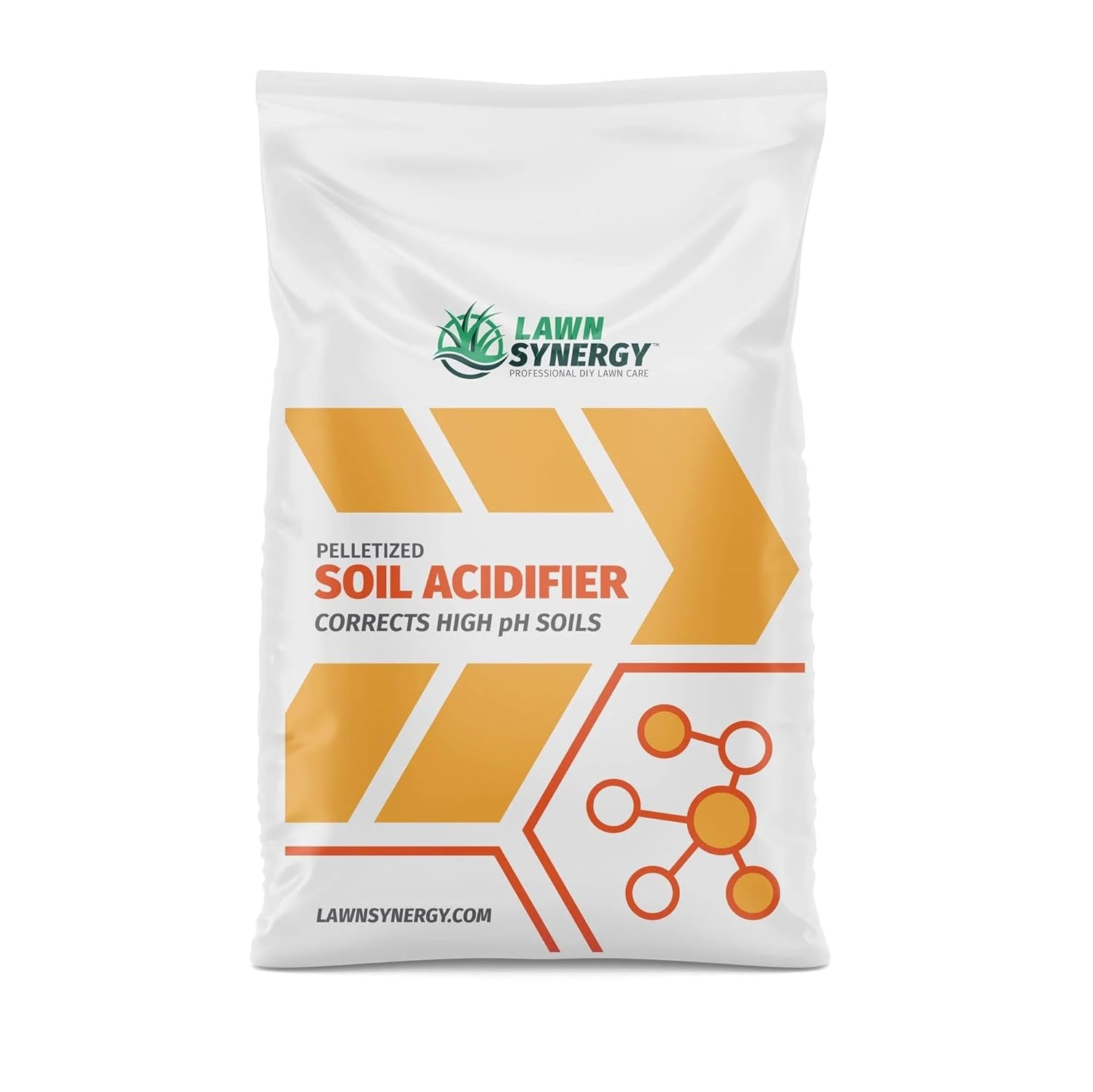
Lawn Synergy Soil Acidifier Elemental Sulfur (18 lb)
| Item Form | Granules |
|---|---|
| Coverage | 1800 sq.ft. |
| Target Species | lawns, hydrangeas, blueberry bushes |
| Ingredients | Elemental Sulfur 90% |
This 18 lb bag of Lawn Synergy Soil Acidifier is 90% elemental sulfur in granule form designed to lower soil pH for acid-loving plants. You spread it across the planting area or mix into the root zone to progressively acidify the soil; the label lists a coverage of about 1800 sq. ft. and the high sulfur content means it acts reliably where pH reduction is needed. For blueberry growers the product creates the more acidic conditions these shrubs prefer, which helps nutrient availability and fruiting when used as part of a regular soil management plan. Application is simple and lends itself to broadcast spreading or spot treatment around plants; because it works through soil microbiology it produces steady pH change rather than an instant chemical shock. Limitations to expect are the need for proper pH testing before and after application and slower action in cool or poorly drained soils where conversion to sulfate is reduced. This is a straightforward, no-frills amendment for gardeners who want a dependable way to lower pH over time.
Best for: Gardeners who prioritize consistent, dependable pH correction for acid-loving crops and who plan treatments based on soil tests and seasonal timing.
Less Ideal for: People who need an immediate pH change or a multi-nutrient fertilizer solution; those seeking quick foliar fixes or rapid short-term results should consider alternatives.
- High elemental sulfur concentration (90%) for effective pH reduction.
- Granular form that is easy to distribute for broadcast or spot applications.
- Covers a large area per bag (listed coverage about 1800 sq. ft.).
- Formulation suited specifically for acid-loving plants such as blueberries and hydrangeas.
- Acts through soil biology so pH change can be gradual and slower in cool or poorly drained soils.
- Requires prior and follow-up soil pH testing to avoid over-application.
Verdict: A reliable, high-concentration elemental sulfur amendment for gardeners who need steady, test-driven soil acidification for blueberries.
Jobe's Organics Granular Soil Acidifier, 6 lb

| Item Form | Granules |
|---|---|
| Target Species | Hydrangeas and blueberries plants |
| Specific Uses For Product | Soil Conditioning, Plant Growth, Root Development |
| Unit Count | 96 Ounce |
| Derived from | Elemental Sulfur and Gypsum |
Jobe's Organics Granular Soil Acidifier is a sulfur-based granular amendment designed to lower soil pH and support acid-loving plants like blue hydrangeas and blueberries. You apply it at planting and reapply two to three times a year or about every eight weeks to maintain a more acidic root zone. The product is OMRI-listed and made from natural elemental sulfur and gypsum, so it is suitable for organic gardens and will slowly change soil acidity without burning roots when used as directed. Practical benefits include easy measuring and application, targeted action on the root zone to encourage blue flower coloration in hydrangeas, and reduced need for frequent liquid treatments. Important limitations are that pH change is gradual so results take weeks to months and a soil test is recommended beforehand to avoid overcorrection. The granules do not supply NPK nutrients, so you will still need a fertilizer if plants require additional nitrogen or phosphorus. Follow safety guidance to avoid inhalation and skin or eye contact during handling.
Best for: Gardeners who want a proven, organic way to acidify soil for blue hydrangeas and similar acid-loving plants and who prefer measured, low-risk treatments backed by broad user acceptance.
Less Ideal for: People needing immediate pH change or quick nutrient feeding for poor-growth plants, or those who prefer liquid pH adjusters for faster short-term results.
- OMRI-listed organic formula suitable for organic gardens
- Elemental sulfur-based granules specifically formulated to lower soil pH for acid-loving plants
- Easy granular application at planting and periodic reapplication
- Slow-release action reduces risk of burning roots when used as directed
- Works gradually so it can take weeks to shift pH and show blueing in hydrangeas
- Does not contain NPK nutrients so separate fertilization may be needed
Verdict: A practical organic granular acidifier that reliably lowers soil pH for blue hydrangeas when applied and maintained as directed.
Espoma Organic Soil Acidifier, Granules (6 lb) – Pack of 2

| Item Form | Granules |
|---|---|
| Specific Uses For Product | Soil Conditioning |
| Coverage | Medium |
| Target Species | Hydrangeas, Blueberries |
Espoma Organic Soil Acidifier is a granular amendment designed to lower soil pH and encourage blue blooms on acid-loving plants such as hydrangeas and blueberries. You spread the granules around the drip line, water them in, and repeat at roughly 60-day intervals until the desired acidity or bloom color appears. The formula contains elemental sulfur and gypsum and is approved for organic gardening, so it fits into an organic care routine without synthetic inputs. In practice it is easy to use for gardeners who test pH and adjust gradually rather than making large sudden changes. The medium coverage per bag and the 6 lb size in this two-pack make it convenient for small to medium beds or several container groups. Limitations are that results take time and depend on existing soil buffering, so persistent monitoring and repeat applications are necessary; it is not a quick fix for already alkaline soils and should be kept away from children and pets as directed.
Best for: A cautious gardener who prefers organic products and wants to lower soil pH gradually to influence hydrangea bloom color or support acid-loving shrubs in small to medium planting areas.
Less Ideal for: Gardeners needing an immediate pH change for large landscapes or those who want to treat edible food crops with the same product should consider alternatives designed for rapid correction or labeled for food plants.
- Organic formulation approved for organic gardening
- Contains elemental sulfur for effective pH reduction
- Granular form is simple to apply around the drip line and water in
- Pack of two 6 lb bags provides enough product for multiple small beds or containers
- Acts slowly and requires repeat applications and pH monitoring
- Not intended for use on food crops and must be kept away from children and pets
Verdict: Choose this organic granular acidifier if you want a simple, slow-release way to lower pH and encourage blue hydrangea blooms while staying within organic gardening practices.
Choosing the Right Soil Amendment for Azaleas: Key Factors to Consider
Soil Acidity and pH Adjustment
Azaleas prefer an acidic root zone, typically in the pH range of about 4.5 to 6.0. The primary role of many soil amendments in this context is to lower or stabilize pH so iron, magnesium, and other micronutrients remain available. Different amendments act at different rates; some produce a gradual, long-term acidifying trend, while others produce a faster shift. Understanding the starting pH of your bed or container is essential because the same amendment can under- or over-correct if applied without testing.
When choosing an amendment, consider how quickly you need pH changes and how often you can monitor soil. Rapid adjustments may be useful for containers or small problem patches, but for established landscape azaleas a steady, mild acidifier is often preferable to avoid shock. Also consider the buffering capacity of your soil: heavy clay or alkaline subsoil can resist change and require larger or repeated applications.
Organic Matter and Nutrient Contribution
Amendments that add organic matter improve nutrient-holding capacity and encourage beneficial microbial activity around azalea roots. Materials such as well-composted leaf mold or pine needle mulch slowly release nitrogen and other nutrients while improving cation exchange, which helps acid-loving plants access what they need. Organic amendments also feed soil biology that can mobilize bound micronutrients, improving overall nutrient availability.
However, fresh high-carbon materials can temporarily tie up nitrogen as microbes decompose them, so choose well-aged or composted products for established shrubs. Consider the nutrient profile: some amendments provide a modest, steady nutrient supply, while others are primarily structural and require separate fertilization to meet azalea nutrient needs.
Drainage and Soil Texture
Azaleas do not tolerate waterlogged roots even though they like consistent moisture. Amendments that improve drainage and create a friable, well-aerated soil are critical, especially for plantings in heavy clay or compacted beds. Materials that increase porosity help roots explore for water and oxygen, reducing root rot risk and encouraging finer feeder roots.
In containers, choosing amendments that balance water retention with drainage prevents both drought stress and oversaturation. Consider particle size and how an amendment will integrate with existing soil: coarse materials can dramatically change porosity, while fine materials mostly influence water retention and nutrient exchange.
Persistence and Maintenance Frequency
Different amendments last different lengths of time in the planting hole or pot. Some are short-lived and need regular reapplication each season, while others break down slowly and provide multi-year benefits. Persistence matters because frequent reapplications disturb shallow azalea roots and increase labor.
Also consider seasonal maintenance: mulches and slow-release organic amendments reduce the need for frequent inputs, while fast-acting chemical acidifiers or soluble feeds may need repeated dosing. Choose an approach that fits your maintenance schedule and whether you prefer ongoing adjustments or occasional, low-effort treatment.
Compatibility With Mulch and Fertilizer Practices
Azalea culture typically includes an acid-loving mulch and light fertilization. The amendment you choose should work alongside your existing mulch and any regional fertilizer practices. Some materials interact with common mulches to further acidify or retain moisture, while others may counteract mulch effects.
Think about timing: incorporating amendments at planting differs from surface-applied mulches and topdressings later in the season. Also consider whether the amendment will be safe near the flaring root zone and whether it requires mixing into the soil or can be applied as a top dressing. Compatibility with common fertilizer schedules and forms ensures you do not inadvertently create nutrient imbalances.
Application Safety for Shallow Roots
Azalea roots are often near the soil surface and can be damaged by deep tilling or heavy incorporation. Choose amendments and application methods that protect the feeder root zone. Surface-applied organic materials, gentle topdressing, or shallow incorporation are usually safer than deep mixing for established plants.
Also consider whether the amendment's salts, acids, or decomposition processes might temporarily harm roots. Materials with high salt content or those that produce strong chemical reactions during breakdown should be avoided or used with caution in close proximity to shallow-rooted azaleas.
When To Use Fast-Acting Versus Slow-Release Amendments
Fast-acting amendments change soil chemistry quickly and are useful for urgent corrections in containers or newly planted shrubs showing clear deficiency symptoms. They can bring pH into range within weeks, but effects may be short-lived and require follow-up.
Slow-release amendments alter root-zone conditions more gradually and are generally better for established landscape azaleas. They reduce the risk of sudden nutrient lockups and support steady root development over seasons.
- Fast-acting: good for potted azaleas and quick symptom relief
- Slow-release: better for landscape beds and long-term stability
- Combine approaches carefully to avoid over-correction
How Container Culture Changes Amendment Choices
In containers, you have a smaller, more controllable root zone. That means pH and nutrient changes occur faster and you can use amendments with predictable short-term effects. Watering frequency, pot size, and media composition change how an amendment performs compared with an in-ground bed.
Choose amendments that balance moisture retention with drainage in pots. Because containers leach nutrients more quickly, favor amendments that provide steady nutrient availability without compacting the media.
- Use smaller, measured doses in pots
- Monitor pH and moisture more often than in-ground plantings
- Prefer composted materials to avoid nitrogen theft during decomposition
Mulching and Surface Applications Around Azaleas
Mulch is a complementary practice that both conserves moisture and gradually modifies the topsoil. Acidic mulches, such as pine needles or shredded oak leaves, indirectly help maintain the acidic environment azaleas prefer without intensive soil disturbance. Surface-applied amendments can be effective when combined with regular mulching.
Apply mulch in a ring that avoids direct contact with the trunk and keep it shallow to prevent crown rot. Topdressings of composted material can be worked lightly into the surface to feed roots without deep digging.
- Spread mulch 2 to 3 inches deep, keeping material away from stems
- Topdress with compost in early spring to boost organic matter
- Reapply mulch annually as it decomposes
Testing and Monitoring Soil Response
A soil pH test is the first step before adding any amendment. Repeat tests seasonally for the first year after application to see how your chosen material is performing and whether further adjustments are needed. Also observe plant symptoms such as leaf color, new growth, and bud set to gauge whether nutrient availability has improved.
Record changes to watering and mulching at the same time, because cultural shifts can affect soil chemistry. Small, measured adjustments reduce the risk of over-correcting and give azalea roots time to adapt.
- Test pH before application and after 8 to 12 weeks
- Watch foliage and flowering for improvement
- Adjust maintenance rather than making multiple large amendments at once
Seasonal Timing for Amendment Applications
Late winter to early spring is often the best time to apply most amendments because it allows roots to access improved conditions as growth resumes. For container plants, earlier or staggered applications may be needed depending on potting media and watering frequency.
Avoid heavy amendments in mid-summer when heat stress can combine with soil chemistry shifts to stress roots. Slow-release approaches applied in fall can break down over winter and be ready for spring growth.
- Topdress or incorporate in early spring for best uptake
- Use gentler surface applications during the growing season
- Plan heavier soil work during cool seasons to reduce stress
How We Chose the Best Soil Amendment for Azaleas
We focused on amendments that demonstrably influence the root environment azaleas need. Our selection filters prioritized materials that affect soil acidity, nutrient availability, and physical structure. Key evaluation criteria included how effectively an amendment lowers or stabilizes pH in acid-loving shrubs, the speed and predictability of nutrient release, impact on soil texture and drainage, and long-term persistence in the root zone. We excluded generic garden mixes that do not modify acidity and products aimed only at general ornamental beds. We also filtered out amendments with unclear composition or unproven claims about acidification. The final list favors widely used, garden-proven materials suitable for in-ground beds and containers, and those compatible with common azalea maintenance practices such as mulching and light fertilization. What mattered most were measurable effects gardeners can test for: pH shift, change in organic matter, drainage improvement, and nutrient contribution. We also looked for amendments that are safe around shallow roots and that work across typical growing scenarios – pots, raised beds, and landscape borders. Those criteria align with the scoring metrics used in our per-product evaluations.
FAQ
How quickly will a soil amendment change pH for azaleas?
It depends on the material and planting situation. Fast-acting acidifiers can shift pH within weeks in containers, while organic, slow-release amendments may take months to affect in-ground beds. Soil buffering and initial pH also influence the speed of change.
Can I use regular garden compost around azaleas?
Composted organic matter is usually beneficial because it improves structure and nutrient holding. Use well-aged compost rather than fresh high-carbon material to avoid temporary nitrogen tie-up that can stress growth.
Will mulch alone keep azalea soil acidic enough?
Mulch made from acidic materials helps maintain surface acidity and conserves moisture, but it may not be sufficient to correct a strongly alkaline soil. Combine mulch with targeted amendments and pH testing for reliable results.
How often should I test soil pH after applying an amendment?
Test before application and again after two to three months for initial response. For ongoing care, annual testing is often adequate unless you are making frequent adjustments or growing in containers where pH can change more rapidly.
Are there amendments I should avoid near mature azaleas?
Avoid materials with high soluble salts or very strong chemical activity close to shallow roots, and refrain from deep digging that can damage the feeder root zone. Also be cautious with fresh green manures or uncomposted materials that may temporarily immobilize nitrogen.
Can I mix different amendments together?
Yes, but do so thoughtfully. Combining a structural material with a gentle acidifier often provides both improved texture and pH adjustment. Avoid mixing products with overlapping strong chemical actions that could over-acidify or create nutrient imbalances.
Final Verdict
Focus on the root-zone outcomes you need: reliable pH in the acid range, improved soil texture that balances drainage and moisture, and steady nutrient availability. Tradeoffs are inevitable: faster-acting acidifiers give quick correction but need follow-up, while organic, slow-release amendments support long-term soil health but act gradually. Choose based on whether you are treating containers, newly planted shrubs, or established landscape azaleas, and plan monitoring and mulch practices around the amendment strategy.
