

Note: This article contains affiliate links. If you click on these links and make a purchase, I may earn a small commission at no extra cost to you. This helps support my research and content. Read my full affiliate disclosure here.
Gardenias need more than regular feeding to produce glossy leaves and fragrant blooms. The right fertilizer for gardenia plant keeps soil slightly acidic while supplying the specific nutrient ratios that support flower formation and healthy foliage. In outdoor beds, containers, or conservatory pots, using a product formulated for acid-loving shrubs prevents leaf yellowing and uneven flowering. This guide shortlists seven top options suited to gardenia feeding routines. We evaluated products on bloom response, soil pH influence, nutrient balance, and ease of application so you can pick the feeding approach that fits your planting situation and maintenance style.
Top Picks at a Glance
| Best Overall The best all-around choice for most situations | Leaves and Soul Professional Liquid Gardenia Fertilizer 3-1-2 Concentrate (8 oz) |  |
| Best Quality Built to a higher standard if you want something more solid | FOLLOWIN Gardenia Liquid Fertilizer 3-1-2, 21 fl oz |  |
| Best Value The sweet spot between price and what you get | ASTEVORA 8-4-8 Granular Fertilizer for Acid-Loving Plants (12 oz) |  |
| Best Budget The cheapest option that still gets the job done reliably | TPS Nutrients Gardenia Liquid Fertilizer, 8 fl oz |  |
| Highest Rated A top-rated pick with lots of positive feedback | SouthernGRO Azaleas, Camellia & Gardenia Fertilizer 04-08-08, 4 lb |  |
| Most Popular A crowd favorite that many people choose with confidence | Perfect Plants Gardenia Liquid Fertilizer, 8 oz |  |
| Best Seller A high-volume bestseller chosen again and again | HiThrive Gardenia Liquid Fertilizer, 16 oz (makes 96 gal) |  |
Leaves and Soul Professional Liquid Gardenia Fertilizer 3-1-2 Concentrate (8 oz)

| Item Form | Liquid |
|---|---|
| Application Method | Watering |
| Target Species | Gardenia |
| Mixing Ratio | 1:4 |
| NPK | 3-1-2 |
This concentrated liquid Gardenia fertilizer is designed to be mixed with water and applied to the soil around container or garden-grown gardenias to support foliage, root development, and blooms. The 3-1-2 NPK ratio with added micronutrients targets steady vegetative growth and flowering cycles; the manufacturer recommends 1–2 teaspoons per 8 cups of water and feeding every 2–4 weeks depending on season. In practice the liquid format makes it quick to blend into watering routines and lets nutrients reach roots faster than slow-release granules. It works for seedlings through mature shrubs and for indoor or outdoor specimens when paired with proper light, drainage, and watering. Important limitations are the small 8 oz bottle, which will require frequent repurchasing for larger plantings, and the need for careful measurement since the product is a concentrate that should not be applied undiluted. Users should also manage overall care factors because fertilizer alone will not fix light, watering, or soil problems.
Best for: Gardenia owners who want a straightforward, species-focused feed to add to regular watering routines and who value convenience and predictable, balanced nutrition.
Less Ideal for: People managing large beds or many plants who need bulk fertilizer or a long‑lasting slow‑release product should look for larger or granular options.
- Balanced 3-1-2 NPK with added micronutrients tailored for gardenias
- Liquid concentrate mixes quickly with water for fast root availability
- Suitable for both indoor and outdoor gardenias and for young or established plants
- Small 8 oz bottle may be insufficient for multiple or large plants
- Requires careful dilution and measurement to avoid overfeeding
Verdict: A convenient liquid concentrate that delivers balanced, gardenia-specific nutrition for steady foliage and bloom support in small to medium plantings.
FOLLOWIN Gardenia Liquid Fertilizer 3-1-2, 21 fl oz

| Item Form | Liquid |
|---|---|
| Target Species | Gardenia |
| Unit Count | 21 Fluid Ounces |
| Mixing Ratio | 1:100 to 1:300 |
This FOLLOWIN liquid fertilizer is aimed at improving foliage color and bloom set in gardenias by delivering a 3-1-2 NPK blend plus seven EDTA-chelated micronutrients. It is used as a root-zone drench rather than a foliar spray: measure one capful per 1.6 gallons (recommended dilution 1:100 to 1:300), mix, and pour onto the soil every other watering during the growing season. The calibrated cap and quick-dissolve formula make dosing consistent and easy, and the chelated iron, magnesium and other elements help correct common nutrient deficiencies in acidic soils. Practical benefits include low odor for indoor use, clear mixing with no residue, and enough concentrate to make roughly 48 gallons of feed. Important limitations are that it is a concentrated liquid so improper dilution can harm roots and it is targeted to acid-loving species rather than general-use feeding for all ornamentals.
Best for: Gardeners who prioritize measurable performance and predictable results for gardenias or other acid-loving shrubs and want a concentrated, easy-to-dose feed to correct nutrient deficiencies and boost blooms.
Less Ideal for: Casual plant owners who prefer an all-purpose fertilizer for mixed beds or those who do not want to measure and dilute a concentrate for each application.
- 3-1-2 NPK ratio tailored to gardenias for improved leaf color and bud formation
- Seven EDTA-chelated micronutrients (including iron and magnesium) remain plant-available in acidic soils
- Calibrated integrated cap simplifies repeatable dosing without extra measuring tools
- Quick-dissolve, low-odor liquid mixes clear and distributes evenly through the root zone
- One 21 fl oz bottle yields about 48 gallons of solution for multiple seasons of feeding
- Concentrated formula requires careful dilution to avoid root burn
- Designed specifically for acid-loving plants so it is less appropriate for neutral or alkaline-loving species
Verdict: Choose this concentrated 3-1-2 liquid fertilizer when you want a performance-focused, easy-to-dose feed that corrects micronutrient deficiencies and promotes richer foliage and better bud set in gardenias.
ASTEVORA 8-4-8 Granular Fertilizer for Acid-Loving Plants (12 oz)

| Item Form | Granules |
|---|---|
| Specific Uses For Product | For acid-loving plants to enhance blooms and health |
| Application Method | Spread evenly to soil and water thoroughly |
| Target Species | azaleas, camellias, hydrangeas, magnolia trees, evergreens, blueberries, gardenias, rhododendrons |
| Nutrient Analysis | Nitrogen 8%, Phosphorus 4%, Potassium 8% |
ASTEVORA 8-4-8 is a granular, slow-release fertilizer designed specifically for acid-loving plants such as gardenias, azaleas, hydrangeas, and blueberries. You apply it by sprinkling the granules under the plant canopy, lightly mixing into the topsoil, and watering to activate the release. The NPK 8-4-8 balance supplies nitrogen for foliage, phosphorus for roots and blooms, and potassium for overall vigor while added micronutrients like magnesium, iron, and manganese help prevent chlorosis in acid-sensitive species. The product also contains processed biosolids and live microbial content intended to enrich soil biology and support long-term soil health. For gardeners who prefer low-maintenance feeding, the label recommends three applications a year, which makes it economical and easy to schedule. Important limitations are the small 12-ounce unit size, which may not be sufficient for larger shrubs or multiple plants, and the safety precautions around handling and keeping it away from children and pets. Also avoid applying where runoff could reach waterways.
Best for: Gardeners who want an easy, low-maintenance fertilizer to keep gardenias and other acid-loving shrubs healthy and reduce leaf yellowing without frequent feedings.
Less Ideal for: People managing large beds or many mature shrubs who need bulk fertilizer or those who prefer fully synthetic or strictly organic inputs without biosolid-derived ingredients.
- Formulated for acid-loving plants with 8-4-8 NPK plus magnesium, iron, and manganese to reduce chlorosis
- Slow-release granules provide sustained nutrition with recommended three applications per year
- Includes processed biosolids and microbes that can help improve soil biological activity
- Simple application method of spreading, mixing lightly, and watering makes it beginner-friendly
- Small 12-ounce bag may be insufficient for larger gardens or multiple mature shrubs
- Contains processed biosolids which some gardeners may prefer to avoid
Verdict: A convenient, slow-release fertilizer that simplifies feeding for gardenias and other acid-loving plants while improving soil biology.
TPS Nutrients Gardenia Liquid Fertilizer, 8 fl oz

| Item Form | Liquid |
|---|---|
| Specific Uses For Product | Plant Food |
| Coverage | Medium |
| Target Species | Gardenia, Camellia, Rhododendron |
| Liquid Volume | 8 fluid ounces |
This concentrated 8 fl oz liquid fertilizer is formulated specifically for gardenias, camellias, and rhododendrons and is intended for regular feedings to encourage glossy leaves and more consistent blooms. You mix the solution according to the label and apply it to soil for outdoor beds or potted shrubs; its liquid form makes it easy to feed container plants and pulse nutrients quickly to roots. The formula emphasizes supporting leaf color and bloom development and claims to promote stronger root growth, which helps plants take up water and nutrients more effectively. Because it is made for acid-loving species, it is a better fit than general-purpose fertilizers for gardenias growing in low-pH soils. The bottle is small, so it is convenient for trial use or small collections of shrubs, but frequent users with larger plantings will need to buy multiple bottles. Handle with care and follow safety directions to avoid skin or eye contact.
Best for: Ideal for gardeners with a few gardenias or potted acid-loving shrubs who want a targeted, easy-to-apply feed to improve foliage and flowering while sticking to a modest budget.
Less Ideal for: Not a good choice for someone managing large beds or a nursery-level number of shrubs where a concentrated commercial-size feed would be more economical.
- Formulated for gardenias and other acid-loving shrubs so nutrient balance suits target plants
- Liquid concentrate is easy to mix and apply to both containers and garden beds
- Supports leaf color, bloom development, and root growth as described
- Small bottle is convenient for trying product or treating a few plants
- Only 8 fl oz per bottle so larger gardens require multiple purchases
- No detailed N-P-K ratio listed on product details for exact nutrient balance
Verdict: A small, easy-to-use liquid formula made for gardenias that lets budget-minded gardeners quickly improve foliage and blooms on a few shrubs.
SouthernGRO Azaleas, Camellia & Gardenia Fertilizer 04-08-08, 4 lb

| Item Form | Granules |
|---|---|
| Specific Uses For Product | Lawn |
| Application Method | Apply to the plants' root systems |
| Target Species | Azaleas, Camellias, Gardenias |
| Mixing Ratio | 04-08-08 |
This granular SouthernGRO formula is designed specifically for acid-loving shrubs such as gardenias, azaleas, and camellias and is intended to be applied at the plants' root zones. With an N-P-K of 04-08-08 it emphasizes phosphorus and potassium to support flowering and root development while supplying modest nitrogen for steady foliage growth. The granule form makes it easy to broadcast or scatter around the drip line and then water in, and the 4 lb bag is convenient for small beds and individual shrubs. Ingredients are derived from common fertilizer salts, so performance is predictable and compatible with standard spring and summer feeding schedules. It is not recommended for container-grown plants and is aimed at in-ground use only, so potted gardenia owners should look elsewhere. For gardeners who value straightforward, purpose-built nutrition for gardenias, this product provides a reliable, no-frills feeding option that helps set up stronger roots and better blooms when used as directed.
Best for: Gardeners who want a reliable, purpose-made feed for in-ground gardenias and similar acid-loving shrubs and prefer a simple granular product they can apply at the root zone.
Less Ideal for: People who grow gardenias primarily in containers or who need a large-volume fertilizer for many shrubs across a landscape.
- Targeted 04-08-08 N-P-K ratio tailored to flowering shrubs for bloom and root support
- Granular form is easy to apply around the root zone and can be incorporated into regular watering
- Formulated specifically for azaleas, camellias, and gardenias which simplifies product choice
- Predictable, commonly derived ingredients that perform consistently in typical garden soils
- Not intended for container use, limiting its suitability for potted gardenias
- Small 4 lb size may require frequent repurchasing for larger gardens
Verdict: A straightforward, plant-specific granular fertilizer that reliably supports stronger roots and better blooms for in-ground gardenias.
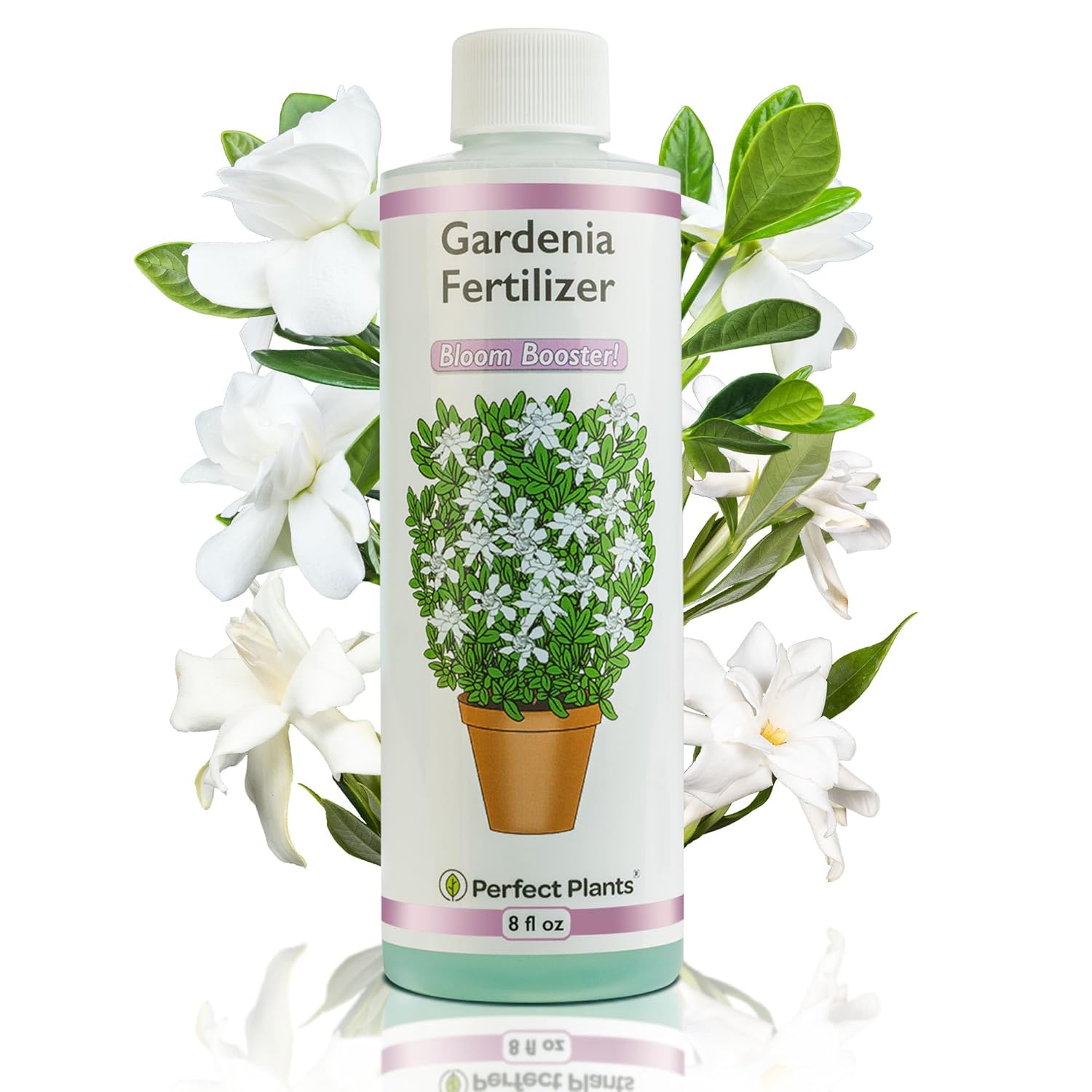
Perfect Plants Gardenia Liquid Fertilizer, 8 oz
| Item Form | Liquid |
|---|---|
| Application Method | Water |
| Target Species | Gardenia |
| Unit Count | 8 Fluid Ounces |
| Included Components | Liquid Gardenia Fertilizer |
This liquid Gardenia fertilizer is a concentrated, water-applied plant food designed to boost flowering shrubs and potted gardenias. It supplies the basic NPK nutrients plus small amounts of micronutrients like calcium, iron, and zinc, and the label recommends diluting by teaspoon measures per gallon so you add it during regular watering. Typical use is simple: measure the concentrate, mix into the watering can, and apply to container or landscape plants when they are actively growing. The product’s strengths are immediate availability to roots and a resealable bottle that keeps the concentrate usable between feedings. Because it is a generic liquid NPK formula rather than a lab-verified blend, results depend on following the dilution guidance and matching feed timing to your plant’s growth cycle. The 8 ounce size is convenient for small collections or trialing a new fertilizer, but frequent feeders or larger plantings will need larger or more frequent purchases. For gardeners wanting a straightforward bloom boost for gardenias, this is a practical, easy-to-use option with clear directions.
Best for: Gardeners who want an easy-to-use liquid feed to encourage bigger blooms on a few gardenias or potted flowering shrubs and who prefer a straightforward water-mix application.
Less Ideal for: Large landscapes or heavy-feeding collections where bulk, economy, or a precisely formulated nutrient analysis is a priority should consider concentrated jugs or granular alternatives.
- Concentrated liquid formula that mixes with water for quick root uptake
- Resealable 8 fl oz bottle keeps remaining concentrate fresh between uses
- Contains NPK plus trace micronutrients beneficial to flowering and foliage
- Simple, repeatable dilution instructions suitable for routine watering
- Small 8 ounce volume may require frequent repurchase for larger gardens
- No detailed NPK ratio or lab analysis provided on the product listing
Verdict: A simple, concentrated water-mix fertilizer for gardeners who want a quick and convenient bloom boost for a small number of gardenias.
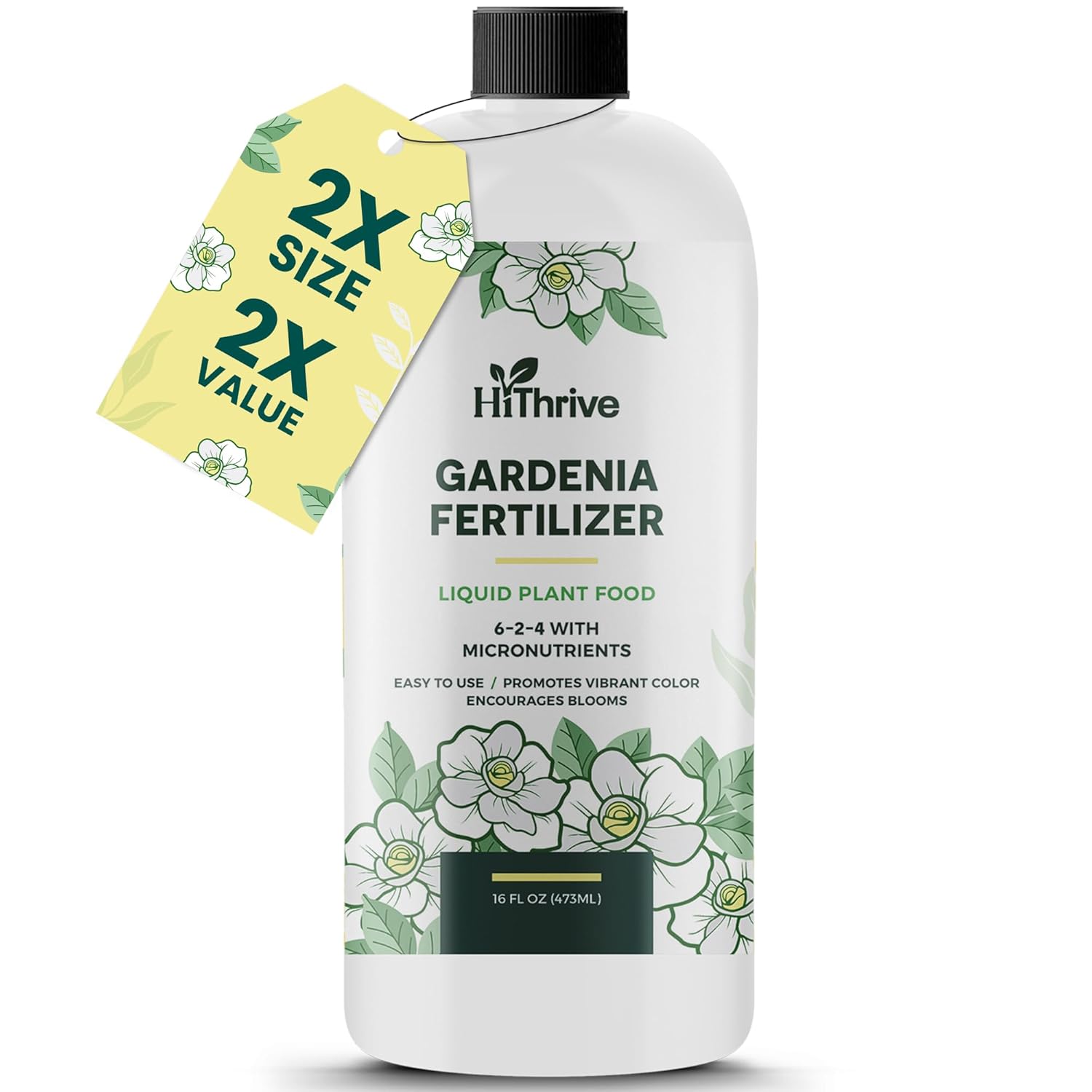
HiThrive Gardenia Liquid Fertilizer, 16 oz (makes 96 gal)
| Item Form | Liquid |
|---|---|
| Coverage | Flowering Bushes and Indoor Plants |
| Mixing Ratio | 1 teaspoon per gallon of water |
| Unit Count | 16 Fluid Ounces |
The HiThrive Gardenia Liquid Fertilizer is a concentrated, water-soluble plant food intended for gardenias and similar flowering shrubs and indoor flowering plants. Its 6-2-4 NPK formula supplies extra nitrogen for leaf and shoot growth, phosphorus to support blooms, and potassium for general vigor, while added micronutrients like calcium, magnesium, iron, manganese and zinc address common deficiencies. Use is straightforward: mix 1 teaspoon per gallon for regular feeding or 2 teaspoons per gallon for deficiency treatment and apply with watering. The 16 oz bottle mixes to about 96 gallons of solution, so a small bottle covers many feedings. Practical benefits include easy measuring, suitability for soil or bottom-watering, and a balanced mix that targets both greener foliage and better flowering. Limitations to note are that it is a regular liquid fertilizer rather than slow-release, so it requires consistent application to maintain results, and the formula is generalized for flowering bushes rather than strictly tailored to every acid-loving species. For cautious gardeners, following the mixing guidance closely will avoid overfeeding.
Best for: Gardeners who want a simple, ready-to-mix liquid fertilizer to support healthier foliage and more blooms in gardenias and similar flowering shrubs and who prefer predictable, repeatable feeding steps.
Less Ideal for: Gardeners who prefer one-time slow-release feeding or who need a fertilizer specially formulated to alter soil pH rather than just supply nutrients.
- Balanced 6-2-4 NPK formula targets both leaf growth and flowering
- Includes micronutrients (calcium, magnesium, iron, manganese, zinc) to correct common deficiencies
- Concentrated liquid mixes easily for quick application and can make up to 96 gallons
- Works for both outdoor gardenias and indoor flowering plants and can be applied via soil or bottom-watering
- Requires regular application because it is not a slow-release fertilizer
- Not specifically labeled with pH adjustment for acid-loving plants, so extra soil care may be needed
Verdict: A concentrated, easy-to-mix liquid fertilizer that delivers a balanced NPK plus micronutrients to reliably boost growth and flowering in gardenias.
Choosing the Right Fertilizer for Gardenia Plant: Key Factors to Consider
Nutrient Ratio and Bloom Focus
Gardenias benefit from fertilizers formulated to encourage flowering while maintaining healthy foliage. Look for N-P-K ratios that do not overemphasize nitrogen at the expense of phosphorus and potassium. Excessive nitrogen can produce excessive leafy growth with fewer blooms, while adequate phosphorus supports bud set and potassium improves overall plant vigor.
A bloom-focused feed usually has moderate nitrogen, elevated phosphorus during bud-setting periods, and steady potassium. Consider seasonal adjustments: higher phosphorus when buds form and a maintenance blend at other times. Also review guaranteed analysis to confirm the labeled N-P-K reflects the nutrients your soil test indicates you need.
Soil Acidity and pH Buffering
Gardenias are acid-loving plants that prefer a soil pH in the slightly acidic range. A fertilizer that helps maintain or gently lower pH will keep micronutrients like iron and magnesium available and reduce leaf yellowing. Some formulations include sulfur or acidifying agents, while others are neutral and require separate pH amendments.
If you grow gardenias in pots, the potting mix can drift alkaline over time, so pick a product that works with your watering and potting routine. For in-ground plantings over alkaline soils, you will need a fertilizer that either contains acidifying components or plan for regular soil acidification tasks alongside feeding.
Release Mechanism and Feeding Frequency
Fertilizers come as fast-release (water-soluble), slow-release granules, or concentrated spikes and gels. Fast-release feeds deliver nutrients quickly and are useful when correcting deficiencies or encouraging immediate bud set. Slow-release options provide a steady supply over weeks or months and reduce the chance of root burn from overfeeding.
Choose a release type that matches how often you want to work with your plants. Containers often need more frequent feeding and may respond better to water-soluble formulas. Established shrubs in the ground can do well with a measured slow-release product applied less frequently.
Micronutrients and Deficiency Correction
Beyond N-P-K, gardenias commonly show symptoms from missing micronutrients such as iron, magnesium, and manganese. Look for fertilizers that include these trace elements or plan to supplement them separately when deficiency symptoms appear. Chelated iron is especially helpful for correcting iron chlorosis in alkaline soils.
Micronutrient levels matter most when soil tests or plant symptoms indicate a problem. Avoid over-application of trace elements; follow label directions and retest soil or observe plant response before repeating treatments.
Formulation Suitability for Containers Versus In-Ground
Growing gardenias in containers concentrates root activity and can change nutrient and pH dynamics rapidly. Container mixes dry and leach nutrients faster, so they typically need more frequent, gentler feeding. In-ground gardenias benefit from feeders that release slowly and build nutrient reserves in the root zone.
Consider particle size, solubility, and salt index when choosing a fertilizer for pots. Low-salt formulations and water-soluble options reduce the risk of root burn in restricted root volumes, while granules and spikes are often better for established in-ground specimens.
Ease of Application and Safety
How easy a fertilizer is to apply affects whether you will keep to a feeding schedule. Water-soluble formulas require measuring and dissolving, while spikes and pellets are applied directly. Consider the precision you need and whether you want daily, weekly, or seasonal interventions.
Also factor in handling safety for children and pets. Controlled-release granules and incorporated product types can be less tempting to animals than coated flakes. Always follow label directions for application rates and storage to minimize accidental exposure.
When to Start Feeding Gardenias
Begin regular feeding when active growth resumes in spring and stop or reduce feeding as growth slows in fall. Timing matters because nutrients support bud formation during the active growth window.
If you are transplanting or repotting, wait several weeks before applying a full-strength feed to allow roots to reestablish. A light starter feed can be used if new growth is slow to appear.
- Start with lighter applications in cool climates where growth begins later.
- Increase phosphorus slightly as flower buds form to support set and development.
- In warm regions with year-round growth, follow a consistent maintenance schedule and adjust only when you observe deficiency signs.
Adjusting Feed for Container Gardenias
Container gardenias need a feeding plan that compensates for quicker nutrient depletion and potential pH shifts in potting mixes. Use water-soluble feeds or split the recommended dose over several applications to avoid salt buildup and root stress.
Flush containers periodically with clear water to prevent salt accumulation and retest the potting mix pH if you notice yellowing leaves or poor flowering.
- Feed containers every 2 to 4 weeks with a diluted water-soluble solution during active growth.
- Use a low-salt or specifically labeled container-friendly formula when repotting young plants.
Organic Versus Synthetic Options
Organic fertilizers provide slow nutrient release and can improve soil structure over time, which benefits long-term soil health around gardenias. They often supply nutrients in forms that depend on microbial activity to become available, so they work best in biologically active soils.
Synthetic formulas deliver nutrients predictably and are useful when you need rapid correction of deficiencies or precise feeding schedules. They also come in a wider range of acidifying products designed to influence pH more directly.
- Choose organic feeds if you prefer soil-building approaches and can accept slower visible results.
- Choose synthetic options when you need quick correction or precise timing for bloom cycles.
Interpreting Leaf Symptoms
Yellowing between veins on newer leaves often indicates iron deficiency, especially when the soil is alkaline. General yellowing can signal nitrogen shortage or overwatering. Observing which leaves are affected and the pattern of discoloration helps you decide whether to feed or correct pH.
Keep a log of symptoms, recent feedings, and any soil amendments so you can correlate plant responses to treatments. That record helps avoid repeating ineffective interventions.
- Interveinal chlorosis on young leaves typically points to iron issues.
- Uniform pale leaves across the plant more often indicate insufficient nitrogen.
- Scorching or brown tips may result from salt accumulation from overfeeding.
Complementary Soil Amendments
Fertilizer alone may not fix structural or pH problems. Incorporate organic matter, peat, or acidic compost when building soil for gardenias to create a consistently acidic, well-drained root environment. Where drainage is poor, amend the planting area with coarse material to prevent root suffocation.
Use targeted pH amendments, such as sulfur-containing products or chelated iron treatments, when soil tests show alkalinity. Apply these measures according to soil test guidance and monitor pH over time rather than making repeated heavy applications.
- Add compost annually to improve soil biology and nutrient retention.
- Test soil pH before major interventions and retest after several months to gauge impact.
How We Chose the Best Fertilizer for Gardenia Plant
We selected fertilizers that match the needs of gardenia plants by prioritizing criteria gardeners can observe and measure in the yard or containers. Key evaluation points included nutrient balance and N-P-K ratios focused on bloom production and leaf health; soil acidification and pH buffering to keep root zones in the preferred acidic range; release type and feeding schedule to match low-maintenance or frequent-feeding approaches; and formulation suitability for containers versus in-ground plantings. We also considered ease of use, including granules, spikes, and water-soluble options, since application method affects accuracy and root uptake. Excluded items included general-purpose fertilizers that lack acidifying properties, specialty blends intended only for lawns or vegetables, and products with unclear nutrient labeling. We gave preference to clearly labeled formulations with targeted micronutrients like iron and magnesium that often correct common gardenia deficiencies.
FAQ
How often should I fertilize gardenias?
Frequency depends on the fertilizer type. Water-soluble feeds are usually applied every 2 to 4 weeks during active growth, while slow-release granules are applied every 2 to 3 months. Adjust frequency based on plant response and container versus in-ground conditions.
Can I use general-purpose fertilizer on gardenias?
General-purpose formulas can support growth but may not keep soil acidic enough or supply the specific micronutrients gardenias need. If you use a general product, monitor pH and leaf color and supplement with acidifying amendments or micronutrients as needed.
What are signs that my gardenia needs more iron?
Iron deficiency typically shows as yellowing between the veins on new leaves while veins remain green. The condition is common in alkaline soils and often improves after acidifying treatments or iron chelate applications.
Are organic fertilizers effective for gardenias?
Organic fertilizers can be effective and improve soil structure over time. They release nutrients more slowly and rely on soil biology, so they are best when you have healthy soil microbes and are not seeking immediate correction of deficiencies.
Should I change feeding in winter?
Yes. Reduce or stop routine feeding as growth slows in colder months. Overfeeding during dormancy can stress roots and waste nutrients. Resume regular feeding when new growth resumes in spring.
How can I avoid root burn when feeding potted gardenias?
Use diluted water-soluble feeds, split the recommended dose across multiple applications, and flush pots occasionally to prevent salt buildup. Choosing low-salt or container-specific formulations also reduces the risk.
Final Verdict
Prioritize a fertilizer that balances bloom-supporting nutrients with acidifying capacity and appropriate micronutrients. Decide on a release type that matches how often you want to work with your plants and whether they are in containers or in the ground. Monitor leaf symptoms and soil pH, and be ready to adjust feed strength or add targeted micronutrients when deficiencies appear. With a consistent feeding plan focused on pH control and phosphorus for bud set, you can confidently support stronger blooms and healthier gardenia foliage.
