

Note: This article contains affiliate links. If you click on these links and make a purchase, I may earn a small commission at no extra cost to you. This helps support my research and content. Read my full affiliate disclosure here.
Choosing the right soil for making pots makes a noticeable difference in how container plants establish, flower, and tolerate watering cycles. In pots root space is limited, so the medium must hold enough moisture and nutrients while still allowing air to reach roots. The mixes shortlisted here are the top picks across common container uses, from decorative patio pots to vegetable and herb containers. We evaluated each option for moisture management, nutrient content, and structure so you can pick a soil that fits your container style and plant list.
Top Picks at a Glance
| Best Overall The best all-around choice for most situations | Burpee Premium Organic Potting Mix with Coco Coir (9 Quart) |  |
| Best Quality Built to a higher standard if you want something more solid | Rosy Soil Cactus & Succulent Potting Mix, 4 Quart |  |
| Best Budget The cheapest option that still gets the job done reliably | SpongEase Coconut Coir Potting Soil — 1 Quart Pop-Up Bag |  |
| Highest Rated A top-rated pick with lots of positive feedback | circle soil Houseplant Potting Mix (Peat-Free, 4 Qt) |  |
| Most Popular A crowd favorite that many people choose with confidence | Plantonix Coco Bliss Coco Coir Bricks (5-Pack) |  |
| Best Seller A high-volume bestseller chosen again and again | Back to the Roots Organic Expanding Coco Coir Potting Soil Brick (10 lb) |  |
Burpee Premium Organic Potting Mix with Coco Coir (9 Quart)

| Item Form | Powder |
|---|---|
| Specific Uses For Product | Plant Growth, Root Development, Seed Development, Soil Conditioning |
| Coverage | 9 Qt Container |
| Liquid Volume | 9 quarts |
Burpee Premium Organic Potting Mix is a ready-to-use container soil designed for indoor and outdoor pots, seed starting, and raised bed containers. The mix combines coco coir for improved aeration and moisture retention with a nutrient blend that feeds plants for up to three months, making it useful for establishing seedlings or repotting established vegetables, herbs, and ornamentals. It is OMRI listed, which suits organic growers, and the bag is sold in a convenient 9-quart size that fits most small to medium containers. Practical benefits include reduced watering frequency thanks to the coir component and a balanced medium that promotes root development and germination. Limitations are the small bag size for larger projects and that it supplies nutrients for only a limited period, so longer-term containers will need supplemental fertilizer. The mix is powdery and light, so it is easy to handle but may compress over time in deep pots and benefit from occasional loosening.
Best for: Gardeners who want a compact, ready-made organic potting mix that reduces maintenance and supports reliable seed starting and container growth.
Less Ideal for: Those establishing large beds or filling many large containers at once should choose bulk soil or larger bags instead.
- OMRI listed organic blend suitable for organic container gardening
- Coco coir improves moisture retention while maintaining good aeration
- Includes slow-release nutrients that feed plants for up to three months
- Light, easy-to-handle texture ideal for seed starting and repotting
- 9-quart bag is small for larger containers or multiple pots
- Nutrient supply is temporary so additional fertilizer is required for long-season crops
Verdict: A compact OMRI-listed potting mix with coco coir that simplifies seed starting and short-term container growing by improving moisture balance and early root development.
Rosy Soil Cactus & Succulent Potting Mix, 4 Quart

| Unit Count | 64 Ounce |
|---|---|
| Ingredients | Biochar,Pumice,Mycorrhizae,Sand,Pine Bark Fines,Compost |
| Style Name | Cactus & Succulent |
This 4 quart Rosy Soil cactus and succulent mix is built for growers who need consistently fast-draining media. The chunky blend of pumice, sand, pine bark fines and biochar keeps the mix airy so roots do not sit in water, while added mycorrhizae and worm castings supply biological activity that supports steady root growth without synthetic fertilizers. Typical use is repotting small-to-medium cacti and succulent pots or refreshing the top few inches of established containers; the resealable bag makes it easy to store between jobs. Practical benefits include reduced risk of root rot, less frequent repotting from compacted soil, and improved transplant success for drought-tolerant species. Because the formula is peat-free it drains more quickly than peat-heavy mixes but may require slightly more frequent watering in very dry indoor conditions. The 4 quart size suits a few plants at a time rather than large collections, so performance-focused growers managing many specimens will need multiple bags.
Best for: Growers who prioritize drainage and root performance for cacti and succulents and want a biologically active, peat-free mix for repotting individual plants or small collections.
Less Ideal for: People who need large volumes of soil at once or who prefer a moisture-retentive mix for tropical houseplants should look elsewhere.
- Chunky, pumice- and bark-based texture promotes rapid drainage and prevents compaction
- Includes mycorrhizae and worm castings to support root health without synthetic fertilizers
- Peat-free formula reduces water retention and environmental impact
- Resealable bag keeps remaining mix fresh between uses
- Small 4 quart volume means multiple bags are required for larger collections or frequent repotting
- Faster drainage can lead to more frequent watering in very dry indoor environments
Verdict: Choose this mix when you need a fast-draining, biologically active peat-free soil that reliably reduces soggy roots for cacti and succulents.
SpongEase Coconut Coir Potting Soil — 1 Quart Pop-Up Bag

| Brand Name | Enroot |
|---|---|
| Included Components | 1 SpongEase Wafer |
| Volume | 1 quarts |
SpongEase is a compressed coconut coir potting soil sold in a small pop-up bag that expands when you add water to produce about 1 quart of loose, aerated growing medium. It is typically used for seed starting, propagation, small pots and transplanting where a light, well-draining mix is helpful. The product’s natural coconut fibers hold water like a sponge while leaving plenty of air space around roots, which helps reduce overwatering problems and keeps young roots healthy. Because the wafer is inert and low in nutrients it is best used with added fertilizer or mixed with compost for longer-term pots. The pop-up bag is convenient for storage and makes it easy to rehydrate and reuse for at least a couple of seasons. Limitations to expect are the small volume per package and the need to amend the mix for sustained feeding of mature plants, so plan to buy multiple wafers or combine with richer potting mix for larger containers.
Best for: Buyers who want an affordable, space-saving soil option for seed starting, small pots, or propagation and who are comfortable amending with fertilizer or compost.
Less Ideal for: Gardeners looking for a ready-to-use, nutrient-rich potting mix for large containers or long-term houseplants should choose a blended potting soil instead.
- Expands from a compact wafer to a loose, airy coir medium for easy storage and shipping
- Coconut fibers retain moisture while maintaining good aeration to reduce waterlogged roots
- Reusable structure resists compaction and can be rehydrated for at least two seasons
- Peat-free and made from renewable coconut husks
- Contains minimal nutrients and requires fertilizer or compost for sustained plant growth
- Small 1 quart yield per package makes it impractical as a sole potting mix for larger containers
Verdict: A compact, peat-free coconut coir wafer that expands into a light, well-aerated quart of potting medium ideal for starting seeds and small pots when you add fertilizer.
circle soil Houseplant Potting Mix (Peat-Free, 4 Qt)
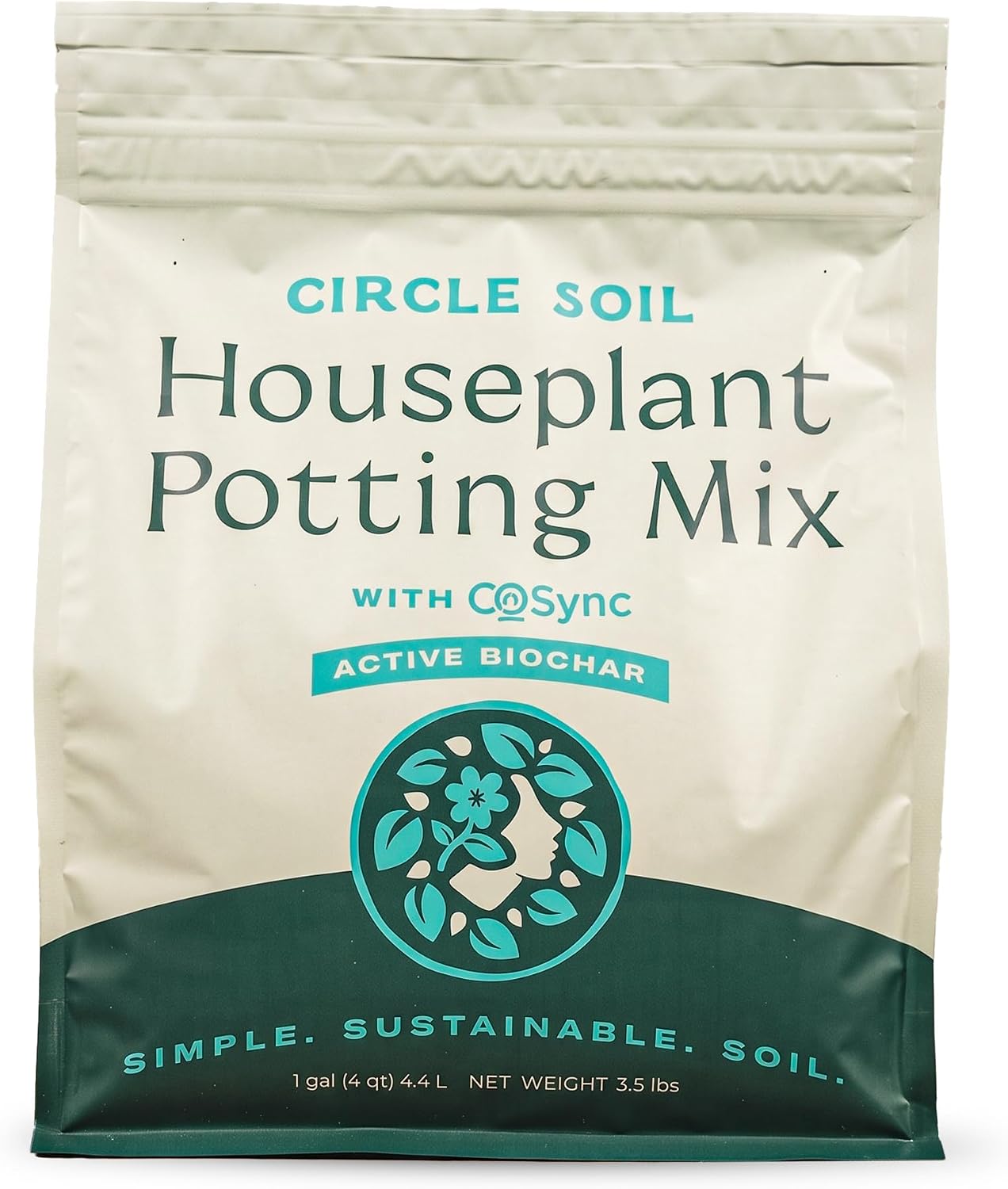
| Unit Count | 56 Ounce |
|---|---|
| Item Highlight | Active Biochar, Worm Castings, Expanded Shale, Peat-Free, Organic, for Indoor Plants and Herbs |
| Brand Name | circle soil |
| Number of Packs | 1 |
This peat-free houseplant potting mix is built around active biochar, coconut coir and expanded shale to give a light, well-aerated medium that holds moisture without waterlogging. Typical uses include repotting potted herbs and common houseplants or topping up container soil for more even moisture retention. Notable features are the biochar that helps retain nutrients and support microbial life, worm castings and local compost for organic feeding, and expanded shale for natural drainage. In practice the mix should reduce the risk of root rot and encourage healthy root development by balancing air and water in small pots. Because it is designed for everyday indoor use, gardeners will appreciate the resealable packaging and the peat-free composition if they prefer sustainable ingredients. Limitations are that the bag is a modest 4 quart size, so frequent purchases are likely for multiple or larger containers, and gardeners needing a gritty, fast-draining cactus mix or a heavy-duty outdoor planting soil will want a different formula.
Best for: Gardeners who prioritize consistent, reliable results for potted herbs and common indoor plants and prefer sustainable, peat-free mixes for routine repotting and container care.
Less Ideal for: Growers who need large volumes of soil for outdoor beds or a very gritty, cactus-specific mix for drought-tolerant plants should consider other products.
- Peat-free formula with active biochar to improve nutrient retention and microbial activity
- Balanced aeration and drainage from expanded shale and coconut coir to prevent waterlogging
- Contains organic amendments like worm castings and compost for gentle, ongoing nutrition
- Resealable packaging helps keep the small bag usable between repottings
- Small 4 quart unit requires buying multiple bags for more than a few pots
- Not formulated specifically for succulents or heavy outdoor soils so drainage profile is moderate rather than very fast
Verdict: Choose this peat-free, biochar-enriched potting mix when you want a reliable, sustainable medium that keeps potted cilantro and other herbs evenly moist without soggy roots.
Plantonix Coco Bliss Coco Coir Bricks (5-Pack)

| Number of Packs | 5 |
|---|---|
| Unit Count | 114.65 Ounce |
| Brand Name | plantonix |
| Volume | 10.5 gallons |
Plantonix Coco Bliss coco coir bricks are compressed blocks of washed, screened coconut coir designed to expand in water and be mixed into potting soil or used as mulch. Typical use is rehydrating a brick, breaking it apart, and blending the coir with potting mix, seed-starting trays, container soil, or garden beds to improve drainage and aeration. Notable features include multiple wash-and-screen steps that reduce dust and debris, neutral pH with high cation exchange capacity for nutrient availability, and strong moisture retention that helps plants stay hydrated between waterings. Practical benefits for gardeners are improved soil structure, reduced compaction, and a sustainable alternative to peat moss. Limitations to consider are that coir provides little inherent nutrients so you should supplement with fertilizer or compost, and bricks require soaking and some manual breaking up which adds a small prep step compared with bagged ready-to-use mixes. For gardeners focused on low environmental impact and predictable soil improvements, this is an easy-to-handle amendment that performs consistently.
Best for: A cautious gardener who wants a reliable, sustainable soil amendment for containers, seed starting, or mulching and prefers products that are cleaned and processed for predictable performance.
Less Ideal for: Gardeners seeking an all-in-one potting mix with built-in fertilizers or those who want a completely ready-to-use loose medium without any prep work.
- Made from 100% renewable coconut husks so it is an environmentally friendly peat alternative
- Pre-rinsed and pre-screened to remove fiber, sand, and rocks which reduces dust and debris
- High moisture retention helps keep containers and seed trays hydrated longer
- Improves soil aeration and reduces compaction when mixed into potting soil
- Neutral pH and high CEC support better nutrient uptake when fertilized
- Contains no significant nutrients so regular fertilization or compost is needed
- Requires soaking and manual breaking apart before use, adding a prep step
Verdict: A dependable, eco-friendly replacement for peat moss that reliably improves moisture retention and soil structure when you're looking for a low-risk natural mulch or soil amendment.
Back to the Roots Organic Expanding Coco Coir Potting Soil Brick (10 lb)

| Item Highlight | 10 lb compressed coco coir brick; peat-free; OMRI Listed |
|---|---|
| Item Type Name | Coconut Coir |
| Volume | 2 cubic feet |
| Ingredients | Coconut Coir |
| Style Name | Expanding Potting Soil |
This compressed coco coir brick provides a lightweight, peat-free potting medium that expands when you add water to create loose, airy substrate for containers and seed flats. It is typically used by hydrating the 10 lb block to about 2 cubic feet of coir and then using it alone for potted plants, mixing it into garden soil to improve drainage and aeration, or blending with compost for starting seeds. Notable features include OMRI listing for organic use, a balanced pH suited to a wide range of plants, and compact storage before expansion which saves space. Practical benefits are improved root aeration and water retention compared with heavy garden loam, easier handling than bulky bags, and versatility across vegetables, herbs, and ornamentals. Important limitations are that coco coir is a soilless substrate and does not supply significant nutrients on its own so you will need to add fertilizer or compost for long-term potted herbs like rosemary, and the product requires time and a water source to expand before use.
Best for: Buyers who prioritize low-risk, easy-to-handle, organic potting media and want a versatile base for container herbs and seed starting without dealing with heavy bags.
Less Ideal for: Gardeners who want a ready-to-plant, nutrient-rich potting mix out of the box or those who prefer soil with built-in slow-release fertilizer.
- Peat-free OMRI listed organic coco coir suitable for organic growing
- Expands from a compact brick to about 2 cubic feet for easy storage and transport
- pH balanced and airy texture that improves drainage and root aeration
- Versatile use: can be used alone, for seed starting, or mixed into existing soil
- Provides little inherent fertility so supplemental feeding or compost is needed for nutrient-hungry plants
Verdict: A compact, peat-free coco coir brick that expands into an airy, pH-balanced base ideal for low-risk organic container gardening and seed starting when paired with fertilizer or compost.
Choosing the Right Soil for Making Pots: Key Factors to Consider
Water Retention Vs Drainage Balance
In a pot the wrong balance between holding water and letting it escape causes root problems. Too much retention reduces oxygen at the roots and invites rot, while too-fast drainage leaves plants thirsty and requires near-constant watering.
Assess the soil's components: peat or coir increases moisture-holding capacity, while perlite, pumice, or coarse sand improve drainage and aeration. Choose a mix that matches the water needs of the plants you intend to grow and the watering frequency you can maintain.
Particle Size and Structure
Particle size affects porosity, root penetration, and how the mix behaves as it dries and rewets. Coarse particles create stable pore space that keeps air available to roots, while very fine particles compact more easily and reduce oxygen exchange.
Look for a medium with a range of particle sizes that resists compaction over time. Stable structure matters for long-season containers and for plants that need consistent root environment, including many perennials and larger ornamental pots.
Nutrient Content and Starter Fertility
Potting soils vary widely in their initial nutrient levels. Some mixes are lightly amended to avoid burning young roots, while others include starter fertilizers to support early growth. Consider whether you prefer a lightly charged mix that you can control with your own feeding schedule, or a fortified mix that supports strong early growth.
Also plan a feeding regime because nutrients in containers deplete faster than in-ground beds. A balanced initial fertilizer plus a regular liquid or slow-release feed will keep potted plants healthy throughout the season.
Organic Matter and Longevity
Organic components like compost, bark fines, or coir contribute nutrients and help retain moisture, but they can break down over time and reduce porosity. So while organic matter benefits short-term fertility and microbial life, too high a proportion can compact after several months or seasons.
Select mixes that balance organic content with inert pore-makers to preserve longevity. For long-lived containers, refresh topsoil or repot periodically to restore structure and fertility.
pH and Crop Compatibility
Soil pH influences nutrient availability in containers. Most common ornamental and edible container plants thrive in a slightly acidic to neutral range, but certain species prefer more acidic or alkaline conditions.
Check the soil's pH or choose a neutral mix if you plan mixed plantings. Amend with lime or sulfur only when necessary and based on testing, because blanket adjustments can create nutrient imbalances.
Weight, Handling, and Safety
The weight of a filled pot affects placement, mobility, and the load on stands, balconies, or decks. Heavier soils with large amounts of stone or dense aggregates increase stability but limit portability.
Consider dust levels, ease of scooping, and whether the mix contains any amendments you prefer to avoid. For example, some gardeners avoid peat for sustainability reasons, while others prioritize lightweight mixes for hanging baskets and rooftop containers.
Mixing Your Own Potting Soil
Making your own potting soil gives you control over drainage, weight, and nutrient content. A basic do-it-yourself approach blends a drainage component, a moisture-retaining organic, and a stable structural element to keep pores open.
Common proportions start with roughly equal parts of coir or composted bark, a drainage additive like perlite or pumice, and a humus source such as compost. Adjust ratios for plant type: more drainage for succulents, more organic for moisture-loving annuals.
- Use coarse pine bark or aged compost rather than raw green materials to avoid nitrogen drawdown.
- Sterilize reused soil if disease or pests were present in the previous container.
- Sift out fines to maintain good aeration and reduce compaction risk.
Adjusting Soil for Specific Plants
Different container plants have distinct needs. For Mediterranean herbs and succulents emphasize sharp drainage and coarse particles. For vegetables and heavy feeders, choose mixes with higher organic content and a reliable fertilizer schedule.
When growing mixed plantings in a single pot, aim for a compromise soil that favors root oxygen while providing enough water retention for less drought-tolerant species.
- Succulents: increase pumice or coarse sand, reduce organic percentage.
- Herbs and vegetables: add compost and a balanced slow-release feed.
- Ornamentals in hanging baskets: lighter mixes with more coir for water retention but reduced weight.
Refreshing and Reusing Potting Soil
Potting soil loses structure and nutrients with repeated use. Instead of discarding after one season, refreshing the top layer and mixing in amendments can extend its life. Remove compacted surface material, fold in fresh compost, and add some aerating material to recover porosity.
For reused soil, always monitor for salt buildup from fertilizers. Leach containers periodically by watering thoroughly until drainage runs clear, and replace a portion of the media when it becomes dense or poorly draining.
- Replace about one third of the soil every season for long-term containers.
- Use a simple salt test or observe leaf scorch to detect fertilizer accumulation.
- Never reuse soil from plants that had root disease without sterilizing.
Container Choice and How It Affects Soil
The container material and size change how soil behaves. Terracotta breathes and dries faster, so mixes in unglazed clay pots often need slightly higher water-holding capacity. Plastic and glazed containers retain moisture longer and can tolerate soils with faster drainage.
Small pots heat and dry rapidly, so use mixes that retain moisture and reduce watering frequency. Large pots benefit from coarser mixes that allow roots to explore without becoming waterlogged in the center.
- Match mix to pot material: more retention for porous pots, more drainage for impervious pots.
- Consider pot depth: shallow pots dry out faster and may need soil that holds water better.
- Provide adequate drainage holes and consider a layer of coarse material only if it improves outlet flow.
Amendments and Simple Tests to Try
Common amendments let you tweak a ready-made mix. Pumice and perlite boost aeration, coir increases water retention without compaction, and slow-release fertilizer adds long-term feeding. Bone meal, rock phosphate, or specialized feeds can be used when specific nutrient needs are identified.
Perform quick field tests: squeeze a handful of moistened mix to check for excessive compaction, or observe how fast water drains through a trial pot. A healthy potting mix will drain within a few minutes without falling apart.
- Add 10 to 30 percent coarse amendment for better aeration in most mixes.
- Use a moisture meter or finger test to learn how quickly your chosen soil holds water in your climate.
- Top-dress with compost midseason to refresh nutrients without full repotting.
How We Chose the Best Soil for Making Pots
We selected soils that perform well in container environments where root volume is limited and drainage is critical. Our filters prioritized mixes with a stable structure to resist compaction, clear information about water retention components, and balanced nutrient profiles suitable for initial planting. We also favored formulations that include or accept easy amendments for long-season containers. Practical handling matters, so we considered texture and dust levels for easy filling and repotting. Durability in pots was assessed by looking at components that maintain porosity over several water cycles. Exclusions included mixes formulated solely for in-ground beds, media designed only for specific single crops without general-purpose use, and products lacking transparent ingredient lists.
FAQ
How often should I repot containers using potting soil?
Many containers benefit from repotting or partial soil replacement every one to three years depending on plant growth and soil breakdown. Fast-growing plants and smaller pots often need attention sooner, while long-lived perennials in large containers can go longer between major refreshes.
Can I use garden soil in pots instead of potting soil?
Garden soil is usually too dense for containers and tends to compact, reducing oxygen availability. It can be mixed in small amounts with potting media for added mineral content, but pure garden soil alone is not recommended for most pots.
Is coconut coir a good substitute for peat in potting mixes?
Coconut coir is a practical alternative that holds water well and has fewer sustainability concerns than peat. It may require buffer rinsing for salts depending on source and works well when combined with aerating additives to prevent compaction.
How do I tell if my potting soil is compacted or has poor drainage?
Signs include slow drainage after watering, standing water on the surface, yellowing foliage, or a sour smell from the pot. A physical check is to squeeze a damp handful: compacted mix will form a tight ball and shed little water when loosened.
Should I fertilize newly potted plants right away?
It depends on the soil's starter fertility. If the mix contains a starter fertilizer, wait a few weeks before additional feeding. For lightly amended or homemade mixes, begin a gentle feeding schedule once plants show active growth to avoid nutrient stress.
Final Verdict
Pick a potting soil that matches how often you can water, the container type you use, and the plant demands. Prioritize a mix that keeps roots oxygenated while supplying enough moisture and nutrients for the length of time you expect between refreshes. Tradeoffs are inevitable: lighter, faster-draining mixes improve aeration but need more frequent feeding and watering; heavier, organic-rich mixes hold moisture longer but may compact sooner. Decide which factors matter most for your containers and adjust the mix or amendments to suit those priorities.
