

Note: This article contains affiliate links. If you click on these links and make a purchase, I may earn a small commission at no extra cost to you. This helps support my research and content. Read my full affiliate disclosure here.
Choosing the right early spring lawn fertilizer shapes how quickly a lawn recovers from winter and how well it withstands the season ahead. The wrong product can burn new shoots or leave grass nutrient-poor by early summer. This guide focuses on early spring formulas designed to stimulate green-up, support root growth, and limit stress during the transition from dormancy. We shortlisted seven top-rated early spring lawn fertilizers and evaluated them for nutrient balance, release pattern, and ease of application. Below you will find practical notes to help you match a formula to your grass type, soil condition, and maintenance routine before the product list.
Top Picks at a Glance
| Best Overall The best all-around choice for most situations | Scotts Turf Builder Halts Crabgrass Preventer with Lawn Food, 5,000 sq. ft. |  |
| Best Quality Built to a higher standard if you want something more solid | The Andersons PGF Balanced 10-10-10 Granular Fertilizer with Micronutrients and 2% Iron (covers 5,000 sq ft) | 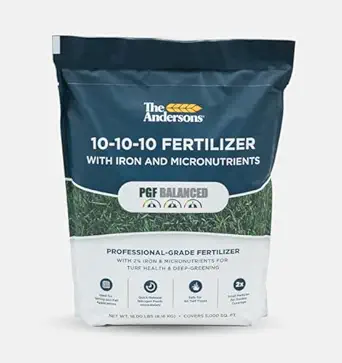 |
| Best Value The sweet spot between price and what you get | Milorganite 6-4-0 Slow-Release Fertilizer, 32 lb (with feeding tips brochure) |  |
| Best Budget The cheapest option that still gets the job done reliably | Greenview Starter Fertilizer 10-18-10, 8 lb bag |  |
| Highest Rated A top-rated pick with lots of positive feedback | AgChimp 24-0-11 Professional Lawn Maintenance Fertilizer, 16 lb |  |
| Most Popular A crowd favorite that many people choose with confidence | Scotts Turf Builder Lawn Food, 12.5 lb. |  |
| Best Seller A high-volume bestseller chosen again and again | Scotts Green Max Lawn Food, Granular Fertilizer with Iron, 5,000 sq. ft. |  |
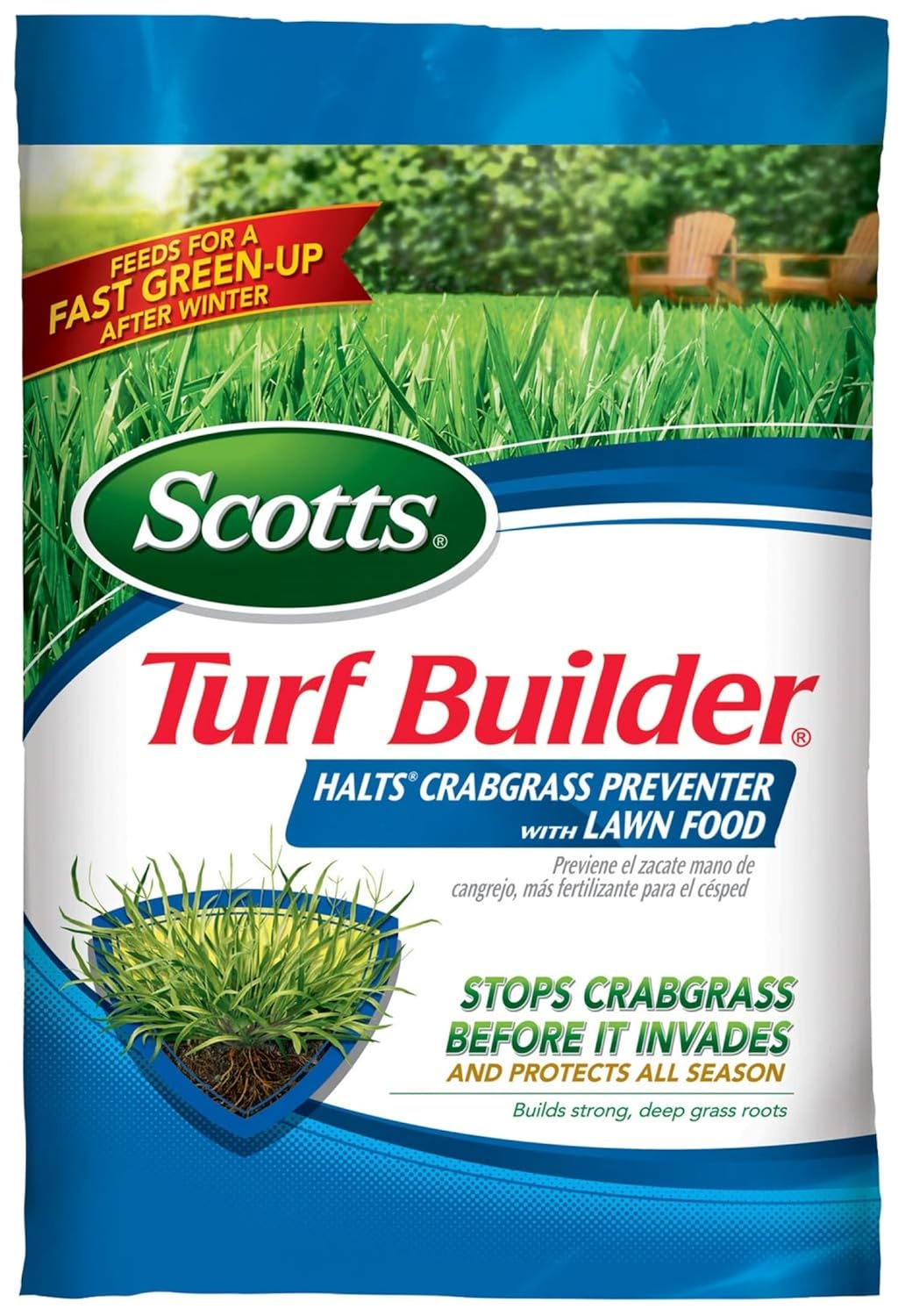
Scotts Turf Builder Halts Crabgrass Preventer with Lawn Food, 5,000 sq. ft.
| Item Form | Granule |
|---|---|
| Coverage | 5000 square feet |
| Fertilizer analysis | 30-0-4 |
| Unit Count | 213.6 Ounce |
Scotts Turf Builder Halts combines a pre-emergent crabgrass preventer with a granular fertilizer so you both stop grassy weeds from sprouting and give the lawn a spring boost. It is applied in early spring to a dry lawn, spread evenly with a rotary or drop spreader, and requires light watering within a few days to activate. The product is formulated to protect against crabgrass plus several other listed grassy and broadleaf weeds while the fertilizer promotes fast green-up and stronger roots. Practical benefits include one-step application for small to medium yards and clear spreader settings recommended by the manufacturer for predictable coverage. Limitations to expect are that it prevents new crabgrass but will not kill established mature crabgrass or existing weeds, and it is not suitable for dichondra or bentgrass lawns. For best results you must time the application correctly in early spring and irrigate to incorporate the granules.
Best for: Homeowners who want a straightforward early spring product that prevents crabgrass while feeding the lawn and prefer a single granular application for small to medium yards.
Less Ideal for: People looking to remove established broadleaf or grassy weeds, or owners of dichondra or bentgrass lawns who need a different, compatible treatment.
- Combines pre-emergent crabgrass control with fertilizer for a two-in-one spring treatment
- Covers up to 5,000 sq. ft. from a single bag, suitable for small to medium lawns
- Granular form works with common spreaders and has manufacturer-recommended spreader settings
- Promotes fast green-up and helps build stronger, deeper grass roots
- Does not control mature crabgrass or existing weeds
- Not safe for use on dichondra or bentgrass lawns
Verdict: A simple early-spring two-in-one granular treatment that prevents crabgrass while giving your lawn a fast green-up across small to medium yards.
The Andersons PGF Balanced 10-10-10 Granular Fertilizer with Micronutrients and 2% Iron (covers 5,000 sq ft)

| Item Form | Granules |
|---|---|
| Application Method | spreader |
| Coverage | 5000 square feet |
| Target Species | Lawns and Gardens |
The Andersons PGF Balanced 10-10-10 is a fine-particle granular fertilizer designed for broad, even coverage across lawns, gardens, and planting beds. It delivers a balanced 10-10-10 NPK in a quick-release form, making it suitable for jump-starting growth in early spring and for general seasonal feedings. The very small particle size increases spreader coverage compared with typical pebble-sized granules, so one 18 lb bag claims to cover up to 5,000 square feet. Included micronutrients and 2% iron help produce deeper greening where needed. Typical use is with a broadcast spreader applied to dry foliage, then watered in; it can also be incorporated into garden beds at planting or used around trees and shrubs. Important practical considerations are cleanup and storage: the iron can stain paved surfaces so sweeping paved areas after application is recommended, and leftover product should be kept dry. This product favors gardeners who want visible, quick results and uniform distribution but who are comfortable reapplying during the season rather than relying on slow-release granules.
Best for: Gardeners focused on fast, visible lawn improvement in early spring who value even coverage and strong greening rather than one-time long-release feeding.
Less Ideal for: People seeking a low-maintenance, slow-release fertilizer or those who cannot thoroughly sweep and water paved areas after application.
- Fine particle size for more even coverage and efficient spreader distribution
- Balanced 10-10-10 quick-release formula provides immediate nutrition
- Includes micronutrients and 2% iron for enhanced greening
- Designed to cover up to 5,000 sq ft from a single 18 lb bag
- Quick-release formula means nutrients act fast but do not provide long-term slow feeding
- Iron content can stain sidewalks and driveways if not cleaned up promptly
Verdict: Choose this product if you want a finely ground, fast-acting 10-10-10 fertilizer that delivers even coverage and deeper greening for early spring lawn performance.
Milorganite 6-4-0 Slow-Release Fertilizer, 32 lb (with feeding tips brochure)

| Item Form | Pelletized |
|---|---|
| Application Method | Broadcast, Rotary or Manual |
| Coverage | 2,500 Square Feet |
| Specific Uses For Product | Lawns, Flowers and Gardens, Education |
Milorganite 6-4-0 is a pelletized, slow-release organic fertilizer designed for regular lawn and garden feeding in early spring and throughout the growing season. It supplies low-salt nitrogen that releases over 8 to 10 weeks, plus organically complexed iron to help green turf without the staining common to some synthetic iron products. Use it with a broadcast, rotary, or hand spreader; one 32 lb bag covers about 2,500 square feet and includes a printed brochure with seasonal timing and spreader settings. Because it is mostly organic matter, it also improves soil structure over time, which is especially beneficial in clay or sandy soils. Expect an earthy smell at first that fades after watering or rain. This product does not require immediate watering-in and is safe for use around flowers, shrubs, trees, and many vegetables. Compared with quick-release synthetics, it feeds more slowly so results appear over weeks rather than days and it will not correct severe nutrient deficiencies rapidly.
Best for: Homeowners who want a low-maintenance, soil-improving fertilizer for early spring application and steady green-up across lawns and mixed garden plantings.
Less Ideal for: Gardeners who need an immediate, high-analysis boost to correct severe nutrient deficiencies or who prioritize rapid, visible greening within days.
- Slow-release nitrogen provides steady feeding for 8–10 weeks
- Low-salt formula reduces risk of fertilizer burn in hot or dry conditions
- Organically complexed iron greens lawns without staining concrete
- Pelletized form works with broadcast, rotary, or manual spreaders
- High organic matter content helps improve soil structure over time
- Slower visible results than fast-release synthetic fertilizers
- Has an initial earthy odor that can attract pets until watered in
Verdict: Choose this product if you want a dependable, low-salt, slow-release fertilizer that improves soil while providing steady early spring feeding for an entire lawn.
Greenview Starter Fertilizer 10-18-10, 8 lb bag

| NPK | 10-18-10 |
|---|---|
| Form | Granules |
| Application | Broadcast or drop spreader |
| Coverage | 2,500 sq. ft. |
Greenview Starter Fertilizer is a one-time-use granular starter fertilizer designed to give newly seeded lawns and bare spots the nutrients they need to establish strong roots and improve germination. You apply it just before or after spreading seed using a broadcast or drop spreader, lightly rake it into the topsoil, then sow seed per package directions. The 10-18-10 formula delivers a higher phosphorus concentration to support root development while offering both immediate-release and time-release nitrogen for up to eight weeks of feeding. That combination helps seedlings get a steady nutrient supply during the critical early growth phase. The product covers roughly 2,500 square feet, so a single 8 pound bag is practical for small to medium patches or split projects. Important limits are that it is intended as a starter only and not a maintenance fertilizer, and you should not hand spread it or mix it into large areas by hand. For gardeners on a budget who want a straightforward, seed-focused starter, this is a simple, effective option.
Best for: Gardeners establishing new lawns or repairing bare spots who want a focused, seed-stage fertilizer that is easy to apply and delivers steady feeding during early growth.
Less Ideal for: Homeowners looking for an all-season or maintenance fertilizer for established lawns or those with large acreage to cover in a single purchase.
- High-phosphorus 10-18-10 formula specifically aimed at improving seed germination and root development
- Contains both immediate-release and time-release nitrogen to feed seedlings for up to eight weeks
- Designed for use with broadcast or drop spreaders for even application
- Covers about 2,500 sq. ft., suitable for small to medium new lawn areas
- Formulated for one-time starter use and not intended as ongoing lawn maintenance
- Small 8 lb bag may require multiple bags for larger lawns
Verdict: A practical, seed-focused starter fertilizer that gives new lawns a concentrated phosphorus boost and up to eight weeks of nitrogen feeding at an affordable scale.
AgChimp 24-0-11 Professional Lawn Maintenance Fertilizer, 16 lb

| NPK | 24-0-11 |
|---|---|
| Net weight | 16 pounds |
| Slow-release nitrogen | 30% of total nitrogen |
| Application method | broadcast spreader |
| Coverage | Up to 5,000 sq ft |
AgChimp 24-0-11 is a professional-style granular fertilizer formulated for dependable, season-long lawn maintenance. It pairs quick-release nitrogen for an immediate green-up with a polymer-coated slow-release fraction that feeds grass gradually, so you get visible results without frequent reapplications. The included potassium helps turf tolerate heat and drought stress while iron deepens color. It is applied with a broadcast spreader to actively growing lawns in spring, summer, or early fall and is labeled safe for common cool- and warm-season grasses. Practical benefits include fewer applications thanks to the slow-release portion and reduced burn risk compared with straight quick-release formulas. Limitations to note are that it is a maintenance rather than starter fertilizer so it does not include higher phosphorus for new sod or seed, and application accuracy depends on a calibrated spreader to cover the stated 5,000 sq ft evenly. For gardeners who want reliable, predictable feeding across a season this product simplifies lawn care but it is not a one-step solution for establishing new turf.
Best for: Homeowners who prioritize consistent, low-maintenance lawn care and want a dependable fertilizer that provides steady feeding and visible green-up without frequent reapplication.
Less Ideal for: Those establishing new lawns from seed or sod who need a high-phosphorus starter product or users who prefer liquid foliar feeds and precise soluble nutrient mixes.
- Dual-phase formula gives immediate green-up plus extended feeding from 30% slow-release nitrogen
- Includes potassium and iron to improve stress tolerance and enhance turf color
- Granular form works with standard broadcast spreaders for even application
- Covers up to 5,000 sq ft per bag when applied at label rates
- Not formulated as a starter fertilizer so it lacks higher phosphorus for new seed or sod
- Effective coverage and results depend on an accurately calibrated spreader
Verdict: Pick this fertilizer if you want a reliable, dual-action granular product that gives fast green-up plus steady, low-maintenance feeding through the season.
Scotts Turf Builder Lawn Food, 12.5 lb.

| Item Form | Powder |
|---|---|
| Specific Uses For Product | Lawn |
| Coverage | 5,000 sq. ft. |
| Target Species | grass |
| Mixing Ratio | 32:0:4 |
Scotts Turf Builder Lawn Food is a straightforward granular fertilizer designed to thicken and green lawns while building stronger roots. It is applied with a broadcast or drop spreader to a wet or dry lawn and can be used in early spring, summer, or fall; one 12.5 pound bag covers about 5,000 square feet. The product’s powder form is easy to broadcast and the manufacturer provides spreader settings to help achieve even coverage. In practice it promotes faster green-up and improved root development compared with unfed turf, and you can water it in for quicker results though that step is optional. Safety instructions are clear and simple to follow. Limitations to consider are that this is a general-purpose lawn food without weed control or insect protection, so you will need separate products for those problems, and a single 12.5 lb. bag is sized for small to medium yards rather than larger properties. For buyers who value proven performance and clear application guidance, this is a reliable early spring feeding option.
Best for: Homeowners who want a proven, easy-to-apply early spring fertilizer to green up and strengthen a small to medium lawn and who prefer products with clear instructions and widespread use.
Less Ideal for: People looking for an all-in-one weed and insect treatment or those responsible for large properties who need higher coverage per bag.
- Formulated for all grass types and promotes thicker, greener turf
- Builds stronger, deeper roots to improve water and nutrient uptake
- User guidance includes spreader settings and can be applied to wet or dry lawns
- Covers up to 5,000 sq. ft. per bag, suitable for small to medium yards
- Does not include weed control or insect protection
- Single 12.5 lb. bag may be too small for larger lawns
Verdict: A dependable, easy-to-apply early spring lawn food that reliably greens and strengthens small to medium lawns.
Scotts Green Max Lawn Food, Granular Fertilizer with Iron, 5,000 sq. ft.

| Item Form | Granules |
|---|---|
| Coverage | 5000 square feet |
| Specific Uses For Product | Lawn |
| Target Species | lawn grass |
Scotts Green Max is a ready-to-use granular lawn food formulated to feed all common grass types and produce faster visible greening thanks to a 2-in-1 fertilizer plus iron formula. It is applied with a broadcast or drop spreader following the package settings and can be used in early spring, summer, or fall as part of a seasonal feeding plan. Notable features include 5% iron for quicker color improvement, a manufacturer claim that it will not stain hard surfaces when used as directed, and coverage for a 5,000 sq. ft. lawn from a single bag. Practical benefits for cautious homeowners include straightforward application instructions, compatibility with standard spreaders, and immediate re-entry to the lawn after application. Limitations are that it is a general lawn food rather than a targeted slow-release or organic product, and label directions must be followed precisely to avoid overapplication. For Florida users some label exceptions apply, so check local guidance before use.
Best for: Homeowners who want a low-risk, easy-to-apply early spring fertilizer that produces quick green-up and who prefer clear instructions and compatibility with common spreaders.
Less Ideal for: Gardeners seeking organic, slow-release, or highly targeted nutrient blends should consider dedicated products instead.
- Includes 5% iron for faster visible greening.
- Covers up to 5,000 sq. ft. from one bag for convenience.
- Clear spreader settings and simple application instructions.
- Manufacturer states it will not stain concrete when used as directed.
- Not labeled as a slow-release or organic formula, so nutrients may release quickly.
- Some regional label exceptions noted for Florida users.
Verdict: Choose Scotts Green Max when you want a simple, dependable early-spring lawn food that delivers fast, deep greening with minimal fuss.
Choosing the Right Early Spring Lawn Fertilizer: Key Factors to Consider
Nutrient Ratio and Timing
Early spring lawn fertilizers typically emphasize nitrogen to drive green-up, but the ratio matters. A moderate nitrogen to phosphorus and potassium balance helps green foliage return without over-stimulating top growth at the expense of roots.
Timing also affects results. Applications made when soil temperatures reach the active range for your grass species ensure the nitrogen is taken up rather than sitting on turf blades. Consider whether you need a starter-level phosphorus boost for reseeding or a low-phosphorus mix for established lawns where root development is already sufficient.
Release Type and Longevity
Fertilizers come as quick-release, slow-release, or blended formulations. Quick-release nitrogen shows results fast, useful when you need immediate green-up, but it can fade quickly and increase mowing frequency.
Slow-release or polymer-coated nitrogen reduces risk of burn and provides a steadier nutrient supply over weeks to months. Blended products aim to give an initial surge plus sustained feeding. Match release type to your maintenance schedule and how often you can apply fertilizer.
Salt Index and Scorch Potential
Salt index reflects the formula's potential to draw moisture away from grass roots and cause burn. Early spring conditions can still include exposed or thin turf that is vulnerable to scorch. Lower-salt blends and products with a higher proportion of slow-release nitrogen reduce the likelihood of injury.
Apply at recommended rates and avoid fertilizing during drought or icy conditions. If the lawn has thin or newly sprigged areas, choose gentler formulations or reduced application rates to protect vulnerable turf.
Suitability for Grass Type
Cool-season grasses and warm-season grasses have different spring growth patterns and nutrient needs. Cool-season lawns often respond earlier in spring and benefit from an application timed to early active growth, while warm-season varieties should receive feeding once soil temps warm sufficiently for active root uptake.
Pick a formula labeled appropriate for your grass type or choose a balanced mix that performs acceptably across species. Overfeeding a slow-starting grass can encourage weak growth rather than healthy turf stand establishment.
Application Method and Spreader Compatibility
Fertilizer comes in granular and liquid forms. Granular products need a broadcast or drop spreader and benefit from calibration to ensure even coverage. Liquid feeds can be applied with hose-end sprayers or tank sprayers and often allow for quicker uniformity but may require more frequent treatments.
Consider the size of your lawn and the equipment you already own. Ease of storage, dustiness of granules, and the ability to dissolve or remain stable in wet spring rains are practical aspects that affect real-world application.
Soil Test and Nutrient Needs
A soil test identifies existing nutrient levels and pH, which determines whether early spring feeding should emphasize certain elements. Applying phosphate to a lawn that already has adequate phosphorus is unnecessary and may harm waterways through runoff.
Testing helps you select a fertilizer with the right balance and avoid overapplication. It also informs whether supplemental amendments like lime or iron are needed alongside spring feeding to correct pH or enhance color without excessive nitrogen.
When to Apply in Your Region
Timing an early spring application depends more on soil temperature than on the calendar. A practical rule is to wait until soil consistently reaches the active range for your grass type. For cool-season grasses that can be around 50 to 55 degrees Fahrenheit, an application at the first flush of growth is ideal.
In cooler climates, this may be late March to April; in milder regions it can be earlier. For warm-season grasses, delay until soil warms and new shoots are emerging to ensure uptake and reduce waste.
- Check local extension guidance for soil temperature thresholds.
- Avoid fertilizing before turf exits dormancy to prevent wasted nutrients.
Starter Feeding Vs Maintenance Feeding
Starter feeds are higher in phosphorus and support seedling and sod root development. Use them when seeding or overseeding in spring. Maintenance feeds focus on nitrogen for top growth and color and are suitable for established lawns that do not need root-building nutrients.
If you plan both seeding and general feeding, split applications and choose a gentler maintenance formula over seeded areas until seedlings are established.
- Reserve phosphorus-rich starter blends for new turf or areas being reseeded.
- Use maintenance formulas on established turf to avoid excessive top growth.
Combining Fertilizer with Weed Control
Some gardeners prefer a combined fertilizer and herbicide approach in early spring. Herbicides applied at the same time can reduce competition from broadleaf weeds as turf green-up begins, but chemical timing matters and can affect newly seeded areas.
If you plan to seed or have sensitive spots, separate weed control and fertilization by at least a few weeks to protect young grass. Always follow label guidance when mixing or scheduling multiple treatments.
- Avoid herbicides if you recently seeded or plan to seed within weeks.
- Spot-treat weeds in delicate areas rather than blanket-spraying across the lawn.
Adjusting Rate for Lawn Condition
Application rate should reflect turf density, soil fertility, and recent care. Thin, stressed lawns may need gentler, more frequent applications to rebuild vigor without shock. Thick, healthy turf can tolerate standard recommended rates for a stronger immediate effect.
Overapplication can cause excessive shoot growth, increased mowing, and more susceptibility to pests and disease. Use a spreader calibration and follow label rate per 1,000 square feet.
- Split a full-season nitrogen requirement into multiple smaller applications for steady growth.
- Cut rates on newly sodded or newly sprigged areas.
Environmental and Runoff Considerations
Early spring often brings variable precipitation. Applying fertilizer before heavy rains increases the risk of nutrient runoff into storm drains and waterways. Choose products with lower soluble nitrogen portions or apply when the forecast is stable for 24 to 48 hours.
Use buffer zones near water features and avoid broadcasting on frozen ground. Proper timing and conservative rates reduce environmental risk while still benefiting turf recovery.
- Avoid application before heavy rain events.
- Use a drop spreader near slopes and waterways for more precise placement.
How We Chose the Best Early Spring Lawn Fertilizer
We focused on attributes that matter to gardeners applying fertilizer in early spring conditions. Primary evaluation criteria were nutrient profile and ratio, release type and longevity, salt index and scorch risk, application convenience and spreader compatibility, and suitability for cool-season versus warm-season grasses. We prioritized products with clear guaranteed analysis and a release profile suited to cooler soil temperatures. We excluded products formulated only for midseason or late-season use, specialty blends that require professional application, and items with unclear nutrient labeling. We also screened out formulas with unusually high salt indices or those that rely solely on quick-release nitrogen without any sustained-release component. Our selection emphasizes balanced early-season feeding that encourages above- and below-ground recovery while minimizing turf stress.
FAQ
Can I apply early spring fertilizer before the grass starts growing?
It usually depends on soil temperature and grass activity. Applying while turf is still dormant can waste nutrients because roots are not actively taking them up. Wait until you see early green-up or soil temperatures are in the active range for your grass species.
How often should I feed after an early spring application?
Frequency depends on the product's release type. Quick-release formulas may need follow-up in four to six weeks, while slow-release blends can carry feeding for two to three months. Match follow-up timing to the product label and lawn response.
Is it safe to overseed and fertilize at the same time in early spring?
You can overseed and fertilize, but avoid high nitrogen, high-salt products that can stress seedlings. Use a starter-type or a gentler, balanced fertilizer and consider delaying full-strength maintenance feeds until seedlings are established.
Will early spring fertilizer prevent crabgrass and other annual weeds?
Fertilizer itself does not prevent crabgrass. Preemergent herbicides control many annual grassy weeds, and some gardeners combine weed control with spring feeding. Timing and compatibility matter, and preemergents can interfere with seeding plans.
How does soil testing change my early spring fertilizer choice?
Soil testing reveals nutrient levels and pH, helping you pick a formulation that addresses true deficiencies. If phosphorus is already sufficient, choose a low-phosphorus maintenance mix. Testing prevents unnecessary applications and protects water quality.
Final Verdict
Focus on matching the fertilizer's nutrient ratio and release pattern to your grass type, soil condition, and maintenance rhythm. Prioritize low scorch risk formulations in early spring, and time applications around soil temperature rather than the calendar. Balancing quick green-up with steady root support will give the best seasonal start. Use soil testing, conservative rates near sensitive areas, and appropriate application equipment to make an informed choice that fits your lawn's needs.
