

Note: This article contains affiliate links. If you click on these links and make a purchase, I may earn a small commission at no extra cost to you. This helps support my research and content. Read my full affiliate disclosure here.
Starting a new flower bed means more than picking pretty plants. The right soil creates the physical and chemical environment that roots need to establish, access moisture, and draw nutrients through the first critical seasons. Poor soil can leave plants stunted, waterlogged, or vulnerable to drought even if you plant well. This guide covers five shortlisted soils suited for building a new flower bed, with practical notes on drainage, nutrient holding, organic matter, and ease of use. Read on for the decision points gardeners use to choose a soil that helps transplants thrive and reduces routine maintenance.
Top Picks at a Glance
| Best Overall The best all-around choice for most situations | Espoma Organic Vegetable & Flower Garden Soil Mix, 1 cu ft |  |
| Best Quality Built to a higher standard if you want something more solid | Espoma Organic Raised Bed Mix (1.5 cu ft) |  |
| Best Value The sweet spot between price and what you get | R&M Organics Cow Manure Compost Soil Amendment (10 lb) |  |
| Best Budget The cheapest option that still gets the job done reliably | Garden Magic General Purpose Potting Soil Mix, 40 lb |  |
| Most Popular A crowd favorite that many people choose with confidence | Coast of Maine Roses & Flowers Planting Soil, 20 qt (2-Pack) |  |
Espoma Organic Vegetable & Flower Garden Soil Mix, 1 cu ft

| Volume | 1 cubic feet |
|---|---|
| Style Name | Peat Moss |
| Unit Count | 1536 Ounce |
Espoma Organic Vegetable & Flower Garden Soil is a 1 cubic foot, peat-based planting mix designed to be blended into native garden soil at planting or transplanting. It contains Canadian sphagnum peat moss, earthworm castings, alfalfa meal, kelp meal, feather meal, limestone for pH adjustment, and a mycorrhizal blend to help root establishment. In practice you work a few inches of this mix into planting holes or rows to loosen dense soil, add organic matter, and give young squash transplants a nutrient-rich root zone. The organic amendments supply slow-release nutrients and biological activity that support early growth, while the mycorrhizae improve water and nutrient uptake. Limitations to note are the peat-heavy base, which dries faster than compost-rich mixes and may require more frequent watering, and the small 1 cu ft bag size that means multiple bags are needed for larger beds. For gardeners who prefer organic inputs and want an easy-to-use planting mix to boost transplant success, this product is straightforward and effective.
Best for: Gardeners who prioritize organic inputs and want a convenient planting mix to boost transplant success for vegetables like squash in established beds.
Less Ideal for: Large-scale landscapers or gardeners needing bulk soil amendments for entire raised beds who prefer compost-rich mixes or peat-free alternatives.
- Formulated with organic amendments like earthworm castings, alfalfa meal, kelp meal, and feather meal for slow-release nutrients
- Contains a mycorrhizal blend to support root establishment and improved nutrient uptake
- pH adjusted with limestone to better suit common garden plants
- Ready-to-use planting mix that blends easily with native soil when transplanting
- Peat-heavy base can dry out faster than compost-rich mixes, increasing watering frequency
- Small 1 cubic foot bag requires many bags for larger squash beds
Verdict: A compact, organic planting mix that makes transplanting squash easier by giving young roots nutrient-rich, biologically active soil.
Espoma Organic Raised Bed Mix (1.5 cu ft)

| Brand | Espoma |
|---|---|
| Volume | 1.5 cubic feet |
| Unit Count | 1 Count |
| Intended Use | Raised beds and outdoor containers |
Espoma Organic Raised Bed Mix is a prepared potting-style soil intended to fill new raised beds or refresh existing ones for vegetables and herbs. It combines natural ingredients such as earthworm castings, alfalfa meal, kelp meal and feather meal plus a proprietary mycorrhizal blend, so it brings organic nutrients and beneficial fungi to freshly planted strawberries without additional mixing. Typical use is to fill the bed to planting depth, firm lightly, and transplant strawberry runners or seedlings directly into the medium. The ready-to-use nature saves time compared with blending compost, topsoil and amendments, and the inclusion of slow-release organic meals supports early season growth. Because it is a bagged mix designed for raised beds and containers it is lightweight and convenient to handle in small batches. Limitations are that a single 1.5 cubic foot bag covers only a small area, so larger beds require many bags, and it is not a long-term replacement for periodic top-dressing with compost as plants deplete nutrients over the season.
Best for: Gardeners who want a convenient, organic soil to quickly fill or refresh small raised beds for strawberries and prefer an out-of-the-bag solution that includes natural amendments and beneficial fungi.
Less Ideal for: Those building large or deep beds who want to create a custom soil blend from bulk components or need a single large-volume product to fill many beds.
- Ready-to-use mix saves time versus blending components yourself
- Contains organic amendments (earthworm castings, alfalfa, kelp, feather meal) for nutrient support
- Includes endo and ecto mycorrhizae to improve root establishment and nutrient uptake
- Small 1.5 cubic foot volume means multiple bags are needed for full raised beds
- Not a permanent soil solution; will need supplemental compost or fertility over a season
Verdict: A convenient organic ready-mix that jump-starts strawberry beds with built-in amendments and mycorrhizae for gardeners who value time savings and organic inputs.
R&M Organics Cow Manure Compost Soil Amendment (10 lb)

| Item Form | Solid |
|---|---|
| Specific Uses For Product | Organic |
| Application Method | Apply a thin layer around plants or mix into soil |
| Coverage | All-purpose |
| Target Species | fruits, vegetables, flowers, lawns, trees |
This 10 lb bag of R&M Organics compost is a straightforward, all-purpose soil amendment aimed at improving soil health in garden beds, containers, and raised beds. Made from cured cow manure and fully composted, it is low-odor and easy to work with — apply a thin quarter-inch layer around established plants or mix into planting soil at the recommended 5:1 ratio for new beds. The compost enhances moisture retention, aeration, and organic matter, which helps roots establish and reduces watering frequency. Its small bag size and modest weight make it convenient for small to medium projects and for gardeners who prefer incremental soil improvements. Because the product is pure compost rather than a balanced fertilizer, it is best used as a long-term soil builder rather than a quick nutrient fix; you may still need targeted fertilizers for heavy-feeding vegetables or to correct specific nutrient deficiencies. The simplicity and low odor make it a practical choice for backyard growers who want a reliable organic amendment without handling fresh manure or bulk deliveries.
Best for: Gardeners who prefer incremental, low-effort soil improvement for beds and containers and who prioritize organic, low-odor amendments for everyday maintenance.
Less Ideal for: Large-scale gardeners or landscapers who need bulk amendments or immediate corrective fertilizers for specific nutrient deficiencies should look for bulk compost or formulated plant foods.
- Fully composted cow manure reduces pathogens and minimizes odor compared with raw manure
- Improves soil structure and moisture retention for beds, containers, and raised beds
- Small 10 lb bag is easy to carry, store, and apply for small to medium gardens
- Versatile all-purpose amendment suitable for fruits, vegetables, flowers, lawns, and trees
- Not a formulated fertilizer so it may not supply immediately available nutrients for heavy feeders
- Bag size is small for larger beds or bulk soil rebuilding projects
Verdict: A convenient, low-odor organic compost that steadily improves soil structure and moisture retention for small to medium garden beds.
Garden Magic General Purpose Potting Soil Mix, 40 lb

| Brand Name | Garden Magic |
|---|---|
| Item Highlight | Moisture Retaining Mix for Indoor and Outdoor Planting, Potting, and Garden Use |
| Included Components | Michigan Peat – 5740 – 40lbs |
| Volume | 5 quarts |
Garden Magic General Purpose Potting Soil is a 40 lb bagged mix intended for pots, planters, and garden beds where steady moisture and basic nutrient-holding capacity matter. It combines reed sedge peat and organic peat moss in a dark blended mix that comes ready to use straight from the bag, so you can pot annuals or refresh container mixes without extra amendments. The formula is designed to retain moisture during moderate dry spells, which helps keep outdoor flowering plants and container flowers from stressing between waterings. Practical gardeners will appreciate the large bag for multiple containers or bed top-ups and the straightforward, no-mix preparation. Important limitations are that this is a general-purpose mix rather than a specialty flowering or high-drainage substrate, so heavy-feeding annuals or succulents may need additional fertilizer or grit for drainage. Also the safety note about avoiding contact with skin, eyes, and dust means handling with care and a mask when filling many pots.
Best for: Gardeners who want a dependable, ready-to-use soil for outdoor flower containers and mixed garden beds and who prioritize moisture retention and convenience over specialty mixes.
Less Ideal for: Growers seeking a high-drainage mix for succulents or a heavily fertilized, bloom-boosting substrate should choose a product formulated specifically for those needs.
- Ready-to-use blend that requires no pre-mixing before potting
- Formulated to retain moisture and reduce stress during short dry periods
- Large 40 lb bag supplies multiple containers or bed top-ups
- Contains peat-based components that improve organic matter and moisture holding
- General-purpose formula may lack the higher nutrient or drainage profile some flowering annuals require
- Contains peat which requires careful handling to avoid dust contact
Verdict: Choose this bag when you need a large, ready-to-use potting soil that holds moisture well for outdoor flowering containers and general garden use.
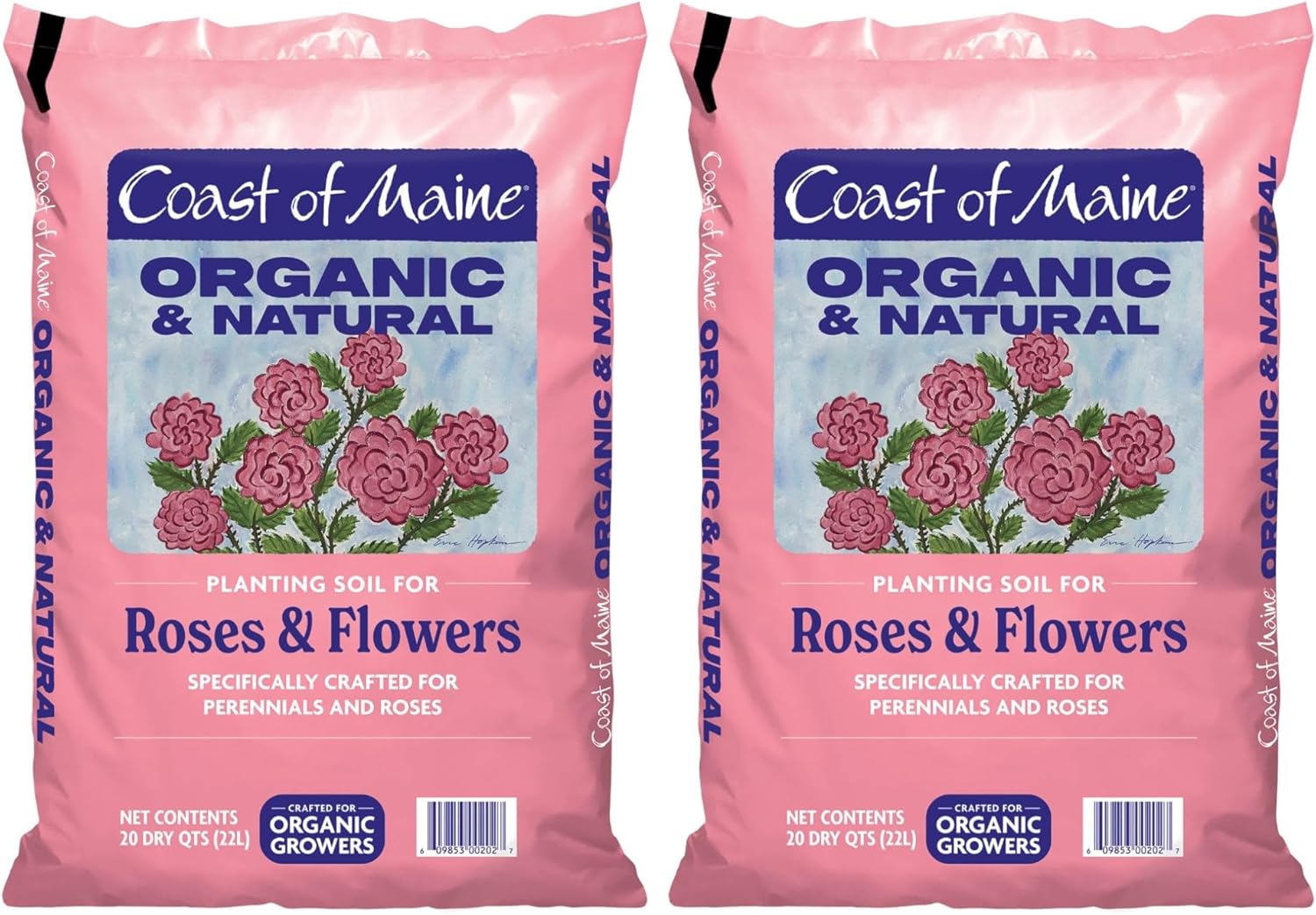
Coast of Maine Roses & Flowers Planting Soil, 20 qt (2-Pack)
| Unit Count | 2 Count |
|---|---|
| Volume | 20 quarts |
| Brand Name | Coast of Maine |
This Coast of Maine Roses & Flowers planting soil is an organic compost blend designed to revive planting mixes for roses, annuals, and perennials. Gardeners typically use it as a top dressing, a soil amendment mixed into existing bed soil, or straight into containers when repotting roses and flowering plants. Notable features include OMRI listing for organic use and a formula that uses seaweed, lobster meal, and composted materials to boost microbial life and supply slow-release nutrients. In practice the mix improves moisture retention while offering adequate drainage, which helps reduce watering frequency without waterlogging root crowns in containers. The product supports soil biodiversity and is safe around children and pets when used as directed. Important limitations are that this is a 20 quart bag sold in a two pack so it is best for small-scale container work or targeted amendments rather than large landscaping projects, and heavier organic mixes like this can compact over time compared with lightweight potting mixes formulated solely for container aeration.
Best for: Buyers who want an organic, nutrient-rich amendment for container roses and flowering pots and who value soil health and sustainable ingredients.
Less Ideal for: Anyone needing a lightweight commercial potting mix optimized only for maximum aeration or gardeners tackling large in-ground areas who need bulk volume.
- OMRI listed organic formula made from seaweed, lobster meal, and compost
- Balanced moisture retention and drainage suitable for container roses
- Supports soil microbiology and biodiversity for healthier root systems
- Safe for use around kids and pets when handled per instructions
- 20 quart bags are small for large projects so multiple bags are needed for beds
- Denser compost-rich mix can compact in containers over time compared with lighter potting-only mixes
Verdict: A small-batch organic soil blend that revitalizes container roses and flower pots by adding slow-release nutrients and supporting soil life.
Choosing the Right Soil for New Flower Bed: Key Factors to Consider
Drainage and Porosity
Soil structure determines how water moves through a new flower bed. Good porosity lets excess water drain away while still retaining moisture within the root zone. For planting beds you want a balance: too dense and roots suffocate in wet spells, too loose and water runs through before roots can use it.
Consider how your garden handles heavy rain and how often you water. Sandy mixes drain quickly and reduce standing water but need higher organic matter to hold nutrients. Clay-heavy soils retain moisture but can compact, so look for mixes that include coarse organic material or grit to keep pore space open after planting.
Nutrient Retention and Starter Fertility
New flower beds need enough available nutrients to support transplant recovery and early growth. A good bed soil should provide gentle starter fertility rather than a large one-time salt spike, which can stress roots. Nutrient retention is also about cation exchange capacity and organic matter that holds nutrients against leaching.
Evaluate soil that combines slow-release organic inputs with a modest initial nutrient boost. This helps feed plants over the first season and reduces the need for frequent fertilizing while soil biology becomes established.
Organic Matter and Soil Biology
Organic matter improves both structure and fertility by providing food for microbes and helping soils hold water and nutrients. For a new flower bed, choose a soil with a healthy proportion of decomposed organic material that will continue to feed soil life without tying up nitrogen excessively.
Well-decomposed compost and leaf mold add biological activity and improve water-holding while coarse organic pieces help maintain pore space. Over time, organic matter encourages root branching and beneficial microbial relationships that reduce disease pressure and improve plant vigor.
Texture and Particle Size
The mix of sand, silt, clay, and organic fragments affects how easy the soil is to work and how roots move through it. A loamy texture that blends fine mineral particles with organic bits is ideal for most flower beds because it supports steady root growth and is simple to plant into.
If your existing site is heavy clay or very sandy, consider soils that are formulated to correct those extremes with the appropriate particle sizes. Avoid soils that are overly fine and powdery, which compact and resist water infiltration, or those that are pure coarse sand, which shed water and nutrients.
Workability and Installation Ease
How a soil behaves when you spread and rake it matters, especially if you are preparing a bed by hand or with light equipment. Workability covers how easy the soil is to level, whether it crumbles for planting holes, and how it settles after installation.
Choose a soil that is ready to plant without extensive onsite amendment for a typical backyard project. Lightweight, dusty mixes create more mess and settle more than structured blends, so consider how much effort you want to invest before planting.
Longevity and Maintenance Needs
Some soils give an immediate boost but break down quickly, forcing repeated topdressing or fertilizer applications. For a new flower bed, aim for a soil that contributes to a stable garden system so you spend less time reconditioning it in subsequent seasons.
Look for mixes that build soil life and structure over time, not just short-term fertility. Consider how the soil will interact with mulches, irrigation, and seasonal planting so you can plan minimal maintenance while supporting healthy blooms.
Preparing the Site Before You Add Soil
Remove weeds, turf, and large roots before adding new soil to avoid future competition. If the existing subsoil is compacted, loosen the top 6 to 12 inches with a fork or tiller to create a transition zone that roots can penetrate easily.
Address drainage issues at this stage. If water ponds on the site, consider a shallow amendment strategy with coarse material to improve infiltration or use raised contours to move water away from plantings.
- Clear perennial roots and persistent weeds to reduce regrowth
- Loosen compacted subsoil to encourage root penetration
- Check surface slope and correct low spots that hold water
How Much Soil to Add for a New Flower Bed
The amount of soil to add depends on the existing ground and planting type. For many new beds a 2 to 4 inch layer of improved planting mix blended into the topsoil is enough to improve structure and fertility without creating a separate root-limiting layer.
If you are establishing plants that prefer a raised root zone or are correcting very poor topsoil, you may opt for a deeper lift of 6 to 8 inches or build a shallow raised bed. Avoid creating a stark interface between a rich top layer and compacted subsoil by mixing the two lightly where they meet.
- Blend new soil with existing topsoil to avoid abrupt transitions
- Deeper lifts suit beds with very poor or contaminated topsoil
- Measure volume in cubic feet or yards to estimate how much you need
Amendments That Complement Bed Soil
Complement purchased bed soil with targeted amendments rather than blanket additions. Coarse sand or grit can improve porosity in heavy mixes while well-rotted compost increases water retention and nutrient exchange in sandy sites.
Avoid adding fresh, high-carbon materials like sawdust directly into a new bed without composting, as they can temporarily lock up nitrogen. Instead use finished compost, leaf mold, or slow-release organic fertilizers when establishing a flower bed.
- Use coarse amendments to open heavy clay
- Add finished compost to boost biology and moisture retention
- Skip raw wood chips or fresh yard trimmings in the planting zone
Mulching and Early Maintenance
After planting, apply a 2 to 3 inch layer of organic mulch to conserve moisture, regulate soil temperature, and suppress weeds. Mulch also slowly breaks down and feeds soil life, which complements the initial soil mix.
Monitor the bed through the first season for signs of poor drainage, compaction, or nutrient deficiency. Adjust watering schedules rather than immediately adding fertilizer when plants show stress, since many problems are moisture-related rather than nutrient-related.
- Keep mulch a few inches away from stems to reduce rot risk
- Check soil moisture before fertilizing; adjust irrigation first
- Topdress with compost annually to maintain organic matter levels
Soil Testing and Ongoing Adjustments
A soil test within the first year gives a baseline for pH and nutrient status so you can make informed corrections. Many flower species prefer slightly acidic to neutral pH, but results guide specific amendments such as lime or sulfur if needed.
Test results also indicate whether additional phosphorus or potassium is required or whether the soil already has adequate levels. Use amendments that slowly change soil chemistry rather than quick-fix soluble products when possible.
- Test pH and major nutrients after the first growing season
- Adjust pH gradually based on test recommendations
- Rely on compost and organic feeds to maintain nutrient balance
How We Chose the Best Soil for New Flower Bed
We focused on attributes that matter to gardeners creating a new flower bed and excluded mixes better suited to lawn repair, heavy vegetable production, or container gardening. Primary evaluation criteria included drainage profile, nutrient retention and starter fertility, organic matter content and structure, ease of installation and workability, and long-term stability in the bed. Each product was assessed for how readily it accepts transplants, how it handles water after watering or rain, and whether it builds soil life rather than masking deficiencies with short-lived fertilizer. We excluded soils that are primarily topdress mixes, single-component soils like pure peat or compost with no structure, and products targeted only at one plant type. We also screened for common red flags such as extremely low organic content, very heavy clay texture, or a formulation that requires extensive on-site amendment to be usable. The final list emphasizes mixes that give new flower beds a balance of immediate fertility and the physical structure needed for healthy root development.
FAQ
How deep should soil be for planting flowers in a new bed?
Most perennial and annual flowers establish well with 6 to 8 inches of good topsoil or a blended mix. Shallow-rooted plants can do with less, while larger perennials and shrubs may need deeper planting zones to accommodate root growth.
Can I use garden soil from my yard to fill a new flower bed?
You can use existing garden soil if it is reasonably friable and not heavily compacted or contaminated. Mix it with compost or a structured bed soil to improve drainage and fertility; avoid using raw clay or sand without amendment.
When should I add compost to a new flower bed?
Incorporate finished compost during bed preparation so it is evenly distributed in the root zone. Avoid adding large amounts of fresh, undecomposed organic material at planting time because that can temporarily reduce available nitrogen.
How soon can I plant after spreading new bed soil?
You can usually plant immediately if the soil is a ready-to-use planting mix. If you have added high rates of amendments or fertilizers, give the bed a light watering and check for any salt or heat from fresh amendments before transplanting sensitive starts.
Do I need to adjust soil pH for a new flower bed?
It depends on the plants you plan to grow and your existing soil. Many ornamentals prefer slightly acidic to neutral pH. A soil test will tell you if adjustments are needed; pH changes are best made gradually.
Final Verdict
Choose a soil that balances drainage, organic matter, and gentle starter fertility to give new flower beds the best chance to establish. Prioritize mixes that improve structure and support soil life over those that offer a short-lived nutrient spike. Think about how the soil will integrate with your existing garden conditions and maintenance plans. With the right soil choice you reduce early stress on plants and cut down on future corrective work, making it easier to enjoy a healthy, flowering bed.
