

Note: This article contains affiliate links. If you click on these links and make a purchase, I may earn a small commission at no extra cost to you. This helps support my research and content. Read my full affiliate disclosure here.
Potted roses need a potting medium that drains well, holds enough moisture between waterings, and supplies steady nutrients for frequent blooms. The right soil keeps roots healthy in a confined space and reduces problems such as root rot, drought stress, or poor flowering. This guide covers seven top soil options for planting roses in pots, each shortlisted for attributes gardeners actually need in containers. We evaluate mixes for drainage, water retention, nutrient release, and ease of use so you can pick the best fit for your patio, balcony, or small garden.
Top Picks at a Glance
| Best Overall The best all-around choice for most situations | Coast of Maine Roses & Flowers Planting Soil, 20 qt |  |
| Best Quality Built to a higher standard if you want something more solid | Coast of Maine Roses & Flowers Planting Soil, 20 qt (2-Pack) |  |
| Best Value The sweet spot between price and what you get | Perfect Plants Specialty Rose Soil, 4 qt Organic Potting Mix |  |
| Best Budget The cheapest option that still gets the job done reliably | Doter Organic Rose Soil Mix (1 qt) |  |
| Highest Rated A top-rated pick with lots of positive feedback | Sawgrass Organics Organic Potting Mix, 4 qt |  |
| Most Popular A crowd favorite that many people choose with confidence | Miracle-Gro Organic Outdoor Potting Mix, 16 qt. |  |
| Best Seller A high-volume bestseller chosen again and again | Miracle-Gro Organic Indoor Potting Mix, 16 qt. |  |
Coast of Maine Roses & Flowers Planting Soil, 20 qt

| Unit Count | 740 Ounce |
|---|---|
| Volume | 20 quarts |
| OMRI status | OMRI Listed |
| Included Components | Coast of Maine Roses and Flowers planting soil |
Coast of Maine Roses & Flowers planting soil is an organic 20 quart mix designed to improve soil structure and support flowering plants. It combines composted manure, sphagnum peat moss, and aged bark with ocean-derived ingredients to increase moisture retention, drainage, and aeration while supplying slow-release nutrients. Typical uses are topping or replenishing garden beds, refreshing container mixes, and planting roses or perennial flowers where a richer, biologically active medium is needed. Being OMRI listed and made from composted and sustainably sourced inputs, it supports beneficial microbes and reduces reliance on synthetic fertilizers. The lightweight bag makes handling and mixing easier than bulk soil, but a 20 qt bag is best for small projects or targeted amendments rather than filling large beds. Users wanting precise pH control or a ready-to-plant mix for large volumes should plan to purchase multiple bags or blend with site soil. For gardeners who prefer organic inputs and want to boost blooms and soil life, this is a practical, plant-focused option.
Best for: Gardeners who prefer organic, biologically minded amendments and want an easy-to-use soil to improve blooms in beds or containers without heavy synthetic inputs.
Less Ideal for: People planting large new rose beds who need bulk soil volume or installers who require precise, pre‑balanced commercial mixes for immediate planting at scale.
- OMRI listed organic formula supports biological soil health
- Contains composted manure and sea-derived ingredients for slow-release nutrients
- Balanced texture of peat moss and aged bark improves moisture retention and drainage
- Lightweight 20 qt bag is easy to handle for spot amendments and containers
- 20 quart volume is limited for large beds and may require multiple bags
- Not a finished fertilizer replacement for gardeners needing specific pH or nutrient formulations
Verdict: Choose this organic, microbe-friendly planting soil when you want a ready-to-use, sustainable boost to roses and flowering containers or small beds.
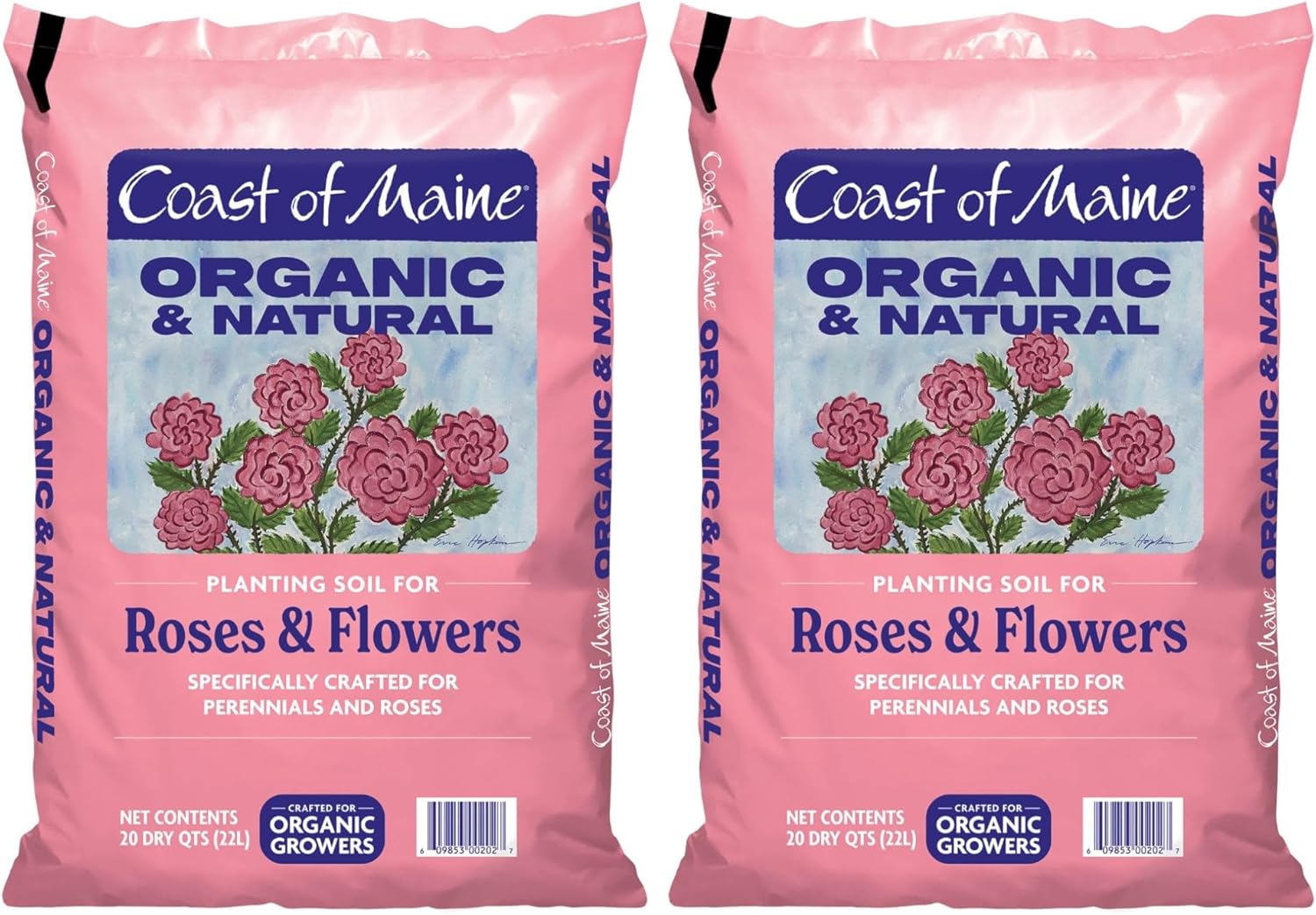
Coast of Maine Roses & Flowers Planting Soil, 20 qt (2-Pack)
| Unit Count | 2 Count |
|---|---|
| Volume | 20 quarts |
| Brand Name | Coast of Maine |
This Coast of Maine Roses & Flowers planting soil is an organic compost blend designed to revive planting mixes for roses, annuals, and perennials. Gardeners typically use it as a top dressing, a soil amendment mixed into existing bed soil, or straight into containers when repotting roses and flowering plants. Notable features include OMRI listing for organic use and a formula that uses seaweed, lobster meal, and composted materials to boost microbial life and supply slow-release nutrients. In practice the mix improves moisture retention while offering adequate drainage, which helps reduce watering frequency without waterlogging root crowns in containers. The product supports soil biodiversity and is safe around children and pets when used as directed. Important limitations are that this is a 20 quart bag sold in a two pack so it is best for small-scale container work or targeted amendments rather than large landscaping projects, and heavier organic mixes like this can compact over time compared with lightweight potting mixes formulated solely for container aeration.
Best for: Buyers who want an organic, nutrient-rich amendment for container roses and flowering pots and who value soil health and sustainable ingredients.
Less Ideal for: Anyone needing a lightweight commercial potting mix optimized only for maximum aeration or gardeners tackling large in-ground areas who need bulk volume.
- OMRI listed organic formula made from seaweed, lobster meal, and compost
- Balanced moisture retention and drainage suitable for container roses
- Supports soil microbiology and biodiversity for healthier root systems
- Safe for use around kids and pets when handled per instructions
- 20 quart bags are small for large projects so multiple bags are needed for beds
- Denser compost-rich mix can compact in containers over time compared with lighter potting-only mixes
Verdict: A small-batch organic soil blend that revitalizes container roses and flower pots by adding slow-release nutrients and supporting soil life.
Perfect Plants Specialty Rose Soil, 4 qt Organic Potting Mix

| Volume | 4 quarts |
|---|---|
| Item Highlight | Composted pine bark, granite sand and peat with 18-6-8 slow release fertilizer |
| Style Name | Medium Drainage and Nutrient rich |
| Unit Count | 128 Ounce |
This 4 quart Perfect Plants rose soil is formulated for container-grown roses and mixes good drainage with steady nutrition. It combines composted pine bark and granite sand for improved aeration and drainage while peat moss helps retain moisture, so it suits potted Drift, Knock Out and other patio roses. The built-in 18-6-8 slow-release fertilizer provides a season-long feed that reduces how often you need to supplement liquid fertilizer. The resealable bag is convenient for storing partial amounts between repottings. Practical benefits include less risk of root rot from overwatering thanks to the coarser components and simpler feeding for casual gardeners. Limitations are the small 4 quart volume, which means multiple bags are needed for larger pots or several plants, and the safety note about potential skin or respiratory irritation means you should handle it with gloves and a mask.
Best for: Potted-rose growers who want an easy, pre-mixed potting medium that balances drainage and steady feeding without frequent fertilizer applications.
Less Ideal for: Gardeners planting into large in-ground beds or those who prefer to custom-blend soil and fertilizer components for specific soil tests.
- Blended for roses with composted pine bark and granite sand to improve drainage and aeration
- Contains peat moss to retain moisture for potted plants
- Includes 18-6-8 slow-release fertilizer that feeds for up to 12 months
- Resealable packaging keeps remaining mix fresh between uses
- Small 4 quart bag may require multiple purchases for larger containers or several roses
- Contains ingredients that can irritate skin or lungs so protective gear is recommended
Verdict: A convenient, ready-made potting mix that gives potted roses improved drainage and a year-long slow-release feed so you can spend less time fertilizing.
Doter Organic Rose Soil Mix (1 qt)

| Brand Name | Doter |
|---|---|
| Item Type Name | Garden soil |
| Volume | 1 quarts |
| Item Weight | 224 g |
This one-quart Doter Rose Soil Mix is a compact, budget-friendly potting medium aimed at potted roses and small container plantings. It is formulated with a slightly acidic pH in the 6.0 to 6.5 range and includes organic matter, coarse sand or perlite for drainage, and added macro and micronutrients to support root development and flowering. In practice it works well for repotting young roses, topping off containers, or refreshing the root zone of indoor and patio roses where good drainage and steady nutrient release matter. The small bag size makes it easy to handle and store, but also means you will need multiple bags for larger beds or full repots. Notable benefits are its emphasis on aeration to reduce root rot risk and the inclusion of composted material for gradual feeding. Important limitations are the 1 quart volume and light weight packaging which limits use to small pots or trial plantings, and you may still need to supplement with fertilizer over the season for heavy-feeding varieties.
Best for: Buyers who want an inexpensive, ready-to-use potting mix for potted roses, trial plantings, or topping up containers and who prioritize convenience over bulk volume.
Less Ideal for: Gardeners needing soil for in-ground beds, large repots, or multiple plants should choose a bulk mix or bag in larger sizes instead.
- pH optimized for roses (about 6.0–6.5) to aid nutrient uptake
- Contains organic matter for steady nutrient release and root growth
- Blended for good drainage with coarse sand or perlite to reduce waterlogging
- Compact 1 quart size is easy to store and convenient for small containers
- Only 1 quart volume requires multiple bags for larger repots or garden beds
- Likely needs supplemental fertilizing for heavy-feeding rose varieties
Verdict: A practical, low-cost 1 qt rose mix that delivers rose-friendly pH and drainage for small pots and quick repotting jobs.
Sawgrass Organics Organic Potting Mix, 4 qt

| Volume | 4 quarts |
|---|---|
| OMRI Listed | Yes |
| Unit Count | 128 Ounce |
| Peat-Free | Yes |
| Triple Screened Compost | Yes |
This 4 qt Sawgrass Organics potting mix is a ready-to-use, peat-free blend designed for potted vegetables, herbs and seedlings. It combines fully composted, triple-screened compost with coco coir for water retention and biochar to support microbial life and nutrient holding. Because it is triple screened and blended at a controlled moisture level it arrives consistent and largely free of debris and gnats, which makes it easy to use straight from the bag for repotting, starting seeds or top-dressing containers. The peat-free formula re-wets reliably after drying and resists compaction so root systems stay airy in small pots and raised planters. It is OMRI listed, so it fits an organic vegetable garden workflow. The main limitations are the small 4 quart volume, which means frequent repurchasing for larger beds, and the lack of built-in fertilizer so regular feeding is still needed for heavy-feeding vegetables.
Best for: Gardeners who prioritize reliable, organic-tested potting media for container-grown vegetables, herbs, and seedlings and who want a consistent, low-maintenance mix to repot or start plants.
Less Ideal for: People installing or amending large in-ground vegetable beds who need bulk soil or those seeking a mix with built-in long-term fertilizer and amendments for heavy feeders.
- Peat-free blend with coco coir for good water retention and easier re-wetting
- Contains fully composted, triple-screened compost for consistent texture and few debris
- Biochar included to support beneficial microbes and nutrient retention
- OMRI listed for use in organic production
- Blended and bagged at controlled moisture to reduce gnats and make it usable immediately
- Small 4 quart bag is insufficient for large vegetable beds or multiple containers
- Does not include starter fertilizer so feeding is required for heavy-feeding vegetables
Verdict: Choose this potting mix when you want a consistent, peat-free, OMRI-listed blend that re-wets well and supports healthy roots in container vegetable gardens.
Miracle-Gro Organic Outdoor Potting Mix, 16 qt.

| Volume | 16 qt. |
|---|---|
| Item Highlight | Plant Soil For Outdoor Container Plants, Contains Quick-Release Natural Fertilizer, OMRI Listed |
| Manufacturer | Scotts Miracle Gro |
This 16 qt. Miracle-Gro Organic Outdoor Potting Mix is designed specifically for outdoor container plants and is useful for planting strawberries in pots. The mix contains responsibly sourced peat and upcycled green waste and includes a quick-release natural fertilizer that feeds for up to two months, which helps young strawberry plants establish and start producing. It is OMRI listed so it fits an organic container-gardening approach. Typical use is to partially fill a 12-inch pot, set the plant with a loosened root ball, add more mix, and water thoroughly; a single bag is sized to fill about one 12-inch container. Practical benefits include moisture retention suitable for exposed pots and a built-in starter nutrient charge so you may not need immediate additional feeding. Important limitations are that nutrients last about two months so plan a feeding schedule for fruiting plants and that peat-based mixes can compact over time, so repotting or refreshing the soil biannually is recommended for continued vigor.
Best for: Gardeners who want an organic-ready potting mix for outdoor container strawberries and prefer a product that gives an initial nutrient boost while simplifying first-season care.
Less Ideal for: Growers who need a long-term, self-sustaining soil blend for mature strawberry beds or those who avoid peat entirely should consider alternatives.
- OMRI listed and made with responsibly sourced peat suitable for organic container gardening
- Includes quick-release natural fertilizer that feeds plants for up to two months
- Formulated to retain moisture for outdoor containers exposed to sun and wind
- Contains upcycled green waste and is locally crafted to reduce transport distance
- Fertilizer effect is limited to about two months so additional feeding is needed for ongoing fruiting
- Peat-based mix can compact over time and requires bi-annual repotting to refresh structure
Verdict: A convenient OMRI-listed container potting mix that gives outdoor strawberry starters an organic nutrient boost and good moisture retention for the first months.
Miracle-Gro Organic Indoor Potting Mix, 16 qt.

| Volume | 1 cubic feet |
|---|---|
| Style Name | Indoor |
| Item Highlight | Protects Against Over & Under Watering |
| OMRI Listed | Yes |
Miracle-Gro Organic Indoor Potting Mix is a ready-to-use organic blend designed for houseplants, seedlings, and container herbs. It combines coir for air space and moisture retention, sphagnum peat moss to hold and release water, and a quick-start natural fertilizer so young plants get an initial nutrient boost. Typical use is filling pots or seed trays with a drain hole, transplanting by loosening the root ball and topping up with fresh mix, or starting seeds in shallow trays and keeping them moist until germination. Practical benefits for herb growers include improved moisture regulation that helps prevent both waterlogging and rapid drying, and organic certification for those avoiding synthetic inputs. The bag claims one 16 qt. package fills a 12-inch container, which fits small- to medium-sized herb pots. Limitations are the modest volume per bag for users with multiple pots and the inclusion of peat, which some growers try to avoid for sustainability reasons. Also, plants that need very fast-draining media, such as certain succulents, may need a different blend or added grit.
Best for: Buyers who want an easy, organic potting mix for growing kitchen herbs and houseplants and who prioritize proven formulations and user guidance over sourcing bulk soil.
Less Ideal for: People looking to pot large numbers of containers at once or gardeners who prefer a peat-free, fast-draining custom mix should consider larger bags or alternative blends.
- OMRI listed and made with organic ingredients suited to organic indoor gardening
- Blend of coir and sphagnum peat moss balances aeration and moisture retention
- Includes quick-start natural fertilizer to feed plants during establishment
- Formulated specifically for indoor containers and seed starting
- 16 qt. bag provides limited coverage if you have several herb pots
- Contains peat which some gardeners avoid for environmental reasons
Verdict: A convenient OMRI-listed indoor potting mix that helps regulate moisture and gives seedlings and container herbs a reliable, organic start.
Choosing the Right Soil for Planting Roses in Pots: Key Factors to Consider
Drainage and Air Porosity
Good drainage prevents roots from sitting in cold, oxygen-poor water in containers. For roses, which need both oxygen at the root zone and steady moisture, look for a mix with coarse elements such as bark, perlite, or expanded clay to create air channels.
If a soil is too fine or contains a high proportion of silt or heavy loam, it compacts quickly in pots and reduces oxygen. That increases the risk of root rot and poor growth. Drainage also affects how often you water and the type of container you choose.
Water Retention and Moisture Buffering
Containers dry out faster than garden beds, so a potting soil must hold enough water to buffer plants between waterings while releasing it slowly to roots. Components like coconut coir, composted bark fines, or peat alternatives store moisture but still allow roots to access it.
A balance matters: too much retention leads to soggy conditions, too little forces constant watering and stresses the plant. Consider your local climate and the pot size when judging how much water-holding material the mix should contain.
Nutrient Profile and Feeding Compatibility
Potted roses rely on the soil mix for initial fertility and as a medium for fertilizers. Some mixes include a starter nutrient charge or slow-release fertilizer that supports new plantings for several weeks. Others are inert and require a feeding schedule from the outset.
Pick a mix that matches how you prefer to feed: a nutrient-rich mix reduces early feeding needs, while a clean, low-nutrient mix gives experienced gardeners more control. Also consider how well the mix holds and exchanges nutrients rather than locking them in unavailable forms.
Structure, Compaction Resistance, and Longevity
Over time, potting soils can break down and compact, reducing aeration and drainage. For roses you want a structure that resists rapid decomposition so root health remains stable across a season or multiple seasons in larger containers.
Look for mixes with stable particles such as aged bark or pumice that keep pore space open. Understanding how often you plan to repot or refresh the top layer will influence how durable the soil needs to be.
pH and Mineral Balance
Roses generally prefer a slightly acidic to neutral pH range. The soil's pH influences nutrient availability and can change in containers faster than in-ground soils because of fertilizer and water quality.
Choose mixes with a pH suited to roses or that are easy to amend. Also watch for high salt content in some precharged mixes, which can be problematic in small pots if not leached or managed with regular irrigation.
Texture and Handling for Repotting
How the soil feels and handles matters when planting, repotting, or topping up a container. Dusty mixes are messy and slow to rewet, while coarse mixes can be easier to work with and promote quick root establishment.
Consider whether you need a bagged mix that is ready to use, or a base medium you will amend with your own compost, perlite, or water-holding crystals. Ease of handling also relates to transport and storage if you manage many containers.
Container Size and Soil Volume Effects
The size of the pot changes watering frequency, temperature swings, and how much root space a rose has. Larger containers offer more buffer against temperature extremes and need less frequent watering per volume of soil, but they require more soil and can be heavy to move. Smaller pots dry quickly and concentrate salts from fertilizers, so they benefit from a mix with higher moisture retention and careful feeding.
When selecting soil, match its water-holding and drainage traits to the pot size. For small pots, favor a blend with moisture-absorbing components. For large containers, prioritize structure and long-term porosity to prevent compaction.
- Large containers: prioritize structure over moisture retention
- Small containers: favor mixes with water-buffering components
- Medium containers: choose a balanced mix suitable for regular feeding routines
Amending Potting Soil for Roses
Most off-the-shelf potting mixes can be adjusted for better rose performance. Simple amendments include adding perlite or pumice to increase drainage, mixing in compost for slow-release nutrients, or blending in coconut coir for improved rewetting. Amend carefully; too much amendment can swing the mix toward being too dry or too wet.
When you amend, measure by volume and test the blend in a single pot before treating all containers. Observe how quickly the soil wets and drains and how the plant responds over several weeks.
- Perlite or pumice to increase porosity
- Compost for nutrients and microbial life
- Coconut coir for moisture retention and rewetting
Watering Rhythm and Irrigation Tips
Potted roses need a consistent watering rhythm that matches the soil's drainage and retention profile. Use the finger test or a moisture meter to check the root zone rather than scheduling strictly by day of the week. Early morning watering reduces foliar disease risk and gives the plant time to use water during the day.
If you use automated irrigation, set shorter, more frequent cycles for fast-draining mixes and longer, less frequent cycles for moisture-retentive mixes. Allow the top inch of soil to dry slightly between waterings for most container roses.
- Use moisture meters or finger test for root zone checks
- Water in the morning to reduce disease risk
- Adjust irrigation cycles to match mix drainage
Top Dressing and Seasonal Refresh
Container soils lose structure and nutrients over a growing season. Top dressing with a thin layer of compost or a balanced granular feed in spring and midsummer refreshes nutrient levels without disturbing roots. For older pots, consider partially replacing the top third of the soil each spring to improve porosity and reduce compaction.
Avoid completely replacing soil unless necessary; careful top dressing is less disruptive and preserves beneficial microbes and root associations.
- Spring top-dress to replenish nutrients
- Partial soil refresh every year or two for compacted pots
- Use light compost to avoid overfeeding
Winter Care and Root Protection
Potted roses are more vulnerable to cold because their roots are above ground and exposed. A well-draining mix reduces waterlogging in winter, while adding insulating materials around the pot can protect roots from freeze-thaw cycles. Move smaller pots to sheltered locations or sink them into the ground for winter protection if possible.
Reduce watering in dormant periods but do not let the mix dry completely. Check drainage in winter rains to prevent prolonged saturation that damages roots.
- Insulate pots or move them to shelter in cold climates
- Ensure excellent drainage before winter rains
- Cut back watering during dormancy but avoid bone-dry soil
How We Chose the Best Soil for Planting Roses in Pots
We focused on attributes that directly affect rose performance in containers rather than generic claims. First, drainage behavior was essential because excess water in pots quickly leads to root problems. We looked for mixes or formulations that combine free-draining components with enough fine material to retain moisture. Second, water retention and moisture buffering were weighed so potted roses can survive between regular waterings without staying waterlogged. Third, nutrient availability and feeding profile mattered: containers need a mix that either contains a balanced starter nutrient package or accepts regular slow-release feeding without locking up soil chemistry. Fourth, physical structure and root space were considered, including how well the mix resists compaction over a season. We also looked at ease of use characteristics such as dust-free handling, rewetting behavior, and suitability for repotting. We excluded soils formulated only for in-ground planting, mixes with persistent synthetic additives not suited to repeated repotting, and products lacking clear ingredient profiles. The final shortlist reflects reproducible, gardener-relevant measures: drainage, water retention, nutrient profile, structural stability, and handling.
FAQ
What pH should soil for potted roses be?
Roses prefer a slightly acidic to neutral pH, roughly 6.0 to 7.0. In containers pH can shift with fertilizer and water, so test annually and adjust with lime to raise pH or sulfur to lower it if needed.
How often should I repot container roses?
Major repotting is usually needed every one to three years depending on pot size and how quickly the soil breaks down. Smaller pots and mixes that compact faster will need more frequent refreshing.
Can I use garden soil in pots for roses?
Garden soil is often too dense for containers and can compact, reducing drainage and oxygen. It is better to use a lightweight potting mix formulated for containers and amend as needed.
Do potted roses need fertilizer if the soil contains nutrients?
Even soils with a starter nutrient charge will require ongoing feeding during the growing season because container plants have limited soil volume. Use a regular liquid feed or slow-release fertilizer according to the mix profile and plant response.
How can I improve drainage in a heavy potting mix?
Work coarse amendments such as perlite, pumice, or coarse bark into the mix to increase pore space. Also ensure the pot has adequate drainage holes and avoid layering with a solid base that traps water.
Is coconut coir a good substitute for peat in rose potting soils?
Coconut coir is an effective peat alternative. It holds water well and improves rewetting, but it may need additional nutrients or buffering because it can be low in initial fertility compared with compost-based mixes.
Final Verdict
Choose a potting soil that balances drainage with moisture retention and has a compatible nutrient profile for container roses. Prioritize mixes that resist compaction and allow steady feeding while matching the mix to your pot size and climate. With the right soil and a simple routine of watering, feeding, and seasonal top dressing, potted roses will establish strong roots and produce consistent blooms.
