

Note: This article contains affiliate links. If you click on these links and make a purchase, I may earn a small commission at no extra cost to you. This helps support my research and content. Read my full affiliate disclosure here.
Choosing the right soil for planting rose bushes affects how well new plants establish, how often you need to water, and the size and health of blooms. Roses have clear preferences for texture, fertility, and drainage, so the soil you use at planting can change maintenance needs for years. This guide shortlists seven top soils suited for planting rose bushes and explains the practical differences between them. We evaluate each mix for structure, nutrient profile, and moisture handling to help you pick a soil that matches your garden conditions and planting plan.
Top Picks at a Glance
| Best Overall The best all-around choice for most situations | Coast of Maine Roses & Flowers Planting Soil, 20 qt |  |
| Best Quality Built to a higher standard if you want something more solid | Perfect Plants Specialty Rose Soil, 8 qt, Organic Potting Mix |  |
| Best Value The sweet spot between price and what you get | Coast of Maine Roses & Flowers Planting Soil, 20 qt (2-Pack) |  |
| Best Budget The cheapest option that still gets the job done reliably | Omitgoter Rose Potting Soil, 2 qt Organic Nutrient Mix |  |
| Highest Rated A top-rated pick with lots of positive feedback | Rosy Soil Garden Mix Biochar Potting Soil, 8 Quart |  |
| Most Popular A crowd favorite that many people choose with confidence | Coast of Maine Roses & Flowers Planting Soil, 20 qt (2-Pack) | |
| Best Seller A high-volume bestseller chosen again and again | Back to the Roots Premium Organic Potting Mix, 6 Quart |  |
Coast of Maine Roses & Flowers Planting Soil, 20 qt

| Unit Count | 740 Ounce |
|---|---|
| Volume | 20 quarts |
| OMRI status | OMRI Listed |
| Included Components | Coast of Maine Roses and Flowers planting soil |
Coast of Maine Roses & Flowers planting soil is an organic 20 quart mix designed to improve soil structure and support flowering plants. It combines composted manure, sphagnum peat moss, and aged bark with ocean-derived ingredients to increase moisture retention, drainage, and aeration while supplying slow-release nutrients. Typical uses are topping or replenishing garden beds, refreshing container mixes, and planting roses or perennial flowers where a richer, biologically active medium is needed. Being OMRI listed and made from composted and sustainably sourced inputs, it supports beneficial microbes and reduces reliance on synthetic fertilizers. The lightweight bag makes handling and mixing easier than bulk soil, but a 20 qt bag is best for small projects or targeted amendments rather than filling large beds. Users wanting precise pH control or a ready-to-plant mix for large volumes should plan to purchase multiple bags or blend with site soil. For gardeners who prefer organic inputs and want to boost blooms and soil life, this is a practical, plant-focused option.
Best for: Gardeners who prefer organic, biologically minded amendments and want an easy-to-use soil to improve blooms in beds or containers without heavy synthetic inputs.
Less Ideal for: People planting large new rose beds who need bulk soil volume or installers who require precise, pre‑balanced commercial mixes for immediate planting at scale.
- OMRI listed organic formula supports biological soil health
- Contains composted manure and sea-derived ingredients for slow-release nutrients
- Balanced texture of peat moss and aged bark improves moisture retention and drainage
- Lightweight 20 qt bag is easy to handle for spot amendments and containers
- 20 quart volume is limited for large beds and may require multiple bags
- Not a finished fertilizer replacement for gardeners needing specific pH or nutrient formulations
Verdict: Choose this organic, microbe-friendly planting soil when you want a ready-to-use, sustainable boost to roses and flowering containers or small beds.
Perfect Plants Specialty Rose Soil, 8 qt, Organic Potting Mix

| Item Highlight | Composted pine bark, granite sand and peat with 18-6-8 slow release fertilizer |
|---|---|
| Unit Count | 256 Ounce |
| Item Type Name | Rose Soil Mix 8qt |
| Style Name | Medium Drainage and Nutrient rich |
| Volume | 4 quarts |
This specialty rose soil is designed for roses grown in pots and containers, combining coarse ingredients for drainage with a year-long slow-release fertilizer. It is typically used when repotting patio roses, container drift varieties, or small hedging roses to give roots both air and steady nutrition. Key features include composted pine bark and granite sand for improved aeration and drainage, peat for moisture retention, and an 18-6-8 granular slow-release fertilizer intended to feed blooms for up to 12 months. In practice that means less frequent feeding and a lower risk of waterlogging compared with standard potting mixes, which helps keep potted roses healthier and more floriferous. The resealable bag is convenient for seasonal storage. Limitations are that peat-based mixes compact over time and will eventually need freshening or amendment with extra coarse material for long-term container use, and the pre-mixed fertilizer makes it harder to fine-tune nutrient levels for different rose varieties or soil-testing results.
Best for: Gardeners who grow roses in pots and want a ready-made, performance-focused mix that improves drainage and provides steady nutrition without frequent feeding.
Less Ideal for: People seeking a neutral, amendment-free base to customize fertilizer dosing or those managing large in-ground rose beds where bulk garden soil is more appropriate.
- Formulated specifically for roses with composted pine bark and granite sand to improve drainage and root aeration
- Includes 18-6-8 slow-release fertilizer designed to feed plants for up to 12 months
- Resealable packaging helps keep remaining mix fresh between uses
- Balanced blend of moisture retention (peat) and coarse components reduces waterlogging in containers
- Peat content can compact over time and may require additional coarse amendment for long-term container use
- Pre-mixed fertilizer limits ability to precisely adjust nutrient ratios for specific rose varieties
Verdict: Choose this mix if you want a ready-to-use, rose-focused potting soil that improves container drainage and delivers season-long feeding with minimal fuss.
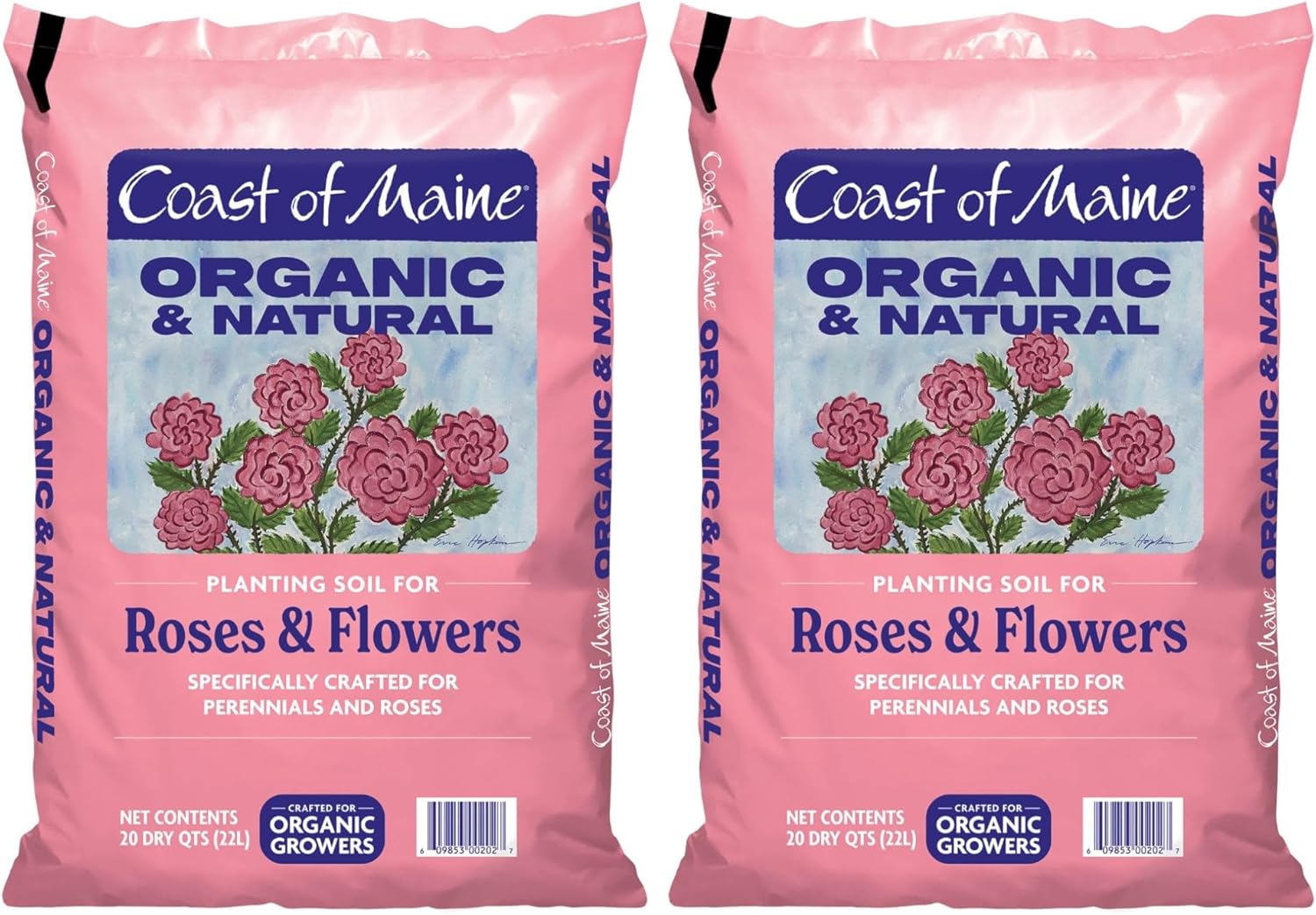
Coast of Maine Roses & Flowers Planting Soil, 20 qt (2-Pack)
| Brand | Coast of Maine |
|---|---|
| Item Highlight | Promotes Beautiful Blooms, Premium Organic Blend |
| Number of Packs | 2 |
| Item Weight | 31 pounds |
Coast of Maine Roses & Flowers Planting Soil is an organic, ready-to-use blend aimed at improving garden soil for roses, annuals, and perennials. Gardeners typically top-dress beds, mix it into existing ground soil, or use it in raised beds and containers to boost moisture retention, drainage, and aeration. The formula lists composted manure, sphagnum peat moss, and aged bark, which together help loosen heavy soil while adding organic matter that supports root health and flowering. The product is OMRI listed and made from sustainably sourced ingredients, so it fits gardeners who prefer organic practices. Because it comes in lightweight 20 qt bags sold as a two-pack, it is convenient for smaller beds or targeted amendments rather than wholesale soil replacement of large garden areas. Expect visible improvement in soil texture and plant vigor over a season, but plan to supplement with larger volumes or additional compost if you need to rebuild deep, depleted garden soil across a big rose border.
Best for: Gardeners who prefer organic, sustainably sourced amendments and need a convenient soil blend to improve texture and bloom performance in established rose beds, containers, or small raised beds.
Less Ideal for: Those renovating large rose borders or rebuilding deep depleted soil where bulk topsoil or high volumes of compost would be more economical and efficient.
- Formulated specifically for roses and flowering plants to support blooms and foliage
- Contains organic amendments (composted manure, peat moss, aged bark) that improve soil structure and moisture retention
- OMRI listed and made with sustainably sourced ingredients for organic gardening
- Lightweight 20 qt bags make it easy to handle and apply in beds, raised beds, and containers
- Sold in relatively small bags which may be impractical for amending large in-ground rose beds
- Not a complete fertilizer so additional feeding may be needed for long-term nutrient needs
Verdict: A convenient, OMRI-listed organic planting soil that improves structure and supports healthier blooms for roses and flowering plants in beds and containers.
Omitgoter Rose Potting Soil, 2 qt Organic Nutrient Mix

| Brand Name | Omitgoter |
|---|---|
| Unit Count | 64 Ounce |
| Style Name | Nutrient-rich, Moisture-retaining (for roses) |
| Volume | 2 quarts |
This 2-quart Omitgoter Rose Potting Soil is a ready-to-use organic mix designed specifically for roses in pots or garden containers. It combines peat moss, coco coir, perlite, bark, and humus to create a loose, well-aerated medium that helps prevent waterlogging and root rot while providing slow-release nutrients to support flowering and root development. Use it straight from the bag to fill pots or to top-dress containers for a quick refresh; its composition makes it beginner-friendly and reduces the need for immediate additional fertilizing. Practical benefits include improved drainage compared with standard garden soil and a lighter texture that makes repotting easier. The 2-quart size is convenient for trialing new plants or refreshing a few small pots, but it is not a bulk option for larger beds or many shrubs. Expect to supplement with fertilizer over a growing season if you need higher nutrient inputs for heavy bloomers or larger roses planted in the ground.
Best for: Buyers who want an affordable, ready-made organic potting mix to pot or refresh a few rose plants and prioritize ease of use over large volume purchases.
Less Ideal for: Gardeners establishing many rose bushes or filling larger raised beds who need bulk soil or a high-nutrient commercial rose soil solution.
- Formulated for roses with organic components like peat, coco coir, perlite and humus.
- Loose, well-aerated texture that promotes drainage and reduces risk of root rot.
- Ready to use without mixing, convenient for beginners and quick potting jobs.
- Small 2-quart volume is impractical for large beds or multiple rose bushes.
- May require additional fertilization over time for heavy-flowering varieties.
Verdict: A compact, budget-friendly organic potting mix that makes potting and refreshing a few rose plants quick and simple.
Rosy Soil Garden Mix Biochar Potting Soil, 8 Quart

| Brand Name | Rosy Soil |
|---|---|
| Item Highlight | Organic Garden Soil with Worm Castings for Vegetables, Herbs, and Flowers, Peat-free Outdoor Potting Mix, Made in USA |
| Volume | 8 quarts |
Rosy Soil Garden Mix is a ready-to-use organic potting soil designed for outdoor vegetables, herbs, and container-grown plants. The formula combines biochar, compost, worm castings, mycorrhizae, and pine bark fines to create a loose, well-aerated medium that holds moisture and supports beneficial microbes. In practice you can use it straight from the resealable 8 quart bag to fill patio planters, raised beds, or large tomato containers, or blend it into existing soil to improve drainage and structure. Biochar helps the mix retain water and nutrients between waterings while resisting compaction that can lead to root rot. The inclusion of mycorrhizae and worm castings supplies biological activity that benefits young tomato roots and helps with nutrient uptake. Limitations are the small bag size for larger plantings and that specific nutrient levels are not listed, so heavier-feeding tomatoes may still need additional fertilizer later in the season.
Best for: Gardeners who prioritize consistent, biologically active, peat-free soil for container-grown tomatoes and want a low-maintenance mix that resists compaction and holds moisture.
Less Ideal for: Growers planting large numbers of tomato plants or filling big raised beds who need bulk soil or a pre-fertilized mix for heavy-feeding varieties.
- Peat-free organic blend with biochar that improves moisture retention and soil structure
- Includes worm castings and mycorrhizae to boost microbial activity and root health
- Pine bark fines keep the mix well drained and resistant to compaction
- Resealable 8 quart bag keeps unused mix fresh and is easy to store
- 8 quart volume is small for multiple or large tomato containers
- No guaranteed NPK or specific fertilizer analysis provided
Verdict: A compact, peat-free garden mix built with biochar and microbial amendments to give container tomatoes reliable drainage, moisture retention, and root support.
Coast of Maine Roses & Flowers Planting Soil, 20 qt (2-Pack)
| Unit Count | 2 Count |
|---|---|
| Volume | 20 quarts |
| Brand Name | Coast of Maine |
This Coast of Maine Roses & Flowers planting soil is an organic compost blend designed to revive planting mixes for roses, annuals, and perennials. Gardeners typically use it as a top dressing, a soil amendment mixed into existing bed soil, or straight into containers when repotting roses and flowering plants. Notable features include OMRI listing for organic use and a formula that uses seaweed, lobster meal, and composted materials to boost microbial life and supply slow-release nutrients. In practice the mix improves moisture retention while offering adequate drainage, which helps reduce watering frequency without waterlogging root crowns in containers. The product supports soil biodiversity and is safe around children and pets when used as directed. Important limitations are that this is a 20 quart bag sold in a two pack so it is best for small-scale container work or targeted amendments rather than large landscaping projects, and heavier organic mixes like this can compact over time compared with lightweight potting mixes formulated solely for container aeration.
Best for: Buyers who want an organic, nutrient-rich amendment for container roses and flowering pots and who value soil health and sustainable ingredients.
Less Ideal for: Anyone needing a lightweight commercial potting mix optimized only for maximum aeration or gardeners tackling large in-ground areas who need bulk volume.
- OMRI listed organic formula made from seaweed, lobster meal, and compost
- Balanced moisture retention and drainage suitable for container roses
- Supports soil microbiology and biodiversity for healthier root systems
- Safe for use around kids and pets when handled per instructions
- 20 quart bags are small for large projects so multiple bags are needed for beds
- Denser compost-rich mix can compact in containers over time compared with lighter potting-only mixes
Verdict: A small-batch organic soil blend that revitalizes container roses and flower pots by adding slow-release nutrients and supporting soil life.
Back to the Roots Premium Organic Potting Mix, 6 Quart

| Unit Count | 192 Fluid Ounces |
|---|---|
| Volume | 6 quarts |
| Item Highlight | Peat-free potting soil for outdoor plants, indoor plants, vegetables, herbs and flowers |
| Made in | USA |
Back to the Roots Premium Organic Potting Mix is a small-batch, all-purpose soil designed for indoor and outdoor container plants, including flowers, herbs, and vegetables. The 6 quart bag contains a peat-free blend made from upcycled plant matter and wood fines, with added organic plant food, yucca extract to help retain and regulate moisture, and dolomitic limestone to stabilize pH. In practice this mix is easy to use straight from the bag for potting annuals and bedding plants or for refreshing topsoil in containers. Its light, well-draining texture helps roots establish without becoming waterlogged while still holding enough moisture for frequent flowering plants. Because it is organic and made in the USA, it suits growers who want a lower-carbon-footprint option. Limitations are the small bag size for larger projects and that very heavy feeders or long-term container plantings may need periodic fertilization or larger volumes of soil to maintain vigor.
Best for: Buyers who want a safe, organic, ready-to-use potting mix for potted flowers and small container gardens and prefer products with predictable performance and lower environmental impact.
Less Ideal for: Gardeners planning large-scale repotting, heavy-feeding perennials, or long-term container plantings that require bulk soil or extended nutrient release.
- Peat-free organic formula made from upcycled plant matter and wood fines
- Includes yucca extract for improved moisture retention and control
- Dolomitic limestone added to help balance soil pH for flowering plants
- Light, well-draining texture suitable for container-grown flowers and annuals
- Small 6 quart bag is not economical for large pots or multiple containers
- Does not include slow-release fertilizer strong enough for long-term heavy feeders
Verdict: A reliable, peat-free organic potting mix that delivers predictable moisture control and pH balance for potted flowers and small container gardens.
Choosing the Right Soil for Planting Rose Bushes: Key Factors to Consider
Drainage and Aeration
Roses need soil that drains freely but still allows roots to access oxygen. A mix that holds standing water will cause root suffocation and disease, while one that sheds moisture too quickly forces frequent watering and weak root systems.
Look for coarse components like sand, grit, or composted bark in a rose planting mix. Those materials open pore space and improve aeration without eliminating water-holding pockets. Good drainage also reduces the chance of crown rot and helps roots explore the planting hole.
Nutrient Content and Availability
Newly planted roses benefit from accessible nutrients to support initial leaf and root growth. Soils with a measured supply of organic matter and slow-release sources provide steady nutrition through the establishment phase.
Avoid mixes that are either sterile or packed with high-soluble fertilizers that produce a short-term flush and then leave plants hungry. A balanced starting nutrient profile reduces transplant shock and lowers the need for immediate heavy feeding.
Moisture Retention Versus Dry-Back
Effective rose soils retain enough moisture to support growth between waterings but allow the surface to dry slightly so foliage stays drier. Too much retention leads to persistent wetness; too little causes stress in hot weather.
Materials such as well-rotted compost or coir can moderate moisture without creating a sponge effect. Choose a mix that matches your local rainfall, irrigation frequency, and whether the roses are in-ground or in containers.
pH and Mineral Balance
Roses typically prefer a slightly acidic to neutral pH. Soil mixes that are too alkaline or acidic can lock up important micronutrients and reduce bloom quality. A mix that holds a stable, amendable pH gives you room to fine-tune fertility with lime or sulfur if needed.
Consider the natural pH of your garden soil and whether the planting soil will be mixed with existing beds. A soil that is easy to adjust chemically saves time and protects long-term plant health.
Soil Structure Durability
The way a soil holds its structure determines how it behaves season after season. A durable structure resists compaction from foot traffic, rain, or irrigation and maintains pore space for roots over time.
Look for mixes that retain fluffiness after wetting and do not form a hard crust on the surface. Durable structure means less reworking of the bed and more consistent root growth as the rose matures.
Workability and Handling
Practical handling affects how easily you can plant and amend. Bagged soils that are excessively heavy, dusty, or prone to clumping slow down planting day. A workable mix that crumbles easily lets you graft soil into the planting hole and backfill without large air pockets.
Also consider whether the soil mixes readily with native garden soil and whether it can be applied from bags or needs pre-mixing. Ease of handling matters most when you are planting multiple bushes or working in a small space where large bags are awkward.
Matching Soil to Planting Situation
Decide whether you are planting roses in raised beds, in-ground borders, or containers, and choose a soil accordingly. In-ground plantings often benefit from a lighter amendment blended into existing soil, while container plantings need a free-draining but moisture-holding potting mix.
For raised beds, aim for a loamier mix with organic matter that will settle slowly. For containers, prioritize drainage and include moisture-retaining components to reduce daily watering.
- In-ground: blend amendment into native soil for gradual transition
- Raised beds: more organic matter for sustained fertility
- Containers: focus on drainage and consistent moisture retention
Adjusting Soil pH and Nutrients After Planting
Test the soil pH before planting if possible. Small adjustments with garden lime or sulfur are easier to make in the planting hole than after the rose is established. Incorporate any corrective amendments into the soil mix at planting depth for the fastest effect.
Plan follow-up feedings with slow-release organic fertilizers. These will complement the soil's baseline nutrient content and support continuous bloom through the season.
- Apply pH amendments at planting if test shows significant deviation
- Use slow-release organics rather than large immediate fertilizer spikes
Preparing the Planting Hole and Backfill
Dig a hole wider than the root ball to encourage roots to spread into the new soil. Roughen native soil on the sides of the hole to prevent a hard boundary that roots will not cross. Mix planting soil with some native soil for a gradual transition unless your existing garden soil is extremely poor.
Avoid creating a distinct layer that will trap water. Backfill gently to remove air pockets and water in thoroughly to settle the mix around the roots.
- Widen hole to at least twice the root spread
- Mix native and planting soils unless native soil is very poor
- Firm backfill lightly and water to remove air pockets
Mulching and Long-Term Soil Care
A 2 to 3 inch layer of organic mulch reduces surface evaporation, buffers temperature swings, and breaks down into more organic matter that benefits roses. Keep mulch a few inches away from the crown to prevent rot.
Plan to topdress with compost annually to maintain fertility and structure. Avoid excessive tilling, which destroys soil aggregates and invites compaction.
- Use coarse organic mulch and keep it off the crown
- Topdress with compost each dormant season to sustain structure
Watering Strategies Based on Soil Choice
Match your irrigation routine to the soil's moisture behavior. Well-draining mixes need less frequent deep soakings to encourage roots downward. Heavier mixes with more organic matter may allow longer intervals between waterings but still require monitoring during heat spells.
Use a moisture probe or finger test to confirm dry-back before irrigating. Overwatering is a common mistake after planting and undermines root development.
- Deep, infrequent waterings promote deeper roots in free-draining soils
- Monitor moisture regularly after planting until roots are established
How We Chose the Best Soil for Planting Rose Bushes
We evaluated candidate soils using criteria that matter in real rose beds and containers. Priority went to mixes with balanced drainage and water retention, measured by texture and coarse content. Nutrient availability at planting was assessed by presence and type of organic matter and slow-release amendments. pH buffering and ease of adjustment were considered, since roses prefer slightly acidic conditions. We also looked at soil structure durability, meaning how well the mix resists compaction over time. Practical handling mattered: bag weight, dust, and suitability for hand or power mixing in the planting hole were part of selection. We excluded mixes intended solely for lawns, seed starting, or general-purpose potting where drainage or fertility profiles are unsuitable for roses. Products that required heavy laboratory amendments to make them rose-ready were not considered. The final shortlist balances immediate planting needs with longer-term root development and gardener convenience.
FAQ
Can I use garden soil alone when planting rose bushes?
Often garden soil benefits from amendment when planting roses. If your native soil is heavy clay or very sandy, blend in organic matter and coarse material to improve drainage and nutrient content before planting.
How deep should the planting soil extend in the hole?
Place the root ball so the graft union or crown sits at finished grade and backfill with planting soil that reaches to the top of the hole. Provide a few inches of loose soil beneath roots if drainage is a concern.
Should I pre-fertilize the planting soil for roses?
A balanced baseline of organic matter and slow-release nutrients at planting is helpful. Avoid high concentrations of soluble fertilizer at the root crown, as that can burn young roots and create salt buildup.
How soon will added compost improve soil structure?
Compost benefits can be seen within a season for surface-applied topdressing, but deeper structural improvements develop over multiple seasons as organic matter breaks down and soil biology increases.
Is soil for containers different than soil for in-ground plantings?
Yes. Container mixes emphasize drainage and consistent moisture retention without relying on surrounding native soil. In-ground mixes can afford more native blending and slower-release properties because roots can spread.
Final Verdict
When choosing soil for planting rose bushes prioritize drainage and a balanced nutrient supply first, then consider moisture retention and pH stability to match your site. Think about how the mix will behave after planting: durable structure and workability reduce rework and support steady root expansion. Balance tradeoffs between immediate fertility and long-term structure. Opt for a soil that fits your planting situation-container, raised bed, or in-ground-and plan simple follow-up care like mulching and annual compost topdressing to keep roses thriving.
