

Note: This article contains affiliate links. If you click on these links and make a purchase, I may earn a small commission at no extra cost to you. This helps support my research and content. Read my full affiliate disclosure here.
Picking the right pot soil mix changes how well container plants root, hold moisture, and access nutrients. Whether you keep houseplants on a sunny sill, grow edibles on a balcony, or manage patio planters, soil that matches the container, plant type, and watering rhythm is essential. This guide shortlists top pot soil mixes chosen for real garden use and explains the features that matter in everyday container growing. Below you'll find the top mixes and the criteria used to evaluate them, including texture, water retention, and long-term fertility. Use the notes to match a mix to your plants and setup.
Top Picks at a Glance
| Best Overall The best all-around choice for most situations | Miracle-Gro Potting Mix, 16 qt. |  |
| Best Quality Built to a higher standard if you want something more solid | FoxFarm Ocean Forest Potting Soil, 12 Quart |  |
| Best Value The sweet spot between price and what you get | Miracle-Gro Potting Mix for Containers, Feeds Up to 6 Months, 2 cu ft |  |
| Best Budget The cheapest option that still gets the job done reliably | Miracle-Gro Indoor Potting Mix for Seed Starting, 8 qt. (2-Pack) |  |
| Highest Rated A top-rated pick with lots of positive feedback | FoxFarm Ocean Forest Potting Soil, 12 qt (with 2 Plant Tags) |  |
| Most Popular A crowd favorite that many people choose with confidence | Miracle-Gro Indoor Potting Mix for All Plants, 6 qt., 2-Pack |  |
| Best Seller A high-volume bestseller chosen again and again | Back to the Roots Organic Indoor Potting Mix, 6 Quart |  |
Miracle-Gro Potting Mix, 16 qt.

| Volume | 16 quarts |
|---|---|
| Feeds up to | 6 months |
| Guaranteed analysis | 0.21-0.11-0.16 (N-P-K) |
Miracle-Gro Potting Mix is a general-purpose container mix built to give potted plants a balanced growing medium and multi-month feeding. It is typically used to fill pots before planting annuals, perennials, vegetables, and shrubs; the bag instructions recommend filling a container about one third, setting the plant, topping off and watering. The mix contains peat/coir-based components, perlite for drainage, and a slow-release fertilizer designed to feed plants for up to six months, which helps reduce the need for immediate fertilizer applications. Practical benefits are easier transplanting, improved root aeration and consistent nutrient availability without frequent feeding. For peonies in pots this mix supplies a light, well-draining base and built-in nutrients to support establishment in the first season. Important limitations are that peonies prefer rich, long-term soil and larger volumes than many pots provide, so this 16 qt bag fills one 12-inch container only and will need annual repotting or supplemental organic matter and long-term fertilizer for mature plants.
Best for: Gardeners who want an easy, reliable potting mix that supplies immediate structure and built-in nutrients for newly potted container plants, including those trialing peonies in patio pots.
Less Ideal for: Growers planning to keep peonies in the same pot long-term or cultivate very large specimens should consider custom mixes, larger volumes of soil, or mixes formulated for long-term perennial growth.
- Includes slow-release fertilizer that feeds container plants for up to six months
- Formulated with perlite and organic components for improved drainage and aeration
- Ready-to-use bag with clear planting instructions for easy potting
- Designed specifically for container gardening and a wide range of plant types
- 16 qt capacity fills only one 12-inch pot, so larger peony containers require multiple bags or a bigger mix
- Not formulated as a long-term perennial bed soil so additional amendments and feeding are needed for mature peonies
Verdict: A convenient, nutrient-rich potting mix that makes establishing peonies in pots easier by providing drainage and six months of built-in feeding.
FoxFarm Ocean Forest Potting Soil, 12 Quart

| Item Form | Granules |
|---|---|
| Specific Uses For Product | Dry Fertilizer |
| Coverage | 4.8 sq ft |
| Mixing Ratio | 1:1 |
FoxFarm Ocean Forest is a pre-mixed potting soil that combines aged forest products, sandy loam and sphagnum peat moss with organic amendments like fish meal, crab meal and earthworm castings. It is sold ready to use straight from the bag for planting in containers, seed starting or top dressing; the manufacturer recommends no additional nitrogen fertilizer for the first 30 days. The mix has a light, aerated texture that promotes drainage while still retaining moisture, and the built-in micronutrients make it practical for growers who want strong early growth without immediate feeding. Practical benefits include easy pot filling, good root zone aeration for roses in containers, and built-in organic fertility to support blooms. Limitations to consider are that the bag is best for containers or small beds only and heavier feeders may need supplemental feeding after the initial month; users should also follow handling precautions to avoid skin or eye irritation.
Best for: Gardeners who want a high-quality, nutrient-rich potting medium to get container roses or plant starts off to a strong, flowering start and prefer a ready-made organic blend.
Less Ideal for: Large in-ground rose beds or landscapers needing bulk soil amendments should look for bulk garden soil or custom rose mixes instead.
- Ready-to-use out of the bag so you can pot immediately
- Organic amendments (fish meal, crab meal, earthworm castings) supply early nutrients
- Light, aerated texture that supports drainage and root development
- pH adjusted for optimal nutrient uptake per product description
- Pack size (12 qt) covers a small area and may require multiple bags for several roses
- No long-term feeding provided after the first 30 days so additional fertilizer is needed for sustained heavy bloom
Verdict: Choose this soil if you want a ready-made, organically amended potting mix that jump-starts container roses and seedlings with good drainage and early fertility.
Miracle-Gro Potting Mix for Containers, Feeds Up to 6 Months, 2 cu ft

| Brand Name | Miracle-Gro |
|---|---|
| Item Highlight | For Flowers, Vegetables, Shrubs, Annuals & Perennials |
| Unit Count | 2400 Ounce |
| Volume | 2 cubic feet |
Miracle-Gro Potting Mix is a container-focused soil blend designed to simplify planting in pots and grow bags. It is typically used to fill containers one-third full, position the plant, then top up and water, delivering built-in plant food that claims to nourish for up to six months. The mix is formulated to support flowers, vegetables, shrubs and houseplants and is intended to promote bigger plants and more blooms compared with unfed soil. For practical gardeners this product saves time because it reduces the need for frequent fertilizing during a growing cycle and makes fast filling of multiple grow bags straightforward given the 2 cu ft bag size. Limitations to consider are that the long-term feeding claim assumes following a regular feeding schedule after 30 days and that users managing specific pH or custom soil recipes may prefer a neutral base or mixing in amendments. Also the bag is best suited to small to medium grow bag projects rather than large-scale soil replacement.
Best for: Gardeners who want a low-effort, time-saving potting mix for grow bags and container projects and prefer a ready-made mix that includes extended feeding.
Less Ideal for: Growers who build bespoke soil blends, manage sensitive edibles with precise nutrient or pH needs, or who are filling very large beds instead of individual grow bags.
- Includes plant food intended to feed container plants for up to six months, reducing early-season fertilizing
- Formulated specifically for containers and grow bags to promote larger plants and more blooms
- Ready-to-use mix that follows a simple fill-plant-water routine, speeding up planting tasks
- 2 cubic feet bag provides enough mix for roughly two 14-inch containers or several small grow bags
- Feeding claims depend on following the recommended follow-up feeding after 30 days for best results
- Not formulated for users who need precise control over pH or custom soil ingredient ratios
Verdict: A convenient, ready-to-use potting mix for grow bags that reduces early-season feeding and speeds up container planting.
Miracle-Gro Indoor Potting Mix for Seed Starting, 8 qt. (2-Pack)
| Brand Name | Miracle-Gro |
|---|---|
| Item Type Name | Potting Mix |
| Number of Packs | 2 |
| Volume | 8 quarts |
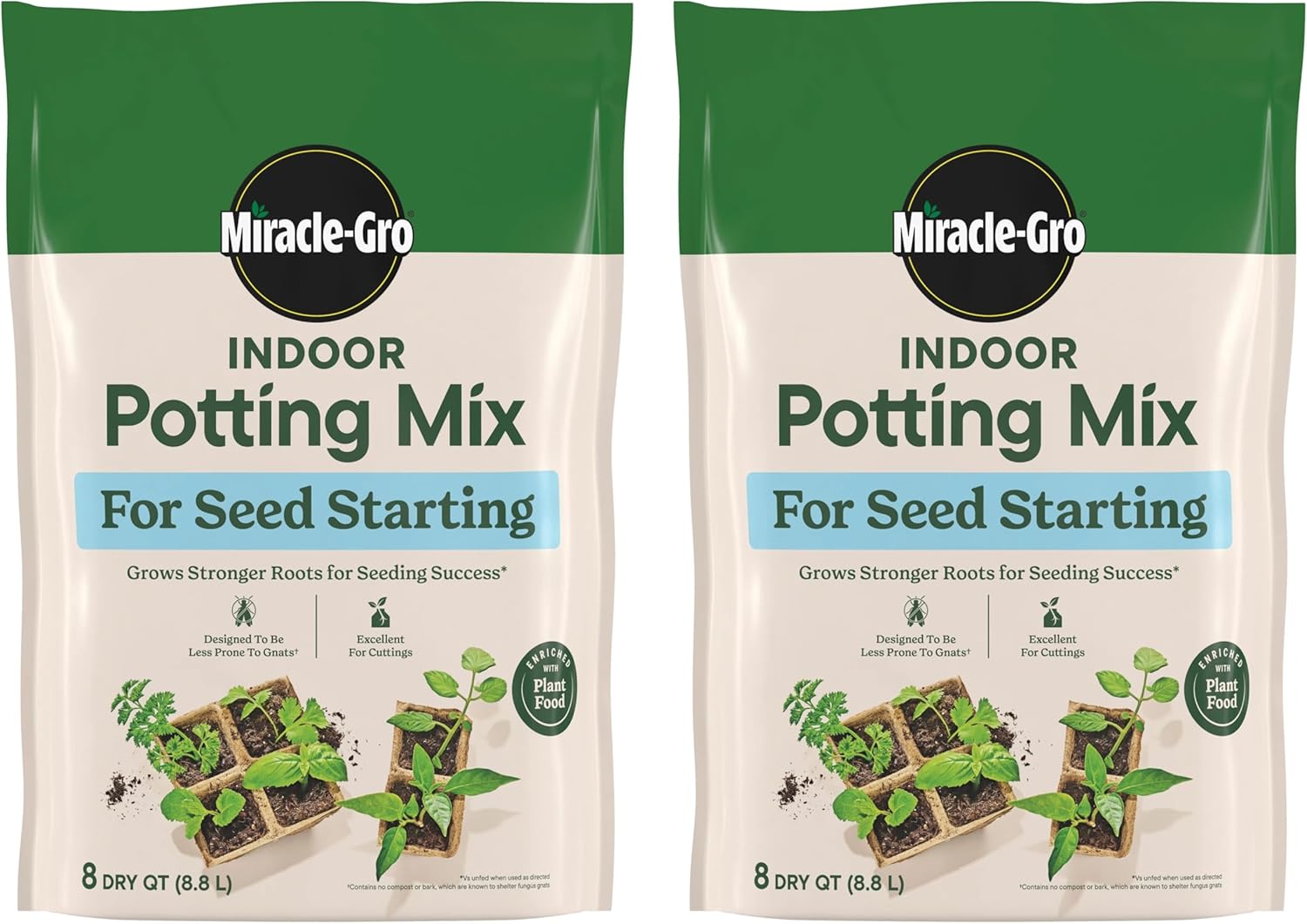
This two-pack of Miracle-Gro Indoor Potting Mix is designed specifically for starting seeds and rooting cuttings indoors. The blend is lightweight and pre-enriched with plant food so seedlings get a nutrient boost during early root development, and the manufacturer says it yields stronger roots compared with unfed mixes when used as directed. It is intended for vegetables, flowers, and herbs and works well in cell trays and small containers; one 8 qt. bag will fill roughly three 72-cell trays. Notably, the formula omits compost and bark, which helps lower the chance of fungus gnat infestations in damp seed-starting setups. Use it by filling trays or pots, keeping the mix evenly moist, and shielding newly sown seeds from direct sun until germination. Important limitations are standard for enriched mixes: it contains fertilizer (so handle carefully) and it is a seed-starting medium rather than an all-purpose potting soil for mature plants, so you will likely transplant seedlings into a different mix or amend soil later.
Best for: Buyers who want a low-effort, indoor seed-starting medium that supports faster root development and reduces common pest risks while following proven seed-starting practices.
Less Ideal for: Gardeners who need a permanent potting soil for mature container plants or who prefer fully organic, compost-rich mixes should consider alternatives.
- Lightweight, ready-to-use formula tailored for seed germination and cuttings
- Pre-enriched with plant food to support early root and seedling growth
- Excludes compost and bark to reduce habitat for fungus gnats
- Comes as a two-pack so you have enough mix for multiple trays
- Contains fertilizer which requires careful handling and storage
- Intended for seed starting so not formulated as long-term potting soil for mature plants
Verdict: A practical, low-risk seed-starting mix that boosts early root growth and reduces fungus gnat risk, making it a reliable choice for indoor vegetable seedlings.
FoxFarm Ocean Forest Potting Soil, 12 qt (with 2 Plant Tags)

| Brand Name | FoxFarm |
|---|---|
| Unit Count | 144 Ounce |
| Item Highlight | Light, Aerated Texture with Fish Meal, Crab Meal, Earthworm Castings |
| Volume | 12 quarts |
FoxFarm Ocean Forest is a pre-mixed potting soil built from aged forest products, sandy loam and sphagnum peat moss, amended with organic inputs like fish meal, crab meal and earthworm castings. It is designed to be used straight from the bag for container-grown plants and seedlings, providing a light, well-aerated texture that helps drainage and root development. Typical use is filling pots or raised beds for starts, houseplants and container vegetables or berries; the included plant tags make labeling varieties and planting dates easier. The nutrient-rich formula supplies an initial fertility boost so you can delay heavy nitrogen feeding while young plants establish. On the downside the 12 quart bag is relatively small for larger blackberry plantings in-ground or for filling many large containers and you may need to supplement specific soil pH or long-term fertility requirements for mature brambles. For container blackberries this mix gives an easy, reliable start but plan on larger volumes or soil amendments for permanent beds.
Best for: Gardeners who want a reliable, plug-and-play potting mix to start container blackberries or seedlings and value a nutrient-rich, well-aerated medium that reduces early feeding needs.
Less Ideal for: Growers preparing large in-ground blackberry beds or those needing specific soil pH control should choose bulk soil or amend based on a lab test rather than rely on this bag alone.
- Ready-to-use blend with organic amendments for immediate planting
- Light, aerated texture that promotes drainage and root growth
- Contains fish meal, crab meal and earthworm castings for early nutrient support
- Includes plant tags for easy labeling of varieties and planting dates
- 12 quart bag size is limited for larger plantings or multiple containers
Verdict: Use this nutrient-rich, aerated potting mix to give container or young blackberry plants a strong, low-effort start.
Miracle-Gro Indoor Potting Mix for All Plants, 6 qt., 2-Pack

| Number of Packs | 2 |
|---|---|
| Unit Count | 400.58 Ounce |
| Item Highlight | Feeds for up to 6 Months |
| Ingredients | Sphagnum Peat Moss, Coir, Perlite, Fertilizer, Wetting Agent |
This Miracle-Gro indoor potting mix is formulated as an all-purpose soil for indoor container plants and is sold in a two-pack of 6‑quart bags. It combines sphagnum peat moss, coconut coir, and perlite to create a lightweight, well-draining mix that holds moisture yet releases it to roots, which helps tropical houseplants like a Dragon Tree avoid waterlogged roots. The bagged mix includes a slow-release fertilizer meant to feed plants for up to six months so you do not need to amend immediately after potting. Notably the formula excludes bark and compost, which can reduce habitats for fungus gnats — useful when repotting indoor specimens. Use is straightforward: fill a pot with drainage, set the plant, backfill with mix, and water. Limitations are that the fertilizer schedule is fixed to the included feed and heavy feeders may need additional fertilizing after several months, and serious growers who want a custom cactus or orchid-style mix will find the texture too fine. For routine repotting of Dragon Trees and similar tropical houseplants this mix is convenient and consistent.
Best for: Buyers who want a reliable, low-effort potting mix for repotting tropical houseplants like Dragon Trees and prefer a product with built-in feeding and pest-reduction features.
Less Ideal for: Specialist growers who need custom texture blends for succulents, orchids, or aggressive feeders should choose purpose-formulated mixes or amend this product accordingly.
- Balanced blend of peat moss, coir, and perlite for good moisture retention and drainage
- Includes slow-release fertilizer that feeds up to six months for low-maintenance care
- Bark- and compost-free formula reduces places for fungus gnats to breed
- Ready-to-use bag makes repotting quick with no mixing required
- Fertilizer is fixed for about six months so additional feeding may be necessary for heavy feeders
- Texture may be too fine for plants that prefer very fast-draining or chunky mixes
Verdict: A convenient, low-maintenance indoor potting mix that keeps Dragon Trees healthy with good drainage and up to six months of built-in feeding.
Back to the Roots Organic Indoor Potting Mix, 6 Quart

| Unit Count | 192 Fluid Ounces |
|---|---|
| Item Type Name | Indoor Potting Mix 6qt |
| Item Highlight | Peat-free, 100% organic, made in the USA |
| Ingredients | Coconut Coir, Yucca, Mycorrhizae, Perlite, Horticultural Sand |
This Back to the Roots indoor potting mix is a ready-to-use, 6-quart blend designed for common houseplants such as pothos, monstera and ferns. It combines coconut coir, yucca extract, mycorrhizae, perlite and horticultural sand to improve moisture retention, drainage and root development without peat. In practice it feels light and friable, so it is easy to pot seedlings or repot mature plants and it reduces compaction that can suffocate roots. The added mycorrhizae helps young roots establish and take up nutrients more efficiently while yucca extract helps the mix hold water between waterings, which is convenient for forgetful or busy plant owners. Because it is peat-free and made in the USA, it is a more sustainable choice versus traditional peat-based mixes. Limitations are the small 6-quart size, which means frequent repurchasing for larger collections, and the bag does not include fertilizer so you will need to feed plants separately as they grow.
Best for: Buyers who prioritize low-risk, easy-care houseplant solutions and want an organic, ready-to-use potting mix that reduces watering hassles and supports healthy root growth.
Less Ideal for: Not ideal for gardeners who need large-volume soil for many pots or for those expecting a mix that includes built-in fertilizer for long-term feeding.
- Peat-free organic formula that reduces environmental impact
- Yucca extract improves moisture retention between waterings
- Contains mycorrhizae to support root development and nutrient uptake
- Light, well-draining texture suitable for repotting seedlings and houseplants
- Small 6-quart volume may require frequent repurchasing for larger plant collections
- Does not include fertilizer so additional feeding is necessary
Verdict: A compact, peat-free potting mix that simplifies indoor plant care by holding moisture and boosting root establishment.
Choosing the Right Pot Soil Mix: Key Factors to Consider
Particle Texture and Drainage
Particle size and texture determine how quickly water moves through a container and how much air reaches roots. Coarser components like bark, perlite, or pumice increase drainage and aeration, which is crucial for drought-sensitive roots and plants that dislike sitting in soggy soil. Finer components, such as finely ground compost or peat, hold moisture and nutrients but can block air pathways if overused.
Choosing the right balance matters because containers have limited volume and drainage is driven entirely by the mix and pot holes. For shallow pots or plants that prefer dry conditions, pick mixes with more coarse particles. For moisture-loving plants, a mix with a higher proportion of fine, water-retentive components helps avoid constant watering.
Water Retention Versus Dry-Back Rate
A mix's ability to hold water affects how often you need to irrigate and how vulnerable a plant is to drought stress. Components such as coco coir, compost, and peat hold water well and slowly release it, reducing watering frequency. However, mixes that retain too much water increase risk of root rot in poorly draining containers or with plants that need dry periods.
Think about your watering habits and container exposure. If you want lower maintenance or have sun-exposed balcony pots, choose mixes with moderate retention plus good drainage. If you water frequently and have moisture-loving species, prioritize higher retention but ensure drainage channels exist to avoid saturation.
Nutrient Baseline and Feeding Schedule
Pot soil mixes differ in how much immediate plant-available nutrition they supply and how long that nutrition lasts. Some mixes include slow-release fertilizers or compost that feed plants for weeks to months, while others are nearly inert and require regular fertilizing. A stronger nutrient baseline is useful for heavy-feeding vegetables and flowering plants, but very rich mixes can burn sensitive seedlings or require dilution.
Consider how often you want to fertilize and the plant types you grow. For long-term containers or patio planters, a mix with extended nutrient availability reduces maintenance. For young plants or those you plan to repot frequently, a lighter, easy-to-amend mix gives more control.
Resistance to Compaction and Longevity
Over time, organic components break down and soil structure can collapse, reducing aeration and drainage. A mix that resists compaction retains pore space and continues to support healthy root systems between repottings. Ingredients such as woody bark, perlite, or pumice help maintain structure longer than pure compost blends.
Longevity matters for large containers and hanging baskets where repotting is labor intensive. Selecting a mix with stable structure extends productive life and reduces the need to refresh or top-dress frequently.
Suitability for Plant Type
Different plants demand different moisture and nutrient regimes. Succulents and cacti need a very gritty, fast-draining mix. Orchids and some epiphytes require chunky, highly aerated mediums. Vegetables and many annuals perform best in mixes with good water-holding capacity and steady feeding. Indoor houseplants vary widely, with some preferring peat-rich blends and others favoring coir-based mixes.
Match the mix to the plant's natural habitat and root habits. If growing multiple plant types, consider separate mixes or choose a versatile all-purpose container mix that you can tweak with amendments.
Pest, Disease, and Salt Considerations
Soil cleanliness affects plant health in containers. Sterile or pasteurized mixes reduce the risk of introducing soil-borne pathogens, weed seeds, and pests into indoor spaces or small patios. Salt buildup from fertilizer or tap water can also concentrate in containers, so mixes that allow regular leaching without losing structure are preferable.
If you reuse soil, plan for pasteurizing or refreshing with compost and amendments. For indoor use, pick mixes labeled for cleanliness and low weed-seed content to minimize surprises.
Mixes for Different Container Types
The same pot soil mix does not perform the same in every container. Shallow saucers and shallow nursery pots dry out faster than deep planters, so mixes for shallow containers should hold a bit more moisture while still allowing surface drainage. Hanging baskets benefit from mixes that resist compaction and retain moisture near the root zone because they dry quickly in wind and sun.
For large ceramic or glazed pots that retain cool root zones, pick lighter mixes that warm up faster in spring. In very small pots, use mixes with finer particles to avoid excessive drainage and nutrient loss.
- Shallow pots: slightly higher water retention, fine texture
- Hanging baskets: stable structure, good moisture retention
- Large planters: lighter mixes to improve warming and root growth
Amending a Base Mix for Specific Plants
You can tailor an all-purpose pot soil mix with straightforward amendments. Add pumice or perlite to boost drainage for succulents and reduce the proportion of fine compost. Stir in compost or slow-release organic fertilizer for vegetables and heavy feeders. For acid-loving houseplants, choose a base with peat or acidifying amendments.
Make small test batches before amending a whole batch of soil so you can observe water behavior and structure. Adjustments are easier to control in a five-gallon bucket than in a full bag.
- Perlite/pumice for drainage
- Compost or worm castings for fertility
- Coco coir or peat for water retention
- Lime for acid-neutralizing when needed
Storage and Handling Tips
Store pot soil mixes in a cool, dry place away from direct sunlight to keep organic components from breaking down prematurely and to avoid mold growth. Resealable bags or covered bins protect mixes from rodents, contamination, and moisture.
When filling pots, loosely fluff the mix rather than packing it down. Light fluffing preserves air pockets that roots need. If reusing mix from old containers, screen out decomposed fines and refresh with compost and structural amendments.
- Keep unopened bags off concrete floors to reduce moisture transfer
- Use gloves and a mask if dusty
- Label mixes with date opened and any amendments added
Sustainable Ingredient Choices
Many gardeners look for mixes that use renewable or lower-impact inputs. Coco coir is a renewable alternative to peat and performs similarly for water retention. Bark and wood-based components can come from recycled sources and add long-lasting structure. Avoid mixes that rely heavily on peat if you want to reduce peat extraction impacts.
Balance sustainability with performance. Some alternative ingredients need different watering or feeding routines, so learn how they behave in your climate and containers before committing to large volumes.
- Coco coir replaces peat for water retention
- Recycled bark improves structure
- Look for responsibly sourced certifications when available
Troubleshooting Common Potting Problems
Yellowing leaves, slow growth, or repeated wilting often point to soil-related issues such as poor drainage, nutrient imbalance, or salt buildup. Check the mix's drainage by observing how quickly water leaves the pot after watering and inspect root health when repotting.
If soil compacts or smells sour, repotting into a fresh, well-structured mix and removing rotted roots usually restores plant vigor. For recurring problems, adjust the mix to increase aeration, reduce feeding salt levels, or switch to a cleaner base mix.
- Slow drainage: increase coarse components
- Frequent wilting: boost water retention or pot size
- Salt buildup: flush container and refresh surface soil
How We Chose the Best Pot Soil Mix
We focused on attributes that directly affect container health and routine garden care. Selection criteria included texture and drainage to ensure roots get oxygen; water retention to reduce over- or under-watering; nutrient profile and slow-release feeding to support steady growth in limited volume; and resistance to compaction and breakdown so mixes last through a season or more. We also weighed organic material content and suitability for common container uses such as flowering pot plants, vegetables, and indoor houseplants. Products were excluded if they were formulated only for ground beds, if they required extensive on-site mixing to be usable, or if they relied heavily on a single ingredient that caused rapid compaction. We favored ready-to-use mixes that deliver predictable water behavior, stable structure, and a nutrient baseline suitable for typical container-grown plants. Pest and disease cleanliness, amendability, and environmental sustainability of main ingredients were also considered when relevant.
FAQ
How often should I repot plants using pot soil mix?
Most container plants benefit from repotting every 12 to 24 months to refresh nutrients and restore structure. Fast-growing annuals or heavy feeders may need repotting or top-dressing sooner, while slow-growing houseplants can often go longer between repots.
Can I mix my own potting soil rather than using a premixed option?
Yes, mixing your own gives you control over texture and nutrition. Start with a stable base of compost or coco coir, then add perlite or pumice for drainage and a slow-release organic amendment for fertility. Test small batches to dial in water behavior before making large quantities.
Is coco coir a good replacement for peat in pot soil mixes?
Coco coir performs similarly to peat for water retention and is more renewable. It may require different fertilization because it holds less native nutrients, so plan to supplement feeding accordingly. Also rinse coir if concerned about salts from processing.
How can I tell if my pot soil mix is compacting?
Signs include poor drainage, root circling at the pot surface, and slow plant growth. Physically check by squeezing a sample; compacted mix feels dense and clumps instead of crumbling. Refresh with coarser amendments and add organic matter to restore porosity.
Should I choose a sterile mix for indoor plants?
Sterile mixes reduce the chance of introducing pests or weed seeds into indoor spaces and are often a good choice for houseplants and propagation. Sterility does not replace fertilizing needs, so plan a feeding routine appropriate to your plant types.
Can I reuse pot soil from outdoor containers in vegetable beds?
You can reuse it after screening out fines and amending with compost and structural materials. Because container mixes can lose nutrients and accumulate salts, blend with fresh compost and monitor for pests before using it in ground beds or new containers.
Final Verdict
For container gardening, prioritize the mix characteristics that match your plant types and maintenance preferences. Focus on particle texture and drainage for root health, water retention for your watering routine, and a nutrient baseline that fits how often you want to fertilize. Expect tradeoffs: mixes that hold more water are lower maintenance but risk poor aeration, while grittier mixtures need more frequent feeding. Choose a stable, well-structured pot soil mix for large or long-term containers and tailor lighter or richer blends for seedlings, flowering plants, or vegetables. With the right match, you will see better root development, fewer watering headaches, and healthier container-grown plants.
