

Note: This article contains affiliate links. If you click on these links and make a purchase, I may earn a small commission at no extra cost to you. This helps support my research and content. Read my full affiliate disclosure here.
Choosing the right potting mix for strawberries matters because these plants need a specific balance of moisture, air, and nutrients to set fruit and resist disease. In containers, raised beds, or hanging baskets, the wrong mix can lead to soggy roots, poor flowering, or nutrient deficiencies. This guide goes over shortlisted potting mixes that suit strawberry growing situations, explaining how each option handles drainage, nutrient retention, and pH stability. We also summarize the evaluation criteria used so you can pick the best mix for your container size, climate, and feeding plan.
Top Picks at a Glance
| Best Overall The best all-around choice for most situations | FoxFarm Strawberry Fields Potting Soil, 1.5 cu ft (2-pack) |  |
| Best Quality Built to a higher standard if you want something more solid | Brut Worm Farms Organic Potting Soil, 2-Pack (21 qt each) |  |
| Best Value The sweet spot between price and what you get | Burpee Premium Organic Potting Mix with Coco Coir (9 Quart) |  |
| Best Budget The cheapest option that still gets the job done reliably | Doter Organic Strawberry Soil Mix (1 qt) |  |
| Highest Rated A top-rated pick with lots of positive feedback | Omitgoter All-Natural Strawberry Soil & Potting Mix, 10 qt |  |
| Most Popular A crowd favorite that many people choose with confidence | Miracle-Gro Potting Mix, 16 qt. (2-Pack) |  |
| Best Seller A high-volume bestseller chosen again and again | Back to the Roots Organic Indoor Potting Mix, 6 Quart |  |
FoxFarm Strawberry Fields Potting Soil, 1.5 cu ft (2-pack)

| Number of Packs | 2 |
|---|---|
| Unit Count | 2 Count |
| Item Type Name | Soil |
| Volume | 1.5 cubic feet |
FoxFarm Strawberry Fields is a ready-to-use potting soil blend aimed at boosting blooms and fruit set in containers and garden beds. It pairs a high proportion of coco fiber with peat, perlite and aged forest products to improve water retention and aeration, while added fertilizers and amendments such as earthworm castings and oyster shell supply immediate nutrients and buffering. The included mycorrhizae may enhance root efficiency and nutrient uptake, which is useful for strawberries and other fruiting annuals planted in pots. Use it to fill containers or top-dress existing mixes; lightly firm around roots and water in. Practical benefits include good moisture holding without compaction and a nutrient mix tailored for flowering and fruit production, reducing the need for frequent feedings early on. Limitations are that it contains pre-mixed fertilizer so growers who prefer precise, long-term nutrient programs will need to monitor feeding and pH over time, and the soil volume per bag is moderate for multiple containers.
Best for: Enthusiastic container gardeners who want a ready-made mix that supports bigger blooms and better fruit set without extensive soil blending. Ideal for growers prioritizing early-season performance for strawberries and other fruiting plants.
Less Ideal for: Growers who follow strict, long-term fertigation or organic-only programs and those who need large bulk volumes for in-ground beds.
- Formulated for fruiting and flowering with added fertilizers and organic amendments
- High coco fiber content improves water retention in containers
- Includes mycorrhizae to support root nutrient uptake
- Light, airy mix with perlite and aged forest products to reduce compaction
- Pre-charged fertilizer may not match precise long-term feeding plans
- Contains peat and coco fiber which may require pH monitoring over time
Verdict: Buy this if you want an out-of-the-bag potting mix tuned to boost blooms and fruit production in container strawberries.
Brut Worm Farms Organic Potting Soil, 2-Pack (21 qt each)
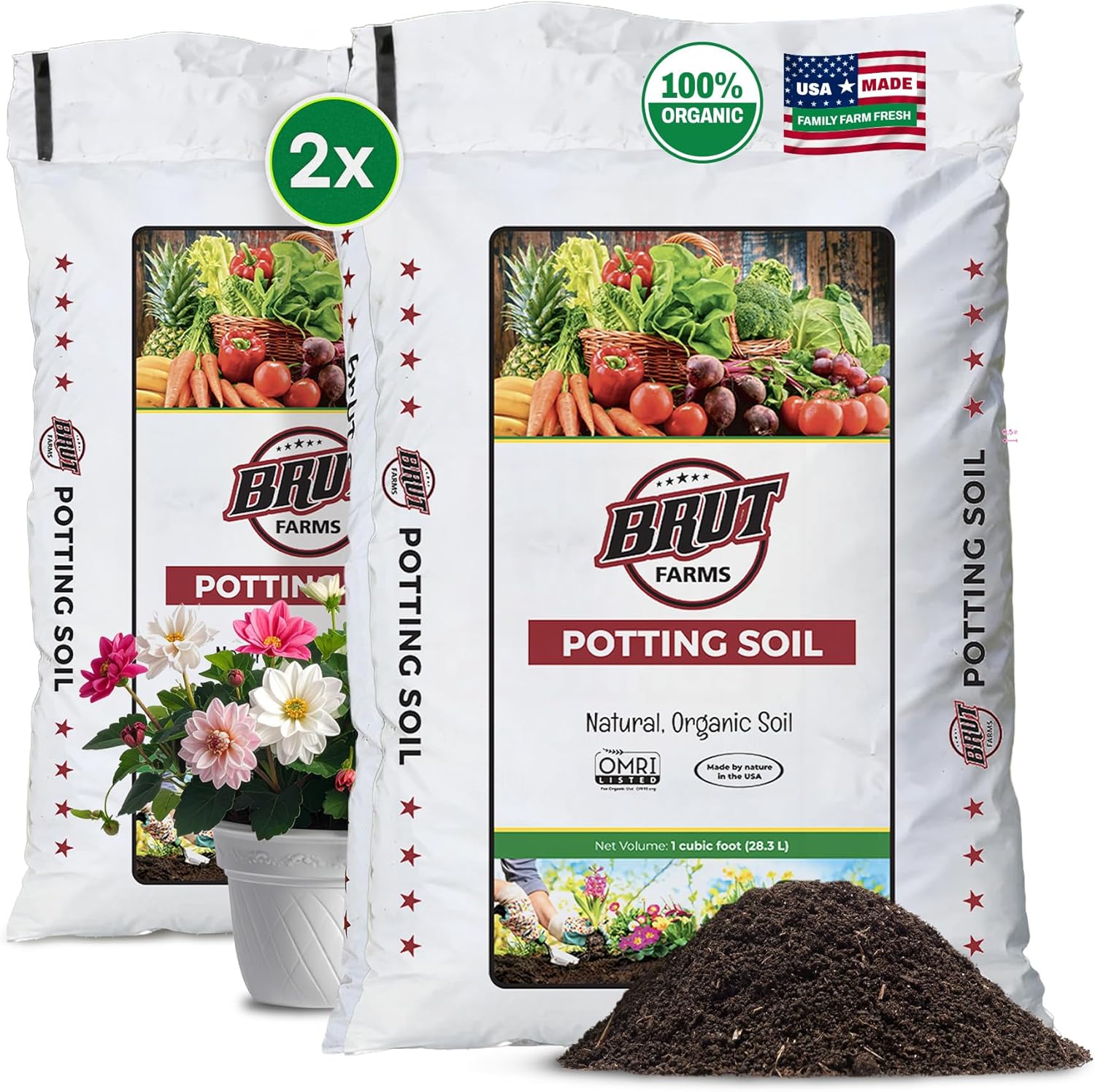
| Volume | 21 quarts |
|---|---|
| Number of Packs | 2 |
| Certified Organic | OMRI listed |
Brut Organic Potting Soil is a ready-to-use, chemical-free mix designed to feed potted plants and garden containers from the start. It combines microbe-rich worm castings, composted manures, perlite for drainage and Azomite and kelp for trace minerals, so it works as both a planting medium and a mild fertility boost. Use it straight from the bag for repotting houseplants, filling containers, or top-dressing seedlings and raised beds; it is pH balanced for general plant health. Practical benefits include improved moisture retention that reduces watering frequency and a nutrient profile that supports early growth without synthetic fertilizers. The mix is filler-free, so you will not find large wood chips or inert bulkers. Expect the soil to feed plants gradually rather than provide an instant high-NPK push, so heavier feeders may still need targeted fertilization later in the season. Also follow basic safety guidance to avoid inhaling dust when handling and to store bags dry to prevent contamination.
Best for: Gardeners who prioritize organic, performance-oriented potting mixes that support steady plant growth without synthetic additives, and who want a versatile soil for repotting, containers, and seed starting.
Less Ideal for: Buyers seeking an immediate, high-NPK boost for heavy-feeding crops or those who prefer pre-fertilized, short-term potting mixes designed for single-season use.
- Certified organic, made from 100% natural ingredients including worm castings and composted manures
- Contains perlite and organic amendments for balanced aeration and moisture retention
- Includes trace minerals (Azomite and kelp) and beneficial microbes to support plant health
- Filler-free formulation with no sticks or large wood debris
- Provides gradual nutrient release so heavy-feeding vegetables may require additional fertilizer
- Bag must be stored dry to avoid contamination or clumping
Verdict: Choose this mix if you want a certified organic, microbe-rich potting soil that improves moisture retention and supports steady, long-term plant health.
Burpee Premium Organic Potting Mix with Coco Coir (9 Quart)

| Item Form | Powder |
|---|---|
| Specific Uses For Product | Plant Growth, Root Development, Seed Development, Soil Conditioning |
| Coverage | 9 Qt Container |
| Liquid Volume | 9 quarts |
Burpee Premium Organic Potting Mix is a ready-to-use container soil designed for indoor and outdoor pots, seed starting, and raised bed containers. The mix combines coco coir for improved aeration and moisture retention with a nutrient blend that feeds plants for up to three months, making it useful for establishing seedlings or repotting established vegetables, herbs, and ornamentals. It is OMRI listed, which suits organic growers, and the bag is sold in a convenient 9-quart size that fits most small to medium containers. Practical benefits include reduced watering frequency thanks to the coir component and a balanced medium that promotes root development and germination. Limitations are the small bag size for larger projects and that it supplies nutrients for only a limited period, so longer-term containers will need supplemental fertilizer. The mix is powdery and light, so it is easy to handle but may compress over time in deep pots and benefit from occasional loosening.
Best for: Gardeners who want a compact, ready-made organic potting mix that reduces maintenance and supports reliable seed starting and container growth.
Less Ideal for: Those establishing large beds or filling many large containers at once should choose bulk soil or larger bags instead.
- OMRI listed organic blend suitable for organic container gardening
- Coco coir improves moisture retention while maintaining good aeration
- Includes slow-release nutrients that feed plants for up to three months
- Light, easy-to-handle texture ideal for seed starting and repotting
- 9-quart bag is small for larger containers or multiple pots
- Nutrient supply is temporary so additional fertilizer is required for long-season crops
Verdict: A compact OMRI-listed potting mix with coco coir that simplifies seed starting and short-term container growing by improving moisture balance and early root development.
Doter Organic Strawberry Soil Mix (1 qt)

| Unit Count | 32 Ounce |
|---|---|
| Item Type Name | Garden soil |
| Manufacturer | Doter |
| Volume | 1 quarts |
This 1 qt Doter strawberry soil mix is a lightweight, nutrient-focused potting medium designed for home strawberry cultivation in pots or small raised beds. It combines organic matter and soil conditioners to improve aeration and water retention while providing a pH suited to strawberries. The mix is intended for straightforward use: fill containers or topdress beds, plant crowns or seedlings, and rely on its slow-release nutrients to feed plants over the season. Practical benefits include improved root aeration and reduced watering frequency compared with plain garden soil, and the small bag size makes it easy to handle for spot potting or trial planting. Limits to keep in mind are the small volume—1 quart covers only a few small pots—so it is best for trial, starter plants, or supplementing larger mixes rather than planting a whole bed. Also follow the safety note to avoid inhaling dust when handling. For growers who want a modest, plant-tailored mix without extra components, this is a simple, purpose-made option.
Best for: Home gardeners growing strawberries in containers or testing varieties who want a ready-made, plant-focused potting medium and prefer a small, easy-to-handle bag.
Less Ideal for: Gardeners establishing large raised beds or planting many crowns who need bulk soil or a custom mix tailored with specific fertilizer rates.
- Formulated for strawberries with balanced pH to aid nutrient uptake
- Includes organic matter and soil conditioners to improve drainage and aeration
- Slow-release nutrients provide sustained feeding through the season
- Convenient small bag suitable for spot potting and container use
- Only 1 quart volume so multiple bags are needed for larger plantings
- No detailed ingredient percentages or NPK values provided
Verdict: A convenient, small-format organic potting mix tailored to get container strawberries off to a healthy start.
Omitgoter All-Natural Strawberry Soil & Potting Mix, 10 qt

| Brand Name | Omitgoter |
|---|---|
| Unit Count | 320 Ounce |
| Style Name | Well-draining, Bonsai-specific |
| Volume | 10 quarts |
This 10-quart Omitgoter potting mix is designed specifically for strawberries and works as both potting soil and a garden amendment. The blend of peat moss and coconut coir retains moisture while perlite and coconut fiber improve drainage and aeration, which helps prevent root rot in containers and raised beds. Worm castings and humus add organic nutrients and microbial life that support flowering and fruit set without synthetic fertilizers. It is ready to use straight from the bag, so no mixing or complex amendments are required—handy for planting seedlings, repotting matted-row plants, or refreshing container strawberries. Limitations to note are bag size and scope: at 10 quarts this is best for small beds, planters, or top-dressing rather than rebuilding large garden beds, and nutrient levels may require periodic feeding for heavy-bearing varieties. For growers who want a safe, low-fuss medium that promotes healthy roots and better drainage, this mix delivers predictable, natural results.
Best for: Gardeners who prioritize dependable, low-maintenance soil for container or small-bed strawberry growing and prefer natural, ready-to-use mixes.
Less Ideal for: Those rebuilding large garden beds, commercial growers, or anyone seeking a bulk soil product for wide-scale planting should consider bulk amendments or larger-volume mixes instead.
- Formulated for strawberries with organic components like worm castings and humus to support flowering and fruiting
- Good drainage and aeration from perlite and coconut coir to reduce waterlogging risk
- Ready-to-use straight from the bag so no mixing or specialist knowledge is required
- All-natural, no synthetic additives, suitable for gardeners avoiding chemical inputs
- 10-quart bag is small for large beds or many containers
- May need supplemental fertilization for high-yielding plants over the season
Verdict: Choose this mix when you want an easy, all-natural potting soil that reliably supports healthy strawberry roots and better drainage in containers and small beds.
Miracle-Gro Potting Mix, 16 qt. (2-Pack)

| Feeds Plants | Up to 6 months |
|---|---|
| Volume | 16 quarts |
| Number of Packs | 2 |
| Intended Use | Outdoor containers |
| Ingredients | Sphagnum Peat Moss, Peat, Perlite, Compost, Fertilizer |
Miracle-Gro Potting Mix is a general-purpose container soil designed for outdoor pots, planters, and hanging baskets. It combines peat-based media, perlite, compost, and built-in fertilizer so you can pot vegetables, herbs, annuals, perennials, and shrubs without blending amendments. Typical use is straightforward: fill a pot about one third, set the plant at nursery depth, top off, and water until excess drains. Notable features are fast drainage to prevent root rot, an all-purpose nutrient charge that feeds plants for up to six months, and a texture that helps roots establish quickly. In practice this means less upfront prep and fewer immediate feedings compared with plain soil, and it is handy for seasonal repotting and new container plantings. Important limitations are that it is formulated for containers only (not in-ground beds) and the nutrient boost will diminish after the stated feeding period so you will need to supplement or repot for long-term specimens. Also peat-based mixes can compress over time and require refreshing each season.
Best for: Gardeners who want a low-effort, dependable potting soil for seasonal container planting and quick repots, especially those optimizing time and results across many pots.
Less Ideal for: Those wanting a soil to amend in raised beds or long-term in-ground planting should choose a garden soil formulated for in-ground use instead.
- Ready-to-use mix with built-in fertilizer that feeds up to six months
- Formulated for fast drainage to reduce risk of overwatering and root rot in containers
- Versatile for a wide range of outdoor container plants including vegetables, herbs, and flowers
- Not intended for in-ground garden beds
- Fertilizer effect is temporary and requires refeeding or repotting after about six months
Verdict: A convenient, fast-draining potting mix that simplifies container planting while providing up to six months of built-in nutrition.
Back to the Roots Organic Indoor Potting Mix, 6 Quart

| Unit Count | 192 Fluid Ounces |
|---|---|
| Item Type Name | Indoor Potting Mix 6qt |
| Item Highlight | Peat-free, 100% organic, made in the USA |
| Ingredients | Coconut Coir, Yucca, Mycorrhizae, Perlite, Horticultural Sand |
This Back to the Roots indoor potting mix is a ready-to-use, 6-quart blend designed for common houseplants such as pothos, monstera and ferns. It combines coconut coir, yucca extract, mycorrhizae, perlite and horticultural sand to improve moisture retention, drainage and root development without peat. In practice it feels light and friable, so it is easy to pot seedlings or repot mature plants and it reduces compaction that can suffocate roots. The added mycorrhizae helps young roots establish and take up nutrients more efficiently while yucca extract helps the mix hold water between waterings, which is convenient for forgetful or busy plant owners. Because it is peat-free and made in the USA, it is a more sustainable choice versus traditional peat-based mixes. Limitations are the small 6-quart size, which means frequent repurchasing for larger collections, and the bag does not include fertilizer so you will need to feed plants separately as they grow.
Best for: Buyers who prioritize low-risk, easy-care houseplant solutions and want an organic, ready-to-use potting mix that reduces watering hassles and supports healthy root growth.
Less Ideal for: Not ideal for gardeners who need large-volume soil for many pots or for those expecting a mix that includes built-in fertilizer for long-term feeding.
- Peat-free organic formula that reduces environmental impact
- Yucca extract improves moisture retention between waterings
- Contains mycorrhizae to support root development and nutrient uptake
- Light, well-draining texture suitable for repotting seedlings and houseplants
- Small 6-quart volume may require frequent repurchasing for larger plant collections
- Does not include fertilizer so additional feeding is necessary
Verdict: A compact, peat-free potting mix that simplifies indoor plant care by holding moisture and boosting root establishment.
Choosing the Right Potting Soil Mix for Strawberries: Key Factors to Consider
Drainage and Aeration
Good drainage prevents waterlogged roots while aeration keeps oxygen available at the root zone. Strawberries are prone to root diseases if their media stays soggy, so a potting mix should include coarse components such as perlite, pine bark, or coarse sand to create larger pore spaces.
In containers, drainage is more critical than in garden beds because water does not disperse horizontally. For hanging baskets and small pots, prioritize mixes that explicitly list aerating ingredients and avoid heavy, compacting materials that hold excessive water.
Water-Holding Capacity
Strawberries need consistent moisture during flowering and fruit development, but not constant saturation. A balanced mix holds enough water to bridge between regular waterings while releasing excess quickly when watered heavily. Ingredients like coconut coir and peat moss increase available water without turning the mix into a sponge.
Consider your watering schedule and local climate. In hot, dry conditions you may want a slightly higher water-holding capacity, while cool, shaded sites benefit from quicker drying mixes to reduce disease pressure.
Nutrient Content and Release
Young plants and matted-row varieties both need nutrients timed to support leaf growth, flower production, and fruit development. A good potting mix will provide an initial nutrient charge and pair well with a predictable feed schedule. Slow-release organic fertilizers or blends with composted components supply steady nutrition, while inert mixes require regular liquid feeding.
Think about how often you want to fertilize and whether you prefer organic amendments. High initial fertility can burn seedlings in fine-rooted transplants, so mixes intended for strawberries often aim for moderate, steady-release nutrition rather than high immediate fertility.
pH and Mineral Availability
Strawberries typically favor a slightly acidic medium, usually near pH 5.5 to 6.5. The mix should either be within that range out of the bag or be easy to adjust with lime or sulfur. pH affects nutrient availability, so stable pH keeps micronutrients accessible during fruiting.
Packaged mixes differ in baseline pH depending on peat, coir, and compost content. If you rely on store-bought mixes, check whether the manufacturer lists pH or whether the mix contains buffering materials to hold pH steady over weeks of watering and fertilizing.
Texture, Weight, and Container Type
The physical feel of the mix affects handling and the final weight of filled containers. Heavy, water-retentive mixes add much more weight to hanging baskets and portable planters. Lighter mixes are easier to move but can dry faster. Consider the container material and mounting location when choosing texture.
For large raised beds, weight is less of a concern, so richer mixes with more compost are acceptable. For wall planters and hanging baskets prioritize lighter blends that still retain enough moisture for strawberries.
Cleanliness and Disease Risk
Strawberries are susceptible to soil-borne fungi and crown rot when pathogens are introduced. Sterile, screened potting mixes are less likely to contain weed seeds, slug eggs, or fungal inoculum. Avoid unprocessed garden soil or poorly composted material for container strawberries.
Look for mixes labeled as pasteurized or manufactured in controlled facilities if disease pressure has been a problem in your garden. Clean mixes reduce the need for chemical controls and make cultural management of pests and disease more effective.
Adjusting Mix Acidity for Your Strawberries
If the potting mix pH is too high or low, you can amend it gradually to create an optimum root environment. Garden lime raises pH, while elemental sulfur or acidic fertilizers can lower it. Test pH after the first few waterings because dissolved salts and fertilizers alter media acidity over time.
Make small adjustments over weeks rather than large one-time changes, and retest pH before planting more delicate varieties. In containers, pH tends to shift faster than in garden beds, so schedule routine checks during the growing season.
- Test pH with a simple meter or a soil test kit after mixing and after a month of use
- Amend in small amounts and allow a settling period before planting
- Consider using acidifying fertilizers for long-term pH management
Mix Recipes and DIY Options
You can blend your own potting mix to tune drainage, water retention, and fertility. A common starting recipe is an equal mix of coconut coir or peat moss, compost or well-aged leaf mold, and a coarse component like perlite or pine bark. Adjust the proportions depending on container size and climate.
For hanging baskets and strawberry jars, increase the coarse component slightly to improve drainage. For deep planters where moisture is easier to maintain, add more organic matter to retain nutrients and support a longer feeding interval.
- Starter DIY mix: 1 part coir, 1 part compost, 1 part perlite
- For drier climates, use 2 parts coir, 1 part compost, 1 part perlite
- For heavier nutrition, add composted poultry or kelp meal in small amounts
Watering Strategies With Different Mixes
How you water should change with the mix you select. Fast-draining, lightweight mixes need more frequent but shorter waterings. Mixes with higher water-holding capacity allow longer intervals between waterings but require careful monitoring to avoid saturation.
Use the finger test or a moisture meter to gauge moisture a few inches below the surface. Water thoroughly until you see drainage from container holes, then allow the top inch or two to dry slightly before the next watering to reduce disease risk.
- Light mixes: water more often, in smaller amounts
- Water-retentive mixes: water deeply but less frequently
- Always ensure containers have adequate drainage holes
Matching Mix to Fertilizer Routine
If you prefer weekly liquid feedings, an inert mix with low initial fertility pairs well because you control nutrient timing and concentration. If you want to reduce feeding frequency, choose a mix with slow-release organic fertilizers or stabilized compost that provides nutrients over several weeks.
Monitor leaf color and flower set to judge whether nutrient levels are appropriate. Overly rich mixes can produce lush foliage at the expense of fruiting, while undernourished plants will have poor flower formation and smaller berries.
- Inert mixes require a regular liquid fertilizer schedule
- Slow-release mixes need topping up less frequently
- Watch foliage and bloom development to adjust feeding
Preparing Containers and Planting Technique
Before planting, rinse new containers and check drainage holes. Add a thin layer of gravel or broken pottery only if it improves drainage in very shallow containers. Fill partially with your chosen mix, set crowns so the roots are covered but the crown sits near the surface, and finish filling around the roots without burying the crown.
Mulch the surface with straw or a fine bark to reduce evaporation and keep fruit off the soil surface. In hanging baskets, avoid heavy mulches that retain excessive moisture and weight down the planter.
- Place crowns at the soil surface to prevent crown rot
- Use fine mulch for moisture control and clean fruit
- Ensure adequate root space for runner development
How We Chose the Best Potting Soil Mix for Strawberries
We prioritized characteristics that directly affect strawberry health in containers and small beds. Key evaluation criteria included drainage and aeration to prevent root rot, water-holding capacity for consistent moisture between waterings, nutrient profile and slow-release behavior to support flowering and fruit set, and pH stability since strawberries prefer slightly acidic conditions. We also considered organic matter content for long-term soil structure and resistance to compaction, and the presence or absence of weed seed and pathogens. Our selection excluded mixes formulated solely for vegetables with heavy amendments that overfertilize or for orchids and succulents with extreme drainage. We focused on products suitable for container-grown strawberries and small raised beds, as those conditions demand different mixes than field soil. Practical concerns such as weight for hanging planters and compatibility with common fertilizing routines were also applied as filters. Products were chosen for how well their ingredient blend translates to reliable moisture, root oxygenation, and predictable feeding needs for strawberry production rather than marketing claims or packaging alone.
FAQ
Can I use regular garden soil in containers for strawberries?
Regular garden soil is usually too dense for containers and can compact, reducing aeration and increasing disease risk. For containers, a purpose-made potting mix or a DIY blend with coarse components is usually a better choice.
How often should I fertilize strawberries in a potting mix?
Fertilizing frequency depends on the mix. Inert mixes typically need liquid feeding every one to two weeks during the growing season. Mixes with slow-release organic nutrients often require fewer feedings, such as every four to eight weeks.
What pH is best for strawberries in pots?
Strawberries prefer slightly acidic conditions, generally near pH 5.5 to 6.5. Aim for that range when selecting or amending a potting mix, and retest periodically because container media can shift pH with watering and fertilizing.
Should I sterilize reused potting mix before replanting strawberries?
Reused mix can harbor pathogens and pest eggs. Sterilizing by solarizing in clear bags or replacing the top several inches and refreshing with compost can reduce disease risk. In many cases, replacing old mix is the safest option for fruiting crops.
Do strawberries need extra drainage in hanging baskets?
Yes, hanging baskets dry and warm faster and can keep roots too wet if drainage is poor. Use a lighter, coarser mix and ensure plenty of drainage holes to keep roots healthy and reduce rot risk.
Final Verdict
Pick a potting mix that balances drainage with enough water-holding capacity for your container type and climate. Prioritize mixes that offer stable pH and a predictable nutrient profile aligned with how often you want to feed. Expect tradeoffs: lighter mixes are easier to handle and drain well but need more frequent watering, while richer mixes hold moisture and nutrients but can increase disease risk if overwatered. Make your final choice based on container size, local conditions, and how hands-on you want to be with fertilizing and pH adjustments. With the right mix and consistent care, container-grown strawberries respond quickly and reward you with better flowering and fruit.
