

Note: This article contains affiliate links. If you click on these links and make a purchase, I may earn a small commission at no extra cost to you. This helps support my research and content. Read my full affiliate disclosure here.
If you grow snake plants indoors or on a sheltered patio, the right potting soil mix makes the biggest difference between steady growth and recurring root issues. Snake plants need a mix that sheds excess water quickly while holding enough organic matter to support slow, steady feeding. This guide covers seven top shortlisted potting mixes chosen for that balance and for typical indoor container sizes. Below you will find practical notes on why each mix suits a snake plant, plus the evaluation criteria gardeners care about: drainage, aeration, organic content, and ease of use. Use the quick summaries to match a mix to your pot size and watering habit.
Top Picks at a Glance
| Best Overall The best all-around choice for most situations | Gardenera Snake Plant Potting Mix (2 Quart) |  |
| Best Quality Built to a higher standard if you want something more solid | rePotme Snake Plant Houseplant Potting Soil Mix — 8 Quart Resealable Bag |  |
| Best Value The sweet spot between price and what you get | Leaves & Soul Professional Snake Plant Potting Soil, 2.2 Quart |  |
| Best Budget The cheapest option that still gets the job done reliably | Kapecute Snake Plant Potting Soil Mix (2 QT, Sphagnum Moss + Perlite + NPK) |  |
| Highest Rated A top-rated pick with lots of positive feedback | Gardenera Snake Plant Potting Mix, 4 Quart |  |
| Most Popular A crowd favorite that many people choose with confidence | Grow Queen Craft Houseplant Potting Mix, 2 Quart |  |
| Best Seller A high-volume bestseller chosen again and again | Perfect Plants Snake Plant Soil, 4 qt Coco Coir Potting Mix |  |
Gardenera Snake Plant Potting Mix (2 Quart)

| Brand Name | Gardenera |
|---|---|
| Item Type Name | Snake Plant Potting Mix |
| Unit Count | 1 Count |
| Volume | 2 quarts |
This Gardenera Snake Plant Potting Mix is a ready-to-use 2 quart blend designed to give snake plants a fast-draining, aerated substrate. It combines peat moss, perlite, lime, and earthworm castings to promote rapid root development while reducing the risk of waterlogged roots that cause mushy leaves. Typical use is repotting or topping up containers for Sansevieria varieties; simply remove the plant, place fresh mix around the root ball, and water lightly. The added perlite improves aeration and drainage so pots dry more evenly, and worm castings supply slow-release nutrients to support steady growth. Because it is premixed and labeled for organic growing, it saves time compared with assembling components yourself. The main limitation is volume — a 2 quart bag only suits one or two small repots, so larger collections will need multiple bags or a bulk alternative. Also the mix is focused on snake plants and may not meet needs for moisture-loving houseplants.
Best for: Plant owners who want a convenient, snake-plant–focused soil that improves drainage and encourages quicker root development without mixing ingredients themselves.
Less Ideal for: Gardeners who need large volumes for many plants or who grow moisture-loving tropical houseplants should look for bulk or moisture-retentive alternatives.
- Formulated specifically for snake plants with peat moss, perlite, lime, and worm castings
- High drainage and aeration to reduce root rot in overwater-prone pots
- Premixed and ready to use which simplifies repotting
- Contains worm castings for gentle, ongoing nutrient supply
- Small 2 quart bag requires multiple purchases for several plants or larger pots
- Not suited for moisture-loving houseplants that need wetter, more water-retentive mixes
Verdict: Buy this if you want a small, ready-made potting mix that improves drainage and root growth for snake plants without the hassle of blending components yourself.
rePotme Snake Plant Houseplant Potting Soil Mix — 8 Quart Resealable Bag

| Brand Name | rePotme |
|---|---|
| Item Type Name | Potting Soil |
| Unit Count | 96 Ounce |
| Volume | 8 quarts |
This rePotme houseplant potting mix is a small-batch, hand-blended soil intended for indoor plants like snake plants, monsteras, pothos and other common houseplants. It comes in a resealable pouch and is blended to give good drainage and optimal water retention for pot-grown plants. In practice the mix handles repotting and top-ups cleanly thanks to a balanced texture that keeps roots aerated while holding enough moisture to reduce frequent watering. The brand emphasizes fresh ingredients and a formulation used by conservatories, which suggests consistent quality. Practical benefits include the resealable bag for storage and a blend suitable for a wide range of houseplants so you can use one mix across several species. Important limitations are the small 8 quart volume, which means it is best for a few pots or small repots rather than large plants, and the product can produce dust so gloves and a mask are advisable when handling.
Best for: Buyers who prioritize reliable growing performance and prefer a fresh, professionally blended mix for repotting or maintaining a few indoor plants, especially snake plants and other common houseplants.
Less Ideal for: Gardeners who need large volumes for many or very large pots should consider bulk commercial mixes or larger bags instead.
- Hand-blended in small batches for consistent freshness
- Resealable pouch for convenient storage between uses
- Formulated for good drainage and moisture balance suitable for common houseplants
- Brand used by botanical gardens and conservatories, indicating professional-grade sourcing
- Only 8 quarts per bag, so not economical for large repots or many plants
- May produce dust during use requiring protective gear
Verdict: Choose this hand-blended, resealable houseplant mix if you want a fresh, well-draining soil tailored to snake plants and other indoor favorites.
Leaves & Soul Professional Snake Plant Potting Soil, 2.2 Quart

| Brand Name | Leaves and Soul |
|---|---|
| Volume | 2.2 quarts |
| Style Name | Snake Plant Soil (2.2 Quarts) |
| Made in | USA |
This 2.2 quart Leaves & Soul soil mix is built for repotting and maintaining snake plants by combining peat moss, coco coir, perlite, and dolomite into a loose, fast-draining medium. Use it straight from the resealable bag when repotting pups, newly purchased plants, or mature specimens to improve root aeration and reduce the risk of prolonged saturation that causes root rot. The blend retains moderate moisture while letting excess water escape, which helps plants that store water in their leaves without needing constant watering. The packaging is convenient for small projects and includes a resealable closure for storage between uses. Important limitations are the small bag size for larger pots or multiple plants and the safety note to avoid inhalation or skin contact during handling. For growers who prefer to custom-blend their mixes, this ready mix may be less flexible than buying components separately, but it delivers a straightforward, low-effort option for most indoor snake-plant repotting tasks.
Best for: Buyers who want a low-effort, purpose-built soil for snake plants and prefer a ready-made mix that improves drainage and root aeration without custom blending.
Less Ideal for: People repotting many large containers or those who prefer to create custom soil blends from individual components.
- Formulated for snake plants with peat moss, coco coir, perlite, and dolomite to balance drainage and moisture retention
- Ready-to-use in a resealable bag for convenient small repotting jobs
- Fast-draining structure helps reduce risk of root rot in drought-tolerant houseplants
- Made in the USA and intended for both beginner and experienced indoor growers
- Single 2.2 quart bag is small for larger pots or multiple repots
- Contains peat-based materials and handling warnings for dust inhalation and skin contact
Verdict: A convenient, ready-to-use fast-draining potting mix that simplifies repotting and care for snake plants.
Kapecute Snake Plant Potting Soil Mix (2 QT, Sphagnum Moss + Perlite + NPK)

| Brand | Kapecute |
|---|---|
| Item Type | potting soil |
| Material composition | Sphagnum moss, perlite, NPK fertilizer |
| Volume | 2 quarts |
| Unit Count | 3.5 Ounce |
This Kapecute mix is sold as a small, compressed kit that expands into a free-draining, slightly acidic medium suited to snake plants. Use it by soaking the compressed sphagnum flakes, mixing in the included perlite and the packaged NPK granules, squeezing out excess moisture, and potting as usual. The product's strengths are its convenience and plant-appropriate composition: sphagnum holds moisture and keeps pH slightly acidic to encourage root growth while perlite improves aeration and drainage. Individual packaging makes it easy to portion for single pots or small repots, which suits people who only need a little soil. The main limitations are the very small volume and the manual prep step required to rehydrate and blend components, so it is not practical for large collections or repeated repotting without multiple purchases. Also follow the safety note to avoid inhaling perlite dust during mixing.
Best for: Buyers repotting one or a few snake plants on a tight budget who want a ready-made, plant-appropriate mix in small, easy-to-use portions.
Less Ideal for: Collectors with many plants or anyone needing bulk potting soil for repeated repotting should choose a larger bag or bulk mix instead.
- Pre-measured kit with sphagnum moss, perlite, and NPK fertilizer included
- Sphagnum debris holds moisture and encourages slightly acidic conditions good for snake plant roots
- Perlite improves drainage and aeration to reduce root rot risk
- Individually wrapped portions make it easy to use small amounts without waste
- Very small total volume not suitable for multiple repots or larger plants
- Requires soaking and manual mixing before use which adds prep time
Verdict: A convenient, low-cost single-pot kit that gives snake plants a well-aerated, slightly acidic growing medium without buying bulk soil.
Gardenera Snake Plant Potting Mix, 4 Quart

| Volume | 4 quarts |
|---|---|
| Brand Name | Gardenera |
| Style Name | Snake Plant Potting Mix |
Gardenera Snake Plant Potting Mix is a ready-to-use 4 quart blend made for Sansevieria and similar houseplants. The mix pairs peat moss and extra perlite for noticeably faster drainage and improved aeration, while lime and earthworm castings add buffering and organic nutrients. Typical use is simple repotting or top-dressing: remove the plant, replace heavy or compacted soil with this aerated mix, and the combination helps prevent waterlogged roots that commonly cause mushy or droopy leaves. Because it is pre-blended, it saves time compared with measuring individual components and is suitable for repeat repots or for starting young divisions. The formula is focused on drainage and root growth rather than water retention, so you should still monitor moisture for newly potted plants. The 4 quart size is convenient for single-plant jobs but may require multiple bags for larger collections. For a reliability-minded gardener, this mix delivers consistent, plant-appropriate structure and organic feed in an off-the-shelf package.
Best for: Plant owners who prioritize a dependable, ready-made soil that reduces overwatering risk for Sansevieria and prefer a mix that supports steady root development during repotting.
Less Ideal for: People who need large volumes of soil for many plants or gardeners who want a moisture-retentive mix for thirstier houseplants.
- Formulated specifically for snake plants with peat moss, perlite, lime, and worm castings
- High perlite content improves aeration and rapid drainage to reduce root rot risk
- Pre-mixed and ready to use, simplifying repotting and potting tasks
- Contains organic inputs suitable for organic growing
- Small 4 quart bag may not be sufficient for multiple or larger plants
- Focus on fast drainage means it holds less moisture than mixes designed for moisture-loving plants
Verdict: Buy this mix if you want a reliable, ready-made soil that improves drainage and root health for snake plants with minimal fuss.
Grow Queen Craft Houseplant Potting Mix, 2 Quart

| Unit Count | 64 Ounce |
|---|---|
| Item Type Name | Potting Mix |
| Volume | 2 quarts |
| Ingredients | Douglas Fir Bark, Lava Rock, Pumice, Coco Coir, Organic Worm Castings, Charged Biochar |
This Grow Queen craft houseplant mix is a chunky, peat-free potting soil made for repotting and ongoing care of indoor plants like peace lily. The blend uses Douglas fir bark, lava rock and pumice to create permanent air pockets so the mix drains quickly and resists compaction, which helps prevent root rot while still allowing the soil to dry evenly between waterings. It arrives slightly moist and ready to use, which makes repotting new plants or rooting cuttings faster and less messy. Organic worm castings and charged biochar supply steady micronutrients and help retain water and nutrients at the root zone without synthetic fertilizer burn. The formula excludes peat and perlite and is designed to stay structured for multiple seasons, so you repot less often. Note that the bag is small at 2 quarts, so you will need larger sizes for bigger plants or multiple repots and should confirm quantity before starting a project.
Best for: Buyers who want a low-maintenance, sustainable indoor potting mix that prevents soggy roots and feeds plants gradually while minimizing repotting frequency.
Less Ideal for: People who need large volumes of soil for many plants or very large containers should choose bigger bag sizes or bulk potting mix alternatives.
- Chunky mix with bark, lava rock and pumice for lasting aeration and fast drainage
- Contains organic worm castings and charged biochar for slow-release nutrition and improved moisture retention at roots
- Peat-free and perlite-free formula reduces compaction and uses renewable ingredients
- Arrives pre-moistened and ready to use for immediate repotting or rooting cuttings
- Small 2 quart bag may not be enough for larger peace lilies or multiple plants
Verdict: A sustainable, chunky houseplant mix that keeps peace lilies healthy by combining fast drainage with bioactive nutrition.
Perfect Plants Snake Plant Soil, 4 qt Coco Coir Potting Mix
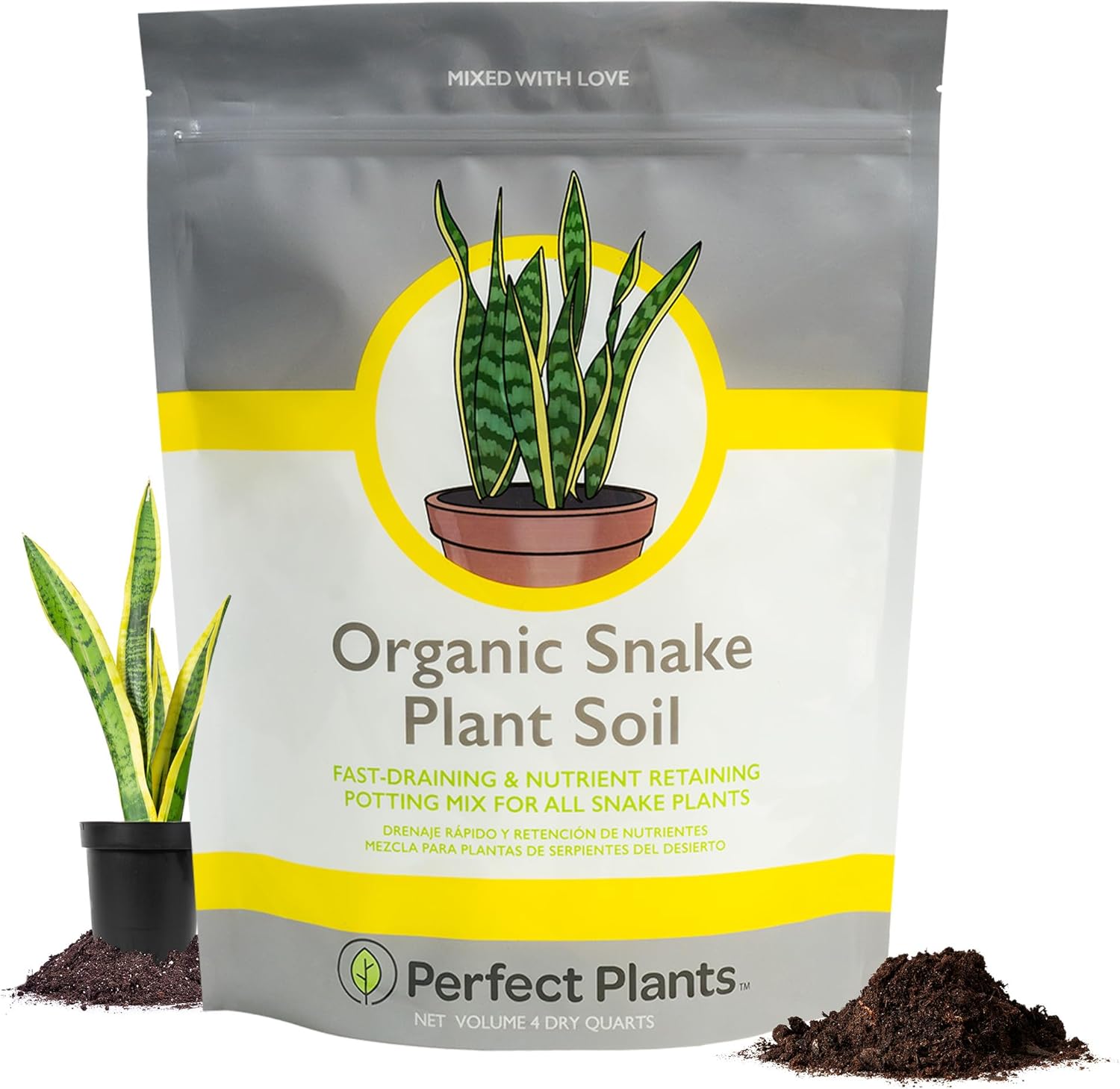
| Volume | 4 quarts |
|---|---|
| Item Highlight | All-natural pine bark, perlite and sand blend for Sansevieria varieties |
| Unit Count | 1 Count |
| Style Name | Houseplant,Bark,Vermiculite,Potting,Garden |
This 4 qt mix is formulated specifically for Sansevieria and similar snake plant varieties to reduce water retention and protect roots. It is typically used when repotting indoor snake plants or refreshing the top layer in containers; the blend of coconut coir, pine bark chips, perlite, and sand gives a loose, airy structure that drains quickly after watering. Because it contains no slow-release fertilizer, it is a neutral starting medium that lets you control feeding separately. The resealable heavy-duty bag makes it convenient to store between uses and small-volume packaging is handy for single pots or propagations. Limitations include the small 4 quart volume for larger plants and the absence of added nutrients, so expect to supply fertilizer on a schedule. For growers who prefer a tailored, fast-draining substrate for snake plants, this mix is a practical, low-risk choice backed by consistent user feedback.
Best for: Buyers who want a purpose-made, fast-draining substrate for repotting or maintaining snake plants and who prefer to manage fertilization themselves.
Less Ideal for: People who need a large bulk supply for many containers or who want an all-in-one mix with preloaded nutrients and long-term feeding.
- Blend optimized for snake plants with coconut coir, pine bark, perlite, and sand for improved drainage
- No added slow-release fertilizer so you can control feeding for specific plants
- Resealable heavy-duty bag for tidy storage between uses
- Made and blended in the USA on a family-run nursery
- 4 quart size may be insufficient for larger pots or multiple repots
- No built-in nutrients requires users to add fertilizer separately
Verdict: A small-batch, fast-draining potting mix designed to keep snake plant roots healthy while letting you control feeding.
Choosing the Right Potting Soil Mix for Snake Plant: Key Factors to Consider
Drainage Rate
Drainage rate determines how quickly water moves through the root zone. For snake plants, fast drainage prevents prolonged wet pockets that lead to root rot. A mix with coarse particles such as perlite, pumice, or coarse sand speeds water flow and reduces the chance of waterlogging.
When choosing a mix, look for visible chunks and minimal fine silt. Faster drainage also means you may water a bit more frequently, but the tradeoff keeps roots healthier in the long run.
Aeration and Pore Structure
Good aeration gives roots access to oxygen and prevents compaction over time. Snake plant roots are adapted to drier soils and will suffer when the mix compacts or packs down. Ingredients that create stable pore space include pumice, perlite, coarse sand, and shredded bark.
Consider how the mix holds its structure after watering cycles. Some organic-rich mixes collapse and reduce air space; mixes designed for succulents typically retain pore structure better.
Organic Matter Quality
Organic matter supplies gentle nutrients and improves moisture buffering, but too much fine peat or compost can retain excess water. For snake plants, moderate, well-aged organic components such as coconut coir, composted bark, or aged compost are preferable because they provide slow-release nutrients without holding water like fresh peat.
Also consider smell and salt content. Very fresh or high-salt amendments can stress roots. Choose mixes that list stable, aged organics to avoid nutrient shocks.
Moisture Retention Balance
Snake plants prefer a mix that holds enough moisture between waterings without staying wet. A balanced mix combines coarse mineral components for drainage with small amounts of moisture-retentive organics to supply water between infrequent watering events.
If you often forget a watering, err on the side of slightly more retention; if you tend to overwater, prioritize drier mixes that shed moisture quickly.
Particle Size and Uniformity
Particle size affects both drainage and stability. A mix containing a range of particle sizes creates a stable matrix that resists compaction but still drains. Very uniform fine particles can compact and reduce oxygen flow, while a good mix will include several size classes from grit to small bark pieces.
Uniformity also affects repotting and root inspection. Coarse components are easy to rinse away and let you inspect roots without creating a muddy mess.
pH and Salt Considerations
Soil pH influences nutrient availability and root health, though snake plants tolerate a fairly broad pH range. Choose mixes that report neutral to slightly acidic pH or that use neutral ingredients like coco coir and aged bark. Avoid mixes that list high levels of uncomposted manure or fresh greens which can spike salts and alter pH.
If you use tap water high in salts, prefer mixes with good flushing potential and lower inherent salt content to reduce buildup over repeated waterings.
Mixing and Amending at Home
Even a ready-made mix can be tailored. For faster drainage, add a portion of pumice or coarse perlite. To increase moisture retention slightly, blend in a small fraction of coconut coir or aged compost. Aim for a final texture where water moves through in a few seconds but the mix still holds some dampness around particles.
Match amendment ratios to pot size. Small pots need less amendment by volume because a high-mineral ratio can dry out tiny root balls too fast. For large containers, increase coarse mineral content proportionally to maintain consistent drainage through the profile.
- Common amendment ratio: 60-70% base mix, 20-30% coarse mineral, 10% organic buffer.
- Use larger grit sizes for containers with fewer drainage holes.
- Avoid adding fresh compost or garden soil directly to indoor mixes.
Pot Choice and Its Interaction With Soil
The pot material and drainage holes interact with the soil to determine how quickly the root zone dries. Unglazed terracotta pots wick moisture from the mix and help prevent overwatering. Plastic pots retain moisture longer, so choose a drier mix when using plastic.
Choose a pot with at least one drainage hole and match the soil volume to the plant size. Deep pots can hold more water at the bottom; in deeper containers, use coarser material lower in the pot to maintain airflow.
- Terracotta: increases drying rate.
- Plastic: retains moisture longer.
- Ceramic with no hole: risk of permanent wet soil; avoid for snake plants.
Repotting Tips for Healthy Roots
Repot snake plants when roots crowd the pot or soil structure has degraded. Gently remove old mix and inspect roots for firmness and white tips. Trim only obviously dead or mushy roots; healthy roots are firm and light-colored.
When placing the plant in fresh mix, avoid burying the crown too deeply and settle the soil so roots have contact with coarse and organic components. Water lightly after repotting to help settle the mix, then allow a longer drying interval before the next watering.
- Repot during active growth months when the plant can recover quickly.
- Use a shallow, wider pot rather than a very deep one for most snake plant varieties.
- Handle rhizomes gently to avoid bruising.
Watering Habits and Seasonal Adjustments
Adjust watering to match both the mix and seasonal growth. In warm, bright months snake plants use more water and may need a bit more frequent watering even in a fast-draining mix. In cool or low-light months allow the top layers to dry thoroughly before watering again.
If you change mixes, monitor the plant closely for the first few water cycles. Faster-draining mixes often require slightly more frequent but shorter waterings; mixes with more organic matter need longer drying intervals.
- Check moisture by feeling the top two inches or by using a moisture meter.
- Avoid standing water in saucers; empty trays after drainage.
Preventing and Managing Root Rot
Root rot is most often a symptom of poor drainage and overwatering rather than a soil-borne issue. Using a fast-draining potting mix and allowing the soil to dry between waterings are the best preventive measures. If you suspect root rot, remove the plant from its pot, trim soft roots, and repot in fresh, drier mix.
Sterilize tools and, when replanting, select a mix with improved aeration. Infected pots with residual wet soil should be cleaned thoroughly before reuse to reduce reinfection risk.
- Remove affected soil and disinfect the pot with a mild bleach solution or hot water.
- Repot into a coarser, aerated mix when recovering from root rot.
How We Chose the Best Potting Soil Mix for Snake Plant
We screened many potting mixes to find options that match the specific needs of snake plants. Selection started with mixes formulated for cacti, succulents, or well-draining houseplants, then filtered for texture and ingredient transparency. Key evaluation criteria included drainage rate, aeration and pore structure, organic matter quality and nutrient release, moisture retention balance, and ease of repotting for typical indoor containers. We excluded heavy garden soils, mixes with unknown or vague ingredient lists, and blends designed for moisture-loving plants. We also deprioritized mixes that require extensive on-site amendment to perform correctly. The final list emphasizes blends that deliver distinct, gardener-observable differences in drainage and root health, while remaining easy to use for both new and experienced indoor gardeners.
FAQ
How often should I repot a snake plant into fresh potting mix?
Usually every 2 to 4 years depending on growth and soil condition. Repot sooner if the soil compacts, drainage slows, or roots become crowded. Repot in spring or early summer for best recovery.
Can I use cactus or succulent mix for snake plants?
Often yes. Cactus and succulent mixes tend to be fast-draining and work well for snake plants, though you may add a small amount of organic material if you want slightly more nutrient buffering. Adjust based on your watering routine and pot type.
Is peat-based mix okay for snake plants?
Peat-based mixes can work but beware they may retain too much moisture unless amended with coarse mineral material. If you choose a peat-heavy mix, increase perlite or pumice to improve drainage and aeration.
What particle size is best in a snake plant mix?
A range of particle sizes is ideal, from coarse grit or small bark pieces to finer organic particles. Coarse components maintain airflow while small particles hold minimal moisture needed between waterings.
Should I sterilize potting mix before use?
Sterilization is usually unnecessary for commercial mixes because they are processed to reduce pathogens. Sterilize if you suspect contamination or if repotting a plant recovering from disease to reduce risk of reinfection.
How does pot size affect soil choice for snake plants?
Smaller pots dry faster and may need mixes with slightly higher water retention. Larger pots hold more moisture and benefit from coarser mixes to prevent wet pockets at the bottom. Match soil texture to pot volume and drainage.
Final Verdict
Choosing the right potting soil mix for snake plant is about balancing drainage with modest nutrient and moisture buffering. Prioritize mixes that maintain stable pore structure and add coarse minerals if you tend to overwater. Consider your pot material and climate when adjusting amendments. Focus on the few decision points that most affect plant health: drainage rate, aeration, and organic matter quality. With those priorities in mind you can pick a mix that keeps roots firm, reduces rot risk, and supports steady, low-maintenance growth.
