

Note: This article contains affiliate links. If you click on these links and make a purchase, I may earn a small commission at no extra cost to you. This helps support my research and content. Read my full affiliate disclosure here.
If you need reach, power, and the ability to clear dead limbs without renting a lift, a gas pole saw is still the go-to for many gardeners. Choosing the right model under $200 matters because lower-cost engines and extension assemblies vary widely in how they perform in real yard work. You want a tool that starts reliably, holds a decent cut stroke, and feels balanced when you are working up on a ladder or standing on the ground. This guide covers seven shortlisted gas pole saws under $200 that are practical for homeowners and small-property stewards. We evaluated each option for cutting power, reach and stability, maintenance needs, and durability so you can match a tool to the kind of pruning you do most often. Read on to see the criteria we used and the tradeoffs to expect at this price point.
Top Picks at a Glance
| Best Overall The best all-around choice for most situations | Bavnnro 48cc Gas Pole Saw with 11.5" Bar and Telescoping Pole |  |
| Best Quality Built to a higher standard if you want something more solid | PROYAMA 42.7cc Gas Pole Saw with 12-inch Oregon Bar and Chain |  |
| Best Value The sweet spot between price and what you get | COOCHEER 58cc Gas Pole Saw with 11.5" Bar and 2.8 ft Extension |  |
| Best Budget The cheapest option that still gets the job done reliably | DCEHKR 42.7CC 2-Stroke Gas Pole Saw |  |
| Highest Rated A top-rated pick with lots of positive feedback | EIDOWA 48cc Gas Pole Saw with 16 ft Reach and 11.8" Bar |  |
| Most Popular A crowd favorite that many people choose with confidence | DOWILIN 48CC Gas Powered Extendable Pole Saw with 11.5" Bar |  |
| Best Seller A high-volume bestseller chosen again and again | VEVOR 33cc 6-in-1 Gas Trimmer with Extension Pole (Pole Saw, Hedge Trimmer, Brush Cutter) |  |
Bavnnro 48cc Gas Pole Saw with 11.5" Bar and Telescoping Pole

| Power Source | Gas Powered |
|---|---|
| Engine | 48 CC 2-stroke |
| Cutting Length | 11.5 Inch |
| Fuel Capacity | 850ml |
This Bavnnro gas pole saw combines a 48cc two-stroke engine with an 11.5-inch cutting bar and a telescoping pole to let you prune higher limbs without a ladder. It is used like a conventional pole chainsaw: assemble the two-section pole and extension, secure the head, mix fuel to the recommended ratio, and start the pull-start engine to cut branches from the ground. Notable features include a beefy 48cc motor for sustained cutting power, an 11.5-inch chain that can handle sizeable limbs, and an included shoulder belt, wrench, and fuel measuring pot so you can begin work right away. In practice it excels on remote or large yards where corded or battery tools fall short, giving long run time and the mobility to reach taller branches. Important limitations are the typical maintenance and noise of a gas two-stroke engine and the need to manage fuel mixing and chain sharpening; the pole length and overall package are long and a bit heavy to maneuver for extended periods. For buyers who need true reach and gas-level cutting performance, this is a practical, work-oriented choice.
Best for: Buyers who prioritize cutting power and reach over light weight and low noise and who need a gas tool for larger yards or remote jobs where cord or battery runtime is limiting.
Less Ideal for: If you want a lightweight, low-maintenance, quiet tool for occasional small pruning or live in areas with strict noise or emissions rules, an electric or battery model will serve you better.
- Powerful 48cc two-stroke engine delivers sustained cutting force for thick limbs
- 11.5-inch cutting bar can handle larger branches with fewer passes
- Telescoping pole provides reach for trimming 13 to 16 feet high from the ground
- Comes with practical accessories including shoulder belt, wrench, and fuel measuring pot
- Requires fuel mixing, regular maintenance, and produces typical two-stroke noise and exhaust
- Heavier and longer than electric alternatives, which can be tiring for extended use
Verdict: Choose this Bavnnro if you need gas-level cutting power and true reach to trim high or thick branches without using a ladder.
PROYAMA 42.7cc Gas Pole Saw with 12-inch Oregon Bar and Chain

| Power Source | Gas Powered |
|---|---|
| Horsepower | 2 hp |
| Chain Length | 12 inches |
| Adjustable Length | 8.2-11.4 FT (reach ~15 FT with user height) |
The PROYAMA 42.7cc gas pole saw is built for homeowners and landscapers who need a reachable, powerful tool for trimming higher branches without climbing. It uses a 42.7cc two-cycle engine to deliver steady cutting power through a 12-inch Oregon guide bar and chain, and an extendable shaft that adjusts from roughly 8.2 to 11.4 feet so users can reach about 15 feet when standing. The saw head rotates up to 90 degrees to change cutting angles, which helps when pruning awkward limbs. Practical touches include a rubber front grip to reduce vibration and an ergonomic harness that spreads the load during longer jobs. Because it is gas powered, expect the usual maintenance: mixing fuel/oil, periodic tune-ups, chain sharpening and more noise and emissions than electric alternatives. The unit is better for medium branches rather than heavy tree felling, and its weight and vibration mean short sessions or using the harness for comfort are advisable.
Best for: A buyer who wants a robust, reach-capable pole saw for regular yard and landscape pruning and prioritizes cutting power and proven components over quiet or zero-emission operation.
Less Ideal for: Not the best choice for users who need a lightweight, low-noise, or emission-free tool for occasional small pruning jobs or for urban settings with strict noise limits.
- Powerful 42.7cc 2-cycle engine for reliable cutting performance
- Oregon 12-inch guide bar and chain for durable, efficient cuts
- Adjustable reach up to about 15 feet to trim high branches without ladders
- 90-degree rotating head allows angled cuts and better access to awkward limbs
- Includes ergonomic harness and rubber front grip to improve comfort and reduce vibration
- Gas engine requires fuel mixing, regular maintenance, and produces noise and emissions
- Heavier and more vibration than battery-powered alternatives, so longer use can be tiring
Verdict: Choose this PROYAMA pole saw when you need gas-powered reach and cutting power with Oregon components to tackle high and medium branch pruning without climbing.
COOCHEER 58cc Gas Pole Saw with 11.5" Bar and 2.8 ft Extension

| Power Source | Gas |
|---|---|
| Wattage | 1400 watts |
| Blade Material | Stainless Steel |
| Item Highlight | 2-Cycle Engine, 11.5" Cutting Bar, Cuts 12" Branches, Extendable Pole |
This COOCHEER pole saw is a gas-powered, extendable pruning tool designed to cut tall and thick branches without climbing ladders. It pairs a 58cc 2-stroke engine with an 11.5" low-kickback chain and a detachable 2.8 ft extension pole to reach up to roughly 16 feet, letting you prune high limbs from the ground. The unit is supplied with two chains, two spark plugs, a shoulder strap and basic tools so you can start working after minimal assembly. Practical benefits include strong cutting ability for branches up to about 12 inches, a large fuel tank for extended runtime, and ergonomic touches like a front handle and padded strap to reduce fatigue. Important limitations are the usual maintenance and noise of a gas 2-stroke engine, the need to mix oil and fuel, and added weight compared with electric or battery options which can make prolonged overhead work tiring. It is best applied to heavy-duty trimming and storm cleanup where sustained power and reach matter most.
Best for: Buyers who need a durable, high-power pole saw for heavy pruning, storm cleanup, or properties with tall trees and prioritize sustained cutting performance and reach from the ground.
Less Ideal for: If you prefer low-noise, low-maintenance tools or need a very lightweight solution for frequent overhead trimming, a battery or electric pole saw would be a better fit.
- Long reach for high branches using the included extension pole to trim without a ladder
- Powerful 58cc 2-stroke engine for cutting large limbs up to about 12 inches
- Comes ready with useful extras including two chains, two spark plugs, shoulder strap and tools
- Ergonomic front handle and padded shoulder strap reduce strain during extended use
- Requires fuel mixing and regular engine maintenance common to 2-stroke gas tools
- Heavier and louder than comparable battery or electric pole saws, making prolonged overhead work more tiring
Verdict: Choose this gas pole saw when you need maximum cutting power and extended reach to prune large, high branches from the ground.
DCEHKR 42.7CC 2-Stroke Gas Pole Saw
| Power Source | Gas Powered |
|---|---|
| Horsepower | 1.25 KW |
| Model Number | 1E40F-5A |
| Unit Count | 1 Count |
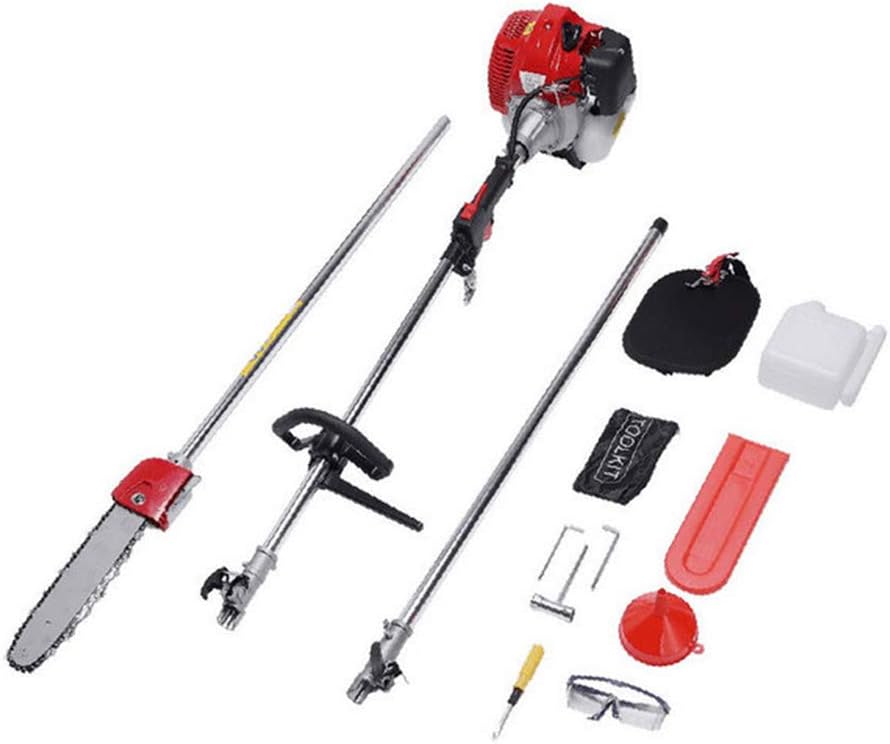
This DCEHKR pole saw uses a 42.7cc two-stroke engine to give you handheld reach for pruning high branches without climbing. It comes with an extension pole and a removable design so you can disassemble it for storage or transport. The engine delivers about 1.25 kW and runs on a 0.26 gal fuel tank, which means reasonable continuous run time for routine yard work. The air-cooled system helps keep temperatures down during extended cuts. Included accessories such as a carrying strap, goggles, and a fuel mixing tank make it usable right away, but expect basic controls and a learning curve for starting and throttle management typical of small two-stroke tools. Practical benefits are strong cutting power for branch pruning, decent run time between refills, and the safety advantage of trimming from the ground. Important limitations are its two-stroke engine complexity compared with battery models and likely higher noise and vibration levels; assembly and regular maintenance are required to keep it running well.
Best for: Homeowners who need an affordable, gas-powered pole saw for occasional to regular pruning and prioritize cutting power and run time over low-noise or low-maintenance operation.
Less Ideal for: People who want quiet, low-maintenance tools or frequent short trimming sessions where a battery model would be more convenient.
- Powerful 42.7cc two-stroke engine provides strong cutting performance for thick branches
- Air-cooled design helps prevent overheating during extended use
- 0.26 gal fuel tank offers longer run time between refills for typical yard jobs
- Removable extension pole for easier storage and ground-level trimming without climbing
- Two-stroke engine requires fuel mixing and more maintenance than electric alternatives
- Likely louder and subject to more vibration than battery-powered pole saws
Verdict: If you want the most cutting power for the money in a ground-use pole saw, this gas-powered DCEHKR model delivers solid performance and run time for routine branch pruning.
EIDOWA 48cc Gas Pole Saw with 16 ft Reach and 11.8" Bar

| Power Source | Gas Powered |
|---|---|
| Horsepower | 3.5 hp |
This EIDOWA gas pole saw is built to handle routine pruning and storm cleanup on taller trees without the need for ladders. It uses a 48cc, 3.5 hp two-stroke engine capable of up to 9000 RPM, which provides sustained cutting power across large yards where cords or batteries would limit range. The 11.8-inch guide bar lets you cut through real branches rather than just small twigs, and the automatic chain oiler helps keep the chain lubricated during extended runs. A padded shoulder strap and anti-slip handle reduce arm fatigue and improve control when working at full extension. In practical use you can reach up to 16 feet from the ground, making crown thinning and deadwood removal safer and faster. Expect typical gas-tool maintenance such as fuel mixing, periodic spark plug and air filter checks, and routine chain sharpening. It is a capable option for homeowners who want dependable, continuous power for large or remote properties but who are comfortable with the upkeep that gas engines require.
Best for: Homeowners with large yards or remote trees who need reliable, continuous cutting power for frequent pruning and storm cleanup and who accept routine gas-engine upkeep.
Less Ideal for: Small-plot gardeners, casual users, or anyone who prefers low-maintenance battery or corded tools for occasional light trimming.
- Gas-powered 3.5 hp engine delivers continuous high RPM performance for large yards
- 16 foot reach allows trimming high branches from the ground without a ladder
- 11.8-inch guide bar can handle thicker branches than small pruning bars
- Automatic chain oiling reduces manual lubrication needs during use
- Padded shoulder strap and anti-slip handle improve comfort and control
- Requires regular gas-engine maintenance and fuel mixing
- Heavier than battery models which can increase user fatigue over very long sessions
Verdict: Choose this gas pole saw when you need dependable, ladder-free reach and continuous power for heavy-duty trimming across large properties.
DOWILIN 48CC Gas Powered Extendable Pole Saw with 11.5" Bar

| Power Source | Gas Powered |
|---|---|
| Speed | 3000 rpm |
| Blade Length | 11.5 inches |
| Other Special Features of the Product | Extendable Pole |
This DOWILIN 48CC gas pole saw is built to reach tall limbs without a ladder and deliver the power needed for thick branches. It combines a 2-stroke 900W engine rated to about 3000 rpm with an 11.5 inch cutting bar and an extendable pole that expands with the included extension to reach roughly 16 feet. Typical use is overhead pruning, cutting back dead limbs, and clearing brush where reach and raw cutting force are required. Notable features include a two-section pole plus an additional extension, a stainless steel cutting bar, and a shoulder belt for easier handling during longer jobs. The practical benefits are strong cutting performance on medium to large limbs and less reliance on ladders or helpers. Important limitations are the usual maintenance needs of a 2-stroke gas engine, the noise and emissions inherent to gas tools, and the extra care required when operating a long, powered pole above your head. For buyers who want dependable gas power and long reach, it performs well; those wanting quieter, low-maintenance operation should consider alternatives.
Best for: Best for homeowners or small-scale contractors who prioritize reliable gas power and need to trim high branches without using a ladder, and who are comfortable with routine small-engine maintenance.
Less Ideal for: Not a good fit for users who prefer low-noise, low-maintenance electric tools or those who need a lightweight option for frequent short tasks around patios and small yards.
- Gas engine provides strong cutting power suitable for medium to large branches
- Extendable pole plus additional extension reaches up to about 16 feet for high pruning
- 11.5 inch stainless steel cutting bar resists corrosion and handles repeated trimming
- Includes shoulder belt to reduce fatigue during extended overhead use
- Requires regular 2-stroke maintenance and fuel mixing
- Gas engine produces noise and exhaust compared with electric alternatives
Verdict: Choose this gas-powered pole saw when you need dependable cutting force and long reach for pruning tall trees without a ladder.
VEVOR 33cc 6-in-1 Gas Trimmer with Extension Pole (Pole Saw, Hedge Trimmer, Brush Cutter)

| Power Source | Gas Powered |
|---|---|
| Engine displacement | 33cc |
| Blade speed | 6500 rpm |
| Fuel tank capacity | 0.8L |
| Adjustable angle | 270° |
This VEVOR 33cc 6-in-1 combines several common yard tools into one gas-powered unit so you can switch heads instead of buying separate machines. In practice it functions as a pole saw for high branches, a dual-action hedge trimmer for shaping shrubs, and a brush/line trimmer and edger for clearing thick grass and borders. Key features include a 33cc two-stroke engine rated to about 8,500 rpm (cutter head ~6,500 rpm), a 270° adjustable trimmer head, a 30-inch extension pole to reach taller hedges, and a claimed 40-minute run time per tank. The metal blades and included chain and guide bar give the pole saw real cutting capacity for medium branches while the brush cutter and 10-inch cutting swath handle dense growth. For a risk-averse buyer, note the kit is heavy and mechanically busy so it needs basic maintenance, correct fuel mix, and safe assembly when swapping attachments; vibration and noise are typical for gas two-stroke tools. The product ships with safety gear and many accessories which helps start working right away, making it a practical all-in-one option if you prefer a single, versatile gas unit over multiple dedicated tools.
Best for: Buyers who want one gasoline-powered machine that handles occasional tree pruning, hedge shaping and heavy brush without buying separate tools and who prefer a ready-to-use kit with accessories included.
Less Ideal for: People who need a lightweight tool for long continuous use, those who prefer low-maintenance electric or battery systems, or users who only need a single-purpose trimmer or saw.
- Six interchangeable heads replace multiple tools for hedge trimming, pole sawing, brush cutting, edging and string trimming
- 33cc two-stroke engine with reported ~40 minutes run time per tank for sustained backyard jobs
- 270° adjustable trimmer head and 30-inch extension pole increase reach for tall hedges and higher branches
- Comes with a wide set of accessories and basic safety gear so it is ready to use out of the box
- Relatively heavy for a handheld multi-tool which can be tiring during extended overhead work
- Requires regular two-stroke maintenance, correct fuel mixing, and periodic blade/chain care to stay reliable
Verdict: If you want one gas-powered machine that replaces several yard tools and includes the attachments and safety gear to start tackling hedges, branches and heavy brush, this VEVOR 6-in-1 is a practical all-in-one choice.
Choosing the Right Gas Pole Saw: Key Factors to Consider
Engine Size and Performance
The small two-stroke engines in budget gas pole saws determine how much continuous cutting you can do before the tool bogs down. Higher displacement usually gives better torque for cutting thicker branches, but also increases weight and fuel consumption. For routine home pruning, look for engines that rev cleanly and maintain power under moderate load rather than ones that surge and stall.
Engine performance affects starting behavior as well. A stubborn-starting unit will slow down yard work, so check whether the engine uses easy-start features like primer bulbs or decompression valves. Consider how often you will use the saw and whether you are comfortable with two-stroke fuel mixing and periodic carburetor maintenance.
Cutting Bar, Chain Quality, and Bar Length
Bar length and chain quality directly influence what branch diameter you can cut efficiently. Shorter bars are lighter and easier to control, while longer bars extend cutting capability but add torque demand on the engine. For general homeowners, a mid-length bar balances cut capacity and manageability.
Chain sharpness, pitch, and tension system are practical concerns. A chain that dulls quickly or is hard to tension will increase downtime. Check that the chain is easy to tension without specialized tools and that replacement chains are a standard pitch so you can source spares without trouble.
Reach, Pole Design, and Stability
How the pole is built affects safety and cut quality. Telescoping poles give adjustable reach but must lock securely to avoid twist or collapse while cutting overhead. Fixed-length poles tend to be stiffer, but you lose flexibility for different job heights. Weight distribution along the pole matters; a heavy motor on the end can make overhead work fatiguing and unstable.
Also consider how the pole connects at joints. Look for solid locking collars or pins with minimal play. A pole that flexes under load can change the cut angle and increase the risk of kickback or loss of control.
Operator Comfort and Vibration
Extended pruning sessions reveal differences in comfort. Handle shape, grip material, and vibration damping influence how long you can work without hand or shoulder fatigue. Many gas pole saws transmit more vibration than electric models, so effective anti-vibration mounts and ergonomic grips are valuable even on budget saws.
Balance is part of comfort. A saw that feels well-balanced between the motor and the pole reduces strain on arms and improves control during precise cuts. Think about the typical time you spend pruning and whether you need features that reduce fatigue for longer jobs.
Maintenance Needs and Serviceability
Budget gas tools can require more frequent maintenance, so serviceability is important. Easy access to the air filter, spark plug, and carburetor makes routine work faster. Tools that need special fasteners or disassembly for simple tasks increase downtime and frustration. Consider whether replacement parts like chains, bars, and fuel line components are commonly available.
Also account for storage and off-season care. Two-stroke engines require fuel stabilization if stored with mixed fuel, and carburetor cleaning may be necessary after long idle periods. Choose a saw that fits your comfort level with that upkeep.
Safety Features and Controls
Safe operation depends on control placement and protective features. Throttle locks, chain brakes, and clear stop switches improve reaction time if something goes wrong. A chain guard for transport, a reliable hand guard, and clear instructions for safe overhead cutting are all important.
Also consider kill-switch reliability and whether guards or shields are secure and easy to reinstall after maintenance. A saw that sacrifices basic safety fittings to reduce cost is not worth the risk.
When a Gas Pole Saw Is the Right Choice
Gas pole saws remain the preferred choice when you need portable power and long reach away from an outlet. They perform well for properties with large trees, remote hedgerows, or infrequent but demanding pruning jobs where battery life or cord length would be limiting factors.
Choose gas when you often cut thicker branches and need a continuous power source during extended sessions. Expect higher maintenance and vibration compared with electric options, but also stronger torque for tougher cuts.
- Best for remote yards and large trees where corded tools are impractical
- Preferable when you need sustained cutting power without battery swaps
- Good option if you are comfortable with basic small-engine maintenance
Preparing for Safe Overhead Pruning
Plan each cut and clear the area below of people, pets, and fragile objects. Position yourself so you can step back as the branch falls. Use a stable ladder or pole stand if you must climb, and never overreach while cutting overhead.
Wear eye protection, gloves, hearing protection, and a hard hat if branches might fall unpredictably. Practice controlled test cuts on smaller limbs to get a feel for the saw's balance and response before committing to larger limbs.
- Check pole lock mechanisms and chain tension before each use
- Test throttle responsiveness on a low branch
- Keep a clear escape route in case the branch falls unexpectedly
Fuel and Storage Best Practices
Mix fuel accurately for two-stroke engines and use fresh gasoline. Old or poorly mixed fuel causes hard starting and can clog carburetors. If you will store the saw between seasons, either run the engine dry or use a fuel stabilizer and follow the manufacturer's guidance for storage.
After long use, allow the engine to cool before stowing the saw. Clean sawdust and debris from the chain, bar, and cooling fins to reduce corrosion and overheating risks. Regular inspection catches wear before it becomes a failure during a cut.
- Use recommended oil-to-gas mix ratios
- Drain or stabilize fuel for off-season storage
- Wipe the bar and chain clean and inspect sprockets regularly
When to Consider Professional Help
If branches are over electrical lines, very large, or poorly supported so they might fall unpredictably, hire a professional. Professionals have rigging skills, safe climbing techniques, and insurance to manage high-risk removals that a homeowner saw cannot safely handle.
Also consider professional help if you need large crown reduction or structural pruning on mature trees. Doing complex cuts incorrectly can cause long-term damage to a tree's health, so weigh the cost of a professional against the risk of a costly mistake.
- Electrical hazards or large hanging limbs are red flags
- Complex structural pruning benefits from arborist experience
- Professionals reduce risk for high or awkward cuts
How We Chose the Best Gas Pole Saw
We focused on features and behaviors that affect day-to-day pruning and tree maintenance with budget gas pole saws. Key evaluation criteria included engine responsiveness and starting reliability, because small two-stroke engines differ in how easily they start and how consistently they deliver power under load. We assessed cutting system effectiveness, covering bar length, chain quality, and recommended chain speed to determine how cleanly and quickly a saw will cut through typical branch sizes. Reach and stability were evaluated for real-world use: telescoping versus fixed poles, weight distribution, and secure locking mechanisms that affect balance when cutting overhead. Maintenance demands were considered, including how accessible the air filter and spark plug are, and whether common maintenance tasks need special tools. Build durability was judged by materials and joint designs that resist flex or failure over seasonal use. We excluded commercial-grade units, electric or battery saws, and any models with incomplete maintenance documentation or unclear safety features. Our shortlist includes only gas pole saws under $200 that meet minimum safety fittings and provide clear user guidance on upkeep and parts.
FAQ
How long will a typical gas pole saw run on a tank of fuel?
Run time depends on engine size and how heavily you use the throttle, but most homeowner-oriented gas pole saws run for 20 to 60 minutes per tank under normal pruning loads. Frequent full-throttle cutting reduces run time, while light trimming will extend it.
Can I replace the chain on any budget gas pole saw with a standard chain?
Most pole saws use common chain pitches, but it varies. Check the chain pitch and gauge in the manual. Using a chain that does not match the bar or sprocket can be dangerous, so confirm specifications before buying replacements.
Are gas pole saws harder to maintain than battery models?
Yes, gas models require fuel mixing, more frequent carburetor attention, and spark plug and air filter service. Battery models trade that for battery management and charging. If you prefer less engine upkeep, a battery option may be more convenient for light pruning.
Is it safe to use a gas pole saw from a ladder?
Using any pole saw from a ladder increases risk. If you must use a ladder, secure it and have a helper steady it, and use conservative cuts. Whenever possible, use an extension pole while standing on stable ground or hire a pro for high work.
How often should I sharpen the chain on a gas pole saw?
Sharpen the chain whenever cuts become slow or produce sawdust instead of clean chips. For regular homeowners, that might be every few hours of cutting, depending on wood type and how abrasive the material is.
What is the best way to reduce vibration when using a budget gas pole saw?
Proper grip, using both hands when possible, and checking that anti-vibration mounts and handle fasteners are tight will help. Taking regular breaks and choosing a saw with better anti-vibration design reduces fatigue.
Final Verdict
Choosing a gas pole saw under $200 is about balancing necessary power, manageable weight, and acceptable maintenance needs. Prioritize engines that start reliably and cutting systems that are easy to tension and service. Pay attention to pole stability and balance so overhead work remains controlled and safer. If you value continuous cutting power for remote or demanding yard tasks, focus on a saw with solid engine behavior and simple maintenance access. If lower vibration or minimal upkeep matters more, be prepared to accept shorter cut capacity or consider different power classes. Use the decision criteria above to match a tool to how and where you prune.
