

Note: This article contains affiliate links. If you click on these links and make a purchase, I may earn a small commission at no extra cost to you. This helps support my research and content. Read my full affiliate disclosure here.
If you do frequent heavy pruning, storm cleanup, or professional tree work, a commercial gas pole saw makes those high cuts manageable without a ladder. The right tool delivers long reach, predictable cutting power, and serviceability so you can stay productive on the jobsite. This guide covers our shortlisted top picks for commercial applications and explains the performance, durability, and maintenance factors that matter most. Read on to understand how engine output, pole length, vibration control, and ease of service influence real-world results before you choose.
Top Picks at a Glance
| Best Overall The best all-around choice for most situations | Husqvarna 525P4S Gas Pole Saw with 12-Inch Bar |  |
| Best Quality Built to a higher standard if you want something more solid | ECHO PPT-2620 X Series 25.4 cc Gas Telescoping Power Pole Saw, 12 in. Blade, Extends to 12.1 ft |  |
| Best Value The sweet spot between price and what you get | COOCHEER 58CC Gas Pole Saw with 11.5" Bar and 16ft Reach |  |
| Best Budget The cheapest option that still gets the job done reliably | DCEHKR 42.7CC 2-Stroke Gas Pole Saw |  |
| Highest Rated A top-rated pick with lots of positive feedback | EIDOWA 48cc Gas Pole Saw with 16 ft Reach and 11.8" Bar |  |
| Best Seller A high-volume bestseller chosen again and again | PROYAMA 42.7cc Gas Pole Saw with 12-inch Oregon Bar and Chain |  |
Husqvarna 525P4S Gas Pole Saw with 12-Inch Bar
| Power Source | Gas Powered |
|---|---|
| Horsepower | 1.36 hp |
| Chain Length | 12 inches |
| Engine Displacement | 25.4 CC |
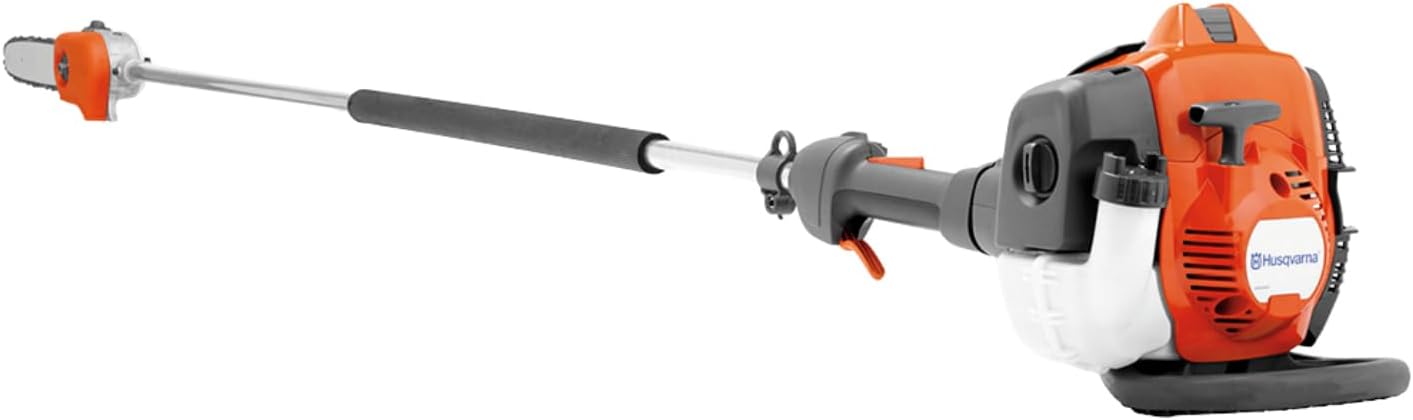
The Husqvarna 525P4S is a performance-focused gas pole saw built for demanding pruning and professional landscaping tasks. It pairs a 25.4 cc X-Torq two-cycle engine with a 12-inch bar to deliver rapid acceleration and the torque needed to cut through medium limbs while its telescoping/pole configuration gives up to 13 feet of reach for high branches. Notable features include an air purge system for easier starting, an ergonomic padded handle and balanced design to reduce operator fatigue, and a rear impact guard to protect the powerhead. In practice this saw is best used for seasonal pruning, clearing high limbs, and routine tree maintenance where power and reach matter more than low noise or zero emissions. Important limitations are its weight and sound level typical of gas engines, and the need to mix fuel with 2-stroke oil and perform regular maintenance. For buyers who prioritize raw cutting performance and durability, this Husqvarna is a capable, no-nonsense option.
Best for: Gardeners and landscapers who need a high‑performance, gas-powered pole saw for frequent or demanding pruning and value power and reach over lightweight convenience.
Less Ideal for: Casual homeowners with small yards who prefer quieter, lower-maintenance battery tools or those concerned about engine noise and emissions.
- Powerful 25.4 cc X-Torq engine delivers strong acceleration and torque for cutting thicker limbs
- Up to 13 feet reach with a 12-inch bar lets you trim high branches without a ladder
- Air purge system and ergonomic controls make starting and handling easier during long jobs
- Commercial-grade build with rear impact guard designed for professional use
- Typical gas-engine weight and 107 dBA sound level make it tiring and loud for extended handheld use
- Requires 2-stroke fuel mixing and periodic maintenance not needed on battery models
Verdict: Choose the Husqvarna 525P4S if you want a rugged, high‑torque gas pole saw that delivers professional cutting power and extended reach.
ECHO PPT-2620 X Series 25.4 cc Gas Telescoping Power Pole Saw, 12 in. Blade, Extends to 12.1 ft

| Power Source | Gas |
|---|---|
| Blade Length | 12 inches |
| Other Special Features of the Product | 2-stage air filtration, automatic oiler, aluminum inner drive shaft |
| Speed | 600 rpm |
The ECHO PPT-2620 is a gas telescoping pole saw built for homeowners and light pros who need to prune tall limbs without ladders. It uses a 25.4 cc two-stroke gas engine and a telescoping shaft that extends reach to handle overhead work up to roughly 12 feet. Notable features include a 12-inch high-carbon steel bar and chain, a 2-stage air filtration system and an automatic oiler that help reduce wear and maintenance. The aluminum inner drive shaft and loop handle give a balance of strength and control when cutting at angles up to 45 degrees. Practically, the saw delivers strong cutting power for thicker branches and the filters and oiler make it more reliable season to season. The main trade-offs are the typical noise, vibration, and maintenance of a gas two-stroke tool and its 17.4 pound weight which can feel tiring during extended overhead use. For buyers who want cordless convenience or the lowest vibration, electric or battery pole saws may be preferable.
Best for: Buyers who prioritize reliable, proven gas power and durability for occasional to regular high-reach pruning and who prefer a low-risk, serviceable tool backed by straightforward maintenance features.
Less Ideal for: People who need a quiet, low-maintenance saw for short jobs or those who prefer a lightweight battery option for frequent use or easy storage.
- Powerful gas engine suitable for cutting thicker branches
- Telescoping shaft extends reach for overhead pruning without a ladder
- 2-stage air filtration and automatic oiler reduce engine and chain wear
- Durable high-carbon steel 12-inch cutting bar and aluminum inner drive shaft
- Heavier than battery-powered alternatives which can cause fatigue during long overhead work
- Requires regular two-stroke maintenance and fuel mixing
- Produces typical gas engine noise and vibration
Verdict: Choose the ECHO PPT-2620 if you want a durable, serviceable gas pole saw that delivers strong cutting power and extended reach for reliable high-branch pruning.
COOCHEER 58CC Gas Pole Saw with 11.5" Bar and 16ft Reach
| Power Source | Gas |
|---|---|
| Engine Power | 1400 watts |
| Engine Type | 58CC 2-Stroke |
| Guide Bar Size | 11.5 inch |
| Fuel Tank Capacity | 1100ml |
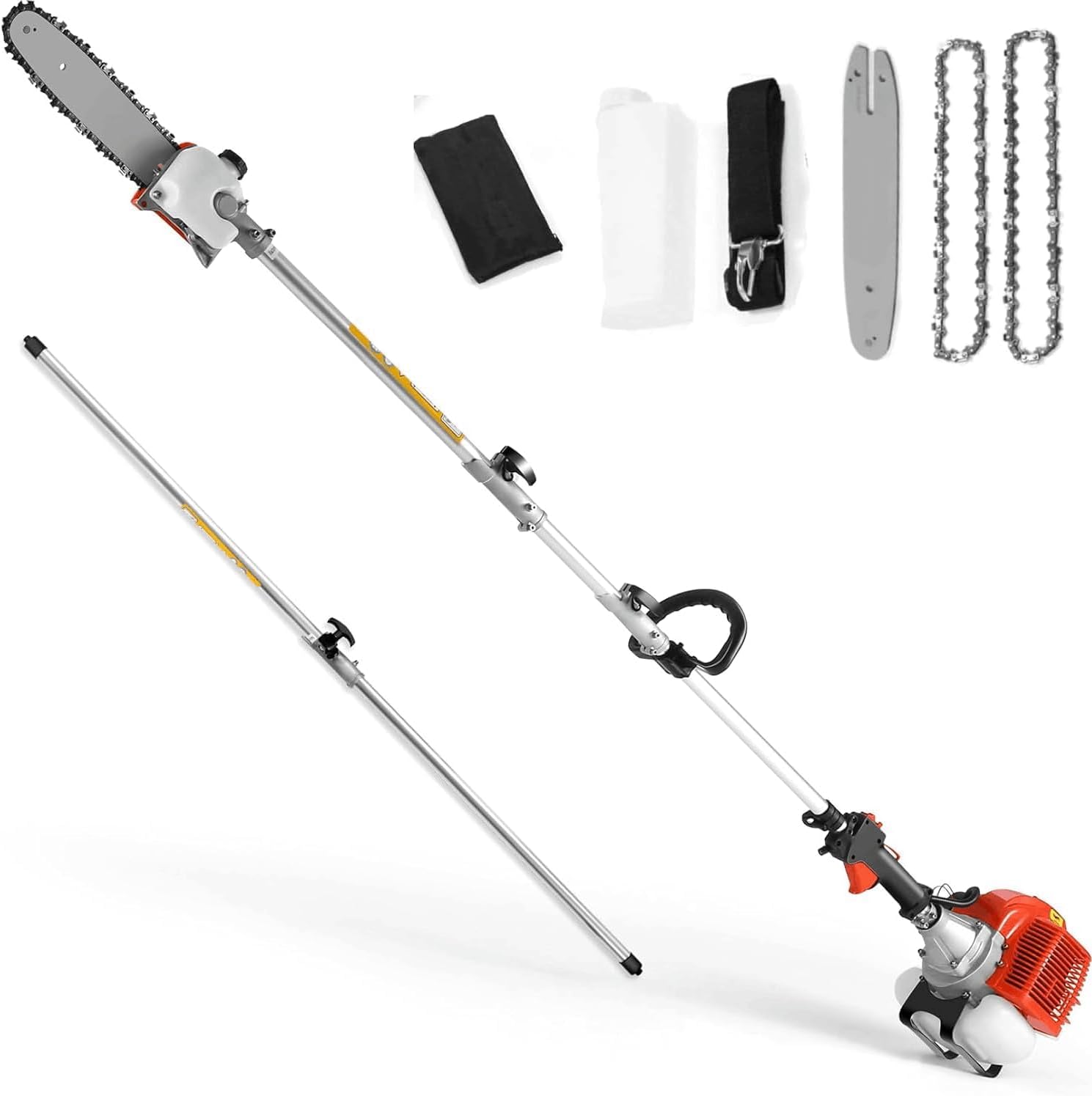
This COOCHEER gas pole saw is built for tougher pruning tasks where reach and raw cutting power matter. It combines a 58cc 2-cycle engine rated at about 1400W with an 11.5-inch guide bar and an extendable pole that telescopes to give a maximum trimming height around 16 feet for a 6-foot user. Typical use is overhead branch pruning and light limb removal on medium-thick wood up to roughly 12 inches in diameter. The unit ships with two chains, a spare spark plug, a shoulder strap, and a mixing bottle so you can start maintenance and operation right away. Notable features include a high rpm engine for faster cutting, an adjustable extension bar for variable reach, and metal/alloy cutting components. Expect practical benefits like longer uninterrupted cutting sessions from the sizable fuel tank and fewer immediate accessory purchases thanks to included extras. Trade-offs are the usual ones with gas pole saws: it requires mixed fuel and basic engine maintenance, it is heavier than battery models, and it produces noise and exhaust that make it less suitable for enclosed or noise-sensitive settings.
Best for: Best for homeowners who want a long-reach, gas-powered tool to handle regular tree trimming and heavier branches and who prefer a ready-to-use package with spare parts included.
Less Ideal for: Not a good choice for users who need a quiet, low-maintenance option for small yards or who cannot perform basic engine upkeep or safely handle gasoline tools.
- Long effective reach up to about 16 feet for overhead pruning
- Powerful 58cc 2-cycle engine capable of cutting branches up to about 12 inches
- Comes with two chains and a spare spark plug so you can operate and maintain it immediately
- Adjustable extension pole provides flexible working heights and a shoulder strap for better balance
- Requires mixed two-stroke gasoline and routine engine maintenance
- Heavier and louder than battery-powered alternatives
Verdict: If you need maximum cutting reach and raw gas-powered torque for trimming tall branches, this COOCHEER pole saw delivers a ready-to-use long-reach solution.
DCEHKR 42.7CC 2-Stroke Gas Pole Saw
| Power Source | Gas Powered |
|---|---|
| Horsepower | 1.25 KW |
| Model Number | 1E40F-5A |
| Unit Count | 1 Count |
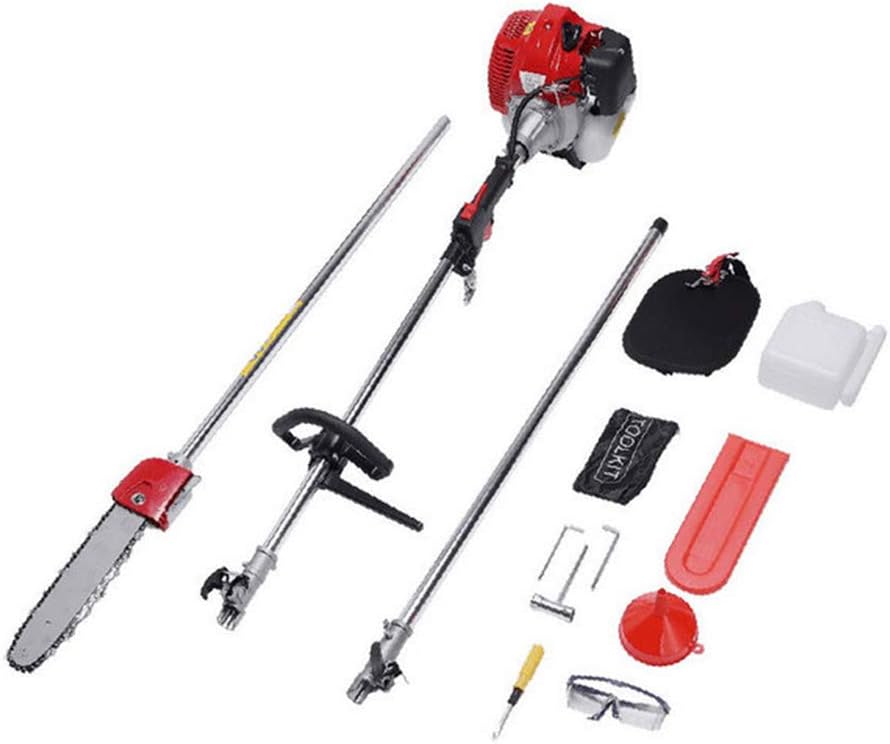
This DCEHKR pole saw uses a 42.7cc two-stroke engine to give you handheld reach for pruning high branches without climbing. It comes with an extension pole and a removable design so you can disassemble it for storage or transport. The engine delivers about 1.25 kW and runs on a 0.26 gal fuel tank, which means reasonable continuous run time for routine yard work. The air-cooled system helps keep temperatures down during extended cuts. Included accessories such as a carrying strap, goggles, and a fuel mixing tank make it usable right away, but expect basic controls and a learning curve for starting and throttle management typical of small two-stroke tools. Practical benefits are strong cutting power for branch pruning, decent run time between refills, and the safety advantage of trimming from the ground. Important limitations are its two-stroke engine complexity compared with battery models and likely higher noise and vibration levels; assembly and regular maintenance are required to keep it running well.
Best for: Homeowners who need an affordable, gas-powered pole saw for occasional to regular pruning and prioritize cutting power and run time over low-noise or low-maintenance operation.
Less Ideal for: People who want quiet, low-maintenance tools or frequent short trimming sessions where a battery model would be more convenient.
- Powerful 42.7cc two-stroke engine provides strong cutting performance for thick branches
- Air-cooled design helps prevent overheating during extended use
- 0.26 gal fuel tank offers longer run time between refills for typical yard jobs
- Removable extension pole for easier storage and ground-level trimming without climbing
- Two-stroke engine requires fuel mixing and more maintenance than electric alternatives
- Likely louder and subject to more vibration than battery-powered pole saws
Verdict: If you want the most cutting power for the money in a ground-use pole saw, this gas-powered DCEHKR model delivers solid performance and run time for routine branch pruning.
EIDOWA 48cc Gas Pole Saw with 16 ft Reach and 11.8" Bar

| Power Source | Gas Powered |
|---|---|
| Horsepower | 3.5 hp |
This EIDOWA gas pole saw is built to handle routine pruning and storm cleanup on taller trees without the need for ladders. It uses a 48cc, 3.5 hp two-stroke engine capable of up to 9000 RPM, which provides sustained cutting power across large yards where cords or batteries would limit range. The 11.8-inch guide bar lets you cut through real branches rather than just small twigs, and the automatic chain oiler helps keep the chain lubricated during extended runs. A padded shoulder strap and anti-slip handle reduce arm fatigue and improve control when working at full extension. In practical use you can reach up to 16 feet from the ground, making crown thinning and deadwood removal safer and faster. Expect typical gas-tool maintenance such as fuel mixing, periodic spark plug and air filter checks, and routine chain sharpening. It is a capable option for homeowners who want dependable, continuous power for large or remote properties but who are comfortable with the upkeep that gas engines require.
Best for: Homeowners with large yards or remote trees who need reliable, continuous cutting power for frequent pruning and storm cleanup and who accept routine gas-engine upkeep.
Less Ideal for: Small-plot gardeners, casual users, or anyone who prefers low-maintenance battery or corded tools for occasional light trimming.
- Gas-powered 3.5 hp engine delivers continuous high RPM performance for large yards
- 16 foot reach allows trimming high branches from the ground without a ladder
- 11.8-inch guide bar can handle thicker branches than small pruning bars
- Automatic chain oiling reduces manual lubrication needs during use
- Padded shoulder strap and anti-slip handle improve comfort and control
- Requires regular gas-engine maintenance and fuel mixing
- Heavier than battery models which can increase user fatigue over very long sessions
Verdict: Choose this gas pole saw when you need dependable, ladder-free reach and continuous power for heavy-duty trimming across large properties.
PROYAMA 42.7cc Gas Pole Saw with 12-inch Oregon Bar and Chain

| Power Source | Gas Powered |
|---|---|
| Horsepower | 2 hp |
| Chain Length | 12 inches |
| Adjustable Length | 8.2-11.4 FT (reach ~15 FT with user height) |
The PROYAMA 42.7cc gas pole saw is built for homeowners and landscapers who need a reachable, powerful tool for trimming higher branches without climbing. It uses a 42.7cc two-cycle engine to deliver steady cutting power through a 12-inch Oregon guide bar and chain, and an extendable shaft that adjusts from roughly 8.2 to 11.4 feet so users can reach about 15 feet when standing. The saw head rotates up to 90 degrees to change cutting angles, which helps when pruning awkward limbs. Practical touches include a rubber front grip to reduce vibration and an ergonomic harness that spreads the load during longer jobs. Because it is gas powered, expect the usual maintenance: mixing fuel/oil, periodic tune-ups, chain sharpening and more noise and emissions than electric alternatives. The unit is better for medium branches rather than heavy tree felling, and its weight and vibration mean short sessions or using the harness for comfort are advisable.
Best for: A buyer who wants a robust, reach-capable pole saw for regular yard and landscape pruning and prioritizes cutting power and proven components over quiet or zero-emission operation.
Less Ideal for: Not the best choice for users who need a lightweight, low-noise, or emission-free tool for occasional small pruning jobs or for urban settings with strict noise limits.
- Powerful 42.7cc 2-cycle engine for reliable cutting performance
- Oregon 12-inch guide bar and chain for durable, efficient cuts
- Adjustable reach up to about 15 feet to trim high branches without ladders
- 90-degree rotating head allows angled cuts and better access to awkward limbs
- Includes ergonomic harness and rubber front grip to improve comfort and reduce vibration
- Gas engine requires fuel mixing, regular maintenance, and produces noise and emissions
- Heavier and more vibration than battery-powered alternatives, so longer use can be tiring
Verdict: Choose this PROYAMA pole saw when you need gas-powered reach and cutting power with Oregon components to tackle high and medium branch pruning without climbing.
Choosing the Right Commercial Gas Pole Saw: Key Factors to Consider
Engine Power and Torque
How much engine displacement and low-end torque the saw produces directly affects its ability to bite into large-diameter limbs without bogging. In commercial work you will often cut continuously through heavier wood, so a motor that sustains RPM under load reduces choke-and-rev cycles and speeds job completion.
Higher torque also helps when cutting wet or knotty wood and reduces the need to force the bar through the cut, which can cause chain kick or premature wear. Consider how the engine performs at typical working RPMs rather than just peak horsepower numbers.
Shaft Construction and Reach
The pole must resist flex and maintain alignment between the drive system and the bar during extended reach operations. Materials, wall thickness, and joint design affect stiffness and longevity; telescoping shafts add versatility but require locking systems that do not slip under torque.
Reach affects both safety and productivity. Longer reach means fewer ladder setups, but longer shafts amplify vibration and change balance. Match shaft length to the work environment and ensure the extension mechanism is robust for commercial cycles.
Bar and Chain Durability
Commercial cutters run through more chain life per week than homeowner saws, so chain metallurgy, pitch, and intended gauge matter. Durable bars resist bending and groove wear; chain designs that are easy to sharpen in the field save service time.
Also check how straightforward it is to tension and replace the chain on-site. Quick-access tensioners and replaceable sprockets reduce downtime and keep crews working instead of servicing equipment.
Vibration Control and Ergonomics
Low-frequency vibration and good anti-vibration mounts reduce operator fatigue during long shifts and lower the risk of repetitive strain. Handle design, grip placement, and weight distribution affect how long a worker can safely hold and maneuver the saw overhead.
Ergonomic controls that are reachable while holding the pole improve safety. Consider gloves and operator PPE in combination with grip material to avoid slips during wet or sweaty conditions.
Starting, Fuel System, and Serviceability
Commercial crews need machines that start reliably after transport and quick idles after warm-up. Choke systems, primer bulbs, and pull-start designs influence field restart efficiency. Fuel system layout and access to the carburetor, filters, and spark components make routine service faster.
Availability of replaceable wear items and the simplicity of common maintenance tasks like spark plug changes, air filter cleaning, and chain replacement matter for uptime. Prefer designs with clearly documented service intervals and accessible parts.
Safety Features and Control
A commercial pole saw should offer clear safety-focused controls: chain brake function, a reliable throttle lock, and easy-to-reach shutoff are essential during overhead work. Guards and deflectors that route debris away from the operator protect hands and face.
Balance safety with accessibility; safety features that are too complex can slow emergency stops, while overly simple controls may be accidentally triggered. Evaluate how the saw behaves when a kickback or sudden load change occurs and whether controls remain reachable in common working positions.
Matching Reach to Your Worksite
Start by mapping the typical heights and tree canopy density you handle. If most work is in street trees and mature shade trees, longer shafts reduce ladder time but increase wind drag when cutting larger limbs. For denser, lower-canopy work, a shorter, stiffer shaft is often faster and easier to control.
Consider whether you need a fixed-length commercial pole or a telescoping model for transport and storage. Fixed shafts tend to be stiffer, while telescoping options add flexibility for varying job sites but require reliable locking mechanisms to maintain safety under load.
- Measure typical limb heights and factor in the height of your lift or platform if you use one
- Account for truck or van length limits when choosing shaft length
- Evaluate how reach affects balance and vibration during overhead cuts
Routine Maintenance That Keeps Crews Moving
On commercial jobs, simple maintenance translates to more uptime. Inspect the chain tension and bar alignment daily, clean or replace air filters frequently in dusty conditions, and follow a strict schedule for spark plug and fuel filter replacement. These tasks prevent unexpected power loss and extend the life of wear items.
Carry a compact service kit with spare chains, a basic file or grinder, and common fasteners. Training crews to perform quick tension checks and basic sharpening will keep the fleet working across long shifts rather than waiting for bench service.
- Establish daily, weekly, and monthly checklists for engine, chain, and shaft
- Label service points on each saw to speed inspections
- Log hours and maintenance to predict part replacement needs
Operator Training and Safe Overhead Cutting
Even the best commercial saws require skilled operators to perform safely. Train teams in proper body positioning, use of chokepoints and hinge cuts, and how to manage branches to avoid unpredictable drops. Emphasize the importance of eye and head protection, and the use of communication systems when working near traffic or other crews.
Make sure operators understand how anti-kickback features work and practice throttle control during partial-thickness cuts. Regularly review manufacturer safety guidance as part of in-field toolbox talks to reinforce safe habits.
- Practice cuts on scrap limbs to learn how a saw reacts under different loads
- Use spotters when cutting over people, vehicles, or structures
- Rotate operators to reduce fatigue on long jobs
Transport, Storage, and Fleet Management
Commercial pole saws should be easy to load, secure, and service in your vehicles. Consider how tools rack in your van or truck, whether protective covers are needed for the bar, and safe fuel storage practices for multiple units. Proper transport reduces accidental damage to bars and chains and simplifies on-site deployment.
Plan storage to minimize corrosion and fuel gumming: drain or stabilize fuel for long-term storage and keep saws in a dry, ventilated area. Implement tagging or numbering for each unit to track service history and simplify parts ordering.
- Design racks that prevent drooping or bar contact with hard surfaces
- Use fuel stabilizer protocols for seasonal storage
- Centralize spare parts inventory for common wear items
When to Call for Professional Repair
Some issues should be handled by trained technicians rather than in the field. Cracked shafts, damaged drive housings, or inconsistent ignition behavior that persists after standard checks are signs that professional service is needed. Attempting extensive repairs on the pole while it is assembled can be unsafe and lead to misalignment.
Keep a relationship with a repair shop familiar with commercial arborist equipment for warranty work, complex carburetor rebuilding, and structural repairs. That preserves fleet reliability and prevents small issues from becoming major downtime events.
- Schedule seasonal bench checks with a qualified technician
- Send units showing repeated performance issues for diagnostic service
- Keep repair logs to identify recurring failures
How We Chose the Best Commercial Gas Pole Saw
We focused on equipment intended for heavy or frequent use and evaluated each pole saw against practical, service-oriented criteria. Key filters included commercial-grade engine displacement and low-end torque for consistent cutting under load; shaft construction and mounting robustness to resist bending or loosening during extended use; bar and chain specifications plus ease of tensioning for fast maintenance between jobs; and vibration and anti-fatigue features that affect operator comfort over long shifts. We also considered starting and choke systems that make field restarts easier, and the availability of common service parts such as ignition components and fuel-system consumables. Exclusions included lightweight homeowner models and battery or electric-only units because they do not meet the sustained power and runtime expectations of commercial workloads. The result is a set of tools chosen for durability, serviceability, consistent cutting performance, and operator ergonomics.
FAQ
How long should a commercial gas pole saw run on a full tank for typical jobs?
Runtime depends on engine size and throttle use. Under light trimming it can last multiple hours, while continuous heavy cuts will reduce runtime significantly. Expect varied durations and plan for fuel changes or carrying spare fuel for long jobs.
Can I use a homeowner-grade chain on a commercial pole saw?
You can physically fit some homeowner chains, but they usually wear faster under commercial workloads. Choosing chain and bar specs rated for continuous duty will extend service intervals and reduce replacement frequency.
What maintenance should I perform daily on a commercial pole saw?
Daily checks include inspecting chain tension and sharpness, ensuring the bar groove and sprocket are clean, checking fuel level and filter condition, and verifying that anti-vibration mounts and controls are secure. Quick visual checks catch problems before they escalate.
Are telescoping shafts reliable enough for commercial use?
Some telescoping designs are robust enough for professional work if they have positive-locking collars and heavy-duty construction. However, fixed shafts generally offer greater stiffness and fewer wear points. Choose based on the balance between transport needs and jobsite stiffness requirements.
What safety gear should operators always wear when using a commercial pole saw?
Operators should always use eye and face protection, a hard hat, hearing protection, cut-resistant gloves, and footwear with good traction. High-visibility clothing and appropriate fall-protection equipment are required when working near traffic or at heights.
Final Verdict
For professional pruning and commercial tree work, prioritize sustained engine torque, a stiff reliable shaft, and bar and chain systems built for frequent sharpening and replacement. Equally important are vibration control and straightforward service access to minimize crew downtime. Balance reach needs against control and transport logistics, and maintain a disciplined maintenance schedule to preserve uptime. With those tradeoffs in mind, choose the saw that offers the best combination of durability, ergonomics, and serviceability for your typical jobsite demands.
