

Note: This article contains affiliate links. If you click on these links and make a purchase, I may earn a small commission at no extra cost to you. This helps support my research and content. Read my full affiliate disclosure here.
Picking the right organic mulch for fruit trees changes how well young and established trees tolerate drought, resist trunk rot, and build soil fertility. The wrong mulch or application can trap moisture against bark, attract pests, or lock up nitrogen, so a gardener's choice influences tree health for seasons to come. This guide shortlists five top organic mulch options that perform well around fruit trees and explains how each option behaves in a real garden. We evaluated options for moisture control, disease risk, breakdown rate, and nutrient contribution to help you match mulch type to rootstock, climate, and maintenance style. Read on to see which types made the list and why they suit different orchard situations.
Top Picks at a Glance
| Best Quality Built to a higher standard if you want something more solid | BRUT Worm Farms Organic Aspen Mulch, 1 cu ft |  |
| Best Value The sweet spot between price and what you get | PlantBest Coco Mulch Compressed Block (expands to 2.5 cu ft) |  |
| Best Budget The cheapest option that still gets the job done reliably | SuperMoss Coco Mulch Small Bale (200 cu in), Natural |  |
| Highest Rated A top-rated pick with lots of positive feedback | Mid-Atlantic Shredded Longleaf Pine Straw Mulch, 2 bags (2 cu ft each) |  |
| Most Popular A crowd favorite that many people choose with confidence | Plantonix Coco Chips Mulch Brick (10 lb) – Compressed Coconut Husk Chips |  |
BRUT Worm Farms Organic Aspen Mulch, 1 cu ft

| Brand | BRUT WORM FARMS |
|---|---|
| Included Components | Aspen Mulch |
| Certified | OMRI-listed |
| Volume | 1 cubic feet |
Brut Organic Aspen Mulch is a lightweight, odor-free aspen bark mulch intended as a top dressing for garden beds, planters, and indoor pots. It is formulated with about 30% carbon to improve soil structure and support beneficial microbes without drawing down nitrogen, and it is OMRI-listed for organic gardening. In practice the fine texture spreads easily around plants to form a clean surface that limits weed seed germination and reduces evapotranspiration, so you can water less frequently. The product is pleasant to handle and decomposes slowly, so it provides long-term soil cover and gradual organic matter addition. Limitations to consider are that it contributes mainly carbon and modest nutrients rather than a broad nutrient boost, and because it is a wood-based mulch it will eventually break down and need replenishing a few times per year depending on climate and bed use. For gardeners after a tidy, water-efficient bark mulch that is safe for indoor and outdoor use, this performs well.
Best for: Gardeners who prioritize soil health and efficient moisture management and want a tidy, organic bark mulch that works for both beds and containers.
Less Ideal for: People seeking an all-in-one soil amendment with high NPK or those who need a rapidly nutrient-rich material for quick growth responses.
- High carbon content (about 30%) to improve soil structure and support microbial activity
- Fine, odor-free aspen bark that spreads easily and creates a neat, weed-suppressing surface
- Strong moisture retention that reduces watering frequency for beds and containers
- OMRI-listed certified organic suitable for organic garden systems
- Provides limited immediate nutrient density compared with composts or castings
- Will slowly decompose and require reapplication several times per year in active beds
Verdict: Choose this fine-texture organic aspen mulch if you want a certified, moisture-saving bark mulch that improves soil carbon and keeps beds looking tidy.
PlantBest Coco Mulch Compressed Block (expands to 2.5 cu ft)

| Item Form | Block |
|---|---|
| Coverage | 2.5 cubic feet |
| Specific Uses For Product | gardening and landscaping |
| Mixing Ratio | 6 fold in 5 minutes |
| Target Species | plants |
This compressed coco mulch block is designed to expand quickly with water into a lightweight, easy-to-spread mulch for flower beds and borders. One 9.1 lb block soaks up water and expands to roughly 2.5 cubic feet, making it simple to store and handle compared with bulky bags. The coconut fibers form a cohesive layer that helps retain soil moisture, reduce watering frequency, and suppress weed growth while resisting mild washout on slopes. It is peat-free and made from renewable coconut coir, so it avoids dyes and chemicals and can last through up to two seasons in typical garden use. Mixing and expansion are fast using the provided water ratio, and the material is useful around plants, trees, and walkways. Limitations are that coverage claims assume a 1.5-inch depth so you may need more than one block for larger beds, and it will gradually decompose over time so expect to top up after a season or two.
Best for: Gardeners who want an easy-to-store, peat-free mulch for flower beds and borders that conserves water and reduces weed pressure without heavy bags.
Less Ideal for: People needing permanent, decorative bark that lasts many years or those covering very large beds where buying in bulk loose mulch is more economical.
- Expands with water to a usable mulch, reducing storage bulk and handling weight
- Made from renewable coconut coir with no dyes or chemicals
- Helps retain soil moisture and can reduce how often you need to water
- Fibrous structure suppresses weeds and resists minor erosion on slopes
- Coverage is calculated at a 1.5-inch depth so larger beds may require multiple blocks
- Will break down over time and typically needs replenishing after one to two seasons
Verdict: A compact, peat-free coco mulch that expands with water to give flower beds moisture-retaining, weed-suppressing coverage with easy storage and handling.
SuperMoss Coco Mulch Small Bale (200 cu in), Natural

| Brand Name | SuperMoss |
|---|---|
| Number of Packs | 4 |
| Volume | 200 cubic inches |
| pH | 5.7 – 6.24 |
SuperMoss Coco Mulch is a small bale of coconut-based soil amendment marketed for garden beds and containers. It hydrates quickly and holds more water than many peat-based mixes, which helps keep roots moist in raised beds between waterings. Because it is pH neutral and free of common soil-borne diseases, it can be blended into existing bed soil or used as a top layer to improve aeration and crumb structure. The mini-sizes make it easy to carry and store, and the product is described as long lasting when kept dry. It is not a complete potting mix on its own for larger plantings, so plan to amend with compost or fertilizer for nutrients. Also handle with care to avoid dust inhalation during mixing. For gardeners looking for a renewable, tidy alternative to peat, this coco mulch is convenient and effective for improving moisture retention in raised beds and containers.
Best for: Gardeners who need an affordable, renewable amendment to improve moisture retention and aeration in raised beds or containers and prefer something easy to carry and store.
Less Ideal for: Large-scale vegetable growers or those who want an all-in-one potting mix without additional amendments should consider bulk coir or ready-mixed soils instead.
- High water retention compared with peat, reducing watering frequency
- pH neutral and free from common soil-borne diseases
- Compact, easy-to-store bale format suitable for small jobs and containers
- Improves aeration and root vigor when mixed into bed soil
- Not a complete, nutrient-rich potting mix and needs compost or fertilizer for feeding plants
- Small volume per bale may require multiple bales for larger raised beds
- Can produce dust during handling so light respiratory caution is advised
Verdict: A compact, renewable coco mulch that boosts moisture retention and aeration in raised beds and containers, ideal for budget-conscious gardeners who want a tidy, easy-to-store amendment.
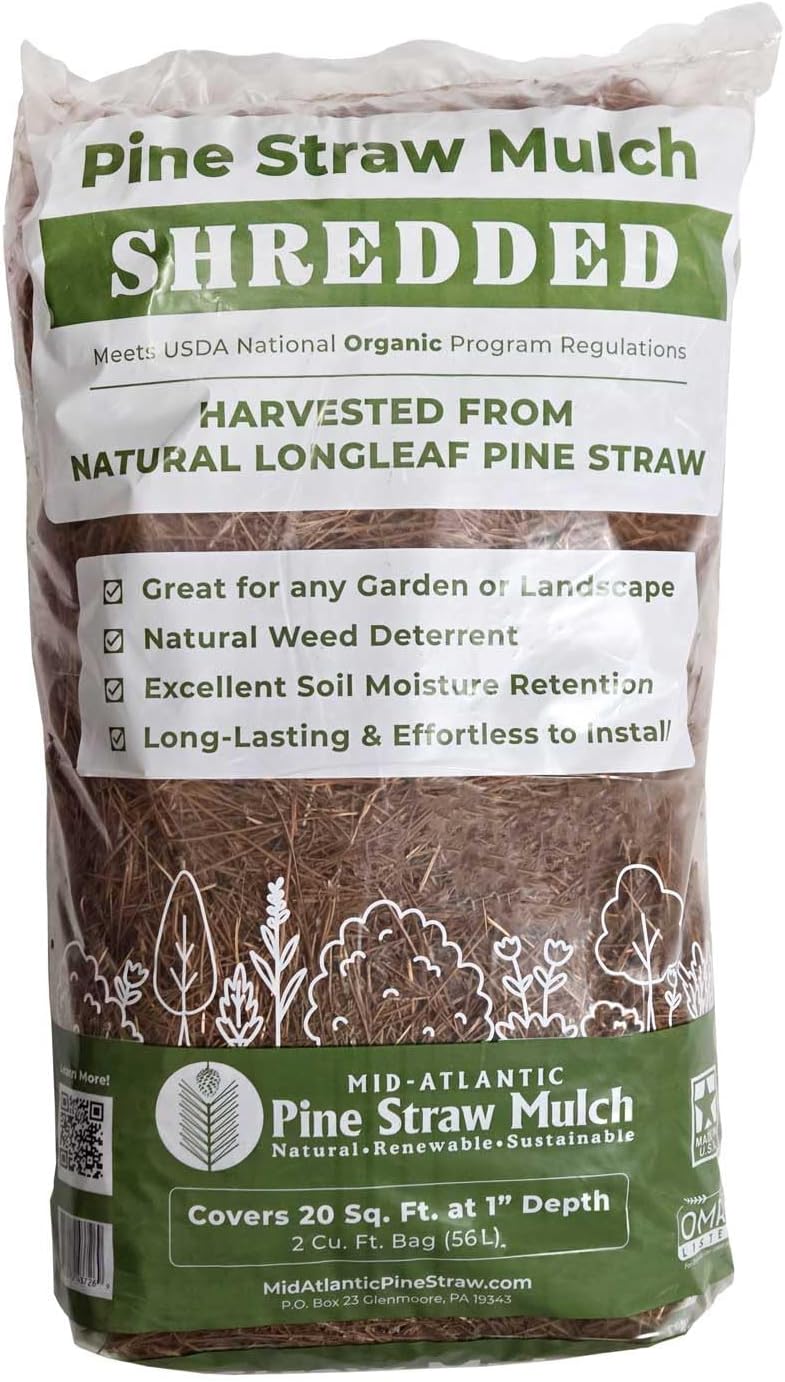
Mid-Atlantic Shredded Longleaf Pine Straw Mulch, 2 bags (2 cu ft each)
| Number of Packs | 2 |
|---|---|
| Unit Count | 2 Count |
| Volume | 6 cubic feet |
| Item Weight | 15 pounds |
This shredded longleaf pine straw is a lightweight, bagged mulch designed for easy handling and straightforward application. Gardeners spread it around beds and shrubs to form a dense mat that suppresses weeds, conserves soil moisture, and insulates roots against temperature swings. The product is OMRI listed for organic gardening and is described as clean and free of weed seeds and common hardwood debris, which makes it suitable for use around fruit bushes. Because the needles are shredded to 3–4 inches, the mulch lays flatter immediately and is easier to distribute evenly than full-length straw. It breaks down slowly to add organic matter over time, reducing how often you need to replace it. Limitations are that pine straw does not provide the same decorative look as bark in some landscapes and can shift on steep slopes if not anchored, so occasional top-ups or light anchoring may be needed in exposed sites.
Best for: Gardeners who want a low-maintenance, organic mulch that is easy to spread and supports plant health, especially those planting edible shrubs who prioritize soil moisture retention and weed suppression.
Less Ideal for: Homeowners seeking a formal, bark-style aesthetic or who need a heavy, erosion-resistant mulch for steep slopes should consider other mulch types.
- OMRI listed organic material suitable for organic gardens
- Lightweight, shredded form for easy carrying and faster laying
- Helps retain soil moisture and suppress weeds by forming a dense mat
- Slow decomposition adds organic matter and reduces replacement frequency
- Less formal decorative appearance compared with hardwood bark mulch
- Can shift on steep or very windy sites without anchoring
Verdict: Choose this shredded longleaf pine straw if you want an easy-to-spread, OMRI-listed organic mulch that conserves moisture and suppresses weeds for blueberry beds.
Plantonix Coco Chips Mulch Brick (10 lb) – Compressed Coconut Husk Chips

| Unit Count | 160 Ounce |
|---|---|
| Item Type Name | Soil and Soil Amendments |
| Brand Name | plantonix |
| Volume | 15 gallons |
Plantonix Coco Chips arrive as a compact 10 pound brick that hydrates and expands into lightweight coconut husk chips for use as mulch, soil amendment, or terrarium bedding. You soak or wet the block to break it apart, then spread the chips over garden beds, containers, orchid pots, or raised beds to reduce evaporation and moderate soil temperature. The product is pre-screened, washed, and aged to remove dirt and rocks, and the low electrical conductivity and near-neutral pH make it safe to mix with potting mixes. Practical benefits include improved drainage and aeration compared with heavy wood mulches, long-lasting moisture retention that can reduce watering frequency, and an attractive tropical look. Important limitations are that you must rehydrate and break up the compressed brick before use which adds prep time, and coco chips do not supply nutrients so you will still need to fertilize regularly. Also note the safety warning about dust and keeping it away from children and pets during handling.
Best for: Buyers who prioritize reliable, consistent mulch performance and want a sustainable, low-maintenance material that retains moisture and improves soil structure for beds and containers.
Less Ideal for: Gardeners who need a nutrient-rich soil amendment or who prefer a no-prep, ready-to-spread loose mulch should consider alternatives.
- Made from 100% recycled coconut husks, a renewable alternative to peat and wood mulches
- Pre-screened and washed to remove dirt, rocks, and excess fiber
- Excellent at retaining moisture while maintaining airflow and drainage
- Lightweight and long-lasting so it does not compact like some organic mulches
- Requires soaking and manual breakup of the compressed brick before use
- Does not provide plant nutrients and should be used with a fertilizer plan
Verdict: A dependable, renewable mulch solution that holds moisture and improves aeration without compacting, ideal for gardeners who want consistent performance.
Choosing the Right Organic Mulch for Fruit Trees: Key Factors to Consider
Moisture Regulation and Drainage
Mulch controls how rapidly water moves into the soil and how long moisture stays near roots. For fruit trees, you want a mulch that evens out moisture fluctuations without creating a waterlogged zone against the trunk. In heavy clay soils a coarser mulch helps surface drainage and prevents standing water. In sandy soils a finer, higher-water-holding material can reduce irrigation frequency.
Layer thickness and placement also change moisture outcomes. Keep mulch pulled back from direct contact with trunk bark by a few inches to maintain airflow. Overly deep layers increase the risk of persistent moisture at the collar, so match depth to material and site drainage.
Disease and Pest Risk Near the Trunk
Some organic mulches can shelter rodents, harbor fungal spores, or hold moisture against bark, all of which raise disease and pest pressure. Materials that compact tightly or stay wet for long periods are more likely to cause collar rot or invite vine weevils and voles. Choosing a mulch with good structure and occasional aeration reduces that risk.
Mulch management matters as much as material. Regularly inspect under the mulch for gnaw marks, scale, or fungal fruiting bodies. Pull mulch away from the trunk base and maintain a shallow ring to discourage pests from nesting directly against the bark.
Nutrient Contribution and Soil Biology
Organic mulches feed the soil as they break down, but different materials supply carbon and nutrients at different rates. High-carbon, woody mulches add structure and slow-release organic matter but may temporarily immobilize nitrogen near the surface during decomposition. Nitrogen-rich mulches like fresh grass clippings or certain composts mineralize faster and can boost early-season growth.
Think about the long-term soil goals for the orchard. If you want to build humus slowly and avoid flushes of vegetative growth, choose a woody material. If trees need a nutrient lift and you monitor nitrogen levels, a more rapidly decomposing mulch or a finished compost top dressing can help.
Decomposition Rate and Maintenance
The breakdown speed determines how often you will replenish mulch and how quickly it alters soil texture. Coarse bark and wood chips can last multiple seasons with minimal top-up, reducing labor. Finer materials like shredded leaves or compost require more frequent replacement but integrate into the soil faster.
Consider your willingness to maintain the mulch bed. Faster-decomposing mulches can reduce weeds and feed soil quickly but demand annual topping. Slower materials require less frequent attention but may need occasional mechanical aeration to prevent compaction.
Application Practice and Tree Safety
How you apply mulch is as important as which material you choose. Maintain a clear trunk zone by pulling mulch back several inches from the bark. Spread mulch evenly in a wide but shallow circle that extends to the tree drip line if practical, since roots often extend beyond the canopy.
Avoid piling mulch against graft unions and trunks. When adding new mulch layers, do so lightly to prevent smothering roots. Regular inspections and slight fluffing of compacted mulch will help maintain oxygen exchange for fine feeder roots.
Source, Contaminants, and Local Availability
Mulch quality varies with source. Some wood chips or bark products can carry herbicide residues or weed seeds, which harm young trees and complicate weed control. Finished compost and well-processed bark products are less likely to introduce contaminants.
Check local supply practices and ask whether materials are screened or heat-treated. Choosing locally available materials reduces transport footprint and makes top-ups more economical, but confirm quality before wide application around valuable fruit trees.
Best Mulch Depth and Placement for Fruit Trees
A shallow, wide ring is preferable to a deep, narrow pile at the trunk base. Aim for 2 to 4 inches of loose mulch over the root zone and keep material 3 to 6 inches away from the trunk to protect bark and permit airflow. Extending the mulch to the drip line helps conserve moisture where most feeder roots live.
If you use a longer-lasting wood chip, a single thicker layer near the outer root zone is fine, but avoid piling chips directly around the stem. For finer mulches that settle quickly, plan to top-dress annually rather than creating an initially deep layer.
- Keep mulch 3 to 6 inches from trunk bark
- Use 2 to 4 inches deep over the root zone
- Extend mulch to or near the tree drip line when possible
Timing Mulch Application Through the Seasons
Apply organic mulch in late spring after soils have warmed, or in autumn to protect roots from winter freeze-thaw cycles. In cold climates a fall application reduces winter heaving and improves survival, while in warm climates spring application helps retain summer moisture without trapping winter wetness.
Avoid heavy fresh applications immediately before a long wet period. If you add mulch in autumn, monitor around the trunk in spring and thin if there is evidence of excessive moisture or pest activity.
- Spring application preserves warmth and conserves summer moisture
- Fall application protects roots in cold climates but needs spring inspection
- Top-dress lightweight mulches annually; heavier wood chips less often
Managing Mulch in Young Vs Established Trees
Young trees have shallower root systems and different nutrient needs. Use lighter, quicker-breaking mulches or a thin layer of finished compost to support early root growth without suffocating fine roots. Avoid heavy materials directly at the stem for several years after planting.
Established trees tolerate coarser, longer-lasting mulches that build organic matter over time. For older trees, wider mulch rings promote feeder root development and reduce competition from grass and weeds.
- Young trees: thin layers, nutrient-friendly materials, careful trunk clearance
- Established trees: wider rings, coarser mulch accepted, less frequent topping
Dealing with Rodents and Other Pests
Mulch can provide cover for voles and mice, which chew bark and damage roots. To reduce rodent habitat, keep mulch loose and shallow near the trunk and avoid deep piles next to grafts. Consider a gravel or bare-soil collar immediately around young trunks until they mature.
Inspect mulch periodically for tunnels or chew marks and remove nesting material if you find rodent activity. Good orchard sanitation, including removing fallen fruit and dense vegetation under the canopy, reduces pest attraction.
- Maintain a clear, shallow zone around trunk base
- Use alternative ground-cover near the stem in rodent-prone areas
- Regularly inspect mulch for signs of tunneling or nesting
Using Mulch to Improve Soil Structure Over Time
Regular applications of organic mulch gradually increase soil organic matter, improving tilth, water infiltration, and root penetration. Over several seasons, well-chosen mulch supports a richer soil food web and better nutrient cycling for fruit production.
Rotate or mix different organic materials when possible. Combining a woodier mulch with occasional compost top-dressing gives both long-term structure and available nutrients, balancing short- and long-term soil improvements.
- Alternate or layer materials to balance structure and fertility
- Expect measurable soil improvement after a few seasons of consistent mulching
- Monitor soil moisture and nutrient status as mulch practices change
How We Chose the Best Organic Mulch for Fruit Trees
We focused on traits that matter to fruit tree care and excluded mulches that are clearly unsuitable for trunks or long-term orchard use. Selection emphasized materials that provide steady moisture regulation, reduce weed competition without smothering young roots, and contribute organic matter without causing bark decay. We prioritized options with predictable decomposition rates and known effects on soil nitrogen dynamics, because mulches that mineralize too fast or immobilize nitrogen can harm fruit development. Evaluation criteria included moisture retention and drainage behavior, disease and pest risk around the trunk, nutrient contribution and effect on soil biology, and decomposition rate plus maintenance needs. We also considered how easy each material is to source and apply for backyard gardeners. Products that require specialized equipment or that are known to introduce invasive weed seeds were excluded. The final list favors mulches that balance protection for trunks with good airflow and manageable upkeep.
FAQ
Can I use wood chips directly against the trunk of a fruit tree?
You should avoid piling wood chips directly against the trunk. Keep a cleared ring of several inches to prevent moisture buildup and reduce risk of bark decay. Wood chips work well in the outer root zone but should not touch the stem or graft union.
How often should I replenish organic mulch around fruit trees?
Frequency depends on material. Fast-breaking mulches like shredded leaves or compost need annual topping, while coarse bark or large wood chips may only need replenishing every two to three years. Inspect the layer each season and add a light top-dress as needed.
Will mulching cause nitrogen deficiency in my fruit trees?
High-carbon materials can temporarily tie up surface nitrogen as microbes decompose them, but this usually affects only the immediate mulch layer. Using finished compost or balancing with a light fertilizer application mitigates nitrogen lock-up. Monitor tree vigor and leaf color to decide if extra nitrogen is needed.
Is it safe to use grass clippings as mulch around fruit trees?
Fresh grass clippings are high in nitrogen and can be useful in thin layers, but they can mat and create anaerobic conditions if applied too thickly. Use well-dried clippings or mix them with coarser material to prevent compaction and odor problems.
Can mulch help prevent weeds under my fruit trees?
A sufficient mulch layer suppresses weeds by blocking light and reducing seed germination. Coarser mulches and thicker layers tend to be more effective, but regular maintenance is still needed to remove persistent or established weeds that push through the mulch.
Final Verdict
Choose a mulch that matches your orchard's soil type, climate, and maintenance rhythm. Favor materials that manage moisture without contacting trunk bark, and balance long-lasting structure with periodic nutrient-boosting top-dresses. Be mindful of pest habitat and the decomposition rate so your mulch supports healthy root growth rather than introducing problems. Prioritize proper placement and reasonable depth over any single material. With the right application and seasonal checks, organic mulch becomes a low-effort tool that improves soil, conserves water, and supports reliable fruit production for years to come.
