

Note: This article contains affiliate links. If you click on these links and make a purchase, I may earn a small commission at no extra cost to you. This helps support my research and content. Read my full affiliate disclosure here.
If you keep a backyard pond, choosing the right mechanical pond filter makes a big difference in water clarity and maintenance time. Mechanical filters remove leaves, sludge, and suspended solids before they can foul biological media or clog pumps, so the right unit protects fish health and reduces how often you need to open and clean the system. This guide covers seven shortlisted mechanical pond filters suited to typical backyard pond setups. We focus on real-garden performance criteria gardeners care about: how well the filter captures different debris sizes, the flow capacity it supports, ease of regular cleaning, and compatibility with common pumps and plumbing. Read on to see the factors we used to evaluate options and practical tips for installing and maintaining a mechanical-only filtration system.
Top Picks at a Glance
| Best Overall The best all-around choice for most situations | VIVOHOME 2110 GPH Auto‑Cleaning Pressurized Bio Pond Filter with 13W Light |  |
| Best Quality Built to a higher standard if you want something more solid | Aquascape Signature Series 2500 BioFalls Filter |  |
| Best Value The sweet spot between price and what you get | Aquascape Submersible Pond Water Filter (Model 95110) |  |
| Best Budget The cheapest option that still gets the job done reliably | COODIA CHP-1500 Pond Pump and Filter Kit with 400 GPH Pump |  |
| Highest Rated A top-rated pick with lots of positive feedback | The Pond Guy AllClear 3000 G3 Filter & SolidFlo 2000 Pump Combo |  |
| Most Popular A crowd favorite that many people choose with confidence | VIVOHOME VH515 Pressurized Biological Pond Filter with 13W UV Light |  |
| Best Seller A high-volume bestseller chosen again and again | coospider-repta Submersible Pond Filter with 18W UV Clarifier and 660 GPH Pump |  |
VIVOHOME 2110 GPH Auto‑Cleaning Pressurized Bio Pond Filter with 13W Light

| Max flow | 2110 GPH (8000 L/H) |
|---|---|
| Suitable pond volume | Up to 2113 gallons (ornamental) / 1057 gallons (koi) |
| Lamp | 13W with 0/12/24‑hour timer |
| Material | ABS, IP44 |
The VIVOHOME pressurized bio pond filter is a self‑contained mechanical and biological filtration unit built for small to medium ornamental and koi ponds. It uses coarse and fine sponge pads in a pressurized chamber plus a 13W lamp and timer to help control water clarity; the unit accepts common hose sizes via included adapters and pairs with an external pump (not included). Typical use is inline between your pump and return line where the filter runs in FILTER mode and you flip to CLEAN to activate its motorized sponge spin and flush debris when the red float indicates cleaning is needed. Notable features are the automatic cleaning cycle with audible completion beep, interchangeable 3/4
Best for: Gardeners who want a low‑maintenance, all‑in‑one pressurized filter for freshwater ornamental or koi ponds and prefer automated cleaning and a timed light to help keep water clear.
Less Ideal for: People who need a saltwater filtration solution or who prefer a barebones passive filter without integrated lamps and auto‑cleaning mechanics.
- Auto‑cleaning cycle spins and flushes sponges to reduce hands‑on maintenance
- Includes coarse and fine sponge pads for multi‑stage mechanical and biological filtration
- Built‑in 13W lamp with 0/12/24 hour timer and spare bulb to help maintain water clarity
- Multiple hose adapter sizes increase compatibility with common pond pumps and plumbing
- Requires an external pump sized correctly for recommended flow and head since pump is not included
- Not suitable for saltwater use because internal parts and seals can corrode
Verdict: A hands‑off pressurized bio filter with automatic sponge cleaning and a timed lamp that keeps small to medium freshwater ponds clear with minimal upkeep.
Aquascape Signature Series 2500 BioFalls Filter

| Installation Type | Freestanding |
|---|---|
| Purification Method | Carbon Block, Ultra Filtration |
| Supported Water TDS Level Maximum (PPM) | 300 |
| Capacity | 2500 gallons |
| Material Type | Plastic |
The Aquascape Signature Series 2500 BioFalls is a robust, all-in-one pond filter that combines mechanical and biological filtration for ponds up to 2,500 gallons. It is freestanding and constructed from rotationally molded polyethylene for weather resistance and structural strength. The unit is typically installed at a waterfall or spillway where the reversible 21.5-inch spillway lip and included rock and plant tray let you integrate natural stone and planting for a concealed look. The kit ships with dual 2-inch bulkheads, media nets, Poly-Flo biological filter mats, fish-safe silicone, and hardware so you can complete setup without sourcing many extra parts. Practical benefits include high flow handling, substantial biological surface area for beneficial bacteria, and durable construction that stands up to outdoor conditions. Important limitations are the manual power source listing which means a pump is required but not included and the filter size and capacity that may be overkill for very small ponds. Overall this model is engineered for long-term, low-maintenance performance in medium to large backyard ponds.
Best for: Buyers who prioritize a dependable, long-lasting filtration solution for medium to large backyard ponds and want a kit that minimizes additional parts sourcing and frequent maintenance.
Less Ideal for: Not a good choice for hobbyists with very small containers, tabletop water features, or those who need a compact, pump-included micro filter solution.
- Designed for ponds up to 2,500 gallons with flow capacity up to 5,000 GPH
- Durable rotationally molded polyethylene construction for outdoor longevity
- Includes comprehensive installation hardware and biological filter mats for immediate setup
- Reversible 21.5-inch spillway and rock/plant tray allow natural integration into landscape
- Poly-Flo ESA filter mats provide increased surface area for beneficial bacteria
- Pump is required but not included
- Large footprint and capacity may be unnecessary for very small ponds
Verdict: A heavy-duty, easy-to-integrate filter kit built for reliable, long-term biological and mechanical filtration in medium to large backyard ponds.
Aquascape Submersible Pond Water Filter (Model 95110)
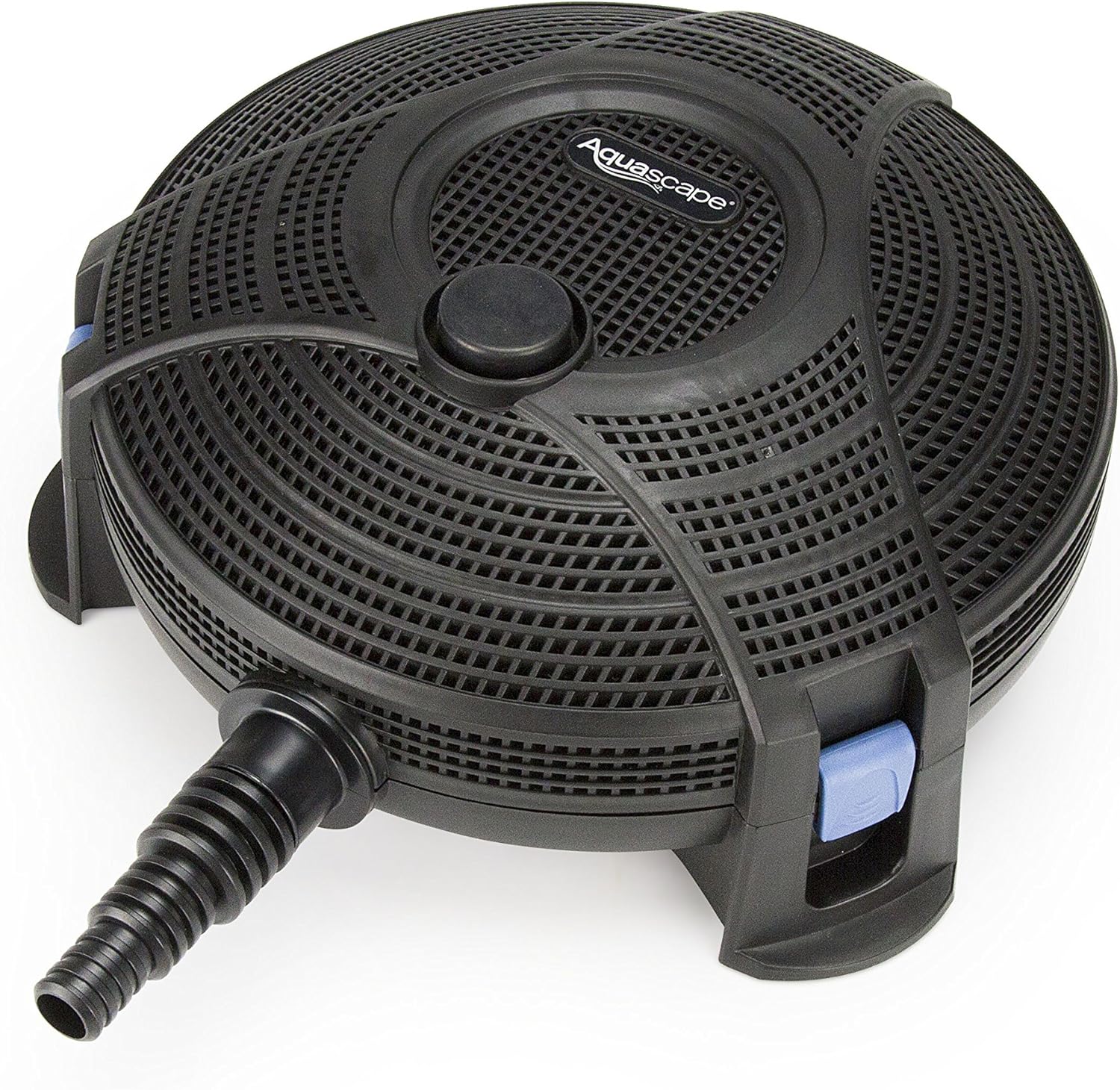
| Manufacturer | Aquascape |
|---|---|
| Item model number | 95110 |
| Filtration type | Mechanical and biological |
| Includes | Multi-hose fitting |
The Aquascape 95110 submersible pond filter is designed to sit on a pump intake and capture debris while establishing biological media to help clarify pond water. In practice you attach it to most submersible pumps using the included multi-hose fitting, place it on the pond bottom or pump shelf, and let the cage trap leaves and solids before they reach the pump. The removable outer cage makes cleaning straightforward and reduces pump maintenance because larger debris is kept out of impellers. The filter also accepts biological media so beneficial bacteria can colonize and help break down dissolved waste. It is best suited to small to medium backyard ponds where hiding the filter under water keeps the installation discreet. Limitations are that it is not an external skimmer or large-capacity biofilter so ponds with heavy fish loads or large leaf fall will need a larger external system or supplemental skimmer for optimal clarity.
Best for: Gardeners who want a low-maintenance, in-pond filter to protect a submersible pump and improve water clarity in small backyard ponds.
Less Ideal for: Owners of large ponds, heavy koi collections, or ponds with heavy leaf fall who need higher-capacity external filtration or a dedicated skimmer.
- Mechanical and biological filtration in one compact unit
- Removable cage simplifies cleaning and reduces pump clogs
- Includes multi-hose fitting for easy connection to many submersible pumps
- Pre-filters pump intake to lower routine pump maintenance
- Not sized for heavy fish loads or very large ponds
- Limited visible capacity compared with external biofilters
Verdict: A compact in-pond filter that reliably pre-filters pumps and combines mechanical and biological cleaning for small backyard ponds.
COODIA CHP-1500 Pond Pump and Filter Kit with 400 GPH Pump
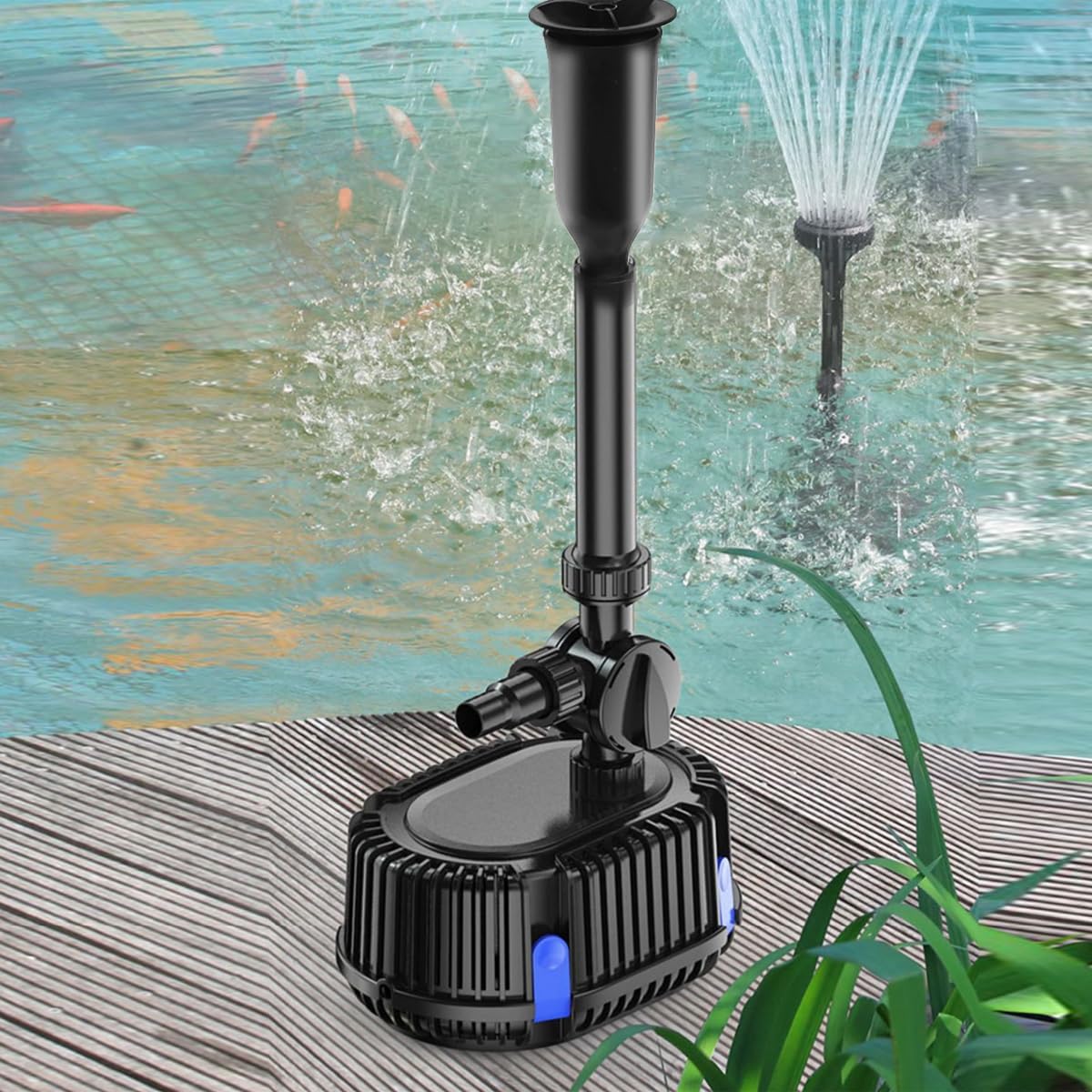
| Power Source | Corded Electric |
|---|---|
| Power | 25W |
| Max flow rate | 400 GPH |
| Maximum Lifting Height | 6.5 feet |
| Cord length | 16.5ft |
The COODIA CHP-1500 bundles a 400 GPH submersible pump with an integrated filtration housing and three fountain heads so you get circulation, mechanical filtration, and a decorative fountain from one compact unit. You install it in a small-to-medium pond or water garden where it pumps water up to a 6.5 foot head and routes flow through replaceable sponge media to trap debris and reduce clogging. The included three-way diverter and multiple fountain nozzles let you switch between fountain patterns or divert more flow to a waterfall or skimmer. Practical touches like a screw-free lid with a safety clasp and a 16.5 foot cord make routine cleaning and placement straightforward. Expect quiet operation and steady flow suitable for ponds up to roughly 1,300 gallons, but note the unit is made of plastic and is a single combined assembly so heavy-duty commercial use or very large ponds would need a larger, serviceable pump and separate filtration. For gardeners who want an easy all-in-one solution, this covers filtration and visual appeal with minimal setup.
Best for: Gardeners who want a compact, low-effort solution to keep a small pond clear while adding a decorative fountain, and who prioritize easy installation and simple maintenance.
Less Ideal for: Owners of large ponds, intensive koi collections, or those who prefer modular, high-capacity multi-stage filtration setups should look for a more heavy-duty, serviceable system.
- Integrated pump, filter, and fountain nozzles simplify setup and reduce the number of separate components
- 400 GPH pump provides strong circulation suitable for ponds up to about 1,300 gallons
- Three-way diverter and multiple fountain heads let you change fountain patterns or route flow to features
- Screw-free lid with safety clasp and sponge media make cleaning and maintenance quick and tool-free
- Plastic construction and combined unit design limit long-term heavy-duty servicing compared with separate commercial-grade systems
- Not suitable for very large ponds or heavily stocked koi systems that need higher-capacity or multi-stage filtration
Verdict: A handy all-in-one pump and filter kit that keeps small ponds circulating and clear while adding an easy decorative fountain.
The Pond Guy AllClear 3000 G3 Filter & SolidFlo 2000 Pump Combo
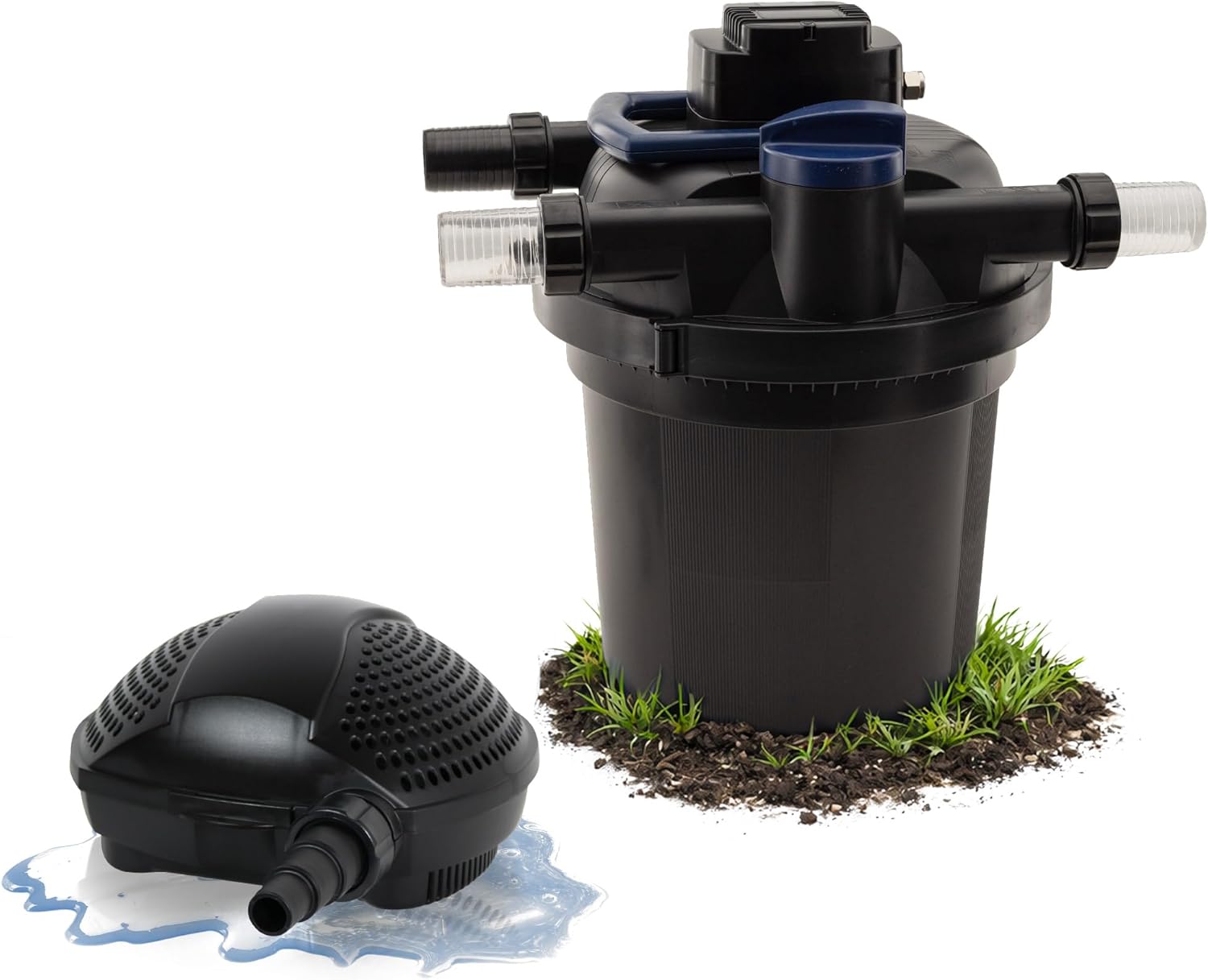
| Includes | Submersible pump and pressurized filtration system with UVC clarifier |
|---|---|
| Filter type | Pressurized canister with mechanical and biological media |
| Cleaning | Backflush feature for media pads |
| Pump duty | Continuous-duty, energy-efficient |
The AllClear 3000 G3 paired with the SolidFlo 2000 is a complete pond filtration solution aimed at keeping water clear and aquatic life healthy. The pressurized canister houses a high-intensity UV clarifier plus stacked low- and high-density media pads so water is exposed to UV and then mechanically and biologically filtered before returning to the pond. In practice you set the pump on the pond bottom and route discharge to the pressurized filter; the backflush feature lets you release trapped debris without disassembling the unit, which speeds routine maintenance. The SolidFlo pump is continuous-duty and energy-efficient with a pre-filter enclosure to reduce large debris intake while still passing smaller particles. Notable benefits are the integrated UV for fast green-water control and the tool-free access to the bulb and quartz sleeve for service. Limitations are that the system is sized for specific pond volumes and should be winterized when not in use, and larger ponds will need the bigger kit versions for adequate flow and turnover.
Best for: Buyers who prioritize a dependable, low-maintenance filtration system for small to mid-size garden or koi ponds and want integrated UV clarification to reduce algae quickly.
Less Ideal for: Owners with very large ponds beyond the kit’s rated gallonage or those seeking an all-season setup that runs through freezing conditions should look at larger or winterized alternatives.
- Triple-stage filtration combining UV clarifier with mechanical and biological media for effective green-water and waste control
- Backflushable media pads let you clear debris quickly without full disassembly
- Continuous-duty, energy-efficient submersible pump with pre-filter to reduce large debris intake
- Tool-free ballast and removable quartz sleeve simplify UV bulb maintenance
- Kit capacity is fixed by model so this 3000 set may be undersized for ponds larger than the listed volume
- Intended for seasonal use and requires winter storage in cold climates
Verdict: Choose this AllClear 3000 G3 combo if you want a reliable, low-maintenance pressurized filter with UV clarification that clears green water and simplifies routine servicing.
VIVOHOME VH515 Pressurized Biological Pond Filter with 13W UV Light
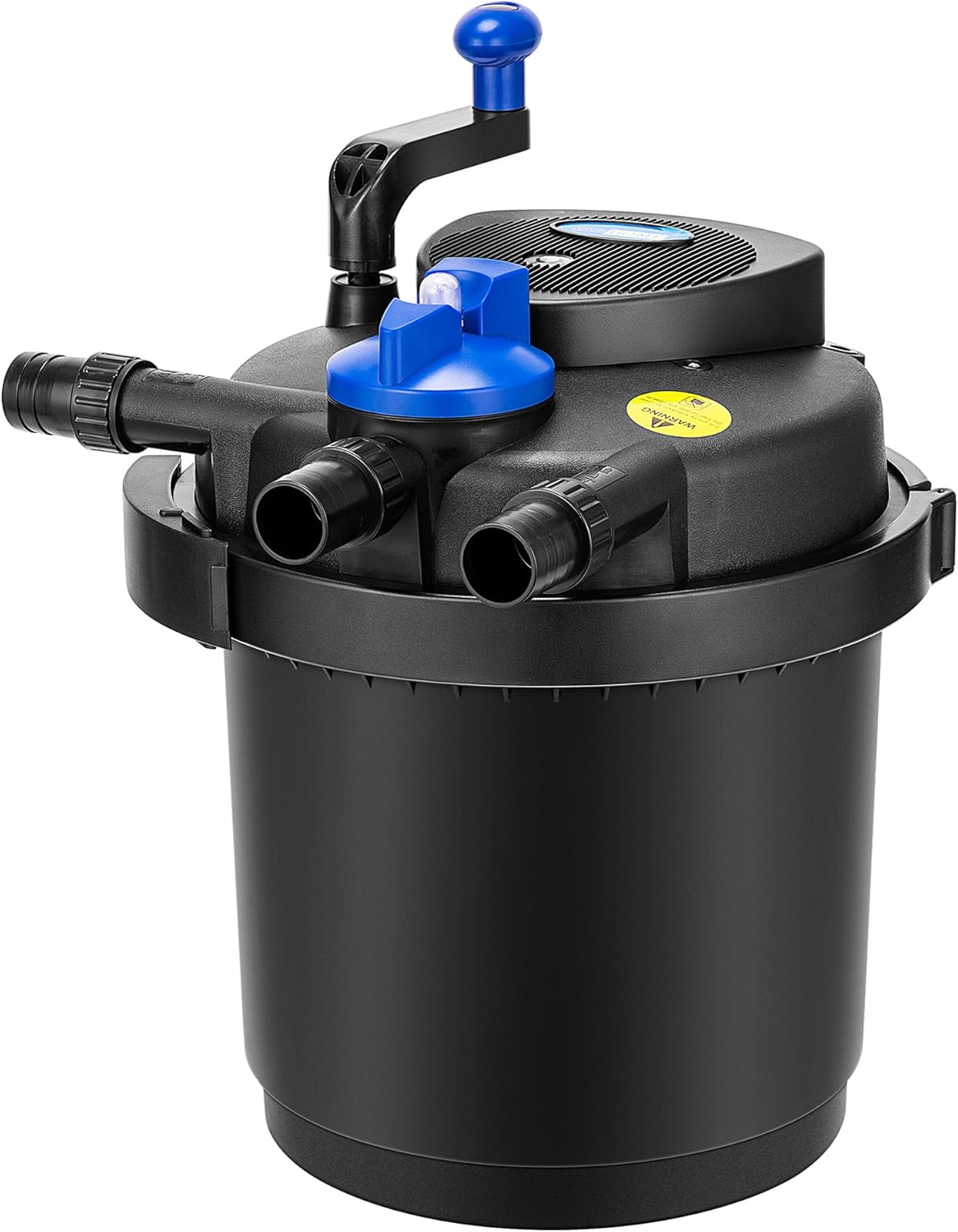
| Power Source | Electric |
|---|---|
| Voltage | 110 volts |
| Horsepower | 13 watts |
| Material Type | Acrylonitrile Butadiene Styrene (ABS) |
| Included Components | Filter, UV sterilizer light (13W) |
The VIVOHOME VH515 is a pressurized biological filter intended to keep koi and decorative ponds clear by combining mechanical sponge filtration with a 13W UV clarifying lamp. It is installed inline with a separate water pump and connects via the included multi-size hose adapters. Water passes through coarse and fine reusable sponges that trap debris while the lamp reduces free-floating algae, and a simple handle-driven backwash lets you switch to Clean mode and flush accumulated muck without disassembling the unit. The ABS, weather-resistant housing and clear inlet/outlet labels make outdoor siting straightforward and reduce installation guesswork. Practical benefits include low ongoing consumable cost because sponges are reusable, simple routine maintenance signaled by a red float, and compatibility with ponds up to about 1,600 gallons (ornamental) or 800 gallons with fish. Important limits are that the unit requires a separate pump and the UV bulb has a finite lifespan and must be replaced if water breaches the lamp seal; performance also depends on matching pump flow and hose size for steady filtration.
Best for: Buyers who want a low-maintenance, reliable filter for a small to mid-size koi or ornamental pond and prioritize simple installation and predictable upkeep.
Less Ideal for: Not the best choice for very large or heavily stocked ponds where industrial-scale filtration or integrated pumping is needed; pond owners who prefer fully submersible combo units should look elsewhere.
- Combined mechanical and UV clarification reduces both debris and free-floating algae
- Reusable coarse and fine sponge media lowers ongoing replacement costs
- Handle-driven backwash makes routine cleaning quick and tool-free
- Includes multiple hose adapters and clear inlet/outlet labeling for easier installation
- Weather-resistant ABS housing suited for year-round outdoor use
- Requires a separate water pump so total system cost and compatibility must be planned
- UV lamp has limited life and can fail if the lamp compartment seal is compromised
Verdict: A straightforward, low-maintenance pressurized biofilter that pairs with your pump to deliver clear water and easy weekly backflushing for small to mid-size koi and ornamental ponds.
coospider-repta Submersible Pond Filter with 18W UV Clarifier and 660 GPH Pump

| UV power | 18W |
|---|---|
| Pump power | 42 watts |
| Flow rate | 660 GPH |
| Suitable pond volume | up to 1500 Gal |
This all-in-one submersible unit pairs an 18W UV clarifier with a 42W, 660 GPH pump and multi-layer filtration to tackle green water, debris, and biological balance in small to medium backyard ponds. It is typically installed on the pond bottom as a plug-and-play system; after priming it sinks and runs continuously to provide circulation, UV sterilization, mechanical filtration and biological media in one compact housing. Notable features include three interchangeable fountain nozzles for visual effect and extra surface aeration, a stack of mechanical pads plus activated carbon for odor and impurity removal, and lava rock and bio-balls for beneficial bacteria colonization. In practice this reduces maintenance by cutting algae bloom and improving clarity within days when used at recommended pond sizes, and the pump delivers strong flow for aeration and downstream features. Important limitations are the need for regular sponge cleaning to maintain UV effectiveness and the plastic construction which may be less durable than metal alternatives in harsh conditions.
Best for: Gardeners who want a single compact unit that both clears green water and provides pump-driven circulation with decorative fountain options, suitable for balanced maintenance routines and backyard ponds.
Less Ideal for: Owners of very large commercial ponds or those seeking a heavy-duty, all-metal professional filtration system should consider larger modular filters and separate high-capacity pumps instead.
- Integrated 18W UV clarifier that can clear green water rapidly when used properly
- High-flow 42W pump rated at 660 GPH supports good circulation and aeration
- Six-layer filtration combining mechanical pads, activated carbon, lava rock and bio-balls for debris, odor and biological filtration
- Three interchangeable fountain nozzles add visual appeal and increase surface movement
- Plug-and-play submersible design simplifies installation and placement on the pond bottom
- Filter sponges require frequent cleaning (every few days under heavy algae) to keep UV and flow effective
- Plastic construction may wear faster than heavier-duty materials in exposed or abrasive environments
Verdict: Choose this unit if you want a compact, all-in-one pond filter that combines a strong pump, multi-stage media and an 18W UV clarifier to clear green water and add a decorative fountain in backyard ponds.
Choosing the Right Mechanical Pond Filter: Key Factors to Consider
Debris Capture and Particle Size
Mechanical filtration is primarily about removing solids before they settle or reach biological media. Filters use screens, mats, brushes, or vortex chambers to separate particles; different designs are better at trapping coarse leaves, mid-sized detritus, or fine suspended solids. A unit that captures a broad range of particle sizes will reduce the load on downstream equipment and slow the buildup of sludge on bottom surfaces.
When assessing capture, consider how the media is arranged and whether it clogs quickly. Some filters trap large debris in a pre-chamber and finer particles in successive stages. In practice this means less frequent full-service cleaning and more predictable water clarity through the season.
Flow Capacity and Head Tolerance
Match the filter's rated flow to your pump and pond turnover goal. Mechanical filters create head loss as they fill with debris, which reduces flow unless the pump has margin. If you have a waterfall or long plumbing runs, choose a filter rated for higher head and flow so it still moves water effectively when loaded with solids.
Over-sizing a filter's flow capacity relative to the pump can prevent early clogging and reduce maintenance. Conversely, an undersized unit will require more frequent cleaning and may allow solids to bypass the media, leading to cloudy water.
Ease and Frequency of Cleaning
Mechanical filters require routine cleaning; how that cleaning is done determines how often you will actually do it. Look for access that allows quick removal of screens or mats, options for backwash or rinse cycles, and designs that let you clean without removing the entire unit from the plumbing. Clear lids or inspection ports also help you judge when service is needed.
Consider whether the filter's consumable media is readily replaceable and how messy the process will be. Simple-to-clean designs reduce maintenance time and lower the chance that a gardener will neglect service intervals, which directly affects algae and sludge problems.
Durability and Weatherproofing
Filters live outdoors and face UV exposure, freezing cycles, and continuous wetting. Materials such as UV-stabilized plastics, corrosion-resistant hardware, and robust seals extend service life. Consider how the unit handles winter: can it be drained, or does it tolerate freezing conditions without cracking?
A durable build reduces long-term repair headaches and keeps seals intact so debris does not bypass the mechanical stages. Also consider spare-parts availability for common wear items like O-rings and screens.
Plumbing and Installation Compatibility
Mechanical filters need to match common pipe diameters and fittings used with pond pumps and waterfalls. Check inlet and outlet sizes, the availability of adapters, and whether the unit suits inline, pressurized, or gravity-fed installations. Some filters require specific pump placement or orientation to function properly.
Ease of installing the unit in existing plumbing reduces labor and the need for bespoke fittings. Also account for placement: accessible mounting locations make routine cleaning easier and reduce disruption to the pond edge or hardscape.
Maintenance Consumables and Long-Term Costs
Beyond upfront build quality, think about long-term consumables such as replacement mats, brushes, or seals. Some designs use proprietary media that must be replaced periodically; others use standard filter pads that are inexpensive and widely available. Consider how often consumables wear out under heavy leaf loads or during algae blooms.
A filter with simple, affordable consumables and easy access for replacement lowers lifetime ownership costs and keeps the system performing well without complex parts sourcing.
How Mechanical Filtration Fits Into a Pond System
Mechanical filters remove physical solids from the water before they can foul biological media or create sludge on the pond bottom. In many backyard setups a dedicated mechanical stage sits before any biological or UV treatment so that the rest of the system can work more efficiently.
Install mechanical filtration closest to the pump or as the first component in a multi-stage filter bank. This placement limits the organic load reaching biological media and reduces the frequency of cleaning entire filtration systems.
- Protects biological media by removing solids first
- Reduces pump wear caused by abrasive particulates
- Helps maintain clearer water between full pond cleanouts
Common Mechanical Filter Designs and How They Work
Mechanical pond filters come in several practical designs. Screen or mat filters force water through layered pads that trap particles; vortex or settlement chambers slow water so coarse debris drops out; and brush filters use rotating or static brushes to intercept solids while allowing water to pass.
Each design has tradeoffs. Mats and screens can capture fine particulates but require regular rinsing. Vortex chambers handle heavy leaf loads well but may not remove finer suspended solids without a secondary stage.
- Screen/mat: good for fine particles and predictable maintenance
- Vortex: excels at coarse debris and high-leaf seasons
- Brush: forgiving with variable debris shapes and sizes
Sizing a Mechanical Filter for Your Backyard Pond
Start by estimating your pond volume and desired turnover rate. Many gardeners aim for a full turnover every hour for heavily stocked koi ponds or slower rates for ornamental fish. Choose a filter rated to handle your pump flow plus a margin to account for fouling and head loss.
Also factor in seasonal loads. A small pond under dense tree cover will generate a much higher debris load in autumn than one in open lawn, so plan for heavier-duty mechanical separation or more frequent maintenance in those situations.
- Match rated flow to pump capacity and turnover goal
- Allow extra capacity for head loss when media is clogged
- Plan for seasonal peak debris input
Placement, Plumbing, and Accessibility Tips
Place the filter where it is easy to access for routine cleaning and where any backwash or rinse water can be drained safely away from planting beds. Inline or pressurized filters are often installed near the pump pad or equipment vault, while gravity-fed units may sit below a waterfall or skimmer.
Use flexible hoses and easily removable unions or quick connectors to simplify removal for service. Ensure the unit can be isolated with valves to prevent draining the entire pond during maintenance.
- Keep the unit accessible and above seasonal flood lines
- Use valves and unions for quick servicing
- Ensure drained rinse water has an appropriate outlet
Winter Care and Seasonal Maintenance
Mechanical filters require seasonal attention where freezing occurs. If the filter cannot be emptied and protected from frost, plan to remove it or relocate it to a frost-free equipment area. At minimum, clean the media thoroughly before winter and ensure seals are dry and lubricated per manufacturer guidance.
In spring inspect all seals and replace worn consumables before the high-growth season begins. Regular seasonal checks prevent ice damage and ensure the system starts the busy season in good working order.
- Clean and dry media before freeze-up where possible
- Inspect O-rings and seals in spring
- Consider winter bypass for systems that cannot be drained
How We Chose the Best Mechanical Pond Filter
We selected mechanical pond filters by focusing on the specifications and features that directly affect day-to-day pond care. Primary evaluation criteria included debris capture efficiency across a range of particle sizes, flow rate capacity and head tolerance, ease and frequency of cleaning, build quality and materials suited to outdoor, wet conditions, and plumbing compatibility with common pond pumps and fittings. We also considered how each design handled high-leaf loads and seasonal slugging, since many ponds face heavy organic input at certain times of year. Excluded from this list were hybrid units that rely primarily on biological media rather than mechanical separation, small decorative filters intended only for tiny container features, and specialty equipment designed solely for koi show ponds with commercial-scale flows. We prioritized units that offer clear, measurable mechanical filtration performance and straightforward maintenance for typical backyard pond sizes. Our approach balanced specification review with gardener-focused practicality: we looked for filters that trap both coarse and fine solids, sustain recommended flows without excessive head loss, and make routine cleaning simple so the system stays effective over time.
FAQ
How often should I clean a mechanical pond filter?
Cleaning frequency depends on debris load and filter design. Under heavy leaf fall you may need to clean weekly, while low-debris ponds often need service every 2 to 6 weeks. Inspect visually to judge whether flow or clarity has declined and clean sooner if you see reduced performance.
Can a mechanical filter handle fine suspended solids and algae?
Some mechanical stages capture fine suspended solids when they use fine-density pads or multi-stage screens, but algae and very fine particles may require additional clarification such as a clarifier or UV stage. Mechanical filtration is most effective as the first step to remove larger solids.
Will a mechanical filter reduce pump lifespan?
A correctly sized mechanical filter protects pumps by removing abrasive solids that cause wear. However, if the filter causes excessive head loss or is clogged regularly, the pump may run under higher strain. Match the filter to the pump and maintain the media to avoid undue stress.
Is it better to use a pressurized or gravity-fed mechanical filter?
Both types work well when matched to the system. Pressurized filters are compact and can be placed away from the pond, while gravity-fed units are easier to service and often handle larger debris loads without pressurizing the media. The choice depends on layout, pump placement, and maintenance preferences.
What maintenance consumables should I expect?
Common consumables include replacement filter mats, fine pads, brushes, and O-rings. Frequency depends on debris load; pads might need replacement once or twice per season under heavy use, while O-rings and seals are typically longer-lived but should be inspected annually.
Can I add a mechanical filter to an existing pond without reworking plumbing?
Often you can add a mechanical stage with adapters and unions that tie into existing inlet or pump lines. Ensure fittings match pipe diameters and that there is space for access. Using valves to isolate the new unit makes installation and future servicing simpler.
Final Verdict
When choosing a mechanical pond filter prioritize how well it removes the types of debris your pond produces and how easily you can maintain it. Size the unit to the pump and expected turnover, allow margin for head loss, and opt for durable materials that tolerate outdoor conditions. Tradeoffs include finer capture versus more frequent cleaning and pressurized convenience versus gravity-fed serviceability. Focus on a filter that matches your pond volume, debris profile, and maintenance habits. That alignment will deliver clearer water with manageable upkeep and protect downstream biological systems and pump equipment.
