

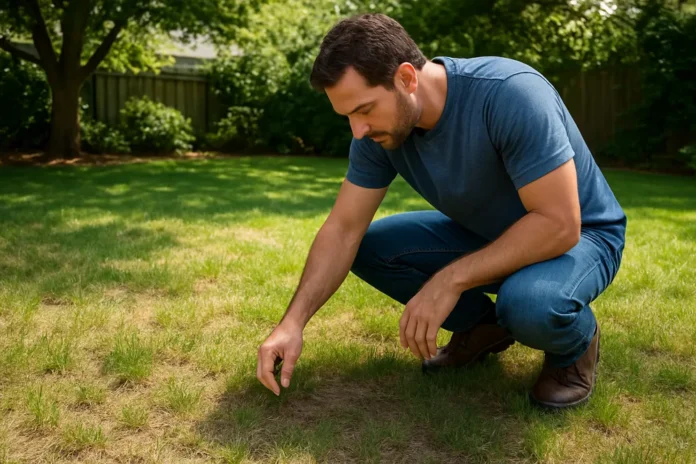
A lawn usually stops growing because the grass is stressed by poor light, watering problems, compacted soil, nutrient shortages, or damage from pests or disease. In some cases, the grass is simply dormant or poorly matched to your climate.
If your lawn looks thin, patchy, or stuck in place while the rest of the yard is waking up, it is frustrating to wait for growth that never seems to come. A not growing lawn is usually not dead, but it is often under stress from one or more conditions that limit root health and new blade development.
Grass needs the basics in balance: enough sunlight, the right amount of water, breathable soil, and nutrients it can actually use. When one of those pieces is off, growth slows down first, then color and density usually follow. The good news is that most lawns start improving once you identify the real cause instead of treating every bare spot the same way.
Below are the most common reasons a lawn stalls out, plus what each issue looks like and how to correct it so the grass can start filling in again.
Dormancy May Be the Reason Your Lawn Appears Stalled
Before assuming your lawn has a serious problem, consider whether the grass is dormant. Cool-season grasses like Kentucky bluegrass, fescue, and ryegrass often slow down or go semi-dormant in hot summer weather. Warm-season grasses like bermuda, zoysia, centipede, and St. Augustine naturally stop growing or turn brown during cool weather.
Dormant grass is still alive, but active top growth pauses until temperatures return to the plant's preferred range. In many parts of the U.S., homeowners mistake normal seasonal slowdown for lawn failure.
- Cool-season lawns grow best in spring and fall and often struggle during extended heat.
- Warm-season lawns grow best in late spring through summer and slow sharply in cool fall weather.
- A lawn that is uniformly off-color but still anchored firmly in the soil is often dormant rather than dead.
Too Little Sunlight Can Stop Grass Growth
Grass is a sun-loving plant, and many lawns simply do not get enough direct light to stay thick. If your yard has mature trees, fences, dense shrubs, or a house that blocks several hours of sun, the grass may survive but barely grow.
How Shade-related Decline Looks
- Thin turf under trees or along the north side of the house
- Long, weak blades that flop instead of standing upright
- Bare areas that never fill in even after watering and fertilizing
- More moss, weeds, or damp soil in low-light zones
Most turfgrasses need at least 4 to 6 hours of sun, and many perform best with more. If that level is not available, growth stays slow because the grass cannot produce enough energy to support both roots and new shoots.
The fix may include selective tree pruning, raising the mowing height in shaded areas, reducing foot traffic, or overseeding with a more shade-tolerant grass such as fine fescue where appropriate.
Watering Problems Often Cause Slow or Nonexistent Growth
Both underwatering and overwatering can make a lawn stop growing. Grass roots need moisture, but they also need oxygen. Soil that stays bone dry limits nutrient uptake, while constantly soggy soil suffocates roots and invites disease.
Signs of Too Little Water
- Bluish-gray or dull green color
- Footprints that remain visible after walking across the lawn
- Hard, dry soil that repels water
- Growth that stops during hot, windy weather
Signs of Too Much Water
- Soft, spongy turf
- Yellowing grass with weak roots
- Mushrooms, algae, or sour-smelling soil
- Persistent disease patches
Most established lawns do best with deep, infrequent watering rather than a little every day. Frequent shallow watering keeps roots near the surface, where they dry out fast and struggle during heat.
As a general rule, lawns need about 1 inch of water per week from rain or irrigation during active growth, though sandy soils, heat waves, and grass type can change that amount.
Compacted Soil Can Keep Roots From Expanding
Compaction is one of the most common hidden causes of a lawn that will not grow. When soil particles are pressed tightly together by foot traffic, play, mowing, parking, or construction, roots cannot move easily through the ground.
Compacted soil also reduces air exchange and water movement. Even if you fertilize and irrigate correctly, the grass may still stall because the root zone is physically restricted.
Common Clues of Compaction
- Water runs off instead of soaking in
- The soil feels hard when you push in a screwdriver or trowel
- Grass stays thin in walkways, dog runs, or play areas
- The lawn struggles after recent building or landscaping work
Core aeration is usually the best correction for compacted lawns. Removing plugs of soil creates channels for air, water, and roots. Follow aeration during the right season for your grass type, then water and fertilize appropriately to encourage recovery.
Poor Soil and pH Problems Can Lock Up Nutrients
A lawn can fail to grow even when fertilizer is applied regularly if the soil itself is out of balance. Soil texture, organic matter, drainage, and pH all affect how roots function and how nutrients become available.
Grass generally prefers a slightly acidic to neutral pH, often around 6.0 to 7.0 depending on species. If the soil is too acidic or too alkaline, nutrients may be present but unavailable. That means the grass behaves as if it is starving even in a fertilized yard.
Soil Issues That Commonly Slow Lawns Down
- Heavy clay that drains poorly
- Very sandy soil that dries out too fast
- Low organic matter and weak microbial activity
- pH outside the optimal range for turfgrass
- Buried debris or subsoil left after construction
A basic soil test is the fastest way to stop guessing. It can reveal pH, nutrient levels, and amendment needs such as lime, sulfur, compost, or specific fertilizer adjustments.
Nutrient Deficiencies Can Leave Grass Alive but Not Growing
Grass uses a lot of nutrients during active growth, especially nitrogen. When the lawn does not get enough nitrogen, it often turns pale and stops producing vigorous new blades. Other deficiencies, including phosphorus, potassium, and iron issues, can also affect growth and color.
What Nutrient Stress Can Look Like
- Light green or yellowish color across large areas
- Slow recovery after mowing or foot traffic
- Thin turf with poor spread into bare spots
- Weak roots and low drought tolerance
That said, more fertilizer is not always better. Excess fertilizer can burn grass, force weak top growth, or worsen disease pressure. Feeding should match the season, the grass type, and the results of a soil test whenever possible.
Cool-season lawns usually benefit most from feeding in fall, while warm-season lawns should be fertilized during active summer growth. Applying fertilizer when grass is dormant rarely delivers the result homeowners expect.
Mowing Too Short Weakens the Lawn
Scalping is a major reason lawns stop growing well. When you cut off too much leaf blade at once, the grass loses the surface area it uses to make energy. That slows root growth and leaves the turf less able to compete with weeds, heat, and drought.
Repeated close mowing can make a lawn look tidy for a day or two, but over time it often produces thin, stressed turf that never fills in. Dull mower blades add to the problem by tearing leaf tips instead of cutting them cleanly.
Better Mowing Habits for Stronger Growth
- Follow the one-third rule and avoid removing more than one-third of the blade at a time.
- Set the mowing height based on your grass species rather than cutting everything as low as possible.
- Mow more often during active growth instead of making severe cuts after the lawn gets too tall.
- Keep mower blades sharp to reduce stress and browning.
Thatch Buildup Can Interfere with Water and New Shoots
A small amount of thatch is normal, but a thick layer of undecomposed stems and roots between the soil and green blades can block water movement and limit new growth. Lawns with heavy thatch often feel springy underfoot and may dry out quickly at the surface even when the soil below is moist.
Thatch is more likely when lawns are overfertilized, watered too frequently, or made up of aggressive spreading grasses. If the thatch layer is more than about half an inch thick, dethatching or core aeration may help restore growth.
Pests Below the Surface Can Damage Roots
If your lawn is not growing despite decent care, look for insect damage. Root-feeding pests can weaken or sever the root system, leaving grass unable to take up water and nutrients. The lawn may appear stuck, thin, or easy to pull up.
Pests That Commonly Affect U.S. Lawns
- White grubs feeding on roots
- Chinch bugs in sunny, hot turf
- Sod webworms and armyworms chewing blades
- Billbugs damaging stems and crowns
Pest damage is often patchy and may resemble drought stress. You might notice birds, raccoons, or skunks digging because they are feeding on grubs under the turf. Correct treatment depends on the specific pest and timing, so identification matters.
Lawn Diseases Can Suppress Growth Even when the Grass Stays Green
Fungal diseases do not always cause dramatic dead spots right away. Some infections first show up as stalled growth, weak thinning, or off-color patches that spread slowly. Humid weather, overwatering, poor airflow, and too much nitrogen can all make disease worse.
Disease Symptoms That Can Mimic Slow Growth
- Circular or irregular patches that expand over time
- Grass that stays wet for long periods
- Blades with lesions, spots, or rotted bases
- Areas that decline quickly after warm nights and high humidity
Common lawn diseases include brown patch, dollar spot, red thread, and leaf spot, but which one appears depends on climate, grass type, and season. In many cases, cultural corrections such as morning watering, better airflow, and balanced fertilization are just as important as fungicide use.
The Grass Type May Not Match Your Yard or Region
Sometimes the lawn is not growing because the grass was never a good fit for the site. A variety that thrives in one part of the country may struggle badly in another. The same is true for lawns planted in deep shade, salty coastal exposure, or low, wet ground.
For example, a cool-season seed mix may fail in a hot southern yard, while a warm-season grass can stay weak for much of the year in a colder northern climate. Matching the grass to your USDA zone, sunlight, and soil conditions is one of the most important long-term fixes.
How to Narrow Down the Cause Quickly
When a lawn stops growing, start by looking at the pattern. Uniform slowdown across the whole yard usually points to seasonal dormancy, nutrient shortage, pH issues, or broad watering problems. Patchy decline often suggests shade, compaction, pests, disease, or localized drainage trouble.
- Note whether the issue affects the whole lawn or only certain sections.
- Consider the season and your grass type before assuming the lawn is dying.
- Check how much direct sun the struggling area receives.
- Feel the soil for dryness, sogginess, or compaction.
- Review mowing height and recent fertilizer applications.
- Inspect roots, crowns, and blades for insect or disease clues.
- Use a soil test if the problem is widespread or recurring.
What Helps a Lawn Start Growing Again
The best solution depends on the cause, but most lawn recovery plans center on improving root conditions. Grass rebounds when it has enough light, steady moisture, room for roots to expand, and nutrients delivered at the right time.
- Adjust irrigation so the soil is moist but not constantly saturated.
- Aerate compacted areas during the proper season.
- Correct mowing height and sharpen mower blades.
- Test the soil and apply amendments only as needed.
- Feed according to grass type and season instead of using a one-size-fits-all schedule.
- Reduce shade or switch to a better-adapted turf type where sun is limited.
- Treat confirmed pests or disease rather than guessing.
If large areas are bare, you may need overseeding for cool-season lawns or plugging, sprigging, or resodding for warm-season lawns after the underlying problem is fixed. Grass rarely fills in well if the original stress remains in place.
FAQ
Can a Lawn Be Alive but Not Growing?
Yes. Grass can stay alive while growth is very slow because of dormancy, shade, nutrient shortages, compacted soil, or root stress from too much or too little water.
How Do I Know if My Lawn Is Dormant or Dead?
Dormant grass is usually uniformly brown or tan and still firmly rooted. Dead grass pulls up easily, often has rotted crowns or roots, and does not recover when the weather improves.
Will Fertilizer Make My Lawn Grow Faster?
It can if nutrient deficiency is the problem, especially low nitrogen. If poor sunlight, compaction, disease, or bad watering is the real cause, fertilizer alone will not solve it and may make some issues worse.
Why Is My Lawn Not Growing in Shady Areas?
Grass in shade gets less energy for photosynthesis, so it develops weaker roots and thinner blades. Dense shade can prevent many lawn grasses from growing well enough to fill in.
Does Compacted Soil Really Stop Grass Growth?
Yes. Compaction restricts air, water movement, and root expansion. The result is a lawn that stays thin, weak, and slow to recover even when it is watered and fed.
What Time of Year Should Grass Grow the Most?
Cool-season grasses usually grow most in spring and fall. Warm-season grasses usually grow most from late spring through summer when temperatures are consistently warm.
Should I Water Every Day if My Lawn Is Not Growing?
Usually no. Daily shallow watering often weakens roots and can increase disease pressure. Most lawns respond better to deeper, less frequent watering during active growth.
When Should I Reseed a Lawn That Is Not Filling In?
Reseed cool-season lawns in early fall or, second best, in spring. Warm-season lawns are usually repaired with sod, plugs, or sprigs once the weather is warm and the grass is actively growing.
Want your yard to fill in faster and stay greener? Read our lawn care guide and compare the best fertilizers, aerators, and grass seed options for stronger growth.
