

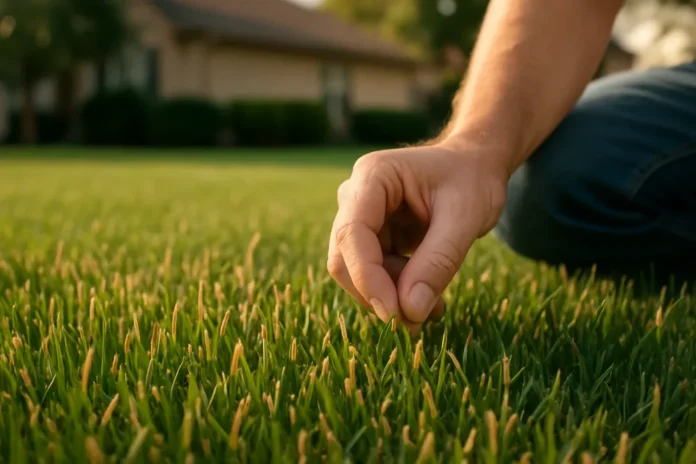
Grass tips usually turn brown because the blades are stressed or injured, most often from drought, heat, dull mower blades, fertilizer burn, or salt buildup. In many cases the lawn is still alive even though the leaf ends look dry and brown.
Seeing grass blades with brown tips can make an otherwise healthy yard look tired, patchy, or scorched. In many cases, browned tips do not mean the entire lawn is dying. They often signal that the leaf blades have been damaged by heat, drought, mowing, fertilizer, pet urine, salt, or disease.
Because grass blades grow from the crown near the soil line, tip damage is often more cosmetic than fatal at first. The key is figuring out whether the problem is simple stress, such as dry weather or mowing with a dull blade, or a more serious issue like root damage, fungal disease, or chemical burn.
Once you know what is browning the ends of the blades, the fix is usually straightforward. Watering more deeply, adjusting mowing habits, easing up on fertilizer, or improving soil conditions can often help the lawn recover and grow fresh green blades.
What Brown Grass Tips Usually Mean
Brown tips show that the grass leaf has dried out, been cut poorly, or been chemically injured at the end of the blade. Unlike grass that is dead from the crown or roots, tip browning often affects the visible leaf tissue first while the lower part of the plant remains alive.
This is why a lawn can look off-color from a distance even though it is still recoverable. New growth may emerge green while older blade ends stay brown until the lawn is mowed or the damaged tissue naturally breaks down.
- If the browning is mostly on the ends of blades, think about stress or injury first.
- If the lawn is brown all the way to the base and pulls up easily, root or crown damage may be involved.
- If only one part of the yard is affected, look for a local cause such as pet urine, reflected heat, fertilizer overlap, or sprinkler coverage problems.
Common Causes of Brown Grass Tips
Drought and Inconsistent Watering
One of the most common reasons grass tips brown is moisture stress. When the soil dries too much between waterings, the thin ends of the blades dry out first. This often happens during hot weather, windy days, or when shallow irrigation encourages weak roots near the surface.
Lawns that get frequent light watering can still show brown tips because the roots never grow deep enough to handle summer heat. You may also see a bluish gray cast, footprints that linger, and blades that fold or curl.
Heat Stress and Hot Surfaces
Grass near driveways, sidewalks, fences, and south-facing walls often develops brown tips faster than the rest of the yard. Reflected heat raises leaf temperature and speeds moisture loss. Even with decent watering, those spots can dry out enough to scorch blade ends.
Dull Mower Blades
A sharp mower blade slices cleanly through grass. A dull blade tears it. Torn grass tips look ragged and quickly turn tan or brown after mowing, giving the whole lawn a dusty appearance. This is especially obvious on cool-season grasses such as Kentucky bluegrass, ryegrass, and fescue.
If the lawn looks greener before mowing and browner a day or two afterward, blade sharpness should be high on your list.
Mowing Too Low
Scalping or mowing too short stresses grass and exposes more of the blade and crown to heat and sun. This weakens the lawn and can cause leaf tips to brown soon after cutting. Short grass also dries out faster, so low mowing and drought often work together.
Fertilizer Burn
Too much fertilizer, especially fast-release nitrogen, can draw moisture out of grass tissue and burn the blade ends. The result may look like crisp brown tips across the lawn or concentrated stripes where a spreader overlapped. Fresh fertilizer granules left on dry grass can intensify the damage.
Salt Buildup
Salt from winter deicers, irrigation water, or overuse of lawn products can accumulate in the soil and interfere with root water uptake. Grass may respond with brown leaf tips, edge burn, and poor growth. This is common along sidewalks, streets, and driveways where deicing products collect.
Pet Urine
Dog urine can create high salt and nitrogen levels in a small area. That often causes brown tips first, then straw-colored patches if the concentration is strong enough. The edge of the patch may look dark green because diluted nitrogen acts like a fertilizer there.
Disease Pressure
Some lawn diseases start with browning at the tips or along the margins of blades. Dollar spot, leaf spot, red thread, and other fungal problems can all alter the appearance of the leaf tips. Disease is more likely when the lawn stays wet overnight, has poor airflow, or receives too much nitrogen at the wrong time.
How to Tell Which Problem You Have
The pattern of damage usually gives the best clue. Brown tips across the whole lawn often point to mowing, fertilizer, weather, or irrigation issues. Isolated spots suggest urine, disease, sprinkler gaps, or localized soil problems.
- Browning right after mowing usually suggests dull blades or mowing too low.
- Browning during hot, dry weather often indicates drought or heat stress.
- Sharp-edged stripes or bands can point to fertilizer overlap or spreader error.
- Edges near pavement or the street often suggest salt injury or reflected heat.
- Small circular patches may be related to disease, urine, or buried debris under the soil.
- A ragged look on the blade ends strongly suggests tearing from a dull mower blade.
Look closely at individual blades. If the tips appear shredded, frayed, or whitish-brown only after cutting, start with mower maintenance. If the tips are crisp and dry but not ragged, focus on moisture, salts, or chemical stress.
Watering Problems That Lead to Brown Tips
Too little water is the classic reason for brown grass tips, but watering timing and depth matter just as much as total amount. Grass does best when watered deeply enough to moisten the root zone and then allowed to dry slightly before the next cycle.
Shallow daily watering keeps the surface damp but often leaves deeper roots dry. That leads to weak, shallow rooting and faster browning during warm afternoons. Watering late in the evening can also raise disease risk by keeping blades wet overnight.
Signs Your Watering Routine Is Part of the Problem
- The lawn turns brown first in high spots or sunny areas.
- Footprints remain visible after you walk across the grass.
- The soil is dry an inch or two below the surface.
- Brown tips are worse in areas that sprinkler heads barely reach.
- The lawn greens up briefly after rain but declines again quickly.
Most home lawns benefit from about 1 to 1.5 inches of water per week from rain or irrigation, though sandy soil and extreme heat may require more frequent watering. Early morning is usually the best time because less water is lost to evaporation and blades dry quickly after sunrise.
Mowing Issues That Make Grass Tips Look Brown
Mowing problems are one of the most overlooked reasons for brown tips because the lawn often looks fine until the day after it is cut. If your grass has a grayish or faded cast after mowing, inspect the blade ends with your fingers.
Why Blade Sharpness Matters
A clean cut heals faster and loses less moisture. A torn blade tip dries out, turns brown, and becomes more vulnerable to disease. If you mow regularly, sharpening the mower blade at least once or twice per season is often enough for a typical home lawn, though sandy soils can dull blades faster.
Why Mowing Height Matters
Cutting too short removes too much leaf area at once. That reduces the plant's ability to photosynthesize and shade the soil, which leads to heat stress and dry tips. Most cool-season lawns in the U.S. perform better when maintained on the taller side, especially in summer.
- Follow the one-third rule and avoid removing more than one-third of the blade at one mowing.
- Raise the mowing height during hot weather.
- Do not mow when the lawn is severely drought-stressed unless absolutely necessary.
- Keep mower blades balanced and sharpened so cuts are even and clean.
Fertilizer, Salt, and Chemical Burn
Chemical stress often shows up as sudden browning on the tips and edges of grass blades. Overapplication of fertilizer is a common cause, especially when nitrogen-heavy products are applied before intense heat or without enough water.
Salt injury behaves similarly because excess salts make it harder for roots to absorb water. The grass may look dry even when the soil is not. This is why lawns along roads and driveways often show brown tips in late winter or spring.
Situations That Increase the Risk of Burn
- Applying fertilizer to dry grass and not watering it in when the label calls for it
- Using more product than the spreader setting recommends
- Overlapping passes with a spreader
- Applying weed-and-feed or other products during heat stress
- Allowing pet urine to concentrate in the same area repeatedly
- Using deicing salts near turf through winter
When burn is mild, the tips may brown while the crowns survive. When severe, entire patches can die out and require reseeding or patch repair.
Could Disease Be Causing the Brown Tips?
Yes, but disease is not the first explanation for every lawn with brown tips. Fungal lawn diseases usually take hold when weather, moisture, and fertility line up in their favor. Lawns that stay damp overnight, have compacted soil, or receive excessive nitrogen are more likely to develop disease-related tip browning.
Disease often comes with additional symptoms beyond brown tips. You may see spots on the blades, fuzzy growth in humid weather, patches that spread, or color changes that do not match mowing or irrigation patterns.
Clues That Point More Toward Disease
- Small patches that enlarge over time
- Discolored lesions or bands on the blades, not just dry ends
- Problems that worsen in humid weather
- A lawn that stays wet for long periods because of evening irrigation or shade
- Brown tips accompanied by thinning, spotting, or visible fungal structures
If you suspect disease, cultural changes such as watering early, improving airflow, reducing excessive nitrogen, and mowing with a clean sharp blade often help. Fungicides can be useful for confirmed problems, but they work best when matched to the actual disease.
How to Fix Brown Grass Tips
The best fix depends on the cause, but most lawns improve when stress is reduced and healthy new growth is encouraged. Brown leaf tips will not usually turn green again, so the goal is to correct the issue and let fresh growth replace the damaged tissue.
Practical Recovery Steps
- Water deeply and evenly rather than lightly every day. Aim for consistent soil moisture in the root zone.
- Sharpen the mower blade and raise mowing height if the lawn has been cut short.
- Pause fertilizer applications if the lawn is heat-stressed or if burn is suspected.
- Flush salt-affected or urine-affected areas with water when practical to dilute accumulated salts.
- Improve drainage or reduce watering frequency if disease pressure is likely.
- Overseed thin areas once conditions are favorable if permanent damage has occurred.
If your lawn is generally healthy, a few mowings under better conditions may be all it takes for the brown look to fade as damaged tips are removed and replaced.
How to Prevent Brown Tips From Coming Back
Prevention is mostly about keeping grass vigorous and avoiding repeated stress. Healthy lawns tolerate heat, mowing, and occasional dryness much better than weak lawns do.
- Water early in the morning and adjust irrigation seasonally.
- Use the correct mowing height for your grass type and season.
- Sharpen mower blades routinely.
- Fertilize based on lawn needs, not on a fixed habit of applying more.
- Avoid heavy foot traffic on drought-stressed turf.
- Rinse deicing salts away from lawn edges in spring when possible.
- Train pets to use a designated spot if urine damage is a recurring issue.
- Aerate compacted soil and improve overall root health.
If you are not sure what kind of grass you have, your local extension office can help. Warm-season and cool-season grasses often respond differently to summer heat, mowing height, and fertility timing.
When Brown Tips Are Not a Serious Problem
Some brown tipping is temporary and mostly cosmetic. A lawn may show minor brown ends after a hot week, after mowing with a slightly dull blade, or during seasonal transitions. If the crowns are healthy and new growth is green, the lawn is usually not in danger.
This is especially true when only the oldest leaf tissue is affected. Grass constantly replaces older blades, so correcting the stress and waiting for normal regrowth is often enough.
When to Take the Problem More Seriously
Brown tips deserve closer attention when they spread quickly, coincide with thinning, or are accompanied by dead patches. Widespread decline can indicate a bigger issue such as irrigation failure, root disease, severe salt buildup, grub damage, or compacted soil.
- Large sections of lawn are losing color, not just the tips.
- The grass pulls up easily with little root resistance.
- Patches expand week by week despite watering.
- The lawn smells sour or stays soggy, suggesting drainage trouble.
- You see insects, grubs, or obvious disease symptoms in the turf.
If that is happening, a more thorough diagnosis is worth it before you throw more fertilizer or water at the lawn. The wrong fix can make the problem worse.
FAQ
Will Brown Grass Tips Turn Green Again?
Usually no. Damaged tips stay brown, but the lawn can still recover by producing new green growth from the base of the plant.
Can Overwatering Cause Brown Grass Tips?
Yes. Overwatering can weaken roots, encourage disease, and reduce oxygen in the soil, all of which can lead to brown tipping and poor color.
How Do I Know if My Mower Blade Is Causing the Problem?
Look closely at the cut ends of the blades. If they appear frayed, shredded, or uneven instead of cleanly sliced, a dull mower blade is likely contributing to the browning.
Is Brown-tipped Grass Dead?
Not always. If the crown and roots are still alive, the lawn can often recover even when the visible tips look dry and brown.
Can Fertilizer Burn Only the Tips of Grass?
Yes. Mild fertilizer burn often shows up first as brown or scorched leaf tips, especially when too much product is applied or it is left sitting on dry grass.
Why Are Only the Edges of My Lawn Turning Brown at the Tips?
Lawn edges often suffer from reflected heat, winter salt, poor sprinkler coverage, and extra drying from pavement. Those conditions can brown the tips before the rest of the yard shows stress.
Does Dog Urine Cause Brown Grass Tips or Dead Patches?
It can cause both. Lower concentrations may brown the tips, while repeated or concentrated urine can burn entire patches and leave straw-colored spots.
Want a greener lawn faster? Read our lawn care troubleshooting guides and compare the best mower blades, fertilizers, and sprinkler tools to stop brown tips and restore healthy growth.
