

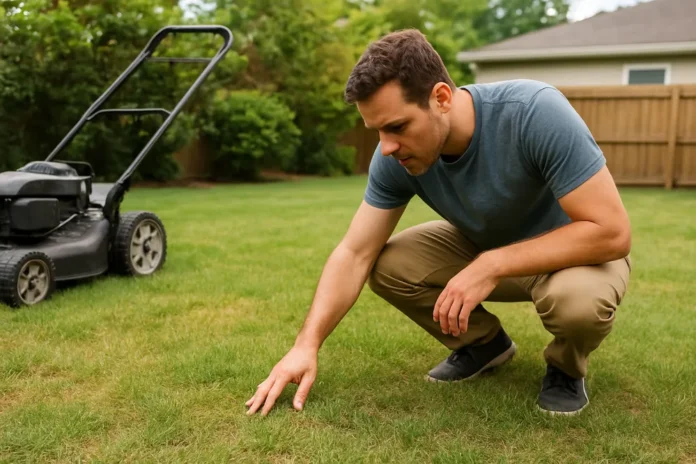
Grass usually grows slowly because of low nitrogen, compacted soil, drought, shade, heavy wear, or cool weather. Some lawns also slow down naturally when the grass type is out of season.
If your grass seems thin, short, or stuck in place even during the growing season, the problem is usually stress rather than a single disease. Slow growth often happens when the lawn is not getting enough sunlight, water, oxygen, or nutrients to keep producing new blades and roots.
The good news is that slow lawn growth is often fixable once you match the pattern to the cause. In many U.S. lawns, the biggest issues are compacted soil, low nitrogen, mowing too short, shade, pet traffic, and weather that does not line up with the type of turf you are growing.
A lawn also does not grow at the same pace all year. Cool-season grasses such as Kentucky bluegrass, fescue, and ryegrass slow down in summer heat, while warm-season grasses like Bermuda, zoysia, and St. Augustine are much slower in cool spring and fall weather.
Most Common Reasons Grass Grows Slowly
When a lawn is growing slowly, start with the most likely causes instead of assuming the grass is dying. Growth depends on active roots, available nutrients, enough moisture, and the right temperature range for your turf type.
Low Nitrogen and Poor Soil Fertility
Nitrogen drives green, leafy growth. When the lawn is low in nitrogen, the grass often looks pale green or yellow-green and grows so slowly that mowing becomes less frequent. Potassium and phosphorus can matter too, but nitrogen is the nutrient most often tied to sluggish top growth.
Compacted Soil
Grass roots need pore space in the soil for air, water, and movement. In compacted areas, especially where kids, pets, or repeated foot traffic wear the lawn down, roots stay shallow and weak. The grass may look thin, struggle after rain, and stop filling in bare patches.
Too Much Shade
Most turf grasses need several hours of direct sun to grow well. In dense shade under trees, along fences, or beside buildings, the lawn often becomes sparse, stretched, and slow to recover after mowing. Even healthy grass grows much more slowly in low light.
Water Stress
Both underwatering and overwatering can slow lawn growth. Drought stress reduces photosynthesis and root activity, while constantly soggy soil limits oxygen and can encourage root rot. Either way, the grass cannot support steady blade production.
Wrong Mowing Habits
Scalping the lawn by cutting it too short removes too much leaf surface at once. That forces the plant to spend energy recovering instead of expanding. Dull mower blades also tear the grass, increasing stress and making the lawn look weak between mowings.
Seasonal Slowdown
Grass grows fastest during its preferred temperature window. Cool-season lawns usually surge in spring and early fall, then slow in summer. Warm-season lawns often lag in cool weather and do most of their growing from late spring into summer.
How Grass Type Affects Growth Rate
A lot of lawn frustration comes from expecting every grass to grow like fast, sunny-season turf. Your growth rate may actually be normal for the species in your yard.
- Kentucky bluegrass spreads and fills in nicely, but it slows noticeably in summer heat and drought.
- Tall fescue grows steadily in cooler weather but often pauses during prolonged heat stress.
- Perennial ryegrass establishes quickly, though mature growth still drops in hot, dry periods.
- Bermuda grass is very vigorous in hot sun but sluggish in cool spring weather and nearly dormant after frost.
- Zoysia grass can be dense and attractive, but it greens up slowly and often fills bare spots more slowly than Bermuda.
- St. Augustine grass grows best in warmth and humidity but often struggles in cold snaps, shade stress, or poor drainage.
If your lawn looks slow in a season that does not favor its growth cycle, that alone may explain a lot. A Bermuda lawn in April can seem stalled, while a fescue lawn in July may look equally unmotivated.
Clues That Point to the Real Problem
The pattern in the lawn tells you more than the slowdown itself. Look at color, location, texture, and when the issue shows up.
Pale Color with Weak Overall Growth
If the entire lawn looks lighter than usual and mowing frequency has dropped, fertility is a top suspect. Nitrogen deficiency often shows up as general pale color rather than patchy damage.
Thin Growth in Paths and Play Areas
Areas near sidewalks, gates, patios, dog runs, and play zones usually indicate compaction or wear. Grass in these spots may stay short, sparse, and unable to thicken even with watering.
Slow Growth Only Under Trees
Tree shade causes two problems at once: less light and root competition for water and nutrients. If the lawn grows reasonably well in open areas but barely moves beneath the canopy, shade is likely the main issue.
Crispy Blades and Folded Leaves
This points toward drought stress. Grass often slows first, then begins to wilt, turn bluish-gray, or leave footprints that linger after walking across it.
Soft Soil and Weak Growth After Frequent Watering
If the ground stays damp and the grass still does not grow, overwatering or poor drainage may be limiting root oxygen. The lawn may feel spongy and become more disease-prone.
Uneven Growth Right After Mowing
A lawn that looks scalped in spots or frayed at the tips may be suffering from low mowing height or dull blades. The grass may survive, but recovery slows considerably.
Soil Problems That Limit Lawn Growth
Healthy grass starts below the surface. When soil conditions are poor, the lawn may never respond well no matter how often you water or fertilize.
Compaction and Shallow Rooting
Clay-heavy soil, construction disturbance, and repeated foot traffic squeeze soil particles together. Roots stay near the top, where temperatures swing faster and moisture disappears more quickly. That makes growth slower and recovery weaker.
Improper Soil pH
Even if fertilizer is present, grass cannot use nutrients well when soil pH is too low or too high. Many lawn grasses perform best in slightly acidic to neutral soil, roughly around pH 6.0 to 7.0, though local conditions vary.
Poor Organic Matter
Soils low in organic matter often dry out too quickly, hold nutrients poorly, and support less microbial activity. Lawns in sandy or depleted soil can stay weak unless the soil is gradually improved.
Drainage Issues
Standing water, hardpan layers, low spots, and runoff patterns can all keep roots stressed. Grass that sits in wet soil commonly grows slowly before it begins yellowing or thinning.
Lawn Care Mistakes That Slow Growth
Sometimes the lawn is healthy enough to grow, but routine care keeps knocking it back. Small maintenance mistakes add up quickly.
- Mowing too short, especially during heat or drought
- Removing more than one-third of the blade in a single mowing
- Using dull mower blades that tear rather than cut
- Applying fertilizer at the wrong time for your grass type
- Watering lightly every day instead of deeply and less often
- Driving or parking on the lawn
- Letting thatch build up until water and nutrients struggle to move through
A lawn under repeated stress often stays alive but grows at a crawl. It may not die outright, yet it never thickens or bounces back the way a healthy lawn should.
How to Help Grass Grow Faster and Thicker
The best fix depends on the cause, but a few core practices improve growth in most lawns. Focus on conditions that support roots first, then top growth will follow.
Feed the Lawn Appropriately
Apply lawn fertilizer based on your grass type and season. Cool-season lawns usually benefit most in fall and spring, while warm-season lawns should be fed after active green-up in late spring and summer. If possible, use a soil test to avoid guessing.
Water Deeply, Not Constantly
Most lawns do better with deeper, less frequent watering that encourages roots to move downward. Frequent shallow irrigation can keep roots weak and the surface overly damp.
Raise Mowing Height
Taller grass blades capture more sunlight and shade the soil, which helps conserve moisture and reduce stress. Many lawns recover noticeably when mowing height is increased by even half an inch.
Aerate Compacted Areas
Core aeration opens channels for air, water, and roots. It is especially helpful for heavy clay soils and lawns that see lots of traffic. Follow the best timing for your turf type so the lawn can recover quickly.
Improve Sun Exposure Where Possible
Selective tree pruning can increase light and airflow. If an area remains deeply shaded, consider switching to a more shade-tolerant grass blend or using a non-lawn groundcover instead of fighting the site.
Repair Bare or Thin Areas with Overseeding or Plugs
Grass that has been slow for a long time may not fill in on its own. Overseeding cool-season lawns or plugging warm-season lawns can help restore density once the underlying stress is corrected.
When Slow Growth Is Seasonal and Normal
Not every slow patch is a problem. Lawns have natural periods of slower growth, especially during temperature extremes or short day length.
- Cool-season grass often slows in the hottest part of summer.
- Warm-season grass may stay tan or sluggish until soil temperatures rise in late spring.
- Newly seeded lawns often focus on root establishment before top growth becomes obvious.
- Fresh sod can appear stalled while roots knit into the native soil.
- Drought restrictions and heat waves may temporarily reduce growth even in otherwise healthy lawns.
If the lawn still has decent color, shows no major dieback, and the timing matches seasonal patterns for your grass type, patience may be part of the answer.
Signs the Problem May Be Pests or Disease
Slow growth by itself is usually tied to care or site conditions, but pests and diseases can also weaken turf. The key is whether you see additional symptoms.
- Irregular dead patches that spread quickly
- Grass that lifts easily from the soil, which can suggest grub damage
- Spots, lesions, or moldy growth on blades
- Circular brown patches with a distinct border
- Bird or animal digging that may indicate insects below the surface
- Areas that stay wet and decline despite moderate watering
When slow growth comes with those symptoms, a closer diagnosis is worth it. Insects, fungal diseases, and root problems often require a different fix than fertility or mowing adjustments.
When to Test, Reseed, or Ask for Help
If the lawn has been underperforming for more than one full growing season, testing and targeted repair usually save time compared with repeating generic treatments.
Get a Soil Test when Growth Is Weak Across the Whole Yard
A soil test can reveal pH issues, nutrient shortages, and sometimes excess salts or other imbalances. This is especially useful if you have fertilized before and the lawn still acts hungry.
Reseed or Overseed when Density Is Poor
If the grass is sparse enough that weeds are moving in, overseeding after correcting the root cause can help the lawn recover faster than waiting for natural spread.
Call a Lawn Professional when the Cause Is Unclear
It may be time for expert help if slow growth is paired with patchy dieback, persistent wet spots, suspected grubs, or compacted soil over a large area. A local professional can also tell you whether your grass type is a poor match for the site.
FAQ
Can Too Much Fertilizer Make Grass Grow Slowly?
Yes. Overfertilizing can burn roots, create salt buildup, or push weak growth that later declines. A lawn that is damaged by excessive fertilizer may look stressed and grow poorly instead of responding with healthy green growth.
Why Is My Grass Growing Slowly Even Though I Water It Every Day?
Daily light watering often keeps the surface wet without encouraging deep roots. That can lead to shallow rooting, poor oxygen in the soil, and weaker growth overall.
Does Cutting Grass Too Short Slow It Down?
Yes. Scalping removes too much leaf area, which reduces the plant's ability to photosynthesize and recover. Grass cut too short often grows back more slowly and becomes more vulnerable to heat and drought.
Will Aerating Help Slow-growing Grass?
It can help a lot if compaction is the problem. Core aeration improves airflow, water movement, and root expansion, which often leads to stronger and faster lawn growth over time.
Is Slow Grass Growth Normal in Summer?
For cool-season grasses, yes. Many cool-season lawns slow down in hot weather, especially during drought or high heat. Warm-season grasses usually grow best in summer unless they are stressed by shade or poor soil.
Why Does Grass Grow Slowly Under Trees?
Grass under trees competes for water and nutrients and gets less sunlight. That combination often causes thin, weak, slow-growing turf even when the rest of the lawn looks fine.
How Long Does It Take for Grass to Start Growing Faster After Fertilizer?
You may see greener color within a week or two, but visible growth depends on temperature, moisture, and grass type. Root-related issues such as compaction or poor drainage can delay improvement even after feeding.
Want a lawn that fills in faster and stays greener? Read our guide to the best lawn fertilizers, grass seed, and soil-improving treatments so you can choose the right fix with confidence.
