

Note: This article contains affiliate links. If you click on these links and make a purchase, I may earn a small commission at no extra cost to you. This helps support my research and content. Read my full affiliate disclosure here.
A small wood axe is a compact, easy-to-handle tool for pruning, limbing, light splitting, and campsite tasks. If you work in a small yard, garden, or frequently handle short rounds for kindling, the right small axe makes repetitive cutting safer and less tiring. This guide covers seven shortlisted small wood axes chosen for their balance of steel, edge geometry, and handle design. We evaluated control, durability, and usability so you can pick an axe that suits tight spaces and lighter-duty woodwork. Read on for the decision factors we used and practical tips for everyday use.
Top Picks at a Glance
| Best Overall The best all-around choice for most situations | Fiskars X13 Ultralight 13" Hiking Axe |  |
| Best Quality Built to a higher standard if you want something more solid | Estwing Sportsman's Axe, 14" Leather Grip Hatchet (E24A) |  |
| Best Value The sweet spot between price and what you get | DESHIL 15-inch Camping Hatchet with Fiberglass Handle |  |
| Best Budget The cheapest option that still gets the job done reliably | DESHIL 10-inch Outdoor Hatchet Mini Camping Axe with Sheath |  |
| Highest Rated A top-rated pick with lots of positive feedback | Fiskars X14 14" Universal Hatchet |  |
| Most Popular A crowd favorite that many people choose with confidence | Fiskars X7 14" Hatchet |  |
| Best Seller A high-volume bestseller chosen again and again | Fiskars X11 17" Splitting Axe |  |
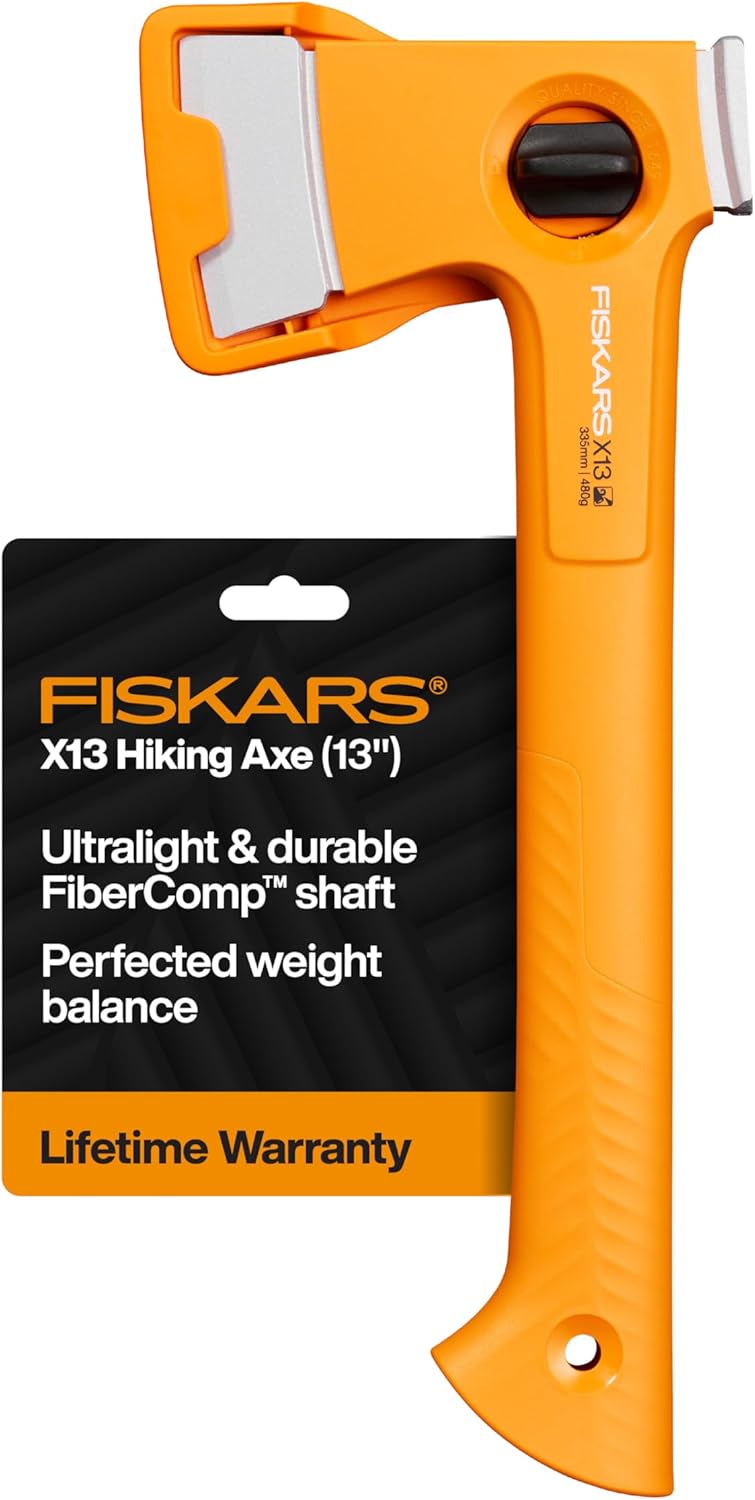
Fiskars X13 Ultralight 13" Hiking Axe
| Handle Material | Alloy Steel |
|---|---|
| Blade Material | Forged Steel |
| Included Components | Belt Loop, Sheath |
| Head Type | Hatchet |
The Fiskars X13 Ultralight 13" hiking axe is built as a compact outdoor tool for hiking, backpacking, and light campsite chores. Its 13-inch length and ultralight construction make it easy to carry and use one-handed for chopping kindling, trimming small branches, and driving tent stakes with the striking end. The forged steel blade has a proprietary grind and low-friction coating that helps it slice cleanly and resist rust, while the FiberComp handle keeps weight down and is highly visible in the field. The insert-molded head reduces the chance of loosening and overstrike damage, and the included sheath with belt loop and locking mechanism makes transport safer and more convenient. Because it is sized for portability, it is not intended for heavy-duty log splitting or felling large trees; expect excellent performance for camp tasks and bushcraft but plan larger axes for heavy woodwork. Overall, this axe balances sharpness, durability, and low weight to suit hikers who want a capable, easy-to-stow hatchet for multi-use outdoor work.
Best for: Buyers who want a lightweight, easy-to-carry hatchet for hiking, backpacking, and campsite chores and who prioritize portability and controllable one-handed use.
Less Ideal for: People who need a tool for splitting large logs, felling trees, or sustained heavy chopping should choose a full‑size splitting axe instead.
- Very light and well balanced for single-handed use and easy carrying
- Forged steel blade with proprietary grind and low-friction coating for clean cuts and rust resistance
- Bright FiberComp handle improves visibility and absorbs shock
- Insert-molded head design reduces loosening and overstrike breakage
- Includes sheath with belt loop and locking mechanism for safe transport
- Not suitable for heavy-duty log splitting or felling large trees
- Short handle limits leverage compared with full-size axes
Verdict: A well-balanced, ultralight hiking hatchet that delivers sharp, reliable performance for campsite chopping and stake driving while being easy to carry.
Estwing Sportsman's Axe, 14" Leather Grip Hatchet (E24A)

| Blade Material | Alloy Steel |
|---|---|
| Handle Material | Leather |
| Head Type | Hatchet |
| Blade Length | 3.25 inches |
The Estwing Sportsman’s Axe is a compact, one-piece forged hatchet built for hard outdoor use. Its single-piece alloy steel construction and hand-polished head give it excellent balance and durability for chopping limbs, splitting small logs and kindling, and general campsite tasks. The sanded and lacquered leather handle provides a comfortable, non-slip grip during extended use, and the included ballistic nylon sheath with belt loop keeps the blade protected and easy to carry. The 3.25-inch cutting edge is sharp out of the box and suited to controlled cuts rather than heavy felling, so it works best for camp chores and light to medium splitting. Because the head and handle are forged in one piece there are no welded joints to fail, but that solid construction also means less shock absorption compared with some modern composite-handled axes. Overall it is a straightforward, high-quality tool for outdoorsmen who prioritize durability and a classic feel, though users needing a longer reach or heavy timber felling will want a larger axe.
Best for: Buyers who want a durable, no-nonsense camp hatchet that will hold up to frequent outdoor use and value classic forged construction and a leather grip.
Less Ideal for: People who regularly need to fell large trees or want maximum vibration reduction should choose a larger felling axe or a tool with a shock-absorbing handle.
- Forged in one piece from alloy steel for excellent durability and balance
- Genuine leather handle that is sanded and lacquered for a comfortable, secure grip
- Includes ballistic nylon sheath with belt loop for safe transport and storage
- Compact 14-inch length makes it easy to carry for camping and backpacking
- Smaller 3.25-inch blade and compact size limit effectiveness on large trees or heavy felling
- One-piece steel handle transmits more shock to the user than shock-absorbing composite handles
Verdict: A rugged, one-piece forged hatchet that delivers reliable chopping performance and a comfortable leather grip for campers and outdoorsmen.
DESHIL 15-inch Camping Hatchet with Fiberglass Handle

| Blade Material | Carbon Steel |
|---|---|
| Handle Material | Fiberglass |
| Head Type | Hatchet |
| Blade Edge | Convex |
This DESHIL 15-inch hatchet is built for practical outdoor use: a forged, heat-treated 45 carbon steel head gives a durable, sharpenable cutting edge for splitting small logs, chopping kindling, and general campsite wood prep. The fiberglass handle with an anti-slip grip reduces vibration for more comfortable swings and helps control rebounds when working through tougher pieces. A flat hammer back adds versatility for driving tent stakes or light hammer tasks, and the included locking blade cover keeps the edge protected in a pack or gear box. At about 600 g and a 15-inch length it balances portability with enough head weight to be effective without demanding advanced technique. Limitations to note are that the hatchet is intended for small to medium chopping tasks rather than heavy-duty felling or large log splitting, and carbon steel requires routine care to avoid surface rust and to maintain sharpness. For routine camping, hiking, and yard cleanup this hatchet combines useful features in a compact package.
Best for: Practical outdoor users who want a single, easy-to-carry tool for campfire wood prep, tent staking, and light yard work without excess weight or extra tools.
Less Ideal for: People who need an axe for felling trees or splitting large logs regularly should choose a larger splitting axe or maul instead.
- Forged heat-treated 45 carbon steel blade for durable, sharpenable edge
- Fiberglass shock-reducing handle with anti-slip grip for more comfortable use
- Built-in hammer back adds dual-purpose functionality at the campsite
- Includes locking blade sheath for safer carry and storage
- Carbon steel blade needs regular cleaning and oiling to prevent rust
- Not designed for heavy felling or splitting very large logs
Verdict: A compact, feature-rich camping hatchet that balances chopping performance and portability for everyday outdoor tasks.
DESHIL 10-inch Outdoor Hatchet Mini Camping Axe with Sheath

| Handle Material | Fiberglass |
|---|---|
| Blade Material | Carbon Steel |
| Head Type | Hatchet |
| Blade Edge | Convex |
| Included Components | Protective Blade Cover |
The DESHIL 10-inch outdoor hatchet is a small, multipurpose camping axe built for chopping kindling, trimming small branches, and light campsite tasks. Its heat-treated carbon steel head and convex blade deliver a sharp edge that holds up for repetitive cuts, while the painted finish helps resist surface corrosion. The fiberglass handle is shock-absorbing and features an anti-slip grip, making swings more comfortable and controlled and reducing user fatigue during repetitive use. A flat back on the head works as a hammer for driving tent stakes or splitting small pieces, and a protective blade sheath keeps the edge covered during transport and storage. Because it is a mini hatchet, it is easy to pack and maneuver but not intended for heavy-duty splitting of large logs. Buyers who want a durable, low-weight tool for campfires, hiking, or backyard kindling will appreciate the practical design, while those needing a full-size splitting axe should look elsewhere.
Best for: Buyers wanting an affordable, portable hatchet for campfires, backpacking, and backyard kindling who prioritize low weight and practical multiuse over heavy splitting power.
Less Ideal for: People who need a full-size splitting axe or a tool for frequent heavy-duty woodfelling should choose a larger, more robust model.
- Heat-treated carbon steel blade stays sharp for common camp tasks
- Fiberglass shock-reduction handle with anti-slip grip improves control and comfort
- Compact 10-inch form factor is easy to pack and maneuver
- Flat back head doubles as a hammer for tent stakes and small driving jobs
- Too small and light for splitting large logs or heavy-duty chopping
- Painted head and carbon steel can still corrode if not dried and maintained
Verdict: A compact, budget-friendly camping hatchet that delivers durable cutting and a comfortable grip for kindling and light campsite tasks.
Fiskars X14 14" Universal Hatchet

| Handle Material | Alloy Steel |
|---|---|
| Blade Material | Forged Steel |
| Head Type | Hatchet |
| Included Components | Sheath |
The Fiskars X14 14" Universal Hatchet is a compact chopping tool meant for one-handed use when making kindling, limb work, or light felling tasks. Its double-hardened forged-steel blade is ground for a sharp, precise edge and has a low-friction coating that helps the blade glide through resinous woods and resist surface rust. The FiberComp handle is lightweight but engineered for strength, absorbing shock and reducing the chance of handle-head separation thanks to an insert-molded head. An ergonomically curved shaft with a textured SoftGrip zone improves control and wrist comfort during repetitive swings. The hatchet ships with a protective sheath for safe transport and storage. Limitations are that this is a short, single-handed tool so it is not intended for splitting large logs or heavy-duty felling, and users wanting longer reach or two-handed power should choose a larger splitting axe or felling axe instead.
Best for: Buyers who prioritize a dependable, low-maintenance tool for regular light chopping, limb work, and kindling preparation and who want a durable, confidence-inspiring design.
Less Ideal for: Not suited for users who need two-handed power or a tool for splitting large firewood and heavy tree felling; those users should look at full-size splitting or felling axes.
- Sharp, double-hardened forged-steel blade for cleaner cuts in fresh, resinous wood
- Low-friction blade coating reduces sticking and adds surface rust protection
- FiberComp handle absorbs shock and reduces overstrike damage
- Ergonomic curved handle with SoftGrip improves comfort and control
- Includes sheath for safe storage and transport
- Short 14-inch length limits leverage and power for large logs or heavy felling tasks
Verdict: A reliably constructed, easy-to-handle hatchet that delivers clean, low-sticking cuts and durable, shock-resistant performance for routine chopping and kindling tasks.
Fiskars X7 14" Hatchet

| Blade Material | Forged Steel |
|---|---|
| Handle Material | Wood |
| Head Type | Hatchet |
| Blade Length | 5.12 inches |
| Item Weight | 1.4 pounds |
The Fiskars X7 14" Hatchet is a lightweight, purpose-built tool for chopping kindling, trimming small branches, and prepping firewood while camping or working around the yard. Its forged steel head uses Fiskars proprietary grinding and a low-friction coating to hold an edge longer and reduce blade sticking, which makes repeated cuts faster and cleaner. The hatchet’s optimized weight distribution boosts swing speed and impact without adding bulk, and the shock-absorbing FiberComp handle with non-slip grip reduces vibration and hand fatigue during extended use. It ships with a sheath for safe transport and storage. Limitations are its small head weight and 14-inch length, which make it unsuitable for splitting large logs or heavy felling tasks where a full-size axe is required. Also the wooden handle listed may feel different from the FiberComp mentioned in marketing, so check the handle type if you have a strong preference. For campers and day-to-day outdoor chores the tool balances sharpness, durability, and portability well.
Best for: Buyers who want a reliable, easy-to-carry hatchet for camping, firewood prep, and light yard work and who value tools backed by broad positive user experience.
Less Ideal for: People who need a tool for heavy-duty log splitting, tree felling, or prolonged professional forestry work should choose a larger splitting axe or maul instead.
- Sharp forged-steel blade with proprietary grinding for longer edge life
- Low-friction coating reduces sticking for faster chopping
- Optimized weight distribution increases swing power without extra weight
- Shock-absorbing handle and non-slip grip reduce fatigue and improve control
- Includes sheath for safe carry and storage
- Small hatchet head and short handle limit effectiveness on large logs or heavy splitting tasks
- Product listings mention both FiberComp and wood handle types which could cause confusion about exact handle material
Verdict: Choose the Fiskars X7 if you want a portable, well-balanced hatchet that delivers sharp, low-sticking cuts for camping and light wood prep.
Fiskars X11 17" Splitting Axe

| Brand | Fiskars |
|---|---|
| Included Components | Sheath |
| Blade Material | Forged Steel |
| Head Type | Splitting Wedge |
| Blade Edge | Straight |
The Fiskars X11 17" Splitting Axe is a compact, user-friendly tool made for splitting small logs, chopping kindling, and light trail clearing. Its wedge-shaped forged steel head and advanced blade geometry increase bite and help the axe split wood with fewer swings, while the FiberComp handle and insert-molded head design reduce the chance of head loosening. The lighter weight and balanced power-to-weight ratio make it comfortable for one-handed use and reduce fatigue during longer sessions by increasing swing speed. It ships with a protective sheath for safe storage and transport and the shock-absorbing handle helps minimize hand strain on impact. Limits to consider are its short 17" length and smaller head, which make it unsuitable for large logs or heavy felling work; users needing big rounds split quickly will want a full-size splitting maul or longer-handle axe. For everyday campsite use, firepit prep, and light yard cleanup, this axe delivers durable construction and predictable, low-maintenance performance.
Best for: Buyers who want a reliable, low-maintenance axe for campsite use, firepit kindling, and light yard work and who prioritize predictable performance and durability over maximum splitting power.
Less Ideal for: People who need to split large rounds, fell sizable trees, or do heavy-duty logging should choose a full-size splitting maul or longer-handled splitting axe instead.
- Forged steel wedge head and advanced blade geometry for strong splitting performance
- FiberComp shock-absorbing handle with insert-molded head prevents loosened or broken handles
- Compact, balanced design increases swing speed while reducing user fatigue
- Protective sheath included for safer transport and storage
- Lightweight and weather-resistant handle material for low maintenance
- Short handle and smaller head limit effectiveness on large logs or heavy felling tasks
- Handle material listed as wood in some specs which may cause confusion about exact handle composition
Verdict: A compact, virtually unbreakable splitting axe that delivers efficient one-handed splitting for campsite and light yard tasks.
Choosing the Right Small Wood Axe: Key Factors to Consider
Blade Steel and Heat Treatment
Blade metal determines how well the axe holds an edge and how easy it is to resharpen. For small wood axes, look for steels that balance hardness and toughness. Too soft and the edge will roll quickly; too hard and the blade can chip when it contacts hidden grit or strikes bones in branches.
Heat treatment makes a major difference. Properly heat-treated steel will allow a good edge angle that resists dulling while remaining serviceable for manual sharpening. For gardeners, a blade that can be honed easily in the field and that accepts sharpening stones or files without fuss is more useful than exotic steels that require advanced sharpening equipment.
Head Shape and Bevel Geometry
The profile of the axe head controls how it cuts through wood. Narrower, thinner blades with swept bevels slice efficiently and are better for limbing and chopping small-diameter wood. Thicker, more wedge-shaped heads spread the wood fibers and perform better for light splitting but can be sluggish for fine chopping.
Consider the intended tasks. If you will mostly trim branches and cut small rounds for kindling, a more acute edge and lower wedge angle will make each swing bite. If you anticipate occasional splitting of short logs, a slightly broader wedge helps separate fibers without needing heavy follow-through.
Handle Length, Shape, and Material
Handle design affects control, comfort, and shock management. Short handles give precise control and are ideal for work in tight spaces or for one-handed use. Longer short-handled axes provide a bit more reach and swing power. The handle profile-taper, flare, and grip section-should match your hand size and typical tasks.
Material matters for feel and durability. Traditional hickory absorbs shock and is easy to replace if damaged, while modern fiberglass or composite handles resist weathering and require less maintenance. Leather or textured rubberized grips reduce slippage when wet but can add thickness that may bother smaller hands.
Weight, Balance, and Swing Control
A small wood axe should feel balanced between head and handle. Head weight influences cutting power; heavier heads transfer more momentum but can tire you quickly in repetitive light work. For controlled chopping and limbing, moderate head weight with a balanced swing cadence reduces fatigue and improves accuracy.
Balance point affects how the tool tracks through a brief swing. An axe that feels head-heavy can bite deep with little effort but demands careful control in confined spaces. If you often work close to buildings or plants, prioritize a controllable, predictable swing over maximum chopping force.
Edge Geometry and Sharpening Ease
Edge angle and bevel finish determine how the blade performs and how easy it is to maintain. A lower bevel angle slices more readily but requires more frequent touch-ups. A more obtuse bevel holds up to tougher fibers and accidental strikes but needs more force to cut cleanly.
Gardeners benefit from an edge they can tune with basic tools. Choose an axe whose bevel profile accepts a file or common sharpening stones without complex jigging. Ease of resharpening keeps the axe useful over years of seasonal work.
Head Attachment and Overall Durability
How the head is secured to the handle influences long-term safety and reliability. Look for construction methods that resist loosening under repeated impact, such as solid wedges or well-molded ferrules. Heads that sit flush and tight reduce the risk of working with a shifting tool.
Durability also includes corrosion resistance and head finish. A matte or bead-blasted finish hides dings and corrosion better than bright polishing, and protective coatings can slow rust on blades stored in damp sheds. Maintenance, such as occasional oiling of wooden handles and keeping the edge dry, extends service life.
Best Uses for a Small Wood Axe
Small wood axes excel at tasks where control matters more than raw power. Typical uses include limbing and pruning larger branches that are too big for loppers, chopping small rounds into kindling, and campsite chores like splitting tinder or driving tent stakes with a mallet-style butt.
Because they are lighter and shorter than full-size felling axes, these tools are also easier to carry on hikes and fit into compact tool storage. Their compact size makes them safer to swing in tight garden beds and around ornamentals when operated with deliberate, short strokes.
- Limbing and pruning medium branches
- Making kindling from small rounds
- Campsite and trail maintenance
- Light splitting of short logs
Maintaining Your Small Wood Axe
Routine maintenance keeps an axe safe and efficient. After each use, wipe the blade dry and remove sap or debris with a cloth and mild solvent if needed. Lightly oil the head to prevent rust, and store the axe in a dry place away from direct ground contact.
Sharpen frequently enough to avoid forcing the edge. For field touch-ups, use a round or flat file to restore the bevel, then refine with a stone. Inspect the handle and head attachment regularly and address looseness or hairline cracks promptly to avoid failure during use.
- Dry and oil the head after use
- Sharpen with file and stone as needed
- Inspect handle-head fit before each season
- Replace wooden handles at first sign of major damage
Safe Techniques and Short-Stroke Chopping
Safety is more about technique than tool size. Use short, controlled strokes when working near plants or structures. Keep a firm two-handed grip if possible, and position your feet for stable balance. Never swing where your off-hand, legs, or other people might be in the blade arc.
When chopping on a chopping block, let the axe do the work-aim for consistent contact and follow-through rather than wild swings. For one-handed tasks, hold the axe lower on the handle for better precision and always be mindful of rebound and kickback.
- Use short, controlled swings in tight spaces
- Maintain safe distance from bystanders and plants
- Work on a stable chopping block when possible
- Wear eye protection and sturdy gloves
Transport and Storage Tips
Carry a small wood axe in a sheath to protect the edge and prevent accidental contact during transport. Keep the axe dry and, if stored outdoors or in an unheated shed, check the handle for moisture-related swelling or shrinkage seasonally.
For longer-term storage, loosen tension on leather sheaths and apply a thin coat of oil to wooden handles to prevent drying. Avoid leaving the axe leaning with the head resting on the ground, which can sharpen corrosion and invite insects into a wooden haft.
- Use a protective sheath for transport
- Store in a dry, ventilated location
- Oil wooden handles before long-term storage
- Avoid resting the head on the ground
When a Small Axe Is Not the Right Tool
A small wood axe is not ideal for large-diameter felling or heavy splitting of long logs. If you regularly handle big rounds, a splitting maul or full-size felling axe with a longer handle will be safer and more efficient. Likewise, delicate pruning close to stems or thin ornamental branches is better handled with hand pruners or saws.
Consider the volume and size of wood you process. For occasional light work and campsite tasks, a small axe is excellent. For frequent heavy-duty splitting or landscape-scale tree work, choose a tool designed for those tasks.
- Not suitable for large log splitting
- Not optimal for fine pruning of small ornamental branches
- Assess workload before committing to one tool
How We Chose the Best Small Wood Axe
We focused on the characteristics that matter when gardeners and homeowners rely on a small wood axe for routine jobs around the yard. Key evaluation criteria included blade steel and heat treatment for edge retention and ease of sharpening; head shape and bevel geometry for chopping versus splitting efficiency; handle ergonomics and material for grip, shock absorption, and hand comfort during repetitive swings; head-to-handle fit and construction for long-term durability and safety; and overall weight and balance to match short-stroke use in confined spaces. We excluded heavy felling axes and specialist splitting mauls that are designed for large logs and full-swing forestry work. We also filtered out novelty or decorative axes that lack the steel quality or construction needed for repeated use. The shortlist reflects tools with clear specifications and construction details that match the intended small-scale tasks, emphasizing longevity, safe handling, and predictable cutting behavior.
FAQ
How long should the handle on a small wood axe be?
Handles for small wood axes typically range from about 12 to 20 inches. Shorter handles give better one-handed control and are easier to use in tight spaces, while the longer end of that range offers a bit more reach and swing power. Choose based on your typical tasks and hand size.
What edge angle works best for kindling and light chopping?
A relatively acute bevel angle slices wood fibers cleanly, which is helpful for kindling and light chopping. Expect to touch up the edge more often than with a blunter wedge, but the improved bite reduces the force required for each swing.
Can a small wood axe be used with one hand?
Yes, many small wood axes are designed for effective one-handed use, especially for limbing and campsite chores. However, two hands provide more control and reduce fatigue when you need extra accuracy or deeper cuts.
How do I tell if an axe head is properly secured to the handle?
A secure head sits flush against the handle with no wobble when you shake it. There should be firm wedges or a well-molded ferrule for composite handles. Check for movement before each season and tighten or replace the haft if looseness appears.
Is a fiberglass handle better than hickory for a small wood axe?
Fiberglass handles resist weathering and require less maintenance, while hickory offers natural shock absorption and is easy to replace if damaged. The better choice depends on your tolerance for maintenance and preference for the tool's feel.
How often should I sharpen a small wood axe?
Sharpening frequency depends on use. For regular seasonal yard work, a quick field file session every few uses and a more thorough stone sharpening monthly or seasonally is typical. If the axe starts to crush rather than cut, it is time to sharpen.
Final Verdict
Prioritize blade steel, head geometry, and handle ergonomics when choosing a small wood axe. These factors determine how the tool cuts, how comfortable it feels during repetitive tasks, and how easy it is to maintain in a garden setting. Balance weight and balance to match the kinds of cuts you make most often: favor control for tight spaces and slightly more mass for occasional light splitting. With those priorities in mind, you can select a small axe that stays reliable and comfortable for years of routine yard and campsite work.
