

Note: This article contains affiliate links. If you click on these links and make a purchase, I may earn a small commission at no extra cost to you. This helps support my research and content. Read my full affiliate disclosure here.
If you grow vegetables or maintain multiple garden beds, the right walk-behind garden tiller saves time and reduces backache. These machines break compacted soil, mix amendments, and create smooth seedbeds faster than hand tools, especially in medium to large plots and heavy clay. In this guide we shortlisted seven reliable walk-behind garden tillers suited to a range of garden sizes and users, then evaluated them on the features that matter in actual garden work. Expect clear notes on digging power, tine design, ease of handling, and maintenance needs. Read on to find a tiller that fits your plot, soil type, and physical comfort.
Top Picks at a Glance
| Best Overall The best all-around choice for most situations | EARTHQUAKE Victory Rear Tine Tiller — 209cc Viper Engine, Counter‑Rotating Tines |  |
| Best Quality Built to a higher standard if you want something more solid | Earthquake Pioneer Dual Direction Rear Tine Tiller with 127cc Briggs & Stratton Engine |  |
| Best Value The sweet spot between price and what you get | Earthquake MC33 Mini Tiller Cultivator (33cc Viper Engine) |  |
| Best Budget The cheapest option that still gets the job done reliably | Sun Joe Corded Electric Garden Tiller & Cultivator TJ604E |  |
| Highest Rated A top-rated pick with lots of positive feedback | Poulan Pro 18" Rear Tine Tiller with 212cc Gas Engine |  |
| Most Popular A crowd favorite that many people choose with confidence | LawnMaster 13.5 Amp 18" Corded Electric Tiller (TE1318M) |  |
| Best Seller A high-volume bestseller chosen again and again | Earthquake Versa 2-in-1 Front-Tine Tiller Cultivator with 99cc Viper Engine |  |
EARTHQUAKE Victory Rear Tine Tiller — 209cc Viper Engine, Counter‑Rotating Tines

| Engine | 209cc 4-cycle Viper |
|---|---|
| Tilling width | 16" |
| Max tilling depth | 10" |
| Wheels | 13" pneumatic self-propelled |
The EARTHQUAKE Victory Rear Tine Tiller is built to break new ground and maintain rows with minimal fuss. Its 209cc Viper 4-cycle engine drives rear-mounted counter-rotating tines that dig aggressively through compacted clay and old beds, while a sturdy cast-iron transmission with bronze gears is designed for long life. The 16-inch working width and up to 10-inch depth make it useful both for preparing planting beds and cultivating between rows. Instant Reverse lets you change direction or back out of tight spots without clutching or shifting, and 13-inch pneumatic wheels plus an adjustable drag stake help control travel speed and tilling depth. Adjustable handlebars support 1- or 2-handed operation and reduce operator fatigue during longer sessions. This is a work-focused machine: it is heavy and requires regular maintenance typical of gas equipment, and its size makes it less convenient for very small plots or frequent transport. If you need a durable, powerful tiller for establishing and maintaining medium to large vegetable beds, the Victory covers the essentials reliably.
Best for: Gardeners who need a robust, long‑lasting tiller for breaking new ground and maintaining medium to large vegetable beds and who prefer a gasoline workhorse over lightweight electric options.
Less Ideal for: Urban gardeners with very small raised beds or anyone who needs a light, easily stored electric tiller for occasional use.
- Powerful 209cc 4-cycle Viper engine for consistent digging performance
- Counter-rotating rear tines that handle compacted soil and breaking new ground
- Instant Reverse control for easy direction changes in tight spaces
- Durable cast-iron transmission with bronze gears built for longevity
- Adjustable handlebars and drag stake improve comfort and tilling control
- Heavy and bulky, making transport and storage more demanding
- Gas engine requires regular maintenance and fuel handling
Verdict: Buy this if you want a durable, high‑power rear tine tiller that reliably breaks new ground and handles season‑long row maintenance.
Earthquake Pioneer Dual Direction Rear Tine Tiller with 127cc Briggs & Stratton Engine

| Engine | 127cc Briggs & Stratton 4-cycle |
|---|---|
| Tine modes | Dual Direction (CRT and SRT) |
| Tilling width | 17 inches |
| Tilling depth | Up to 11 inches |
| Wheels | Airless rubber tires with steel rims |
The Earthquake Pioneer is a purpose-built rear tine tiller aimed at gardeners who want strong, controllable tilling performance without a bulky machine. Its 127cc Briggs & Stratton 4-cycle engine and patented transmission supply the torque needed to bust through virgin soil in CRT mode and then switch to SRT mode for a fine, smooth seedbed. Instant reverse makes turning in tight rows and along fences fast and easy without shifting gears, and the wide airless tires on steel rims eliminate flats while delivering consistent traction. Dual control handlebars and a three-position adjustable handlebar let you operate one- or two-handed for precise guidance and to keep footprints out of the prepared bed. The unit is relatively light and balanced for its class, improving maneuverability compared with heavier competitors. Limitations to consider are that it is gas powered so it requires fuel, routine engine maintenance, and produces exhaust and noise; it also may be more machine than needed for very small container or raised-bed gardens.
Best for: Gardeners who prioritize powerful, reliable tilling for new beds or large plots and want a machine that combines sod-busting capability with controllable, precise finishing.
Less Ideal for: People who only tend small raised beds, container gardens, or who need a quiet, emission-free electric option should consider smaller tillers or battery/electric alternatives.
- 127cc Briggs & Stratton 4-cycle engine delivers strong sod-busting torque
- Dual-direction tines offer both aggressive soil breaking (CRT) and a smooth seedbed (SRT)
- Instant reverse handle allows quick backing and turning in tight spaces without shifting
- Airless rubber tires with steel rims provide puncture-free traction across varied terrain
- Gas engine requires fuel, periodic maintenance, and produces noise and exhaust
- May be oversized for very small or container gardens where a lightweight cultivator would suffice
Verdict: Choose the Pioneer if you want a compact but powerful rear tine tiller that can break new ground and also finish a fine seedbed with easy maneuvering.
Earthquake MC33 Mini Tiller Cultivator (33cc Viper Engine)

| Engine | 33cc 2-cycle Viper engine |
|---|---|
| Tilling width | Adjustable 6–10 inches |
| Transmission | Bronze gear drive |
| Depth control | On-board wheels and adjustable drag stake |
| Power source | Gas Powered |
The Earthquake MC33 is a compact gas cultivator intended for small to medium garden beds where maneuverability matters. It uses a 33cc two-cycle Viper engine and bronze gear drive to deliver torque for mixing in fertilizer, aerating soil, and removing weeds; the tines can be reversed for tougher ground and outer tines removed to switch between a 6-inch narrow and 10-inch wider working width. On-board transport wheels and an adjustable drag stake make depth control straightforward, and overhand handlebars allow forward and backward operation so you can work close to plants and edges without excessive bouncing. Assembly is tool-free and the unit is light enough to move around the yard easily. Expect typical gas-engine upkeep such as fuel mixing and occasional maintenance, and the two-cycle engine will be louder and require more care than electric alternatives. The MC33 suits gardeners who value practical versatility and solid transmission durability in a compact package.
Best for: Buyers who prioritize a practical, easy-to-handle cultivator for regular garden bed maintenance and want a durable gear-driven machine that handles weeding, mixing, and light aeration with minimal fuss.
Less Ideal for: Gardeners who need to cultivate large acreage frequently or who prefer low-maintenance electric or battery-powered equipment should consider larger or electric alternatives.
- Compact and lightweight for easy transport and maneuvering around beds
- Adjustable tilling width (6"–10") to suit narrow rows or open areas
- Solid bronze gear drive for smoother operation and durability
- On-board wheels and adjustable drag stake for simple depth control
- Tool-free assembly gets it ready to use quickly
- Two-cycle gas engine requires fuel mixing and more maintenance than electric models
- Not ideal for very large or heavy clay soils where a larger tiller would be faster
Verdict: A maneuverable, gear-driven mini cultivator that delivers practical power and adjustable width for efficient bed maintenance.
Sun Joe Corded Electric Garden Tiller & Cultivator TJ604E

| Power Source | Corded Electric |
|---|---|
| Motor | 13.5-Amp |
| Tines | 6 steel angled tines |
| Operation Mode | Electric |
The Sun Joe TJ604E is a corded electric tiller built to make light to moderate soil preparation fast and simple. It delivers continuous power from a 13.5-amp motor and tills up to about 16 inches wide and 8 inches deep, using six angled steel tines that resist rust for regular use. The folding handle and compact footprint make it easy to transport and store when you are working in small yards, raised beds, or vegetable patches. Three-position wheel adjustment helps control depth and maneuverability across different soil types, and the electric design eliminates gas maintenance and fumes. Because it is corded, runtime is unlimited but you will need a safe outdoor extension cord and attention to cord placement. The machine is best for homeowners who want a straightforward, low-maintenance tiller for prepping and reviving garden beds rather than heavy-duty breaking of compacted ground or acres of soil.
Best for: Practical gardeners on a budget who need a dependable, low-maintenance tiller for prepping small to medium garden beds and raised planters.
Less Ideal for: People who need a heavy-duty machine for rocky or heavily compacted ground or those who want cordless freedom across large properties should look elsewhere.
- 13.5-amp motor provides continuous power for consistent tilling performance
- Six alloy steel angled tines offer durable, rust-resistant soil penetration
- Folding handle and compact design make storage and transport easy
- Three-position wheel adjustment allows better depth control for different soil conditions
- Corded power requires an outdoor extension cord and limits reach compared with cordless or gas models
- Not intended for breaking extremely compacted soil or large acreage tilling
Verdict: A straightforward, low-maintenance electric tiller that gives budget-minded gardeners reliable power for preparing small to medium beds.
Poulan Pro 18" Rear Tine Tiller with 212cc Gas Engine
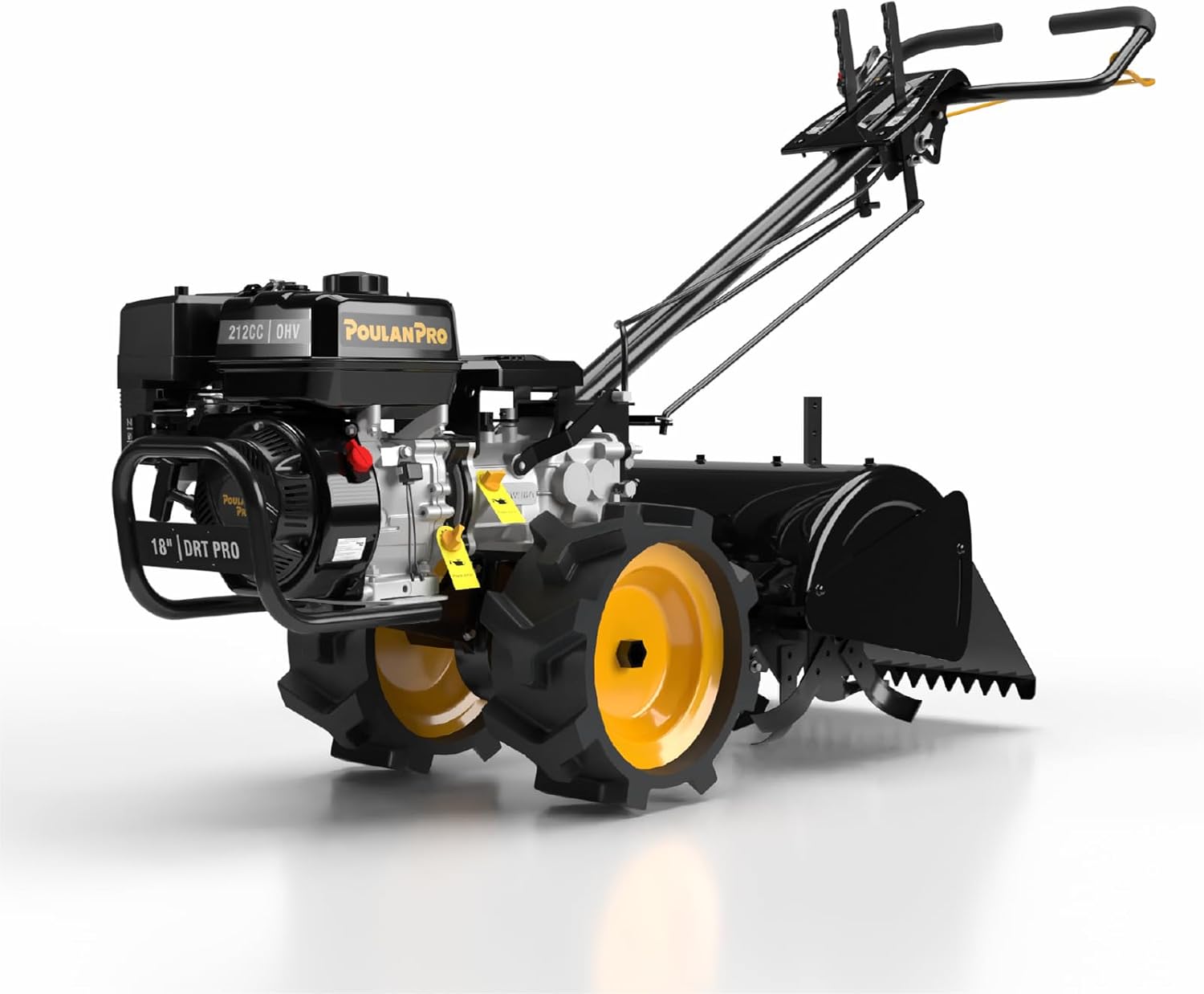
| Engine | 212cc 4-cycle |
|---|---|
| Tilling width | 18" |
| Tilling depth | 4"-10" |
| Tines | 16 steel dual-rotation |
| Transmission | Full gear-driven |
The Poulan Pro 18-inch rear tine tiller is built for repetitive, demanding soil work where reliability matters. Its 212cc 4-cycle gas engine pairs with a full gear-driven transmission rather than belts, which reduces routine adjustments and delivers steady power when breaking hard or compacted ground. The unit uses 16 steel tines with dual-direction rotation and three speeds (two forward, one reverse) so you can control progress and back out without fighting the machine. Flat-free tires and a dual-grip handlebar make maneuvering and pivoting along beds more controlled and low maintenance. Practical benefits include consistent performance in vegetable plots, flower beds, and small acreage prep, plus fewer service headaches thanks to the gear drive. Important limitations are that it is a gas machine so it needs fueling and periodic engine upkeep, and its weight and size make it less suited for very small or raised beds where a compact tool would be easier to handle.
Best for: Gardeners and small-scale growers who prioritize a low-maintenance, workhorse tiller that consistently handles heavy or compacted soil for regular bed preparation.
Less Ideal for: Urban gardeners with very small plots, raised beds, or those who prefer electric or hand tools for lighter, infrequent tilling tasks.
- Full gear-driven transmission reduces belt maintenance and delivers consistent torque
- Powerful 212cc 4-cycle engine handles compacted soil and larger plots
- Dual-rotation 16-tine setup with multiple speeds improves control when tilling and reversing
- Flat-free tires provide long-term durability and stable traction without inflation concerns
- Gas engine requires regular fueling, oil changes, and winter storage care
- Physical size and weight limit ease of use in very small or raised garden beds
Verdict: Choose this tiller when you need a robust, low-maintenance gas tiller that consistently tackles compacted soil on vegetable plots and small farms.
LawnMaster 13.5 Amp 18" Corded Electric Tiller (TE1318M)

| Power Source | AC |
|---|---|
| Operation Mode | Electric |
| Tilling Width | 18-Inch |
| Tines | 6 rust-resistant steel tines |
| No-load Speed | 380-RPM |
The LawnMaster TE1318M is a corded electric tiller that makes primary-bed prep and light-duty soil cultivation straightforward for homeowners. It uses a 13.5-amp AC motor driving six rust-resistant steel tines at about 380 RPM to cut through garden soil to a reported 9-inch depth and an 18-inch working width. Practical features include mechanical overload protection that shuts the unit off if the tines bind, foldable handles for easier storage, adjustable transit wheels for moving between jobs, and detachable tine options that let you switch from six to four tines for narrower rows. Because it is electric, it produces no gas emissions and needs no oil or fuel mixing, which simplifies maintenance and reduces running cost. Limitations are inherent to corded models: you need access to a grounded outdoor power outlet and extension management for larger plots, and it is not intended for heavy rocky hardpan where a gas tiller would perform better. For gardeners wanting a cleaner, lower-maintenance tiller for vegetable beds, borders, and regular cultivation, this is a sensible choice.
Best for: Buyers who prioritize documented reliability and want a low-maintenance electric tiller for regular bed preparation and vegetable gardens, preferring a proven product with common-sense safety features.
Less Ideal for: Large acreage owners, contractors, or anyone who regularly tills extremely compacted or rocky ground should consider a heavier gas-powered tiller instead.
- 18-inch working width and 9-inch tilling depth cover medium to large beds efficiently
- Rust-resistant steel tines and detachable tine option for flexibility between 18-inch and 12.6-inch configurations
- Mechanical overload protection reduces risk of motor damage if tines bind
- Corded electric power means no gas, oil, or emissions and lower routine maintenance
- Foldable handles and adjustable transit wheels aid storage and transport
- Corded design requires a nearby outlet or long heavy-duty extension for larger yards
- Not suited for very rocky, compacted, or heavy clay soils where a more powerful gas tiller would be needed
Verdict: A dependable, low-maintenance corded tiller that delivers efficient 18-inch bed prep and practical safety features for home gardeners.
Earthquake Versa 2-in-1 Front-Tine Tiller Cultivator with 99cc Viper Engine
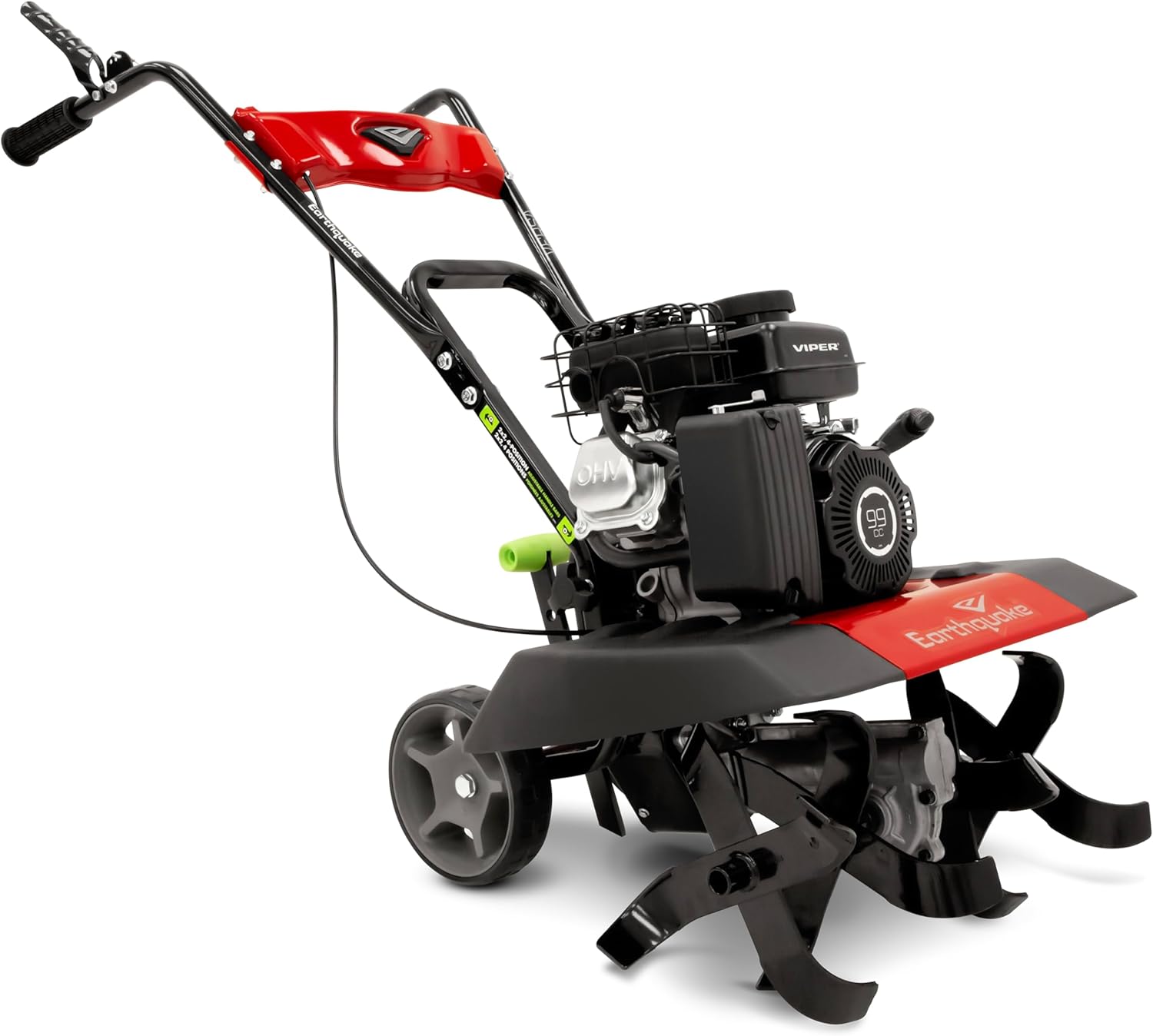
| Power Source | gas_powered |
|---|---|
| Operation Mode | Gas-powered |
| Included Components | tiller |
| Manufacturer Warranty Description | 5-Year Limited |
The Earthquake Versa is a straightforward, gas-powered front-tine machine that works as both a cultivator for tight rows and a wider tiller for preparing seedbeds. It uses a 99cc 4-cycle Viper engine to deliver steady power for turning compacted soil up to about 11 inches deep, and the outer tines and side shields remove without tools to reduce the working width from 21 inches to 11 inches. Built-in transport wheels and an adjustable handlebar make moving and operating the unit easier around a typical home garden. The low center of gravity noted by the manufacturer helps with stability while tilling. Practical benefits include faster prep of larger beds in tiller mode and the ability to work between plants in cultivator mode, plus routine maintenance familiar to anyone used to small gas engines. Downsides to consider are the machine weight and the need to maintain a gas engine, which makes it less appealing if you want a lighter or electric option for very small plots.
Best for: A cautious homeowner who wants a reliable gas-powered machine that can handle both bed preparation and in-row cultivating and who prefers familiar, serviceable engine equipment.
Less Ideal for: Urban gardeners with very small containers or people who prefer quieter, low-maintenance electric or battery-powered tools.
- Two-in-one design converts quickly between 11" cultivator and 21" tiller for versatile use
- 99cc 4-cycle Viper engine provides consistent power for breaking compacted soil
- Tool-less removal of outer tines and side shields simplifies mode changes
- Integrated transport wheels and adjustable handlebar improve maneuverability
- Heavy for a front-tine unit which can make maneuvering and storage harder
- Requires regular gas-engine maintenance and fuel handling
Verdict: Buy this if you want a dependable gas-powered 2-in-1 tiller that quickly switches between wide bed preparation and narrow-row cultivating for typical home gardens.
Choosing the Right Walk Behind Garden Tiller: Key Factors to Consider
Engine Power and Torque
Engine capability determines whether a tiller can break compacted ground and work through heavy clay or root-strewn beds. Higher torque helps maintain steady forward progress under load, preventing the unit from bogging down when you meet tougher patches.
Assess the typical soil on your property and size of beds. If you plan to dig deeply or prepare new beds, choose a machine with more torque rather than relying only on peak horsepower. For light annual cultivation or shallow mixing of compost, lower-powered models are often sufficient and easier to manage.
Tine Style and Working Depth
Tine shape, number, and spacing control how aggressively soil is cut and how much clod size remains after tilling. Curved tines tend to pull and mix material, while straight tines cut more cleanly. Tine length and adjustable depth lets you switch between shallow cultivation and deeper bed preparation.
Consider the planting depth you need for your crops and whether you will use the tiller for initial bed creation or for maintenance between rows. Deeper tines require more power and can create larger clods, so a balance between depth control and tine geometry matters for consistent seedbeds.
Maneuverability and Weight
How a tiller handles affects fatigue and the accuracy of your work, especially in tight beds, around established plants, and on slopes. Lighter units can be easier to lift and store, but they may be harder to keep steady in heavy soils. Adjustable handlebars, forward and reverse drive options, and wheel placement all influence control.
Test how the controls fit your height and strength. Features like self-propulsion, variable forward speeds, and quick-adjust handlebars reduce strain during long sessions and improve precision when navigating corners and existing plantings.
Durability and Maintenance Access
A tiller that is toughly built will last through stones, roots, and regular use. Look for robust gearcases, sealed bearings where possible, and tines that are replaceable without complex disassembly. Ease of accessing oil fill points, spark plugs, belts, and drive components affects how often you actually keep up with maintenance.
Regular maintenance keeps performance predictable and prevents breakdowns mid-season. Consider the availability of common replacement parts and whether routine tasks like changing oil or sharpening/rotating tines are straightforward for a typical gardener.
Starting System and Controls
A simple and reliable start-up reduces frustration and gets you working sooner. Pull-start systems should have easy-to-grip handles and short rope travel. Electric start options add convenience but require battery care. Controls should be intuitive, with clearly labeled throttle, choke, and gear selectors.
Smooth engagement of drive and tine engagement controls is important to avoid sudden lurches that can damage plants or create uneven results. Ergonomic placement of levers and safety interlocks also affects day-to-day usability.
When a Walk-Behind Tiller Is the Right Tool
Walk-behind tillers sit between hand tools and larger tractor implements in capability. They are best when you need more soil-turning power than a hoe or broadfork can provide but do not have the acreage or budget for large machinery. Use them for preparing new garden beds, incorporating compost, or deep cultivating compacted patches.
If you maintain multiple medium-sized beds, renovate a vegetable plot each season, or convert turf to garden, a walk-behind machine offers predictable results and saves many hours of manual labor compared with hand methods.
- Good for new bed creation and deep mixing of amendments
- Saves time in medium to large backyard gardens
- Offers repeatable depth and consistency versus hand tools
Preparing Your Garden Before Tilling
Clear the area of large stones, fallen branches, and dense roots that could damage tines or jam the drive. Mark permanent plantings and remove or fence off areas you want to protect. If your soil is extremely dry and hard, water the area lightly a day before tilling to reduce dust and ease penetration.
For lawns or turf conversion, mow very short and remove as much thatch and sod as possible. Work in manageable passes rather than trying to do the whole space in one go; this reduces machine stress and improves soil conditioning.
- Remove large debris and rocks
- Water very dry soils a day before if safe
- Mow and remove sod when converting turf
Maintenance Tips to Keep a Tiller Running
After each use, brush off soil and plant material to prevent corrosion. Check tines for bends, cracks, or excessive wear and replace as needed. Keep oil and air filters on the manufacturer schedule to protect the engine or motor from premature failure.
Store the tiller in a dry, covered area and follow winterization steps if you live in freezing climates, such as draining fuel or adding a stabilizer for gasoline engines. Periodically inspect belts, cables, and fasteners for tension and wear so small issues do not become shop repairs.
- Clean tines and housing after use
- Follow routine oil and air filter service
- Winterize fuel systems in cold climates
Safe Operating Practices
Wear eye protection, gloves, and sturdy footwear. Keep a firm two-handed grip and stand so your weight helps guide the machine without pulling it toward you. Never attempt to clear tines while the engine is running; stop the motor and disconnect spark or power before inspecting or clearing jams.
Work across slopes rather than up and down steep inclines, and avoid tilling on wet, sticky soils that can compact rather than loosen. Be mindful of underground utilities and irrigation lines when tilling close to established systems.
- Use protective gear and maintain stable stance
- Stop and disconnect power before clearing tines
- Avoid tilling when soils are excessively wet
Alternatives and Supplemental Tools
For very small container gardens, raised beds, or spot cultivation, hand tools or compact cultivators may be more appropriate and easier to store. For large acreage or commercial production, tractor-mounted tillage implements are more efficient.
Consider a garden fork, broadfork, or spade for no-dig or low-disturbance soil improvement methods. A rear-tined tiller can be a gentler option for established beds where you want to aerate without uprooting perennial roots.
- Hand tools for very small or delicate work
- Tractor implements for large acreage
- Rear-tine units for gentler cultivation
How We Chose the Best Walk Behind Garden Tiller
We focused on features that directly affect performance and usability in real gardens. Selection began with machines built for ordinary backyard and small market plots rather than light cultivators or large agricultural tractors. We prioritized reliable engine or motor power and torque for working heavy soils and for turning compost or amendments into existing beds. Tine arrangement and construction were included as a key filter because tine style controls how deeply and cleanly a tiller works and how much clumping it leaves behind. Ease of maneuvering and operator comfort were evaluated so machines can be used for longer sessions without excessive fatigue. Durability and serviceability were considered next, emphasizing robust gearcases, accessible maintenance points, and replaceable tines. Finally, we judged machines on transport and storage practicality for homeowners with limited space. We excluded specialty implements not intended for normal backyard beds, such as large agricultural rototillers and tiny hand-held cultivators, plus any units lacking documented maintenance access. The resulting shortlist reflects tools that balance power, tilling quality, handling, and long-term ownership considerations.
FAQ
How deep should I till with a walk-behind tiller?
Depth depends on purpose. For initial bed creation aim for 6 to 8 inches to break topsoil and mix amendments. For routine cultivation and weed control, 2 to 4 inches is usually sufficient.
Can I use a tiller in clay soil without causing compaction?
Tilling clay can help when done at the right moisture level. Work the soil when it is slightly damp rather than bone dry or waterlogged. Over-tilling or tilling when very wet can create compacted layers, so avoid repeated passes in the same season.
Is rear-tine better than front-tine for vegetable beds?
Rear-tine machines are typically more stable and better at deep, heavy work while front-tine units are lighter and more maneuverable. Rear-tine is often preferred for larger or tougher plots; front-tine can be fine for smaller gardens and easier handling.
How often do I need to replace tines?
Tine life depends on soil type and frequency of use. Inspect tines periodically for bending, cracks, or thinning. Replace them when performance drops noticeably or when wear affects depth and mixing consistency.
Can I till close to established plants?
You can, but be cautious. Use shallow passes and a steady hand to avoid uprooting roots. Consider protecting plants with temporary barriers and work slowly when navigating near existing plantings.
Final Verdict
Choose a walk-behind tiller by matching engine torque and tine capability to the soil types and tasks you do most often. Prioritize maneuverability and control if you work tight beds or around existing plantings, and favor durability and easy service access if you expect heavy seasonal use. Balance depth potential against operator comfort to avoid overreaching for power you do not need. With those tradeoffs in mind, pick the machine that fits your garden size, soil, and how much physical effort you want to expend.
