

Note: This article contains affiliate links. If you click on these links and make a purchase, I may earn a small commission at no extra cost to you. This helps support my research and content. Read my full affiliate disclosure here.
A properly chosen ground cover makes a steep slope safer and easier to maintain. On hillsides you need plants that hold soil, spread steadily without overtaking nearby beds, and tolerate the sun and moisture conditions on your slope. This guide covers five shortlisted ground cover options selected specifically for hillside use, focusing on erosion control, maintenance demands, and landscape appearance. Below you will find practical notes on where each option performs best and the criteria we used to judge them, so you can pick a hillside solution that fits your garden conditions.
Top Picks at a Glance
| Best Overall The best all-around choice for most situations | AK TRADING CO. Soil Saver Jute Erosion Control Blanket, 48 inch x 20 yd |  |
| Best Quality Built to a higher standard if you want something more solid | Sandbaggy Coir Erosion Control Mat — 4 ft × 80 ft Roll |  |
| Best Budget The cheapest option that still gets the job done reliably | BuggyBeds Creeping Thyme Seeds (20,000 Count) |  |
| Highest Rated A top-rated pick with lots of positive feedback | Sandbaggy Coconut Coir Erosion Control Blanket, 3.75 ft x 120 ft (450 sq ft) |  |
| Most Popular A crowd favorite that many people choose with confidence | Outsidepride White Dutch Clover Seed, 10 lb |  |
AK TRADING CO. Soil Saver Jute Erosion Control Blanket, 48 inch x 20 yd

| Material Type | Alloy Steel, Jute |
|---|---|
| Unit Count | 1 Count |
| Number of Packs | 1 |
| Item Type Name | Jute Erosion Control, Soil Saver Mesh Blanket |
This jute erosion-control blanket is a straightforward, natural option for stabilizing soil on slopes, embankments, seedbed areas, and newly planted landscapes. Sold as a 48-inch-wide roll with 20 yards of length, the matting is made of woven jute that lays flat, holds seed and mulch in place, and degrades back into the soil over time. Installation is simple: unroll, cut to fit, secure with stakes, and overlap edges as needed; the blanket’s pliability makes handling and trimming easy for one or two people. The biodegradable construction is the main benefit for environmentally minded projects because it eliminates the need for later removal and adds organic matter as it breaks down. Expect useful performance for short to medium-term erosion control — the product is described to last several months before degrading, which is appropriate for establishing vegetation but not for permanent reinforcement. If you need long-term synthetic stabilization or heavy-duty reinforcement under high-flow water, a stronger nonbiodegradable option would perform better.
Best for: Gardeners and landscape DIYers who want an eco-friendly, temporary solution to control erosion while establishing vegetation on slopes, embankments, or seedbeds.
Less Ideal for: Those needing permanent soil reinforcement or protection in channels and high-velocity runoff areas should choose stronger synthetic mats or engineered erosion-control systems.
- Made from natural biodegradable jute that integrates into the soil
- 48-inch width and 20-yard length provide broad coverage for beds or slopes
- Flexible and easy to cut and lay, simplifying installation and trimming
- Helps retain seed and mulch while promoting vegetation establishment
- Designed for temporary stabilization and will biodegrade in months rather than provide permanent reinforcement
- Not intended for high-flow erosion areas where heavier synthetic or engineered solutions are required
Verdict: Choose this biodegradable jute blanket when you want an easy-to-install, environmentally friendly mat to protect soil and help vegetation establish during the first season.
Sandbaggy Coir Erosion Control Mat — 4 ft × 80 ft Roll

| Material Type | Coir, Jute |
|---|---|
| Size | 4 ft by 80 ft Roll Size or 320 sq ft |
| Item Thickness | 0.5 inches |
| Other Special Features of the Product | Biodegradable |
| Water Resistance Level | Waterproof |
The Sandbaggy Coir Mat is a heavy-duty natural-fiber erosion control blanket intended for stabilizing slopes, riverbanks, and shorelines while seeds germinate and roots establish. Installed by laying the roll over graded soil and securing it with staples or pins, the dense coconut coir fibers and jute backing hold soil in place, reduce runoff, and allow water and air to pass so vegetation can grow through. Notable features include biodegradable construction, waterproof performance, and a half-inch thickness that balances durability with seed contact. In practice this mat gives longer-lasting protection than straw blankets and can remain effective for multiple seasons before breaking down, which reduces reinstallation frequency on performance-focused projects. Limitations are its natural material lifespan and the need for mechanical anchoring on steep or high-flow sites; for permanent hard armor or immediate heavy flow resistance, engineered solutions are still required. For restoration or conservation work where long-term but temporary soil stabilization and vegetation support are priorities, this coir mat performs well.
Best for: Buyers who prioritize long-term, natural erosion control for restoration, shoreline, or hillside projects and want a solution that supports plant establishment rather than immediate hard-armoring.
Less Ideal for: Not a good fit for sites that need permanent, nondegrading armor or for locations with extremely high-velocity flows where engineered rock or concrete solutions are required.
- Biodegradable coir and jute construction that supports vegetation and later decomposes
- Durable enough to last multiple seasons, outperforming straw blankets for longer-term projects
- Permeable, allowing water infiltration and seed-to-soil contact for effective germination
- Natural-fiber lifespan means it will eventually decompose and need replacement for permanent stabilization
- Requires proper anchoring (staples or pins) and correct installation on steep slopes for best performance
Verdict: Choose this coir mat when you need a durable, natural erosion-control layer that stabilizes soil and promotes vegetation establishment over multiple seasons.
BuggyBeds Creeping Thyme Seeds (20,000 Count)

| Indoor Outdoor Usage | Outdoor |
|---|---|
| Expected Blooming Period | Late Spring To Early Fall |
| Sunlight Exposure | Partial Shade |
| USDA Hardiness Zone | 4-9 |
| Unit Count | 20000 Count |
This 20,000-count pack of creeping thyme seeds supplies enough seed to cover large areas, paths, or rock gardens and is aimed at gardeners who want a fragrant, low-growing ground cover. Creeping thyme is a perennial that performs best in full sun to partial shade, tolerates low to moderate moisture, and prefers well-draining sandy or loamy soil. The packet’s high seed count makes it economical for converting small lawn sections, filling between stepping stones, or establishing borders that suppress weeds. Practical benefits include drought tolerance once plants are established, late-spring to fall blooms that add color, and heirloom non-GMO seed stock. Expect to water regularly until seedlings establish and to wait a season for dense coverage; germination and establishment depend on site preparation and sun exposure. The packet does not include planting rates or guaranteed germination percentage, so results can vary and you may need to overseed thin spots. For budget projects where you want large coverage from a single purchase, this seed lot is a straightforward choice.
Best for: Gardeners on a tight budget who need to cover a lot of ground or convert small lawn areas into a low-maintenance, fragrant ground cover.
Less Ideal for: Gardeners seeking a guaranteed fast lawn replacement or precise germination information should consider nursery plugs or seed mixes with documented germination rates instead.
- Very large 20,000 seed count provides broad coverage from one packet
- Heirloom non-GMO seed suitable for perennial ground cover and lawn-alternative plantings
- Low-maintenance and drought-tolerant once established
- Suitable for full sun to partial shade and a range of well-draining soils
- No listed germination rate or specific seeding rate provided on the packet
- Establishment takes time and may require overseeding in thin areas
Verdict: If you want an inexpensive way to establish a perennial, drought-tolerant ground cover over a large area, this high-count creeping thyme seed packet delivers the most coverage per dollar.
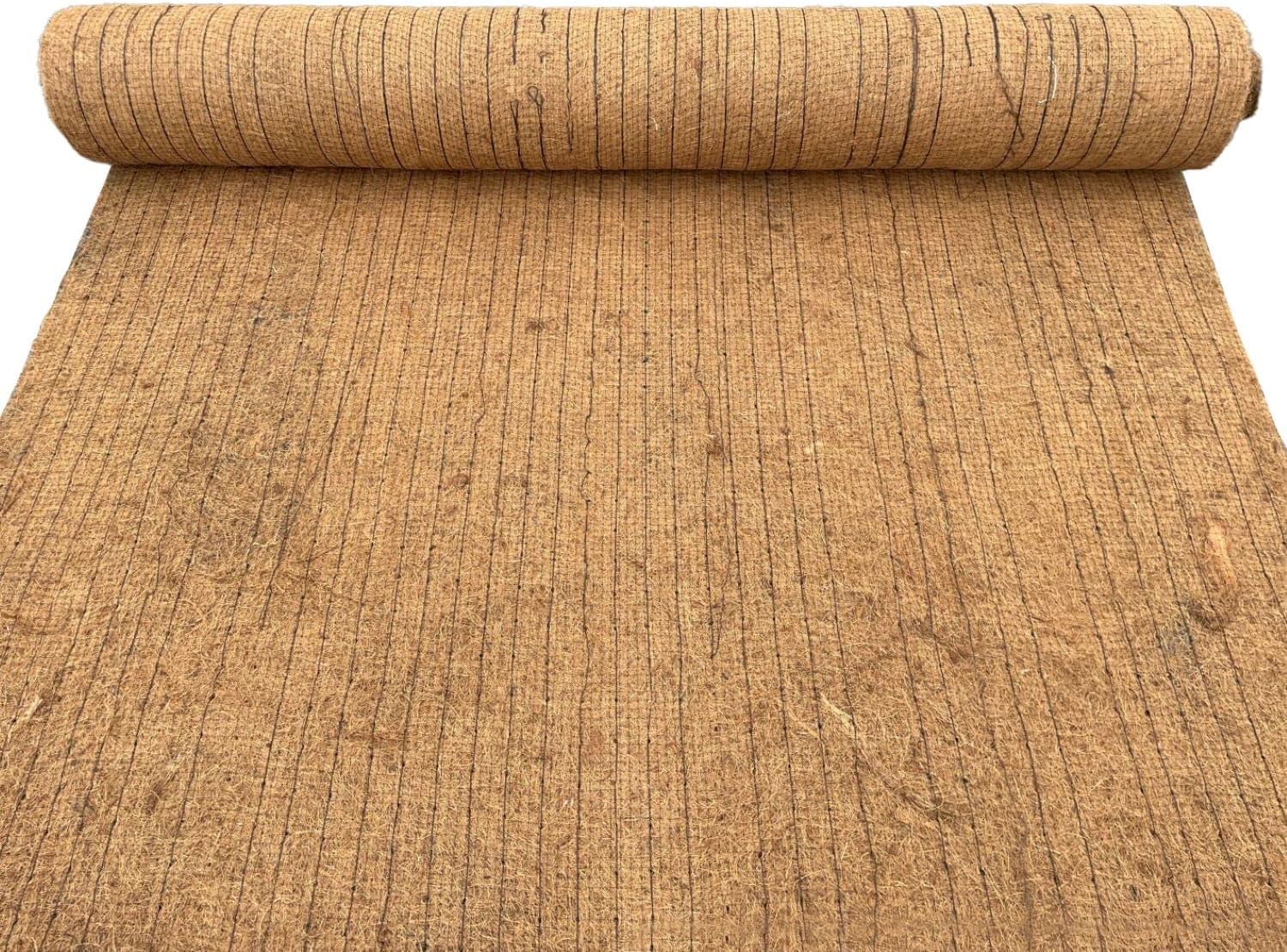
Sandbaggy Coconut Coir Erosion Control Blanket, 3.75 ft x 120 ft (450 sq ft)
| Unit Count | 1 Count |
|---|---|
| Item Type Name | Coconut Erosion Control Blanket |
| Material Type | Polypropylene Netting |
This Sandbaggy coir erosion control blanket is a contractor-grade mat made from coconut fiber and polypropylene netting to stabilize steep slopes and support seed growth. It is typically unrolled and pinned across banks, ditches, or construction embankments to reduce runoff, anchor soil, and hold moisture so seeds can germinate. The 3.75 by 120 foot roll covers large runs of hillside without seams, and the biodegradable coir gradually breaks down while feeding the soil, which is helpful for long-term restoration projects. The polypropylene netting provides handling strength during installation but does not prevent the underlying coir from naturally decomposing. Practical benefits include easier installation on uneven terrain without heavy equipment, proven suitability for 1:1 slope jobs, and improved seed establishment from moisture retention. Important limitations are that the blanket will biodegrade over a few seasons so it is not a permanent hard barrier and the roll size can be bulky to handle for one person on steep ground.
Best for: Buyers who need a reliable, eco-friendly solution for stabilizing steep slopes and establishing vegetation, including contractors and homeowners focused on lasting seed establishment rather than a permanent hard structure.
Less Ideal for: People seeking a permanent, nondegrading erosion barrier or a lightweight product for small decorative beds should consider different synthetic or structural options.
- Made from 100% coconut fiber to retain moisture and support natural seed germination
- Sized to cover 450 sq ft (3.75 ft x 120 ft) so fewer seams on long slopes
- Designed for 1:1 slope stabilization and trusted for hillside and DOT projects
- Biodegradable material improves soil health as it decomposes
- Biodegrades over time so it is not a permanent erosion barrier
- Large roll can be awkward to handle alone on steep or uneven terrain
Verdict: Choose this coir erosion blanket when you need a contractor-grade, biodegradable mat that stabilizes steep 1:1 slopes and promotes reliable seed establishment.
Outsidepride White Dutch Clover Seed, 10 lb

| Plant or Animal Product Type | white dutch |
|---|---|
| Indoor Outdoor Usage | Outdoor |
| Other Special Features of the Product | Drought Tolerant |
| Expected Blooming Period | Summer |
| Material Features | Heirloom |
Outsidepride White Dutch Clover seed is a bulk perennial clover intended for establishing dense ground cover, improving soil nitrogen, and attracting pollinators. Treated with a nitrocoat and inoculant, the seed is designed to germinate reliably and help fix nitrogen into the soil, so it is typically broadcast over prepared soil, lightly raked in, and kept moist until established. Practical uses include overseeding lawns, creating low-maintenance clover lawns, erosion control on slopes, and adding to pasture or cover-crop mixes. Notable features are drought tolerance, adaptability to full sun or partial shade, and quick germination when soil temperatures are appropriate. In everyday use it reduces the need for fertilizers by improving soil fertility and crowds out many weeds once established. Important limitations are that it will produce white blooms that some homeowners may not prefer in a formal turf and it grows only a few inches high so it may not replace tall vegetation; establishing a uniform stand can require correct seeding rates and proper moisture during the first few weeks. For those wanting a resilient, low-input green cover, this is a practical option.
Best for: Buyers who want a low-input, soil-improving ground cover or lawn alternative that attracts pollinators and reduces fertilizer needs, and who prefer practical, ecological landscaping solutions backed by large-scale use.
Less Ideal for: People seeking a traditional manicured, high-traffic turf or a tall ornamental planting should consider conventional grass varieties or different groundcovers instead.
- Nitrocoated and inoculated seed for improved germination and soil nitrogen fixation
- Drought tolerant and adaptable across USDA zones 3 to 10 and in partial shade
- Useful for multiple applications: lawn alternative, erosion control, pasture and cover crops
- Attractive white flowers that draw pollinators and support garden biodiversity
- Produces visible white blooms and a low-growing texture that may not suit formal turf preferences
- Requires correct seeding rate and consistent moisture during establishment to form a uniform stand
Verdict: Choose this treated bulk White Dutch clover seed when you want a resilient, low-maintenance ground cover that improves soil fertility and attracts pollinators.
Choosing the Right Ground Cover for Hillside: Key Factors to Consider
Rooting Habit and Soil Reinforcement
How a plant puts roots into the slope is the primary factor in preventing erosion. Deep, fibrous root systems bind loose soil and resist undercutting from runoff, while shallow or sparse roots offer less protection. On rocky or thin soils you need species with flexible rooting patterns that can exploit fissures and spread laterally to form a dense mat.
When planning a hillside planting, consider how quickly roots develop after transplanting and whether the plant forms a continuous root network. Fast surface spread helps cover bare ground early, but deeper anchoring contributes to long-term slope stability, especially after heavy rains.
Spread Rate and Containment
A useful hillside ground cover must spread enough to close gaps but not so aggressively that it overruns adjacent beds, pathways, or natural areas. Some ground covers expand by running stems or stolons and can be checked with simple barriers or routine trimming. Others spread by self-seeding and may be harder to contain.
Assess how easy it will be to limit a plant's spread with edging, periodic pruning, or selective removal. Slow but steady spread often suits planted terraces or designed landscapes, while faster spread helps bare, erosion-prone slopes get covered quickly.
Sun Exposure and Microclimates
Hillsides can present a variety of exposures and microclimates, from hot, reflective south-facing slopes to cool, shaded north-facing banks. Choose plants rated for your slope's predominant exposure. Some ground covers tolerate full sun and dry soils, while others need afternoon shade and consistent moisture.
Also think about wind exposure and heat reflected from hardscapes, which can increase plant stress. Matching light and microclimate needs reduces mortality and long-term maintenance.
Soil Type and Drainage
Slope soils range from deep loam to shallow, rocky substrates. Soil texture affects water retention and root penetration, while drainage determines whether plants will face drought stress or waterlogging. Select species adapted to your soil conditions rather than relying solely on amendments, which can wash away on steep slopes.
In poorly draining pockets, choose plants tolerant of temporary saturation. On fast-draining, sandy slopes, favor drought-tolerant, water-conserving ground covers that still form a protective canopy.
Maintenance Requirements
Maintenance on a slope is more difficult than on flat ground, so choose ground covers that match the time and effort you can commit. Low-maintenance options require minimal trimming, division, or deadheading. Others may need seasonal clean-up to prevent mulch and debris from filling in and encouraging erosion.
Also consider access for weeding and replacement plantings. If the slope is steep, favor plants that establish reliably with little intervention and avoid species that demand frequent hands-on care.
Visual Impact and Seasonal Interest
Hillside plantings are often a prominent landscape feature, so aesthetic considerations matter. Look for ground covers that provide consistent texture and color through the season, and consider options that add flowers or fall color for seasonal interest. Dense, uniform foliage can mask bare patches and make slopes appear tidy.
Balance visual goals with functional needs; sometimes combining two compatible ground covers provides year-round coverage and seasonal variation without sacrificing erosion control.
Preparing a Hillside Planting Site
Before planting, stabilize loose soil and reduce concentrated flow paths that cause gullies. Light grading to remove perched debris and to create shallow berms or terraces can slow runoff and give plants a better chance to establish. Avoid heavy excavation which can destabilize the slope unless a professional approves it.
Add organic matter sparingly and focus on improving infiltration rather than creating deep beds that will wash out. On very steep areas, consider installing simple erosion-control measures such as jute netting, biodegradable erosion blanket, or temporary wattles to protect young roots during the first season.
- Plant in late spring or early fall when moisture supports root growth.
- Space starts according to their mature spread so the cover fills without excessive early weeding.
- Use biodegradable erosion fabric on newly planted areas to conserve soil while roots establish.
Planting Techniques for Better Establishment
Set plants at the same soil level they grew at in the nursery to avoid crown rot or stress. On slopes, plant slightly closer together than on flat beds if the species is slow to spread. Mulch lightly with coarse material to conserve moisture but avoid thick layers that will slip downhill.
Water deeply at planting to encourage roots to grow downward and outward. For very steep slopes, water can be applied in short, shallow pulses to reduce runoff and ensure soil absorption.
- Create small level pockets or scoops for each plant to hold water transiently.
- Secure mulch with pins or biodegradable nets on steep grades to prevent washout.
Combining Ground Covers with Structural Measures
Ground covers work best when used with modest structural supports on challenging slopes. Low terraces, stone risers, or retaining walls break long slopes into manageable runs and reduce the energy of flowing water. Combine living cover with these measures where erosion risk is highest.
Planting shrubs or native grasses at intervals adds root depth and vertical structure that complements mat-forming ground covers. This mix improves biodiversity and gives the slope a more natural appearance.
- Install edging or root barrier where covers meet walkways to prevent spillover.
- Use plant combinations with complementary root depths for layered stabilization.
Seasonal Care and Long-Term Management
Expect a higher maintenance burden the first one to two seasons while plants establish. After roots are established, most well-chosen ground covers require only light upkeep. Remove weeds early to prevent competition and monitor for bare spots that need infill planting.
Address problems like erosion or patchy mortality quickly to avoid larger failures. Periodic light pruning and replacing isolated losses keeps the cover dense and effective without heavy labor.
- Inspect slopes after heavy storms and repair any rills immediately.
- Plan for periodic reinforcement plantings in high-traffic or high-erosion zones.
Integrating Pollinator and Habitat Value
Where appropriate, choose ground covers that provide nectar or shelter to pollinators and beneficial insects. Ground-level flowers and dense foliage can support small invertebrates and add ecological value to your hillside.
Rotate small patches of flowering ground cover in alternating sections to maintain both erosion control and habitat benefits without sacrificing overall coverage.
- Include a mix of flowering and evergreen ground covers for season-long resources.
- Avoid mass planting of sterile varieties if habitat value is a priority.
How We Chose the Best Ground Cover for Hillside
We focused on traits that matter on slopes where runoff and root reinforcement determine long-term success. Selection emphasized soil stabilization ability, spread behavior and containment, drought or moisture tolerance relative to slope exposure, and maintenance needs such as pruning, reseeding, or deadheading. We also considered aesthetic flexibility for mixed plantings and the ability to establish from common nursery starts or plugs. Each candidate had to demonstrate reliable ground coverage without aggressive invasiveness that would threaten adjacent beds or native habitat. Plants that require heavy soil amendments or intensive irrigation to survive on a hillside were excluded. We prioritized species and cultivars with documented performance across a range of slope soils, including shallow or rocky substrates, and those suited to the specified use-case of hillside planting. Excluded items included high-maintenance perennials that need constant division, species known to become invasive in most regions, and plants that only succeed under greenhouse conditions. Our final shortlist reflects a balance of stabilization effectiveness, controllable spread, establishment speed, and seasonal visual interest.
FAQ
How long does it take ground cover to protect a hillside from erosion?
It often takes one to three growing seasons for ground cover to form a dense mat that meaningfully reduces erosion. Establishment speed depends on species, planting density, soil conditions, and follow-up watering during the first season.
Can I use mulch instead of ground cover on a slope?
Mulch helps reduce surface erosion temporarily but does not replace living roots for long-term stabilization. Mulch can be used to protect young plants while they establish, but permanent erosion control relies on vegetation with durable root systems.
What is the best time to plant ground cover on a hillside?
Late spring or early fall are usually best because cooler temperatures and seasonal moisture encourage root growth without extreme heat stress. However, timing should match local climate patterns and the specific plant's recommended planting window.
How do I prevent ground cover from spreading into other beds?
Control spread with regular edge maintenance, physical edging, and selective pruning. Choosing species with moderate spread rates or using root barriers where covers border sensitive areas also helps keep planting contained.
Will irrigation be necessary on a steep slope?
Irrigation is often necessary during the establishment phase, especially on dry, sunny slopes. Use slow, deep watering and consider drip lines or soaker hoses to minimize runoff. Once established, many hillside-adapted ground covers need little supplemental irrigation.
Final Verdict
When choosing ground cover for a hillside, prioritize plants that combine effective root reinforcement with a controllable spread habit and appropriate tolerance for your slope's sun and soil conditions. Balance quick establishment for immediate erosion protection with long-term maintenance needs and aesthetic goals. Selecting species that match your microclimate and providing proper initial planting and watering will give you a stable, low-maintenance hillside planting over time.
