

Note: This article contains affiliate links. If you click on these links and make a purchase, I may earn a small commission at no extra cost to you. This helps support my research and content. Read my full affiliate disclosure here.
If you want reliably pink hydrangea flowers, the fertilizer you choose matters as much as soil and light. Pink hydrangeas respond to nutrient balance and soil acidity, so using a fertilizer tailored to those needs can make blooms larger, last longer, and keep color consistent through the season. This guide covers the top fertilizer options chosen for pink hydrangeas and focuses on practical outcomes for garden beds, containers, and borders. You will find shortlisted products that perform well across common garden situations, plus the evaluation criteria we used so you can match a fertilizer to your soil, watering routine, and bloom goals. Read on to understand how nutrient ratios and pH control affect pink tones and bloom health before the product list.
Top Picks at a Glance
| Best Budget The cheapest option that still gets the job done reliably | Perfect Plants Garden Lime, 2 qt |  |
| Highest Rated A top-rated pick with lots of positive feedback | Espoma Organic Garden Lime (Dolomitic) 5 lb. Bag, 2-Pack |  |
| Most Popular A crowd favorite that many people choose with confidence | True Organic Garden Lime, Granular Soil Lime, 6 lb |  |
| Best Seller A high-volume bestseller chosen again and again | Espoma Organic Garden Lime, 5 lb |  |
Perfect Plants Garden Lime, 2 qt

| Unit Count | 74.47 Ounce |
|---|---|
| Item Type Name | Garden Lime |
| Manufacturer | Perfect Plants |
| Volume | 2 quarts |
Perfect Plants Garden Lime is a ground limestone powder made to raise and stabilize soil pH for both containers and in-ground beds. Applied to acidic soils it increases alkalinity, which can shift hydrangea blooms toward pink and make nutrients more available to vegetables and herbs. Typical use is to broadcast or mix the powder into potting mix or around the root zone, then water in and retest pH after a few weeks; the product is sold in a resealable 2 quart bag for repeat spot treatments. The formulation is straightforward and natural—calcium carbonate—so it doubles as a simple soil sweetener without adding synthetic fertilizer. Important limitations are that lime works slowly and you need a soil test to avoid over-application, and it is not a quick nutrient fix if plants are already nutrient deficient. Also safety precautions are needed to avoid inhaling the dust during application.
Best for: Gardeners who want an inexpensive, low‑maintenance way to nudge acidic soil toward neutral or alkaline for pink hydrangeas and vegetable beds, preferring simple, natural amendments over fast-acting chemical fixes.
Less Ideal for: Growers who need immediate nutrient corrections, fast-acting fertilizers, or precise controlled-release feeding should choose a different product; large-scale soil reclamation projects may prefer bulk lime options.
- Raises and stabilizes soil pH to favor pink hydrangea blooms and alkaline-loving edibles
- Natural calcium carbonate formula that acts as a soil sweetener without synthetic additives
- Resealable 2 quart bag convenient for small gardens and repeat treatments
- Suitable for both container and in-ground use when adjusting acidity
- Changes in soil pH occur slowly so multiple applications or time are required to see color change
- Requires a soil pH test and careful dosing to avoid over-liming
Verdict: Use this small, resealable bag of garden lime to economically raise soil pH and encourage pink hydrangea blooms in containers and small beds.
Espoma Organic Garden Lime (Dolomitic) 5 lb. Bag, 2-Pack
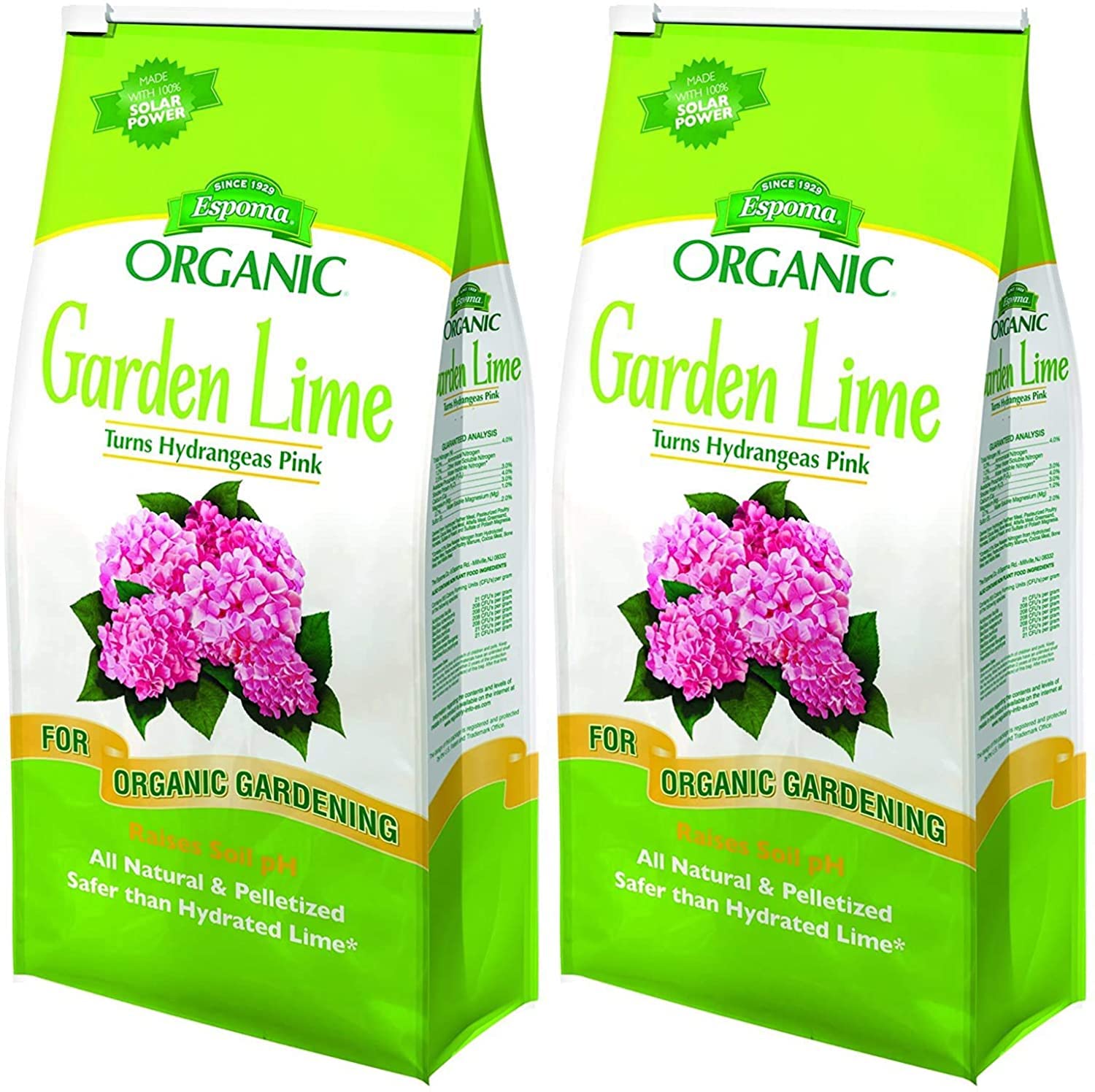
| Product type | Dolomitic garden lime |
|---|---|
| Form | Pelletized |
| Organic | Approved for organic gardening |
| Package | 5 lb. bag, 2-pack |
Espoma Organic Garden Lime is a pelletized dolomitic lime intended to correct acidic soil and supply calcium and magnesium for healthier plants. Gardeners typically broadcast it around flower beds, vegetable rows, lawns or under shrubs, then work it into the topsoil or apply several weeks before planting so pH adjustments take effect. The product is approved for organic gardening and comes in manageable 5 lb. bags sold as a two-pack, which is convenient for repeat seasonal applications. For hydrangeas in particular, raising soil pH with this lime can shift mophead and lacecap blooms from blue toward pink while also helping prevent blossom end rot in fruiting crops by improving calcium availability. Because pH changes happen gradually, expect several weeks to months before bloom color shifts are evident and reapplication may be necessary for persistent acidity. The pellet form reduces dust and makes spreading easier than powdered lime but you still need to follow label rates and test soil pH to avoid overapplication.
Best for: Gardeners who prioritize dependable, organic-approved amendments and want a straightforward way to raise soil pH and add calcium for long-term plant health and bloom color management.
Less Ideal for: People needing an immediate, fast-acting pH change or who require a single large-volume purchase for extensive turf or commercial acreage should consider alternatives.
- Pelletized dolomitic lime is easier to handle and produces less dust than powdered lime.
- Approved for organic gardening so it can be used in certified organic systems.
- Adds calcium and magnesium which can reduce blossom end rot and improve overall plant vigor.
- Suitable for a range of uses including flowers, vegetables, lawns and shrubs.
- Comes in 5 lb. bags sold as a multi-pack for convenient repeat applications.
- pH adjustment is gradual so results like hydrangea color change can take weeks to months.
- Small bag size may require multiple bags for larger beds or repeated seasonal treatments.
Verdict: Use this pelletized, organic-approved dolomitic lime when you want a reliable, easy-to-apply way to raise soil pH and add calcium to shift hydrangeas toward pink and improve plant health.
True Organic Garden Lime, Granular Soil Lime, 6 lb

| Item Form | Granules |
|---|---|
| Specific Uses For Product | Agriculture, Gardening |
| Coverage | Full |
| Target Species | Plants |
| Included Components | 100% Made in the USA with Organic Inputs |
This granular garden lime is formulated to raise acidic soil pH, which helps plants that dislike low pH and can shift hydrangea bloom color toward pink. You spread it around in-ground beds or work it into potting mixes to neutralize acidity and improve nutrient availability and soil biology over time. The formula is simple limestone with organic inputs, packaged for home gardeners in a manageable 6 pound bag. Practical benefits include safer handling compared with harsh chemical alternatives and broad applicability across vegetables, shrubs and flowering plants. Expect results to appear gradually rather than instantly since lime changes soil chemistry slowly and may need repeated seasonal applications as directed. It does not supply NPK nutrients, so plan to pair it with a balanced fertilizer when plants also need feed. For gardeners who want an organic, low-toxicity way to raise pH and influence hydrangea color, this product is straightforward and effective when used as part of a regular soil care routine.
Best for: Gardeners who want an organic, low-toxicity method to raise soil pH and influence hydrangea bloom color and who value products with positive user feedback.
Less Ideal for: Growers who need an immediate nutrient boost or quick pH correction for a single season should consider fast-acting amendments or paired fertilizers instead.
- Raises soil pH to reduce acidity and improve nutrient availability
- Made from limestone with organic inputs and safe for people and pets when used properly
- Granular form is easy to apply to beds and containers
- Suitable for a wide range of plants including hydrangeas, vegetables and shrubs
- Works slowly and requires repeated seasonal applications for lasting pH change
- Does not provide primary nutrients like nitrogen phosphorus or potassium
Verdict: Choose this organic garden lime if you want a simple, pet-friendly way to raise soil pH and steer hydrangeas toward pink while improving overall soil health.
Espoma Organic Garden Lime, 5 lb

| Item Form | Granules |
|---|---|
| Specific Uses For Product | Organic |
| Coverage | Medium |
| Target Species | plants |
Espoma Organic Garden Lime is a pelletized dolomitic lime intended to raise soil pH for gardens, lawns, trees and shrubs and to help turn hydrangea blooms pink. It is applied by broadcasting over beds or spreading around individual plants to just beyond the drip line and then watering in; the pellet form makes it easy to handle and distribute evenly. The product supplies calcium and magnesium to reduce issues like blossom end rot and to improve how other fertilizers perform in acidic soils. Because it is labeled for organic gardening, it fits well into an organic program. Expect results over weeks to months rather than immediately because lime changes soil chemistry slowly and must be worked into the root zone for lasting effect. The 5 pound bag covers a modest area so multiple applications or larger bags are likely needed for big beds. Also keep in mind that over-application can overshoot pH targets, so testing soil before and after application is recommended.
Best for: Gardeners who prefer conservative, organic amendments and want a simple way to raise soil pH to shift hydrangea color or improve fertilizer performance.
Less Ideal for: People who need rapid pH correction or who manage large beds and need bulk quantities should look for faster-acting or larger-volume products.
- Pelletized dolomitic lime is easy to spread evenly by hand
- Adds calcium and magnesium to help prevent blossom end rot
- Approved for organic gardening and formulated for general garden use
- Clear application directions for broadcasting or local placement around plants
- Works slowly so pH changes may take weeks to appear
- Small 5 lb bag limits coverage for larger gardens
Verdict: Use this pelletized organic dolomitic lime when you want a safe, slow-acting way to raise soil pH and nudge hydrangeas toward pink while adding calcium and magnesium.
Choosing the Right Fertilizer for Pink Hydrangeas: Key Factors to Consider
Nutrient Ratio and Bloom Needs
Pink hydrangeas need a fertilizer that favors flowering without encouraging excessive leafy growth. Look for a balanced feed with moderate nitrogen, elevated phosphorus to support bud formation, and sufficient potassium for overall plant vigor. The N-P-K numbers indicate the relative emphasis; fertilizers marketed for flowering shrubs typically have a lower first number and a higher middle number to promote blooms.
Too much nitrogen early in the season drives lush foliage at the expense of flowers and can dilute color intensity. Applying a bloom-oriented formula at the right times helps shift plant resources into bud development and sustained flowering throughout the season.
Soil pH Influence on Pink Color
Hydrangea flower color is influenced by soil aluminum availability, which is controlled by soil pH. For pink tones you generally want a less acidic, neutral to slightly alkaline soil where aluminum is less available to the plant. Some fertilizers and soil amendments help maintain that higher pH or are compatible with lime applications.
When choosing a fertilizer, consider whether it contains acidifying components such as ammonium sulfate or sulfur, which can lower pH over time. If your goal is pink flowers, choose feeds that do not increase acidity and pair them with pH-raising measures when needed.
Release Profile and Timing
Fertilizers come in quick-release water-soluble forms and slow-release granular or coated products. Fast-release feeds give an immediate nutrient boost and are useful when plants look nutrient deficient or when you need to push a flush of blooms. Slow-release options provide steady nutrition over weeks or months and reduce the chance of nutrient swings that can stress blooms.
Think about how often you want to feed and how much maintenance you are willing to do. In containers, nutrients wash out faster, so a blend of slow-release granules plus occasional soluble feedings can be effective. In beds, a single early-season application of a slow-release formula may be sufficient.
Application Method and Ease
Application convenience matters for home gardeners. Granular fertilizers can be broadcast and worked into the root zone, while water-soluble formulas are applied with a watering can or hose-end applicator. Foliar feeds offer rapid uptake but are usually supplemental rather than a primary feeding method.
Choose a product with clear instructions and an application schedule that fits your routine. If you prefer low-maintenance care, prioritize slow-release granules. If you like targeted, seasonal feeding for peak bloom displays, a soluble feed applied during bud set may suit you better.
Compatibility with Containers and Soil Types
Container-grown hydrangeas have a smaller root volume and different nutrient dynamics than plants in garden beds. Potting mixes drain and leach nutrients quickly, so container plants often need more frequent, milder feedings. In-ground plants benefit from contact with existing soil chemistry and organic matter that buffers nutrient changes.
Select formulas labeled safe for container use if you grow hydrangeas in pots. Also consider your native soil type: heavy clay holds more nutrients and may require less frequent feeding, while sandy soils need more regular applications to maintain available nutrients.
Trace Elements and Magnesium
Beyond N-P-K, micronutrients such as iron, magnesium, and manganese affect leaf health and can indirectly influence flowering quality. Magnesium, for example, is part of chlorophyll and supports photosynthesis, which fuels bud formation. However, some micronutrient formulations alter soil chemistry and could shift color balance if they influence aluminum availability.
When choosing a fertilizer, look for clearly listed trace elements and avoid mixes that add significant acidity if your aim is to keep flowers pink. If micronutrient deficiencies appear, treat them specifically rather than switching to a feed that alters pH unexpectedly.
How Soil Testing Guides Your Choice
A simple soil test is the best first step before you change feeding routines. Test kits or lab results that include pH and basic nutrient levels tell you whether the soil already favors pink tones or if you need to raise pH with lime alongside fertilizer.
Knowing baseline phosphorus and potassium levels helps you pick a fertilizer that supplies what is missing rather than overlapping with abundant soil minerals. A test also identifies micronutrient shortages that might require targeted correction.
- Test pH in spring before applying long-term amendments
- Measure phosphorus if blooms are sparse despite regular feeding
- Re-test periodically to track how fertilizers or lime affect soil over time
Adjusting pH Without Harming Plants
If your soil is too acidic for pink blooms, you can raise pH gradually using garden lime. Apply lime according to soil test recommendations and allow several months for the change to take effect. Avoid abrupt pH swings that can stress roots or alter nutrient availability.
When you apply lime, choose a fertilizer that does not counteract the pH goal. Products that are neutral in pH impact and that supply bloom-promoting nutrients fit best while you wait for lime to change soils.
- Apply lime in fall or early spring for gradual effect
- Combine pH adjustments with mulching to stabilize root temperatures and moisture
Feeding Schedules for Peak Bloom
Timing feeds to natural growth stages gives the best flowering results. Start with a light application in early spring as new growth begins, increase phosphorus-focused feeding at bud set, and taper off after peak bloom to avoid late-season vegetative growth that reduces winter hardiness.
For repeat-blooming varieties or long-season displays, a midseason supplemental feed can extend flowering. Match the feeding cadence to the fertilizer release profile you choose to avoid overfeeding.
- Early spring: base nourishment and slow-release application
- Pre-bud set: higher phosphorus feed to support flower development
- Post-peak: minimal feeding to let plants harden off
Container Care Vs In-Ground Care
Containers require more attentive feeding because nutrients wash out with each watering. Use blends formulated for container shrubs or apply slow-release granules and supplement with dilute water-soluble feed every few weeks during the season.
In-ground hydrangeas are buffered by surrounding soil and organic matter. A single early-season granular application often covers their needs, with a targeted soluble feed only if signs of deficiency appear.
- Use slightly lower concentrations for container feeds to avoid root burn
- Top-dress beds with compost to build long-term nutrient reserves
Organic Options and Soil Health
Organic fertilizers such as composted manures, bone meal, and kelp provide nutrients more slowly but improve soil structure and microbial life over time. For gardeners focused on long-term soil health, organic feeds can be combined with pH management to support pink hydrangeas without synthetic inputs.
Remember that organic materials release nutrients less predictably, so plan seasonal top-ups and monitor plant response. Pair organic feeds with regular soil testing to ensure phosphorus and potassium remain sufficient for robust blooms.
- Use compost to increase cation exchange and buffer pH changes
- Bone meal provides phosphorus but works slowly; incorporate before the growing season
How We Chose the Best Fertilizer for Pink Hydrangeas
We selected fertilizers that address the two core needs of pink hydrangeas: supplying the right nutrient balance for vigorous flowering and maintaining a soil pH that favors pink pigments. Our filters favored formulas with clearly stated N-P-K ratios appropriate for flowering shrubs, sources of phosphorus and potassium that support bud set, and products or additives that help manage substrate acidity. We also prioritized ease of application so busy gardeners can use granular, slow-release, or water-soluble formats without complex schedules. Selection criteria included nutrient balance geared to bloom production, documented pH influence or compatibility with lime/alkalizing practices, release profile (immediate vs slow release), and suitability for both in-ground and container-grown hydrangeas. We excluded broad-purpose lawn feeds and general houseplant mixes that do not address flower development or pH. Products lacking clear ingredient labeling or instructions for woody shrubs were not considered. The result is a list of fertilizers that meet practical garden needs for sustaining pink hydrangea color and seasonal flowering.
FAQ
How often should I fertilize pink hydrangeas?
Frequency depends on the fertilizer type and planting situation. Slow-release granules are often applied once in early spring, while soluble feeds may be used every 4 to 6 weeks during active growth. Containers typically need more frequent, lighter feedings.
Will adding lime help keep hydrangeas pink right away?
Raising soil pH with lime is a gradual process and may take months to change aluminum availability and flower color. Apply lime according to soil test recommendations and combine it with a fertilizer that does not acidify the soil.
Can too much phosphorus change flower color?
High phosphorus supports bud production but does not directly change color in the same way pH does. Excessive phosphorus can create nutrient imbalances, so follow label recommendations and adjust based on soil test results.
Are organic fertilizers effective for pink hydrangeas?
Organic fertilizers can be effective and improve long-term soil health, but they release nutrients more slowly. If immediate bloom response is needed, supplement organics with a mild soluble feed that fits your pH goals.
Should I feed hydrangeas in late summer or fall?
Avoid heavy feeding late in the season because it can encourage tender growth that is vulnerable to frost. A light, low-nitrogen maintenance feed may be appropriate in mid to late summer, but stop feeding several weeks before the first expected frost.
Final Verdict
Choosing the right fertilizer for pink hydrangeas means balancing nutrients to favor flowers while managing soil pH so aluminum stays less available. Prioritize a bloom-focused N-P-K ratio, a release profile that matches your maintenance style, and products that are compatible with lime if you need to raise pH. Decide first whether your plants are in containers or garden beds, test the soil, then pick a feeding approach that supports bud set without encouraging excessive leafy growth. With a targeted fertilizer plan and modest pH adjustments where needed, you can keep hydrangea blooms consistently pink and vigorous.
