

Note: This article contains affiliate links. If you click on these links and make a purchase, I may earn a small commission at no extra cost to you. This helps support my research and content. Read my full affiliate disclosure here.
If rodents are raiding feed or leaving droppings in your coop, choosing the right mouse trap makes a big practical difference for flock health and feed waste. A mouse trap for chicken coops should be effective at catching mice while minimizing risk to chickens, chicks, and sensitive coop hardware. This guide shortlists the top options suited for that environment and explains why each style fits certain coop setups. We evaluated traps for capture reliability, placement safety, weather resistance, and ease of clearing so you can choose a solution that matches your coop layout and management routine. Read on for quick buying guidance before the product list.
Top Picks at a Glance
| Best Quality Built to a higher standard if you want something more solid | Kat Sense Tunnel Rat Trap, Reusable Covered Snap Trap, 2-Pack |  |
| Best Value The sweet spot between price and what you get | M MITLINK Multi-Catch Flip-Door Bucket Lid Mouse and Rat Trap (2-Pack) |  |
| Highest Rated A top-rated pick with lots of positive feedback | AyaChuu 5-Gallon Bucket Flip-Lid Mouse Trap Kit (4-Pack) |  |
| Most Popular A crowd favorite that many people choose with confidence | Motel Mouse Humane Live-Catch Mouse Traps, 4-Pack |  |
| Best Seller A high-volume bestseller chosen again and again | Victor Tin Cat Live-Catch Mouse Traps, 2-Pack |  |
Kat Sense Tunnel Rat Trap, Reusable Covered Snap Trap, 2-Pack

| Unit Count | 2 Count |
|---|---|
| Target Species | Chipmunk, Mouse, Rat |
| Material Type | Plastic |
| Number of Pieces | 2 |
The Kat Sense Tunnel Rat Trap is a covered snap-style trap designed to catch mice, chipmunks, and rats while minimizing exposure to the animal. It is typically baited via a removable bait cup, placed along runways or near burrows, then allowed to snap shut when a rodent enters either tunnel opening. The plastic housing keeps the spring and capture area enclosed so you do not have to touch the rodent during disposal and the trap can be opened and emptied directly into a bin. Practical benefits include dual-entry placement flexibility, a reusable easy-clean body, and a captive chamber that reduces accidental triggering by pets or children. Limitations are that the unit is plastic so very large, heavy Norway rats may overpower it in some cases, and the two-pack provides only limited coverage for multi-point infestations. Also the trap relies on correct bait placement and positioning to be consistently effective rather than being a one-size-fits-all solution.
Best for: Buyers who want a cleaner, low-contact snap trap for routine indoor or perimeter use and who value reusability and safer handling around children or pets.
Less Ideal for: People dealing with large, powerful rat populations who need heavy-duty metal traps or multiple-point coverage across a property.
- Covered tunnel design keeps the snap mechanism enclosed for touch-free disposal
- Removable bait cup simplifies baiting and placement
- Reusable plastic body is easy to clean and suitable for indoor or outdoor use
- Dual-entry tunnels increase the chance a rodent will enter from either side
- Plastic construction may be less durable against very large or determined rats
- Only two traps in the pack may be insufficient for heavy infestations
Verdict: A practical, touch-free reusable tunneled snap trap for homeowners who want cleaner, lower-contact rat control in typical indoor and perimeter situations.
M MITLINK Multi-Catch Flip-Door Bucket Lid Mouse and Rat Trap (2-Pack)

| Unit Count | 2 Count |
|---|---|
| Power Source | hand_powered |
| Number of Pieces | 2 |
This two-pack of flip-door bucket lids turns a standard 5-gallon bucket into a multi-catch trap for mice and medium rats. Each lid snaps onto a compatible bucket and uses a flip door to let rodents fall into the bucket while preventing escape, with the mechanism automatically resetting so it can catch multiple animals before emptying. The lids are injection-molded PVC, corrosion resistant and simple to clean, so they can be reused season after season. For coop use you can position the bucket where rodents travel and bait the ramp or entrance to direct animals onto the trap. Practical benefits include high capacity compared with single-capture snap traps and reduced contact with carcasses when disposing of caught rodents. Important limitations are that a 5-gallon bucket is required but not included and the system depends on correct placement and baiting to be effective in a coop environment where chickens might disturb it.
Best for: Best for practical keepers who want a low-maintenance, reusable way to reduce rodent numbers around a chicken coop without daily disposal of carcasses.
Less Ideal for: Not a good choice for users who need an immediate, single-capture kill method or who cannot secure the trap away from curious chickens and pets.
- Multi-catch design resets automatically so multiple rodents can be trapped before servicing
- Durable PVC construction resists corrosion and is easy to wash for repeated use
- Simple snap-on installation converts a common 5-gallon bucket into a trap
- Two lids in the pack let you set multiple stations around a coop
- Requires a separate 5-gallon bucket which is not included
- Effectiveness depends on correct placement and baiting in busy coop areas
Verdict: If you want a reusable, low-contact way to trap multiple mice or medium rats around a chicken coop, this flip-door bucket lid converts a 5-gallon bucket into an effective multi-catch station.
AyaChuu 5-Gallon Bucket Flip-Lid Mouse Trap Kit (4-Pack)

| Unit Count | 4 Count |
|---|---|
| Power Source | manual |
| Manufacturer | AyaChuu |
This kit converts a standard 5-gallon bucket into a reusable flip-lid rodent trap that catches mice and rats without poisons or snap mechanisms. Installation is straightforward: mount the flip-lid mechanism and ramp on a bucket (bucket not included), add a smear of bait on the lid, and place the ramp against walls or entry points. The lightweight lid and gravity-driven reset make captures fast and allow multiple catches before emptying, which is useful for heavy infestations outdoors. Notable features include the sensitive flip-lid, reusable construction, and simple manual power source that requires no batteries. The humane live-capture approach reduces odor and safety concerns around children and pets compared with lethal methods. Important limitations are that you must supply a compatible 5-gallon bucket and set up multiple kits for broad coverage; success also depends on bait choice and proper placement, and very large rodents may be harder to contain depending on bucket strength. For someone who values reliable, low-maintenance outdoor control, this kit is a practical, long-term option.
Best for: Buyers who need a dependable, low-maintenance outdoor rodent solution and prefer reusable, non-chemical methods for ongoing infestations.
Less Ideal for: People seeking a self-contained, instant-use trap without sourcing a bucket or those who prefer lethal control methods for single, isolated rodents.
- Reusable flip-lid mechanism for repeated catches without replacing parts
- Gravity-triggered design is manual and needs no batteries or power
- High-capacity when paired with a 5-gallon bucket, reducing emptying frequency
- Humane live-capture reduces odor and avoids poisons around people and pets
- 5-gallon bucket is not included so you must provide a compatible bucket
- Effectiveness depends on proper bait choice and placement which can require trial and error
Verdict: A reliable, reusable flip-lid kit for turning a 5-gallon bucket into a high-capacity, humane outdoor rat and mouse trap.
Motel Mouse Humane Live-Catch Mouse Traps, 4-Pack
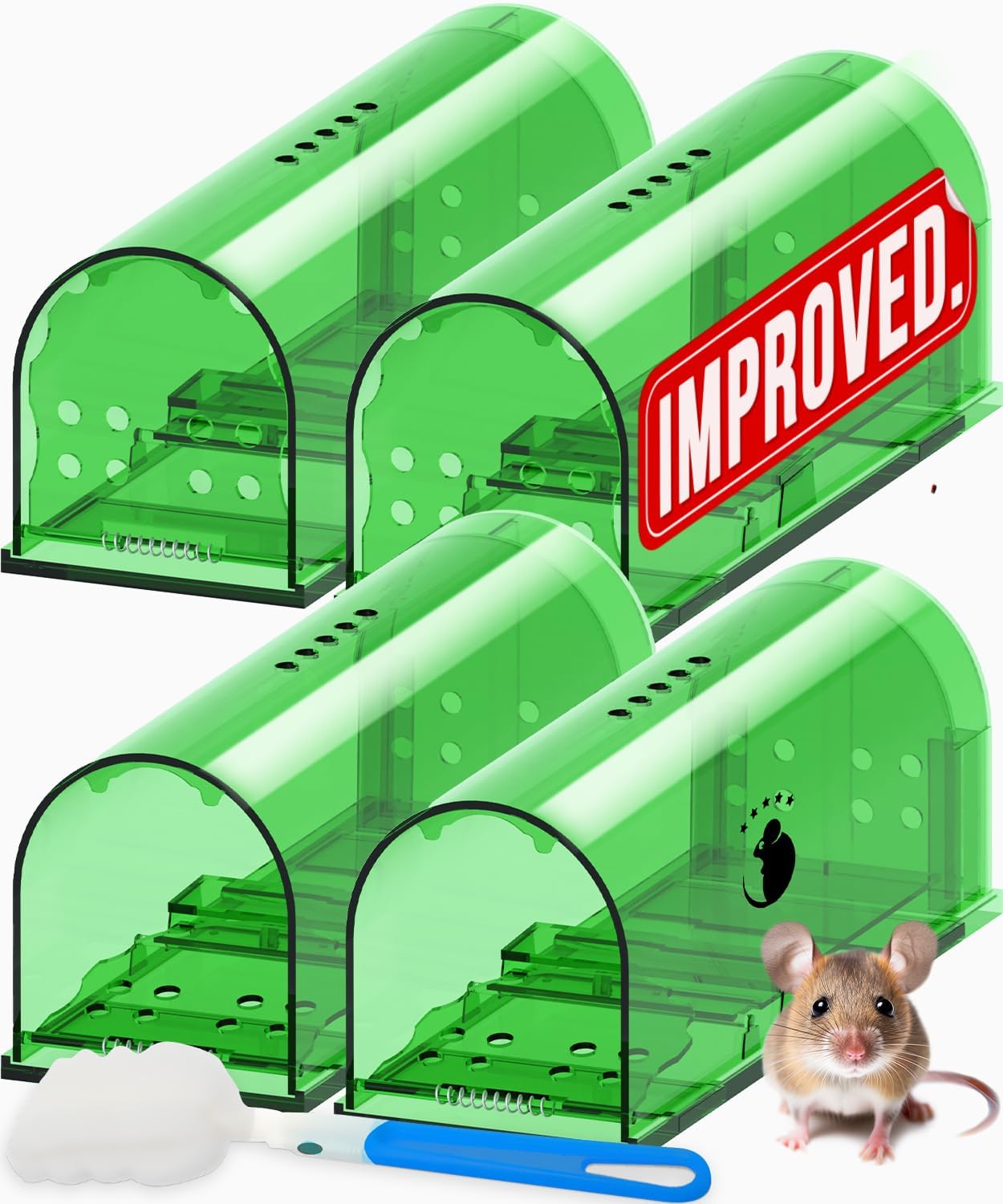
| Unit Count | 4 Count |
|---|---|
| Material Type | Plastic |
| Target Species | Mouse |
| Number of Pieces | 4 |
The Motel Mouse 4-pack is a reusable live-catch system intended to trap mice without harming them and let you release them safely. Each unit is a small plastic enclosure with ventilation, a simple set mechanism, and a trap-door release that lets you free a captured mouse without touching it. Typical use is placement along walls or near suspected runs baited with peanut butter or similar attractants, then checking traps regularly and releasing caught animals away from the home. Notable features include the included cleaning brush and instruction materials, a no-touch release mechanism, and extra air holes to reduce stress for captured mice. Practical benefits are the humane approach to pest control, the ability to reuse traps many times, and safe use around children and pets because there are no snap springs. Limitations are that these are single-mouse traps and require frequent monitoring and relocation for larger infestations, and being plastic they need proper cleaning to avoid scent buildup. For buyers prioritizing humane, low-risk performance, these traps deliver a straightforward, repeatable solution but are not a one-time fix for heavy infestations.
Best for: Buyers who want an effective, animal-friendly trap that prioritizes humane capture and repeatable performance for small to moderate mouse problems.
Less Ideal for: People facing heavy or persistent infestations who need high-throughput or instant population reduction should consider professional services or higher-capacity solutions.
- Reusable live-catch design allows multiple uses after cleaning
- No-touch release door reduces handling and stress on the animal
- Included cleaning brush and instruction materials make setup and maintenance easier
- Ventilation and interior space designed to reduce stress for captured mice
- Captures one mouse at a time so multiple traps or frequent checks are needed for larger problems
- Plastic construction can retain odors if not cleaned thoroughly
Verdict: Choose this four-pack if you want a reliable, reusable humane trap system that lets you catch and release mice safely without harmful mechanisms.
Victor Tin Cat Live-Catch Mouse Traps, 2-Pack

| Target Species | Mouse |
|---|---|
| Unit Count | 2 Count |
| Material Type | Metal |
| Number of Pieces | 2 |
The Victor Tin Cat is a no-kill, metal live-catch trap that uses a see-saw entrance to trap mice without poison or snapping parts. Set-up is straightforward: smear a small amount of bait such as peanut butter on the inside wall, close the lid, and position the trap where mice travel. Its slim profile makes it easy to tuck under furniture, inside cabinets, in garages or attics, and the lid opens for simple, no-touch release. The trap is large enough to hold multiple captures before needing to be emptied, which reduces how often you have to check it during high activity. Because it is metal and mechanically simple, it is durable and suitable for indoor or outdoor use. Limitations are that live traps require regular checking and the moral and logistical step of transporting and releasing captured animals, and they do not address entry points or long-term population control on their own.
Best for: Buyers who prioritize a humane, reusable solution and want a durable trap they can set and check regularly to remove mice without killing them.
Less Ideal for: People who want a hands-off, long-term pest elimination method or who prefer instant lethal control should consider other options.
- Humane live-catch design avoids poisons and snap mechanisms
- Slim metal body fits easily under furniture and inside cabinets
- Durable metal construction suitable for indoor or outdoor placement
- Large internal capacity lets the trap hold multiple mice before emptying
- Requires frequent checking and manual transport for release
- Does not prevent future infestations or seal entry points
Verdict: Choose the Victor Tin Cat if you want a durable, humane live-catch trap that holds multiple mice and is easy to place and release.
Choosing the Right Mouse Trap for Chicken Coops: Key Factors to Consider
Capture Reliability
Reliable capture affects how often you must check traps and whether rodents leave bait uneaten. Traps that close fully or contain the animal reduce the chance of escape and repeated visits. In a coop, partial captures are especially problematic because injured rodents can still spread disease or draw predators near the flock.
Consider the trigger sensitivity, the size of the strike mechanism, and whether a trap is designed for mice specifically rather than larger rodents. A trap that consistently performs in field conditions will reduce labor and lower the chance of reinfestation.
Chicken Safety
Any device placed inside or near a coop must minimize harm to birds. Low-profile traps that fit into enclosed bait stations or sealed boxes reduce accidental contact with hens and chicks. Look for designs that do not have exposed springs, pinch points, or small parts that curious birds can peck at or swallow.
Also think about placement options. Traps that can be secured inside wall voids, under feeders, or in dedicated bait boxes keep chickens away while still intercepting rodents attracted to feed.
Weather and Dust Resistance
Coops and outbuildings are subject to moisture, dust, and bedding material. Traps that corrode, clog, or lose sensitivity when dirty will underperform. Materials like rust-resistant metal or durable plastics and sealed mechanisms are better for long-term reliability in barn or coop environments.
If you place traps in runs or semi-exposed coops, choose units that shed water or fit inside protective housings so rain and coop litter do not foul the trigger or bait.
Ease of Setting and Clearing
In a busy homestead, you want traps that are quick to bait, set, and empty without elaborate tools. Easy-to-open catch compartments and clear indicators of a successful capture reduce handling time and limit exposure to droppings. Reusable traps should allow safe disposal of the rodent with minimal contact.
Also consider how often traps need rebaiting and whether they can be serviced without moving them from a tucked-away location. Simpler operation reduces the chance of mistakes that could leave traps unset or unsafe.
Bait Retention and Placement Flexibility
Traps that hold bait securely and present it in a way that attracts mice rather than hens will be more effective. Baits that fall out easily or are scavenged by chickens reduce trap success. Some designs include internal bait cups, narrow entry points, or elevated bait ledges specifically to favor mice.
Placement flexibility matters because coop layouts vary. Traps that can be mounted, staked, or placed inside small cavities let you target runways and entry points while keeping them away from birds.
Best Trap Styles For Coop Use
Different trap types each have benefits and tradeoffs when used around poultry. Enclosed catch traps or covered snap designs reduce bird contact and contain the animal for easier cleanup. Live-capture baskets avoid snap mechanisms but require frequent checking and secure release far from the coop. Electronic traps offer clean disposal but need power and may be less practical in remote outbuildings.
Select a style that fits how you manage the coop. If you check traps daily, live-capture options may be acceptable. If you want low-contact clearing, enclosed snap or mechanical catch traps are often the most practical.
- Enclosed snap traps: contain the strike and reduce accidental pecking
- Live-catch traps: humane if checked often, require secure release
- Electronic traps: hands-off disposal, need power source or fresh batteries
- Bait station-compatible units: combine protection and discretion
Where to Place Traps in and Around a Coop
Good placement increases catches while keeping birds safe. Target runways along wall edges, behind feeders, near grain storage, and at gaps in the coop foundation where rodents enter. Place traps along walls because mice rarely cross open ground when foraging.
Avoid placing traps inside nesting boxes or in open feeding trays. Instead, mount them in predator-proof bait boxes, under raised feeders, or inside small voids where chickens cannot reach. Secure devices so curious hens cannot tip them over.
- Along walls and behind obstructions where mice run
- Inside secured bait stations near feed sources
- Under raised feeders to intercept food-driven rodents
- At foundation gaps and run entry points
Bait Choices and How to Present Them
Use baits that are highly attractive to mice yet less appealing to chickens. Peanut butter, seed mixes, and small pieces of grain often work well. Place bait in internal cups or on narrow ledges so mice must reach in but chickens cannot get a full peck.
Renew bait regularly and avoid overfilling to reduce spillage. If you use multiple traps, vary bait placement slightly to identify preferred runways. Clean up spilled feed promptly to avoid drawing more rodents.
- Use sticky or contained bait presentations to reduce loss
- Avoid large open piles of grain near traps
- Rotate baits if catches decline to prevent bait shyness
Sanitation and Biosecurity After a Catch
Rodents can carry pathogens that affect poultry and people, so handle trap clearing with gloves and limit direct contact. Dispose of rodent remains following local regulations and disinfect the trap and surrounding area to reduce disease risk. Clean spilled feed and bedding that may be contaminated.
Regularly inspect for fresh droppings or gnawed packaging around feed storage and address leaks or spills that attract rodents. Improving coop sanitation is often the most effective long-term control measure alongside traps.
- Wear gloves when handling traps and carcasses
- Disinfect trap surfaces and nearby feeding areas
- Remove contaminated bedding and spilled feed promptly
- Seal feed containers and patch entry points
Integrating Traps With Other Rodent Control
Traps work best as part of an integrated approach that includes habitat modification and exclusion. Seal gaps around the coop, store feed in rodent-proof containers, and reduce clutter where mice nest. Predatory birds and barn cats can contribute but should not replace proven exclusion and trapping methods.
Monitor activity with regular inspections rather than relying solely on occasional trapping. A combination of sanitation, exclusion, and strategically placed traps reduces both immediate rodent pressure and the conditions that allow infestations to return.
- Seal openings larger than a quarter inch where rodents can enter
- Store feed in metal or heavy plastic containers with tight lids
- Keep vegetation and debris away from coop perimeter
- Use traps to reduce population while fixing entry and attractant issues
How We Chose the Best Mouse Trap for Chicken Coops
We focused on features that matter specifically in a coop environment rather than general household traits. Primary evaluation criteria included capture reliability, safety for poultry and chicks, weather and dust resistance for outbuildings, and ease of setting and clearing without disturbing hens. We also considered bait retention and placement flexibility so traps can be used around feeders and in nesting areas without causing spill or entanglement. Products were excluded if they posed a clear risk to chickens or required handling that would regularly expose you to droppings or diseased rodents. Extremely specialized research-only devices and traps that depend on toxicants were also excluded because poisons can harm scavengers and are unsafe in close-quarter coop settings. The shortlist emphasizes practical, repeatable performance in real coop conditions and options suited to indoor-style coops, enclosed runs, and partially exposed outbuildings.
FAQ
Are snap traps safe to use inside a chicken coop?
Snap traps can be safe if they are enclosed or placed inside a secure bait station that chickens cannot access. Avoid open snap traps in areas where hens and chicks roam freely because exposed springs and small parts can injure birds.
How often should I check traps in a coop?
Check traps at least once daily when rodent activity is high to reduce stress on captured animals and limit disease exposure. For lower activity, check every 48 hours but avoid leaving live-capture traps unchecked for long periods.
Can I use poison baits around my chickens?
Using poisons near chickens is risky because of secondary poisoning to scavengers and the potential for contaminated carcasses in the coop. For safety and biosecurity, non-toxic trapping methods and exclusion are generally recommended in close coop settings.
What bait attracts mice but not my hens?
High-fat, sticky baits like peanut butter placed in narrow cups or internal bait holders tend to favor mice because they can access small bait portions while hens cannot easily remove them. Avoid open piles of grain near traps that will attract chickens.
How do I reduce rodents returning after I catch a few?
Address sources of food, water, and shelter by sealing feed containers, patching entry points, and removing nesting materials. Regular sanitation and exclusion measures combined with continued strategic trapping will reduce the likelihood of reinfestation.
Final Verdict
When choosing a mouse trap for chicken coops, prioritize devices that balance effective capture with clear protections for birds. Focus on trap types that can be enclosed or mounted out of reach, materials that withstand coop conditions, and presentations that favor mice over hens. Tradeoffs include the need for regular checking with live-capture traps versus cleaner disposal with enclosed snap units. Decide based on how often you can inspect traps and how accessible the trap location is to chickens. Combine selected traps with sanitation and exclusion for the most reliable long-term control.
