

Note: This article contains affiliate links. If you click on these links and make a purchase, I may earn a small commission at no extra cost to you. This helps support my research and content. Read my full affiliate disclosure here.
If mice are moving into your home, picking the right quick kill mouse trap matters for speed, safety, and ongoing prevention. The wrong trap can be messy, unreliable, or risky around children and pets. This guide shortlists the top options built to dispatch mice quickly while minimizing handling and accidental triggering. We evaluated each entry for effectiveness, user safety, reset speed, and durability to help you pick a solution suited to kitchens, basements, garages, or rental units. Read on for practical notes about setup, placement, and what to expect in day-to-day use before and after installation.
Top Picks at a Glance
| Best Overall The best all-around choice for most situations | Victor Power-Kill Mouse Traps, 6-Pack |  |
| Best Quality Built to a higher standard if you want something more solid | Victor Quick-Kill Mouse Traps, 6-Pack |  |
| Best Value The sweet spot between price and what you get | Hdama Reusable Snap Mouse Traps, 6-Pack |  |
| Best Budget The cheapest option that still gets the job done reliably | Victor Easy Set Wide Pedal Wooden Mouse Trap, 2-Pack |  |
| Highest Rated A top-rated pick with lots of positive feedback | G-Jyuncyou 2-Pack Electric Mouse Traps — 2000V High-Voltage Indoor Zapper |  |
| Most Popular A crowd favorite that many people choose with confidence | USKICH Reusable Plastic Mouse Traps, 6‑Pack |  |
| Best Seller A high-volume bestseller chosen again and again | Victor Wide Pedal Mouse Traps, 12-Pack |  |
Victor Power-Kill Mouse Traps, 6-Pack

| Unit Count | 6 Count |
|---|---|
| Target Species | Mouse |
| Power Source | Manual |
| Material Type | Plastic |
The Victor Power-Kill mouse trap is a snap-style trap designed for fast, humane kills and simple one-click setting. It is typically placed along walls, in corners, or near suspected runways and baited in the trough or bait cup with peanut butter or similar attractants. Notable features include a larger trip pedal that increases the chance a passing mouse will trigger the mechanism and a high-impact kill bar that snaps closed for an immediate result. The traps can be discarded after use for hands-free cleanup or the mouse can be removed and the durable plastic trap reused, which gives flexibility for different cleanup preferences. Setup is straightforward and fast, requiring a single click to arm or release the trap, and the compact footprint fits into tight spaces where mice travel. A limitation is that these are manual traps and require periodic checking and disposal; they are also not electronic and offer no remote alerts unless paired with an optional smart base sold separately.
Best for: Buyers who want a reliable, no-nonsense mechanical trap that delivers fast kills and can be reused or thrown away depending on cleanup preference.
Less Ideal for: People who need remote monitoring, automated alerts, or a hands-off electronic solution should consider electronic traps or integrated smart systems instead.
- Oversized trip pedal increases activation likelihood from investigating or passing mice
- High-impact kill bar designed for quick, humane elimination on contact
- Simple one-click set and release makes deployment fast and easy
- Reusable construction or disposable option for hands-free cleanup
- Manual operation requires regular physical checking and disposal
- No built-in alerting or electronic monitoring without an extra smart base
Verdict: A straightforward, high-catch snap trap that delivers quick kills and the flexibility to reuse or dispose for buyers who prioritize reliable, manual pest control.
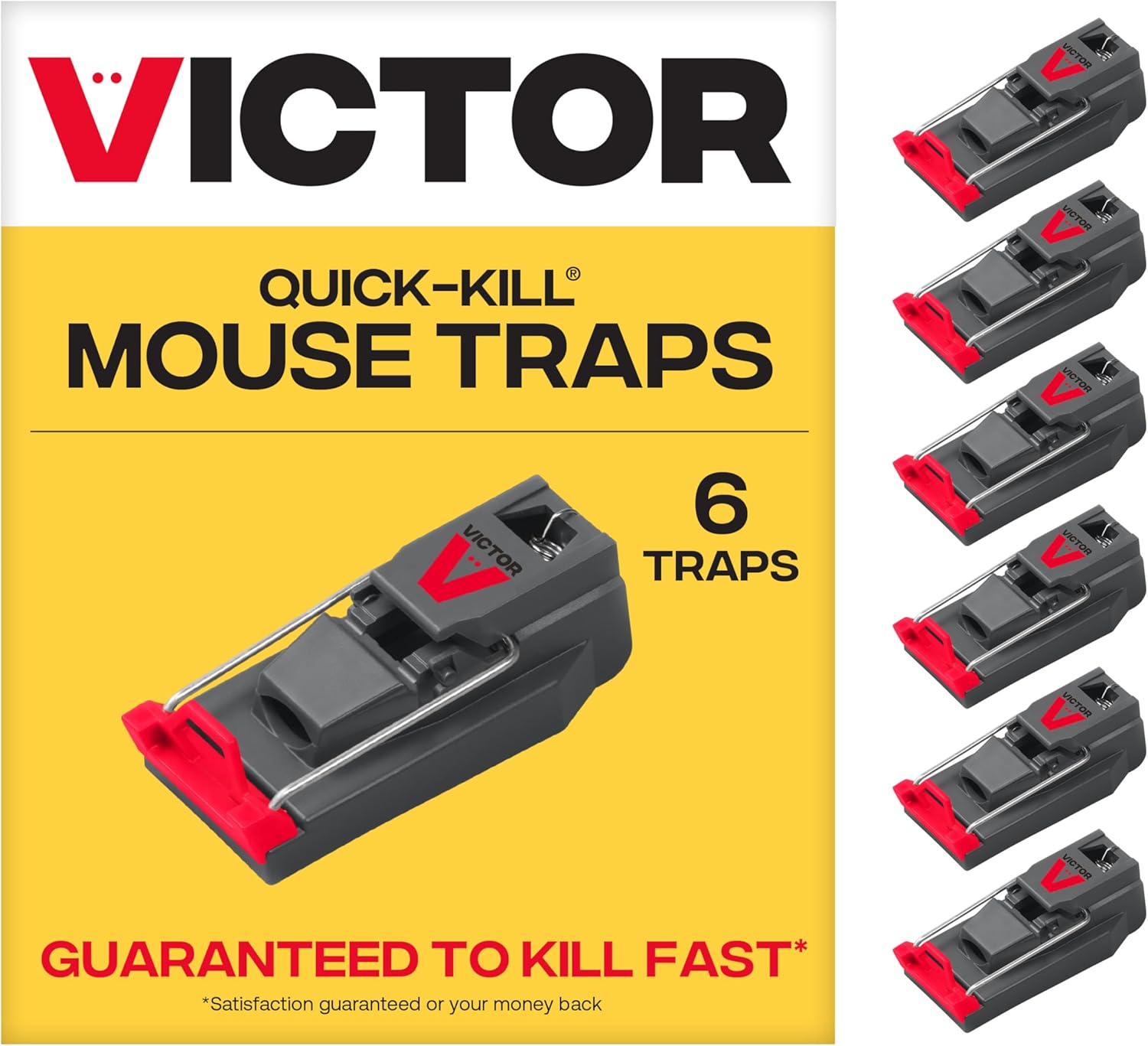
Victor Quick-Kill Mouse Traps, 6-Pack
| Unit Count | 6 Count |
|---|---|
| Target Species | Mouse |
| Power Source | Manual |
| Material Type | Plastic |
The Victor Quick-Kill Mouse Traps are compact, reusable spring traps designed for fast home rodent control. You set each trap with a single click, load bait into the built-in covered bait cup, and place it along walls or where you see mouse activity. The covered bait area prevents bait theft and helps ensure the rodent triggers the high-impact kill bar at the correct point for a quick, humane kill. Traps are made of plastic, come in a six-pack, and include a release mechanism that opens the trap for no-touch disposal of caught rodents. Practical benefits include straightforward one-handed setting, clear bait placement, and the ability to reuse traps rather than replace them after each catch. Limitations are that the traps are manual so they require occasional inspection and disposal by the homeowner and the plastic body may be less durable than metal alternatives in heavy-use situations.
Best for: Homeowners who want an efficient, low-chemical method to control occasional mouse problems and prefer reusable, easy-to-set traps they can manage themselves.
Less Ideal for: People seeking a fully hands-off or high-capacity commercial solution should consider electronic or professional traps and services instead.
- One-click setting makes deployment quick and easy
- Covered bait cup prevents bait theft and guides proper placement
- Reusable design with a release mechanism enables no-touch disposal
- Precision Strike Technology targets a quick, humane kill
- Plastic construction may wear faster than metal with heavy repeated use
- Requires manual checking and disposal which may not suit users who want hands-off solutions
Verdict: A simple, reusable six-pack of manually set traps that delivers a quick, low-chemical solution for routine household mouse control.
Hdama Reusable Snap Mouse Traps, 6-Pack

| Unit Count | 6 Count |
|---|---|
| Target Species | Mouse, Rat |
| Power Source | Snap traps |
| Material Type | Mouse Traps That Work |
The Hdama snap traps are compact, reusable plastic traps that use a spring-loaded snap mechanism and a removable bait cup to catch mice quickly. You set them by adding bait (peanut butter is suggested), rotating the bait cup back into place, then arming the rear clip so the trap sits ready on the floor where mice travel. The traps are lightweight and easy to clean because the bait cup and plastic body resist mess and odor, so you can reuse them rather than disposing after a single catch. Notable features include a sensitive snap and toothed strike area intended to deliver a quick kill and a design that keeps you from handling carcasses directly. Limitations to expect are the small size, which is optimized for mice rather than larger rats, and that the plastic construction may wear over many cycles compared with metal traps. Overall this is a practical kit for homeowners who want a sanitary, baited snap solution for routine mouse control.
Best for: Homeowners or renters who want a sanitary, low-mess snap trap system to manage occasional or moderate mouse activity and prefer reusable, easy-to-bait solutions.
Less Ideal for: People dealing with large rat infestations or commercial pest control who need heavy-duty metal traps or bulk industrial solutions.
- Removable bait cup makes baiting and cleaning simple and reduces direct contact
- Reusable ABS plastic construction resists odor and is easy to rinse between uses
- Sensitive snap and toothed strike area designed for a fast kill with minimal mess
- Six traps in the pack let you cover multiple runways or replace traps quickly
- Small footprint is suited to mice but not reliable for larger rats
- Plastic parts may wear or deform faster than metal snap traps after heavy use
Verdict: A practical, reusable six-pack of snap traps that makes baiting and cleanup simple for quick mouse control.
Victor Easy Set Wide Pedal Wooden Mouse Trap, 2-Pack

| Unit Count | 2 Count |
|---|---|
| Target Species | Mouse |
| Power Source | manual |
| Material Type | Wood |
The Victor Easy Set Wide Pedal Mouse Trap is a straightforward snap trap that improves the traditional wooden design with a larger plastic trigger plate that comes pre-baited for fast setup. It is used by placing the trap along runways or near walls and setting the pedal to Firm or Sensitive depending on how easily you want it triggered. The wider pedal increases the chance of activation whether a mouse is taking the bait or merely scurrying across it, and the powerful kill bar delivers an immediate, humane kill. After use you can either dispose of the whole trap or lift the bar to remove and reuse it, which makes it flexible for different cleanup preferences. The trap is manual and simple to operate with no electronics or consumables required, which keeps ongoing costs low. Notable limitations are that wooden snap traps can be messy to handle when disposing and they require careful placement to avoid accidental triggering by children or pets.
Best for: Buyers who want a low-cost, no-frills indoor mouse control method that is easy to set up and maintain and who prefer a quick mechanical kill over electronic or bait-based systems.
Less Ideal for: Households with small children or curious pets that might accidentally trigger the trap should consider safer enclosed or tamper-resistant options.
- Wider plastic pedal increases likelihood of catches compared with narrow snap traps
- Easy-set design with Firm and Sensitive trigger settings for flexible placement
- Pre-baited pedal speeds initial setup and reduces mess
- Reusable option or disposable for quick cleanup keeps user choice and reduces repeat purchases
- Wood construction and metal bar can be unpleasant to handle after a catch
- Manual traps require regular checking and careful placement to protect pets and children
Verdict: A simple, budget-friendly snap trap that raises catch rates with a larger trigger pedal and easy-set operation for reliable indoor mouse control.
G-Jyuncyou 2-Pack Electric Mouse Traps — 2000V High-Voltage Indoor Zapper

| Target Species | Mouse |
|---|---|
| Power Source | ac |
| Material Type | Acrylonitrile Butadiene Styrene (ABS) |
| Number of Pieces | 2 |
These G-Jyuncyou electric mouse traps are a two-pack designed for indoor, long-term rodent control. Each unit uses a 2000V high-voltage pulse in a 150-second cycle to kill mice quickly after they contact the internal metal plates. You bait the trap, install four AA batteries per unit and place the devices where mice travel; LEDs and a buzzer indicate standby, shocking, kill complete, and low battery so you do not need to check traps constantly. The removable bottom tray and insulated ABS shell make cleaning and disposal no-touch and straightforward. Because the traps are reusable and battery powered they are convenient for kitchens, garages, warehouses, and offices where continuous coverage is needed. Important limitations are that they are for indoor use only and require fresh batteries for peak performance, and safety depends on proper placement since the device delivers a lethal shock to rodents.
Best for: Buyers who need dependable, low-maintenance indoor rodent control and prefer reusable electronic traps with clear status indicators for continuous coverage in homes, garages, or small commercial spaces.
Less Ideal for: People who need an outdoor-rated solution or want a completely maintenance-free option that does not require periodic battery replacement.
- High-voltage 2000V shock with a 150s cycle for rapid kills
- LED and audio indicators show status including kill complete and low battery
- Removable bottom tray allows no-touch disposal and easy cleaning
- Reusable ABS housing designed for repeated indoor use
- Requires four AA batteries per unit which will need replacing after extended use
- Intended for indoor use only and not rated for outdoor or wet locations
Verdict: A reliable reusable two-pack for indoor spaces that kills mice quickly and signals status clearly, making it a solid choice for long-term, low-effort rodent control.
USKICH Reusable Plastic Mouse Traps, 6‑Pack

| Brand Name | USKICH |
|---|---|
| Unit Count | 6 Count |
| Target Species | Mouse |
| Power Source | hand_powered |
These USKICH traps are small reusable snap-style mousetraps designed to catch mice and small rats without toxic bait. Each trap uses a double-spring mechanism and a removable bait cup so a small dab of peanut butter or similar sticky bait attracts rodents and reliably trips the jaws when the animal applies as little as 0.025 pounds of pressure. The traps are made from ABS plastic, include a tail hole for anchoring, and can be washed and reused after ejecting a catch by pressing the rear. They work well set along walls, in cabinets, or in garages where space is limited and you want a non-chemical option. Limitations to note are the small size, which targets mice and not larger rodents, and the need to place traps away from children and pets because the snap can cause injury. Getting the bait amount and position right affects success, and users should plan for regular checking and cleaning between uses.
Best for: Buyers who want a reusable, non-chemical snap trap to catch small mice in and around the home and who prioritize a discreet, compact solution with repeatable use.
Less Ideal for: People needing to control larger rodents or who require no-contact electronic or catch-and-release solutions should consider alternative traps.
- Reusable ABS plastic construction that can be washed and reused
- High-sensitivity double-spring design triggers with very light pressure
- Removable bait cup lets you use sticky baits and helps position lure
- Compact size fits tight spaces and includes a tail hole for anchoring
- Non-toxic, mechanical operation suitable for indoor and outdoor use
- Small form factor is not suitable for large rats or heavy rodents
- Snap mechanism requires careful placement to keep children and pets safe
Verdict: A compact, reusable mechanical trap that reliably catches small mice without poisons, ideal for homeowners seeking a non-chemical solution.
Victor Wide Pedal Mouse Traps, 12-Pack

| Unit Count | 12 Count |
|---|---|
| Target Species | Mouse |
| Power Source | manual |
| Material Type | Wood |
The Victor Wide Pedal Mouse Traps adapt the classic wooden snap design with a larger plastic trigger plate to increase activation reliability. You set traps along walls, in basements, garages, or other rodent routes and choose between firm or sensitive trigger settings to match local mouse activity. The plastic pedal arrives pre-baited with a light fruit scent for quick, mess-free setup, and the powerful snap bar delivers an immediate kill for decisive rodent control. Constructed from FSC certified wood, the traps are sturdy yet simple to use and can be discarded after a catch or cleaned and reset for reuse. The wider pedal helps catch skittish or light-footed mice that might miss narrower triggers, but as with any mechanical snap trap, careful placement and cautious handling are necessary to avoid accidental snaps. The pack of 12 gives good coverage for multi-room or recurring problems, making it practical for homeowners who prefer a straightforward, low-tech solution with adjustable sensitivity.
Best for: Buyers who prioritize reliable, low-tech rodent control and want adjustable sensitivity to catch skittish mice while relying on product performance validated by other users.
Less Ideal for: People seeking nonlethal capture methods or those who need traps designed for constant outdoor exposure in wet conditions should consider alternate solutions.
- Wider plastic pedal increases likelihood of activation by light or cautious mice
- Two sensitivity settings let you tune the trigger to local rodent behavior
- Comes pre-baited on the pedal for quick and tidy setup
- FSC certified wood construction balances durability with sustainable sourcing
- 12-trap pack provides enough units for whole-house coverage or repeated use
- Snap mechanism requires careful handling to avoid accidental injury
- Wood construction can limit long-term outdoor exposure compared with all-plastic traps
Verdict: A practical, adjustable-sensitivity snap trap pack that increases catch rates for skittish mice while remaining simple and ready to deploy.
Choosing the Right Quick Kill Mouse Trap: Key Factors to Consider
Dispatch Reliability
A trap that fails to dispatch consistently creates more work and stress. Reliable triggering depends on a crisp mechanism, correct bait placement, and the trap's sensitivity. In practice you want a device that activates with a normal mouse approach but resists false triggers from drafts or household vibration.
Consider where mice are active in your space and whether the trap's trigger type suits that traffic pattern. Some mechanisms perform better for quick strikes in narrow runs, while others need open access to make contact. Reliable dispatch reduces the chance of injured rodents that escape and require additional cleaning or follow-up methods.
User and Pet Safety
Safety matters when traps live in occupied rooms. Features that improve safety include enclosed housings that keep fingers and paws away from the mechanism, low-profile designs that can be tucked under cabinets, and trigger designs that reduce accidental activation by children or pets.
You should evaluate how the trap is set and released. Tools that allow one-handed setting or provide clear visual arming indicators lower the chance of mishandling. If you have curious pets or small children, prioritize models that fully shield the strike area or are intended for toiletable placement where access is restricted.
Ease of Setup and Reset
Frequent checking and resetting is part of effective rodent control. Traps that are fiddly to bait, hard to arm, or require significant force to reset discourage regular maintenance and slow response to catches. Look for designs with straightforward bait wells, intuitive arming steps, and quick-release disposal features.
Also consider whether the trap can be cleaned without compromising the mechanism. Reusable devices should allow safe, minimal-contact cleanup. Simpler setup improves consistency in placement and increases the odds of catching rodents quickly after deployment.
Catch Containment and Disposal
Containment affects hygiene and how much contact you have with caught rodents. Traps that capture and fully enclose the carcass reduce odors and limit exposure during disposal. Some designs provide a sealed compartment or a quick-eject disposal slide so you never touch the remains directly.
If you prefer to avoid repeated handling, favor traps that make disposal straightforward or that accept replaceable, sealed inserts. Proper containment also makes it easier to inspect catches and assess whether follow-up control is needed in the area.
Durability and Materials
Durable materials maintain reliable trigger action over many uses. Look for corrosion-resistant metals or sturdy plastics that resist warping, especially if traps will be used in humid basements or garages. Poor materials can lead to misfires, broken components, or a degraded fit that invites escapes.
Durability also affects long-term cost and convenience. A well-built reusable trap will hold tension and alignment over dozens of cycles, and cleaning will not degrade critical surfaces. Consider build quality when you expect repeated use rather than a single-season deployment.
Where to Place Quick Kill Mouse Traps
Placement is often more important than trap type. Mice travel along walls and along the backs of cabinets. Place traps with the trigger side against the wall in areas where you see droppings, gnaw marks, or footprints. Narrow runs and under-shelf gaps are high-probability locations.
Avoid placing traps in the middle of open rooms where mice are less likely to travel. Instead, focus on edges, behind appliances, inside pantries, and near entry points such as gaps around pipes or vents. If you have pets, elevate traps or use enclosed placements to prevent accidental access.
- Check high-traffic runs daily for catches and to rebait.
- Use multiple traps spaced several feet apart for better coverage.
- Rotate or move traps if you see no activity after a few days.
Baiting Tips for Faster Results
Bait choice and presentation influence how quickly a mouse approaches a trap. Soft, high-calorie baits such as peanut butter or nut-based spreads often work better than dry grains because they require the animal to linger and trigger the mechanism. Use a small pea-sized amount so the rodent must work at the bait.
Avoid overbaiting. Excessive bait can allow a mouse to remove food without triggering the mechanism. Secure the bait in designed wells or small containers when possible to force the animal into the trigger zone.
- Fresh bait outperforms stale or old store-bought attractants.
- If food sources are abundant nearby, remove competing food before deploying traps.
- Wear disposable gloves when handling bait to minimize human scent transfer.
Managing Hygiene and Disposal
After a catch, handle disposal promptly to prevent odors and secondary pests. Use sealed bags or containers when discarding carcasses, and wash hands and any contact surfaces thoroughly. If your trap has a containment or ejection feature, use it to minimize contact.
Regular cleaning of reusable traps helps maintain performance. Use mild detergent and hot water when possible, and avoid harsh solvents that could damage components. Store traps dry to prevent rust or mold growth.
- Disinfect gloves and tools after handling traps.
- Rotate traps during extended infestations to reduce scent buildup.
- Inspect trap components for wear after every few uses.
When to Consider Professional Help
Quick Kill Mouse Traps are effective for low to moderate infestations. If you see several mice regularly, hear activity inside walls, or encounter droppings in many rooms, the problem may require a broader approach. Professional services can identify entry points and implement exclusion measures that traps alone will not fix.
Also seek expert assistance if you are uncomfortable handling carcass disposal, have a severe allergy to rodent dander, or face an infestation in areas with sensitive occupants such as infants or immunocompromised people.
- Professionals can perform proofing to prevent re-entry.
- They can also advise on integrated strategies that combine trapping with sanitation and exclusion.
Common Myths About Quick Kill Traps
A common myth is that larger traps always perform better. In many indoor settings, a compact, well-placed trap can be faster and less obtrusive than a bulky device. Size matters more for where you can position the trap than for dispatch speed alone.
Another misconception is that bait amount drives success. Too much bait reduces the chance of triggering. Proper bait presentation and strategic placement are usually more important than quantity.
- Myth: Stronger springs equal better results in all situations. Reality: Balance is key to avoid false triggers.
- Myth: Traps need continuous bait replacement to work. Reality: High-quality bait that is placed correctly often lasts multiple days.
How We Chose the Best Quick Kill Mouse Trap
We focused on features that determine real-world performance in homes and similar indoor settings. Primary evaluation criteria included dispatch reliability, measured by consistent trigger action and minimal escape; user and pet safety, looking at trigger sensitivity, protective housings, and whether the device isolates the mechanism; ease of setup and resetting for repeat use; and durability, meaning construction that withstands repeated triggers and cleaning. We also assessed catch containment and disposability to reduce contact during disposal, plus footprint and placement flexibility for tight corners and behind appliances. Items were excluded if they required extensive assembly that would impair reliable triggering, if they lacked clear safety features for multi-person households, or if they were intended only for outdoor use. The final shortlist prioritizes devices that balance quick dispatch with manageable cleanup and low accidental-trigger risk.
FAQ
How soon should I check a trap after setting it?
Check traps daily during initial deployment. Early checks help you determine activity patterns and refill bait if necessary. Frequent checks also reduce hygiene issues from a catch left in place for too long.
Can these traps hurt pets if accidentally triggered?
Some designs pose a risk to curious pets, while enclosed or shielded models minimize that danger. If pets may access the area, choose traps with protective housings or place traps in locations inaccessible to animals.
Is it better to use multiple traps or move a single trap around?
Using multiple traps increases coverage and catch probability, especially for early infestations. If you only have one trap, move it every few days to areas with signs of activity. Multiple traps also help reveal hot spots you may have missed.
How do I remove human scent from traps and bait?
Wear disposable gloves when baiting and avoid touching bait surfaces directly. Some gardeners wash traps with mild soap and water and let them air dry to reduce scent, though a small amount of scent rarely prevents mice from approaching.
Are reusable traps worth it compared with disposable options?
Reusable traps can be cost-effective and reduce waste if you are comfortable with cleaning and resetting. Disposable options reduce handling but may require more frequent replacement. The choice depends on your tolerance for disposal tasks and expected infestation length.
Final Verdict
Prioritize dispatch reliability and safety when choosing a Quick Kill Mouse Trap. A unit that consistently triggers in high-traffic runs and shields the strike mechanism will reduce the chance of injured escapes and accidental activations. Balance ease of setup and cleanup with durable construction so the solution remains effective over repeated uses. Decide based on where you will place traps, whether pets or children are present, and how much handling you are willing to do during disposal. Focusing on those tradeoffs will help you pick the right tool for fast, manageable rodent control.
